Watchable Wildlife: Watch the Skies for Spring Bird Migrations 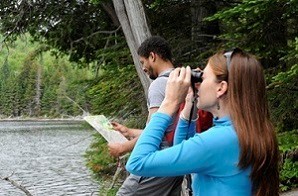 Spring is an ideal time to observe bird migrations. New York is conveniently located along the Atlantic Flyway, one of the main migration routes. This gives you a great opportunity to observe birds flying to their summer breeding grounds. Spring is an ideal time to observe bird migrations. New York is conveniently located along the Atlantic Flyway, one of the main migration routes. This gives you a great opportunity to observe birds flying to their summer breeding grounds.
Grab your binoculars and check out one of these hot spots: - Northern Montezuma Wildlife Management Area (WMA), Cayuga, Seneca, Wayne counties—a stopover for many species of ducks who are headed farther north. You can see shorebirds, raptors, waterfowl, and songbirds at this WMA.
- Montezuma Wildlife Refuge (leaves DEC), Cayuga and Seneca counties—an endless list of birds can be seen here.
- Braddock Bay WMA, Monroe County—find waterfowl, raptors, and songbirds.
- Iroquois National Wildlife Refuge (leaves DEC), Genesee and Orleans counties—see many species of waterfowl.
- Derby Hill Bird Observatory (leaves DEC), Oswego County—known for migrating hawks.
- Bashakill WMA, Orange County—view hawks, marsh birds, and waterfowl.
- Central Park (leaves DEC), NYC—see warblers, in addition to many other species.
It's impossible to list all the great bird-viewing locations, but look for an Important Bird Area (leaves DEC) or Bird Conservation Area near you.
Save the Date - I Love My Park Day 2021 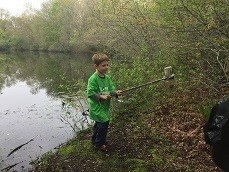 I Love My Park Day (leaves DEC)—the largest single-day volunteer event in NYS—will be celebrating its 10th anniversary in 2021! With the ongoing pandemic, this year will look a little different, but will be modified for a safe, in-person I Love My Park Day event. Parks & Trails NY, in partnership with State Parks and DEC, will be hosting a more contained, two-day event on Saturday, May 1 and Sunday, May 2 I Love My Park Day (leaves DEC)—the largest single-day volunteer event in NYS—will be celebrating its 10th anniversary in 2021! With the ongoing pandemic, this year will look a little different, but will be modified for a safe, in-person I Love My Park Day event. Parks & Trails NY, in partnership with State Parks and DEC, will be hosting a more contained, two-day event on Saturday, May 1 and Sunday, May 2
Registration for volunteers will open at the end of March.
NYS Outdoor Burn Ban: March 16 - May 14 Open burning of debris is the largest single cause of spring wildfires in New York State. When temperatures are warmer and the past fall's debris and leaves dry out, wildfires can start and spread easily and be further fueled by winds and a lack of green vegetation. In 2020, DEC Forest Rangers extinguished 192 wildfires that burned a total of more than 1,122 acres. In addition, local fire departments, many of which are volunteer, all too often must leave their jobs and families to respond to wildfires caused by illegal debris fires. DEC will post a Fire Danger Map rating for the 2021 fire season on DEC's website when there is a moderate risk anywhere in the state. New York first enacted strict restrictions on open burning in 2009 to help prevent wildfires and reduce air pollution. The regulations allow residential brush fires in towns with fewer than 20,000 residents during most of the year, but prohibit such burning in spring, when most wildfires occur. Campfires using charcoal or untreated wood are allowed, but people should never leave these fires unattended and must extinguish them. Burning garbage or leaves is prohibited year-round. For more information about fire safety and prevention, go to DEC's FIREWISE New York website. 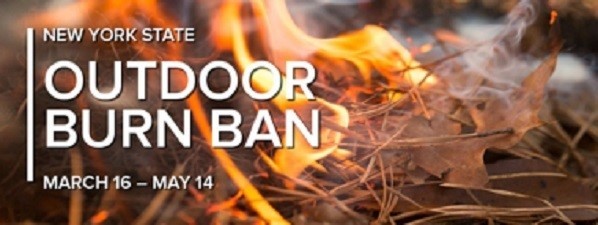
Recreation Highlight: Becoming and Outdoors-Woman Program  If you are interested in growing your legacy in the outdoors, consider DEC's Becoming an Outdoors-Woman (BOW) and Beyond BOW programs. If you are interested in growing your legacy in the outdoors, consider DEC's Becoming an Outdoors-Woman (BOW) and Beyond BOW programs.
These programs teach participants the outdoor skills they need to become comfortable, confident, influential members of the outdoor community. DEC experts provide information, encouragement, and hands-on instruction in outdoor skills, such as fishing, shooting, archery, hunting, trapping, outdoor photography, map and compass, survival, camping, canoeing, and outdoor cooking. BOW workshops are designed primarily for women who have little or no experience with outdoor activities, but are open to anyone ages 18 and over. Past participants have ranged in age from late teens to mid-80s! View the photo gallery from past BOW workshops on DEC's Flickr page.
Play Smart * Play Safe * Play Local 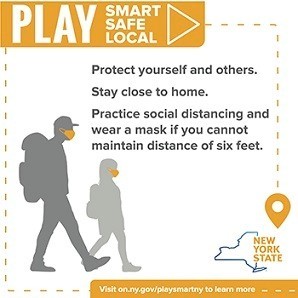 Remember to recreate safely and responsibly when venturing outside. During the COVID-19 public health crisis, take the #PlaySmartPlaySafePlayLocal pledge. Remember to recreate safely and responsibly when venturing outside. During the COVID-19 public health crisis, take the #PlaySmartPlaySafePlayLocal pledge.
PLAY SMART * PLAY SAFE — Practice social distancing, wash your hands, wear a mask to protect yourself and others. If it's crowded, find somewhere else to go. PLAY LOCAL — Stay close to home and #RecreateLocal in your region — amenities like restrooms and restaurants may not be open. PLAY SMART — plan ahead. Make a list of alternate destinations and places to visit. PLAY SAFE — stay home if you're sick or if you're part of a vulnerable population.
Nature Notes Did you Know... The distance migratory birds can travel varies by species. Hummingbirds, the smallest migrant, can travel non-stop for up to 600 miles! The blackpoll warbler is not much larger than a black-capped chickadee, but is able to fly 2,300 miles nonstop for 3-4 days to reach the higher elevations of the Adirondacks where it nests.
DEC Environmental Education Centers For information about upcoming events at DEC Environmental Education Centers, see the following links: Five Rivers Environmental Education Center Reinstein Woods Nature Preserve & Environmental Education Center Rogers Environmental Education Center Stony Kill Farm Environmental Education Center
Conservationist 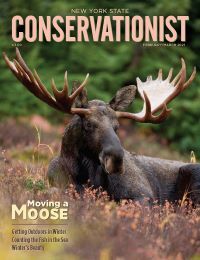 You've probably never thought about how you might corral a moose on the loose, but you'll learn what it entails in the latest issue of Conservationist. And you'll also find out how DEC marine biologists count the fish in the sea, and why it's important. This issue also features a profile of the barred owl, as well as an article on the history and beauty of the Shawangunk Mountains (the "Gunks"), a great place to visit for anyone who enjoys the outdoors. See these articles and more in Conservationist magazine. You've probably never thought about how you might corral a moose on the loose, but you'll learn what it entails in the latest issue of Conservationist. And you'll also find out how DEC marine biologists count the fish in the sea, and why it's important. This issue also features a profile of the barred owl, as well as an article on the history and beauty of the Shawangunk Mountains (the "Gunks"), a great place to visit for anyone who enjoys the outdoors. See these articles and more in Conservationist magazine.
To order a Conservationist subscription online, visit DEC's website and click on the Conservationist icon or call 1-800-678-6399. |


No comments:
Post a Comment