Mises Wire |
- How the Constitutional Convention Vastly Expanded the Powers of the President
- Why Death Certificates Aren't As Reliable as the CDC Would Have You Believe
- "What Did Bob Learn?" Part 1 of 3
- America's Corporate Thought Police
- Investors Won't Buy the "Transitory" Inflation Line
- The Bogus January 6 Commission Poses a Real Threat to Freedom
- Peter Klein on Cronyism, Capitalism, and the Entrepreneurial Pathway
- China's New Pandemic: A Bond Default Crisis
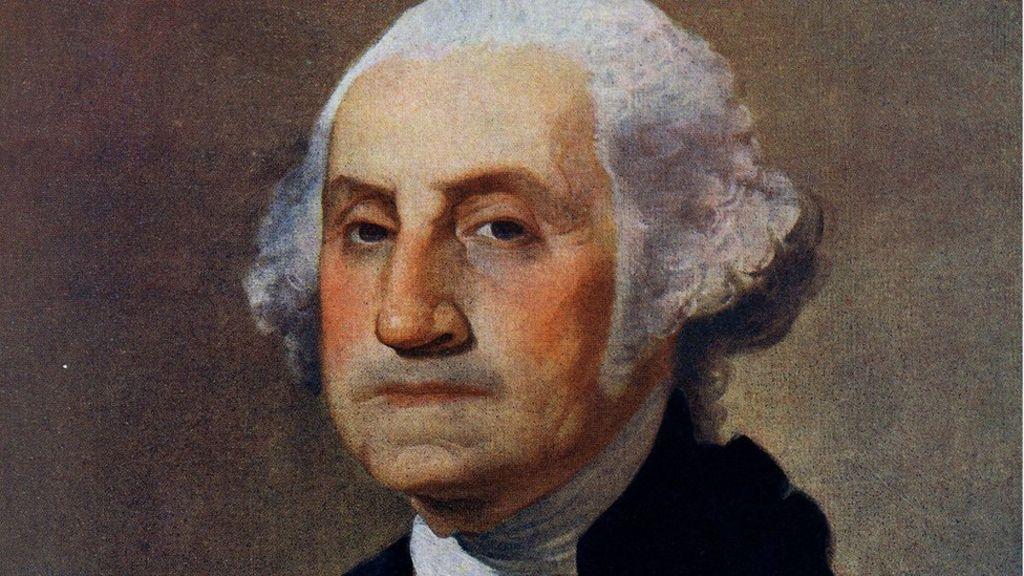
| How the Constitutional Convention Vastly Expanded the Powers of the President Posted: 25 May 2021 02:45 PM PDT All the articles of the draft plan having been considered by the convention, the amended draft was referred on August 31 to a grand Committee of Unfinished Parts. In the committee, the nationalists, not content with their plethora of victories, launched several important offensive strikes and secured crucial victories. It was confirmed that the Senate was allowed to amend money bills originating in the House, and the vital treaty-making and appropriations powers were transferred from the Senate to the president, although the sop was there to the small states that the Senate must approve all appointments, and two-thirds must ratify treaties. The general welfare clause was added to the power to tax, a clause of ambiguous meaning at the time, which much later became a vehicle for unchecked expansion of the federal government's powers. Most significantly, Madison and Morris were able to alter the convention's decision for Congress to choose the president and provide for an independent executive chosen by electors, who in turn were chosen directly by the legislatures of the various states. It was assumed, however, that the Senate, by having the ultimate power to choose among the candidates if none received an electoral majority, would really be exercising the decisive electing power. For it was believed that many candidates would be voted for by the electors. Furthermore, the president's term was reduced from seven to four years, he was made eligible for indefinite reelection, and he was required to have been an American citizen for fourteen years before becoming president. A major advocate of the new plan was Morris, who emphasized the "indispensable necessity" of an independent and powerful executive. Randolph and Rutledge inserted that Congress should elect, and Mason, Wilson, and Dickinson wanted the more popular House rather than the more oligarchical Senate to have the ultimate decision to choose the president. From the Right, Madison tried to bypass Congress almost completely by allowing any candidate with one-third of the electoral vote to become president, but this suggestion was overwhelmingly defeated. The committee report was presented back to the convention on September 4 and the day following. The major struggle was waged over the suddenly new model of selecting the president. Rutledge attacked the president's reeligibility and denounced the Senate's new ultimate decision-making role as creating "a real & dangerous Aristocracy" to go alongside the quasi-monarchic development of the executive office. Wilson and Randolph, however, led the attempt to give the entire Congress, rather than the Senate, the ultimate power of choice by a vote of 3-7-1 (Pennsylvania, Virginia, South Carolina for, and New Hampshire divided). While Wilson, Mason, and others continued to attack the "dangerous" and "inadmissible" aristocracy this placed in the Senate, Hamilton predictably urged the ultra-nationalist Madison idea of bypassing Congress by electing the man with the highest number of electoral votes. Finally, the question was resolved by Roger Sherman, who suggested that the House hold the ultimate power of choice, but one vote per state rather than per congressman. This obviously sensible compromise—taking the power out of the oligarchical Senate but giving the small states equal voting in the House for their particular vote—was voted for overwhelmingly with only Delaware in opposition. The clause was also clarified to provide that a majority of states in the House be required to elect a president. One concession that the committee had made to the anti-nationalists was to transfer the power to impeach the president and other appointed officers from the House and the Supreme Court—appointed by the president—to the independent Senate. The committee had very narrowly limited the grounds for impeachment, treason, and bribery. George Mason made a critical point in checking the executive power: that "maladministration" be added to the grounds for impeachment. Such a clause could have made the president and the rest of the executive truly dependent on the representative body, the Congress; but Madison persuaded Mason and the convention to substitute the still formidably narrow "other high crimes & misdemeanors agst. the State." From the other side, Madison and Pinckney tried to free the executive from the Congress altogether by putting the impeachment power back in the Supreme Court, but even Gouverneur Morris objected to a small corruptible Supreme Court having such power, and this proposal was defeated. The committee's transfer of the critical appointment power from the Senate to the president produced opposition by the moderates; Mason expressly urged that appointments were too dangerous a power to treat to a president, and that it instead should be given to an executive council. On the ultra-right, Wilson proposed that the Senate be stripped even of its power to ratify presidential appointments. The Constitution, indeed, had further strengthened the presidential appointment power, allowing him the sole right to make lengthy appointments during the recesses of the Senate. The convention, at nationalist behest, had earlier changed the power to override the presidential veto to three-fourths of each house, but now, over bitter objections, the convention narrowly returned to the two-thirds clause. As to the treaty-making power, which the committee had given to the president while leaving the ratification power to two-thirds of the Senate, the debate in the convention was brief but illuminating. The nationalists, who wanted to strip Congress of as much treaty power as possible, were here split on North-South lines. The South bitterly remembered the Jay-Gardoqui Treaty, and any further treaties might also be expected to benefit northern merchants and shippers, perhaps at the expense of southern planters or western settlers. The two-thirds clause was then a concession to southern interests. Thus, Wilson argued for a simple majority of both houses in order to ratify, while even Madison, on the other hand, proposed that two-thirds of the Senate be empowered to make treaties on its own without consent of the president, for he argued cogently that a war-time president would have so much power that he might well balk at making peace. He was seconded by Pierce Butler of South Carolina, who defended the proposal as "a necessary security against ambitious & corrupt Presidents." For the ultra-nationalists, Gouverneur Morris spelled it out: a simple majority is necessary for peace treaties, otherwise Congress would not be willing to make war to gain the fisheries and the Mississippi River, "the two great objects of the Union." Here was a clear-cut indication of the neglected role that the power for aggressive war and any adventurous foreign policy played in the drive for the new Constitution. Thus, as in the struggle over the navigation acts, export taxes, the power to admit new states, and the protection of the slave trade, northern nationalists showed themselves to be a bit more motivated for absolute central power than were the southerners, who were continually checked by their economic interests. For their part, Gerry and Sherman predictably urged an even greater majority than two-thirds as needed for the treaty power. The convention quickly concluded the issue by retaining the committee provisions. On September 8, the convention chose a Committee of Style to draw up the final draft of the Constitution. Of the five members in the committee, four: Hamilton, Madison, Gouverneur Morris, and King were ultra-nationalist, and only one—William Samuel Johnson of Connecticut—was a moderate. The committee's stylistic revision, submitted to the convention, was ultimately the sole work of Morris, who, by slyly substituting a semicolon for a comma, tried to erect an unambiguously independent, and therefore very broad, general welfare clause. The Convention, however, returned the vital comma. Morris also added a grandiose preamble, which, however, was partially based on the preamble clause of the Articles of Confederation, and in any case conferred no substantive powers whatever. On September 15, the final revised draft of the Constitution was submitted to the convention and passed unanimously in essentially the same form. A last-minute, unanimously approved change on the seventeenth revised the number of representatives to one for every 30,000 instead of every 40,000 people. This made the House a bit more democratic and closer to the people. Then, after some quibbling about the form of signatures of the Constitution, and the entrusting of the secret records of the convention to George Washington, the Constitutional Convention ended on September 17. The nationalists had succeeded, and the new Constitution was ready to be sprung upon an unsuspecting country.1
 This posting includes an audio/video/photo media file: Download Now |
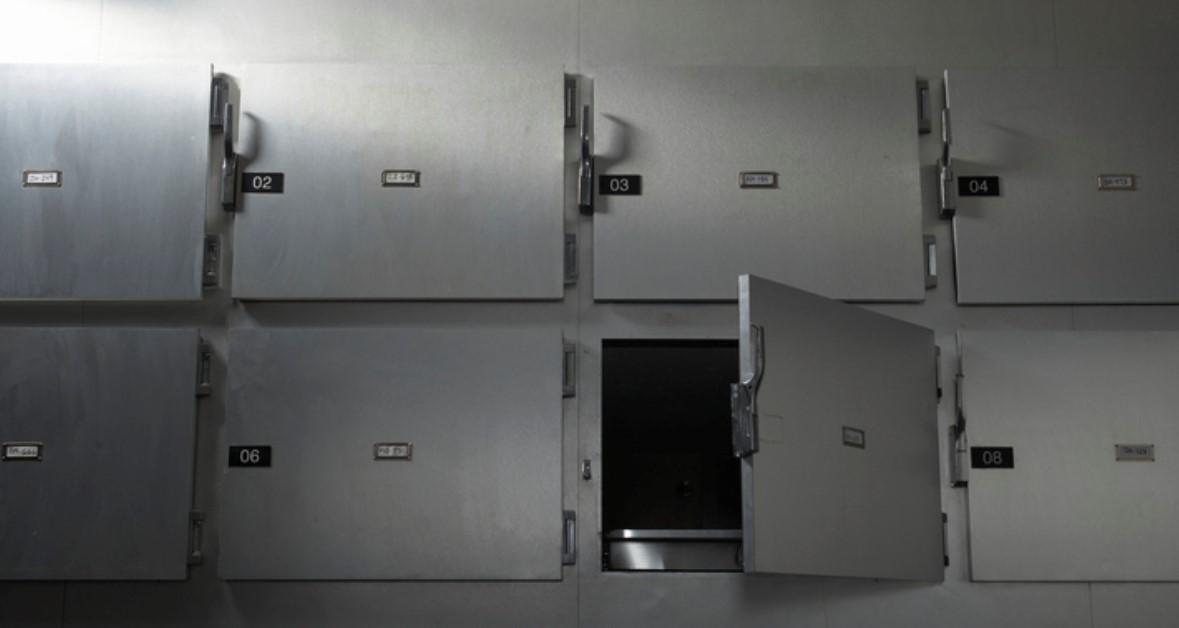
| Why Death Certificates Aren't As Reliable as the CDC Would Have You Believe Posted: 25 May 2021 12:30 PM PDT Historically, the overwhelming majority of Americans have ignored death certificates and the topic of how they are processed, produced, and compiled for purposes of government statistics. During 2020, however, death certificates rose to a level of unprecedented prominence in the United States. This was due to the fact that both state and federal government agencies began using covid death counts as a means to justify a wide variety of radical new government decrees designed to combat disease. Given that governments were leaning so heavily on death counts as an excuse for unprecedented expansions of state power, many observers quite understandably began to question how these deaths were being counted. It turns out that the administration of death certificates is something ripe for some serious skepticism. Even before the panic that ensued over rising reports of covid-19 deaths, the accuracy of death certificates was an ongoing concern. In recent decades, the number of autopsies had declined, meaning that fewer and fewer death certificates are backed up by more thorough investigation. Moreover, studies have shown that nearly half of physicians in some cases "knowingly reported an inaccurate cause of death" on death certificates. Other studies have suggested that a majority of death certificates contained "multiple errors." The implications of this for government policy are significant, to say the least, and it calls into question the accuracy of one of the most basic building blocks underlying today's public health technocracy. Statistics on causes of death rely heavily on aggregate death-certificate data. But if physicians admit to poor training, and to even providing misleading info on causes of death, then attempts to justify government policy with data from death certificates becomes increasingly suspect. Yet, the media and government agencies tend to present this data as if it were unimpeachable and an ever-reliable source of health data. Just as with other types of government data, however, death certificates ought to be viewed with far more skepticism than is presently the case. Problems with Collecting the DataBack in April of 2020, as state and local governments were using official numbers on covid deaths to justify policy changes, public curiosity over death certificates began to rise. The importance of reporting accurate cause-of-death information was highlighted on April 7, 2020 when the Trump administration's infectious disease advisor Deborah Birx discussed CDC recommendations on reporting deaths. Birx noted:
Moreover, federal policy provided a monetary inventive to report more deaths as covid-19 deaths. According to Factcheck.org:
This doesn't mean that doctors are putting "covid-19" as the cause of death in many cases when they know something else to be true—all while laughing an evil laugh. Rather, the effect is likely more subtle. In cases where there is ambiguity as to the cause of death, these policies provide a nudge in the direction of including covid-19 as a cause of death because it unlikely to be questioned, and it ensures health care providers receive higher levels of reimbursement. Many different factors can go into choosing a cause of death. After all, causes of death don't just miraculously appear on paperwork. The cause of death must be reported in the paperwork by a human being who uses his or her own judgment as to what the cause of death is. Although the cause of death often seems obvious in the popular culture—such as a bullet wound in the head in a crime drama—the cause of death is often anything by self-evident in real life. But, federal policy has made it it very easy for medical personnel to just put "covid" on the death certificate and be done with it. Indeed, it's unlikely that medical professionals needed more urging than this. As it turns out, the medical profession has been moving away from insisting on thorough investigations in cause-of-death information. In this 2017 article on geriatric medicine and "death certificate accuracy," the authors report:
As one Washington Post headline put it in 2013: "nearly one-third of all death certificates are wrong." This is partly due to a paucity of training. In a 2005 article for American Family Physician, Dr. Geoffrey Swain, et al, write that "physicians receive inadequate training in this important area, and their performance on this task remains less than ideal. …While the cause of death may be difficult to agree on sometimes, most problems with death certificates stem from failure to complete them correctly." Another reason for death certificate errors and inaccuracies is the fact that relatively few autopsies are performed anymore, and few resources are apparently dedicated to auditing cause-of-death reporting or confirming the reported causes of death. For example,
Some doctors, researchers and bureaucrats claim that autopsies are no longer necessary except in a few cases because medical personnel are supposedly so much better at identifying cause of death today. Many others disagree, however, and "In medicine, autopsies remain a critical weapon" in the fight to expand medical knowledge. For example, a meta-analysis comparing clinical diagnoses against autopsy findings states: "At least a third of death certificates are likely to be incorrect and 50% of autopsies produce findings unsuspected before death." And, an Ohio study of infant death certificates found 56.5% of death certificates were discordant with autopsy findings. Moreover, it appears the field of forensic pathology has become rather unpopular. According to Judy Melink, MD, forensic pathologists are getting older on average, and their total numbers are down. This has been encouraged by federal policy, and "Hospitals are no longer required to have autopsy programs to qualify for Medicare reimbursement." Thorough investigation of the cause of death also tends to uncover more evidence of medical errors. Thus, As Lee Goldman, MD has noted, a lack of autopsy information "represents a huge missed opportunity for understanding how to reduce deaths attributable to medical errors." In some cases, medical personnel might even avoid autopsies for nefarious reasons. As Melink concludes, the decline in requirements for autopsies can mean that if hospital staff "find themselves motivated to bury their mistakes, they are now free to do so." In a field where more than 100,000 deaths per year may be due to medical errors, this is no small issue. In some cases, there have been bureaucratic obstacles to reporting what doctors believed to be the correct conclusion. The Washington Post reports:
The Politicization of Death CertificatesPrior to 2020, the issue of interpreting death certificates usually garnered attention from the general public in cases of criminal justice. As in the George Floyd case, the official cause of death became a matter of legal debate. This might occur in some cases at the macro level as well. Police in Japan, for instance, have long been suspected of declaring suspicious deaths to be suicides, and then discouraging autopsies which might uncover homicide. As The Los Angeles Times reported in 2007:
In any case, a situation in which there is motivation to conduct a lackluster investigation into the cause of death can be problematic, and potential problems don't end with the stage at which death certificates are filled out. Further problems can arise when "public health" officials make decisions about how this data will be compiled, labeled, and used. As all government data, such as employment data, crime data, or data on homeownership, this data can be used in a variety of ways to justify and craft additional government interventions in the private sector. It's important to keep in mind that death certificate data, like any other bureaucratic metric, is subject to human errors and human choices, and ought always be regarded as just one fallible factor in political decision-making.
 This posting includes an audio/video/photo media file: Download Now |
| "What Did Bob Learn?" Part 1 of 3 Posted: 25 May 2021 10:00 AM PDT In response to a listener request, Bob starts a 3-part series explaining areas where his views have changed. In this episode, he covers trade deficits, justice vs. mercy, the 2000 election, WMDs in Iraq, and Arrow's Theorem. Mentioned in the Episode and Other Links of Interest:
For more information, see BobMurphyShow.com. The Bob Murphy Show is also available on Apple Podcasts, Google Podcasts, Stitcher, Spotify, and via RSS.
 |
| America's Corporate Thought Police Posted: 25 May 2021 09:30 AM PDT It is no surprise that the corporate media tends to showcase and honor experts whose views tend to reflect the views of media pundits and editors themselves. The idea that the public might prefer other experts leaves these pundits in dismay. Original Article: "America's Corporate Thought Police" This Audio Mises Wire is generously sponsored by Christopher Condon. Narrated by Michael Stack.
 |
| Investors Won't Buy the "Transitory" Inflation Line Posted: 25 May 2021 09:30 AM PDT Governments always justify printing more money with the excuse that there is no inflation. When inflation rises, they say it is transitory. And when inflation soars, governments blame businesses and shop owners, presenting themselves as the solution with "price controls." Original Article: "Investors Won't Buy the "Transitory" Inflation Line" This Audio Mises Wire is generously sponsored by Christopher Condon. Narrated by Michael Stack.
 |
| The Bogus January 6 Commission Poses a Real Threat to Freedom Posted: 25 May 2021 09:00 AM PDT "Truth will out" is the most popular fairy tale in Washington. Members of Congress are clashing over whether politicians will appoint an "independent" commission to reveal the facts behind the January 6 Capitol ruckus. Proponents are portraying the issue as a simple choice between "truth or Trump." Recent history provides no reason to expect a politically controlled process to expose facts that undermine powerful politicians. Congress has long been worse than useless as a fact-finding agency. "Oversight" is a euphemism for stupefying congressional procedures designed to avoid discovering information that might embarrass their allies. A senior House Republican admitted in 2004: "Our party controls the levers of government. We're not about to go out and look beneath a bunch of rocks to cause heartburn." Most members of Congress are more likely to grovel before federal agencies than to challenge their power. "How are you so great and how can we help you?" is the usual response when the FBI director testifies, as Guardian columnist Trevor Timm noted in 2016. There is no reason to presume that a commission investigating January 6 would not be hogtied official stonewalling. Former Senate Intelligence Committee staff director Andy Johnson observed in 2014: "The fog of secrecy made a mockery of oversight" of the CIA torture scandal. The Obama administration did not object even when the CIA illegally spied on a congressional committee to thwart the torture investigation. Both Bush and Obama administration officials repeatedly lied during congressional testimony on war on terror policies but faced no consequences. But everything would be different in this investigation, right? House Speaker Nancy Pelosi and her team want a congressionally appointed commission in lieu of disclosing what actually happened on January 6. Cameras posted in and around the Capitol recorded fourteen hundred hours of film on January 6, but very little of the evidence has been publicly disclosed. Fourteen news organizations have requested that the Justice Department publicly release key videos on the federal court's electronic dockets but no such luck. Capitol Police chief lawyer Thomas DiBiase warned that "providing unfettered access to hours of extremely sensitive information to defendants who already have shown a desire to interfere with the democratic process will … [cause that information to be] passed on to those who might wish to attack the Capitol again." But it is also "interfering with the democratic process" to withhold evidence of actions which have been endlessly demonized by the president, top congressional leaders, and their media allies. Disclosing the video could settle the question of whether most protestors behaved like violent attackers or gaping tourists. Julie Kelly, writing for American Greatness, recently posted a forty-five-second video clip of protestors after they entered the Capitol that day. Capitol Police officer Keith Robishaw tells a group of protestors: "We're not against … you need to show us … no attacking, no assault, remain calm." The citizens shown in that clip don't appear to have been hell-bent on overthrowing the government that day. The media is touting the fact that Tom Kean and Lee Hamilton, the cochairs of the 9/11 Commission, have endorsed a commission to investigate January 6. But invoking Kean and Hamilton is like relying on the Three Stooges as references for a job application at a pie factory. Kean and Hamilton issued a joint statement boasting about the 9/11 Commission: "We put country above party to examine, without bias, the events before, during, and after the attacks…. The January 6th attack on the U.S. Capitol was one of the darkest days in our history. Americans deserve an objective and accurate account of what happened. As we did in the wake of September 11, it is time to set aside partisan politics and come together as Americans in common pursuit of truth and justice." The 9/11 Commission "pursued truth and justice" by permitting the White House to edit the final version of their report before it was publicly released. Despite its canonization inside the Beltway, that report would not be admissible in a court of law, because it relied on torture for many of its key assertions. The New York Times's Philip Shenon, the author of The Commission: The Uncensored History of the 9/11 Investigation, noted that "more than a quarter of the report's footnotes—441 of some 1,700—referred to detainees who were subjected to the CIA's 'enhanced' interrogation program." Shenon reported that commission members "forwarded questions to the CIA, whose interrogators posed them on the panel's behalf. The commission's report gave no hint that harsh interrogation methods [including waterboarding] were used in gathering information." The commission's report was released months after shocking photos from Abu Ghraib and key Justice Department and Pentagon memos leaked out, exposing the Bush administration's torture regime. Yet, as Shenon noted, "The commission demanded that the CIA carry out new rounds of interrogations in 2004 to get answers to its questions." The 9/11 Commission became profoundly complicit in the torture at the same time it pretended to objectively judge the Bush record. The commission report was released in July 2004 at the same time that Bush was exploiting the 9/11 attacks and the Iraq War for his reelection campaign. The commission ignored evidence compiled by a joint House-Senate investigation revealing that Saudi government agents bankrolled multiple Saudi hijackers in the US prior to the attacks (fifteen of the nineteen hijackers were Saudis). But the Bush administration suppressed those twenty-eight pages of that congressional report and they were not released until 2016. Bush embraced Saudi leaders while insisting that Iraqi leader Saddam Hussein was somehow to blame for 9/11. If the 9/11 Commission had quoted the 2002 FBI memo stating that there was "incontrovertible evidence that there is support for these [9/11 hijacker] terrorists within the Saudi Government," Bush might have been seriously damaged, but 9/11 commissioners chose to serve the White House rather than truth. Kean and Hamilton remain venerated by the media, because their kowtowing buttressed public trust in the political system. Would an investigation of January 6 be more honest than the investigation of September 11? President Biden and Democratic congressional leaders are vested in the "terrorist attack/Pearl Harbor" narrative that they established within hours of the fracas. Democrats still refer to the protestors murdering a Capitol Police officer long after the belated revelation that he died of natural causes. The New York Times noted that that advocates of a January 6 commission insist it is "an ethical and practical necessity to fully understand the most violent attack on Congress in two centuries." Tell that to the Puerto Rican nationalists who shot up Congress in 1954 or to Congressman Steve Scalise and two other Capitol employees who were shot by a Democratic Party zealot in 2017. If such "facts" are the baseline for accuracy, then citizens can start scoffing long before a commission issues a final report. The biggest illusion behind the push for a January 6 commission is that there is a political constituency in Washington for truth. But that hasn't been the case for decades. As French essayist Paul Valery warned long ago, "At every step, politics and freedom of mind exclude each other." In the same way that it took almost fifteen years for some key facts about the 9/11 attacks to be revealed, it may be months or years until key damning revelations about the Capitol clash are extracted from federal agencies or private individuals and groups. Creating a pseudoindependent commission is more likely to codify a deceptive but politically profitable storyline than to expose facts that undercut powerful Washingtonians or government agencies. A façade of political "truth" can be more dangerous than no disclosure at all. Biden and congressional Democrats are seeking to turbocharge their push for a new domestic terrorism law to permit widespread federal crackdowns on their opponents. Any rigged commission would likely pour gasoline on a fire that could singe far more American rights and liberties.  This posting includes an audio/video/photo media file: Download Now |
| Peter Klein on Cronyism, Capitalism, and the Entrepreneurial Pathway Posted: 25 May 2021 08:15 AM PDT Cronyism is not CapitalismWe often hear that capitalism is under fire: in contemporary politics, in journalism, in popular discourse, and even in some business schools and among some management scholars and their students. But the criticism, upon examination, is not about capitalism but cronyism. The two are entirely separate systems, and the corruption and corporate political activities of cronyism are not exhibited in capitalism, and will never appear if we can adhere to capitalism's purest form, entrepreneurship.
Defining CapitalismCapitalism is a system in which factors of production are privately owned, resources are allocated through markets, i.e., voluntary co-operation among individuals, and individuals and groups are free to engage in economic activity without centralized control or interference from the state. Capitalism includes the monetary system that enables entrepreneurs to engage in economic calculation, and the institutions that support property rights, and the rule of law. There are high levels of individual freedom of people to form groups and act without state coercion or compulsion. Defining CronyismCronyism is a system in which the state takes charge of, or has a high degree of influence in, allocating resources to firms, and some firms derive advantages over other firms based on their relationship with and influence with government officials, rather than their ability to satisfy customer wants via superior capabilities. The supporting ideology favors high levels of state interference in the allocation of economic resources, with institutions and practices favoring the manipulation of public policy as a strategy for increasing profits. The benefits of capitalism and the vices of cronyismThe advocacy for capitalism in the paper we discuss with Professor Klein in this episode of the Economics For Business podcast ("Capitalism, Cronyism, And Management Scholarship: A Call For Clarity": Mises.org/E4B_119_Paper) is not pure theory, but rather the greater benefits for everyone in society that result from capitalism compared to alternative systems. Current critics vent their dissatisfaction with some aspects of the status quo, such as issues related to the natural environment or reactions to measurements of income inequality. It is not only an illogical leap to believe that taking decision authority away from private individuals and firms and giving it to government will result in greater benefits for society. It is also moving the system towards cronyism, so that unscrupulous people, whether they be executives, investors, labor unions, politicians or government bureaucrats can benefit themselves at society's expense. The nuances of cronyism and the maleficent influence of sizeBribery, blackmail, extortion and other forms of criminality are widely deemed inappropriate. The problem of cronyism lies in practices that are legal and encouraged by the intelligentsia and business school academics as sources of commercial advantage via the manipulation of the political system. These include activities such as lobbying, political contributions, or awarding board seats to retired government officials. Peter Klein noted that there was a time when Microsoft, as an up-and-coming high growth tech company, did not even have a Washington DC office. Politicians couldn't help them and didn't understand their business. But the politicians reminded Microsoft who was really in charge, via an expensive, threatening and long drawn out anti-trust suit. Now Microsoft and the rest of the mature high tech industry have extensive Washington DC offices and very large lobbying budgets. Levels of cronyism parallel the scale of the modern corporation. The costs of cronyismThe costs of cronyism are both direct and indirect. The direct costs are misallocation of resources and the production of goods and services that the free market would not want but politicians favor. The skills of executives and managers are applied to the influencing of government officials rather than to seeking the rewards of the marketplace via consumer acceptance and consumer value. Firms develop in much different ways than they would under capitalism. Some of the misallocation of resources are most highly visible in the build-up of bureaucracy in corporations. Bureaucrats are not strategic decision makers and not producers of goods and services. They are devoted to compliance, government relations, and working with regulators and lawyers. Their salaries and office space and equipment are all misallocations of resources. An indirect cost of cronyism is the undermining of institutions. A well-functioning market has institutions for integrity of contracts, resolving disputes, and protecting private property. The institutions are neutral: they enforce general rules that apply to all. The effect of cronyism — its whole point, in effect — is to override general rules in favor of privileging those in power over those who lack power. Confidence in institutions consequently erodes. Business schools and management scholars are part of the problemTrendy developments in management practice such as stakeholder capitalism, ESG (Environmental, Social, and Governance considerations for investment) and DEI (Diversity, Equity, and Inclusion requirements) are forms of cronyism, diverting business activities away from meeting the wants of customers in voluntary free-market exchanges to aligning with government directives, some current and some anticipated. Business schools have been party to encouraging this non-market behavior, and to developing the associated indexes and scales and processes, all of which are murky and ambiguous, as well as very costly to implement. Executives welcome the ambiguity that makes accountability more difficult. Business schools and universities are, in fact, vulnerable to the practices and measures they have encouraged, and their staffs are now bloated with middle managers, administrators and compliance departments. It's all highly costly and a waste of resources. Corporations exhibit similarly destructive economic behavior with their "woke" advertising campaigns and corporate training programs. Gramsci's long march through the institutions seems to have reached the corporate HR departments who are the source of much of this uneconomic, anti-capitalist behavior. Entrepreneurship is the pathway to lead us out of the cronyist morassThe budding entrepreneurial movement is the way out of cronyism and corporatism. Entrepreneurial businesses focused on consumers and customers, on innovation and betterment, and on producing ever-improving goods and services, have no time for cronyism. They are not looking for political protection. Newer firms, newer business models, and those harnessing newer technologies are less invested in lobbying and corporate political activity. They don't have the time or the resources for it, and slow and sclerotically reactive government can only get in the way. Entrepreneurial innovation can trigger the separation of business from government and reverse the processes of cronyism, encouraging an open, dynamic, vibrant economy in which firms of all sizes engage in the full-time pursuit of innovation and new economic value, and devote no resources to lobbying or government relations. Additional Resources"Capitalism, Cronyism, And Management Scholarship: A Call For Clarity" (forthcoming in Academy Of Management Perspectives) by Peter Klein, Michael Holmes, Nicolai Foss, Siri Terjesen, and Justin Pepe (PDF): Mises.org/E4B_119_Paper  |
| China's New Pandemic: A Bond Default Crisis Posted: 25 May 2021 04:00 AM PDT China was one of the first major countries to recover from the coronavirus-induced economic collapse—but at what cost? The country has taken on enormous levels of public and private debt, eased monetary policy, and issued billions of dollars in new bonds. Yet, as the world's second-largest economy attempts to return to its pre-crisis glory days, Beijing could potentially deal with a new pandemic that could have a sweeping effect on financial markets at home and abroad: A bond default crisis. Once again, when China sneezes, the world catches a cold. The Great Default?The Chinese bond market is at a pressure point with liquidity levels tightening. Although a massive selloff has yet to transpire in the world's second-largest bond market, all the indicators point to its inevitability. Authorities are desperate to implement more financial discipline and transparency in the debt arena, but it might be a case of too little, too late. Chinese corporations are defaulting on local bonds at the fastest rate on record. Year-to-date, businesses, from airlines to property developers, have failed to make payments on approximately $16 billion worth of inland bonds. This is the fourth consecutive year that defaults have surpassed the $15 billion mark, but they have typically crossed this threshold in September, not in April. On the one hand, these defaults are part of a robust bond market because it spotlights efficiency and transparency. On the other, the sources of these failures are generating a deep concern: The real estate industry represented about one-quarter of all defaults. Moreover, defaults on offshore bonds are beginning to increase, totaling close to $4 billion in the first quarter. Are foreign investors, who are bailing out China, worried about this trend? So far, overseas investors have been attracted to yield premiums and the strengthening yuan. At the end of April, foreign holdings of government bonds topped $326 billion, following a steep decline in March. Foreigners might inject the bond market with some liquidity, but that reprieve may be short-lived. The Li Keqiang Index, an alternative economic measurement that looks at electricity consumption, railway cargo volume, and bank lending, is at a decade high. China's bond market is reportedly lagging behind these indicators, resulting in higher rates in the near term. Producer prices are soaring, and they have pointed to a direct connection to government bonds yields, even more than consumer prices. Moreover, short-dated interest rate markets are noticing the trends, moving incrementally higher and suggesting that tighter liquidity conditions are on the horizon. Policymakers to the Rescue?Late last year, Yongcheng Coal & Electricity Holding Group, a state-owned mine operator in the Henan province, failed to issue a principal or interest payment on AAA-rated commercial paper worth nearly $152 million. This triggered panic selling and crashing bond prices. It was a big deal for two reasons: the size of the SOE and that it was yet another high-profile company with direct ties to the central government. In 2020, there were more than 100 corporate bond defaults. Now that the rate of corporate bond defaults is rising again, will policymakers intervene? For now, the answer may be no because officials might have other headaches to worry about, including elevated asset prices and increasing debt levels. Plus, according to Jean-Charles Sambor, head of emerging-market debt at BNP Paribas Asset Management, officials are attempting to alter the mindset of investors, telling Bloomberg:
But what happens when defaults start hitting municipalities? The Zunyi Bozhu District, a county in southwestern China's Guizhou province, did not repay a bond with a principal of about $40 million. This was the first municipal bond default in China this year, and experts are warning that a few more could be coming in the $1.65 municipal bond market over the next 12 to 18 months. Ultimately, the bond market is in disarray, and the only things that could keep it afloat are outsiders and bailouts. Post-COVID China Needs RepairsAcross the country, gaping holes are threatening to reverse the post-coronavirus recovery. Be it credit risks or hidden debt troubles, China's titanic of an economy will need to steer the nation in a new direction if it wishes to avoid crashing into multiple icebergs. This will be challenging for officials since they are still trying to cover up the distortions, bailouts, zombies, and crises from before the COVID-19 public health crisis. And President Xi Jinping will need more than a de facto communist five-year plan to accomplish this feat. Originally published by LibertyNation.  This posting includes an audio/video/photo media file: Download Now |
| You are subscribed to email updates from Mises Wire. To stop receiving these emails, you may unsubscribe now. | Email delivery powered by Google |
| Google, 1600 Amphitheatre Parkway, Mountain View, CA 94043, United States | |




No comments:
Post a Comment