| Welcome to The Daily 202 newsletter! Tell your friends to sign up here. Remember the old days of presidents only getting impeached once? On this day in 1868, Andrew Johnson barely escaped removal by the Senate. Senate Republicans openly worry a special investigation into the deadly Jan. 6 Capitol riot will set up the 2022 midterm elections as a choice between Donald Trump and President Biden when they'd prefer a referendum on the latter. The GOP would prefer to hit the trail lampooning Biden's big-spending agenda than facing questions about how and why their voters violently interfered with the 2020 election certification. That's why they're likely to vote "no" this week — perhaps Thursday — on creating a special commission. Democrats "would like to continue to debate things that occurred in the past. They'd like to continue to litigate the former president into the future," Senate Minority Leader Mitch McConnell (R-Ky.) told reporters Tuesday. "We think the American people, going forward, and in the fall of '22, ought to focus on what this administration is doing to the country and what the clear choice is that we have made, to oppose most of these initiatives," he added. 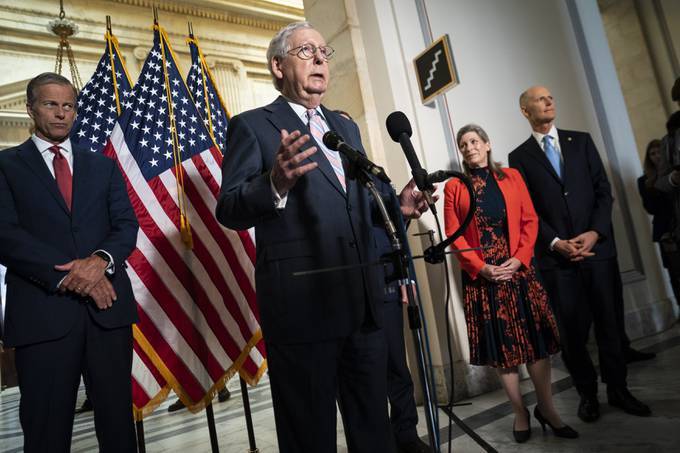 Senate Minority Leader Mitch McConnell (R-Ky.) told reporters on Tuesday that Democrats "would like to continue to debate things that occurred in the past." (Jabin Botsford/The Washington Post) | The No. 2 Senate Republican, John Thune (S.D.) told CNN something similar last week. "Anything that gets us rehashing the 2020 elections I think is a day lost on being able to draw a contrast between us" and the Democrats, he said. "I want our midterm message to be on the kinds of things that the American people are dealing with: That's jobs and wages and the economy and national security, safe streets and strong borders — not relitigating the 2020 elections," Thune said. Earlier GOP complaints about the commission had focused on process — how staff would be hired, how subpoenas would be issued, when a final report would be due, etc. My colleague Salvador Rizzo addressed them here. The latest argument goes well beyond that, to explicitly tie a potential focus on Trump's actions (and inactions) on Jan. 6 to the GOP's fate in November of 2022, when they want voters focused on Biden's agenda and their opposition to it. This is, in part, why an 11th-hour push by Democratic Sens. Joe Manchin III (W.Va.) and Kyrsten Sinema (Ariz.) to win over any vacillating Republicans by proposing changes to the commission's structure and procedures feels like the longest of long shots. "We implore our Senate Republican colleagues to work with us to find a path forward on a commission to examine the events of January 6th," Manchin and Sinema begged in a joint statement yesterday. A couple of Senate Republicans have already said they'll support the bipartisan legislation — one of the bill's two authors is a senior Republican, and 35 GOP lawmakers joined Democrats when the proposal passed the House 252-175. Manchin and Sinema might get a couple more. But reaching the pivotal number — Democrats need 10 Republicans to reach the 60 needed to break through a filibuster — seems well out of range. (A symbolic victory might be enough for them. Yesterday, Manchin ruled out doing away with the filibuster if Republicans use it to kill the commission. "I can't take the fallout," he told Forbes. So creating the commission is not more important to him than preserving the parliamentary tactic.) At the Associated Press, Mary Clare Jalonick got us caught up on the centrists' efforts yesterday afternoon: "The talks are, for now, focused on two issues that Republican senators have cited for their opposition to the House-passed legislation to create the commission — ensuring that the panel's staff is evenly split between the parties and making sure the commission's work does not spill over into the midterm election year. … … But many Republicans have still said they don't trust it will be a bipartisan effort, threatening the chances of a truly independent look at the violent attack on the Capitol by a mob of former President Donald Trump's supporters." On Tuesday, McConnell suggested all of the commission's nonpartisan goals were already being served, leaving only political aims. Law enforcement will arrest and try the rioters, he said. Congressional committees will handle "how to prevent this from happening again" from a Capitol security perspective, he said. The preferred Republican approach "doesn't allow anyone to get away with anything," McConnell said. So a commission "is a purely political exercise that adds nothing to the sum total of information." "Doesn't allow anyone to get away with anything"? You could hear Democratic heads (metaphorically) exploding. It's not that Democrats don't know the commission could help them in 2022 and beyond. But, they say, law enforcement and congressional committees aren't set up to get some of the answers to which Americans are entitled. For example: A special commission could look into what Trump was doing during the harrowing hours in which hundreds of his supporters stormed and ransacked the Capitol, interrupting the electoral college count confirming Biden's victory, after the president told them to "fight like hell." But that could potentially implicate Republican lawmakers themselves. One item of interest is a phone call between Trump and House GOP Leader Kevin McCarthy of California. Rep. Jaime Herrera Beutler (R-Wash.) says McCarthy told her about the conversation, saying that when he told Trump his supporters were to blame for the violence, the president replied: "Well, Kevin, I guess these people are more upset about the election than you are." Which, in a way, takes us back to the claim a commission would "relitigate" the 2020 elections. Trump does it all the time, including in four separate statements yesterday. And Republicans coast-to-coast repeat unfounded claims that the 2020 election was decided by fraud as they push a once-in-a-lifetime legislative project: A systematic effort in dozens of states to pass new laws to curtail or end voting practices they blame for Trump's defeat. | | | What's happening now Police swarmed an "active shooter" incident in San Jose, Calif. "Authorities were responding Wednesday morning to reports of an active shooter at a mass transportation rail yard," the Los Angeles Times's Hayley Smith reports. "Video showed police swarming the area. Witnesses told local television stations they heard gunshots. ... Authorities also said the shooter 'was down' but have not released information about other casualties... Aerial footage captured by KGO-TV showed dozens of police cars and ambulances on the scene. ... 'I do believe there have been some people who have been injured,' said [VTA spokeswoman Brandi Childress], noting that she believes the only people at the facility are VTA employees." 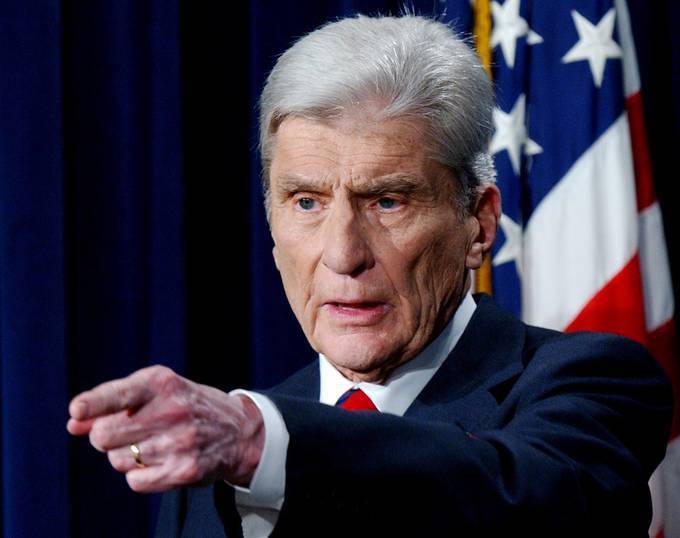 John W. Warner, a five-term Republican senator from Virginia, speaks during a news conference in 2007. (Dennis Cook/AP) | John W. Warner, the five-term senator from Virginia and a force on military affairs, died at 94. Warner, who helped plan the country's 1976 Bicentennial celebrations, played a central role in military affairs and gained respect on both sides of the political aisle for his diligence, consensus-building and independence, died May 24 at his home in Alexandria, Va.," Donald P. Baker writes. "His former chief of staff Susan Magill announced the death and said the cause was a heart ailment. Because of his willingness to buck his increasingly conservative party, Mr. Warner became the Republican whom many Virginia independents and Democrats respected and voted for. By the time he retired in 2009, he held the second-longest tenure of any Virginia senator. "As a former secretary of the Navy and, in later years, one of only a handful of World War II veterans in the U.S. Senate, Mr. Warner held considerable authority to military matters. His consensus-building on a number of critical issues led him to be known as one of the Senate's more influential members. He also brought a touch of glamour to the political world through his six-year marriage to film star Elizabeth Taylor. As chairman of the Armed Services Committee, Mr. Warner provided critical support for President George W. Bush's handling of the war in Iraq. ... Mr. Warner frequently went against his party in domestic affairs. He supported legal abortion, although he voted in favor of numerous limitations on the procedure; supported gun control; voted against confirmation of President Ronald Reagan's U.S. Supreme Court nominee Robert Bork; and urged lifting President George W. Bush's restrictions on stem cell research." To start your day with a full political briefing, sign up for our Power Up newsletter. | | | Lunchtime reads from The Post - "Resistance to vaccine mandates is building. A powerful network is helping," by Isaac Stanley-Becker: "The Americans lodging complaints against coronavirus vaccine mandates are a diverse lot — a sheriff's deputy in North Carolina, nursing home employees in Wisconsin and students at the largest university in New Jersey. But their resistance is woven together by a common thread: the involvement of a law firm closely tied to the anti-vaccine movement. Attorneys from Siri & Glimstad — a New York firm that has done millions of dollars of legal work for one of the nation's foremost anti-vaccination groups — are co-counsel in a case against the Durham County Sheriff's Office. They've sent warning letters to officials in Rock County, Wis., as well as to the president of Rutgers University and other schools.
- "Teen speaks out a year after filming George Floyd's death, saying her video 'put his murderer away,' " by Hannah Knowles: "Darnella Frazier's cellphone footage of George Floyd's arrest last May helped rewrite the story of his death, then arguably became the 'star witness' in a police officer's conviction for murder. Yet Frazier herself has largely stayed out of the public eye… On Tuesday, the anniversary of Floyd's death, Frazier spoke out. 'Behind this smile, behind these awards, behind the publicity, I'm a girl trying to heal from something I am reminded of every day,' the now 18-year-old wrote in a Facebook post. 'Everyone talks about the girl who recorded George Floyd's death, but to actually be her is a different story.'"
- "Russia is still the biggest player in disinformation, Facebook says," by Elizabeth Dwoskin: "A Facebook report released Wednesday says that Russia is still the largest producer of disinformation, a notable finding just five years after Russian operatives launched a far-reaching campaign to infiltrate social media during the 2016 presidential election campaign."
| | | … and beyond - "Wall Street must stop enabling communist China," by Sen. Marco Rubio (R-Fla.) in the American Prospect: "Chinese companies that produce surveillance technology and weapons of war that could one day kill Americans finance their investments with Wall Street capital. Historically, both Republicans and Democrats have been weak when it comes to identifying and correcting these kinds of problems. ... But just as many Republicans have grown more skeptical of big business's cozy relationship with Beijing, large swaths of America's financial and corporate sectors are making a play for a new base of political support — this time complete with deep-blue, progressive social stances on hot-button issues in our politics. It's the height of hypocrisy. U.S. corporations with lucrative business ties to the Chinese Communist Party will boycott states here over anti-abortion laws, while Beijing systematically sterilizes Uyghur women."
- "This under-the-radar supply chain routes food from prisons to hospitals, food banks, and even schools," by The Counter's H. Claire Brown: "Food companies partner with correctional industries to hire incarcerated people through the federal Prison Industry Enhancement Certification Program (PIECP) and similar state-level initiatives. On paper, these initiatives pay wages at and above the federal minimum; in reality, incarcerated workers might see as little as 20 percent of their checks."
| | | At the table Today, we're having lunch with our own Jeff Stein, The Post's White House economics reporter. Our conversation about President Biden's approach to taxes has been lightly edited for clarity and length. Knox: Let's talk about this tax proposal from the Biden administration to raise money by going after tax cheats and cryptocurrency. What do we know about the state of tax evasion in America in 2021? How much could they plausibly raise? Stein: When the Biden administration issued its report last week about its plan to ramp up enforcement, it included what I thought was an amazing statistic, which suggested that, just 10 years or so ago, taxpayers who earned more than $10,000,000 a year faced audit rates of 19 percent. But now that number had dropped, as of 2018, to 7 percent. Similarly, corporations with more than $20 billion in assets used to have a 98 percent audit rate, and now that number has fallen to 50 percent. So, dramatic decline in what the IRS is able to do to audit big firms and rich taxpayers. Now, there's a massive dispute among tax experts, IRS officials, others in this world, about exactly how much the Biden administration can raise. It's a very important disagreement right now, because the Biden administration is relying on beefing up IRS enforcement to pay for its large spending proposals. This is actually one of the few that Democrats and Republicans seem to agree on, because there's a lot of reticence about raising taxes. But it's worth saying that the Biden administration thinks and says and is pinning its estimates on Treasury officials that say $700 billion over 10 years can be raised through this higher enforcement mechanism. Others think the number is a lot lower. Knox: Let me ask you about the state of the IRS in 2021. The last time I looked at the state of the IRS they weren't in good shape. Stein: The IRS budget has been dramatically slashed over the past 10 years. Thousands of personnel have left. I think at one point the IRS budget had fallen by about 20 percent, basically entirely due to changes pushed by congressional Republicans under the Obama administration. There was some effort to increase that by modest amounts under Trump's implementation of the 2017 tax law. But, in general, the trend is very, very clear. The IRS is in a very anemic state and that's fueling these hopes that there could be a lot of money on the table that's going unconnected. Knox: I remember from ProPublica's reporting that one of the reasons that the audit rate on the wealthiest Americans has gone down is those are enormously complicated, and therefore labor intensive, and therefore the drop in IRS personnel had an impact. Stein: That's correct. When you look at taxation of the very rich, it's not just a question of manpower, it's a question of technology. A lot tax experts I speak to say we don't really have great technical tools for tracking where the wealthy are stashing their money, be it abroad or in domestic tax shelters. And it's very, very hard for the IRS to get a good handle on where that money is. A lot of the IRS systems — not an exaggeration — literally date back to the 1960s. Congress has not provided the funding for an up-to-date, contemporary, tech system for the IRS to use. And as a result, these manpower concerns, combined with this antiquated tech, has allowed tax cheats to get away scot free. There was a report by Gabriel Zucman, an economist, who found that the wealthiest 400 Americans now own about 20 percent of American gross domestic product — roughly a fifth of the economy. And there's a ton of money there that's not being collected even without raising tax rates. Knox: How about the politics of the Biden proposals? Stein: Right now, the Biden administration is proposing over $3 trillion in tax increases to fund their ideas. Biden has been very adamant that he wants his plans to be paid for. The tax hikes are really in trouble even among his own party. We're seeing just yesterday Sen. Jon Tester (D-Mont.) oppose a key plank in the tax plan to increase taxes on heirs. We've seen congressional Democrats oppose tax increases to the corporate tax rate. There are a lot of questions about the international tax provisions that the Biden administration wants to impose. And then Democrats are pushing for tax cuts on higher-income Americans, such as the state and local tax deductions, that the White House has opposed. So those are really quite troubling headwinds for the administration if it wants to pay for these proposals, they're going to have to find a way to get congressional Democrats to agree with them. Right now, it's not looking very likely. | | | The Biden agenda The White House is continuing its push for an infrastructure package. - Vice President Harris will meet with a group of lawmakers from both parties to discuss investments in broadband, John Wagner reports, as negotiations stall with Republicans over legislation to win bipartisan support in the Senate.
It looks like Biden plans on nominating Los Angeles Mayor Eric Garcetti (D) as ambassador to India. - "Biden is planning to name his first slate of political ambassadors as soon as next week, rewarding political allies like Garcetti, as well as big-dollar donors, many of whom covet postings in elegant European capitals," Axios reports.
- "Garcetti, who served as the co-chair of Biden's presidential campaign, was initially considered for the Cabinet. However, his chances diminished after a sexual harassment lawsuit against one of his former aides, Rick Jacobs, received national attention."
The Pentagon is accelerating the withdrawal of U.S. troops from Afghanistan. - "United States troops and their NATO allies intend to be out of Afghanistan by early to mid-July, well ahead of President Biden's Sept. 11 withdrawal deadline, military officials said, in what has turned into an accelerated ending to America's longest war," the New York Times's Thomas Gibbons-Neff, Eric Schmitt and Helene Cooper report. "But the race to the exits, which has picked up steam as planeloads of equipment and troops are flown out of the country, leaves the United States grappling with huge unresolved issues that officials had thought they would have more time to figure out."
- "The Pentagon still has not determined how it will combat terrorist threats like Al Qaeda from afar after American troops leave. Nor have top Defense Department officials secured agreement from allies about repositioning American troops in other nearby countries. And administration officials are still grappling with the thorny question of whether American warplanes — most likely armed Reaper drones — will provide air support to Afghan forces to help prevent the country's cities from falling to the Taliban."
Secretary of State Antony Blinken is trying to bolster the cease-fire between Israel and Hamas. - Blinken pledged tens of millions of dollars in additional development assistance to the Palestinians yesterday as part of the effort, John Hudson reports.
- "Blinken also said the United States would reopen its consulate in Jerusalem, reversing a Trump administration decision that closed the office and downgraded U.S. ties with the Palestinians."
| | | Quote of the day "Thanks to vaccines, tens of millions of Americans are able to get back to something closer to normal: visiting friends and family," Centers for Disease Control and Prevention Director Rochelle Walensky said yesterday as she encouraged vaccinated Americans to enjoy Memorial Day weekend. "These are the events we missed over the last year, and we are now safe … when we are vaccinated." | | | More on the future of the GOP Senate Majority Leader Charles E. Schumer (D-N.Y.) plans on holding a vote before Memorial Day recess on the Jan. 6 commission. - "Senate Majority Whip Dick Durbin said Schumer has indicated it will be on the floor this week, before adding the caveat that 'everything is subject to the amendment process,'" Politico's Marianne Levine and Burgess Everett report. "Schumer is expected to take the first procedural step Tuesday evening to move forward on the commission, according to a Senate source. The Senate this week is considering a China competition bill, which is slated to take up significant floor time."
- "The bill establishing the commission, which passed the House last week, is facing fierce opposition from Senate Republicans, including Minority Leader Mitch McConnell, who reiterated concerns about the commission in a private GOP lunch on Tuesday. 'It's a purely political exercise that adds nothing to the sum total of information,' McConnell told reporters after the lunch."
McConnell's power over Biden's agenda is here to stay. - "Some things have changed for McConnell since he spent most of former President Barack Obama's presidency as a comparably effective minority leader. He has former President Donald Trump hanging over him, playing kingmaker and lobbing insults as McConnell tries to win back the majority. And Democrats are more aware of McConnell's tactics after living through them for Obama's two terms," Politico's Everett reports. "But for now, the Kentucky Republican is nonetheless leveraging the existence of the filibuster into remarkable power over legislation. He's doing it through a subtle but unmistakable bet: that the Senate's 60-vote threshold for most bills is here to stay, and so too is his ability to shape or derail Democrats' priorities."
- "Take the proposed commission to investigate the Jan. 6 Capitol riot. McConnell said Trump is 'practically and morally responsible' for the siege on Congress, but he has no interest in the changes requested by Sens. Mitt Romney (R-Utah) and Susan Collins (R-Maine) to change the commission's staffing and quicken its pace. ... With McConnell actively moving to block the bill, though, it's hard to see the Utahn and Mainer bringing along the 10 Republicans they'll need to cross their leader."
- "Some in McConnell's conference are privately antsy over blocking the commission. ... [But] McConnell's Republicans can block that bill without any apparent threat that the legislative filibuster could be scrapped to dilute his power. Sen. Joe Manchin (D-W.Va.) said he wouldn't change his defense of the filibuster regardless of a McConnell-led blockade."
McConnell offered rare praise for the Biden administration's response to the coup in Myanmar. - "During a virtual discussion with leaders of the country's pro-democracy movement hosted by the Heritage Foundation, McConnell relayed that he has been 'in close touch' with the Biden administration," Wagner reports. "The discussions, he said, have focused on 'how to best support opposition to the junta while standing up new targeted sanctions and export licensing bans to hit the leaders of the military coup where it hurts: in the wallet.' 'And I've been encouraged by the administration's swift response,' he added."
Trump is crafting a policy agenda outlining a MAGA doctrine for the GOP. - The former president is getting help from former House Speaker Newt Gingrich (R-Ga.), his former chief of staff Mark Meadows and Sen. Lindsey Graham (R-S.C.), Politico's Meredith McGraw reports.
"His template is the 1994 'Contract with America,' a legislative agenda released ahead of the midterm elections in the middle of President Bill Clinton's first term. And, as a cherry on top, he's teaming up with its main architect — Gingrich — to do it." - "The group is still just beginning to hammer out the details of what a Trumpified Contract might look like. But it is likely to take an 'America-First' policy approach on everything from trade to immigration. The source described it as 'a policy priority for 2022 and beyond.'"
- "Detailed policy planks have never been the most notable feature of Trump's political appeal, nor has he regularly followed through on promised policy initiatives. So it remains to be seen just how comprehensive the updated Contract will be, if one is issued at all."
| | | The new world order Belarusian President Alexander Lukashenko struck a defiant tone today, claiming the plane's diversion protected passengers and that his country is under a "hybrid attack." - Lukashenko said "the interception of a Ryanair flight was not a way of arresting a dissident but was necessary to protect passengers from a possible bomb and his citizens from any harm befalling the country's nuclear power plant," Mary Ilyushina reports.
- "He railed against European Union sanctions and flight diversions as part of a new kind of 'hybrid attack' on his country and predicted close ally and neighbor Russia was the next target."
- "The skies over Belarus are empty as more and more foreign airlines cut traffic in response and European Union officials discuss fresh sanctions. 'I acted lawfully and was protecting the people according to all international rules,' Lukashenko said in his first public appearance since the incident and the subsequent arrest of a dissident journalist and his partner who were on the flight."
| | | Hot on the left "Ed Markey's adoring, online fans have a new enemy: Ed Markey," the Daily Beast's Sam Brodey reports. "Calla Walsh still has Ed Markey's victory speech pinned to her bedroom wall. The 16-year-old from Massachusetts went all-in on the septuagenarian senator's ultra-progressive campaign in 2020, devoting countless hours toward organizing for his primary victory against Joe Kennedy III. When Markey won, he credited a movement powered by young people like Walsh. ... Walsh looks at those words every day, but they ring more hollow now. ... Instead of replying adoringly to his every tweet, former Markey fans and staffers — the heart of an extremely online constellation of Generation Z lefties known as The Markeyverse — are now challenging him and urging others to flood his offices with calls. The reason for this dramatic flip is their belief that the senator hasn't done enough to address the Israel-Palestine conflict. ... Markey's diehard backers expected he'd join other left-wing icons like Sen. Bernie Sanders (I-VT) and Rep. Alexandria Ocasio Cortez (D-NY) in strongly condemning Israel's deadly attacks on Gaza. ... Markey has not met that high bar." The Gen Z accounts that once lionized the senator have now turned against him. 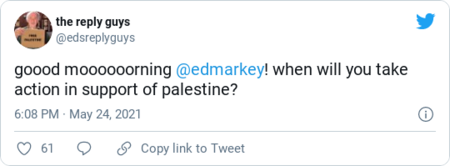 | | | | | | Hot on the right "The Republican Governors Association on Tuesday threw out Mike Lindell, the CEO of MyPillow and a top Trump ally, after he showed up to its spring conference in Tennessee," Politico's Daniel Lippman reports. "An RGA official, who spoke on the condition of anonymity, said on Tuesday night that Lindell tried to join transportation for members only for a dinner at the Tennessee Governor's Mansion and was denied. The person added: 'These events are for RGA members, and Mike Lindell is not currently an RGA member.' ... [Lindell] said he had been invited to the event in the last month or two. ... Earlier on Tuesday, Lindell had gone on Steve Bannon's radio show and promised to confront Georgia Gov. Brian Kemp and Arizona Gov. Doug Ducey, RGA's chair, about the election and allegations of fraud in their states." | | | D.C. coronavirus cases racial gap, visualized The share of new infections involving Black people spiked sharply in the city starting around mid-April, when the coronavirus vaccine became widely available to D.C. residents. The share of cases involving White people, meanwhile, has fallen below 10 percent, compared with 33 percent of cases in December, Lola Fadulu and Dan Keating report. | | | Today in Washington Harris will meet with a bipartisan group of lawmakers today at 3:30 p.m. to discuss the importance of investing in broadband infrastructure. | | | In closing | Trevor Noah pointed out that the fight over the 2020 election is still somehow going on:  | | | | | | |


 Email
Email 


No comments:
Post a Comment