Mises Wire |
- Critical Race Theory and Our Weaponized Schools
- Wages, Prices, and the Demand for Money: Keynes Got It All Wrong
- The Fed Plans to Raise Interest Rates—Years from Now
- Capitalism Isn't a Modern Invention. It's Medieval.
- Mortgage Companies Cash in on Pandemic Relief
- Biden Wants To Seize Control of Local Land-Use Regulations
| Critical Race Theory and Our Weaponized Schools Posted: 18 Jun 2021 02:30 PM PDT Government schools have always been tools of the regime for teaching state-approved ideology and culture. The rise of critical race theory is just the latest phase for America's public schools system. Be sure to follow Radio Rothbard at Mises.org/RadioRothbard.  |
| Wages, Prices, and the Demand for Money: Keynes Got It All Wrong Posted: 18 Jun 2021 01:00 PM PDT Markets clear. Or so was the accumulated wisdom in the half century before John Maynard Keynes. The British economist proposed a novel theory of economics in 1936 based on the opposite premise: markets don't clear. While Keynesian theory is quite complex and his book widely regarded as unreadable, in his system, chronic idleness of useful resources is the rule. In Keynes's world, the market can find a market-clearing price through decentralized adjustments for most preferences among most goods. But two particular preferences are problematic in that the price system does not balance supply and demand. The two troublemakers are time preference and the reservation demand for money. Those two bad actors cause the market process to fail for everyone else. The British Austrian school economist William H. Hutt was an underappreciated critic of Keynes. In Hutt's The Keynesian Episode: A Reassessment, he distilled the obscurantism of "the new economics" into a series of clear propositions. When reduced to its essence, Keynesian economics is compelling in its absurdity. In Keynes's version of reality, there are Good Preferences and Bad Preferences. The bad ones are so troublesome that an increase in either one can cause entirely different useful resources to lose the ability to command a money price altogether. The effect is so strong that a productive worker may become idle, not due to his own lack of skill or sloth, but due to someone else's attempt to save. When a resource is stuck in this idle state, the owner and buyers cannot find a common ground.1 Time preference is the lower valuation that people place on a good in the future compared to the present. Time preference frustrates market clearance through the paradox of thrift. According to this construct, attempts by all savers in the community to save more in aggregate fail. Their attempts do not result in greater realized savings. It works this way: saving reduces spending on consumption but somehow leaks demand out of the system instead of creating a demand for something else (such as capital goods). Wikipedia explains: "[A]n increase in autonomous saving leads to a decrease in aggregate demand and thus a decrease in gross output which will in turn lower total saving." Prior economic teaching had identified time preference—the choice between provision for present needs and future needs—as the originating cause of interest. Reservation demand is the demand that the owner of a good exercises by not selling it or by holding out for a higher selling price. This preference itself is largely irrational, driven by what Keynes saw as an excessive and irrational preference for liquid assets. Interest in Keynes land is entirely caused by the reservation demand for money. Saving and investment in the Keynesian story are unrelated activities—not two sides of a single market. Because investment is interest rate sensitive, an increase in the reservation demand for money can cause the interest rate to be too high, attracting more savings which are not realized as investment. Investable resources thus remain unused. Hutt took the other side of this. To his thinking, "time preference and so-called liquidity preference are no different in principle or in practice from all other economic preferences."2 He asks this:
Hutt—and Keynes—were largely dealing with the problems of surplus labor in 1930s Britain, in which the sellers of labor were represented by labor unions (or simply unemployed people with unrealistic wage expectations). Hutt wrote many times about the problem of surplus, whether unemployment in labor markets, inventories, or capital goods. He placed the responsibility for chronic surplus largely on sellers who would not lower their asking price. In most cases of surplus, the seller was usually asking for a price above what potential buyers would or could pay. While there are buyers making an offer in almost any market, for anything that is useful, if the buyer does not agree, then no exchange will take place. Hutt thought that where there is a surplus, it was the seller who needed to come down to meet the buyer, rather than the buyer offering more. The business firm works on behalf of the consumer. They will make a wage offer based on the contribution of the worker toward the price the consumer is expected to pay for a product. Under depressed conditions, the consumer may be willing to pay less. Entrepreneurs may be even more cautious about the selling prices they expect. But, at some price, said Hutt, "there is always complete absorptive capacity for all potential productive services which have value."4 The wage expectations of unemployed labor at the time were unrealistic if under the existing conditions businesses could hire the idle workers and make a profit only at a lower wage than the unemployed were asking. Hutt blamed the failure of the market price system to clear labor markets on the political power of labor unions. By using the threat of strikes and organized violence with the tacit approval of governments, they were able to contract a nominal wage which looked good on paper. But in practice the wage was not paid, because it was not affordable to the businesses where the workers might find employment. Hutt also took to task welfare systems that incentivized people not to work. Idleness of useful things was not due to irrational money hoarding or miserly oversaving. It did not require a new theory of economics. It did not require a falsification of Say's law. It only required that the price system be allowed to do its job. Hutt wrote, "The origin of such 'economic disturbances' must be attributed, I suggest, solely to the factors which prevent the value system from performing its coordinative task."5 Anything which has value has a money price at which it can be sold. All useful labor and capital goods can contribute to production when priced for market clearance.6
F.A. Hayek in taking on this same point wrote:
Changes in any preference do not cause valuable resources to remain priced out of use so long as other prices can adjust. A wage that worked yesterday may be too high today in light of changed conditions. Entrepreneurs motivated by loss avoidance must stay on top of the market and adjust their offers and their asking prices. Workers must seek alternative employment when their line of business is in decline if they do not wish to accept a lower wage, or work for a lower wage if they wish to remain in a declining industry. Keynes was confused about the difference between a preference that caused resources to be unused and the inability of the system to adapt to a change in that preference. Keynes's theory blamed the former cause, Hutt, the latter. Hutt showed that changes in time preference do not inherently cause useful things to lose all value within the price system. Even when people save more, all useful things can still participate.
When people wish to save more, the most useful employment of many things will change. Wages will fall in the consumption goods industries, reflecting the fall in value of the final product. Demand for labor will increase in the capital goods sectors. Workers may need to change jobs—even change industries—and adapt to a new line of work in order to receive the highest wages. Existing inventories may need to be sold at a lower price than expected. A large number of small—or even large—adjustments will follow on. Yes, if those prices do not fall where they must, then surpluses of those goods will accumulate. While Hutt does not focus on shortages and scarcity pricing due to a price not rising quickly enough when there is more demand, shortages can also arise. The production of goods proceeds through stages. The outputs of each stage can be fully absorbed into the next stage if priced properly. The product at each stage will be profitable as long as prices of inputs and outputs are adjusted and so long as businesses are adapting what they produce to what people want, not what they used to want. Hutt explains:
Keynes missed the need for these adjustments because of the excessive aggregation of his model:
Reservation demand for money is the other problem child in the Keynesian world. In Hutt's terminology, this is the preference for the services of money compared to the services of nonmoney. The active investment that market actors make in their money balances provides the useful service of "availability." By this Hutt meant that money can easily be exchanged for other goods. Having some of it around gives the holder choices and options. People can choose to invest more in money in order to have more choices in the future. Money demand increases when some individuals raise the ranking of some additional units of money in their preference scales from lower to higher than some other goods. Hutt also identified the speculative purpose for investing in a greater money balance. Some people expect money prices of some goods to be lower in the future than they are now and plan to buy more in the future than they are able to at current prices. Then what of reservation demand for money? Is it so problematic as Keynes suggests? Keynes saw an increase in reservation demand for money as a fall in aggregate demand, for which price adjustments could not compensate. It would create a systematic discoordination between savings and investment. Hutt explained Keynes' position as, "at times people may cease demanding nonmoney services and goods because they demand … the service of money."10 Individuals and firms are able to adjust to changes in both the supply of and demand for money according to Hutt. Those who want to increase cash holdings will reduce money expenditures and attempt to increase their money income through some mix of lower offering prices for things they buy and lower asking prices for their services. If roughly the same number of people wish to increase their money demand as decrease it, then there is no systemic change; existing money balances are shifted. Some people end up with more cash, others with less. If there is an overall shift in preferences by most people toward holding money, this cannot be accommodated by some people holding more and others the same if the money supply is not growing. Instead, prices will generally fall. This allows everyone's money balances to increase in real terms. With lower prices, existing money balances are worth more even with the money supply unchanged. The fall in prices is not separate from the increase in money demand, but is the means by which the change in money demand is realized. A large increase in money demand requires many price changes across many markets. As with changes in time preference, as long as there are no institutional barriers to price movements, all productive assets and labor can remain in productive use. Hutt argues:
While saving preference and the demand for money are the most important preferences in the market economy because they both affect nearly every other price, the price system, said Hutt, is fully capable of adapting to changes in either one. He wrote:
Keynes's arguments rely on the assumption that prices cannot change. There is no other way for markets to be stuck in a chronic surplus. The assumption of price rigidity was not clearly stated, and is often difficult to untangle from the complexity of the Keynesian system. Keynes attributed the persistence of idle resources in Britain to what Hutt called "imaginary defects" in the market. His theory aimed to show that changes in time preference and money demand could throw the whole system into discoordination. The Keynesian system was an attempt to overturn a half century of progress in economic theory demonstrating that a decentralized, self-corrective market process in which individuals and firms pursue their own ends resulted in a coordinated supply chain from producers to consumers.
 This posting includes an audio/video/photo media file: Download Now |
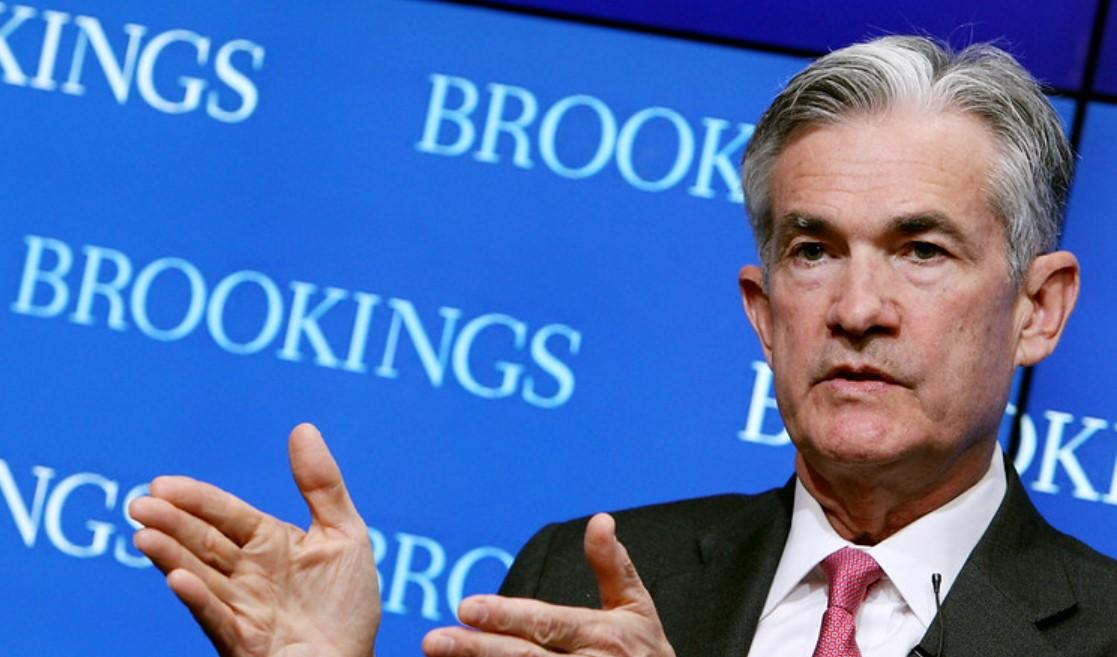
| The Fed Plans to Raise Interest Rates—Years from Now Posted: 18 Jun 2021 08:45 AM PDT On Wednesday, the Federal Reserve's Federal Open Market Committee voted to continue with a target federal funds rate of 0.25 percent, and to continue with large-scale asset purchases. According to the committee's press release:
This statement might be summarized best as "more of the same," and in spite of whatever other statements might be made about Fed officials or about how the economy is relatively strong or improving, the fact is Fed policymakers voted unanimously on Wednesday against tapering of any kind, and in favor of continued extremely accommodative policy. In other words, at the Fed there is no appetite at all for ever testing the waters to see just how fragile this current economy is in spite of all we hear about a "V-shaped recovery" and GDP numbers showing an economy roaring back. And why should the Fed act as if the recovery were well underway? As of last month, total employment is still more than 7 million jobs below the February 2020 peak. Meanwhile, new jobless claims increased by more than thirty thousand last week, rising to a sickly 412,000. Nevertheless, the "big news" coming out of the Fed—at least as far as many news outlets were concerned—is the fact that many FOMC members expect the Fed to raise the benchmark rate "as soon as 2023" based on the so-called dot plot showing FOMC member expectations. As CNBC reports:
In Washington terms, this means nothing at all. This wasn't a commitment from FOMC members to actually raise the rate two years from now. This was simply an opinion—polled FOMC members expect the rate to go up. An expectation that something might happen two years from now hardly constitutes a meaningful prediction. One would need to be extremely credulous to read the FOMC's assessment as a "hawkish" move. After all, the policy situation was very similar during the decade that followed the 2008 financial crisis. For many years, the Fed under Janet Yellen repeatedly described the economy as "strengthening" and experiencing moderate growth. The Fed repeatedly hinted at a tapering and tightening of policy that would happen "soon." And yet the Fed kept the target rate at 0.25 percent for nearly seven years, from early 2009 through most of 2015. The rate never climbed above 1 percent until 2017. But all the while, the FOMC repeatedly suggested that any day now it would "normalize" things.  So, now when we hear that the Fed will be tapering in 2023, we should read this as something that is possible, of course, but "2023" could just as easily mean 2025 or 2028. At least, that's certainly what experience suggests, especially as our jobless recovery continues. And speaking of "normalizing" things, the Fed during the Yellen years had long also hinted at scaling back its portfolio. This, of course, never happened. Total assets owned by the Fed only grew from 2012 to 2015, and then held steady at around $4.4 trillion until 2018, when the Fed slightly scaled things back. But signs of trouble were already apparent by late 2019 with the repo panic, as the Fed was back in the asset-purchasing game. Now Fed assets have climbed to an eye-watering $8 trillion. Combine this with this week's promise to keep buying "at least $80 billion per month and of agency mortgage‑backed securities by at least $40 billion per month" and it's clear the talk of getting hawkish at the Fed is little more than talk at this point.  On the other hand—this shift toward predicting rate hikes in 2023 did represent a change in messaging from the FOMC, likely forced by the fact the Fed can no longer deny that price inflation is occurring. In March, for example, FOMC members said they didn't expect any action on tapering until 2024. But then the Fed, in order to look like it has some connection to reality, changed its inflation forecast:
So, the Fed has been forced to admit the reality that has been long clear to normal people who buy houses, education, food, and other services. Inflation is real. Nevertheless, the Fed insists it's all temporary:
It's unlikely any of this is anything more than optics and public relations, however. The Fed has to look like it's taking price inflation seriously, so it admits there's some but dismisses it as temporary. Moreover, FOMC members send the message they're concerned by saying, "We might have to raise rates in 2023 instead of 2024." In the real world, however, none of this tells us anything at all about what the Fed actually plans to do in 2023. Yet markets are so shaky and so dependent on easy money from the Fed that once the Fed sent the message it might have to act on inflation at some point a few years from now, the Dow Jones crashed by more than 300 points. This further illustrates what some Fed observers are now saying about the state of the US economy: the Fed isn't here to take away the punch bowl anymore. The Fed is the punch bowl. Even the mildest suggestion that it might raise rates years from now sends panic through the ranks. Indeed, Fed chairman Jerome Powell stepped in to assure the markets that even this miniscule step toward "hawkishness" at some point in the future shouldn't be taken too seriously. Forget about that dot plot, Powell insisted. We'll keep rates low forever:
 This posting includes an audio/video/photo media file: Download Now |
| Capitalism Isn't a Modern Invention. It's Medieval. Posted: 18 Jun 2021 08:00 AM PDT During the eighteenth century, capitalism in Europe "took off" in a way it had not done before, and as a result the West surpassed all other areas of the world in economic growth. What led to this transformation? Max Weber offers the most famous answer. In The Protestant Ethic and the Spirit of Capitalism (1905), he traces the new system to the Puritans. Before them, though there were rich merchants, substantial savings and investment by private individuals was unusual. The Puritans changed matters. They viewed the self-disciplined pursuit of wealth without indulgence in luxury consumption as a sign that God had predestined them to salvation. Murray Rothbard rejects this interpretation. In his History of Economic Thought, volume 1, he says,
Rothbard's point is decisive, but the question still needs to be addressed: Why did capitalism grow so much in the eighteenth century and after, far exceeding in extent the efflorescence to which Rothbard calls attention? Ludwig von Mises helps answer our question through a reversal. He says that we shouldn't look for groups of people who, because of special traits, overcame the reluctance of most people to save and invest. There have always been such people, he contends. In Human Action, he doesn't mention the Weber thesis, but he calls attention to a similar view advanced by Werner Sombart, a leading member of the German historical school.
Now comes Mises's reversal. The question we should be asking isn't "What group of people wanted to acquire money more than other people did?" Instead, we should try to find out how the obstacles to their doing so were overcome. After pointing out that there have always been acquisitive people, he remarks,
One more piece of the puzzle is needed to understand in full Mises's account of the origins of capitalism. It wasn't enough to end the privileges that allowed only elite groups to enter certain trades. One had also to overcome the ideology of equality, which held that it was wrong for some people to possess markedly more money than others. Although at one time China had a more highly developed economy than the West, the Chinese were never able to overcome this egalitarian dogma. Mises says of the situation:
In other words, capitalist development required workers who were willing to work in factories, but they would not have much incentive to do so if they could cultivate their own plots of land. In China, insistence on equality led to a large number of farmers with small plots of land. Demands for equality were less exigent in England than in China, and many workers, lacking land, found working in factories attractive. Mises thus responds to a disputed topic by changing the question under consideration, and in doing so, he makes a creative advance.  |
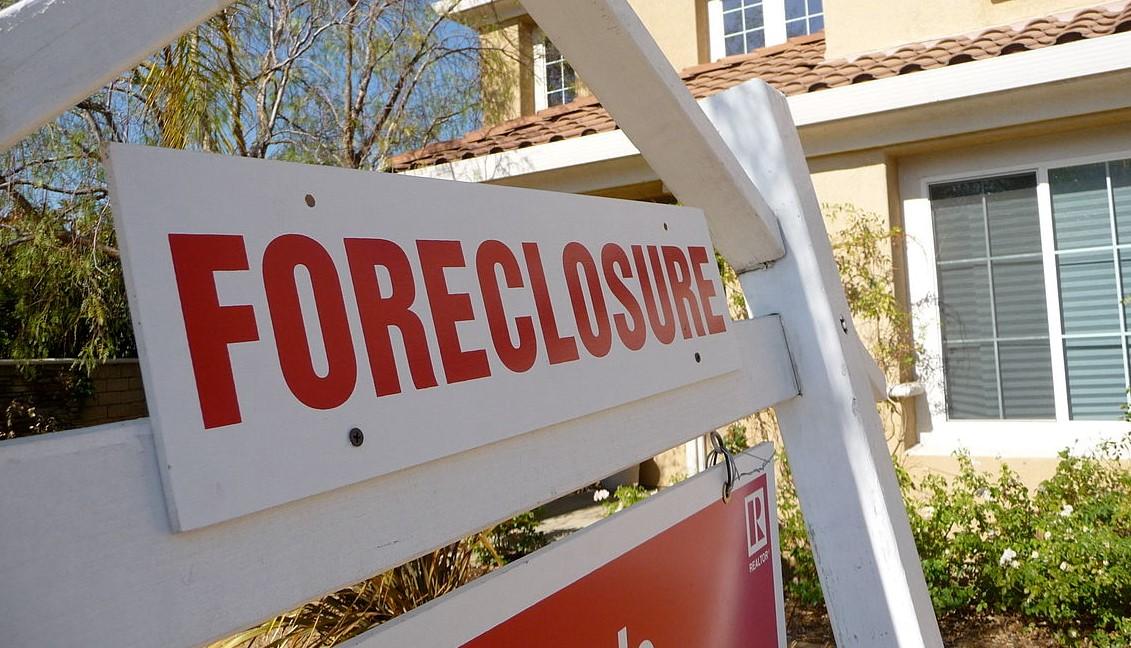
| Mortgage Companies Cash in on Pandemic Relief Posted: 18 Jun 2021 06:15 AM PDT The nation's billionaires are catching plenty of grief for profiting from the pandemic. All they are guilty of is providing services people wish to pay for. Nothing wrong with that. Then there are the mortgage companies. It turns out they are turning a good profit off Uncle Sam's forced forbearance plan. Ben Eisen writes for the Wall Street Journal, "Mortgage companies have ramped up their purchases of government-backed mortgages in forbearance, and they are selling these loans back to investors at a profit." In a bit of pandemic crony capitalism, mortgages made through the FHA (Federal Housing Administration) or the VA (Department of Veterans Affairs) are pooled together into Ginnie Mae bonds. If a borrower stops making payments, Ginnie Mae allows the mortgage servicer to buy the mortgage out of the pool after ninety days at face value. So, even though the loan is in default, servicers buy the loan for the amount of the principal owing and any interest owed. In a free market, this paper would sell at a discount. But the government mortgage market is anything but laissez-faire. The servicer then works with the borrower to bring the loan current, by the magic trick of "letting the homeowner make up the missed payments at the end of the loan." Again this would not be considered a satisfactory loan in any normal marketplace. Now, with the borrower able to start over with a clean slate and making payments, the mortgage company sells the loan into a new pool, "often for more than what the mortgage company paid." In other words a premium. Voilà. With 840,000 FHA and VA loans in forbearance, mortgage companies are licking their chops. Just in the month of May, $7.8 billion worth of the now "performing" loans were repackaged into bonds, according to JPMorgan. Eisen writes, "Michael Drayne, acting executive vice president at Ginnie Mae, said that a robust market for buying out delinquent loans enhances the overall attractiveness of the Ginnie Mae program." Well, I guess so. By the way, loans in forbearance "aren't supposed to be reported as delinquent to credit-reporting firms." Well, it's a win, win, win situation all around. The government's covid mandate calling for lenders to cease and desist if borrowers didn't pay expanded the market for this bit of accounting trickery. The market, forgetting that real estate sometimes falls in value, "viewed them as a relatively safe bet." PennyMac has made $284 million from this gambit and Rocket has doubled its exposure to $636 million from last year's fourth quarter to this year's first. And Wells Fargo bought $30 billion of punk mortgage paper last year, with a spokesman claiming, "[T]he buyouts have long been a normal practice, then [the bank] 'increased substantially in the second half of 2020' and returned to normal in 2021." If anyone out there believes the housing market will be allowed to collapse, think again.  This posting includes an audio/video/photo media file: Download Now |
| Biden Wants To Seize Control of Local Land-Use Regulations Posted: 18 Jun 2021 04:00 AM PDT In recent years, there's been a push to move zoning decisions further from the local level. In 2019, Oregon passed House Bill 2001, making it the first statewide law to abolish single-family zoning in many areas. By expanding the state government's jurisdiction to include zoning decisions previously handled by local agencies, the law entails an alarming centralization of state power. This was quickly followed by the introduction of similar bills in Virginia, Washington, Minnesota, and North Carolina. Now President Biden is attempting to increase federal influence over local zoning. Included in Biden's American Jobs Plan is a proposal that would award grants to jurisdictions that move to eliminate single-family zoning and other land-use policies the administration deems harmful. Biden's plan has been widely opposed by conservatives and libertarians alike, but some libertarians view this zoning proposal as the plan's silver lining. These libertarians hope federal incentives will remove government obstacles to affordable housing. To be sure, government regulations at every level increase costs and violate property rights. However, political centralization will not reduce government. To the contrary, centralization must be understood as an expansion and concentration of state power. Instead of furthering property rights, centralization will promote a one-size-fits-all approach regardless of homeowner preferences. At this point, some may object that unlike the laws introduced at the state level, Biden's proposal could be resisted by simply refusing the grants. Indeed, a White House Official describes Biden's approach to zoning as "purely carrot, no stick." However, this offers little reassurance. Experience has shown that governments cannot be relied upon to refuse funding, and as Murray Rothbard points out, "[G]overnment subsidy inevitably brings government control." Once the public becomes accustomed to the federal standards and local governments become dependent on the federal money, there's little to stop them from accepting those same standards as laws. We need only look at education to see where federal subsidies can lead. The zoning issue is instructive, because it demonstrates both how the federal government can seize control of local functions through the back door, and how a move from the local to state level can lead to further centralization. Given that centralization moves decisions further from individual property owners and ultimately in the direction of supranational government, federal control of zoning is the logical next step. Decentralization, by contrast, would be a step toward self-determination. One of the more common arguments against local control holds that zoning cannot be left to localities because local zoning is often exclusionary. But this position is completely untenable. If a property owner finds his control over his own property limited by zoning ordinances, then his opposition is justified, because the ordinances violate his property rights. However, opposition to zoning cannot be justified simply because it's exclusionary. After all, private property is inherently exclusionary. Hence, if zoning is opposed on the grounds that it's exclusionary, then the concept of private property can be opposed on the same grounds. Moreover, if all neighborhoods were completely private, we could expect some neighborhoods to be more exclusive than is presently the case. Rothbard explains,
As we have seen, neighborhoods would be as exclusive or inclusive as property owners wish them to be if all neighborhoods were privately owned. Some would only allow single-family homes while others would permit duplexes and multifamily homes. It should therefore be clear that a uniform zoning code cannot represent the wishes of property owners in different locales. In distinct contrast, one of the benefits of localism is that the wishes of property owners tend to be better represented at the local level. Astonishingly, the ostensibly libertarian Reason magazine uses this same point to argue in favor of moving zoning decisions to the state level. They approvingly quote Emily Hamilton of the Mercatus Center arguing that local policymakers are too beholden to local property owners. Yet, localism is the better strategy here, because local regulations are more easily avoided than state regulations. If a local government's regulations prove too onerous, it risks the loss of its most productive citizens to the next city or town. However, as a state expands the territory under its control, it becomes more difficult for citizens to escape its jurisdiction. Thus, there's less reason for a large, centralized state to refrain from imposing such regulations. Opposition to any and all centralization is particularly important when the centralizing measure sounds superficially appealing. This could be a supposed deregulation measure, or to use Hans-Hermann Hoppe's examples,
In our case, it is certainly true that government regulations have increased costs and limited the supply of housing. That's not the issue. The issue is that faraway governments will predictably be even less responsive to local demands in different neighborhoods. Incidentally, it would be remiss not to mention that most who would involve the state and federal governments in local zoning are conspicuously silent on monetary policy. Yet, an inflationary monetary policy is one of the major obstacles to affordable housing. Make no mistake: the power libertarian centralists would grant the federal government in the name of deregulation would be used in service of the broader egalitarian project. Indeed, under Biden, HUD (the Department of Housing and Urban Development) has already moved to restore an Obama-era rule which previous housing secretary Ben Carson warned would essentially turn HUD into a national zoning board. Not surprisingly, this is being sold as an attempt to reduce "racial segregation." Empowering state legislatures—or worse, the federal government—to abolish local regulations would be a grave mistake. Rather than limiting government, centralization under any pretext will only add new layers of government. We must therefore resist all assaults on local self-government by more distant governments and combat government regulations at the location they occur. Otherwise, distant administrators will continue to seize power and local control will become increasingly trivial.  This posting includes an audio/video/photo media file: Download Now |
| You are subscribed to email updates from Mises Wire. To stop receiving these emails, you may unsubscribe now. | Email delivery powered by Google |
| Google, 1600 Amphitheatre Parkway, Mountain View, CA 94043, United States | |




No comments:
Post a Comment