Mises Wire |
- No Bernie, Collegiate Athletes Do Not Need a Union
- Bringing the Free Market to the Healthcare Bazar
- Is There Such a Thing as Good Inflation?
- Rothbard's The Ethics of Liberty Finale with Roberta Modugno
- The Fed: Why Federal Spending Soared in 2020 but State and Local Spending Flatlined
- Mises and Social Darwinism
- How Medical Innovation Happens: Cash Clinics in Pharmacies and Big Box Stores
- Privatize the Police
- An "Open Mind" Is of No Use When It's Open to Lies
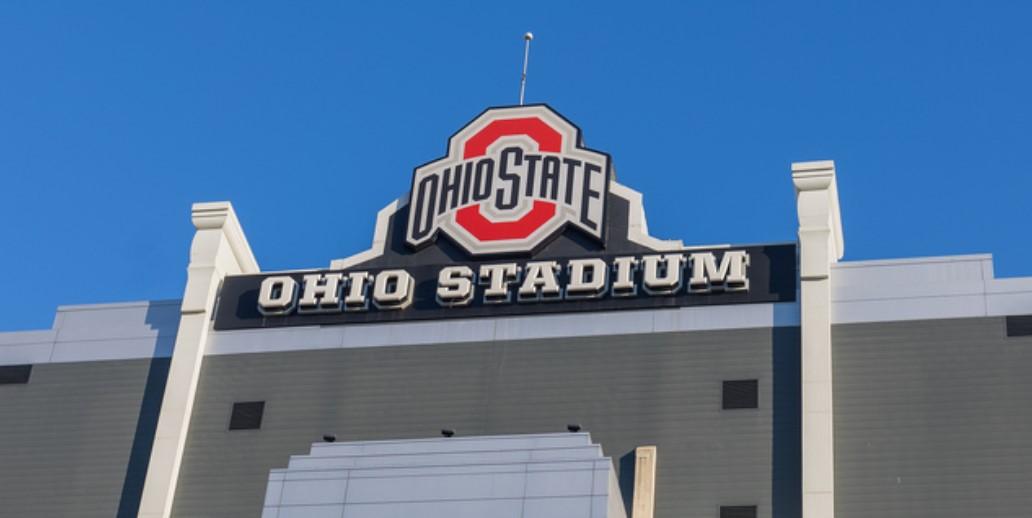
| No Bernie, Collegiate Athletes Do Not Need a Union Posted: 26 Jun 2021 04:00 AM PDT When we last saw Bernie Sanders at the Joe Biden inaugural bundled and wearing a mask, some of us hoped that Bernie would still be masked—and silent. Unfortunately, as it becomes increasingly clear that the Biden administration is wanting to transform the USA into a progressive paradise, Sanders has joined the movement in which no institution is safe from an enforced state makeover. The latest from Sanders is the introduction of a bill that would classify collegiate athletes as employees of the college or university they attend, and it also "encourages" athletes to become unionized so they can enjoy the "right to collectively bargain." According to CBS Sports:
The bill would prohibit any scholarship that would keep an athlete from collectively bargaining for their rights. Scholarships would be defined as compensation that would give athletes the right to collectively organize and have a say in their working conditions. Companion legislation was also introduced in the House of Representatives by Representatives Jamal Bowman (D-NY), Andy Levin (D-MI), and Lori Trahan (D-MA). While one doubts that this particular scheme will be successful, nonetheless it sets a precedent that will be hard to ignore in the future, especially given that the US Supreme Court voted 9–0 to force the NCAA to change its limits on compensation for athletes. The present herd of Jacobin progressives that hold much of the political power in this country and govern many of its key institutions like education and the media are not going to go away if this present bill fails to accomplish its purposes—and they are decidedly not attempts to improve the lot of scholarship collegiate athletes. Moreover, the SCOTUS decision will increase the "inequity" that progressives claim to hate. Before going further, I will point out that nearly 50 years ago, I was a scholarship track and field athlete at the University of Tennessee, and I had a relatively successful career. I held some school records in high school and college and still am on some of the program's all-time performance lists, and I was part of six Southeastern Conference championship teams and two NCAA championships, and I had the good fortune of earning both All-American and All-SEC honors. This doesn't make me an expert on collegiate athletics, but my experiences have given me some insights into that world and, more importantly, provide me a smidgen of authority to speak out against Sanders' latest attempt to wreak havoc in this country. I can say without hesitation that Bernie is flat-out wrong in his pronouncements that collegiate athletes represent an "exploited" class of people who need to be "rescued" by politicians and union bosses. Yes, I am aware of the rhetoric that comes from the sports media, but the reality of NCAA Division I college sports is very different, and even though I am more than four decades removed from my stint at Tennessee, I have stayed in touch with my alma mater and have made many visits to the track and the coaches offices since my graduation. The reality of college sports does not match Sanders' rhetoric, some of which is contained in the proposed bill:
Sanders was a highly regarded distance runner in high school (he went to high school with Walter Block) but did not pursue college sports. (One suspects our country might have been better off had he been on a college track team and have become something other than a politician, but that is water under the bridge.) His "knowledge" about the poor, exploited collegiate athlete is derived more from his ideology than his experience. So, what about the "exploited" collegiate athlete? First, while I will defend the current system to a certain extent, I do not extend that grace to the NCAA itself. This is not because of any "hypocrisy" on the part of NCAA officials—although they clearly have earned this label—but rather because in its zeal to "protect" the so-called amateur status of collegiate sports, the organization has created a Byzantine bureaucracy that would have rivaled anything from the former Soviet Union. A highly regarded head track coach of a mid-major university told me that in order to have a prospective athlete visit on campus, he had to prepare twenty pages of documents to give to the NCAA and its representative at his university. (Several years ago, I served as the NCAA representative for my employer, Frostburg State University, which then was in Division III sports, which does permit its institutions to offer athletic scholarships. I still serve on the university's athletic board.) The NCAA has so many rules governing recruiting and regulating any benefits that athletes may receive that it is impossible for any member institution to keep from violating regulations. Compliance with these rules is a nightmare. Consider some of the violations:
The list, unfortunately, is endless and the mentality that accompanies calling out these so-called transgressions is worthy of all the ridicule that can be heaped upon it. One is tempted to dismiss these things as the products of people who have too much available time but there really is logic in what seems to be petty regulations on steroids. (I guess better the regulations being steroid engorged rather than the athletes, who are required regularly to undergo drug testing.) One truism in economic analysis is that ridiculous regulations tend to have perverse incentives behind them, and the rules are not irrational as one might think, given the players and the reward structure behind them. While many economists have tried to model the NCAA as a private cartel in which the rules are the enforcement mechanism, I believe that it is more accurate to say that we should frame major collegiate athletics as a regulated industry much like passenger air before deregulation in 1978, and trucking and railroads before 1980. Pre-deregulation, the Civil Aeronautics Board set rates for passenger airlines as well as the routes for the more profitable "long hauls" between major cities. The arrangement blocked entry into the industry and all but guaranteed that airline firms would be profitable. In return, airlines serviced smaller cities, subsidizing these unprofitable routes with profits, much like AT&T used profits from its long-distance service to subsidize local service (when AT&T was given a legal monopoly by the Federal Communications Commission). Because they were not permitted to compete via lower air fares, the airlines competed on the intensive margins, resorting to the hiring of young, beautiful women as flight attendants (I remember those days well), good food (yes, that is hard to believe today), and one airline even had a piano bar for first class passengers. Flying was for the well to do; everyone else took the bus or passenger trains (at least until the early 1970s). Likewise, we find college sports engaged in massive cross-subsidizing, using profitable sports such as football and men's basketball to subsidize other "nonrevenue" sports. (I remember being constantly reminded in college that our sport didn't bring in revenue to the athletic department. It was one reason I didn't resent the special perks football and basketball players received, knowing that they were helping to fund my scholarship and our team's enormous success.) Even that might not be enough, and the subsidies are extended to the conferences and to the money the NCAA spreads out after its money-making basketball championships, aptly named "March Madness." Like the airlines that couldn't compete via pricing, college sports must find other ways for teams to compete for key resources (athletes) than offering them a better financial deal. Thus, we see the advent of the facilities "arms races" in which colleges and universities build athletic venues that would have been scorned as unnecessary by previous generations of coaches and athletes but today are deemed vital necessities for programs wanting to be competitive. Furthermore, with Title IX strictly enforced as a quota system, there is almost no profitability whatsoever with women's sports, save women's basketball in a few universities that historically have had successful winning programs. One is safe to say, then, that college athletics overall cannot be classified as a money-making venture even when there are entities in that system that are profitable. While athletes can be called (economically speaking) factors of production that might fit into something that creates what Murray N. Rothbard called "psychic profit" (a successful sports team can bring "pride" to a university and serve as a rallying point), there is no way one accurately can claim that athletes are employees of a university's department of athletics. At very best, at least for most colleges and universities, collegiate athletics is a loss leader, not a money-generating enterprise. Thus, to classify collegiate athletes as employees and then demand those employees be unionized is a logical and economic absurdity (although people like Bernie Sanders have made careers out of promoting absurdities). Yes, some athletes receive in-kind subsidies from their colleges or universities (called athletic scholarships), but athletic scholarships are similar academic scholarships in which students are expected to keep a certain grade point average (GPA) and stay out of trouble. With athletic scholarships, athletes are expected to perform at certain levels, stay academically eligible, and not create problems on and off the field. That being said, there is one important difference between students receiving athletic grants and those that have academic or, say, music scholarships: the latter do not have limits placed upon what they can receive in compensation outside the in-kind benefits they receive from their university while athletes cannot enjoy that same privilege. For example, a student on a violin scholarship can play in an outside orchestra or ensemble and be paid. (I remember throwing money into a basket in a New York subway station while a string quintet from Julliard entertained us.) Collegiate athletes are much more restricted. For example, a collegiate basketball player cannot be paid for performing in a summer league or have ever received payment for playing a sport. Say someone played at the lowest level of professional baseball for one summer and then wants to go to college and play basketball. To that, the NCAA says, "Nyet." That summer of making a tiny amount of money has "contaminated" this athlete for life, at least where college athletics are concerned, even if we are dealing with a different sport than the one for which the athlete was paid. These are the kinds of rules that turn people against the NCAA and help encourage lawmakers like Sanders to intervene. Nevertheless, they are not proof of oppression and exploitation of hapless athletes. Let us take first the issue of compensation or scholarships. Division I FBS (Football Bowl Series) football teams have 85 scholarships, which means that most of the players you see on the field have what we call "full rides." Most basketball players, men and women, are on full rides as well, although the lineups for football and basketball also include "walk-ons," or nonscholarship players. Other sports have fewer scholarships and generally split them up among players, often into what we call half rides. For example, when I was at Tennessee, our team had 28 scholarships, which meant we could have a large roster because we could have a large core on full rides and still plenty of money to dole out to others. (The women had no scholarships when I was in college, although that would change soon enough.) Today, track teams are permitted up to 12.5 scholarships for each team, which means rosters are smaller and most of the athletes are not recipients of full rides. The same goes for the other sports classified as "non-revenue." Even in that situation, however, athletic scholarships hardly count as "poverty wages" or whatever term Bernie Sanders might use. Yearly tuition, fees, and room and board at a place like Duke University is about $70,000, so a full athletic scholarship hardly falls into the zero-compensation category. Likewise, out-of-state costs at many Division I state universities are likely to be close to $50,000, a rate of pay that few students that age can attain in the regular world of work. (Many D-I sports teams recruit out of state as well as in their home states.) Furthermore, one of the assumptions behind the rhetoric that Sanders and other critics are spouting is that athletes are the modern-day equivalent of slaves working in Roman salt mines. (For that matter, Sanders believes that ANYONE working nonunion for a private employer is the proverbial Roman salt mine slave.) However, being part of a Division I athletic team not only is a symbol of personal status on campus, but also provides a lot more than just scholarship money for athletes. Most of my teammates from nearly a half century ago now are lifelong friends and we value these relationships highly. We also keep relationships with current members and coaches from the Tennessee track teams. The notion from Sanders that we were mere slaves toiling for an undefined benefit to the university and receiving nothing in return is perverse and, unfortunately, par for the course where Sanders is concerned. One comes to expect this kind of nonsense from him: destructive, hateful rhetoric that when it helps form laws and policies, they always make things worse. So, what if the colleges start paying players? First, what does that mean? As I have noted before, a college athletic scholarship is valuable, and because the vast majority of athletes that use their entire college eligibility graduate, these "exploited" athletes also receive the value of a college education. (Yes, I am fully aware of the problems in higher education; however, I am pointing out that most college athletes do not walk away empty-handed, as Sanders and his ilk want us to believe.) Because an athletic scholarship is a thing of value, I doubt that paying athletes directly instead of awarding grants is going to make much difference. Because the majority of athletes play in nonrevenue sports, there really is no measure of discounted marginal revenue product that would easily fit a payment schedule. I had a good career as an athlete, yet I doubt that my DMRP was anything but negative, and that goes for most (if not all) of my teammates. We didn't generate much revenue and, instead, were subsidized by revenues from football and men's basketball. In any collegiate D-I athletic program, there are relatively few athletes that one actually can say bring in the revenues. Zion Williamson, who dominated college basketball the one year he played for Duke University, comes to mind. While Duke didn't win the NCAA championship that year, Williamson was a major draw and I'm sure that his worth, athletically speaking, to Duke was in the millions of dollars. While Williamson did not "officially" receive anything but tuition, fees, room and board, one hardly can say he was "exploited" or treated like "slave labor." First, I'm sure that people associated with Duke, not to mention Nike, which all but openly sponsored him, make sure that his family was well compensated, albeit quietly to avoid an NCAA investigation. Second, Williamson could have played in the NBA's G-League and earned a six-figure salary, well above the value of his athletic scholarship and probably any under-the-table money he might have received. However, the G-League could not have provided Williamson the same publicity as he received dominating game after game being viewed by millions on ESPN. There is no doubt that Williamson received a much better rookie contract in the NBA than he would have received had he done his time in the G-League. At worst, Williamson's year at Duke could be seen as his enjoying deferred compensation. To get an idea of his massive presence in college basketball, he suffered a sprained knee early in a game with the University of North Carolina when one of the shoes Nike had provided him ripped under pressure. Nike's stock value dropped $1.1 billion the next day. I repeat, contra Sanders, that college sports did not victimize Zion Williamson, despite the claims otherwise. Furthermore, had Duke paid him anything close to his value to the university and its athletic programs, it would have been a figure that Sanders would have deemed immoral, since he claims to be against any sort of economic inequality. In fact, if a market-based payment system were to be implemented by the NCAA, it would have to reflect the realities of what people actually are producing. Male athletes would have to earn more than most females (although there are exceptions, Paige Bueckers of the University of Connecticut women's basketball team comes to mind), and a relatively small number of athletes would receive the lion's share of the income. In other words, the only compensation scheme that would not exploit the Zion Williamsons of college sports would have to reflect the same kind of inequality that people like Sanders claim to abhor. My sense is that Sanders sees something different, a system in which everyone receives the same pay no matter what sport and the entire apparatus is wrung through collective bargaining. Yet, that would change nothing regarding the so-called exploitation issue. If the Sanders bill were to become law, it surely would ramp up the costs of fielding college sports programs, and higher costs certainly would mean fewer teams. Moreover, the "equal pay" provisions of the law would mean the star athletes, the ones people really do pay to watch, would receive compensation much less than their actual economic contributions, which really would be an act of exploitation. In short, it would be an unworkable disaster akin to the Bolshevik Revolution and its aftermath that Sanders effusively praised through most of his political career. There is one more problem, one that I have not seen addressed by any analysts, and that involves federal and state income taxes. College scholarships, whether they be for sports or for academics, are not taxed. As I noted before, a student on a full ride at Stanford or Duke is receiving a financial package worth at least $70,000 a year and probably more, without a penny of it going to the IRS or the state comptrollers. College and university employees, however, are not tax exempt and must pay federal and state income taxes along with Social Security and Medicare taxes. If Sanders were to succeed in having all NCAA Division I athletes reclassified as employees, then not only would these students be liable for income and payroll taxes, but many of their so-called perks such as payment for travel costs and per diem expenses could be grist for the taxation mill. One doubts seriously that students would be enthusiastic about paying double-digit tax bills for their scholarships. It is one thing to raise the union fist to show fake "solidarity" with the proletariat, but it is quite another to receive a sizeable tax bill for the whole thing. Furthermore, one doubts that the courts would be willing to cut out a huge tax exemption for NCAA athletes, especially given the greedy proclivities of the IRS. To put it another way, the Sanders proposal comes with all of the hidden costs and other unwanted surprises that one would expect from a politician who has supported totalitarian governance for all of his political life. One suspects that once student athletes would come to realize that Sanders had pulled a bait-and-switch aimed at increasing tax revenue, and then publicly declared their opposition, Sanders and his allies would regard the new dissidents the way that Bernie's political forefathers saw the demands of the Kronstadt sailors in 1921: a threat to the regime that the IRS would put down quickly.  This posting includes an audio/video/photo media file: Download Now |
| Bringing the Free Market to the Healthcare Bazar Posted: 25 Jun 2021 03:30 PM PDT A new world of medical entrepreneurship is growing. Concierge and cash-only practices, walk-in cash clinics, medical tourism, and cost-sharing plans are just a few of the ways free-market approaches are changing the landscape. Our expert speakers will discuss several of these developments, and more. Recorded in Salem, New Hampshire, on June 17, 2021.  |
| Is There Such a Thing as Good Inflation? Posted: 25 Jun 2021 12:00 PM PDT Last week a student in my MBA-level intermediate-macro seminar raised a provocative question. We were discussing the various kinds of (price) deflation and which kinds, according to Austrians, are benign and accommodate consumer preferences, and which are malignant and conflict with consumer preferences. In view of the Austrian emphasis on inflationary monetary policy as the primary cause of the business cycle and the current financial crisis in particular, the student asked if Austrians considered any kind of inflation as "good" for the economy. I gave a short response in the affirmative and then thought about it more over the weekend. Here is the note on the subject that I wrote up for discussion in class tomorrow. (The last two paragraphs on free banking were not part of the original note.) One kind of "good" inflation typically results when innovations and changes occur that permit people to economize on the amount of money they need to hold in their cash balances. For example, the introduction and increasing availability of credit cards bring about a decrease in the demand for money, which, all other things being equal, causes a general rise in prices. Credit cards operate as an alternative means of payment for many transactions and therefore reduce the amount of money people need to hold in currency and bank deposits in order to finance their anticipated exchanges at the prevailing level of prices. These "excess" cash balances produce an increase in the demands for goods, the supplies of which have not increased. The result is that overall prices rise. But inflation here performs an important function: it reduces the buying power of the dollar to the point where money no longer is in excess supply, because people are now content to hold the total supply of money in existence in order to finance planned transactions at the new, higher level of prices. Another way of putting this is that the "real" money supply, that is, its total purchasing power in terms of goods, has been reduced to exactly the level desired by consumers. What we might call "cash-economizing" inflation tends to occur as a result of any financial innovation, including the invention of money-market mutual funds, ATM machines, PayPal accounts, and so on. It may also result from organizational or technical innovations in business that promote vertical integration of operations, where capital goods previously exchanged between two independent firms are now produced and employed within the same firm. Note that cash-economizing inflation is benign precisely because it is an outcome of individuals striving to optimize their property holdings through the voluntary exchange process. It is also noteworthy that this kind of inflation involves a one-shot increase in prices: once the new payment method or invention becomes broadly adopted, the decline in the demand for money ceases and prices stop rising. Lastly, inflation caused by people responding to opportunities to economize on their money holdings has no systematic effect on credit markets and the interest rate and therefore does not precipitate the business cycle. A second type of good inflation is one that occurs as a result of a reduction in the supplies of goods and services caused by natural disasters, the depletion of natural resources, or increases in people's preferences for leisure (causing a decline in labor-force participation) or for present consumer goods (causing the nonreplacement or "consumption" of capital goods). All of these events bring about, sooner or later, a greater scarcity of exchangeable goods in the economy. The reduction in the supplies of goods in the market, all other things being constant, including the stock of money, causes an excess demand for goods to emerge. Overall prices will naturally rise to restore equilibrium in goods' markets. This rise in prices both indicates the greater scarcity of available goods and ensures that they are allocated to the uses most highly valued by consumers. Conversely, it may be said that there is a fall in the "exchange" demand for money, which is constituted by the goods offered for exchange. The decrease in the demand for money in exchange, with the supply of money unchanged, initially produces a surplus of money, because at the low prices prevailing, the supply of money offered exceeds the supplies of goods brought to market. Eventually, the buying power of the dollar adjusts downward, goods' prices are bid up, and all dollars offered are absorbed in exchange for the now-higher-priced goods. Once again we note that, unlike the ongoing price inflation that is typically caused by central-bank expansion of the money supply, the inflation generated by diminished supplies of goods is a one-shot affair. Prices stop rising as soon as the supplies of goods and services stop decreasing and stabilize at the lower level consistent with the change in the economic data. "Scarcity" inflation is thus socially beneficial, because it facilitates economic calculation and smoothly operating markets in a situation in which people's preferences or their production opportunities have undergone a radical change. History has shown time and again—during wars, revolutions, sieges, and crop failures—that any attempt to repress scarcity inflation via price controls or centralized distribution of necessities results in calculational chaos, widespread poverty, and social disorder. Our conclusion is, thus, that a rise in general prices driven by the demand for money always improves economic welfare as Austrians understand that term. In the interest of full disclosure, I note that most modern Austrians who support free banking, while agreeing with me on scarcity inflation, would strongly disagree with me that cash-economizing inflation is benign. Writers such as Larry White, George Selgin, and Steve Horwitz insist that any change in total spending caused by shifts in the demand for money must be promptly undone by a change in the supply of money in the same direction. Thus under our current fiat-money system, if financial innovations occur that induce people to reduce their demand for cash balances and to exchange money more rapidly, then according to "free bankers," the central bank must contract the money supply in order to prevent the increase in prices that corresponds to people's voluntary choices. This is a direct implication of the free bankers' "productivity norm," according to which the central bank must actively suppress "meaningless" changes in prices. Meaningless changes in prices include those caused by shifts in what free bankers characterize—misleadingly in my opinion—as "the velocity of money." Thus, free bankers become cheerleaders for a monetary deflation engineered by the central bank as a means of stifling a pattern of freely chosen exchanges of property that expresses consumer preferences for higher prices. The position of free bankers is not only erroneous but paradoxical as well. They accuse Austrians of the neo–Currency School, created by Mises and Rothbard, of viewing deflation and inflation asymmetrically, favoring deflation while condemning inflation. But as I tried to demonstrate above, Austrians of the neo–Currency School are perfectly consistent in their attitudes toward rising and falling prices: both "inflation" and "deflation" are benign as long as they are in accord with the voluntarily expressed preferences of consumers. Not so the free bankers, who claim to be in favor of a freely competitive monetary system, but presume to know in advance what outcome the entrepreneurs operating in this system will bring about, namely, complete stability of a particular macroeconomic variable. Thus, the real point at issue between the free bankers and their neo–Currency opponents is whether the productivity norm should be invoked to encourage the central bank to use its power to manipulate the money supply in order to stabilize "total spending," a meaningless, ex post macroaggregate. The free bankers answer, "Yes." Neo–Currency School Austrians accept Mises's dictum that rising and falling prices per se are meaningless in assessing the soundness of a monetary regime. As Mises wrote,
Originally published November 20, 2009 as "Good Inflation."
 |
| Rothbard's The Ethics of Liberty Finale with Roberta Modugno Posted: 25 Jun 2021 09:45 AM PDT Professor Roberta Modugno joins the show to finish our look at Rothbard's seminal treatise on normative libertarianism, The Ethics of Liberty. Dr. Modugno elaborates on Rothbard's disagreements with Mises regarding ethical justifications for a free society, and defends his uncompromising views on the nature of the state. Mentioned in the Episode and Other Links of Interest:
 |
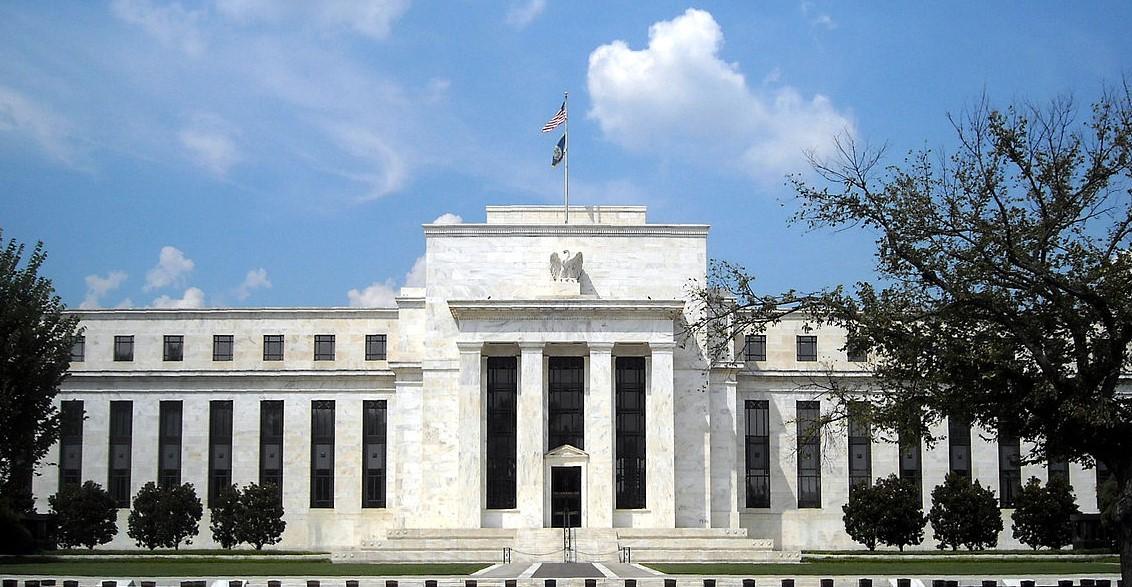
| The Fed: Why Federal Spending Soared in 2020 but State and Local Spending Flatlined Posted: 25 Jun 2021 09:30 AM PDT In the wake of the Covid Recession and the drive to pour ever larger amounts of "stimulus" into the US economy, the Federal Government in 2020 spent more than double—as a percentage of all government spending—of what all state and local governments spent in 2020, combined. By the end of 2020, the US's federal government was spending 68 percent of all government spending in America, while state and local governments spent only 31 percent of all government spending. More specifically, federal expenditures reached 6.8 trillion for the year while state and local spending reached "only" 2.9 trillion. This was a sizable change from the decade leading up to 2020 when the federal government's share of all government spending tended to hover around 60 percent, while state and local spending remained close to 40 percent. The sudden spike to 68 percent pushed the federal share up to the highest it's been since the 1960s and the Vietnam War.  Moreover, from 2019 to 2020, growth in state and local spending nearly flatlined, dropping to 0.38 percent growth over the previous year. That's the lowest growth rate in state and local spending since 2011 in the wake of the 2008 financial crisis. Yet, at the same time, federal spending increased by 25 percent. This was the largest year-over-year increase in federal spending since the Korean War. A Lot of State and Local Spending Is Really Federal SpendingYet, these numbers actually understate the extent to which federal spending dominates all government spending in America. This is because a lot of state and local spending is really federal spending, thanks to federal grants. As noted by the Center on Budget and Policy Priorities in 2018,
The share of state spending composed of federal grants varies from state to state with the largest share at 41.9 percent in Michigan, and the smallest in Hawaii at 17.5. Of course, this percentage is driven both by total state spending and by the total amount of federal grants. States that tax a lot and spend a lot in general (e.g., Hawaii, Massachusetts) tend to have a small share of federal spending within their state budgets. In any case, this is a continuation of a well-established trend. In fiscal year 2011, federal grants accounted for about 25 percent of state and local spending. So when we're comparing federal spending with state and local spending, that "60 percent" figure for federal spending over the past decade (as a proportion of all spending) is a low-ball figure. We should also expect this number to get a lot bigger. Thanks to rising Medicaid costs (mandated by federal law but only partly covered by federal grants) total state spending will increase, but federal grants will rise as well. In fiscal year 2011, "the federal government provided $607 billion in grants to state and local governments." By 2019, that figure had risen to $721 billion. My mid-2020, it was clear this total was around $800 billion, and that's not counting bailout funds and other covid-related funds handed over to state and local governments. The Role of Deficit Spending and the Central BankPerhaps the biggest reason we should expect the federal role to keep getting bigger is because it can do so easily. That is, state and local governments will continue to find it politically difficult to keep raising taxes to cover rising costs. The federal government, on the other hand, has a lot more freedom to spend. This is because the federal government has much greater access to borrowed funds than state and local governments, and this borrowing process is also subsidized by the US's central bank. This isn't normal. In most of the world, and for most state and local governments, rising deficits and mounting debt will tend to lead to rising interest rates and greater difficulty in finding a growing pool of borrowers to take on the government's debts. The US government, on the other hand, has two things working its favor which allows it to take on trillions in new debts without having to face the realities of rising interest rates: the Federal Reserve, and the status of the dollar as the world's reserve currency. Thanks to the Federal Reserve, when the US government needs to borrow another $500 billion or even another trillion dollars—as has been the case in recent years—the feds need not worry about flooding the debt markets with "too much" debt. Rather, the central bank will swoop in to buy up trillions of dollars in government debt—as has happened since 2008—to ensure that interest rates remain low. The central bank thus prints up trillions in new money in order to put more government debt in its portfolio, essentially monetizing the debt and subsidizing the federal government's ability to spend. Of course, if the US were a "normal" country with an ordinary fiat currency, it could never do that. All those trillions of dollars used to force down interest rates on government debt would cause the currency to devalue at catastrophic rates. Things would look more like the situation in Argentina. Fortunately for the federal government and the central bank, however, the dollar remains the world's reserve currency, partly because the other central banks of the world are at least as irresponsible as the US's central bank. So, investors and other central banks are still willing to mop up all those extra dollars and store them away. States and local governments can't do anything like this. The State of Illinois can't just spend an extra $100 billion because if it did so, the interest rate it had to pay on its debt would skyrocket. Moreover, even if Illinois had its own currency and a central bank to buy up a lot of this debt, the "Illinois dollar" would not have the benefits of being a global reserve currency. So, the US's federal government is in a unique position to keep funds flowing into state and local governments when those governments couldn't get away with taxing, spending, and borrowing on their own. This means that over time, the federal government will continue to replace state and local tax-and-spend mechanisms with federal spending and federal taxes. It's just another way that the central bank enables the centralization and growth of political power in the United States.  This posting includes an audio/video/photo media file: Download Now |
| Posted: 25 Jun 2021 09:00 AM PDT It's often claimed that support for the free market rests on the ideology of social Darwinism. According to this nefarious doctrine, Charles Darwin showed that evolution is a process of struggle. In it, the strong, meaning those best able to reproduce, supplant the weak. Social Darwinists like Herbert Spencer and William Graham Sumner, it is alleged, applied evolutionary theory to support the free market. If the poor did not fare well, their situation should not be deplored or remedied. The victory of the strong over the weak is a law of nature, and to endeavor to combat it is futile. One way to respond is to claim that social Darwinism is a myth, largely concocted by the historian Richard Hofstadter in his book Social Darwinism in American Thought. The journalist Jonathan Goldberg adopts this line, but for reasons I've stated elsewhere, it's a mistake. There really were social Darwinists, who defended capitalism in just the way indicated above. A better way to counter the claim that capitalism rests on the ideology of social Darwinism is to show that Spencer and Sumner, the supposed chief figures of this line of thought, do not advocate it. In a recent column, I attempt this task for Sumner. Mises adopts a characteristically insightful standpoint on this issue. He is strongly committed to Darwinism, but, he says, the social Darwinists draw the wrong lessons from evolution. They are right that, aside from human beings in the past several thousand years, evolution is a struggle in which the strong overcome the weak. But the onset of the division of labor changes things. With its onset, the key to evolutionary success is peaceful cooperation between the weak and the strong. As Mises puts this point in Human Action,
To reiterate, there is for Mises an antithesis between biological competition and social competition. In biological competition, people struggle against each other; in social or catallactic competition, more people does not mean greater struggle. The division of labor means that people benefit each other. As Mises says,
Mises doesn't think that it is always true that, once people have discovered the benefits of the division of labor, the more people the better. He is a Malthusian who thinks that there is an optimum level of population. But it is safe to say that such a point will not be reached for a very long time to come.  |
| How Medical Innovation Happens: Cash Clinics in Pharmacies and Big Box Stores Posted: 25 Jun 2021 08:00 AM PDT "Austrian economics is very much the economics of innovation, because we understand change, we understand uncertainty, and we understand that there is a constant search for betterment." A new world of medical entrepreneurship is growing. Concierge and cash-only practices, walk-in cash clinics, medical tourism, and cost-sharing plans are just a few of the ways free-market approaches are changing the landscape. Our expert speakers will discuss several of these developments, and more. Recorded in Salem, New Hampshire, on June 17, 2021.  |
| Posted: 25 Jun 2021 04:15 AM PDT Abolition of the public sector means, of course, that all pieces of land, all land areas, including streets and roads, would be owned privately, by individuals, corporations, cooperatives, or any other voluntary groupings of individuals and capital. The fact that all streets and land areas would be private would by itself solve many of the seemingly insoluble problems of private operation. What we need to do is to reorient our thinking to consider a world in which all land areas are privately owned. Let us take, for example, police protection. How would police protection be furnished in a totally private economy? Part of the answer becomes evident if we consider a world of totally private land and street ownership. Consider the Times Square area of New York City, a notoriously crime-ridden area where there is little police protection furnished by the city authorities. Every New Yorker knows, in fact, that he lives and walks the streets, and not only Times Square, virtually in a state of "anarchy," dependent solely on the normal peacefulness and good will of his fellow citizens. Police protection in New York is minimal, a fact dramatically revealed in a recent week-long police strike when, lo and behold!, crime in no way increased from its normal state when the police are supposedly alert and on the job. At any rate, suppose that the Times Square area, including the streets, was privately owned, say by the "Times Square Merchants Association." The merchants would know full well, of course, that if crime was rampant in their area, if muggings and holdups abounded, then their customers would fade away and would patronize competing areas and neighborhoods. Hence, it would be to the economic interest of the merchants' association to supply efficient and plentiful police protection, so that customers would be attracted to, rather than repelled from, their neighborhood. Private business, after all, is always trying to attract and keep its customers. But what good would be served by attractive store displays and packaging, pleasant lighting and courteous service, if the customers may be robbed or assaulted if they walk through the area? The merchants' association, furthermore, would be induced, by their drive for profits and for avoiding losses, to supply not only sufficient police protection but also courteous and pleasant protection. Governmental police have not only no incentive to be efficient or worry about their "customers'" needs; they also live with the ever-present temptation to wield their power of force in a brutal and coercive manner. "Police brutality" is a well-known feature of the police system, and it is held in check only by remote complaints of the harassed citizenry. But if the private merchants' police should yield to the temptation of brutalizing the merchants' customers, those customers will quickly disappear and go elsewhere. Hence, the merchants' association will see to it that its police are courteous as well as plentiful. Such efficient and high-quality police protection would prevail throughout the land, throughout all the private streets and land areas. Factories would guard their street areas, merchants their streets, and road companies would provide safe and efficient police protection for their toll roads and other privately owned roads. The same would be true for residential neighborhoods. We can envision two possible types of private street ownership in such neighborhoods. In one type, all the landowners in a certain block might become the joint owners of that block, let us say as the "85th St. Block Company." This company would then provide police protection, the costs being paid either by the home-owners directly or out of tenants' rent if the street includes rental apartments. Again, homeowners will of course have a direct interest in seeing that their block is safe, while landlords will try to attract tenants by supplying safe streets in addition to the more usual services such as heat, water, and janitorial service. ' To ask why landlords should provide safe streets in the libertarian, fully private society is just as silly as asking now why they should provide their tenants with heat or hot water. The force of competition and of consumer demand would make them supply such services. Furthermore, whether we are considering homeowners or rental housing, in either case the capital value of the land and the house will be a function of the safety of the street as well as of the other well-known characteristics of the house and the neighborhood. Safe and well-patrolled streets will raise the value of the landowners' land and houses in the same way as well-tended houses do; crime-ridden streets will lower the value of the land and houses as surely as dilapidated housing itself does. Since landowners always prefer higher to lower market values for their property, there is a built-in incentive to provide efficient, well -paved, and safe streets. Private enterprise does exist, and so most people can readily envision a free market in most goods and services. Probably the most difficult single area to grasp, however, is the abolition of government operations in the service of protection: police, the courts, etc.—the area encompassing defense of person and property against attack or invasion. How could private enterprise and the free market possibly provide such service? How could police, legal systems, judicial services, law enforcement, prisons—how could these be provided in a free market? We have already seen how a great deal of police protection, at the least, could be supplied by the various owners of streets and land areas. But we now need to examine this entire area systematically. In the first place, there is a common fallacy, held even by most advocates of laissez-faire, that the government must supply "police protection," as if police protection were a single, absolute entity, a fixed quantity of something which the government supplies to all. But in actual fact there is no absolute commodity called "police protection" any more than there is an absolute single commodity called "food" or "shelter." It is true that everyone pays taxes for a seemingly fixed quantity of protection, but this is a myth. In actual fact, there are almost infinite degrees of all sorts of protection. For any given person or business, the police can provide everything from a policeman on the beat who patrols once a night, to two policemen patrolling constantly on each block, to cruising patrol cars, to one or even several round-the-clock personal bodyguards. Furthermore, there are many other decisions the police must make, the complexity of which becomes evident as soon as we look beneath the veil of the myth of absolute "protection." How shall the police allocate their funds which are, of course, always limited as are the funds of all other individuals, organizations, and agencies? How much shall the police invest in electronic equipment? fingerprinting equipment? detectives as against uniformed police? patrol cars as against foot police, etc.? The point is that the government has no rational way to make these allocations. The government only knows that it has a limited budget. Its allocations of funds are then subject to the full play of politics, boondoggling, and bureaucratic inefficiency, with no indication at all as to whether the police department is serving the consumers in a way responsive to their desires or whether it is doing so efficiently. The situation would be different if police services were supplied on a free, competitive market. In that case, consumers would pay for whatever degree of protection they wish to purchase. The consumers who just want to see a policeman once in a while would pay less than those who want continuous patrolling, and far less than those who demand twenty-four-hour bodyguard service. On the free market, protection would be supplied in proportion and in whatever way that the consumers wish to pay for it. A drive for efficiency would be insured, as it always is on the market, by the compulsion to make profits and avoid losses, and thereby to keep costs low and to serve the highest demands of the consumers. Any police firm that suffers from gross inefficiency would soon go bankrupt and disappear. One big problem a government police force must always face is: what laws really to enforce? Police departments are theoretically faced with the absolute injunction, "enforce all laws," but in practice a limited budget forces them to allocate their personnel and equipment to the most urgent crimes. But the absolute dictum pursues them and works against a rational allocation of resources. On the free market, what would be enforced is whatever the customers are willing to pay for. Suppose, for example, that Mr. Jones has a precious gem he believes might soon be stolen. He can ask, and pay for, round-the-clock police protection at whatever strength he may wish to work out with the police company. He might, on the other hand, also have a private road on his estate he doesn't want many people to travel on—but he might not care very much about trespassers on that road. In that case, he won't devote any police resources to protecting the road. As on the market in general, it is up to the consumer—and since all of us are consumers this means each person individually decides how much and what kind of protection he wants and is willing to buy. All that we have said about landowners' police applies to private police in general. Free-market police would not only be efficient, they would have a strong incentive to be courteous and to refrain from brutality against either their clients or their clients' friends or customers. A private Central Park would be guarded efficiently in order to maximize park revenue, rather than have a prohibitive curfew imposed on innocent—and paying—customers. A free market in police would reward efficient and courteous police protection to customers and penalize any falling off from this standard. No longer would there be the current disjunction between service and payment inherent in all government operations, a disjunction which means that police, like all other government agencies, acquire their revenue, not voluntarily and competitively from consumers, but from the taxpayers coercively. In fact, as government police have become increasingly inefficient, consumers have been turning more and more to private forms of protection. We have already mentioned block or neighborhood protection. There are also private guards, insurance companies, private detectives, and such increasingly sophisticated equipment as safes, locks, and closed-circuit TV and burglar alarms. The President's Commission on Law Enforcement and the Administration of Justice estimated in 1969 that government police cost the American public $2.8 billion a year, while it spends $1.35 billion on private protection service and another $200 million on equipment, so that private protection expenses amounted to over half the outlay on government police. These figures should give pause to those credulous folk who believe that police protection is somehow, by some mystic right or power, necessarily and forevermore an attribute of State sovereignty. [Excerpted from chapters 11 and 12 of For A New Liberty.]  This posting includes an audio/video/photo media file: Download Now |
| An "Open Mind" Is of No Use When It's Open to Lies Posted: 25 Jun 2021 04:00 AM PDT In our world, there is very little people agree upon. One thing that seems to be an exception is that having an open mind is almost universally well regarded, while having a closed mind is almost universally criticized. However, such rhetoric presumes that what we are open or closed to is the truth. That leads to some problems of understanding, because we are routinely exposed to a great deal of nonsense, which we do not want to be open to, as well as truth. That is particularly important to understand in a period when Americans have been repeatedly told to "follow the science" (say on mask restrictions) to prove they are not just obstinately closed-minded, when the main purpose was to open people's minds to falsehoods, while at the same time they have been browbeaten to close their minds to legitimate questions about vaccines, mandated closures, critical race theory, and more, with both types of arguments used to reduce our freedoms. Leonard Read insightfully addressed such issues in "Open versus Closed Minds," chapter 22 of his 1973 Who's Listening? We should have an open mind to what he wrote.
Read begins by explaining why someone being close-minded about something need not be an inverse indicator of their wisdom on the topic, and being open-minded on something need not be a positive indicator of their wisdom on the topic.
Read then takes his view of what we should, and what we should not, be open to, and asks a very uncommon question about it—what kind of openness would serve both ourselves and society, both those around us today and in posterity?
Not only did Leonard Read add to our ability to know what we are talking about with open- and closed-mindedness, he provided us an example, laying out things his mind was closed to—core principles which he believed were true, and solid premises from which to reason and evaluate behavior. He wrote, "Here I stand, I can do no other."
Leonard Read's closed-mindedness on certain principles as true provides us material for serious reflection about what we believe. And he reflects some ancient wisdom that is unfortunately more often honored in the breach than in modern practice. He seems to be channeling Marcus Aurelius, who wrote in Meditations, "If someone is able to show me that what I think or do is not right, I will happily change, for I seek the truth, by which no one was ever truly harmed. It is the person who continues in his self-deception and ignorance who is harmed." Further, Heraclitus, in Fragments, suggests perhaps a better term than closed-mindedness for Read's approach: "To be even-minded is the greatest virtue. Wisdom is to speak the truth and act in keeping with its nature." Read also provided us a way to evaluate the quality of our own closed-mindedness.
 This posting includes an audio/video/photo media file: Download Now |
| You are subscribed to email updates from Mises Wire. To stop receiving these emails, you may unsubscribe now. | Email delivery powered by Google |
| Google, 1600 Amphitheatre Parkway, Mountain View, CA 94043, United States | |


.jpg?itok=fpBHUfZR)

No comments:
Post a Comment