Mises Wire |
- What Did Bob Learn? Part 3 of 3
- Böhm-Bawerk: Austrian Economist Who Said No to Big Government
- El Salvador Blazes the Path to Bitcoinization
- Irene Ng: Designing New Consumer Experiences in the Era of IoT
- Guatemala: The Human Rights Nightmare That Is the US Drug War
- Fannie and Freddie Are Just Government Agencies. They're Likely to Stay that Way.
- Since When Is a Half-Point Rate Hike (2 Years from Now) "Hawkish"?
| What Did Bob Learn? Part 3 of 3 Posted: 29 Jun 2021 02:00 PM PDT Bob concludes his series on areas where he's changed his mind. This episode covers the economics of climate change, fractional reserve banking, the US gold standard, his notorious inflation bets, Nelson Nash's Infinite Banking Concept, and the God of the Bible. Mentioned in the Episode and Other Links of Interest:
For more information, see BobMurphyShow.com. The Bob Murphy Show is also available on Apple Podcasts, Google Podcasts, Stitcher, Spotify, and via RSS.
 |
| Böhm-Bawerk: Austrian Economist Who Said No to Big Government Posted: 29 Jun 2021 12:00 PM PDT We live at a time when politicians and bureaucrats only know one public policy: more and bigger government. Yet, there was a time when even those who served in government defended limited and smaller government. One of the greatest of these died one hundred years ago on August 27, 1914, the Austrian economist Eugen von Böhm-Bawerk. Böhm-Bawerk is most famous as one of the leading critics of Marxism and socialism in the years before the First World War. He is equally famous as one of the developers of "marginal utility" theory as the basis of showing the logic and workings of the competitive market price system. But he also served three times as the finance minister of the old Austro-Hungarian Empire, during which he staunchly fought for lower government spending and taxing, balanced budgets, and a sound monetary system based on the gold standard. Danger of Out-of-Control Government SpendingEven after Böhm-Bawerk had left public office he continued to warn of the dangers of uncontrolled government spending and borrowing as the road to ruin in his native Austria-Hungary, and in words that ring as true today as when he wrote them a century ago. In January 1914, just a little more than a half a year before the start of the First World War, Böhm-Bawerk said in a series of articles in one of the most prominent Vienna newspapers that the Austrian government was following a policy of fiscal irresponsibility. During the preceding three years, government expenditures had increased by 60 percent, and for each of these years the government's deficit had equaled approximately 15 percent of total spending. The reason, Böhm-Bawerk said, was that the Austrian parliament and government were enveloped in a spider's web of special-interest politics. Made up of a large number of different linguistic and national groups, the Austro-Hungarian Empire was being corrupted through abuse of the democratic process, with each interest group using the political system to gain privileges and favors at the expense of others. Böhm-Bawerk explained:
He accused the Austrian government of having "squandered amidst our good fortune [of economic prosperity] everything, but everything, down to the last penny, that could be grabbed by tightening the tax-screw and anticipating future sources of income to the upper limit" by borrowing in the present at the expense of the future. For some time, he said, "a very large number of our public authorities have been living beyond their means." Such a fiscal policy, Böhm-Bawerk feared, was threatening the long-run financial stability and soundness of the entire country. Eight months later, in August 1914, Austria-Hungary and the rest of Europe stumbled into the cataclysm that became World War I. And far more than merely the finances of the Austro-Hungarian Empire were in ruins when that war ended four years later, since the Empire itself disappeared from the map of Europe. A Man of Honesty and IntegrityEugen von Böhm-Bawerk was born on February 12, 1851 in Brno, capital of the Austrian province of Moravia (now the eastern portion of the Czech Republic). He died on August 27, 1914, at the age of 63, just as the First World War was beginning. Ten years after Böhm-Bawerk's death, one of his students, the Austrian economist Ludwig von Mises, wrote a memorial essay about his teacher. Mises said:
Another of Böhm-Bawerk's students, Joseph A. Schumpeter, spoke in the same glowing terms of his teacher, saying, "he was not only one of the most brilliant figures in the scientific life of his time, but also an example of that rarest of statesmen, a great minister of finance…. As a public servant, he stood up to the most difficult and thankless task of politics, the task of defending sound financial principles." The scientific contributions to which both Mises and Schumpeter referred were Böhm-Bawerk's writings on what has become known as the Austrian theory of capital and interest, and his equally insightful formulation of the Austrian theory of value and price. The Austrian Theory of Subjective ValueThe Austrian school of economics began 1871 with the publication of Carl Menger's Principles of Economics. In this work, Menger challenged the fundamental premises of the classical economists, from Adam Smith through David Ricardo to John Stuart Mill. Menger argued that the labor theory of value was flawed in presuming that the value of goods was determined by the relative quantities of labor that had been expended in their manufacture. Instead, Menger formulated a subjective theory of value, reasoning that value originates in the mind of an evaluator. The value of means reflects the value of the ends they might enable the evaluator to obtain. Labor, therefore, like raw materials and other resources, derives value from the value of the goods it can produce. From this starting point Menger outlined a theory of the value of goods and factors of production, and a theory of the limits of exchange and the formation of prices. Böhm-Bawerk and his future brother-in-law and also later-to-be-famous contributor to the Austrian school, Friedrich von Wieser, came across Menger's book shortly after its publication. Both immediately saw the significance of the new subjective approach for the development of economic theory. In the mid-1870s, Böhm-Bawerk entered the Austrian civil service, soon rising in rank in the Ministry of Finance working on reforming the Austrian tax system. But in 1880, with Menger's assistance, Böhm-Bawerk was appointed a professor at the University of Innsbruck, a position he held until 1889. Böhm-Bawerk's Writings on Value and PriceDuring this period he wrote the two books that were to establish his reputation as one of the leading economists of his time, Capital and Interest, vol. I, History and Critique of Interest Theories (1884), and vol. II, Positive Theory of Capital (1889). A third volume, Further Essays on Capital and Interest, appeared in 1914 shortly before his death. In the first volume of Capital and Interest, Böhm-Bawerk presented a wide and detailed critical study of theories of the origin of and basis for interest from the ancient world to his own time. But it was in the second work, in which he offered a Positive Theory of Capital, that Böhm-Bawerk's major contribution to the body of Austrian economics may be found. In the middle of the volume is a 135-page digression in which he presents a refined statement of the Austrian subjective theory of value and price. He develops in meticulous detail the theory of marginal utility, showing the logic of how individuals come to evaluate and weigh alternatives among which they may choose and the process that leads to decisions to select certain preferred combinations guided by the marginal principle. And he shows how the same concept of marginal utility explains the origin and significance of cost and the assigned valuations to the factors of production. In the section on price formation, Böhm-Bawerk develops a theory of how the subjective valuations of buyers and sellers create incentives for the parties on both sides of the market to initiate pricing bids and offers. He explains how the logic of price creation by the market participants also determines the range in which any market-clearing, or equilibrium, price must finally settle, given the maximum demand prices and the minimum supply prices, respectively, of the competing buyers and sellers. Capital and Time Investment as the Sources of ProsperityIt is impossible to do full justice to Böhm-Bawerk's theory of capital and interest. But in the barest of outlines, he argued that for man to attain his various desired ends he must discover the causal processes through which labor and resources at his disposal may be used for his purposes. Central to this discovery process is the insight that often the most effective path to a desired goal is through "roundabout" methods of production. A man will be able to catch more fish in a shorter amount of time if he first devotes the time to constructing a fishing net out of vines, hollowing out a tree trunk as a canoe, and carving a tree branch into a paddle. Greater productivity will often be forthcoming in the future if the individual is willing to undertake, therefore, a certain "period of production," during which resources and labor are set to work to manufacture the capital—the fishing net, canoe, and paddle—that is then employed to paddle out into the lagoon where larger and more fish may be available. But the time involved to undertake and implement these more roundabout methods of production involve a cost. The individual must be willing to forgo (often less productive) production activities in the more immediate future (wading into the lagoon using a tree branch as a spear) because that labor and those resources are tied up in a more time-consuming method of production, the more productive results from which will only be forthcoming later. Interest on a Loan Reflects the Value of TimeThis led Böhm-Bawerk to his theory of interest. Obviously, individuals evaluating the production possibilities just discussed must weigh ends available sooner versus other (perhaps more productive) ends that might be obtainable later. As a rule, Böhm-Bawerk argued, individuals prefer goods sooner rather than later. Each individual places a premium on goods available in the present and discounts to some degree goods that can only be achieved further in the future. Since individuals have different premiums and discounts (time-preferences), there are potential mutual gains from trade. That is the source of the rate of interest: it is the price of trading consumption and production goods across time. Böhm-Bawerk Refutes Marx's Critique of CapitalismOne of Böhm-Bawerk's most important applications of his theory was the refutation of the Marxian exploitation theory that employers make profits by depriving workers of the full value of what their labor produces. He presented his critique of Marx's theory in the first volume of Capital and Interest and in a long essay originally published in 1896 on the "Unresolved Contradictions in the Marxian Economic System." In essence, Böhm-Bawerk argued that Marx had confused interest with profit. In the long run no profits can continue to be earned in a competitive market because entrepreneurs will bid up the prices of factors of production and compete down the prices of consumer goods. But all production takes time. If that period is of any significant length, the workers must be able to sustain themselves until the product is ready for sale. If they are unwilling or unable to sustain themselves, someone else must advance the money (wages) to enable them to consume in the meantime. This, Böhm-Bawerk explained, is what the capitalist does. He saves, forgoing consumption or other uses of his wealth, and those savings are the source of the workers' wages during the production process. What Marx called the capitalists' "exploitative profits" Böhm-Bawerk showed to be the implicit interest payment for advancing money to workers during the time-consuming, roundabout processes of production. Defending Fiscal Restraint in the Austrian Finance MinistryIn 1889, Böhm-Bawerk was called back from the academic world to the Austrian Ministry of Finance, where he worked on reforming the systems of direct and indirect taxation. He was promoted to head of the tax department in 1891. A year later he was vice president of the national commission that proposed putting Austria-Hungary on a gold standard as a means of establishing a sound monetary system free from direct government manipulation of the monetary printing press. Three times he served as minister of finance, briefly in 1895, again in 1896–1897, and then from 1900 to 1904. During the last four-year term Böhm-Bawerk demonstrated his commitment to fiscal conservatism, with government spending and taxing kept strictly under control. However, Ernest von Koerber, the Austrian prime minister in whose government Böhm-Bawerk served, devised a grandiose and vastly expensive public works scheme in the name of economic development. An extensive network of railway lines and canals were to be constructed to connect various parts of the Austro-Hungarian Empire—subsidizing in the process a wide variety of special-interest groups in what today would be described as a "stimulus" program for supposed "jobs-creation." Böhm-Bawerk tirelessly fought against what he considered fiscal extravagance that would require higher taxes and greater debt when there was no persuasive evidence that the industrial benefits would justify the expense. At Council of Ministers meetings Böhm-Bawerk even boldly argued against spending proposals presented by the Austrian Emperor, Franz Josef, who presided over the sessions. When finally he resigned from the Ministry of Finance in October 1904, Böhm-Bawerk had succeeded in preventing most of Prime Minister Koerber's giant spending project. But he chose to step down because of what he considered to be corrupt financial "irregularities" in the defense budget of the Austrian military. However, Böhm-Bawerk's 1914 articles on government finance indicate that the wave of government spending he had battled so hard against broke through once he was no longer there to fight it. Political Control or Economic LawA few months after his passing, in December 1914, his last essay appeared in print, a lengthy piece on "Control or Economic Law?" He explained that various interest groups in society, most especially trade unions, suffer from a false conception that through their use or the threat of force, they are able to raise wages permanently above the market's estimate of the value of various types of labor. Arbitrarily setting wages and prices higher than what employers and buyers think labor and goods are worth—such as with a government-mandated minimum wage law—merely prices some labor and goods out of the market. Furthermore, when unions impose high nonmarket wages on the employers in an industry, the unions succeed only in temporarily eating into the employers' profit margins and creating the incentive for those employers to leave that sector of the economy and take with them those workers' jobs. What makes the real wages of workers rise in the long run, Böhm-Bawerk argued, was capital formation and investment in those more roundabout methods of production that increase the productivity of workers and therefore make their labor services more valuable in the long run, while also increasing the quantity of goods and services they can buy with their market wages. To his last, Eugen von Böhm-Bawerk defended reason and the logic of the market against the emotional appeals and faulty reasoning of those who wished to use power and the government to acquire from others what they could not obtain through free competition. His contributions to economic theory and economic policy show him as one of the greatest economists of all time, as well as his example as a principled man of uncompromising integrity who in the political arena unswervingly fought for the free market and limited government. Originally published September 6, 2014.  |
| El Salvador Blazes the Path to Bitcoinization Posted: 29 Jun 2021 12:00 PM PDT An unbanked population, an economy dependent on remittances, and dollarization. These combine to make El Salvador a perfect case study for bitcoinization. Original Article: "El Salvador Blazes the Path to Bitcoinization" This Audio Mises Wire is generously sponsored by Christopher Condon. Narrated by Michael Stack.  |
| Irene Ng: Designing New Consumer Experiences in the Era of IoT Posted: 29 Jun 2021 08:00 AM PDT Value-as-experience is an insight from Austrian economics. Value is not inherent in objects or even in services. Value is not derived from functional use, but is the good feeling the consumer experiences during consumption. Consistent with the Austrian understanding of the market as a process, value is a process. It plays out in time in the consumer's mind. Consumers learn what is valuable to them in the process of choosing and consuming and evaluating. These insights add some under-appreciated marketing considerations to a firm's capabilities, such as an appreciation of situational traits and of the importance of context. Irene Ng provides the E4B podcast audience with a set of contemporary tools to design new experiences and even create new markets in the era of the "Internet of Things" (IoT). Key Takeaways and Actionable Insights.To design experiences, start by thinking in terms of ecosystems.Ecosystem thinking pays attention to how knowledge, people, technology, processes and the environment are connected and work together. Systems awareness is becoming wider and wider, observing the interaction and value creation among multiple service systems. Consumers' value experience occurs within a service system, and thus the service ecosystem worldview is increasingly important for entrepreneurs in an ever more connected, digital and data-driven world. The subjectivist viewpoint is fundamental to designing consumer experiences.We are taught from the youngest age to have an object view of the world. We describe situations using nouns: for example, in a room, there is a chair and a piano. Meaning and purpose are identified via the nouns we use. Economics shares some of this noun-based view of the world: assets, knowledge, material things, property. For the design of consumer experiences, verbs are more relevant, not just as descriptions but as connections between objects and people and behavior and thinking. If I play the piano or drink tea, I am connecting objects and people in action. The world becomes a matrix of verbs and interactions. What individuals do impacts on objects and on other individuals. Design becomes a matter of what a system of objects and people and connections and actions and flows can do. IoT brings new capacities and new affordances to service ecosystems.Irene listed 4 new capacities of IoT that contribute to new ways to design experiences:
Now a designer can think about a new set of affordances: properties of a system that show users what actions they can take. Ideally, the consumer will perceive the new affordances without the need for complex instruction. Marketing changes its focus from consumers' personal traits and segmentation to situations and contexts.The design of an experience shifts from the use of objects to connected things with information flows in a system. A customer's perception of the experience within the system may be affected less by their personal traits (as is often assumed in segmentations such as "early adopters" or "social approbation seekers") and more by situational traits and context. For example, the situation of "taking my morning coffee" affects an individual's perception of how well a coffee mug meets their needs (how well does it fit under the spout of the coffee maker), along with a chair to sit in or a news service (paper or digital?) to read. How well do all these artifacts and services work together in this situation? Similarly, context affects system perception. An individual might like a certain style of streaming music at home, consumed through a sound system while eating dinner, and an entirely different style for working out in the gym, consumed through a portable digital device and earpods. The design of experiences considers situation and context, and can potentially accommodate a very broad range of people through personalization rather than cater to a narrow market segment. The human being remains the best sensor in the system, and all design must support and enhance this role.There may be a temptation for digital designers and technicians to become immersed in the capabilities of an IoT system and forget that it is the human who judges the value of the system through the experience it enables and supports. The human is not outside the system, but is the master sensor, providing both inputs, outputs and judgment. IoT systems provide support, using data to enhance the human experience. Empathy is still the designer's number one tool to identify the market drivers — the dissatisfactions to be addressed — that underpin favorable human perceptions of the value of IoT systems. Additional Resources"Designing New Consumer Experiences in the Era of IoT" (PDF): Mises.org/E4B_124_PDF "The Internet of Things: Review and Research Directions" by Irene Ng and Susan Wakenshaw" (PDF): Mises.org/E4B_124_Paper1 "Service Ecosystems: A Timely Worldview" by Irene Ng (PDF): Mises.org/E4B_124_Paper2 "Mimicking Firms: Future of Work and Theory of the Firm in a Digital Age" by Irene Ng (PDF): Mises.org/E4B_124_Paper3 Value & Worth: Creating New Markets in the Digital Economy by Irene Ng: Mises.org/E4B_124_Book  |
| Guatemala: The Human Rights Nightmare That Is the US Drug War Posted: 29 Jun 2021 07:00 AM PDT Biden's plan to give more money to Central American regimes will do nothing to compensate farmers, businessmen, and others still victimized by the US war on drugs. Original Article: "Guatemala: The Human Rights Nightmare That Is the US Drug War" This Audio Mises Wire is generously sponsored by Christopher Condon. Narrated by Michael Stack.  |
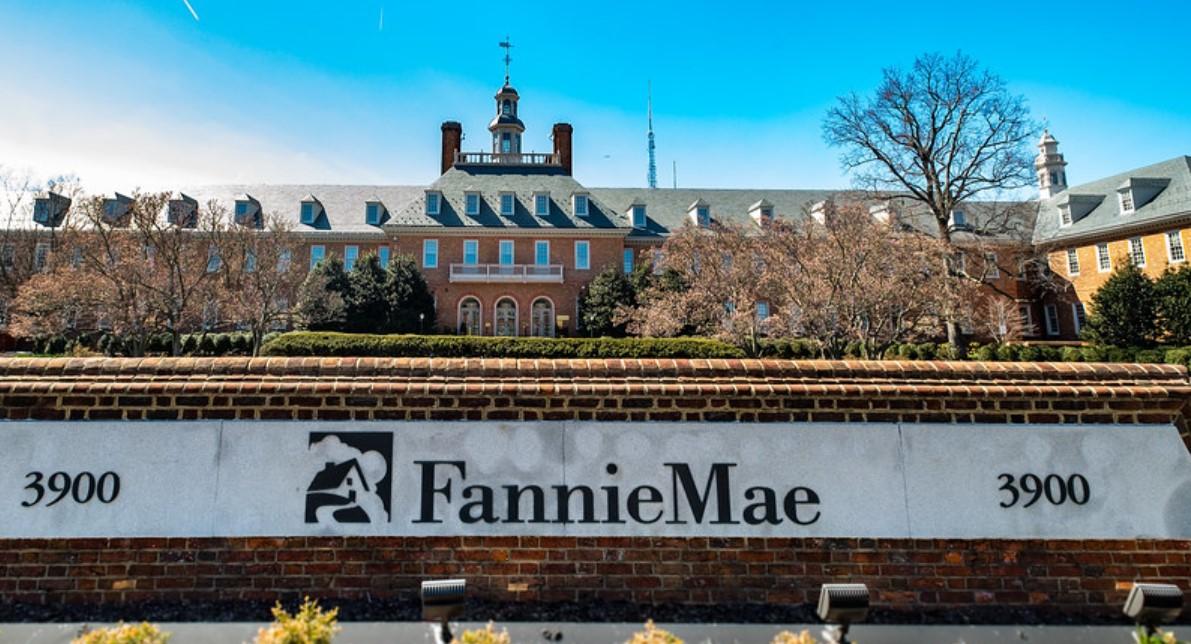
| Fannie and Freddie Are Just Government Agencies. They're Likely to Stay that Way. Posted: 29 Jun 2021 05:45 AM PDT Last Week, the US Supreme Court confirmed that Fannie Mae and Freddie Mac are essentially government-owned corporations, and are likely to stay that way. The Court didn't say this in so many words, but the ruling (namely, Collins v. Yellen) helps to end the fiction that Fannie and Freddie are private organizations only temporarily in a state of "conservatorship" under the control of the US government. The ruling itself is seemingly extremely mundane. The Court ruled that the chief executive of the Federal Housing and Finance Agency (FHFA)—the government agency that effectively owns Fannie and Freddie—was for all practical purposes a government appointee like any other executive from a government agency. Moreover, the Court refused to intervene to end the federal government's practice of "sweeping" funds from Fannie and Freddie and placing those funds in the US Treasury. In effect, the rulings confirm what more cynical and savvy observers have long known: that Fannie and Freddie have always been quasi-government organizations, and are now full-on government bodies following the bailout and takeover of the two corporations which occurred in September 2008. In other words, in practice, Fannie and Freddie are no more "private" entities than is Pemex, Mexico's state-owned petroleum company. As Lew Rockwell noted at the time of the government's takeover in 2008:
So, although we now politely—nearly 13 years later—refer to Fannie and Freddie as companies "in conservatorship"—the reality is these companies have been nationalized. Of course, they were never truly private. Fannie and Freddie were created by Congress to add liquidity to the mortgage markets by buying up mortgages in the secondary market. For investors, the desirability of their stock to investors long rested on the implicit promise—a de facto wink and nod—making it clear that Congress would never allow these companies to fail. Yet, not even this was enough for the management at Fannie and Freddie. As early as the late 1990s, Fannie Mae was likely "misstat[ing] its financial statements." Freddie engaged in similar behavior. None of t his affected what many investors were banking on: that in case of any major disruptions to the housing market, the federal government would force the taxpayers to bail these companies out. That's exactly what happened in 2008, as just the latest spasm of "financialization" which sucked ever more resources out of the non-financial economy in order to pour more cash into the financial sector. Yet, investors perhaps did not expect the feds to expropriate the companies, although such terms were never used. Both investors and federal regulators have continued to fight over just how fully these companied had been nationalized. Last week's ruling makes it clear they are indeed truly nationalized, and the money that flows into Fannie and Freddie is the federal government's money. Nor should we expect this to change any time soon. Approximately half of the mortgage market at this point is backed by Fannie and Freddie, and that means the stakes are high. Congress needs Fannie and Freddie to grease the wheels of the mortgage market and to ensure that there is always plenty of money sloshing around in the mortgage markets so that interest rates remain low and the homeownership rate is propped up. To trust Fannie and Freddie to the "free market" might allow interest rates to adjust to a significantly higher rate, and that's clearly not tolerable in the current climate in Washington, DC. It's clear Washington never intended these companies to be truly private, but the current housing market is so fragile and so reliant on artificial amounts of liquidity—and artificially low interest rates—that it appears clear federal officials will continue to insist on direct control. It's all just another example of how the modern US economy is heavily socialized, financialized, subsidized, and controlled by federal technocrats. The Court has just told us what we already knew, but now it's getting harder to investors to deny this reality. Following the ruling last week, Fannie and Freddie stock plummeted 45 percent at one point, and remains at a multi-year low as investors now increasingly suspect hopes for "reprivatization" are in vain.  This posting includes an audio/video/photo media file: Download Now |
| Since When Is a Half-Point Rate Hike (2 Years from Now) "Hawkish"? Posted: 29 Jun 2021 04:00 AM PDT The Fed announced the reportedly hawkish news that the central bank may raise rates, not this year, not next year, but by fifty basis points sometime in 2023. This tapering would slow the Fed's buying of $120 billion of debt securities a month with money created from the ether to some lesser amount. People forget the central bank "kept its benchmark rate on hold for a 10th straight meeting after sweeping into emergency action amid the coronavirus pandemic in March of last year with a full percentage-point cut." Yet again emergency government action has become permanent. This news sent the dollar screaming upward, with the DXY jumping from 90.54 to 92.32 at week's end. The price of gold was, of course, bludgeoned. The yellow metal dropped 6.5 percent over the next five days. The ten-year Treasury bond finished the week at a paltry 1.44 percent. Meanwhile, financial basket case Greece saw its ten-year rate finish at seventy-nine basis points. Making no news was Lyn Alden's tweet that the Federal Reserve's balance sheet crossed $8 trillion in assets. Fed watcher Alden followed this with the news, "Reverse repos jumped $235 billion today to $755 billion." Chairman Powell didn't articulate what the Fed will do; the financial press deciphered it this way, per Bloomberg: "The Federal Reserve's so-called dot plot, which the U.S. central bank uses to signal its outlook for the path of interest rates, shows that officials expect no change in policy this year, while leaning toward two rate increases by the end of 2023, based on median estimates." Does this make sense? Free markets at work? Logical price discovery? After all, as Murray Rothbard explained, "Since the investment is always in anticipation of later sale, the investors are also engaged in entrepreneurship, in enterprise." Since when is forecasting a couple rate bumps two years from now considered hawkish to the point of making the dollar pop and gold flop? Since it's a Keynesian world, rather than an Austrian one, Lord Keynes reminds us, "The market can stay irrational longer than you can stay solvent." Another point of view is "I'm looking at the gold market right now and I think this could prove to be a good time to buy," George Milling-Stanley, chief gold strategist at State Street Global Advisors, said. "I see a lot of panic selling and I don't think that can last much longer. Basically, the markets saw higher inflation and higher interest rates, but they completely ignored the fact that the hikes are at least two years away. A lot can happen in two years." Milling-Stanley has a long enough memory to make the point, "the last time that the Fed was actually in a rate tightening mode was between December of 2015 and December of 2018, so gold should have gone down. But it went from $1,050 in December of 2015 to $1,270 by December of 2018. So gold went up 21% in those three years, even though rates were raised nine times." Keynes pointed out, "For it is, so to speak, a game of Snap, of Old Maid, of Musical Chairs—a pastime in which he is victor who says Snap neither too soon nor too late, who passed the Old Maid to his neighbour before the game is over, who secures a chair for himself when the music stops. These games can be played with zest and enjoyment, though all the players know that it is the Old Maid which is circulating, or that when the music stops some of the players will find themselves unseated." While Keynes viewed speculation as a game, Rothbard viewed it more seriously. "Entrepreneurship is also the dominant characteristic of buyers and sellers who act speculatively, who specialize in anticipating higher or lower prices in the future. Their entire action consists in attempts to anticipate future market prices, and their success depends on how accurate or erroneous their forecasts are." Nobody can say for sure the Fed will taper or increase rates. And just because the Fed's inflation has forced us all to learn to pump our own gas and scan our groceries, not many have the entrepreneurial savvy to invest properly to fund retirement. With the eight hundred–pound Fed in the markets, finding a chair and forecasting accurately may be next to impossible.  This posting includes an audio/video/photo media file: Download Now |
| You are subscribed to email updates from Mises Wire. To stop receiving these emails, you may unsubscribe now. | Email delivery powered by Google |
| Google, 1600 Amphitheatre Parkway, Mountain View, CA 94043, United States | |



No comments:
Post a Comment