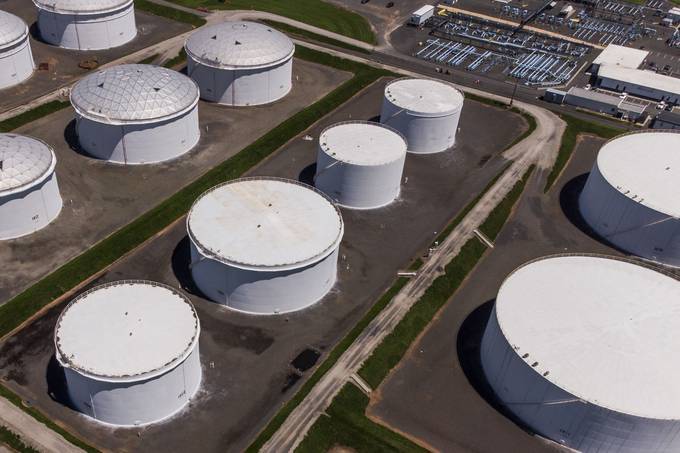
| The National Security Agency, which once did its work almost entirely in the shadows, is evolving into a far more public institution that's eager to cooperate with parts of the private sector. The most visible symbol of that shift is a cybersecurity collaboration center that opened in January and is custom-designed for agency officials to host industry cybersecurity pros and hash out responses to major hacking challenges. The agency has worked out deals with numerous defense and technology companies to make regular visits to the center, said Rob Joyce, director of NSA's Cybersecurity Directorate, although he declined to name the companies or provide a specific number that have joined. The goal is for some company officials to be based in the center full time, though that has been delayed by the pandemic, Joyce said. "If you dealt with NSA a couple of years ago in cybersecurity, we were happy to catch things you would throw over that fence line, but we did not have the authorities and the processes to engage in a conversation back," Joyce said, referring to the physical barrier that surrounds the agency's home base in Fort Meade, Md., which is mostly inaccessible to folks without security clearances. "That's what's changed," he said. Joyce made the comments during a media tour of the collaboration center — another event that would have seemed outlandish a few years ago for the spy outfit that was jokingly referred to as "no such agency."  Rob Joyce, director of NSA's Cybersecurity Directorate, speaks to reporters at the agency's Cybersecurity Collaboration Center. (NSA) | There are two key things that prompted the NSA's transformation. First was the backlash to Edward Snowden's 2013 revelations about the agency's widespread surveillance, which sometimes scooped up communications from U.S. citizens who were in contact with foreign surveillance targets. In the wake of the leaks, NSA officials pledged to be far more transparent with the public about their operations. That's been a difficult task while also maintaining secrecy about spying operations. The second major driver is the pace and scale of cyberattacks, which increasingly are threatening to destabilize the economy and threaten public safety. The Colonial Pipeline ransomware attack in May disrupted gas supplies across the southeastern United States. The SolarWinds attack could have brought large chunks of the government and top companies to a screeching halt if the Russian hackers allegedly behind the operation had opted to launch a destructive attack rather than simply steal information. "Things have to change because doing what we did yesterday isn't going to solve the problem," Joyce said. Joyce wants the government to be better at preventing cyberattacks against industry rather than mopping up the damage once it's already happened, he said. "We don't want the federal government to be exceptional at incident response. At that point it's too late," he said. Collaborating more closely with industry will also give NSA better visibility into the kind of attacks hackers are launching and a possible early warning about actions by adversaries such as Russia and China, Joyce said. 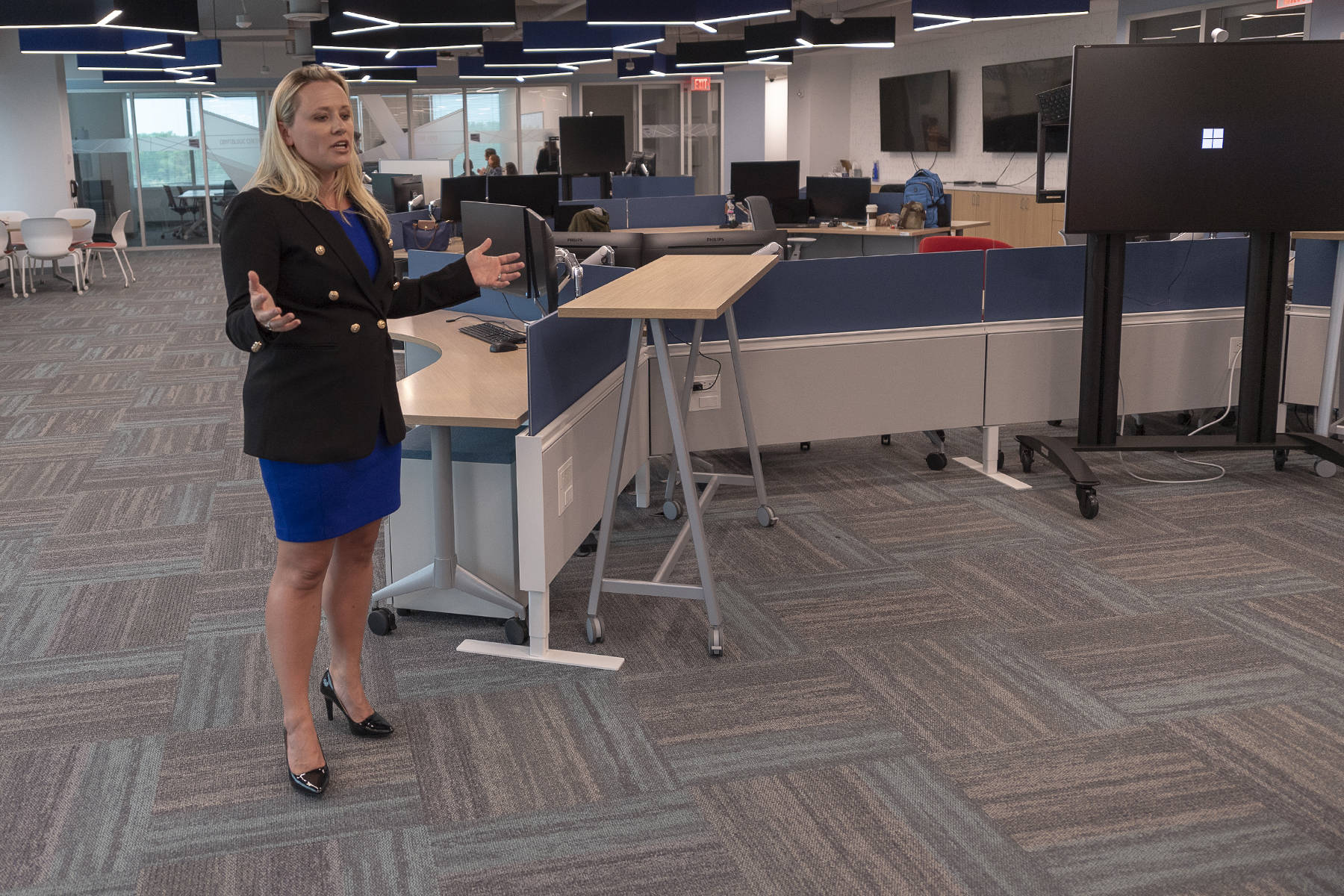 Morgan Adamski, chief of NSA's Cybersecurity Collaboration Center, shows off the new center to media. (NSA) | The center is designed for collaboration specifically with companies in the defense industrial base and that provide large-scale technology services. That second category could include major technology platforms, cybersecurity companies and providers of cloud computing services. "We have [company officials] coming in for meetings, conversations where we talk about specific actors or specific activity that we've been seeing," the center's chief, Morgan Adamski, said. "We also facilitate analytical, collaborative workshops so our partners can come in and we can work a specific topic for multiple days at a time." The center isn't giving up secrecy entirely. Company representatives who spend a substantial amount of time there are expected to have security clearances so they can collaborate using information that's not shared with the broader public, Adamski said. About one-third of the 3,600-square-foot center is set up for such classified conversations, though the remainder looks more like a traditional tech workspace with cubicles, large glass windows and pillars with inspirational slogans printed on them, such as "imagine," "ideate" and "transform." The center's connected through a virtual chat room with analysts at NSA's main campus who can share insights based on the agency's foreign intelligence collection. The unclassified portion of the center is WiFi enabled, another novelty for the NSA because of concerns about leaking secrets. Joyce made a show of tweeting from his personal cellphone during the news briefing, something that's not usually possible in the classified environments he works in. 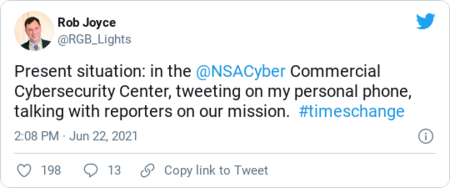 In a further nod to transparency, the agency is working on setting Joyce up with an official government Twitter account to post from rather than his personal account, he said. | | Share The Cybersecurity 202 |  |  |  | | | 


 Email
Email 





No comments:
Post a Comment