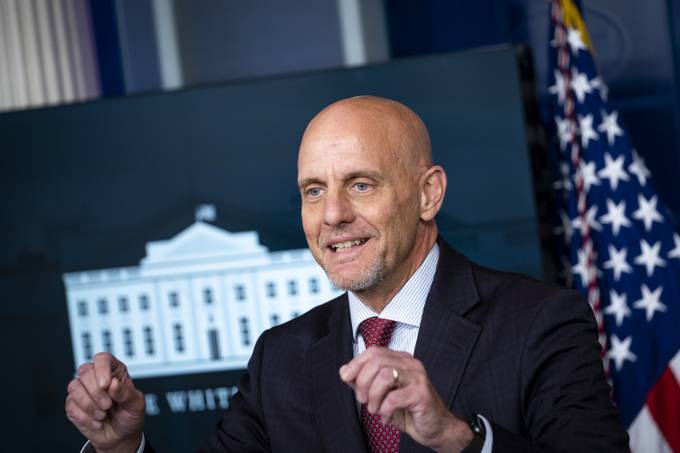
| As the first big wave of coronavirus books arrives, it's shedding new light on the outbreak — and raising questions when those stories conflict. The pandemic literary moment is hard to miss, with reporters, pundits and politicians afflicted by book contracts. Former Biden official Andy Slavitt, author of the just-published "Preventable," will be interviewed tomorrow by my colleague Yasmeen Abutaleb — who's co-authoring her own imminent book on the bumbled response, "Nightmare Scenario," with fellow Post reporter Damian Paletta. They'll join hundreds of coronavirus books already out or coming soon, including big-picture offerings from former FDA commissioner Scott Gottlieb ("Uncontrollable Spread") and CNN's Sanjay Gupta ("World War C"), and narrower scopes like Brendan Borrell's "The First Shots" on the vaccine race or Alina Chan and Matt Ridley's "Viral" on coronavirus' disputed origins; and an entire cottage industry about Anthony S. Fauci, ranging from a children's picture book to "Faucian Bargain," a conspiratorial tome taking aim at the government's top infectious-disease expert. (For transparency, today's Health 202 guest author also had discussions about a coronavirus book last year before deciding the timing wasn't right.) John Barry, author of "The Great Influenza" — the definitive history of the last world-altering pandemic — said he's writing a coronavirus book that he hopes will be published in three years, potentially taking a global perspective. "I haven't really identified precisely what the narrative's gonna be yet," he added. "I think it's still maturing." The stakes are real: the right books can shape national policy and collective memory. "The Great Influenza" alarmed a parade of Bush administration officials, helping spark a new U.S. pandemic strategy. "Rage," by The Post's Bob Woodward, established that Donald Trump privately knew the severity of SARS-CoV-2, even as he publicly played down the risks. And the timing is key. There's a risk in writing too early — as New York Gov. Andrew Cuomo might confess, with his triumphant October 2020 memoir now the subject of scorn and probes — or waiting too long. "If you're only going to read two or three books on the pandemic, which are the two or three you're going to read?" asked prominent epidemiologist Michael Osterholm, who's contracted to co-author his own coronavirus tome. Set to be judged by history — and potentially millions of readers — top Trump officials involved in last year's bumpy coronavirus response have met to get their stories straight, Politico's Adam Cancryn richly detailed this spring. Now the pandemic books are here, starting to offer insights as the U.S. outbreak recedes and we move into contemplating what went wrong.For instance, Michael Lewis' briskly written book, "The Premonition," crystallizes frustrations about the Centers for Disease Control and Prevention that transcend the Trump administration. A master of constructing a narrative, Lewis centers much of his around a California public health official who feels stymied by slow-moving bureaucrats in Atlanta. Another storyline focuses on a scientist who built his own coronavirus testing lab after CDC's test rollout was bungled. (Lewis, whose daughter tragically died last month, has paused much of his book promotion but was among the authors who spoke with The Post for this piece.) 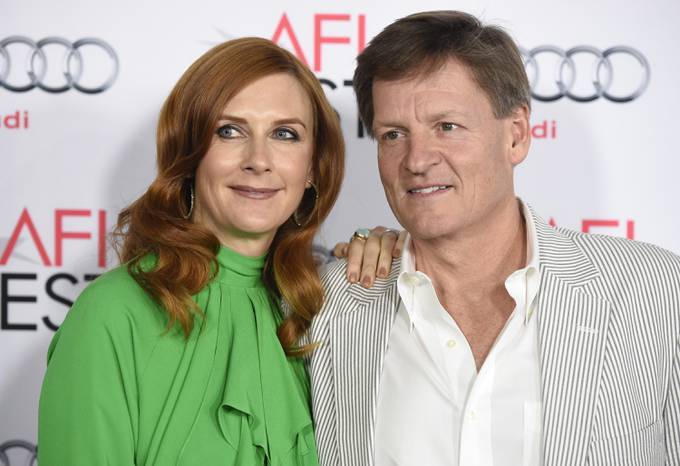 Michael Lewis and Tabitha Soren in 2015. (Photo by Chris Pizzello/Invision/AP, File) | Slavitt — who stepped out of the White House last week and straight into a book tour — draws upon his own insider access in "Preventable": he was in close conversation with Trump officials and national experts throughout 2020, and then took a job in Biden's coronavirus response. It's a unique status that gave him direct access to decision-makers, who appeared to confide in him; Slavitt cites a conversation with then-White House coronavirus coordinator Deborah Birx where he concluded that she wanted Trump to lose re-election. The books paint dramatically different pictures of last year's response.The president's son-in-law is one litmus test. "Jared Kushner inserted himself into the discombobulated White House response, but he only added to the chaos," according to Lawrence Wright in his new book, "Plague Year," which critiques a Kushner-backed effort to enlist private-sector volunteers to source supplies. That effort prompted a complaint to the House Oversight Committee, filed by one volunteer — the grandson of Robert F. Kennedy — who framed it as a failure, catering to Trump allies. "Virus" — a slim book by longtime political journalist Nina Burleigh — goes further, mocking Kushner as "Trump's boy wonder" and blaming the administration's "MBA ideology" as one cause of its "murderous decisions." (Burleigh, who leaned heavily on reports from the New York Times and Vanity Fair, says she conducted just seven interviews for the book, none with anyone involved in the government's response; she told The Post that she did not contact some officials because she believed they would not be honest with her.) 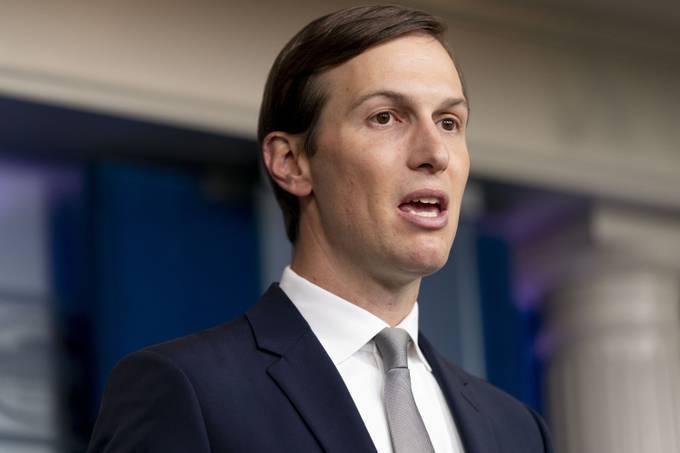 White House senior adviser Jared Kushner in August 2020, speaking at a press briefing at the White House. (AP Photo/Andrew Harnik, File) | But Slavitt, who was in touch with Kushner, describes him as helpful and receptive to advice on the need to delay after Trump called for re-opening businesses by Easter. The former White House coronavirus advisor also maintains that Kushner's team of private-sector volunteers were unsung heroes. "I was glad they were there, and I sent a few additional talented people their way," Slavitt writes, detailing how one volunteer — data scientist Blythe Adamson of Flatiron Health — ended up shaping efforts to better track the virus' spread. And in some places, the narratives explicitly conflict. In his bestseller, Lewis relays an episode where his protagonist, a California public health official named Charity Dean, drafted a secret national coronavirus management plan that circuitously ended up in the hands of Slavitt, thanks to mutual connections. In Lewis' telling, Slavitt took Dean's plan, renamed it and "presented it to Kushner as his own" in the effort to delay Trump from re-opening the nation by Easter. But Slavitt's book offers a different, more robust origin story for the plan he gave Kushner: it was the product of several days of working with experts like epidemiologist Larry Brilliant and health care venture capitalist Beth Seidenberg, and he told The Post that it was modeled on existing plans overseas. Dean isn't mentioned at all in Slavitt's book, and contemporaneous emails show that she was among several people who reviewed a draft plan that Slavitt sent her. It's a reminder of journalism reality: the narrative can be held captive by who's willing to talk. "The Premonition" tells the now-famous tale of the "Red Dawn" group of infectious-disease experts, who peppered government officials by phone and email with their prescient insights on coronavirus. "The names at the top of the Red Dawn emails grew in both number and importance," Lewis writes, citing recipients like former Surgeon General Jerome Adams and Fauci, and implying that one conference call even influenced CDC policy on coronavirus testing. But Adams told The Post that he didn't ask to be added to the emails nor recalled the contents being discussed by fellow White House coronavirus task force members. "Just because someone CC'd you on an email doesn't mean you actually read or responded to it," Adams said, adding that the officials were being deluged with messages. Four other former officials directly involved in the White House response said the influence of the Red Dawn group had been exaggerated in the popular press. 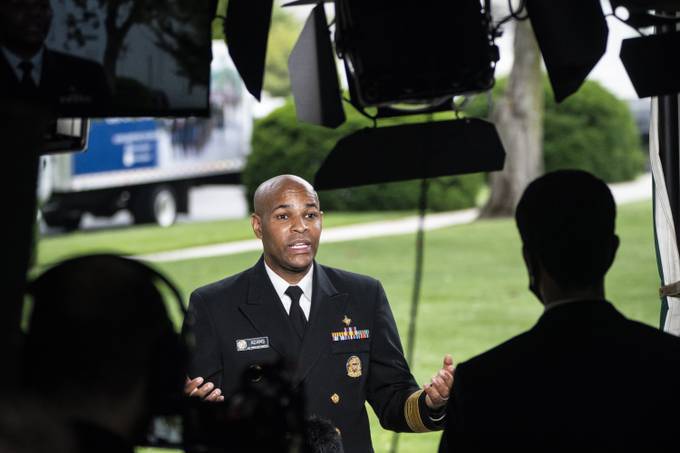 Former surgeon general Jerome Adams speaks during a television interview in July 2020. (Photo by Jabin Botsford/The Washington Post) | Meanwhile, Wright's book tells the oft-riveting story of Matthew Pottinger, the national security official and former China-based journalist whose own premonitions helped shape the Trump administration's response in January 2020. But Pottinger's journey comes at the exclusion of many key Trump officials like FDA commissioner Steve Hahn or domestic policy chief Joe Grogan, who are scarcely or never mentioned, while other forthcoming books rely on their perspectives. The authors' takeaways already are sparking robust debate in the health policy world. Current and former CDC officials are pushing back on Lewis' contention that the agency was inevitably damaged when Ronald Reagan first picked a political appointee to lead it, rather than a career civil servant. Lewis defended the theory to The Post — "The difference between Redfield and [Fauci] is the difference between an appointee and a career official," he wrote in an email — but told The Post in a follow-up phone call that he knows more stories are coming to shade in the gaps. "There is a book to be written, I have no doubt, about what actually happened inside the CDC and why," Lewis said. "That wasn't the book I was writing." But there's a chance that future waves of books reach an audience that's increasingly immune to reading them. Barry's book detailed how Americans in the 1920s quickly lost interest in dwelling on the flu outbreak, and the author acknowledged that it was "very possible" that interest in the pandemic may wane before his own book is released years from now. "But I don't write for an audience — I write for myself," Barry added. "So that may concern the publisher, but it doesn't concern me." | 


 Email
Email 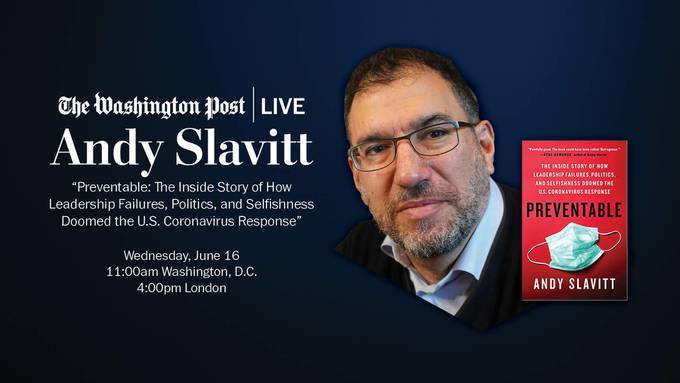





No comments:
Post a Comment