| Dozens of top Biden administration officials have professional ties to Big Tech that could raise questions about the administration's willingness to get tough on Silicon Valley. The ties are most prominent at the White House, where 13 aides — some of them with the ear of the president — have previously worked for Google parent company Alphabet, Amazon, Apple, Facebook, Lyft, Microsoft, Twitter or Uber. The ties give Big Tech potential allies in the White House as Silicon Valley faces a reckoning in Washington amid bipartisan backlash on issues from alleged anticompetitive business practices to insufficient privacy policies, and the spread of baseless and false claims on their platforms. "There are any number of instances where you can imagine these relationships potentially impacting policy" issues such as trade negotiations, said David Segal, the executive director of digital rights group Demand Progress. The Technology 202's analysis is based on a review of hundreds of financial disclosure filings filed by Biden administration officials. The hires don't violate President Biden's ethics policy issued when he entered the White House. And they don't necessarily mean the administration won't crack down on the practices of large tech companies. And the president recently appointed renowned Silicon Valley critic Lina Khan to head the Federal Trade Commission. But they do suggest a closeness between the tech industry and the Biden administration during a time when the former is under massive scrutiny. 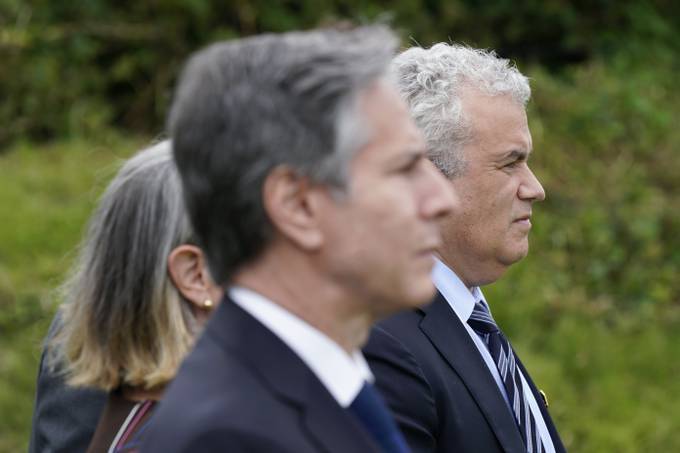 Secretary of State Antony Blinken advised Facebook before entering the government, while Jeff Zients, the White House coronavirus response coordinator, was a director on the company's board. (Patrick Semansky/AP) | According to our review, Facebook leads the pack with 11 administration officials who previously worked for the company in some capacity. Alphabet came in second with 10 officials and Microsoft trailed with eight. The officials are spread through the government, although the White House is home to the most people who worked for the companies at 13, representing around 8 percent of the White House staffers whose filings The Technology 202 examined. The State Department and Pentagon tied for second place with 6 officials each, the review shows. Some of the officials with the most ties to Big Tech serve at the top of the administration. Secretary of State Antony Blinken, for example, disclosed providing "advisory services" to Facebook, Uber, Microsoft and LinkedIn, which is now owned by Microsoft. Other members of Biden's Cabinet, such as Homeland Security Secretary Alejandro Mayorkas, provided legal services for Uber and ex-Twitter executive Gabriel Stricker, who is now chief communications officer at the Emerson Collective. Director of National Intelligence Avril Haines advised Microsoft and Secretary of Veterans Affairs Denis McDonough provided strategic advice to Apple. The financial disclosure filings do not provide details about the work, including start and end dates. WestExec Advisors, the firm Blinken and Haines consulted through, "advised on issues related to cyberspace and global efforts to better protect customers from cyberattacks," Microsoft spokeswoman Kate Frischmann said. Uber and Apple did not respond to requests for comment. Facebook and Twitter declined to comment. The all-encompassing nature of the tech industry presents challenges for the administration, consumer advocates warn. "Tech policy can encompass basically every part of the federal government," from tax policy, to transportation issues, said Max Moran, the research director of the personnel team of the Revolving Door Project, an initiative of the liberal Center for Economic and Policy Research that looks at government appointees. The officials also may have a hand in the selection of other officials who could play a major role in tech policy. Progressive groups want Deputy Attorney General Lisa Monaco — the Justice Department's second-highest-ranking official — to recuse herself from deliberations about the future leader of the department's Antitrust Division because she provided "legal services" to Apple before entering the government. "Individuals with personal ties to Big Tech should be prevented from playing a role in determining who will lead the Antitrust Division," 18 groups, including the Revolving Door Project, wrote in an April letter to Biden. "In the interest of preserving the integrity and independence of the office, we urge that Monaco be removed from the deliberation process over who will lead the Antitrust Division," they added. In general, Biden administration officials are required to sign an ethics pledge prohibiting them from participating in a matter "involving specific parties that is directly and substantially related" to former employers and clients. For the pledge to be technically violated, there has to be a specific matter that causes a conflict, according to Delaney Marsco, the senior legal counsel for ethics at the Campaign Legal Center. "The President has instituted the highest ethical standards of any administration ever," a White House spokesperson said. "And as appointees, these staff members are subject to the pledge and accordingly, are recused from particular matters involving these former employers/clients (for two years from their date of appointment)." A Justice Department spokesperson declined to comment. Technology companies have increased their lobbying efforts in recent years — including, seemingly, by trying to exert direct influence on senior leaders. Amazon, for example, hired Jeff Ricchetti — the brother of Biden senior counselor Steve Ricchetti — last year to lobby Congress, my colleagues Michael Scherer and Sean Sullivan reported last week. The company paid him $150,000 through March to lobby on the online marketplace and minimum-wage legislation, disclosures show. (Amazon CEO Jeff Bezos owns The Washington Post.) Ricchetti no longer lobbies the "White House Office" for any clients and has not lobbied his brother, he said. Advocacy groups see some positive steps by the administration in selecting officials who could look closely at the power the companies wield. For example, the recent elevation of Khan was cheered on by groups that want the major platforms to face greater Washington scrutiny. "There are competing impulses within the administration, and Lina Khan's selection is the apotheosis of that," Segal said. Biden has yet to fill another slot on the FTC held by Rohit Chopra. Biden picked Chopra to lead the Consumer Financial Protection Bureau in January. Biden has also brought on Tim Wu, another critic of the tech industry's power, to work on competition and technology policy at the White House's National Economic Council. | 


 Email
Email 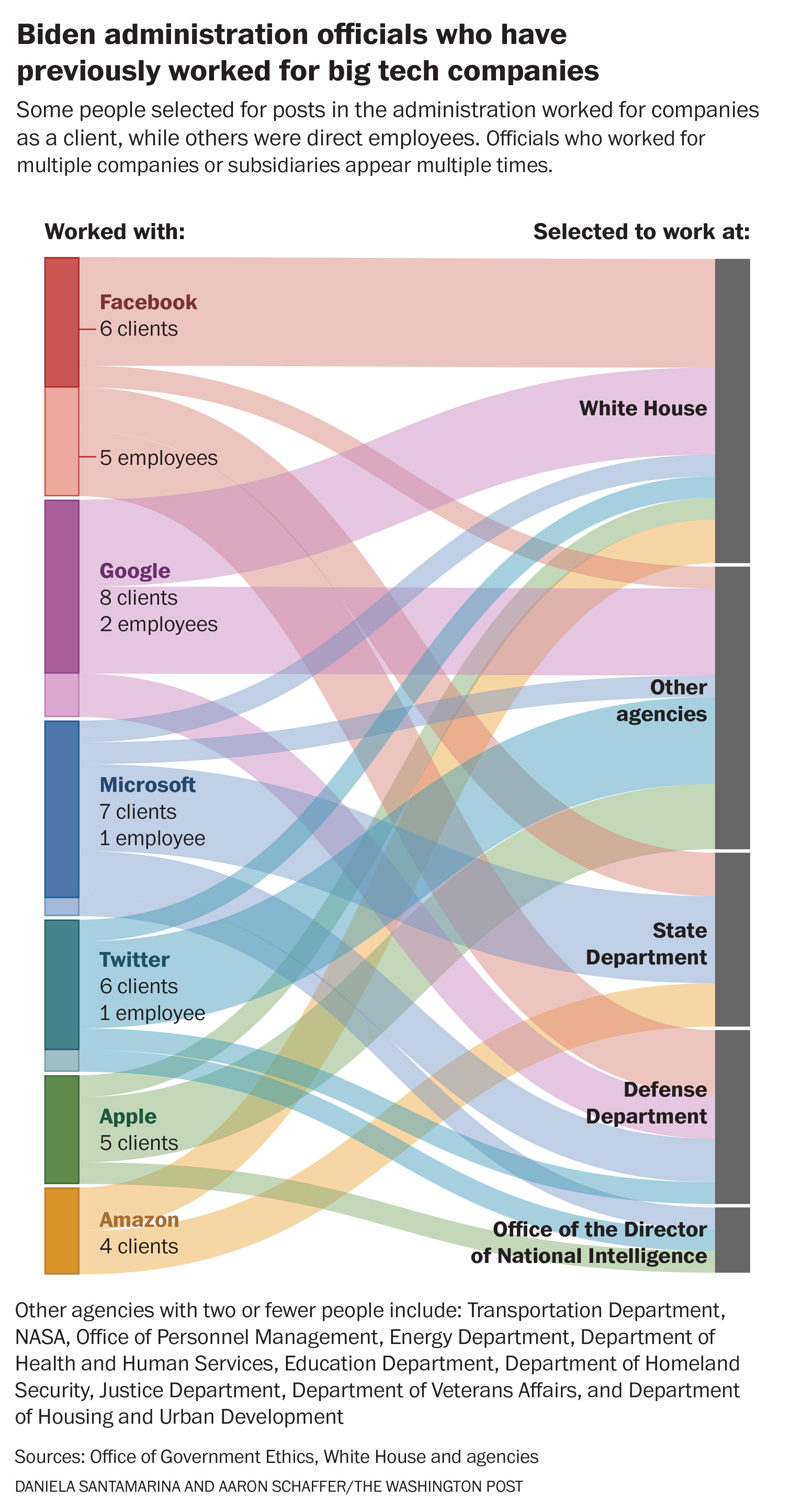








No comments:
Post a Comment