 Blue Origin's New Shepard rocket launches near Van Horn, Tex., July 20. (AP Photo/Tony Gutierrez) | "It's always the science-fiction guys," Jeff Bezos once said. "They think of everything first, and then the builders come along and they make it happen." This week, Bezos made it happen by briefly riding his New Shepard rocket into space (story). It was one giant leap for science, one small step for science fiction. Bezos, who also owns The Washington Post, fell in love with outer space as a child. He spent summers at his grandfather's ranch in South Texas, and there in the little town of Cotulla, he discovered the county library. As luck would have it, that library "had an extensive science fiction collection that had been donated by a town resident," according to "The Space Barons," by Washington Post reporter Christian Davenport (review). Bezos's interest in the genre is reportedly vast, encompassing Jules Verne, Arthur C. Clarke, Madeleine L'Engle, Robert Heinlein, Isaac Asimov, Frank Herbert, Alastair Reynolds, Ernest Cline, Andy Weir and more. (Beyond 'Dune': Science fiction about ecology and climate change) In 1999, Bezos told his friend Neal Stephenson — one of the great writers of speculative fiction — that he'd long dreamed of starting a rocket company. Stephenson encouraged him and became the company's first employee. Although he stepped down in 2006, Stephenson was at the launch on Tuesday, according to Davenport. (In Neal Stephenson's 'Fall,' there is life after death) But let's get back to that little Texas library. Nora Martinez, the current library director in Cotulla, tells me she wants to make sure kids are still reaching for the stars. "Being a reader really opens your mind to so many possibilities," says Martinez, a native-born resident who retired from teaching reading after 30 years. "One of the things I liked to do with my kids is introduce them to a lot of the classics, like 'Twenty Thousand Leagues Under the Sea.' I would tell the children to look at what we have now: 'This person had a vision!'" — and those visions have inspired others to pursue all kinds of scientific breakthroughs. Martinez wants the children at the Cotulla library to know that "even though they come from a small community, their possibilities are endless." Today, there's a space capsule inspired by Jules Verne in the lobby of Blue Origin's headquarters. 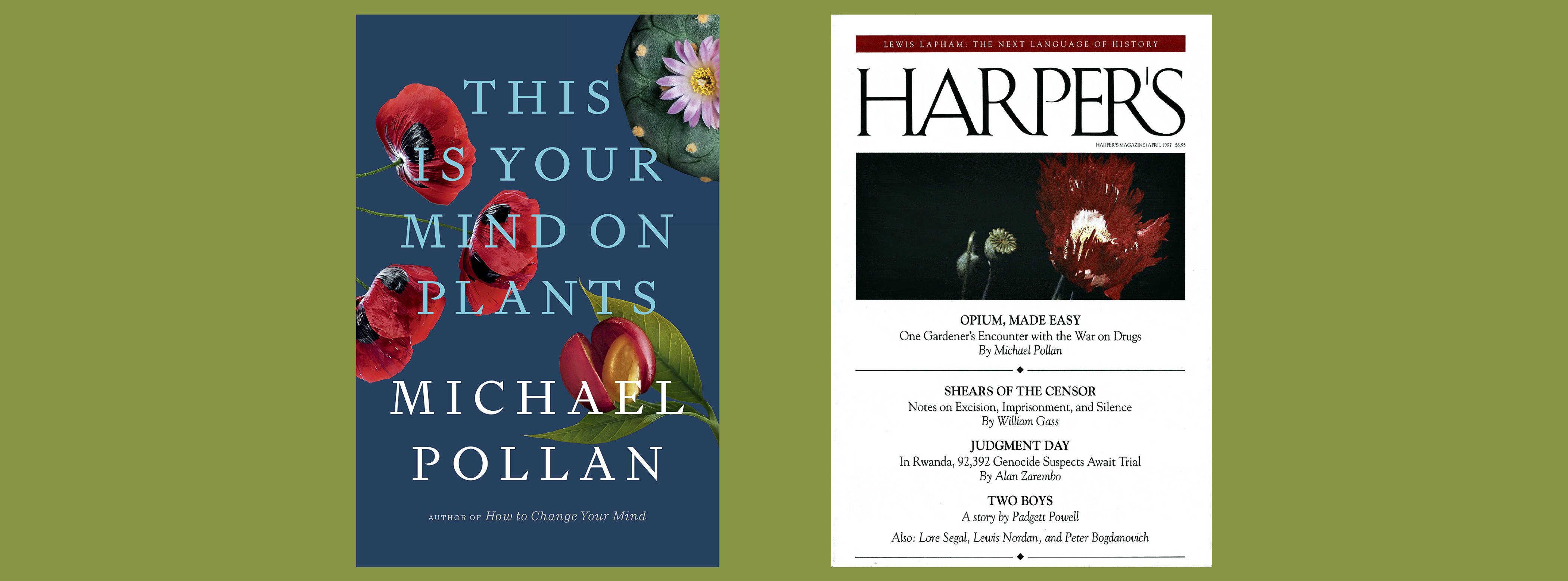 Penguin Press; Harper's | Let's get small. Michael Pollan's new book, "This Is Your Mind on Plants," is No. 1 on the nonfiction bestseller list (full list). Our reviewer calls it "a wonderful and compelling read" about plant-based psychedelics and America's war on drugs (review). But not everybody is grooving on Pollan's book. John "Rick" MacArthur, the publisher of Harper's, is being a real downer. That's especially odd because "This Is Your Mind on Plants" begins with an essay called "Opium, Made Easy," which was first published, in a slightly abbreviated form, in 1997 in Harper's. On the magazine's website, MacArthur has posted an extraordinary statement accusing Pollan of misrepresenting why potentially incriminating details were cut from the Harper's piece before it was published. Both parties agree that at that time Pollan was nervous about including passages in his essay that described him making and drinking opium tea. MacArthur says that he and the magazine's lawyer, Victor Kovner, reassured Pollan that the DEA wouldn't dare charge him with a drug crime or seize his property because he was a journalist protected by the First Amendment. MacArthur even offered Pollan an indemnification contract promising to defend him and buy him a replacement house, if necessary. But Pollan says he received additional legal advice warning him that publication of the complete essay could subject him to ruinous prosecution and even imprisonment. Concluding that it wasn't worth the risk, he insisted the most incriminating passages be cut. MacArthur suggests that Pollan was just being cowardly. "It was a bitter blow to me," he writes, "because I have always put the freedom to publish in the forefront of my work, and I lost some respect for Pollan after that." The magazine publisher sounds particularly irritated by Pollan's recent appearance on Tim Ferriss's podcast during which he speculated that MacArthur wanted to exploit any possible legal troubles for publicity purposes. "My guess is he was hoping something would happen," Pollan told Ferriss. "He was hoping I would get arrested. This would put Harper's on the map. This would be a giant case. He would take it to the Supreme Court." Those "nasty jibes" are "simply not true," MacArthur writes. "Back then, Pollan took the easy way out. I don't blame him for having been afraid. He just now shouldn't try to lay responsibility for his decision on anyone but himself." "Rick and I have different recollections of exactly what happened in 1997," Pollan tells me. "However, I did refresh mine by speaking to Victor Kovner last fall, and feel confident of my version of events. As I detail in 'This Is Your Mind on Plants,' a second lawyer, also hired by the magazine, advised me against publishing the piece at all. I don't dispute Rick's contention that I was 'frightened' to publish the article in toto — I was, and with good reason. The police were arresting people for doing what I admitted to doing: growing opium poppies in my garden with intent. I was a freelance writer at the time and had not only my liberty but the welfare of my family to consider." One thing is not in dispute: You can now read an unabridged description of Pollan making and drinking opium tea in his new book. 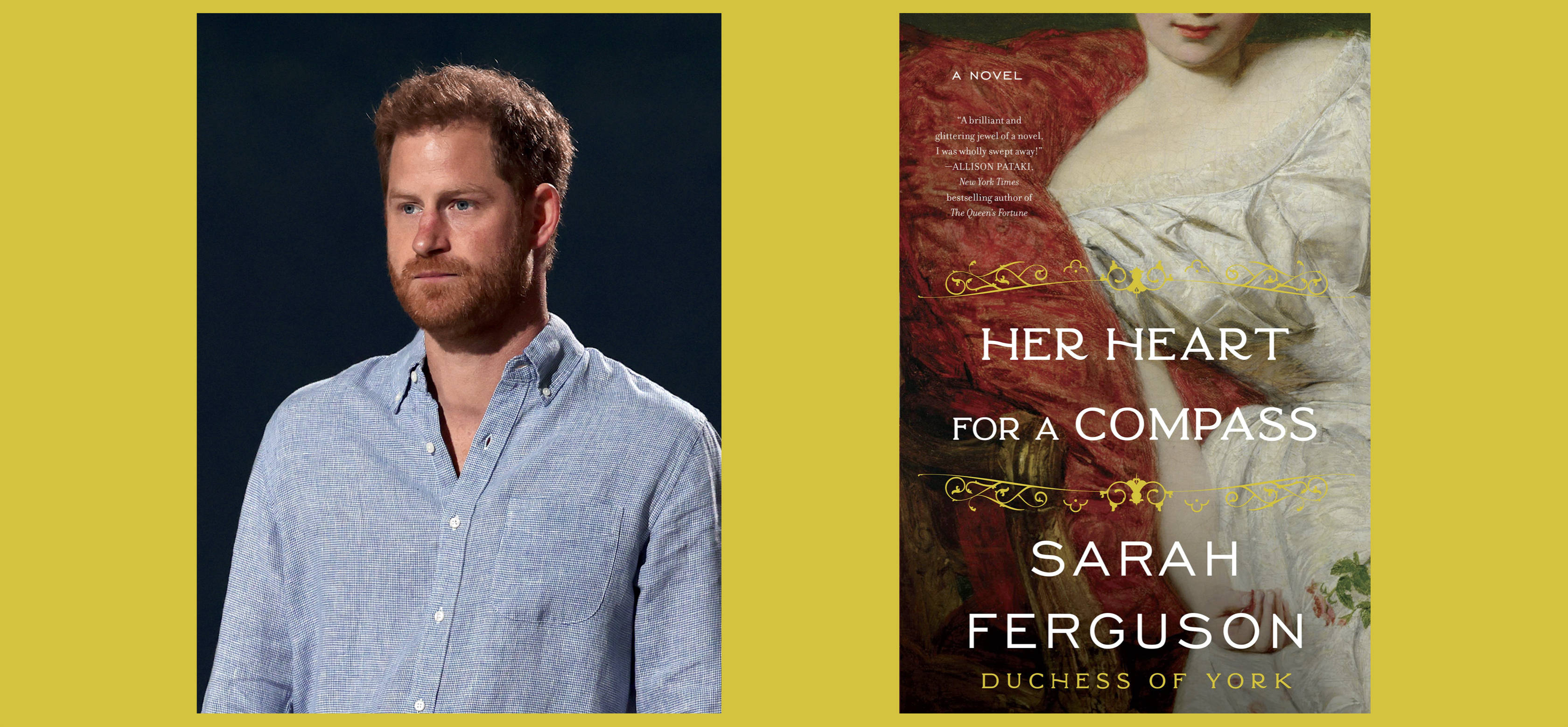 Prince Harry, Duke of Sussex (File photo by Kevin Winter/Getty Images for Global Citizen VAX LIVE); William Morrow | The British are coming. Again. Prince Harry of Santa Barbara has announced plans to release a memoir in late 2022. Rumors about the book's advance have ranged as high as $20 million. Some unconfirmed percentage has reportedly been promised to charity. Striking a tone one might expect from, say, the final scene of Shakespeare's "Richard II," Harry proclaimed, "I'm writing this not as the prince I was born but as the man I have become." He went on to promise that his memoir will be "accurate and wholly truthful," which is so naive it made me weep. Meanwhile, Sarah Ferguson, the prince's ex-aunt-in-law, is gearing up to release her first adult novel, a Victorian romance titled "Her Heart for a Compass." Forthcoming Aug. 3, the novel is inspired by the life of Fergie's real life great-great aunt Lady Margaret Montagu Douglas Scott. Review copies of "Her Heart for a Compass" have been embargoed until the day before it's released. Probably because it's so good. . . . In any case, People magazine is pulling out all the stops: The July 26 issue features an "exclusive" cover story expansively titled "Motherhood, My Memories of Diana & Life After the Palace." In a video interview posted on People's website, Ferguson says, "You are talking today to Sarah, and Sarah is really authentically with you," while we watch clips of the wind-swept duchess posing in historical costumes beside a lake. 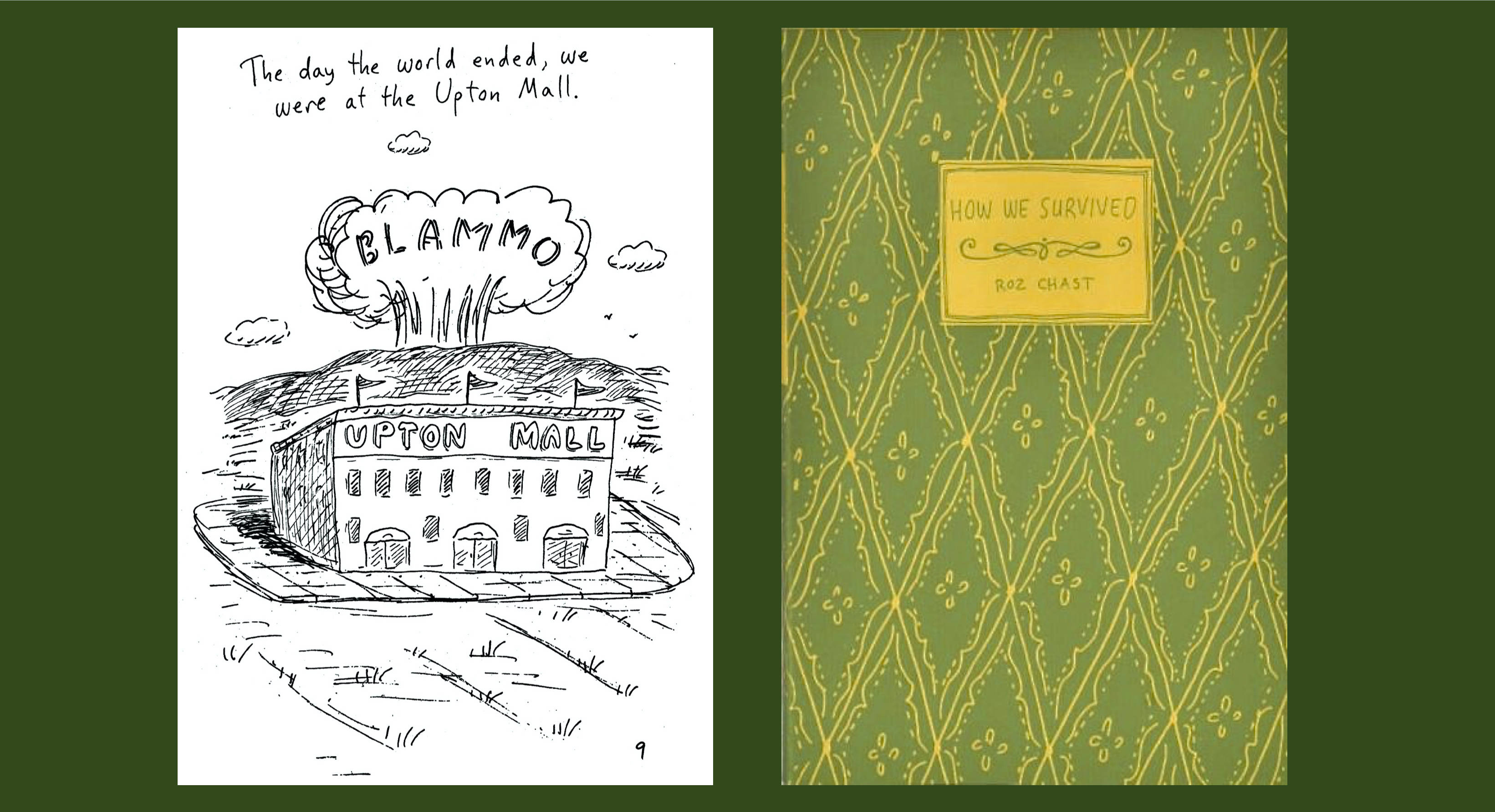 Interior image from "How We Survived," by Roz Chast; Thornwillow Press | Throughout the covid-19 pandemic, the only certainty we could cling to was that Roz Chast would capture the grim comedy of quarantine in a cartoon. Even better: We're getting a whole book. "How We Survived" is a dystopian fantasy about the lucky few who made it through the "Blammo" apocalypse that destroyed everything on Earth except the Upton Mall. The survivors – and Chast, who happened to be shopping for placemats at Macy's when the world ended – got creative. They ate from the Food Court and then turned to the gerbils in Pet Town. "We did what we had to do," Chast writes. "All in all, I didn't hate it. There was food, shelter, and God knows, plenty of clothing." This macabre little book is being produced by Thornwillow Press, a small publishing house in upstate New York founded by Luke Ives Pontifell in 1985. Thornwillow creates fine books and stationery using the handcraft methods of old. The results are keepsakes; U.S. presidents have given Thornwillow books as state gifts. But you don't have to know a president to get a copy of "How We Survived." Chast's book is being offered as part of Thornwillow's "Monthly Dispatch" series, which offers limited edition chapbooks, broadsides and prints. To receive "How We Survived," you must subscribe by July 31 (more information). If you've ever wondered what Chast sounds like, you'll love the latest episode of Thornwillow's podcast, "The Colophon" (listen). Pontifell and Chast sit down for a leisurely conversation and imagine — with perfectly straight faces — that they're celebrating the 10th anniversary of being trapped in the Upton Mall. "I remember back in the old days laughing at Yankee Candle," Chast says. "Now it's sort of an essential." Over the years, the survivors of Blammo managed to recreate most of the world they'd left behind — except ballet. "Nobody, when it came down to it, really wanted to save that," she says. "It was just too painful."  Bookshop.org | While Amazon's founder was rocketing into space, back here on Earth, the anti-Amazon retailer Bookshop.org announced a record of its own: In its first 18 months online, Bookshop.org has generated $15 million in profit for about 1,200 affiliated indie bookstores. Andy Hunter launched Bookshop.org in January 2020 to provide a way for people to buy books online that supports local bookstores (story). In early 2020, his plan sounded impossibly quixotic to me, but since it began, about 1.5 million people have used Bookshop.org. Needless to say, Bookshop.org is not a threat to Amazon, whose market capitalization is $1.8 trillion. But Hunter isn't trying to beat Amazon, he's trying to help indies. Many of these stores are small, financially precarious enterprises that provide crucial cultural space for their communities. Especially during the lockdown, some extra cash from Bookshop.org might have made the difference between surviving the pandemic or shutting down forever. With this week's announcement, Hunter fired up his criticism of Amazon. In a public letter, he said that Amazon now controls more than half the consumer book market and, at its current rate of growth, could control 80 percent by 2025. He also asserted that Amazon sells the most popular books as loss-leaders, which drives competitors out of business. And finally, Hunter said that Amazon's algorithm-driven marketing of books threatens the diversity of the book market. An Amazon spokesperson responded by saying, "We congratulate Bookshop.org on this achievement. However, the binary us-vs-them mentality in Mr. Hunter's op-ed is flawed, and his claims are unsubstantiated and wrong. His suggestion that a reader's world view may be narrowed to simply the best-sellers is belittling to readers and the diversity of successful authors publishing today. The books industry is flourishing for new and established, indie and traditionally published authors alike. There's ample opportunity in the books industry, and we believe the future is bright for authors, booksellers and, most importantly, readers." The spokesperson added, "Amazon does not engage in predatory pricing." 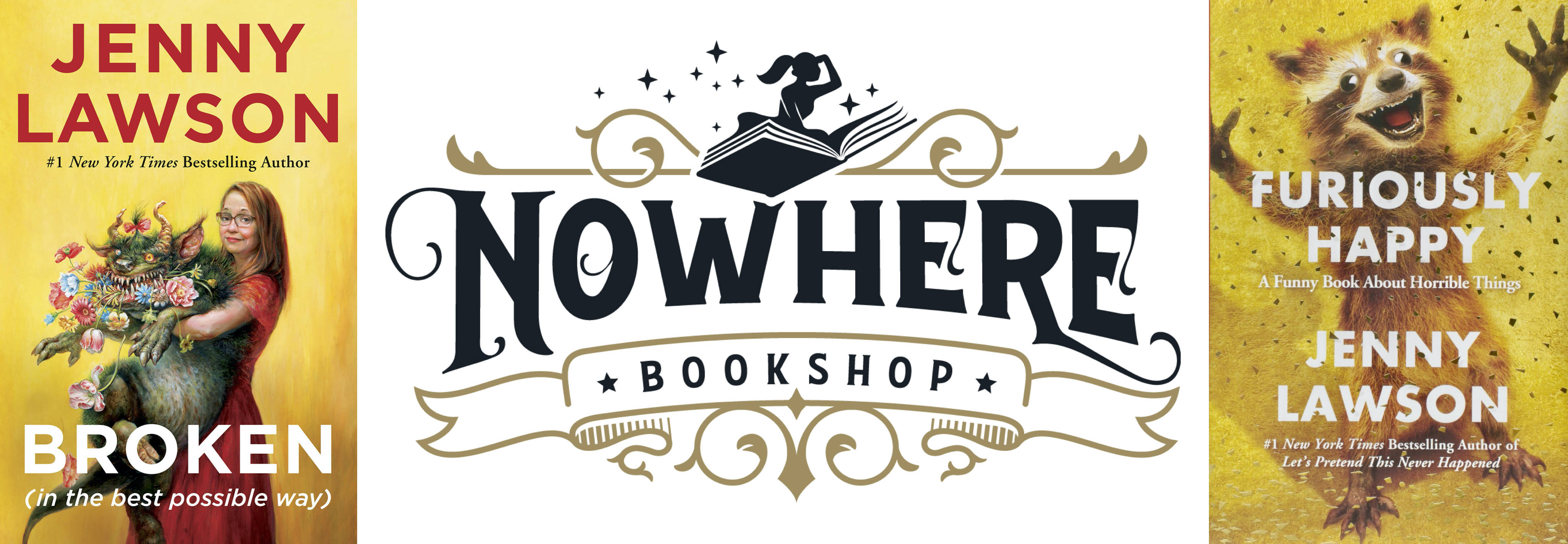 Henry Holt; logo courtesy of Nowhere Bookshop; Flatiron | Jenny Lawson is furiously happy about her new bookstore in San Antonio, Tex. Long delayed by the pandemic, the Nowhere Bookshop welcomed in the public on Monday. "I was always building the perfect bookstore in my head so when I had the chance to make it a reality, it seemed like a dream," Lawson tells me. "There's something about bookstores and libraries that are such a safe place. I assume it's like what churches are to religious people, a type of sanctuary. The quiet stacks of books inviting you into other worlds and other heads are a type of magic, especially for people like me who are so painfully introverted at times that reading and writing are the only kind of communication that comes easily." A best-selling memoirist, Lawson joins a growing number of popular authors who own bookstores, such as Ann Patchett, Emma Straub and Louise Erdrich. Lawson, a native Texan, was delighted by how helpful the independent bookstore community has been. "I would assume in most industries that most stores look at each other as competition," she says, "but independent bookstores are like a strange sort of family, and each of them supports each other in really amazing and surprising ways." Lawson writes candidly, often hilariously, about her life, including the toughest parts — depression, anxiety and rheumatoid arthritis. Her most recent book is "Broken (in the Best Possible Way)." Talking about it last year with The Post, she said, "The pandemic is a marathon I've been preparing for my whole life" (Q&A). 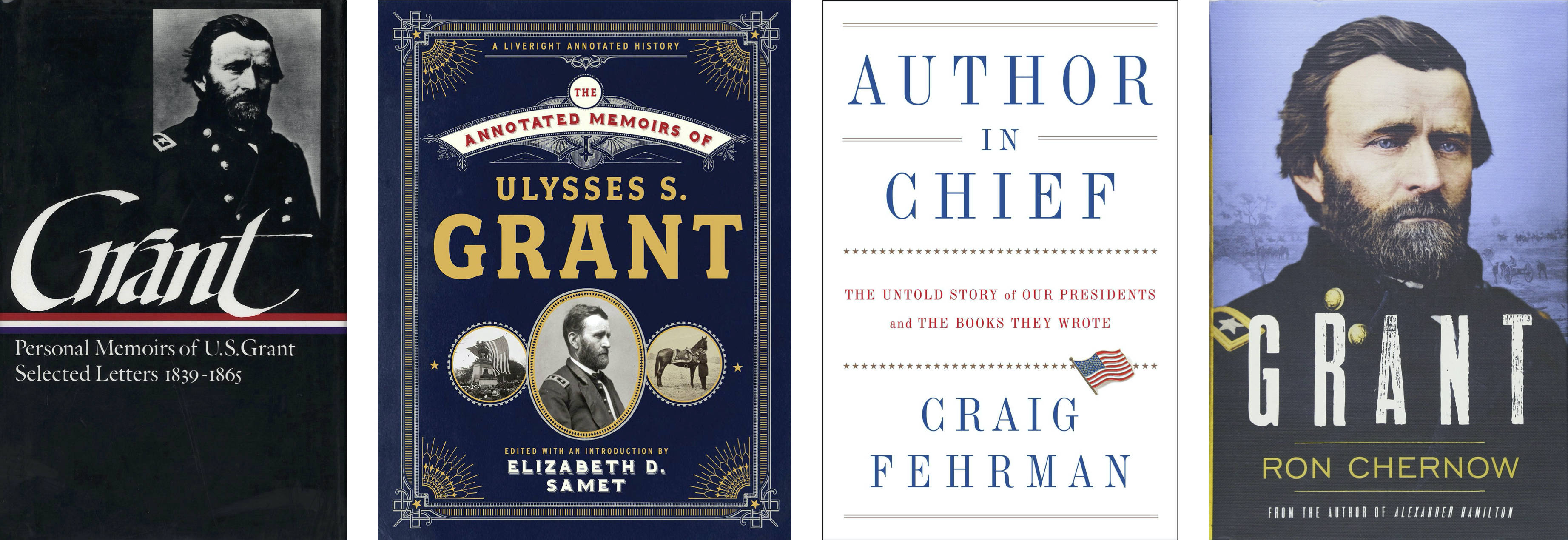 Library of America; Liveright; Simon & Schuster; Penguin Press | Ulysses S. Grant died on this day in 1885, just after finishing his "Personal Memoirs." The physical act of composition had been a grueling race against cancer, but Grant was desperate for money and determined to provide for his family. The book went on to become the best-selling presidential memoir in U.S. history at that time, and it prefigured a lucrative publishing tradition. In the 21st century, presidential memoirs have commanded astronomical advances and sold millions of copies. But the success of Grant's memoir didn't happen by accident. It was shepherded along by none other than Mark Twain, who had recently formed his own publishing house. The popular humorist — and tireless promoter — made a Hail Mary bid for Grant's memoir, and once he'd secured it, he sent salesmen to knock on doors across the country, announcing: "I called to give you an opportunity to see Gen. Grant's book, of which so much has been said in the papers." (I learned this quirky bit of publishing history from Craig Fehrman's "Author in Chief: The Untold Story of Our Presidents and the Books They Write.") As Twain predicted, Grant's memoir was an astonishing success. It sold more than 300,000 copies in its first few months and earned his widow $450,000 (more than $10 million today). In "Grant," Ron Chernow's 2017 biography of our 18th president, Chernow calls "Personal Memoirs" "probably the foremost military memoir in the English language, written in a clear, simple style that transcends the torment of its composition" (review). The copyright has long since expired on Grant's memoir, so you'll find lots of versions available (caveat emptor). The Library of America offers a stately edition that includes maps and letters. Readers interested in a deep dive will enjoy the elaborately annotated edition from Liveright edited by Elizabeth D. Samet. 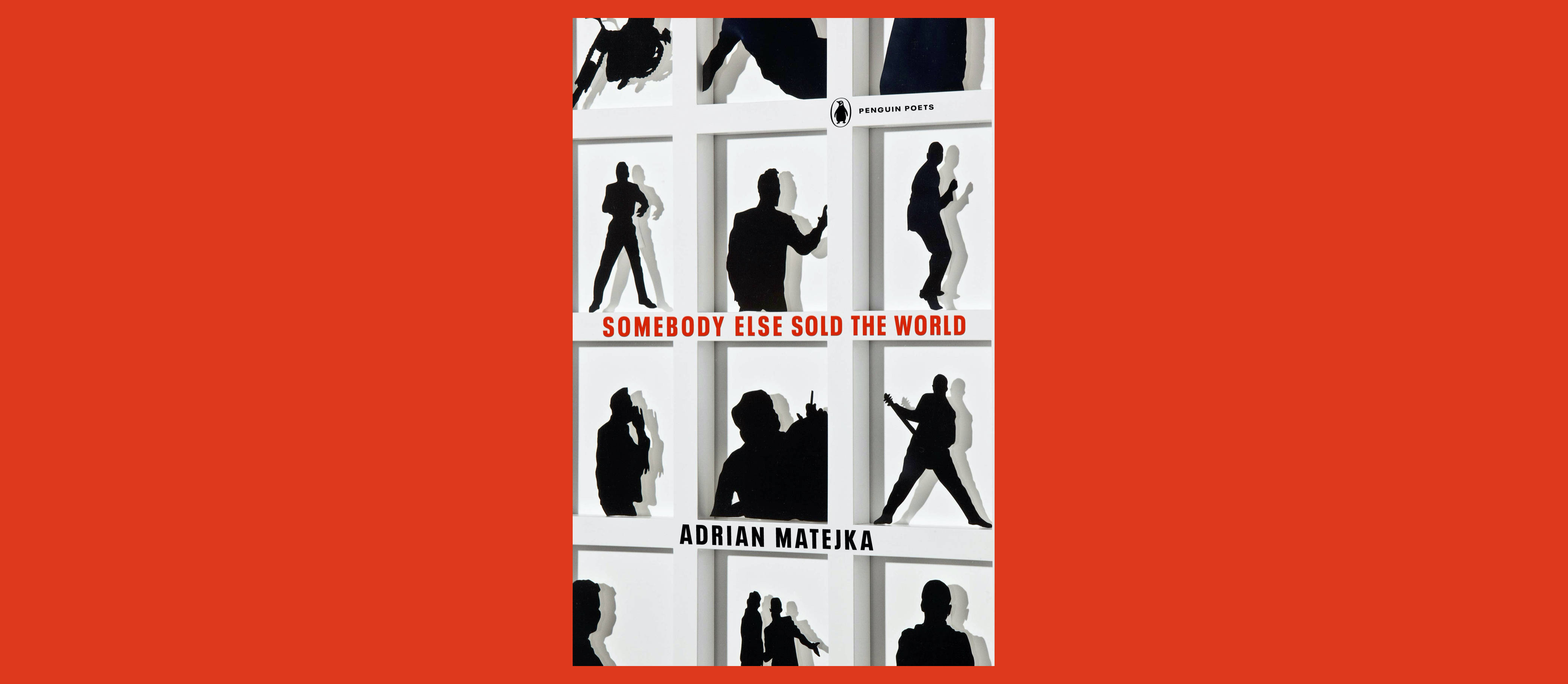 Penguin | Adrian Matejka has been a finalist for a Pulitzer Prize and a National Book Award. His new collection, "Somebody Else Sold the World," offers a bracing look at the ongoing struggle for equality. Somebody Else Sold the World Outside, the antagonists
are wet with flag colors
& sycophancy & I'm alone in the front room again
like it's 1982 again when
the power got cut off & the neighbors brawled
like sullen countries over
the demarcation of kitchen table & china hutch. Another
revolution breaking in half,
another slim-ringed alliance snapped under the weight
of lost referendums. Where did
their long-stemmed love go? Even now, I'm sitting in
the window seat in the year
of cottonmouth & disaffection as white people goose-step
masklessly & the antagonists
imagine new ways to dismantle poor people. Sitting, running,
dreaming, coughing, seeming:
cuffs for all of them. Bullets, too, glinting in perpetual
velocity. To be poor is to always
be blamed for your already busted happenstance. There's
no changing that American
tradition now, not even during a pandemic. Meanwhile,
the antagonists boat out
to their islands of isolation & repose. Anything they need
is essential, while the rest of us
stay in place like furniture. From the book "Somebody Else Sold the World," by Adrian Matejka. Copyright © 2021 by Adrian Matejka. Published by arrangement with Penguin Books, a division of Penguin Random House LLC. A live discussion with Washington Post critic Robin Givhan ● Read more » | | | 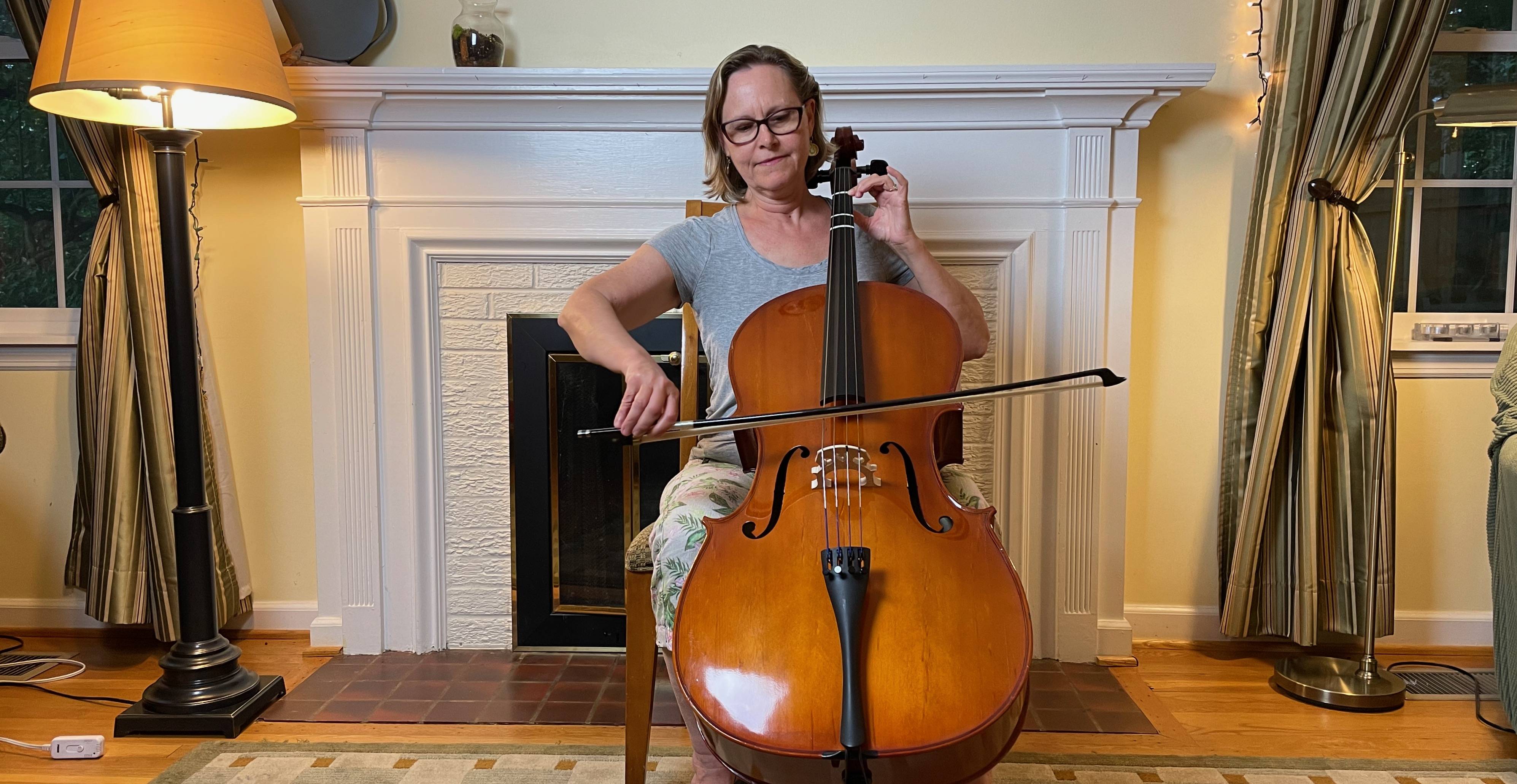 Dawn Charles and her summer-vacation cello. (Ron Charles/The Washington Post) | When the pandemic began and we were all sent home for the duration, I was determined to use the lockdown for Improving Activities. So, I redoubled my efforts to speak French. Alas, after more than a year, all I can say is, "Comment annuler Duolingo?" But my wife, finally released from her teaching duties, is more disciplined. She has rented a cello for the summer and is teaching herself to play by watching YouTube videos. (It's only $20 for the first two months – that's how these modern-day Harold Hills get you hooked.) I've discovered that the cello is a surprisingly loud instrument. But I am being un bon mari. Meanwhile, if you have any questions or comments about our book coverage, send a note to ron.charles@washpost.com. And if you know friends who would enjoy this newsletter, please forward it to them. To subscribe, click here.
Interested in advertising in our bookish newsletter? Contact Michael King at michael.king@washpost.com. | 




 Email
Email 




No comments:
Post a Comment