 Winter is coming. We may be facing a shortage of paper – all kinds of paper. (Ron Charles/The Washington Post) | As Douglas Adams would say, "Don't panic." But we may be running out of paper. And this time it's not just toilet paper. A recent report in The Washington Post warns, "Book publishers, dogged by paper shortages and shipping delays, are pushing fall releases into early next year" (story). Ingram, a major book distributor, issued a statement noting that "the book industry, like all physical goods industries, is experiencing Covid's negative logistic impacts due in large part to labor and supplies shortages and transportation issues." The company warned of "a perfect storm brewing." The ongoing economic effects are being felt by readers around the globe in strange ways. For instance, with millions of people stuck at home, meal deliveries have soared, forcing book publishers to compete for paper with pizza box manufacturers. Barnes & Noble CEO James Daunt tells me that reprints of popular books are of special concern because they're driven entirely by customer demand and so are harder to predict. "This is where the paper shortages, and all the other supply and logistic disruptions, may cause delays and even an inability to reprint at all," Daunt says. "In truth, printer capacity in the U.S. for domestic printing has fallen short of peak needs for several years now. This year seems certain to be worse." (Brace yourself!)  (Anchor; Scribner; Ecco; Back Bay) | This week, Texas launched the country's largest marketing campaign for "The Handmaid's Tale." A new state law effectively forbids poor women from obtaining abortions, even in cases of rape and incest. For the time being, women with enough money can still travel outside the theocracy Texas to exercise their Constitutional rights, but surely Aunt Lydia is working to close that loophole. Inspired by the practices of repressive regimes around the world, the new law empowers gangs of citizen-spies to keep watch on women, their relatives, therapists and doctors (story). Like the handmaids of Gilead, they are all now "Under His Eye." Much of the country was so fixated on Gov. Greg Abbott's efforts to keep school children vulnerable to covid-19 that the state's grab for women's bodies came as a shock. But all along, insightful fiction writers have been exploring how we got to this point and what's ahead. Here are three novels you might consider for a particularly topical book club meeting: - Past: "My Notorious Life," by Kate Manning, is loosely based on the real-life story of a 19th-century midwife-abortionist whose trial — and suicide — became a national sensation (review).
- Present: "A Book of American Martyrs," by Joyce Carol Oates, offers a deeply sympathetic portrayal of partisans on both sides of the abortion debate: the family of a doctor who performs abortions and the family of a fundamentalist Christian who murders him (review).
- Future: "Red Clocks," by Leni Zumas, imagines the United States if every misogynistic law currently proposed by politicians were enacted. Anyone who terminates or assists in the termination of a pregnancy is jailed, and a Pink Wall along the northern border keeps women from seeking relief in Canada. The world that Zumas imagines is so unsettling that even Sen. Susan Collins might consider thinking about becoming concerned (review).
 The Modern Language Association of America; The Washington Post TikTok Guy Dave Jorgenson; DK | You can't scoff at TikTok anymore. Well, you can, but now you have to cite it correctly. The short-form video-sharing platform best known for lip-syncing teens has received formal recognition by the Modern Language Association. "The MLA Handbook" — the bane of my existence in graduate school — now offers instructions for citing, say, @cityboyj dancing to Mooski's "Track Star." You chalk-dusted English professors with your suede elbow patches can object all you want to TikTok, but as Nobel literature laureate Bob Dylan said, "The times they are a-changin'." "There's a lot of scholarship that's engaging with what's going on publicly in the humanities," MLA Executive Director Paula Krebs tells me. "And what's going on publicly in the humanities is on these social networking platforms. If you're going to be able to have legitimacy in your scholarship, we need to provide a way for people to cite that stuff. So it makes perfect sense." It's not that TikTok is replacing the Journal of Medieval and Renaissance Studies. (Heaven forfend!) It's that scholarship is broadening its realm. "I find myself reading lots more critical articles in traditional journals by finding the references to them in social media," Krebs says. And it's not just scholars and teens paying attention to TikTok. The Washington Post's TikTok channel recently hit 1 million followers. That success is the work of our very clever TikTok Guy, Dave Jorgenson (audio interview). Several times a day, Dave posts short comic videos pegged to the day's news, the zeitgeist or just whatever's going through his hilarious mind. Last year, I experienced 20 seconds of my allotted 15 minutes of fame when I appeared in one of Dave's retrospective TikToks about Watergate. If you want to do more than just watch TikToks, Dave recently published a handy, funny, fully illustrated book called "Make a TikTok Every Day." It includes short interviews with other TikTok stars and lots of encouraging advice. "Remember," he says, "it just takes 15 seconds to make a 15-second TikTok." 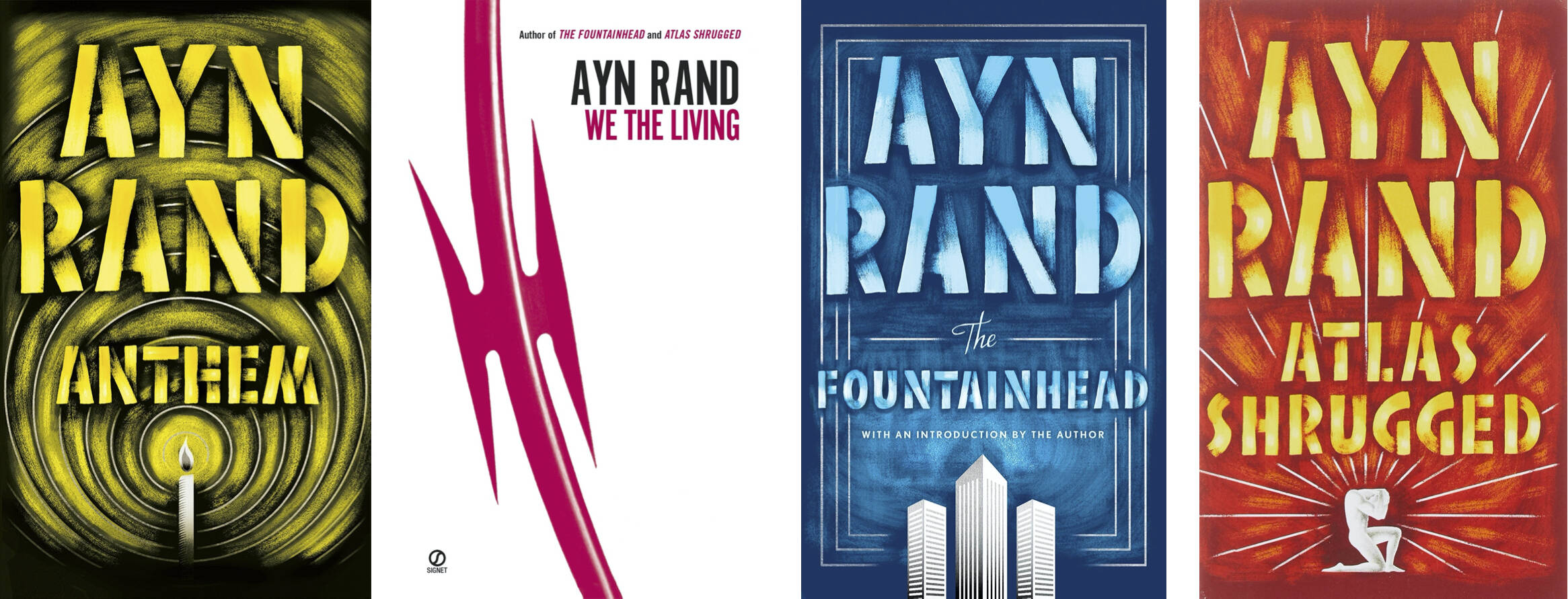 All covers courtesy of Signet | A few weeks ago, my wife received an email message that began, "[Fname], you may not know this, but for over two decades we've provided bestselling Ayn Rand novels and supporting resources to middle and high school teachers for free!" It's true. I did not know that, and neither did [Fname]. Staff members at the Ayn Rand Institute initially offered to respond to my questions. But then they refused, concluding, I suppose, that helping me would only make me weaker. The group's website claims that the Institute has given away 4.5 million copies of Rand's novels to 65,000 teachers — a kind of Gideon's Bible program for Objectivists. The Institute also provides "dozens of resources to simplify teaching — from teacher's guides and free videos to lesson plans and virtual sessions with an expert on Ayn Rand's novels." For instance, students who have read "The Fountainhead" in class are then assigned to "write a letter to the editor of your local newspaper, arguing that the individualistic philosophy of Howard Roark is the solution to specific contemporary problems, e.g., racism, drugs, poverty, crime, war." The institute says the program is a success because "Ayn Rand's dramatic, thought-provoking novels appeal strongly to young readers." Hmmm. In 2013, Idaho State Sen. John Goedde introduced legislation to require every Idaho high school student to read "Atlas Shrugged" and pass a test on it as a condition of graduation. His bill was apparently just a stunt, and, according to news reports, even the Ayn Rand Institute distanced itself from the idea. But the institute's free book program actually feels more problematic. There's something sinister about a culty group using its largess to insinuate propaganda into the curriculum of cash-strapped schools. And my concern really isn't so much ideological as pedagogical. After all, nothing will turn students away from what William F. Buckley called Rand's "ideological fabulism" faster than having to read her. But students can only study a distressingly small number of novels during the academic year, and every syllabus is a zero-sum game. Those weeks that an 11th grade English class spends trudging through a thousand pages of "Atlas Shrugged" could be spent studying three or four good novels. Will parents continue to let this happen? "That's not the point," Roark says. "The point is, who will stop me?"  Atlantic Monthly Press | If you're lucky, a few times in your life the universe will conspire to make you fall desperately in love with a book. "Peace Like a River" was like that for me. A debut novel by a Minnesota Public Radio producer named Leif Enger, it was published on Sept. 11, 2001. There was something tragically appropriate about the novel appearing on that doomed day. The title "Peace Like a River" comes from a Protestant hymn written by Horatio Gates Spafford in 1873 after his four daughters died in a shipwreck. But "Peace Like a River" enjoyed a fantastic launch. Grove/Atlantic and its hotshot young editor Elisabeth Schmitz (she'd earlier discovered Charles Frazier's "Cold Mountain") sent out 5,000 early copies to reviewers and booksellers. They talked up the novel so much that even before it was officially published, "Peace Like a River" was No. 13 on the bestseller list. The American Booksellers Association eventually chose it as the year's best work of fiction — over Richard Russo's Pulitzer Prize-winning "Empire Falls" (review) and Jonathan Franzen's National Book Award-winning "The Corrections" (review). Enger's novel — part Western, part Gospel romance — is about a Minnesota family in the 1960s. The father works as a school janitor and has a knack for small wonders. Early in the story, the elder son kills a pair of thugs and goes on the lam. The narrator, an 11-year-old boy with asthma, describes how the family heads out to find him. Raised as a Christian Scientist, I found the novel's dewy luster of miracles absolutely enchanting. (A reviewer at Some Other East Coast newspaper panned the book, but I was feeling so spiritually superior that I nobly refused to hate her for it.) This month, Grove/Atlantic is publishing a 20th anniversary edition of "Peace Like a River." In a brief new foreword, Enger writes, "When you love books and live with them daily, it's tempting to believe they're the answer. That whatever the crisis — war, pandemic, social delamination — books will be our lanterns and compasses, our balls of string leading out of the labyrinth. I think all this is true, and moreover that these primitive bundles of ragstock and ink still pulse with curious music, but twenty years on it's plain that their greatest power is to move us toward each other." 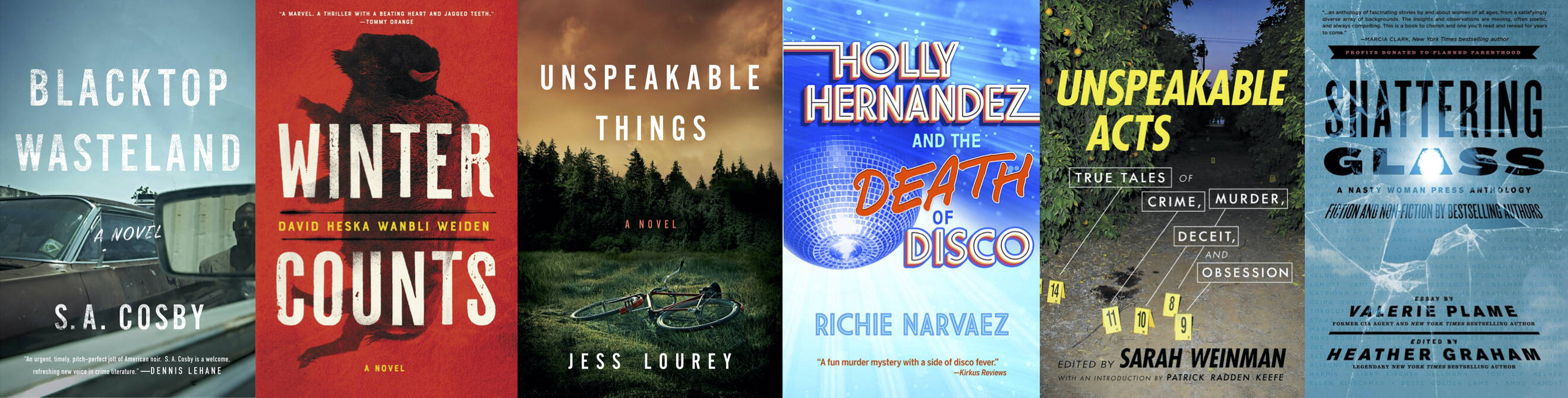 The Anthony Awards recognize the best mystery and crime writing of the year. (Flatiron; Ecco; Thomas & Mercer; Pinata; Ecco; Nasty Woman) | I suppose you're all wondering why I've gathered you here. On Saturday, the Bouchercon World Mystery Convention recognized the best mystery and crime writing. Here are the winners of the 2021 Anthony Awards: - Best Hardcover Novel: "Blacktop Wasteland," by S.A. Cosby (review)
- Best First Novel: "Winter Counts," by David Heska Wanbli Weiden (book review and audiobook review)
- Best Paperback Original Novel: "Unspeakable Things," by Jess Lourey
- Best Juvenile/Young Adult: "Holly Hernandez and the Death of Disco," by Richie Narvaez (ages 14-17)
- Best Critical Nonfiction: "Unspeakable Acts: True Tales of Crime, Murder, Deceit, and Obsession," edited by Sarah Weinman
- Best Anthology: "Shattering Glass," edited by Heather Graham
That last award is particularly noteworthy because "Shattering Glass" is the first book published by Nasty Woman Press. Dedicated to combating fascism, racism, misogyny, anti-Semitism, homophobia, Islamophobia, transphobia and bigotry, it's a nonprofit group founded the day after Donald Trump got elected (a coincidence, surely). "Shattering Glass," which focuses on the empowerment of women, contains short fiction, essays and interviews by Jacqueline Winspear, Rhys Bowen, Anne Lamott, Sen. Barbara Boxer and many others. 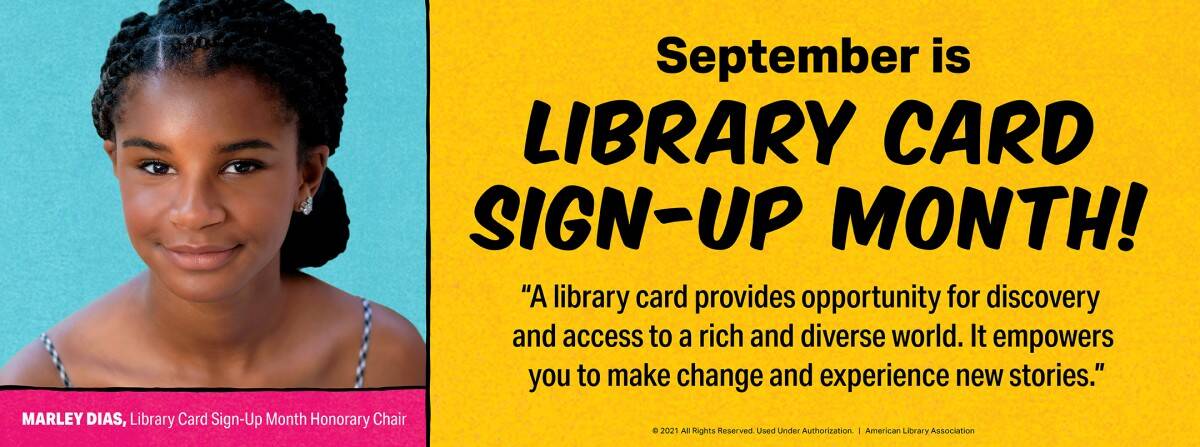 Marley Dias is the honorary chair of this year's Library Card Sign-Up Month celebration. She's the teenage founder of #1000BlackGirlBooks, a literary nonprofit that collects and donates children's books that feature Black girls. (Courtesy of the American Library Association) | September is Library Card Sign-Up Month. Yes, it's a thing. In 1989, it was even signed into law by President George H.W. Bush. I'll be celebrating by wearing these library card socks all month. The American Library Association wants everybody to enjoy access to the books, magazines, multimedia content and technology available at public libraries. I'm sure I'm preaching to the choir here, but just take this as a reminder to make sure the kids and adults in your reading sphere have a library card. You can also spread the word by posting a comment online about Library Card Sign-Up Month and your local library using the hashtag #LibrariesEmpower. The creator of one randomly-selected post will receive a $100 Visa gift card from the ALA (official rules). Although I've written about e-book lending for years, I'm embarrassed to say that I tried it out for the first time this week — and it's amazing! To download e-books and audiobooks to your devices, all you need is a library card. The service is free — and legal. Check it out. Incidentally, the issue of who can lend out what e-books to whom is at the center of an ongoing legal battle between the publishing industry and a San Francisco-based nonprofit called the Internet Archive. While your public library buys expensive, time-limited licenses to lend out e-books, the Internet Archive takes a different approach: IA scans physical books — including books still under copyright — and lends those digital copies to anyone in the world. IA claims this is a legal library practice. Hachette et al has called IA "an illegal e-book distribution service that threatens to destroy the legal library e-book market and otherwise harm consumer book sales if left unchecked." As the case drags on in a Manhattan federal court, IA has demanded access to a vast trove of publishers' data to demonstrate that its digital lending practices have not, in fact, hurt commercial book sales. Hachette et al filed a rebuttal using the Latin legal phrase that roughly translates to "Are you out of your frakking mind?" 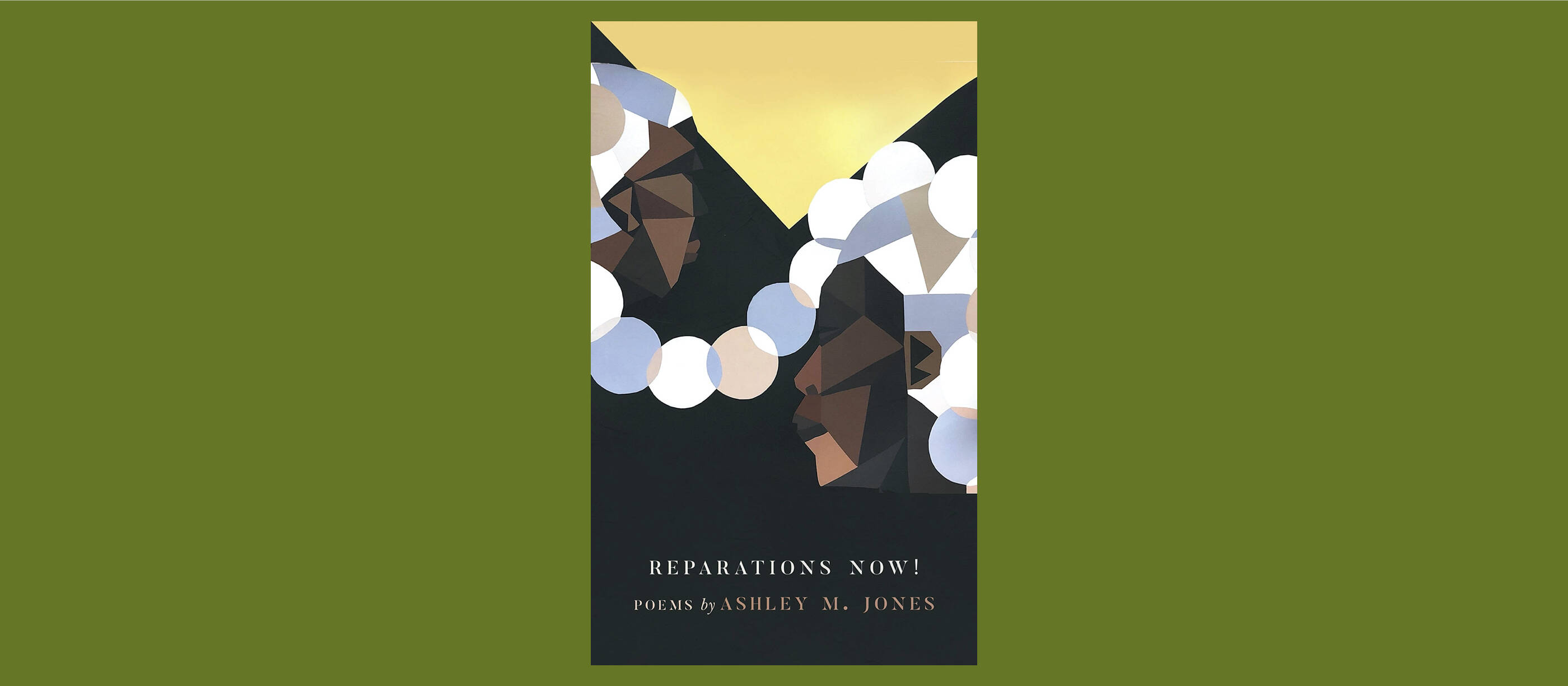 Hub City Press | Ashley M. Jones has been appointed the Poet Laureate of Alabama. She is the first Black person and, at 31, the youngest poet to hold the position since Alabama created it in 1930. Her new book, "Reparations Now!," offers a diverse, complex collection of poems in response to historical and contemporary racism. In a few lines, she can slip from weary to witty to wary – but never defeated. Oil Change When the mechanic asks me how I'm doing,
I can see the way his teeth shine a rotting white,
the way a smile glistens before it gobbles—
his eyes linger—over my face, and I don't look to see
if he's looking at my thighs, the brown curve of them,
their only desire to be cool in the Alabama heat.
I pull in, and this is when the cage starts building itself around me—
I cannot escape when I'm over the bay,
when the man below is screwing and unscrewing the pieces of my car,
its hood an open, helpless mouth.
Before, the mechanic asked me, for far too long,
what I'm doing on this side of town.
The sticker from my previous oil change read "not here."
I think of the safety of "not here," the brown of it.
I wonder if it's my skin he questions,
but then, those teeth again, his eyes shrinking
behind his gaping mess of lips—the silence
he fills with that grin, the way he cocks his head just so—
and now I'm breathing faster, the walls of the garage stand, stagnant,
mocking—what would happen, I wonder,
if I simply turned the ignition and sped away?
Would these men explode, would I explode, too?
Surely, heaven is a place where men can't make anyplace
a dangerous corner—
surely, there, a smile is a smile and not a taunt.
Maybe, there, when I look over to see the mechanic,
draped through my window, hand hanging so loose it could drop
into my lap, maybe there, instead of the smile,
his pink face would dissolve into a thousand butterflies,
searching for sugar
instead of skin. Reprinted from "Reparations Now!" Copyright © 2021 by Ashley M. Jones. Used with permission of the publisher, Hub City Press. All rights reserved.  I've been fascinated by carnivorous pitcher plants like these since I was in high school. (Photo by Dawn Charles) | Given the grim news here and abroad, it's been a tough week to find moments of joy. One happy highlight for me was receiving a little pitcher plant from my sister-in-law, who knows how fascinated I am with carnivorous flora (story). When we were all up in New Hampshire this summer, I tromped around the bog until I finally spotted pitcher plants growing on the soggy shore. Pitcher plants don't chomp like Venus flytraps; they just wait until a bug is attracted to the nectar along their sweet lips. Hairs pointing downward on the inside of the "pitcher" lead the unsuspecting insect to its doom in a goblet of digestive liquid. It's all very H.P. Lovecraft. Meanwhile, Dawn is looking forward to Sally Rooney's new novel, "Beautiful World, Where Are You." My younger daughter is loving "Transcendent Kingdom" (review), by Yaa Gyasi, whom I'll be interviewing for the National Book Festival (schedule). And I'm reading Colson Whitehead's "Harlem Shuffle," which I'll tell you about soon. Send any questions or comments about our book coverage to ron.charles@washpost.com. You can read last week's issue here. And if you know friends who might enjoy this newsletter, please forward it to them and remind them it's free! To subscribe, click here.
Interested in advertising in our bookish newsletter? Contact Michael King at michael.king@washpost.com. |





 Email
Email 





No comments:
Post a Comment