Mises Wire |
- Some Conservatives Still Pine for the Good Ol' Days of Cannabis Prohibition
- Study Guide to the Jordan Peterson – Robert Murphy Podcast
- Many Tribal Hunting and Foraging Grounds Were Private Property
- An End to the Bizarre CDC Rent Moratorium
- There's Nothing Profreedom about "Nudging" People with Government Policy
| Some Conservatives Still Pine for the Good Ol' Days of Cannabis Prohibition Posted: 03 Sep 2021 06:00 AM PDT The federal government, along with pharmaceutical, alcohol, and tobacco companies have spent money trying to put the legalization genie back in the prohibition bottle, so any argument or propaganda will suit their purposes. Original Article: "Some Conservatives Still Pine for the Good Ol' Days of Cannabis Prohibition" This Audio Mises Wire is generously sponsored by Christopher Condon. Narrated by Michael Stack.  |
| Study Guide to the Jordan Peterson – Robert Murphy Podcast Posted: 02 Sep 2021 12:00 PM PDT This week, Jordan Peterson released an interview titled, "Is Property Theft?", with Austrian economist Robert Murphy. The conversation was fast and exciting, with a lot of references to books, articles, and other ideas from Austrian economics thrown in. Since this is likely to be the first introduction to Austrian economics for many people, I am taking it upon myself to release a "study guide" of sorts for this interview. Here I will give citations, references, and other explanations for that may have gone by too quickly for the audience. As a table of contents, I will use the time stamps from the original video as they appear on YouTube. Almost all of the links will take you to a free book, article, or lecture. That's one of the great things about Austrian economics: there are a lot free learning resources. A word of warning: the first few sections are much longer than others, as they provide a lot of necessary background information. Feel free to skim the information as needed on a first pass, and come back to it later for more details. [2:30] Jordan Peterson Introduces Robert Murphy. Robert Murphy has an active blog that goes back more than a decade, and covers many different topics. He's also active on Twitter. He also goes by Bob Murphy, and has an active podcast covering current events and general economics, as well as an older podcast (and affiliated annual cruise) dedicated to discussing the economics of New York Times columnist (and Nobel Laureate) Paul Krugman. [2:30] Learning about the Austrian school of economics. Peterson references "Mises": this is Ludwig von Mises (1881-1973), an economist born in the Austrian empire. He has written many books and articles, all of which are freely available online, which I've collected here. Mises is the most important figure in the so-called Austrian School of economics, as it was his books, personality, connections, and activism that inspired several generations of economists both during his time and in the decades after his death. So it may be useful to provide a brief biography, in bullet form:
For the most comprehensive biography of this person, see Jorg Guido Hulsmann's Mises: The Last Knight of Liberalism. Peterson references Murphy's book "Choice: Cooperation, Enterprise, and Human Action", available for purchase here. Murphy's book is a simplification and distillation of the ideas found in Human Action, for a modern audience. Murphy says Peterson's comments on how people respond to social cues and other feedback are very "Hayekian". This is a reference to Friedrich Hayek, another Austrian School economist. Hayek is most famous for his formulation of "the knowledge problem", based on his article The Use of Knowledge in Society, his argument (based on Mises's essay on economic calculation) being that knowledge is dispersed in society, and cannot be grasped by one mind alone; this is why free-market exchange is important, since (according to Hayek) they in effect aggregate all this information and distill it into a single number: the market price. Without private ownership of the means of production, there is no free-market exchange, and no prices; thus, central planners cannot have the information they need to allocate resources efficiently. A brief biography of Hayek (1899-1992), as he is perhaps the most well-known Austrian economist today.
[6:00] The basics of Austrian economics by Ludwig von Mises is distilled in Murphy's book 'Choice'. Robert outlines the basic building blocks of this economic system. Peterson and Murphy give a very brief account of what the "Austrian School" is and what distinguishes it from others schools, so here is a more detailed bullet-form list going over these basics:
In short, the Austrian School refers broadly to a method of doing economics: a verbal, logical method that is based on realistic assumptions about the world and how people make decisions. While most Austrian School economists are based in the United States, there are adherents all over the world. Even though there are fundamental differences between how the Austrians and "mainstream" non-Austrian economists do economics, there does exist broad agreement on the basic issues. But there are many important differences that necessarily arise due to the different methods of interpretation and analysis.
[11:30] Theories of Value, Marginal Utility, Utility, Labor. Peterson asks, "Why on the margin?" Menger's book was part of something that later came to be called the "Marginal Revolution", an intellectual shift between the classical objective theory of value approach, and this new method developed independently in 1871 by Menger in Austria, William Stanley Jevons in Britain, and Leon Walras in Switzerland.
As they overturned the "classical" view of economics, the new era of subjective values and marginal analysis came to be known as neoclassical economics. It's crucial to note that Menger, Jevons, and Walras had important differences between them. Most importantly, Jevons and Walras came to their conclusions using mathematical reasoning. This required different assumptions from Menger (who used no mathematics at all), because they posited that there exists "total utility" that exchanges can add and subtract from. This influence continues to mainstream economists today. Here is a short paper on how Austrians and the mainstream interpret "marginal utility" differently. Murphy talks about the "water-diamond paradox". Many non-economists still make this same error when talking about value. Here is Jay-Z inventing the "water-music paradox". [17:00] Why should average people care about how economics works? Mises devotes the last three chapters of Human Action (which make up only 30 pages) to discussing "the place of economics in society." This gist of his argument is this: economics is an important science to understand, because it affects social policy—which has ramifications for peace, prosperity, and war. Politicians have it in their self-interest to mislead the public and operate on false beliefs about economics, and it is the duty of the economists to present their ideas in new ways—in order to prevent the spontaneous (or systematic) rise of fallacies. It's perhaps best to quote the last two sentences from Human Action:
[19:30] Will raising the U.S. minimum wage hurt or help young people? Peterson cites John Maynard Keynes (pronounced Kains), rival of Hayek, and for whom "Keynesian economics" is named after. Here are two brief interviews (one and two) with Hayek and his opinions of Keynes. Murphy calls Austrian economics "value-free". This means that Austrian economics per se does not judge what a businessman or politician should do in a specific situation. Rather, Austrian economics merely describes what it believes people are actually doing. Sometimes Austrians will throw around the German word "Wertfrei" to mean this same thing. Here is Rothbard on the concept. [27:00] The practical price paid for increasing the minimum wage / interfering with the free market setting pricing in general. On the disparate impacts of minimum wage on black and white youths, see Walter Williams in an op-ed, in a documentary, and in a book. See also the drama over the empirical analyses of the effect of raising the minimum wage in Seattle to $15 an hour in 2014: when politicians realized that a study they had commissioned to study the effects of the minimum wage would have negative results, they secretly commissioned another study in order to find positive results. (Austrians would point to this episode as an example where statistical economics can be less helpful than theoretical economics.) [35:30] Mises' ideas in the Austrian view of economic structures. Here is the Bureau of Labor Statistics on who tends to be a minimum wage worker in the US. Murphy talks about "catallactic functions." Catallactics is what Mises called the study of the market economy, one sophisticated enough to have money prices. Contrast with praxeology, which is the general science of all human action, and thymology, which is the branch of praxeology dealing with historical events by understanding the motivations of people (sometimes called Verstehen). [46:00] Relating different parts of the economy from the perspective of Austrian economics and Marxist communism/socialism. Peterson says that "thought is a labour multiplier." Here is Mises on the role of ideas in determining action and society. More pertinently, here is also Mises on the role of the creative genius. An excerpt: "Neither society nor single individuals can substantially further the genius and his work. The highest intensity of the "demand" and the most peremptory order of the government are ineffectual. The genius does not deliver to order. Men cannot improve the natural and social conditions which bring about the creator and his creation. It is impossible to rear geniuses by eugenics, to train them by schooling, or to organize their activities. But, of course, one can organize society in such a way that no room is left for pioneers and their path-breaking." [54:00] Does specialization maximize productivity? Is free trade beneficial to all? See Mises on the role of specialization and the division on labor, in chapter VIII of Human Action. Austrian economist Per Bylund on "the division of labor being the very core of economic growth." Here is Robert Murphy on who benefits from free trade. Murphy says "even if one person (or country) was better at producing everything, it would still be beneficial to specialize and trade." This is most commonly referred to as "comparative advantage." Mises referred to it as the "Law of Association." Peterson brings up slavery. Here is Mises on "The Work of Animals and Slaves": "If one treats men like cattle, one cannot squeeze out of them more than cattle-like performances." Rothbard on Marx and alienation. Peterson refers to "the most important chart in the world." He is referring to charts that represent the global explosion of wealth per capita. Here is more data on the rapidly improving state of the world. These differences were apparent going as far back as Adam Smith, which is why he wrote the Wealth of Nations. Mises gives a short answer to this question here.
[1:08:30] Discussing the idea that private property is theft, What rights do we as individuals need to own. Defining what it means to own something. "Property is Theft!" is a famous monograph by the French socialist Pierre-Joseph Proudhon. The objection which Murphy raises (that theft presupposed a concept of property) was also noted by Marx.
Mises makes many passive remarks about Proudhon in his works, but mostly in dismissive tones. In his economics works, Mises takes the justification for property rights mostly for granted. This is because justifying property is outside the narrow scope of economics, and instead is properly within the field of ethics. Mises instead simply analyzes what the effects would be of different arrangements of property rights. Here, libertarian legal theorist (and a patent attorney who is against patents) Stephan Kinsella provides a short justification for individual property rights. Murphy talks about "anarcho-socialists" and "anarcho-communists." Rothbard put forward what would come to be called "anarcho-capitalism", and gives a comprehensive defense of it in For a New Liberty. Peterson talks about the lack of private property in oceans. Austrian economist Walter Block argued for the privatization of oceans in his book, Water Capitalism: The Case for Privatizing Oceans, Rivers, Lakes, and Aquifers (coauthored with Peter Lothian Nelson). Murphy refers to Mises stipulating that even if the central planners truly want the best for their subjects, and their subjects faithfully carry out the orders of the central planners, there would still be problems knowing where to put factories, etc. This is the argument Mises initially laid out in Economic Calculation in the Socialist Commonwealth (which I've summarized in one-syllable words here), and later expanded in his book Socialism. Peterson talks about "distributing the computational problem to the maximum number of economic actors." This was the thesis behind Hayek's The Use of Knowledge in Society. Peterson also says "there are places where we have real trouble with that, where we can't price something accurately." This is question Mises tries to answer in his books Bureaucracy (summarized in one-syllable words here) and Interventionism: An Economic Analysis. [1:25:30] The distributed supercomputer of the free market that allows complex communication through price. Peterson talks about money as a "measure of value." This is dangerously close to a common fallacy. Robert Murphy has an article on why money is not a "measuring rod" of value, an argument initially put forward in chapter II Mises's Theory of Money and Credit. The basic gist is that money is exchanged for other goods and services because of an inequality: the person giving the money values it less than the person receiving it in an exchange. Peterson tells a personal story about pricing difficulties he faced with his "Self-Authoring" suite of products. Pricing strategies are not in the realm of economics proper, since (as Peterson himself alluded) they can involve complex analysis of psychology, which moves them into the field of thymology. An interesting reference point may be professional advertiser Rory Sutherland, who tried to initiate an "Austrian School of Marketing", where he combined psychological insights with the subjectivism of Austrian economics. See also Mises on advertising in Human Action, in the section "Business Propaganda." [1:33:30] Is the power to make investments and society shaping decisions spread over a net of rich people or in the hands of the state? Peterson says some people "specialize in the ownership of money." This is very perceptive. While many in the mainstream would argue (using marginal analysis) that "a dollar is worth less to a billionaire than a homeless man", the Austrians would argue that this is an "interpersonal utility comparison" and is invalid. It very well could be that the billionaire would get more utility than the poor man. Think of it this way: who would benefit more from a gift of $1 million, you or Warren Buffett? Remember that Buffett has access to investment and charitable vehicles that make his money much more productive than yours. Murphy was involved in a debate on this very question in 2015. Peterson asks, "if we didn't have radical inequalities in income distribution, would we ever be able to introduce new expensive products into the market?" Mises responded to this point in his book Liberalism, in the Classical Tradition: "This is the course of economic history. The luxury of today is the necessity of tomorrow. Every advance first comes into being as the luxury of a few rich people, only to become, after a time, the indispensable necessity taken for granted by everyone." [1:38:30] Claims of systemic racism from an economic perspective or the consequences of irrational prejudice in a free market economy. Murphy mentions "polylogism." This is what Mises referred to as the idea where different peoples (be it different races, classes, nations, etc.) in chapter III of Human Action. Mises pointed out that these ideas have been propounded by Marxists, racists, nationalists, for many years, yet none of these people actually put forward a coherent argument of why this is the case. So Mises took it upon himself to try to build a case for each, and showed that in the end, it is all nonsense anyway: "If the Marxians and the racists were right, it would be impossible to explain why those in power are anxious to suppress dissenting theories and to persecute their supporters. The very fact that there are intolerant governments and political parties intent upon outlawing and exterminating dissenters, is a proof of the excellence of reason." Regarding sexual discrimination and the pay gap, see Walter Block's lecture on the topic. Peterson says "people aren't incentivized when they're tyrannized." Recall what Mises said on "The Work of Animals and Slaves": "But as soon as he begins to expect from his slaves services other than such as can also be rendered by draft and pack animals, he is forced to loosen their chains. He must try to substitute the incentive of self-interest for the incentive of mere fear; he must try to bind the slave to himself by human feelings." Murphy refers to Standard Oil succeeding by offering lowering prices, while Peterson says he remembers how Microsoft took over the market. "Gates bundled software together, and sold it for one-tenth the price." On Standard Oil's market success, see this article by Lawrence Reed. Listeners should be careful not to confuse this with "predatory pricing"—the illegal practice of selling goods at a loss in order to attract business and drive out competition, only to raise prices later when all the competitors have exited the market. To see why this worry is problematic both theoretically and in practice, see this article of Dow Chemical's entry into the European market. [1:46:30] Equating value to price. Tracking liabilities and assets. Murphy quotes the German poet and author Goethe, who writes in chapter X of his novel Wilhem's Meister Apprenticeship, "What advantages does he derive from the system of book-keeping by double entry? It is among the finest inventions of the human mind; every prudent master of a house should introduce it into his economy." Here is Mises on monetary calculation in chapter XIII, section 1 of Human Action. Here is an Austrian defense of accounting from attacks by a popular historian. Here is a non-Austrian defense against the allegation that double-entry bookkeeping is somehow racist. [1:50:00] Introducing The Business cycle. The single best introduction to the Austrian business cycle theory (or ABCT; also called the Austrian theory of the business cycle, or the Austrian theory of the trade cycle) is this video presentation by Austrian economist Roger Garrison, based on the greatest slideshow ever constructed. I am not exaggerating. If you have any interest in this stuff, this is definitely worth your time. Murphy mentions that Mises was a "rationalist" and Hayek was more "evolutionary". Here is Mises defending rationalism. Hayek's "evolutionary" view of social structures is based on the idea of "spontaneous order": that which is the product of human action but not design. Here is a video of Hayek discussing his views. He went into these issues more comprehensively in the first two volumes of Law, Legislation, and Liberty. Austrian economist Joseph Salerno compares and contrasts these two views in an essay here. Peterson asks a seemingly innocuous question: "why do we have an interest rate, and what is it exactly?" This has been the subject of intense debate for millennia, going back to justifications on bans of "usury". Of course, the simple answer is that interest is the extra money you pay to someone when you borrow money from them. But it gets more complicated very quickly: can interest be paid when borrowing things that aren't money? Is borrowing a necessary component of paying interest? And so on.
Peterson brings up Scrooge McDuck. Austrian economist Kristoffer Mousten Hansen defends the miserliness of Scrooge McDuck here. See also the chapter on "The Miser" in Walter Block's book Defending the Undefendable. [2:03:00] Confronting the possibly morally problematic idea of inherited wealth. On the ethics of inheritance, see this video by Milton Friedman. See also this essay by Alex Tabarrok on "death taxes". [2:15:00] Finally finding our way to business cycle theory. At the end of the previous section, Peterson briefly mentions "that the system is error prone". Murray Rothbard argues that a business cycle theory must explain a sudden "cluster of errors", in his essay here called "Economic Depressions: Their Cause and Cure." That link has essays by Mises, Hayek, and Garrison as well. On the volatility of the US economy after the introduction of the Federal Reserve, see here. Murphy mentions Alan Greenspan's interview with Jon Stewart. Alan Greenspan was the chairman of the Federal Reserve from 1987 to 2006. Here is the video of the interview, and an article from the Wall Street Journal at the time. Before becoming Fed chairman, Greenspan was widely regarded as a free market radical. See his 1967 article on why the US should return to a gold standard. Once again, I'm going to push for you to watch this video presentation on the Austrian business cycle theory. Here is the gist of the argument:
The Austrian "remedy" for economic recessions is to let the market sort itself out. It may be painful, but it will pass over much faster than with protracted government policies.
[2:23:00] Looking at privatized versions of commodities formerly believed to only be possible through some form of central planning or government. Bitcoin, eBay, Uber Murphy co-authored an introduction to bitcoin in 2014 called Understanding Bitcoin, which covers both the economic aspects of it as well as the technical side. Peterson asks about taking the monetary institutions out of the hands of the centralizing institutions. Rothbard gives a compelling account of the dangers of centralizing the monetary institutions, in What Has Government Done to Our Money? Hayek also has had an influential piece proposing a solution, The Denationalization of Money. A shorter piece also by Hayek is Choice in Currency. Austrian School economists have also done great work on the cultural effects of centralized monetary production. See this book by Jorg Guido Hulsmann Menger has a short book on the Origins of Money, where he argues against the notion that the state created money. Murphy refers to "Satoshi", of course meaning Satoshi Nakamoto—the inventor of bitcoin. Murphy mentions the some people think government should provide courts and security. Murphy himself as a short monograph where he argues that the government does not need to provide security. See Chaos Theory. Austrian economist Tate Fegley has written more on private policing in recent years. [2:30:00] Wrapping Up Murphy mentions he's been a big fan of Peterson. He first mentioned Peterson on his blog in 2017. Here is Murphy's take on Peterson's take on the Bible. Austrian economist Jonathan Newman has an essay on Jordan Peterson and Human Action. Originally published at AshNavabi.com. Follow Ash on Twitter @AshNavabi This posting includes an audio/video/photo media file: Download Now |
| Many Tribal Hunting and Foraging Grounds Were Private Property Posted: 02 Sep 2021 09:00 AM PDT In the Rothbardian-Hoppean school of libertarianism, all legal disputes come down to property rights and contractual obligations. Therefore, there is much discussion about originary property rights (stemming from homesteading unowned land) and about who has rights to places that people claim to have been displaced from long ago when those areas have been inhabited by many groups, often simultaneously, both pre- and postdispossession. Many students of the messiest conflicts in history in terms of property rights come to the conclusion that specific evidence of ownership and dispossession must be a requirement in any effort to restore stolen property or provide compensation to those who have been wronged. At the very least this can be called a reasonable position. Specifics matter when property rights, and therefore people's right to live unmolested and to provide for themselves, hang in the balance. But although time has rendered many valid claims unenforceable and will do so ever after, sharpening the conception of property will improve libertarians' ability to vet land claims and to provide redress should the opportunity arise. This is the case with American Indian property claims. In discussing native property rights in the Americas, some libertarian scholars look to Lockean homesteading (where improvement of land establishes proprietorship) and argue that as "hunter-gatherers," Indians did not legitimately hold any of the land they produced food on and can rightfully claim as theirs only a few areas where they built towns or otherwise had their homes. Hans-Hermann Hoppe is the most prominent example. In his excellent book A Short History of Man, Hoppe decisively concludes,
Going into further detail, Hoppe claims that hunter-gatherers do not interfere with the land to make it productive. They pick the berries but do not trim or water the bush; they follow and hunt animals, sometimes even herding them, but do not alter the land to corral them or otherwise promote stable reproduction.2 Murray N. Rothbard seems to be more familiar with native land use, asserting that the Indian peasantry of tillers in particular was dispossessed of its legitimate landholdings during the Spanish conquest of present-day Latin America.3 It's clear that he understood Indian homes, villages, and the extensive fields that surrounded farming groups' settlements were legitimate landholdings. His interpretation of Lockean homesteading also seems broader. Rothbard writes:
Rothbard seems to leave room for unfamiliar ways of using knowledge and labor to alter places and turn them into sites of productive value and thereby property. He also rightly clarifies that land does not have to be in continual use to be validly owned, but only "be once put into use."5 This is an important clarification, given that often when native residential and agricultural lands are acknowledged as property, the implication is that only sites in then current use are considered as such. So-called nomadism renders all old village and hunting camp sites abandoned and therefore unowned, even though most groups were in fact seminomadic/semisedentary, cyclically moving between predetermined places within their established territory. Nevertheless, Rothbard ultimately seems to be in agreement with many libertarian scholars that the lands and waters that many groups harvested plants, fruit, and especially animals from were illegitimately claimed because they had not been homesteaded. As economic historian Patrick Newman explains, Rothbard unreservedly deems the prospering of the American colonies "a happy accident" made possible in part by "the sheer abundance of unsettled land."6 Although it is true that Indians did not own every square inch of the Americas and that there was therefore ample room for new legitimate homesteaders, the assertion that no one owned any of the forests, lakes, rivers, or other hunting grounds in the Americas seems arbitrary. After all, libertarians in the Rothbardian-Hoppean tradition often mention the legitimacy of holding lands as parks, ecological preserves, and hunting preserves when they defend the free market against environmentalists' attacks, and they long for the end of the tragedy of the commons in the world's oceans and largest lakes and rivers, all of which states claim exclusively but let the highest bidders have their way with. If legitimate property rights in these kinds of nonagricultural, nonresidential areas can exist for contemporary people, in groups and as individuals, and if people do not have to be omnipresent to own multiple pieces of land, the same rules must apply to people who came before. But that doesn't mean passively accepting native peoples' claims to vast tracts of land. Quite the contrary. As libertarians argue all the time, property is a universal and specific concept. It is everywhere characterized by exclusive control of a resource by owners and the exclusion of nonowners (enforced by legitimate retributive violence under the nonaggression principle). But landholders' specific arrangements and practices are temporally, locally, and culturally contingent. Taking the time to be more specific and local, there is ample evidence of different American Indian groups holding property in nonagricultural, nonresidential lands and waters. Indians of the Northeast—eastern Algonquian and Iroquoian peoples including Wampanoags, Mahicans (Mohicans), Lenapes (Delawares, such as Munsees), and Iroquois (Mohawks, Onondagas, Oneidas, Cayugas, and Senecas)—held their territory as groups, although it should be noted that within the tribal lands, individuals and kin groups occupied specific areas, usually under a usufruct system (but sometimes seemingly in freehold).7 Because these groups usually hunted and gathered in addition to cultivating crops,8 their communally held territories included forests, meadows, rivers, beaches, and other wild-resource areas. Because of the purpose that wild-resource areas serve, whether hunting, fishing, or gathering, it does not always make sense to compartmentalize them, to disturb them by carrying out nonharvesting activities in them, or to otherwise traffic them constantly. It is also sometimes a good idea to exploit these lands intermittently to prevent declines in game stocks and wild plant yields. In some cases, this strategy of land use—land management, more appropriately—gives the impression that these resource areas are unowned. But exclusion and control are the common features of property ownership across humanity, and these were clearly present in Indian wild-resource areas in the Northeast. As historian Tom Arne Midtrød explains,
Multiple claims to the same resource area were very common,10 but this does not mean that the area was unowned or illegitimately claimed. In all cases of shared wild-resource areas, the land was claimed by specific parties, usually neighboring groups. It was not merely open to all. Certainly, foreigners and other strangers could not freely use these lands without risking retribution. In addition to simply making use of an area to the exclusion of nonowners, hierarchical claims of varying strength also existed. In these cases, certain specific groups owned and used the land almost as equals but one group preemptively retained certain rights. For example, Midtrød notes that the Peconic River formed the boundary between the Shinnecock and Yeanocock lands of eastern Long Island. Accordingly, the two groups had an arrangement in which both c0uld freely hunt the land around the river. The exception was that "the pelts and fat of drowned bears," the skins of deer drowned or killed in the river, and the baby eaglets found in the area were the exclusive privilege of the Shinnecocks, a sign of the latter's stronger claim to the area.11 These kinds of unequal overlapping claims persisted in the Northeast after European settlement had begun, with Indians retaining hunting, fishing, and even planting rights as a condition of selling certain parcels. For example, in 1639, the sachem who sold present-day Queens County, Long Island, to the Dutch retained the right to "be allowed, with his people and friends, to remain upon the aforesaid land, plant corn, fish, hunt and make a living there as well as he can."12 Apart from claiming wild-resource lands for their exclusive use, neighboring Algonquian and Iroquoian peoples purposefully preserved them as foraging and hunting areas through maintenance and control of their development. That many of the overlapping claims on such lands specified who could hunt and what could be taken suggests that the proprietors restricted the use of these lands to hunting and foraging. Additionally, wild-resource lands were harvested regularly, but only at specific times of year, and like villages and their nearby fields, which were moved every twenty or thirty years within a group's particular territory, allowing sites to lie temporarily fallow with the goal of ultimately reusing them, wild-resource lands were also allowed to recover from periods of regular use. Northeastern Indians also actively altered wild-resource landholdings so that they would better yield the goods they needed. Most famously, northeastern Indians practiced controlled burning of their forests. As historian Andrew Lipman explains,
Nor were their alterations limited to dry land. Among others northeasterners, coastal peoples such as Pequots, Narragansetts, Wampanoags, and Munsees built wood and stone weirs and set massive handwoven nets (around five hundred feet long) over river mouths to trap fish.14 These and other adaptations turned wild lands into valuable sites of wild food production for those who had wrought the transformation using their labor and wit. Although neither Algonquian or Iroquoian groups claimed ownership of marine lands, other groups did. The Makahs, hunter-gatherers living in roughly five small communities on Cape Flattery, in present-day Washington State, are a prominent example. In this more stratified society, individual chiefs owned specific offshore fishing grounds in addition to beaches, locations for weirs, cranberry bogs, and more typical hunting and gathering spots, bequeathing these to their heirs and kinsmen. As historian Joshua L. Reid explains, "Chiefs managed and monitored use of these resources and extended usufruct rights . . . to family members and others [especially commoners who accepted their authority], even possibly to non-Makahs on an occasional, case-by-case basis." Those with use rights gave a portion of their harvest to the owner of the resource; others were actively excluded, and trespassers were met with defensive violence against person and property.15 Although knowledge of a site's name and resources cannot be said to establish ownership in themselves, lack of knowledge was a clear sign of someone with no rights to an area in Makah and many other Amerindian societies. Makah terrestrial and marine landholders' thorough and localized knowledge of their resources allowed them to successfully produce large-scale harvests of fish and whales for export in the nineteenth century. In actively working particular stretches of ocean, Makahs "mixed their labor with the ocean . . . [and] transformed the sea into their country."16 These land use and management practices—especially the universal custom of barring nonowners from landed property—improved wild-resource areas, keeping them fruitful for the benefit and enjoyment of those who owned them, and protecting them from the overharvesting that plagues true commons (open-access zones). As such, these practices are redolent of the Lockean idea of acquisition of property rights via the labor exerted on land as well as Hoppean notions of landed property's origins in tending land. Libertarians in the Rothbardian-Hoppean tradition should continue to posit specificity and proof as the only avenue toward justice in land disputes. However, they should also strive to look beyond traditional fencing, clearing, and tillage as demonstrating human manipulation and use of land for productive purposes and establishing landownership. The only real way we can hope to fairly evaluate claims in terms of specific individuals and groups under natural law is to open ourselves to the realities of decentralization and the idiosyncrasies of land tenure that have sprung from humans acting out their right to self-determination the world over. In doing so, Rothbardian-Hoppean libertarians will be better equipped to help properly vet land claims and move toward resolving historical and contemporary disputes as the opportunity arises. Not least important, firming up the concept of property and its origin is a necessary step in ridding natural legal theory of the faint traces of arbitrariness that its earliest articulators impressed it with. Arbitrary notions of how validly held land must look serve to obscure the universal nature of private property and natural law in humanity. The stench of hypocrisy and irrational bias repulses potential newcomers, sending them sailing back, for the truth seems like a perverted dogma. To draw people away from the enemies of liberty and peace, we must dig deeper to uncover all the intricacies of property rights, that the truth of the peaceful, voluntary interaction that it fosters may be an unmistakable beacon.
 This posting includes an audio/video/photo media file: Download Now |
| An End to the Bizarre CDC Rent Moratorium Posted: 02 Sep 2021 06:00 AM PDT Many landlords just received a crash course about how irrelevant their property rights are in Washington. Original Article: "An End to the Bizarre CDC Rent Moratorium" This Audio Mises Wire is generously sponsored by Christopher Condon. Narrated by Michael Stack.  |
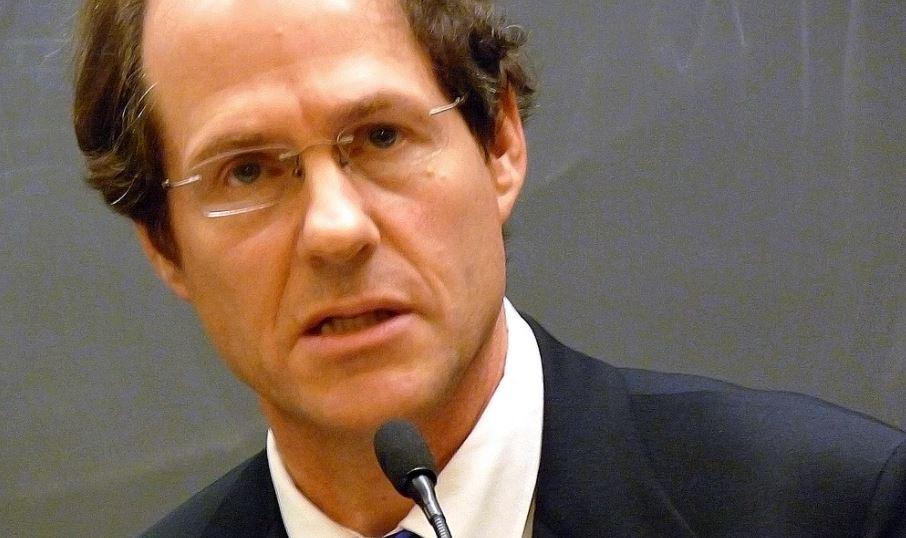
| There's Nothing Profreedom about "Nudging" People with Government Policy Posted: 02 Sep 2021 04:00 AM PDT The July/August 2021 Cato Policy Report hosted a friendly debate between Cass Sunstein and Mario Rizzo. Sunstein is a Harvard Law professor, a onetime member of the Obama administration, and coauthor of Nudge and other books advocating public policy applications of behavioral economics. Rizzo is an economist at New York University. Sunstein argues that modifying the "choice architecture" available to consumers so as to "nudge" them toward the correct choice is a libertarian position perfectly compatible with Friedrich Hayek's The Constitution of Liberty. Rizzo disagreed, arguing that behavioral economics does not solve Hayek's knowledge problem, quoting psychologist Jerome Kagan's 2012 book: "Few psychological concepts intended to represent a person's tendency to react in a certain way apply across diverse settings." In other words, we do not know enough psychology to know how people will react in every choice situation. Kagan did not write about behavioral economics, but, as we will see, his reservation applies there with special force. The "knowledge problem" manifests itself in many places in this short debate; I will mention just one: Sunstein's frequent use of the undefined term "epistemically favorable conditions," which seems to mean conditions under which people will act "rationally"—which of course presupposes the kind of knowledge that Kagan and Hayek dispute. We cannot in general know what epistemically favorable conditions are. Much more could be said along these lines, but here I simply want to point out a couple of serious flaws in behavioral economics. The seminal paper in behavior economics is the 1979 paper by Daniel Kahneman and Amos Tversky called "Prospect Theory: An Analysis of Decision under Risk." This work eventually led to many thousands of citations and an economics Nobel Prize in 2002. Kahneman and Tversky consulted their own intuitions and came up with simple problems which they then asked individual subjects to solve. The results generally confirmed their intuitions. Here is a typical problem. Subjects were asked to pick one of two choices. In one case, the choices were A, 4,000 (Israeli currency) with probability 0.2, or, B, 3,000 with probability 0.25. Sixty-five percent of the subjects picked A, with an expected gain1 of 800 over B, chosen by 35 percent, with an expected gain of 750. This represents rational choice on the part of 65 percent of choosers. The authors contrast this result with an apparently similar problem, A, 4,000, p = 0.8, versus B, 3,000, p = 1.0. In this case, 80 percent of subjects chose B, the certain option with the lower expected value (3,000 versus 3,200), an irrational choice. Kahneman and Tversky then used this contrast, and the results of many similar problems, to come up with an alternative to standard utility theory. Prospect theory, as they called it, is not like most scientific theories, namely a modest set of assumptions from which many predictions can be deduced. It is rather list of effects—such as the certainty effect (this case), loss aversion, confirmation bias, and the like (Wikipedia lists more than a hundred "biases" like this). Prospect theory attempted, with only partial success, to account for these discrepancies by proposing a modified utility function (a more complex version appears in a later paper), but basically it is a set of labels, rather than a theory. There two problems with this superficially attractive approach: teleology and the object of inquiry. First, as to teleology, the use of utility functions: Ludwig von Mises argued that "teleology presupposes causality," and teleological accounts often fail, because they are either silent on the causal processes which, under some conditions, allow people to maximize utility or, more commonly, because they assume that the mathematical method for obtaining the maximum, equating marginals, is in fact the one that people use. Kahneman and Tversky did not (and we still do not) know the processes by which people arrive at their decisions. Hence the failure of their teleological models and the reduction of "prospect theory" to a set of labels. The more serious problem, hinted at by Rizzo's Kagan quote, is prospect theory—any theory that attempts to account for the majority choice—cannot apply to the minority choice. Neither the 35 percent who chose rationally in the first case nor the 20 percent who chose irrationally in the second. If the object of inquiry is the psychology of individual human beings, the work is incomplete. To finish the job, the experimenters need to find out what it takes to produce the same result for all subjects. Kahneman and Tversky's results, and the theory that describes them, are a property of groups of people under very restricted conditions. They are not, as is sometimes assumed, general properties of human nature. The method is just opinion polling, albeit with a clever set of questions. Yet each effect is presented as an invariant property of human choice behavior. Because the group effect is reliable, individual exceptions are ignored. There is little doubt, for example, that subjects given a lesson or two in probability, or faced with a question phrased slightly differently (e.g., not "What is your choice?" but "What would a statistician choose?"), would choose differently. As Rizzo hints at one point, under some conditions, a group might even choose differently than an individual. For example suppose the subjects were allowed to consult among themselves before choosing. If the choice were between, say, 1,000 for sure versus a 0.6 chance of 2,000, would it not be wise for the group of, say, twenty subjects to agree among themselves to always choose the 0.6 and 2,000 option and then split the proceeds evenly—thus ensuring that everyone would probably get more than $1000? People's choice in a problem like this almost certainly depends on the absolute quantities involved. Who can doubt that if subjects were offered a credible choice between, say $10 million for sure versus a 0.6 chance of $20 million, close to 100 percent would choose the sure thing? Until the theory is developed to account for the minority choice and the effect of absolute amount, until it is in a form that allows no individual exceptions, it cannot pretend to be an adequate model of human choice behavior. Hence, quite apart from all the other objections to "nudge" policy is the fact that to the extent that it relies on behavioral economics, it relies upon a fallacy.
 This posting includes an audio/video/photo media file: Download Now |
| You are subscribed to email updates from Mises Wire. To stop receiving these emails, you may unsubscribe now. | Email delivery powered by Google |
| Google, 1600 Amphitheatre Parkway, Mountain View, CA 94043, United States | |



No comments:
Post a Comment