| Donald Trump instigated one of the greatest attacks on American democracy ever. That's one of the takeaways from a Washington Post investigation into how the Jan. 6 insurrection happened. 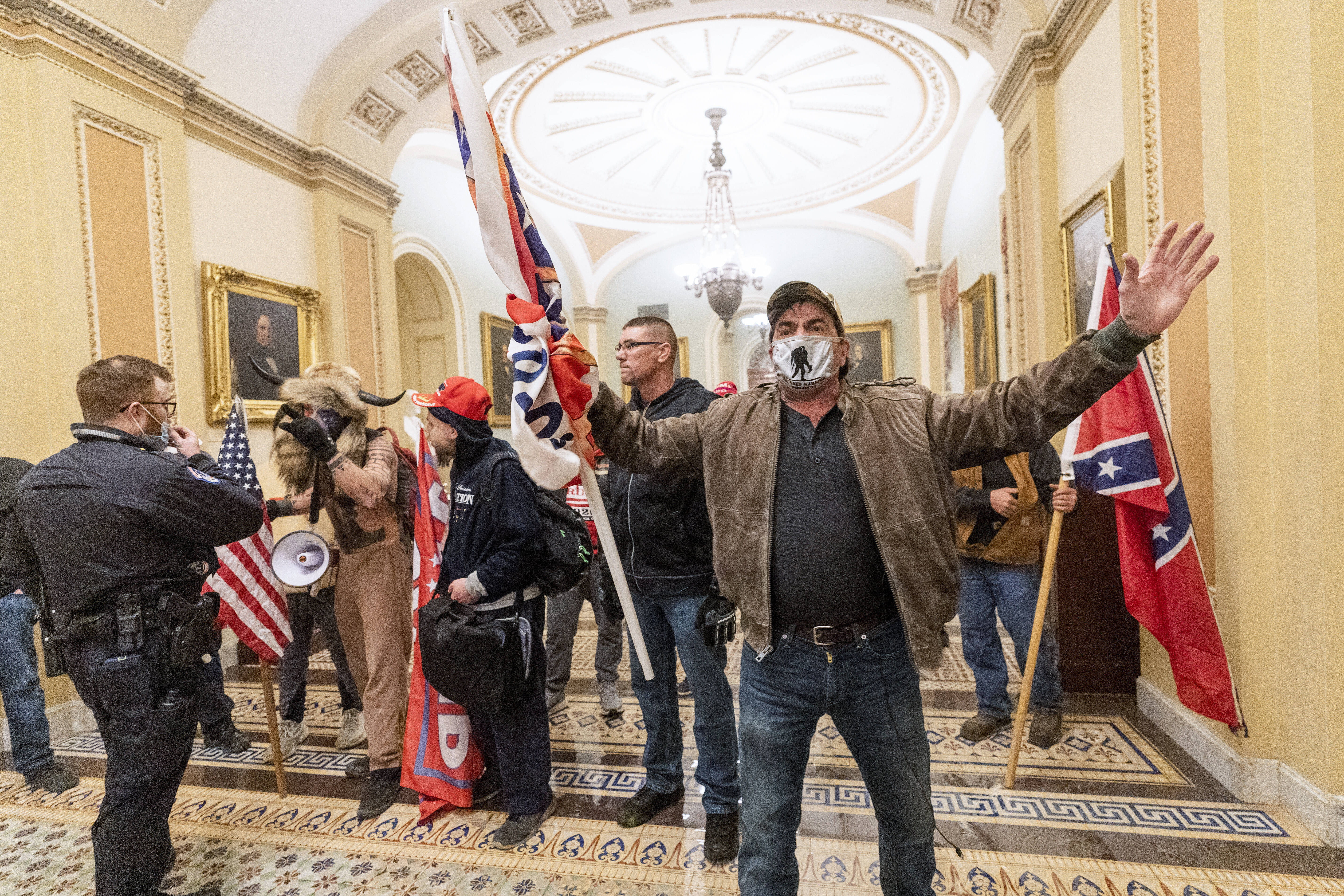 Trump supporters storm the Capitol on Jan. 6. (Manuel Balce Ceneta/AP) | Nearly 10 months after the attack, it's worth stepping back and pausing to realize this happened. As The Washington Post's editor in chief Sally Buzbee writes, that day was one of the most consequential moments in American history. So how did it happen? The Post has spent much of this year putting together a detailed account, released today. Here are some big questions the investigation answers — and new questions that ultimately arise. 1. How did so many extremists and Trump supporters breach the Capitol? The Post finds: Authorities were caught off guard. But they shouldn't have been. There were scores of warning signs of a potential attack on lawmakers in the Capitol that day from local officials, FBI informants, social media companies, former national security officials, researchers, lawmakers and tipsters. There were clashes earlier that day just a mile or so from the Capitol on the National Mall between hundreds of Trump supporters — some with shields and gas masks — and police. A question this raises: Why didn't high-level federal officials take these warnings more seriously? It's not like Trump and his supporters were planning this in secret. Trump frequently tweeted about the Jan. 6 rally. And one intelligence analyst told The Post that far-right groups were talking daily about smuggling guns into D.C. "[F]rom coast to coast, the centers were blinking red," my colleagues write. "The hour, date and location of concern was the same: 1 p.m., the U.S. Capitol, Jan. 6." 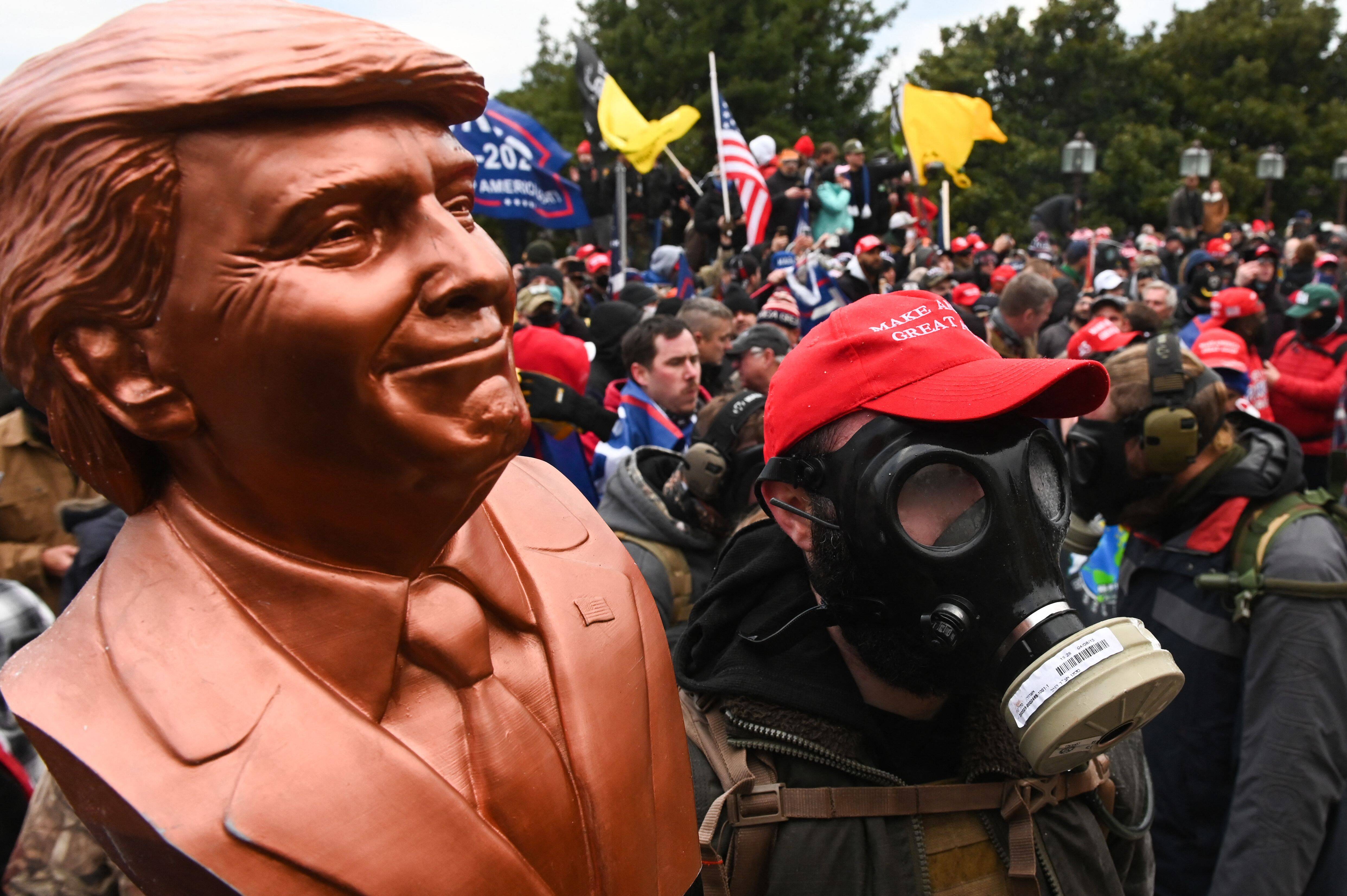 Trump supporters on Jan. 6. (Roberto Schmidt/AFP via Getty Images) | The Post also finds: When the attack on the Capitol happened, the military was hesitant to send soldiers in to save lawmakers. Some were fearful of Trump trying to weaponize soldiers to stay in power, which Trump considered. Meanwhile, the police that were already in the Capitol and charged with keeping lawmakers safe were disorganized and outnumbered. Perhaps the post-9/11 intelligence community just wasn't set up for this. "Intelligence officials certainly never envisioned a mass attack against the government incited by the sitting president," The Post investigation determines. One intelligence analyst who responded to the World Trade Centers told my colleagues: "This feeling came over me that I was out of my depth, that I was in over my head. I was kind of freaking out." Another question this raises: Just a small one: How does America protect democracy? Some experts speculate it's a matter of when, not if, an attack like this happens again. "When do we get to bring the guns?" one attendee at a conservative talk recently asked. " … That's not a joke." Or perhaps the next attack on democracy is something less violent but more insidious: What happens if Trump or another leader comes into power wanting to overthrow an election, and they are more calculated about it? Trump's efforts were haphazard, yet he actually got pretty far. 2. What role did Trump have in inciting this violence? 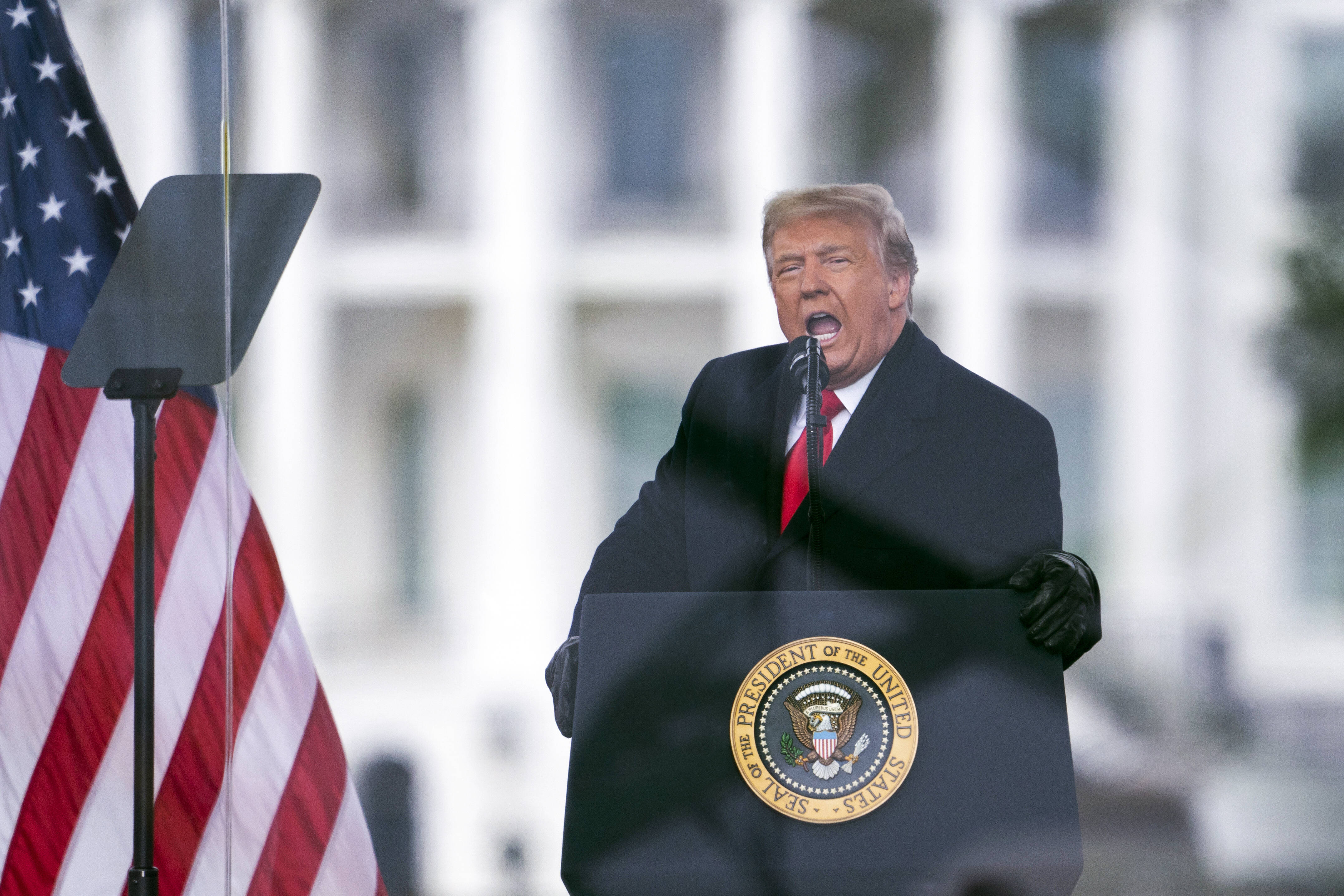 Trump speaks to supporters before the insurrection Jan. 6. (Evan Vucci/AP) | The Post finds: There is no direct evidence Trump envisioned this kind of breach on the Capitol. But he certainly lit the kindling. Eighteen hours before the attack, the president's supporters were cheering outside the White House, within earshot. "Stop, can you hear it? This is just incredible music," Trump told his aides, The Post investigation reports. The president told an aide he didn't want violence the next day. But he probably wasn't expressing concern about his supporters, soon tweeting that he wanted a left-wing group known as "Antifa" to stay out of Washington. Let's review what Trump did: - Trump spent months before the election casting unfounded doubt on a new way millions of people voted during the pandemic, by mail.
- He falsely claimed on election night, before the votes were even fully counted, that he won.
- After he lost, he falsely claimed that the election was stolen from him, and he propped up a parade of legal advisers to file dozens of lawsuits challenging votes based on little more than hearsay. Most of these got thrown out of court; Rudy Giuliani got disbarred for bringing such baseless lawsuits.
- He put immense pressure on local Republican officials to vote against certifying their community's election results. GOP officials in Michigan initially did. Others who resisted received death threats. ("In a perfect world, traitors are hung by their scrawny little necks until dead," one to an Arizona official read, The Post investigation found.)
- He stirred up his supporters on social media: "Big protest in D.C. on Jan. 6th. Be there, will be wild!" The Post investigation finds: "Trump's election lies radicalized his supporters in real time."
- When all that failed, he pressured Vice President Mike Pence to halt the last step to making Biden president, by urging him in his duty as president of the Senate to deny certification of enough results to throw the election in doubt.
- When that failed, he refused to call off his supporters, despite top Republican lawmakers, besieged in the Capitol, urgently calling him to do so. "Trump had direct warnings of the risks but stood by for 187 minutes before telling his supporters to go home," The Post investigation finds.
A question this raises: What consequences will there be for Trump? He was impeached, but the Senate acquitted him and decided against voting to bar him from public office. He can and probably will run for president again. Democracy advocates fear a "worst-case scenario" for America as a result. 3. What happens to this contingent of the American public that wants to overturn an election? 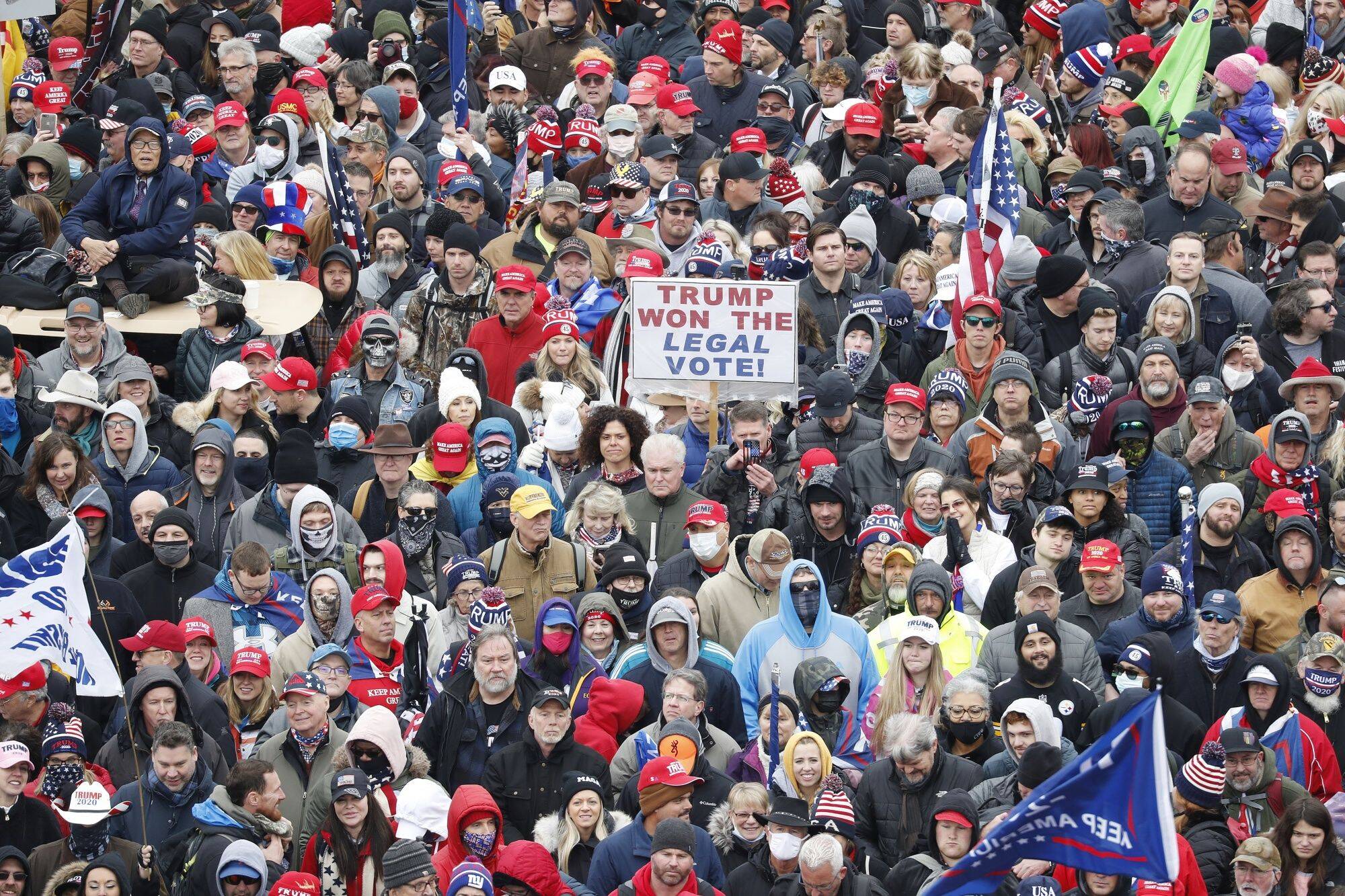 (Shawn Thew/EPA/Bloomberg) | The Post finds: These insurrectionists haven't faded away. In fact, you could argue that the spirit that drove them to attack the Capitol is the dominating stream of Republican politics. Not a year later, it's part of the Republican platform to hint or outright say the election was stolen from Trump. The Post investigation calculates that nearly a third of Republican candidates likely to run for statewide office soon have questioned Biden's victory to varying degrees. Reuters finds that 10 of 15 Republican candidates running to oversee elections in states that could decide the 2024 presidential election have questioned the validity of the 2020 election. A new survey from PRRI found that one-third of Americans believe the election was stolen from Trump, including two-thirds of Republican voters. A question this raises: What happens to trust in elections in America? Are these GOP conspiracy theories here to stay? I'll end this synopsis with something Rep. Liz Cheney (R-Wyo.), one of the only House Republicans willing to talk openly about what happened on Jan. 6, said: "Every single American has a responsibility … our institutions are very fragile. Every single person has a duty." | 




 Email
Email 


No comments:
Post a Comment