| Hey, happy Monday, and welcome back from Thanksgiving break. 🦃 Send tips on beating the looming cold weather to rachel.roubein@washpost.com. Below: Merck's coronavirus treatment pill isn't as effective as it first seemed, and the Supreme Court is hearing a major abortion case on Wednesday. But first: | We just don't know much yet about the omicron variant | 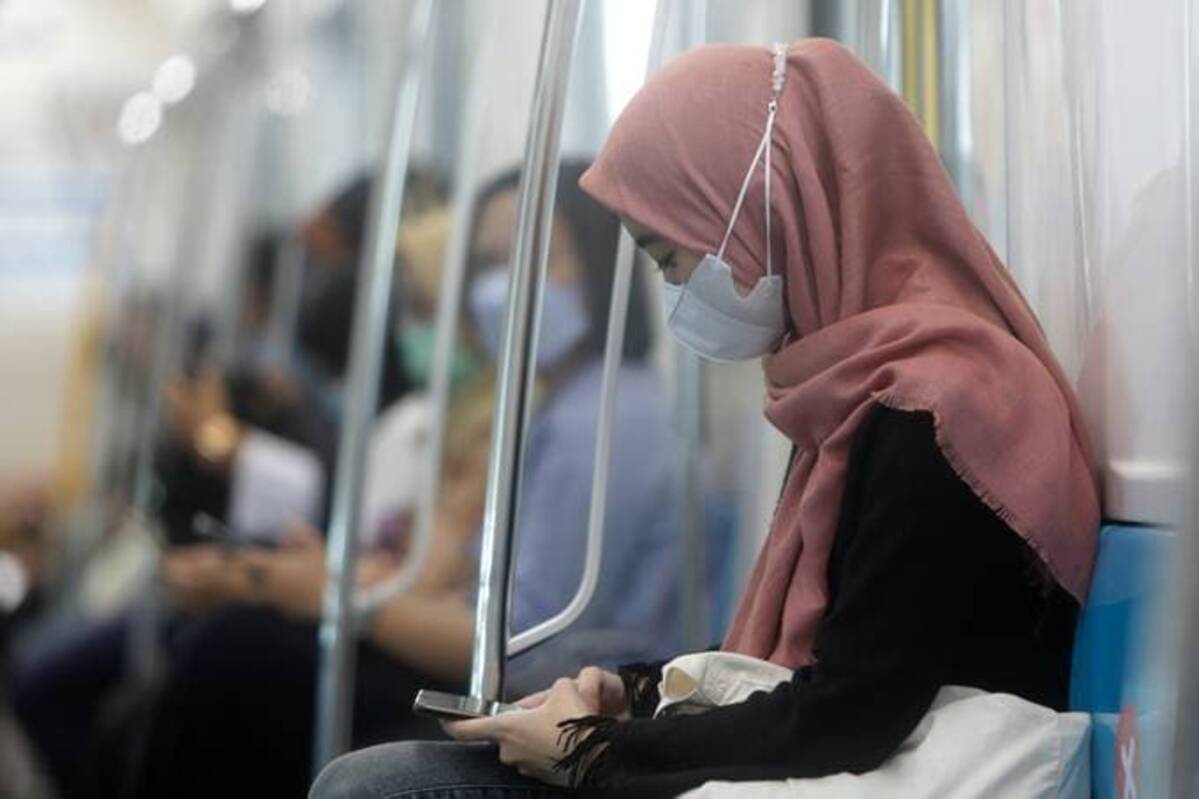 A worker in Jakarta, Indonesia, where travelers from eight countries are now prohibited due to the omicron variant. Mandatory Credit: Photo by ADI WEDA/EPA-EFE/Shutterstock | | | Health officials around the globe are racing to answer critical questions that could shape the public health response to the new coronavirus variant, dubbed omicron. Most of it is still TBD: Researchers don't yet know if the virus is more transmissible, the severity of the disease it causes and how well vaccines protect against the variant. | - "A lot of unknowns really. … Give the scientific community a week or so, we're going to get a lot more information," said Peter Hotez, dean of the National School of Tropical Medicine at Baylor College of Medicine.
| | Here's what happened over the Thanksgiving holiday: | - On Thursday, South African officials announced they had detected a new virus variant with a high number of mutations.
- On Friday, the World Health Organization declared it a "variant of concern" — citing mutations that may impact how it behaves — and officially gave it the Greek letter designation omicron.
- Later that day, the Biden administration restricted travel from South Africa and seven other countries starting today.
- Over the last several days, senior health officials have spoken with government scientists, South African officials and vaccine manufacturers, The Post reports.
- On tap today: President Biden will give an update on the country's response to omicron.
| | But as the news unfolds, health experts inside and outside of the federal government are urging the public not to panic. There's still much to learn about omicron. | | CNN's "State of the Union": | 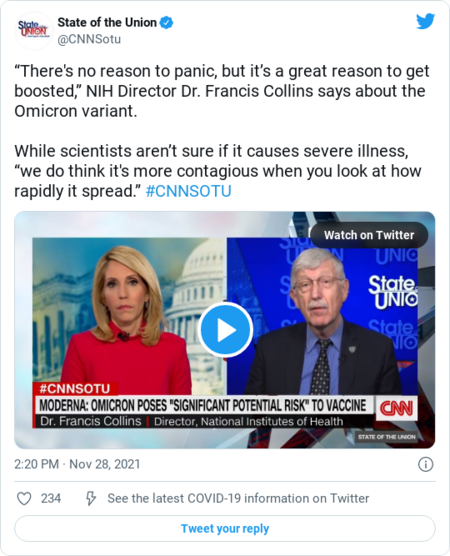 | | | | | Here's what we know and don't know — and when we might learn it by: | | 1. The variant has a high number of mutations. Omicron has more than 30 mutations in the spike protein, the part of the virus that attaches to a human cell and infects it. That's led to questions over whether omicron is more transmissible than other forms of the virus and if it could more easily evade vaccines. | - "That is a new record in terms of the number of mutations," Francis Collins, the National Institutes of Health Director, said on "Fox News Sunday." "It does make you worry, therefore, that it's a sufficiently different virus, that it might not respond as well to protection from the vaccines. But we don't know that."
| | The composition of the variant has left U.S. officials to "prepare for the worst, and hope it's not going to be the worst at all," Anthony Fauci, Biden's chief medical adviser, told our colleague Dan Diamond. | | Per Dan: | 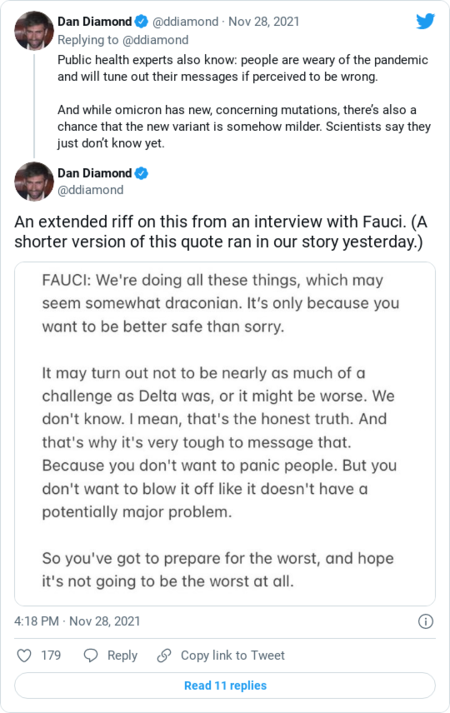 | | | | | 2. There's still too many unknowns to make any definitive conclusions about omicron. The variant has fueled a recent outbreak in South Africa, where the rate of cases has risen dramatically in Gauteng province around Johannesburg. But scientists still don't know if that's because it's more infectious or if the spike is due to other factors. | - The WHO put out a note of caution. In a statement Sunday, the organization said it's still too early to know the answers to many key questions and said researchers are working rapidly to determine the variant's transmissibility, severity and more.
| | It'll take about two weeks to get more definitive information. That's what Fauci told Biden yesterday, according to a readout from the White House. 3. Vaccines can be altered to protect against the new variant — if necessary. | | Biden officials believe existing vaccines are likely to provide a degree of protection against omicron. The administration and some public health experts are focusing on booster shots as the best strategy to protect the country against the variant, The Post's Yasmeen Abutaleb, Fenit Nirappil, Rachel Pannett and your host report. Officials plan to urge Americans to get the third shot and sharpen efforts to ensure the boosters are available in as many locations as possible. It'll take time to learn whether the variant limits the effectiveness of the vaccines, but researchers could have a rough indication in about a week, Hotez said. | - Meanwhile, drugmakers say they're already preparing to make new versions of their vaccines to fight omicron if need be. Those could be created within just a few months, with Pfizer estimating 100 days to develop and produce the shot, our Post colleagues report, and Moderna saying it's beginning work on an omicron-specific booster shot that could begin clinical testing by early next year.
| | |  | Coronavirus | | The world reacts to omicron | | Scientists widely praised South Africa for quickly identifying and alerting the world to the new coronavirus variant. But that may be cold comfort for South African officials, who criticized travel bans placed on their country over the weekend. Some health experts have argued that such bans could discourage countries from reporting variants. | - Meanwhile, some experts fear that the travel bans may be too late. Confirmed suspected cases have been identified in a number of countries, including Canada, Britain, Belgium, Botswana, Germany, Italy, Hong Kong and Israel.
- Scientists are racing to track the spread of the new variant, but 20 months into the pandemic, virus sequencing remains spotty, The Post's Miriam Berger reports. South Africa sequences 0.8 percent of its virus samples, ranking 37th globally. The United States does a bit better, sequencing and sharing 3.6 percent of coronavirus samples.
| | Omicron has yet to be detected in the United States, though public health experts told The Health 202 they wouldn't be surprised if it was here already. | - But still, New York Gov. Kathy Hochul (D) declared a state of emergency on Friday, warning, "it's coming." As part of the emergency, which also comes in response to a surge in cold weather coronavirus infections, the state's health department will be allowed to protect hospital capacity by limiting nonessential and non-urgent care until at least Jan. 15, The Post's Andrew Jeong reports.
| New data dampens expectations for Merck's covid pill | | Drugmaker Merck and its partner Ridgeback Biotherapeutics released data Friday showing their experimental pill to treat covid-19 is less effective than early clinical trials predicted, The Post's Katie Shepherd reports. | - Data released by the company in October suggested the pill, molnupiravir, could cut the risk of hospitalization and death by half among high risk patients. But the latest findings suggest that the pill reduced the risk of death and hospitalization only by 30 percent.
| | The FDA's advisory committee is set to meet tomorrow to discuss whether to recommend emergency use authorization for the pill and how to best use the treatment. While the FDA determined that the clinical trial identified "no major safety concerns," the agency's review suggests that regulators may limit the drug's use in people who are pregnant, hospitalized and vaccinated. On the horizon: The FDA is also expected to soon consider another antiviral pill from Pfizer, known as Paxlovid. Pfizer's drug, when taken within three days of symptoms, appeared to reduce the risk of hospitalization and death among high-risk patients by 89 percent, according to company data. | | |  | In the courts | | Mississippi's abortion case gives Justice Thomas a chance to make his case against Roe v. Wade | 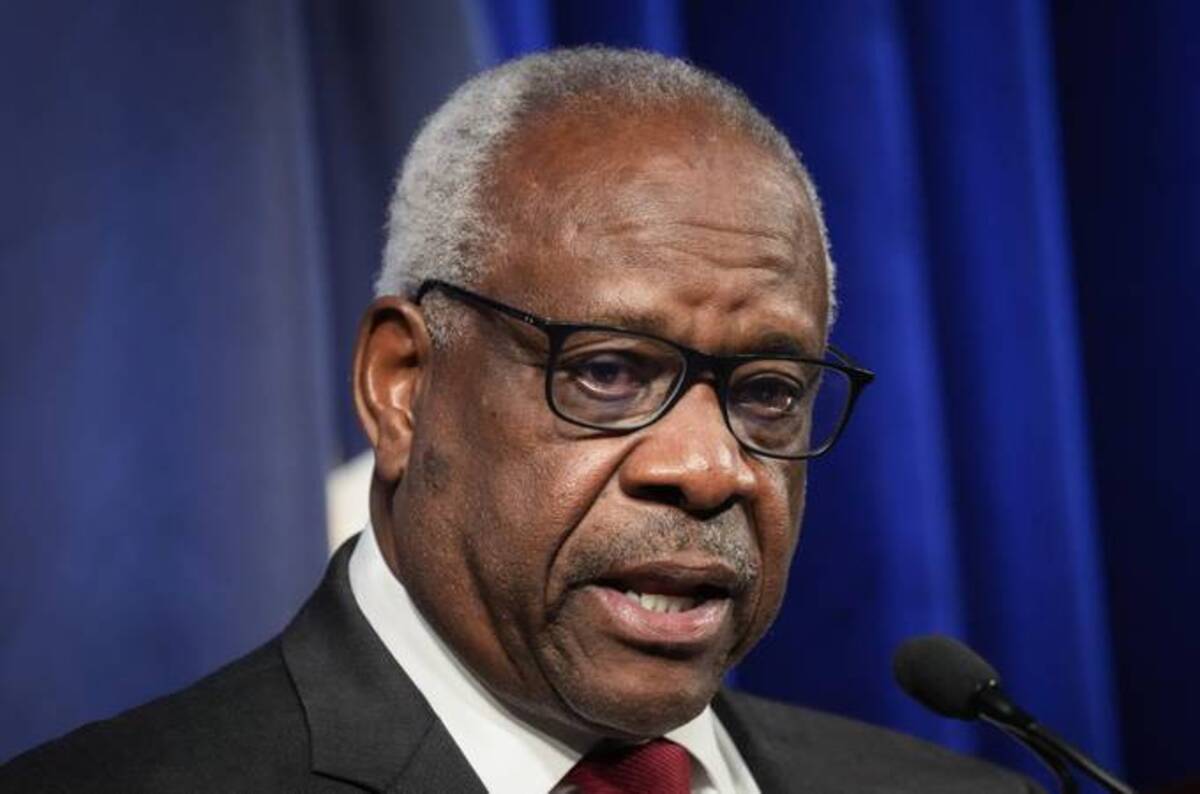 Supreme Court Justice Clarence Thomas. (Drew Angerer/Getty Images) | | | This Wednesday will be a pivotal moment for the nation's fight over abortion, as the Supreme Court hears oral arguments in a high stakes case that could determine the future of Roe v. Wade. For Justice Clarence Thomas, the moment is long awaited, The Post's Robert Barnes reports. Thomas has maintained for three decades that the Constitution does not protect a right to abortion. | - "Our abortion precedents are grievously wrong and should be overruled," Thomas wrote in a dissenting opinion in 2020. "The Constitution does not constrain the States' ability to regulate or even prohibit abortion."
| | Now, as the Supreme Court considers a Mississippi law that bans almost all abortions after 15 weeks, Thomas is sitting on the most conservative Supreme Court in decades. The case also coincides with "something of a high-water mark" in Thomas's career, as the longest-serving justice is offered unprecedented deference. | - "In terms of abortion, Justice Thomas is the tip of the spear," said Thomas C. Goldstein, a lawyer who frequently argues before the court and was a founder of SCOTUSblog.com. "He is a driving force for overruling Roe v. Wade. And that position will make a decision that doesn't go so far and instead cuts back on Roe seem pretty modest."
| | |  | Industry Rx | | | The counteroffensive: Up against the powerful pharmaceutical lobby, AARP has been fighting hard to ensure drug pricing measures are included in Democrats' economic package, The Early's Theodoric Meyer and Jacqueline Alemany report. | - The influential seniors' lobby has spent more than $16 million so far this year on TV, radio and digital advertising.
- It shelled out $8.5 million on lobbying on drug pricing and other issues in the first nine months of the year, according to disclosure forms. That's a little more than a third of the $22.4 million that the Pharmaceutical Research and Manufacturers of America has spent.
- It also mobilized its network. AARP members made more than 9,000 calls to congressional offices within the span of a week after the White House issued a framework for the bill that originally excluded drug pricing.
| | |  | Daybook | | | Today: The World Health Assembly, the governing body of the WHO, will kick off a special session in which it will consider new international rules for how to handle future pandemics. Tomorrow: The FDA's advisory committee will meet to discuss recommending emergency use authorization for Merck's antiviral coronavirus pill. Also tomorrow: The Senate HELP Committee will hold a hearing on the nomination of Susan Harthill to be a member of the Occupational Safety and Health Review Commission. Wednesday: The Supreme Court will hear oral arguments in the most consequential abortion case in decades, which deals with the constitutionality of a Mississippi law banning abortions after 15 weeks. Thursday: The House Energy and Commerce health subcommittee will hold a hearing on federal efforts to combat overdoses. Friday: Congress faces a deadline by the end of this week to fund the government or face a shutdown. It's one of two major fiscal deadlines facing lawmakers this month. Also on Democrats' to-do list: raising or suspending the debt ceiling and pushing through a $2 trillion tax-and-spending bill. | | |  | Sugar rush | | | Thanks for reading! See y'all tomorrow. | |


No comments:
Post a Comment