| "Vaccine" is the word of the year. The editors of the Merriam-Webster dictionary announced, "The biggest science story of our time quickly became the biggest debate in our country, and the word at the center of both stories is vaccine." When the pandemic began last year, interest in that word was already strong, but in 2021 online lookups of "vaccine" have increased more than 600 percent (story). Our surging curiosity about the word provides a genetic sequence of the era's febrile debates about vaccine efficacy, safety, mandates and civil rights. In a sign of just how universal the covid challenge has been, our friends across the pond came to almost the same conclusion: The Oxford English Dictionary searched through 14.5 billion words and chose the colloquialism "vax" as the word of the year. The OED editors said, "For lexicographers, it is rare to observe a single topic impact language so dramatically, and in such a short period of time become a critical part of our everyday communication." But what if you're feeling weirdly left out of this lexical unanimity? What if you can't even find a word for what's happening to you? Get a copy of "The Dictionary of Obscure Sorrows." This quirky book of neologisms by John Koenig is meant "to capture the delectable subtleties of the human experience" (review). You'll discover hundreds of useful words that spark a strange sense of recognition. A few samples of Koenig's melancholy wit: - kudoclasm: when lifelong dreams are brought down to Earth.
- lyssamania: the irrational fear that someone you know is angry at you.
- proluctance: the paradoxical urge to avoid doing something you've been looking forward to.
And for the littlest linguists in your life, I recommend these exceedingly clever books: - "Comparrotives: A Grammar Zoo Book," by Janik Coat (ages 2 to 4). In bright, blocky illustrations, Coat's parrot introduces children to comparative adjectives. This is not just GOOD; it's BETTER than any kids grammar book I've seen. It's so fun, they won't ever know they're learning something.
- "The Wordy Book," by Julie Paschkis (ages 5 to 10). Across 16 magical paintings packed with paradoxes, Paschkis poses big questions about language and life. At one point, she wonders, "Is the word in the world or is the world in the word?"
- "Homophones Visualized," by Bruce Worden (ages 10 and up). With dozens of stick-figure drawings, Worden comically demonstrates the difference between words that sound alike but are spelled differently. I may never again confuse "stationary" and "stationery," but I don't want to rays my editor's hopes two high!
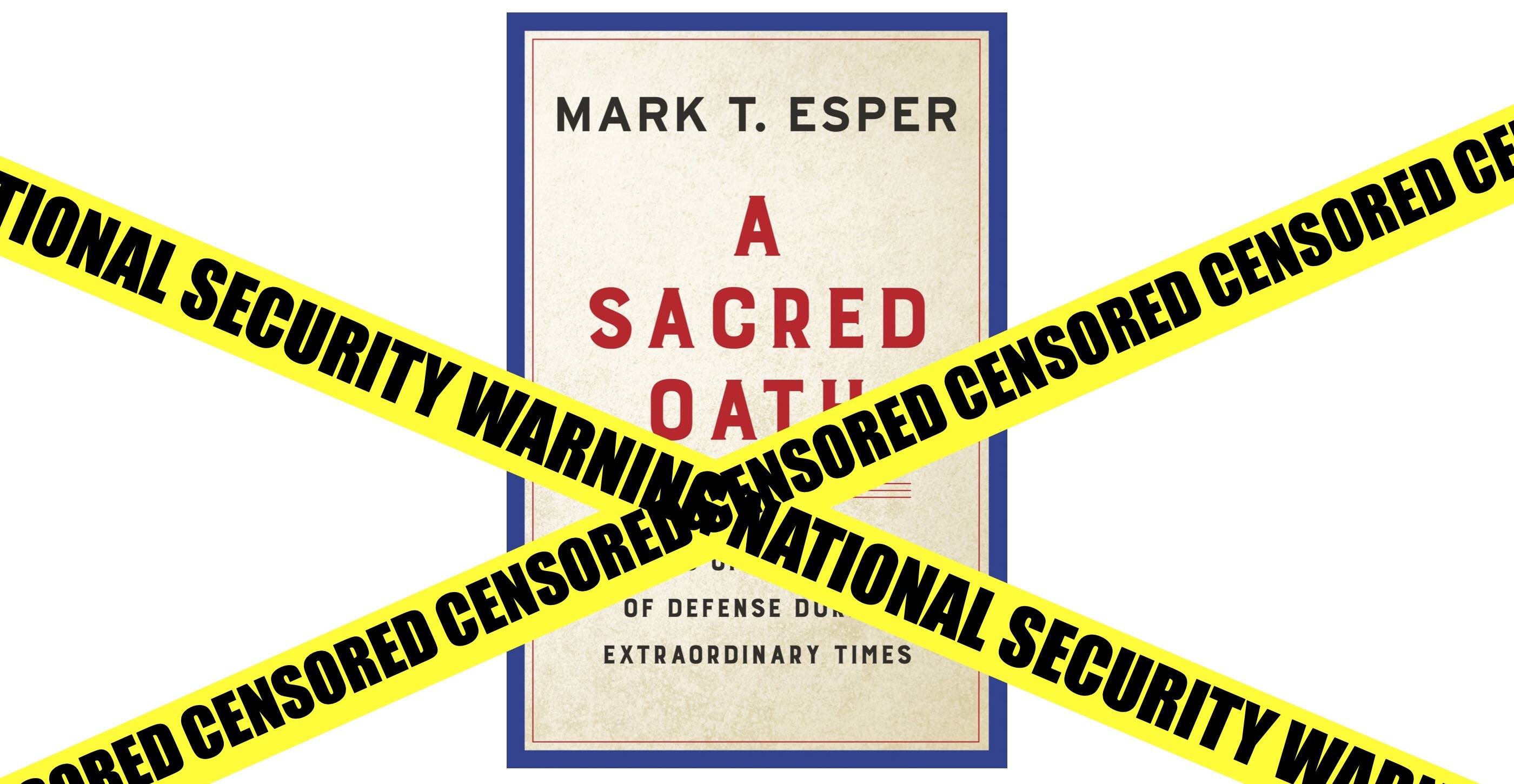 "A Sacred Oath," by Mark Esper, is scheduled for release on May 10, 2022, but the memoir is now snarled up in a legal battle with the Department of Defense. (William Morrow; photo illustration Ron Charles/The Washington Post) | You may remember how aggressively — and futilely — President Trump tried to squash John Bolton's "The Room Where It Happened," Michael Wolff's "Fire and Fury" and Mary Trump's "Too Much and Never Enough." Well, Trump has left Washington, but hostility towards books still lingers here. This week brought news that Trump's former defense secretary Mark Esper is running up against censors under the current administration. On Sunday, Esper filed a lawsuit claiming that the Department of Defense is infringing on his First Amendment rights by needlessly delaying and arbitrarily redacting his memoir, "A Sacred Oath" (story). Esper's publisher, William Morrow, says the memoir, scheduled to be released in May 2022, "reveals the shocking details of his tumultuous tenure while serving in the Trump administration." But Esper's lawsuit argues that the Defense Department's review process — required by law to protect national security — is gutting the book for no good reason. "My Constitutional rights should not be abridged because my story or choice of words may prompt uncomfortable discussions in foreign policy circles," he writes. "For me to redact or alter all of the items currently required by the DOPSR review not only grossly exceeds the purpose of the process, but doing so would be a serious injustice to important moments in history that the American people need to know and understand." More alarming, Esper suggests that government officials intentionally leaked information from his manuscript "to undermine the impact it would have had were it to first appear in the published version of 'A Sacred Oath.'" So much for the government's national security concerns. Esper freely acknowledges the importance of protecting legitimate classified information. But the former defense secretary insists that his memoir contains no such details. And precedent is on his side: Over and over again, we've seen that administrations — liberal and conservative — are addicted to secrecy. Enough. Congress needs to overhaul the government's pre-publication review process. The presumption should be total openness, and each demand for a redaction or change should be accompanied by specific justification related to national security. As we've seen, anything less can become a license for nervous spooks and vain politicians to protect their private vision of our public history. 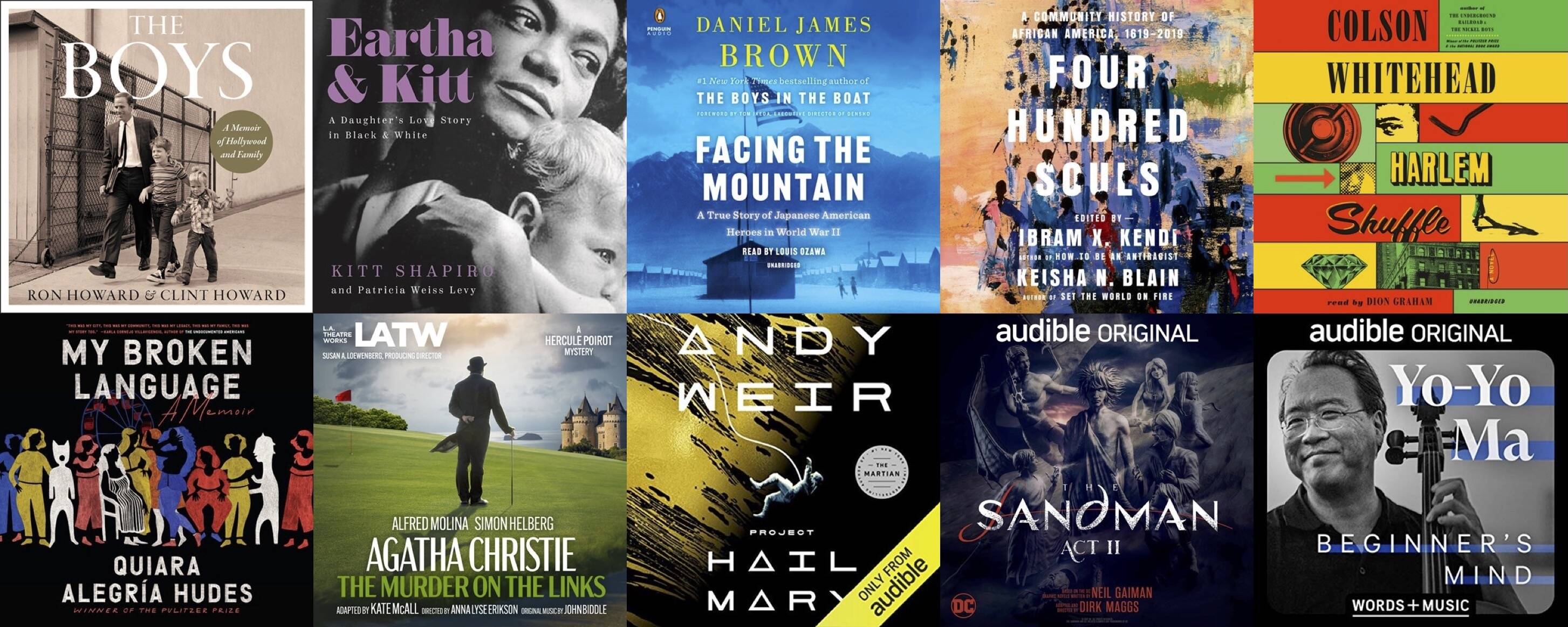 Top row: Harper Audio; Dreamscape; Penguin Audio; Random House Audio; Random House Audio. Bottom row: Random House Audio; L.A. Theatre Works; Audible; Audible; Audible | In our family, we have a strict division of labor: Dawn drives the car, and I read to her. But if you'll be traveling this holiday season without me, you'll need a good audiobook to listen to. Start with Book World's 10 best audiobooks of 2021 (full list). For more good ideas, this week I asked the editors of AudioFile magazine to name their top recommendations chosen from the 2,300 audiobooks they reviewed in 2021. Robin Whitten, founder of AudioFile, said, "Here are 10 audiobooks that we think give great listening and offer something different and more than a reader would get from print": - "The Boys: A Memoir of Hollywood and Family," by Ron Howard and Clint Howard, read by Ron Howard, Clint Howard and Bryce Dallas Howard (video interview)
- "Eartha & Kitt: A Daughter's Love Story in Black and White," by Kitt Shapiro and Patricia Weiss Levy, read by Karen Chilton (Appreciation: Eartha Kitt, The Purrfect Diva)
- "Facing the Mountain: A True Story of Japanese American Heroes in World War II," by Daniel James Brown, read by Louis Ozawa
- "Four Hundred Souls: A Community History of African America, 1619-2019," edited by Ibram X. Kendi and Keisha N. Blain, read by JD Jackson, Kevin R. Free, January LaVoy, Robin Miles, Dion Graham, Angela Y. Davis, Nikole Hannah-Jones et al. (review)
- "Harlem Shuffle," by Colson Whitehead, read by Dion Graham (review)
- "My Broken Language: A Memoir," by Quiara Alegría Hudes, read by the author
- "The Murder on the Links," by Agatha Christie, adapted by Kate McAll and read by Alfred Molina, Simon Helberg and more (I recommended this in October)
- "Project Hail Mary," by Andy Weir, read by Ray Porter (This bestseller has some problems)
- "The Sandman: Act II," by Neil Gaiman, adapted by Dirk Maggs and read by James McAvoy, Neil Gaiman, Kat Dennings, John Lithgow and more
- "Beginner's Mind," by Yo-Yo Ma, read and performed by the author (Yo-Yo Ma on the lessons of staying home)
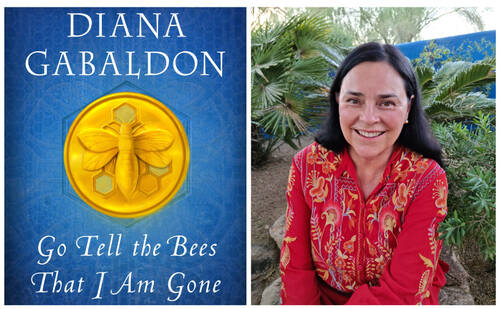
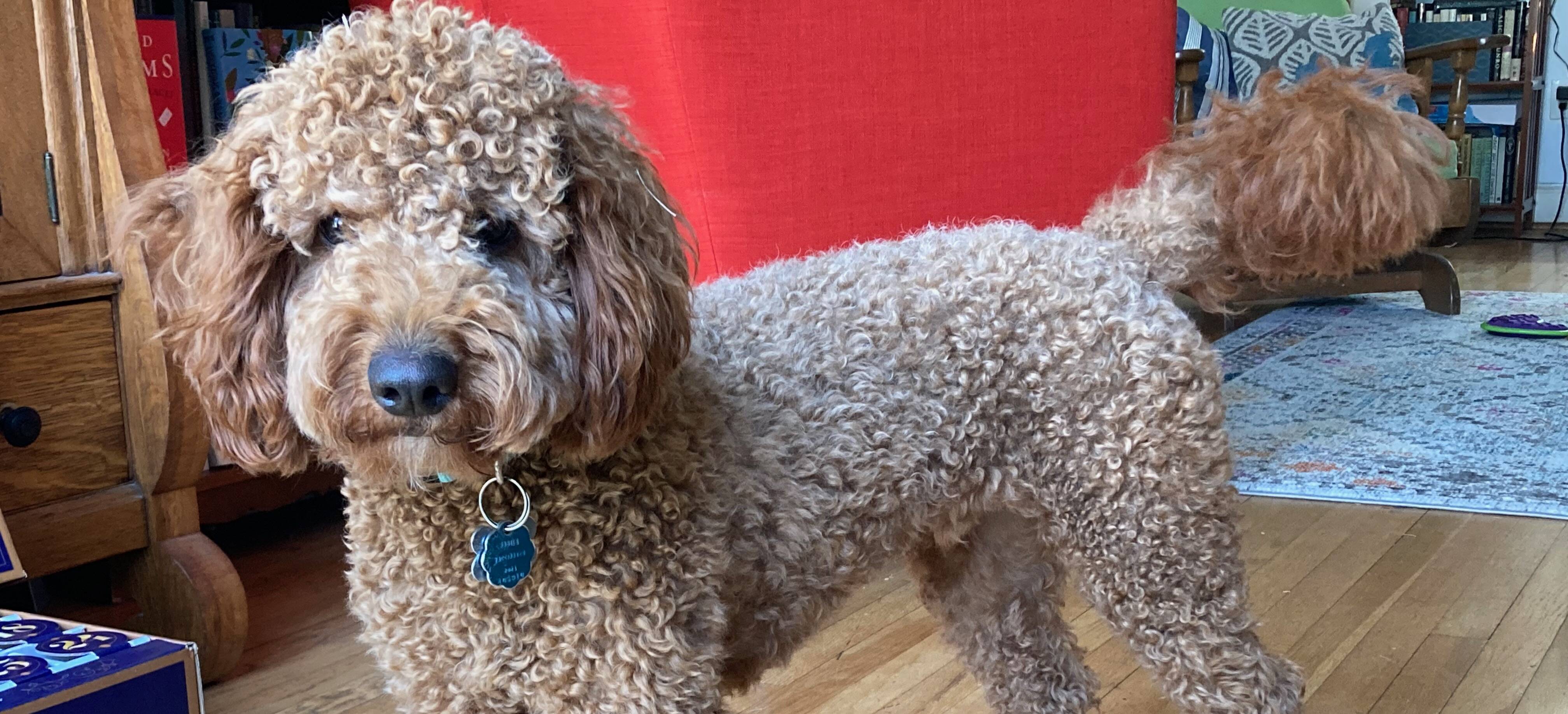 Fauci, who lives with Book World editor Nora Krug, did not participate in the new craze for literary pet names. (Nora Krug/The Washington Post) | It's been a ruff year for literature. The covid pandemic kept more of us inside reading and adopting dogs — and therein hangs a tail. The historic confluence of books and barks apparently inspired a pack of pups with literary names. Rover, the international network of pet sitters and dog walkers, pawed through millions of names submitted by pet owners. Of course, there were all the usual pop stars, sports celebrities and Faucis (story). But the company also discovered that dogs named Poppy (from Emily Henry's "People We Meet on Vacation") are trending up by 45 percent; Briannas (from Diana Gabaldon's Outlander series) are up 38 percent; and Elins (as in romance writer Elin Hilderbrand) are up 63 percent. Classic authors fetched a dramatic rise in canine fans, too. According to Rover, there's a new fondness for Oscar the Wilde, Frederick Douglass and Bradbury. William Shakespeare, who once noted that dogs are "easily won to fawn on any man," saw a 55 percent increase in the use of his name in 2021. Hemingway is up 151 percent. And Salinger, who picked a bone with every phony, rose 163 percent. Cats saw an increase in their use of literary names, too, but they want you to know they're all European authors you haven't read. 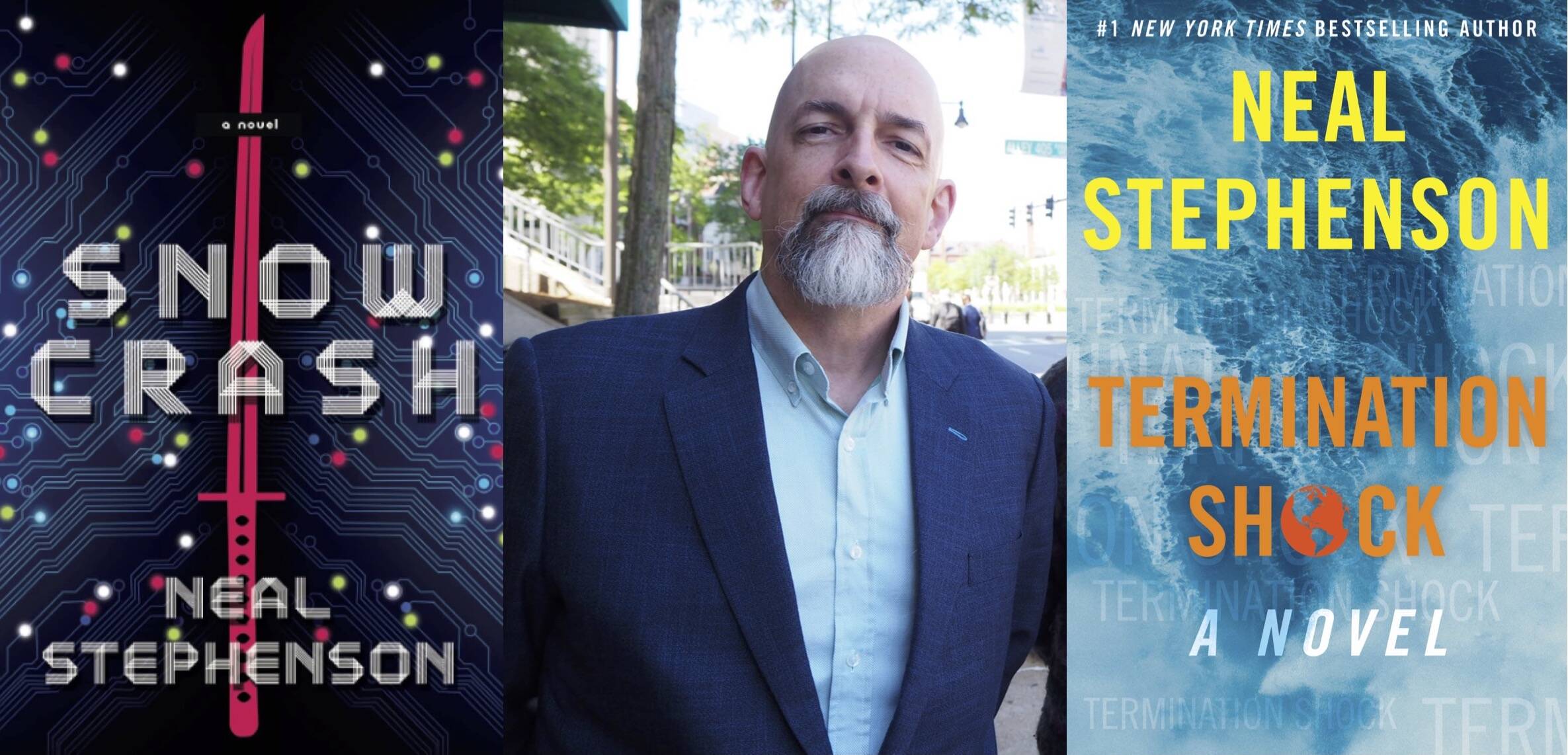 Random House; author Neal Stephenson (Courtesy of Mercatus Center at George Mason University); William Morrow | Mark Zuckerberg was 8 when Neal Stephenson published "Snow Crash," his dystopic novel about an immersive realm of virtual reality called the Metaverse. Now, that term and a rosy adaptation of that vision have become the model for Facebook Meta Platforms. Stephenson's new novel, "Termination Shock," may prove just as unnervingly prophetic (review). The story describes a world transformed by the ravages of climate change. Determined to find a solution, a can-do Texas billionaire decides to carpet the Earth's atmosphere with sulfur to block sunlight and cool the planet. Complications ensue. . . . "Termination Shock" is a massive thought experiment in response to the chronic dithering of world governments. While diplomats in Glasgow debated CO2 reductions far off in the future, Stephenson tells me, "The time to have begun was probably one or two generations ago." The problem, he points out, is that "if we could magically stop putting carbon dioxide into the air today," the CO2 that we've already released would continue warming the planet. "That's still going to leave us with a world that for many people is literally uninhabitable." As Stephenson sees it, there's only one extraordinarily complex solution: "Carbon capture has to become the largest engineering project in the history of the world over the next few decades." It's easy to get discouraged. Every few years, Earth's most powerful government is taken over by science-denying theocrats screaming, "Drill, baby, drill!" But Stephenson insists that "we absolutely can" solve global warming. "I hope that in 100 years, we'll have the CO2 level back down to a reasonable level." Stay tuned. 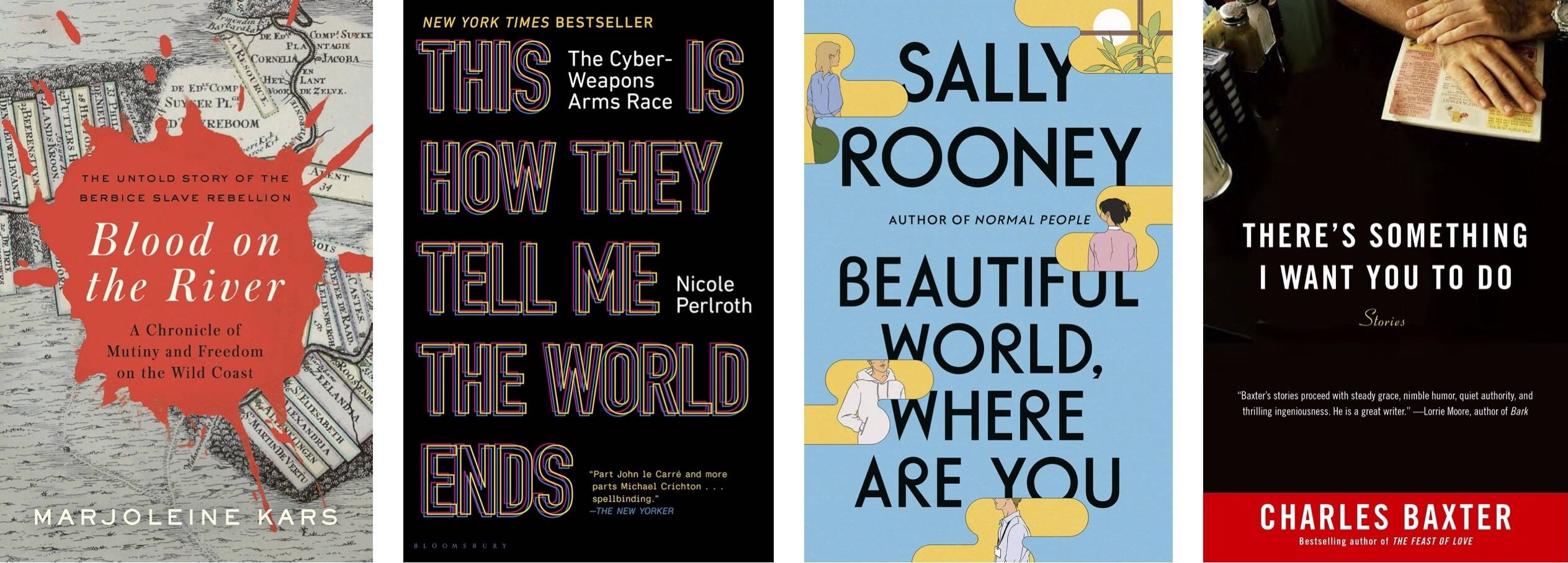 The New Press; Bloomsbury; Farrar, Straus and Giroux; Vintage | This week's literary prizes and honors: - "Blood on the River: A Chronicle of Mutiny and Freedom on the Wild Coast," by Marjoleine Kars, won the Cundill History Prize. The $75,000 award, administered by McGill University in Montreal, honors the year's best work of history written in English. "Blood on the River" examines a 1763 slave rebellion against the Dutch in present-day Guyana (review).
- "This Is How They Tell Me The World Ends: The Cyberweapons Arms Race," by Nicole Perlroth, won the $40,000 Financial Times/McKinsey Business Book of the Year. In an interview with The Washington Post about the alarming state of cybersecurity, Perlroth warned, "We have to really recalibrate and focus on defense. Otherwise, we're just so screwed" (interview).
- "Beautiful World, Where Are You," by Sally Rooney, was named Novel of the Year by the An Post Irish Book Awards, Ireland's biggest literary celebration. Rooney's novel is also one of The Washington Post's 50 Notable Works of Fiction for 2021.
- Charles Baxter will accept the PEN/Malamud Award for Excellence in the Short Story tonight — Dec. 3 — at 7:30 p.m. ET. Baxter is the author of six novels and six story collections, including "There's Something I Want You to Do," which our reviewer said "highlights what finely crafted short stories can accomplish better than any art form" (review). You can watch tonight's free virtual ceremony by registering here.
 (Image courtesy of Goodreads) | "He's making a list, he's checking it twice." I'm talking, of course, about everybody in the book business. For editors, reviewers and booksellers, this is the season of fervent list making. (You can find the best list of the top 10 best books of 2021 here.) For the 14th year, David Gutowski, who writes the Largehearted Boy blog, is maintaining a master list of all the best books lists that appear online. It's already a staggering collection of conflicting literary judgments — and he'll continue updating it daily here. Looking at what other publications have crowned as the best novels of the year, I'm battered with conflicted feelings of relief, superiority and inadequacy. (You don't want to be in my head.) The Goodreads Choice Awards is the largest best books contest in the world. Last year, about 5.6 million people cast ballots, which is enough to spread the credit — or blame — very wide. Users are invited to choose their favorites across 17 categories — from Fiction to Romance to Horror and more. Winners will be crowned on Dec. 9. (Goodreads is owned by Amazon, whose founder, Jeff Bezos, owns The Washington Post.) We can debate the wisdom of crowds (I'm a confirmed skeptic), but the Goodreads Choice Awards do provide a depressing useful barometer of popular taste. A couple of The Post's picks were among the semi finalists, but they've since been knocked out of the running. Now we're facing the very real possibility that Nicholas Sparks's "The Wish" might be crowned the year's best work of fiction. After 22 months of the covid pandemic, that feels like one disaster too many. Votes are due by Sunday night. Start here. 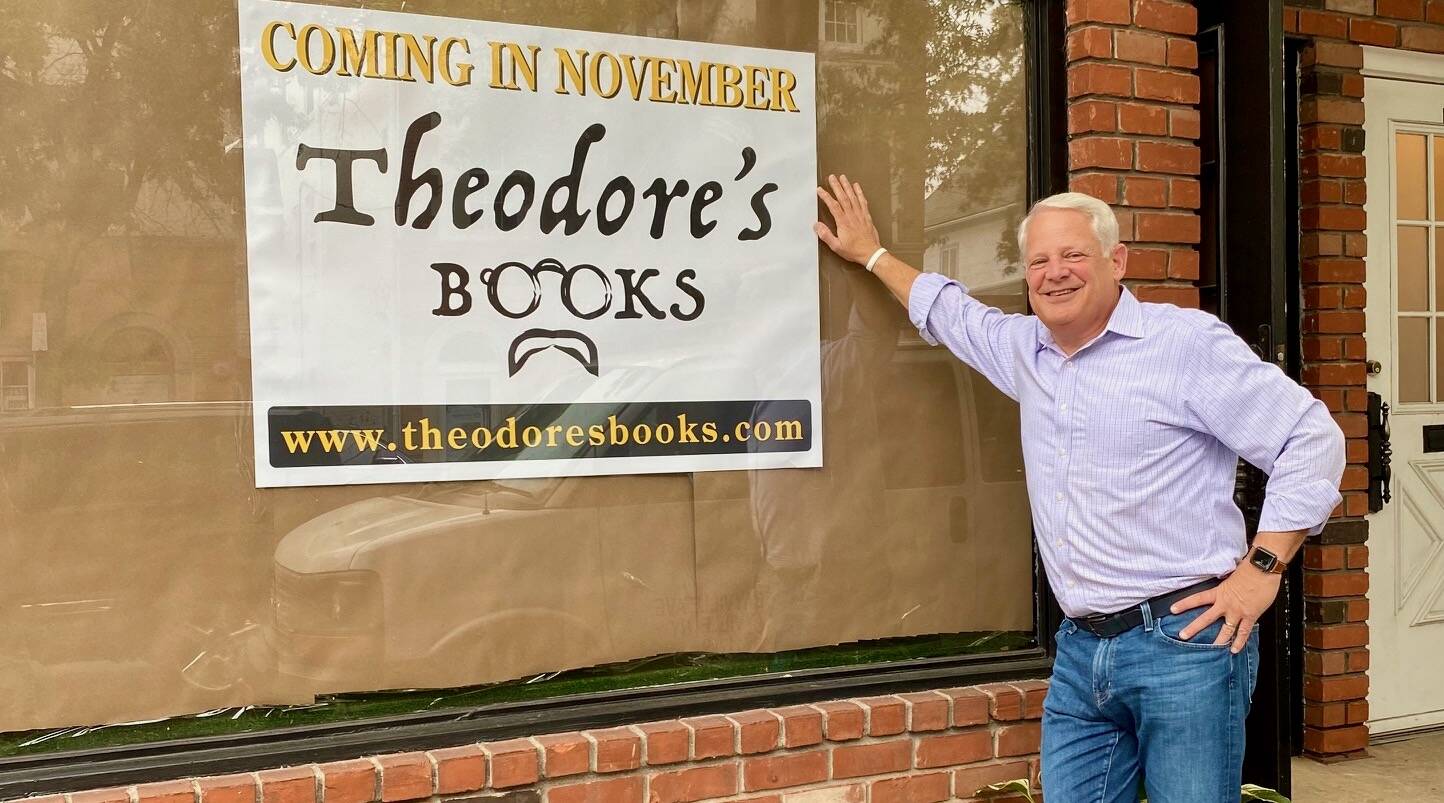 Former Congressman Steve Israel standing in front of his new bookstore just before opening day, in Oyster Bay, N.Y. (Courtesy of Theodore's Books) | After serving in Washington for 16 years, former Congressman Steve Israel has finally found what he calls "his safe space." On Saturday, he opened Theodore's Books in his hometown of Oyster Bay, N.Y. The indie bookstore, which carries about 9,000 books, is named after President Theodore Roosevelt, who's buried in a cemetery nearby. When he was in Congress, Israel's staff knew that no matter where he traveled around the country, he had to visit any nearby bookstores. "I'd fundraise and do press conferences and browbeat candidates and then decompress at the local bookstore," he tells me. "It's a place where you can go and not deal in soundbites and one-minute speeches and finger-pointing. It attracts people with curiosities and not necessarily ideologies." Serving in Congress — "living in that insanity" — turned out to be good preparation for running his own small business. "I approached this as if I were mastering a piece of legislation," he says, "and had to be expert at it." During the pandemic, when he found a spot in Oyster Bay's historic downtown area, he got his whole operation up and running in just six weeks. "There was no lead time," he says. "I had to open before the holidays because a bookstore derives about a third of its revenues between Thanksgiving and Christmas." That deadline required designing the store and then packing it full of merchandise very quickly. "At one point, my wife said, 'We're spending a lot of money,' and I said, 'Well, everything is relative. I was on the Appropriations Committee.'" Oren Teicher, an old friend and the former CEO of the American Booksellers Association, offered Israel invaluable advice — and even became an investor in the store. So far, Theodore's Books is off to a great start. Rep. Adam Schiff (D-Calif.) dropped by and spent two hours signing copies of his new book, "Midnight in Washington" (review). Huma Abedin, Hillary Clinton's longtime adviser, drew a similar crowd for her memoir, "Both/And" (review). But Israel assures me that Theodore's Books is "relentlessly bipartisan." He's currently talking with Newt Gingrich about doing an author event, and he says he'd be willing to carry President Trump's upcoming photobook, too. "We welcome all opinions, but that doesn't mean that I necessarily have to hide my own opinions when people walk in," he says. "The thing I love the most is talking to former constituents who aren't yelling at me but just want a recommendation for a book. It really is the coolest job I've ever had." 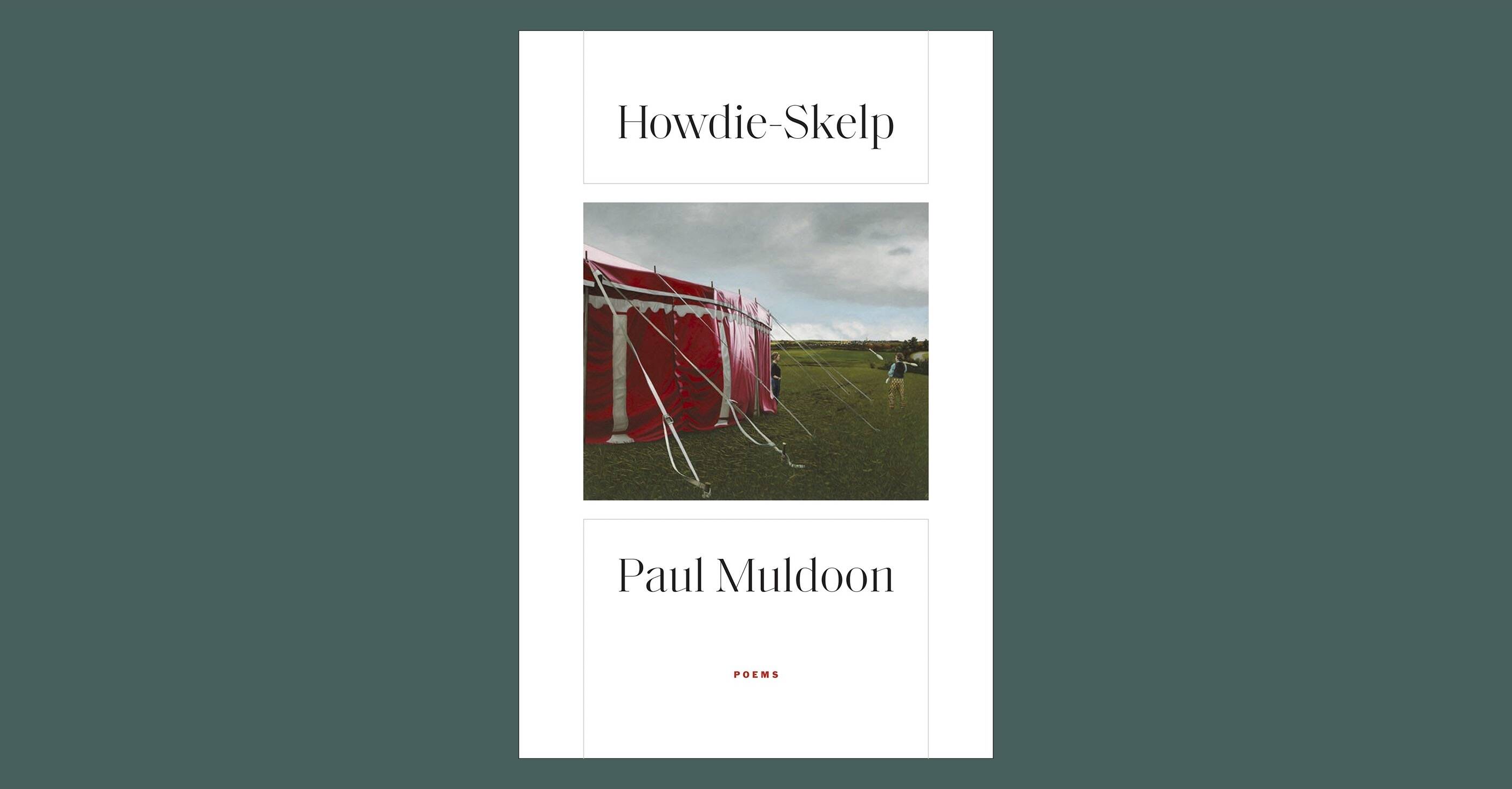 Farrar, Straus and Giroux | It's a busy fall for Paul Muldoon. The Irish-American poet, who teaches at Princeton University, is the editor of Paul McCartney's best-selling memoir-in-songs, "The Lyrics: 1956 to the Present," which was just chosen as Waterstones Book of the Year (review). And now he's released a major new collection of poetry called "Howdie-Skelp." That quirky title may baffle Americans, but readers in Muldoon's homeland will recognize a howdie-skelp as the slap a midwife gives a newborn. In this, his 14th collection, Muldoon applies that optimistic whack to the derriere of the American body politic, writing, "Vis-à-vis Trump, we have only ourselves to blame for giving ourselves over to pablum." Other poems reflect on the pandemic's endless depravations, the state of his homeland and the effect of great paintings. But no short summary can really convey the dazzling range and language of these pieces. A Ruin It might have been a gristmill, a dilapidated granary, or grange
I first drove by some sixty years ago
and, with my little eye, espied
through a doorframe the tousled ferns
and red-haired dockens
of kids my own age sent out to play in the snow,
their snowballs
so specific in the sprawl.
Windowless now, roofless, tucked under the first, sheltering hill of a range
that ran all the way to Mexico—
a country into which we still hoped to ride
hell-for-leather, still hoped to adjourn
after the stickup—this ruin betokens
not only the slo-mo-
mowing of a meadow for a shopping mall
but the fate that would befall
the many tagged and retagged over those sixty years. The landscape is so marked by change,
the bungled peace process, the shoddy bungalows,
the wind farms taking us in their stride,
so marked by all the turns
things have indeed taken
for kids now summoned back from playing in the snow,
the nettles almost as tall
as its dividing wall,
a ruin seems the only thing intact. Excerpted from "Howdie-Skelp: Poems," by Paul Muldoon. Published by Farrar, Straus and Giroux. Copyright © 2021 by Paul Muldoon. All rights reserved. 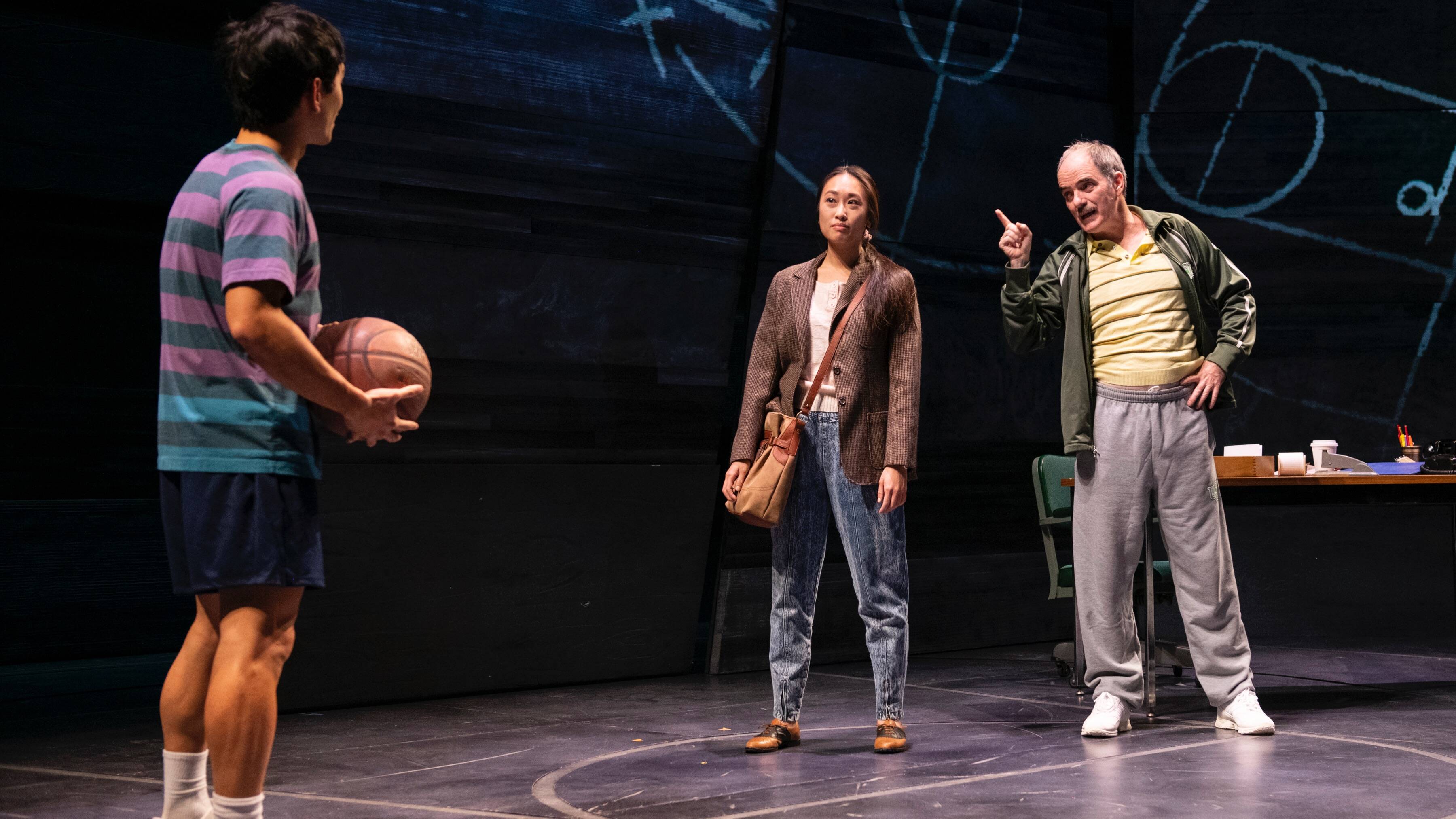 Randy Nguyen Ta, Lois Shih and Eric Hissom in "The Great Leap" at Round House Theatre in Bethesda, Md. (Photo by Margot Schulman Photography) | As the latest "variant of concern" threatens to hijack the holiday season, it's good to cling to renewed signs of normal life. For instance, my wife, Dawn, took her students to see a play this week — live theater, remember that!? "The Great Leap," by Lauren Yee at Round House Theatre, is about the University of San Francisco basketball team traveling to China for a "friendship" game just before the Tiananmen Square massacre (rave). Dawn and her students (all masked) loved it. No matter where you live, you can watch the virtual performance through Dec. 5 here. Meanwhile, happy Hanukkah! Send any questions or comments about our book coverage to ron.charles@washpost.com. You can read last week's issue here. And if you know friends who might enjoy this newsletter, please forward it to them and remind them it's free! To subscribe, click here.
Interested in advertising in our bookish newsletter? Contact Michael King at michael.king@washpost.com. |





 Email
Email 




No comments:
Post a Comment