| Good morning, Early Birds. Thanks to all the readers who sent in suggestions for what to rename the Build Back Better Act. They included the Child Care Climate Compact, the Build Back Belatedly Act, the Build Back a Bit Better Act and "Trump's Build Back Better Plan," which one reader suggested might help win Republican votes. Keep those tips coming: earlytips@washpost.com. | | |  | At the White House | | Four things experts say the Biden administration can do to rein in the pandemic | 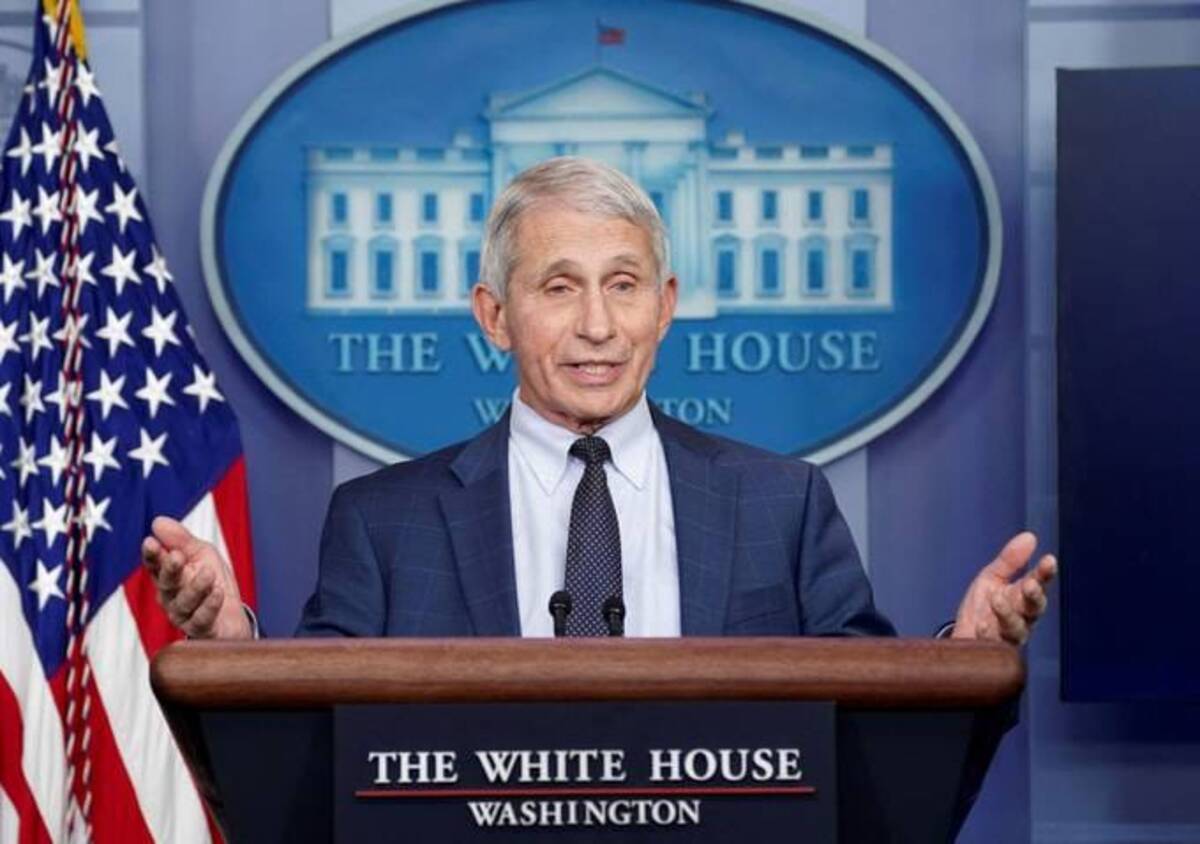 Anthony Fauci says the country is not yet at a place to where the pandemic has reached acceptable levels. (REUTERS/Kevin Lamarque/File Photo) | | | Best practices: President Biden said last week he'd resolved to seek more advice from outside experts in the second year of his presidency — "more input, more information, more constructive criticism about what I should and shouldn't be doing." So Rachel Roubein, our Health 202 reporter, and Theo surveyed more than a dozen outside experts — including epidemiologists, public health officials and think-tank types — to ask what more the Biden administration could do to meet perhaps its greatest challenge: ending the seemingly neverending pandemic. Here are four of their suggestions: | - Stop making decisions based on covid-19 numbers alone: It's hard to come up with a number of covid deaths that the country might accept in the long run. But several epidemiologists who advised Biden's transition team suggest one place to start: looking at the toll of similar illnesses before the pandemic.
| | "In recent years, the U.S. has accepted as many as 35,000 hospitalizations and 3,000 deaths per week from influenza and respiratory syncytial virus (RSV) alone," Céline Gounder, Rick Bright and Ezekiel Emanuel wrote in an op-ed last week. "We use that as a starting point for discussion because that is a level of hospitalization and death that society was willing to bear where we did not close schools, we did not have lockdowns, we did not mask," Gounder said in an interview. "We didn't do anything special, we just went about our lives." | | So the epidemiologists want the administration to track all viral respiratory infections as a whole rather just focusing on covid. "We need to move toward it," Emanuel told us. "We can't quite do it now because we don't do a great job of tracking all infections and having the right databases in place." What the administration says: Asked whether the Centers for Disease Control and Prevention might adopt such an approach, director Rochelle Walensky said it already collects data on influenza, RSV and other viral respiratory infections. And in an interview last week, Anthony Fauci, Biden's chief medical adviser, said covid deaths and hospitalizations were still too high to start contemplating living with the virus. "Living with the virus when the virus is at a very, very low level … is OK," he told us. "That's something that we could accept, that we could move on with our lives. But to say that we want to live with the virus the way it currently is now, where it's averaging 156,000 hospitalizations and 1,900 deaths — that's not an acceptable level." | - Mandate vaccination for domestic air travel: The Supreme Court earlier this month struck down the Biden administration's vaccination-or-testing requirement for large employers, but the administration has other options for inducing reluctant Americans to get vaccinated.
| | One of them: Require Americans be vaccinated to fly. "Having vaccine — or at minimum vaccine and testing — mandates for domestic travel as well as international would help both with minimizing the spread of the disease, maximizing safety of airline travel, helping to protect our TSA workers, our flight attendants and our pilots," Megan Ranney, the academic dean of Brown University's School of Public Health, told us. But support for the idea is not universal. "If the government imposes it, it will probably likely be mired in court, it will not actually result in more vaccinations and it will probably create much more backlash," Amesh Adalja, a senior scholar at Johns Hopkins University's Center for Health Security, told us. | | What the administration says: Fauci has called a vaccination mandate for domestic flights "something that seriously should be considered" but declined to discuss the matter in our interview. Asked about the idea, White House press secretary Jen Psaki told reporters earlier this month that "masking is very effective, according to our health experts, in protecting people on flights." | - Put in place new rules to protect health-care workers: While the Supreme Court struck down Biden's mandate for large employers, the administration has other weapons for fighting the virus in workplaces.
| | David Michaels, who led the Occupational Safety and Health Administration during the Obama administration and now teaches at George Washington University, said Biden's top priority on this front should be putting out a permanent standard to protect health-care workers. "Many hospitals still cling to the idea that the coronavirus as well as influenza are spread by droplets, which means that many workers, especially ones who don't directly provide care, are not given N95s [even] if they're in the vicinity of hospital patients," he said — which a permanent standard might help clarify. The agency issued a temporary standard last year but allowed part of it to lapse in December, as our colleague Dan Diamond reported, "saying it wasn't ready to issue permanent protections by a December deadline, even though it believed 'the danger faced by health-care workers continues to be of the highest concern.'" Sen. Patty Murray (D-Wash.), the chairwoman of the Senate Health, Education, Labor and Pensions Committee, urged Labor Secretary Marty Walsh last week to prioritize issuing a permanent standard "as soon as possible." What the administration says: OSHA wrote in a court filing on Friday in response to a suit filed by the National Nurses Union and other labor organizations that it would "re-prioritize its resources to focus on finalizing a permanent" standard. "The Agency currently anticipates that it will be able to complete this rulemaking within six to nine months," the agency wrote. | - Step up aid to other countries: The Biden administration has touted its efforts to send hundreds of millions of vaccine doses to countries that need them. But some global health experts say it's not nearly.
| | "The verbal commitment is there," said Eric Goosby, a University of California, San Francisco, professor who advised Biden's transition team on the pandemic. "It's larger than any commitment made by any other country, but it is grossly inadequate." The administration, for instance, has pointed to its efforts to train thousands of community health care workers around the world. But "the scale of everything that's been done so far is not even in the right order of magnitude of the need," Krishna Udayakumar, who leads Duke University's Global Health Innovation Center, told us. "We know that there are millions of additional workforce that are gonna be needed." One suggestion for making the issue a priority, Udayakumar said: Split White House covid coordinator Jeff Zients's job into two positions, one overseeing the domestic covid response and another the global one. "That's not in any way a reflection on Jeff Zients as an individual or his capabilities," Udayakumar said. "I don't think there's anybody that could do both of those jobs well." What the administration says: Asked about Goosby's call for the administration to make better use of its infrastructure set up to combat HIV abroad in support of covid vaccination efforts, a White House official pointed to the $250 million for such programs that was included last year in Biden's covid relief bill. The money has paid for tens of millions of covid tests, and the administration has used "surveillance capabilities built for HIV detection to identify COVID-19 hot spots and quickly allocate appropriate health care resources," according to the official. Evaluating Biden's track record: The New York Times' Michael Shear, Sheryl Gay Stolberg, Sharon LaFraniere and Noah Weiland take a look at the setbacks the administration has faced on covid in its first year. Among the takeaways: "The White House bet the pandemic would follow a straight line, and was unprepared for the sharp turns it took. The administration did not anticipate the nature and severity of variants, even after clear warning signals from the rest of the world." In case you missed it: Read Dan Diamond's story from last week examining White House's covid response over the past year. | | |  | On K Street | | | Two more of K Street's top lobbying firms reported booming revenue in the first year of the Biden administration, even though 2020 was also a strong year for lobbying due to the demand for help securing covid relief aid. Here are numbers shared with The Early by the firms on Friday following the fourth-quarter lobbying disclosure deadline: | - Capitol Counsel: $21.9 million (versus $19.1 million in 2020)
- Forbes Tate Partners: $25 million (versus $19.5 million in 2020)
| | |  | In the agencies | | U.S. threatens use of novel export control against Russia | | 🚨From 0 to 100: "The Biden administration is threatening to use a novel export control to damage strategic Russian industries, from artificial intelligence and quantum computing to civilian aerospace, if Moscow invades Ukraine," administration officials told our Ellen Nakashima and Jeanne Whalen. | - "The administration may also decide to apply the control more broadly in a way that would potentially deprive Russian citizens of some smartphones, tablets and video game consoles."
- "Such moves would expand the reach of U.S. sanctions beyond financial targets to the deployment of a weapon used only once before — to nearly cripple the Chinese tech giant Huawei."
| | The maneuvering comes amid unraveling diplomacy between the U.S., Europe and Russia. | - On Saturday, Britain accused Moscow of plotting to install a pro-Russian leader in Ukraine, BBC News reports. The leader – Yevhen Murayev – was a member of former Ukrainian president Viktor Yanukovych's parliament.
- On Sunday, the New York Times's Helene Cooper and Eric Schmitt first reported that Biden is considering expanding America's military presence in the Baltics and Eastern Europe by deploying as many as 5,000 "U.S. troops, as well as warships and aircraft, to NATO allies."
- Also on Sunday, "the State Department ordered the departure of all family members of U.S. Embassy personnel serving in Kyiv, citing the 'threat of Russian military action,'" our colleagues John Hudson and Paul Sonne report. "The department also told nonessential staff they can leave the country."
| | |  | The Media | | | |  | Viral | | | Condolences to all Early Birds who happen to be Bills fans 🏈 |  | | | |  Sincerely, a long-suffering Giants fan 😪 | | | | AM/PM | | Looking for more analysis in the afternoon? | | | | Weekday newsletter, PM |  | | | | | | |


No comments:
Post a Comment