Banks make billions in overdraft and other 'junk fees.' Biden officials want that to end. 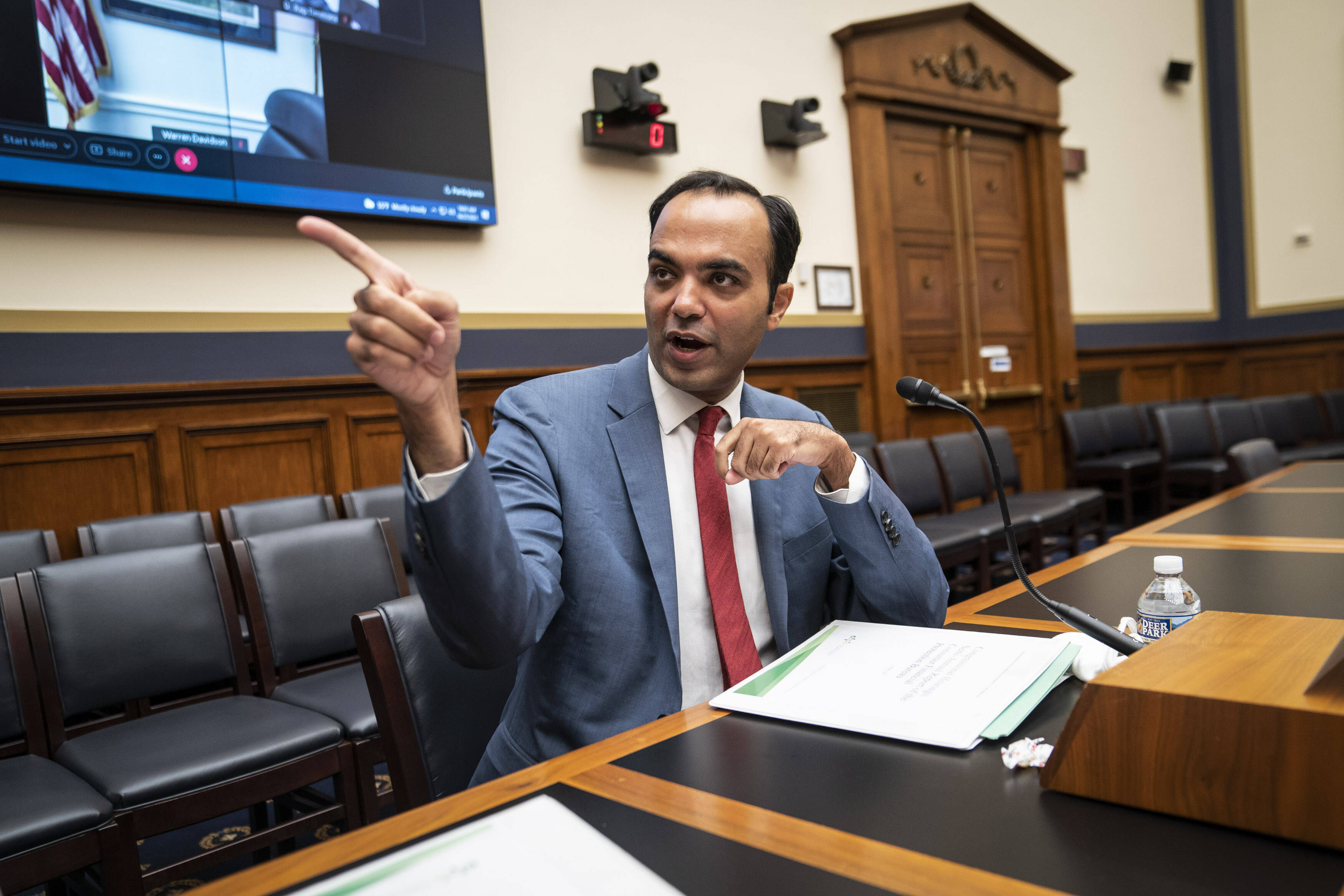 Rohit Chopra, director of the Consumer Financial Protection Bureau. | If you have plenty of money, the occasional overdraft fee — or its nuisance cousin, the dreaded non-sufficient-funds fee — won't break your bank. But for a family living on the financial edge, the fees can be devastating. One overdraft fee of $35 can result in a cascade of charges that drain a bank account. "In many cases, junk fees often act as penalties, like with non-sufficient funds and credit card late fees, rather than compensation for a legitimate service," Rohit Chopra, director of the Consumer Financial Protection Bureau, said during a recent press call. "While it may make sense for banks to pass on the cost for extra services provided, many complain that these fees are far higher than the service is really worth." Under President Biden, the watchdog agency — which was muzzled during the Trump administration — is targeting the type of "junk fees" that often drive low-income and minority customers from banks to predatory payday loan companies — and that have become a significant source of banking revenue. In 2019, revenue from overdraft and non-sufficient-funds fees (typically $25 to $30) surpassed $15 billion, the CFPB said. A 2019 study by the Federal Deposit Insurance Corp. found that half of unbanked Americans had a bank account at some point in the past. Among the top reasons cited by many who checked out of the banking system were high or unpredictable account fees. Send your comments and questions to colorofmoney@washpost.com, but due to the volume of mail, personal responses may not be possible. Please also note that comments or questions may be used in a future column, with the writer's name, unless a specific request to do otherwise is indicated. | 



 Email
Email 


No comments:
Post a Comment