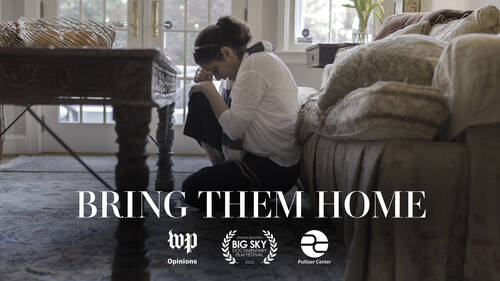
| "The strongest man I have ever known was laid to rest on March 4," Karen Tumulty wrote in the opening lines of her Opinions Essay. She was writing about her beloved brother Pat, dead at 67 after a remarkably lengthy battle with brain cancer. But — as Karen does so well — her essay was about much more than a sister's love. When Pat's health first deteriorated due to kidney disease, "My brother found himself up against not just disease but a broken medical system," Karen observed. "Pat's journey became a story of the best and worst of health care in this country, and it reveals the real-life consequences when health-care policy is treated like a football by two political parties." The worst was something Karen first chronicled in a powerful cover story for Time magazine: how Pat, who struggled with Asperger's syndrome and found himself out of work, had purchased a series of high-deductible, six-month medical insurance policies that promised "the peace of mind and health care access you need at a price you can afford" but turned out to be all but worthless. Karen was covering the health-care debate at the time, and Pat's difficulties were a microcosm of nearly everything wrong with a skewed insurance system that seemed more focused on denying care than providing it. But the system also worked for Pat. The insurance coverage he eventually found — first through the newly passed Affordable Care Act, then through Medicare when his end-stage kidney disease made him immediately eligible — allowed him to deal with a seemingly endless series of health issues, including Stage 4 glioblastoma, a deadly brain cancer. And Pat — "miracle man," his doctor called him — managed to survive years beyond the 12 to 16 month prognosis, enduring two brain surgeries, a partial hip replacement, three-times-a-week dialysis and, yes, covid-19. Last month, Pat, who had lost the ability to walk and was suffering seizures, made the decision to enter hospice care. "It was a gift to all of us that he made this decision himself," Karen wrote, "that he could determine when the medical care that had prolonged his life had begun to make it unbearable." Speaking of gifts, Karen would not tell you this but I can: No brother ever had a better advocate for a sister. From here in the Washington area, she relentlessly advocated for him to get the necessary care in Texas, spending hours on the phone with his doctors and nurses navigating his multiple medical issues. Keep that in mind as you read her remarkable essay. One family's struggle with cascading medical bills and a system determined to make it harder. The Opinions Essay ● By Karen Tumulty ● Read more » | | | The chairman of the Joint Chiefs of Staff conducts a NATO pep rally — and prepares for a war he hopes his troops will never have to fight. By David Ignatius ● Read more » | | | | The Cardiff Philharmonic Orchestra got slammed for canceling a Tchaikovsky concert. But Netflix and other businesses and institutions could learn a thing or two from its approach. By Alyssa Rosenberg ● Read more » |    | | | This reality becomes clear if you set aside the catch-all labels "Democrat" and "Republican." By Perry Bacon Jr. ● Read more » | | | | A troubling possibility is that changing the mix of who was driving changed the culture of American roads, making it less law-abiding and more aggressive. By Megan McArdle ● Read more » | | | | | | Who is Tucker Carlson to challenge Jackson's credentials, anyway? By Christine Emba ● Read more » | | | | | Most Americans would like to end the biannual clock switcheroo. By Helaine Olen ● Read more » | | | An intimate short documentary about the growing crisis of Americans held hostage by foreign governments, "Bring Them Home" follows one family's desperate effort to free their loved one from being a geopolitical pawn. Short Doc ● By Kate Woodsome and Ray Whitehouse ● Read more » | | | |




 Email
Email 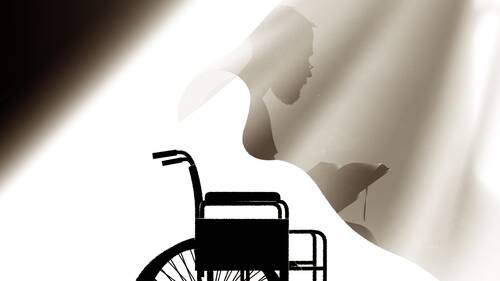





No comments:
Post a Comment