| Republican-led states across the country are racing to ban abortion. Lawmakers in Kentucky, Oklahoma, Florida and others have advanced a raft of new restrictions in recent weeks, preparing for a much-anticipated Supreme Court decision that could overturn or significantly weaken Roe v. Wade, the landmark case that has guaranteed abortion access since 1973. It's my job to keep an eye on these bills as they move through state legislatures. I couldn't keep tabs on every single antiabortion measure — there are more than 500 this year alone — so I made myself a list of the ones I see as most significant and started to track them. This is my fourth year monitoring abortion legislation. And while a lot of the bills this year look similar to ones we've seen before, the stakes are completely different. In recent years, the most restrictive bans were blocked by the courts because they violated Roe v. Wade. But the legal landscape has changed. Texas has successfully banned abortion after six weeks of pregnancy, using a novel legal strategy that empowers private citizens to enforce the law — and several Supreme Court justices appear open to overturning Roe. On Wednesday, Kentucky became the first state to wipe out abortion access. The GOP-dominated state legislature voted to override Democratic Gov. Andy Beshear's veto to pass a sweeping package of antiabortion restrictions that have made it impossible for the state's two clinics to continue providing abortion care. Oklahoma could soon follow. Legislators there have already passed a total abortion ban, which is slated to take effect this summer. Two others modeled after the restrictive Texas law are also moving quickly in Oklahoma — and those will take effect with the governor's signature. That means that abortion access could end in Oklahoma as early as next week. I've been watching the state particularly closely because it has been an important access point for Texas patients. I recently flew to San Antonio to meet some patients being sent to Oklahoma. I stood in an ultrasound room as a woman was told she was too far along. The clinic staff referred her to Oklahoma, but warned her that by the time she got to her appointment the following week, abortion might be banned there, too. As more places enact strict restrictions, patients who can afford to cross state lines will be forced to travel farther. Clinics in blue states, like this one I visited on the Illinois border, are preparing for a massive influx of patients starting this summer. Across the country, antiabortion bills are moving quickly every day, along with bills to protect access to abortion. Follow what's happening in real time with our tracker. 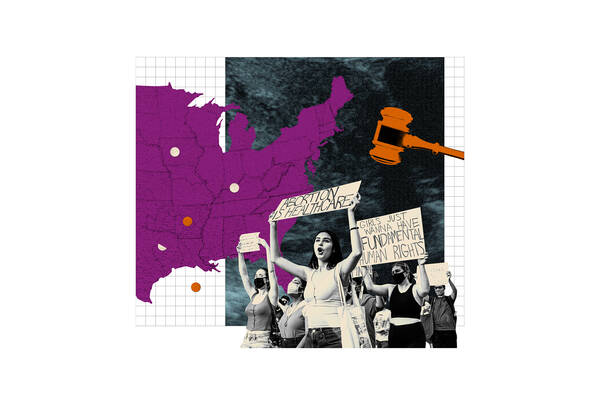 (Lucy Naland/The Washington Post) As Republican-led states move to restrict abortion, The Post is tracking legislation across the country on 15-week bans, Texas-style bans, trigger laws and abortion pill bans, as well as Democratic-dominated states that are moving to protect abortion rights enshrined in Roe v. Wade. By Caroline Kitchener, Kevin Schaul and Daniela Santamariña ● Read more » |    | | | | An immersive look at why Russia failed to capture Ukraine's capital, forcing it to shift its strategy to the eastern part of the country. By Aaron Steckelberg, Adam Taylor, Ruby Mellen, Alex Horton and Dylan Moriarty ● Read more » | | | | | The pandemic, new social platforms and always-on work culture have changed the way we text. Here are the unspoken texting rules that survived the upheaval. By Tatum Hunter ● Read more » | | | 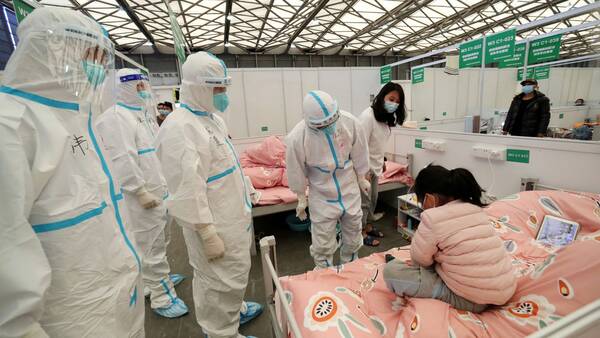 (China Daily via Reuters) China's most populous city has been under strict lockdown for weeks because of a coronavirus outbreak. It's starting to take an emotional toll on residents. By Lily Kuo, Lyric Li, Vic Chiang and Pei-Lin Wu ● Read more » | | | | | | The dangerous tactic has grown as judges routinely authorize requests for the raids, which police say can prevent violence and preserve evidence. By Nicole Dungca and Jenn Abelson ● Read more » | | | | | | Ukrainian officials say their use of a U.S. company's facial recognition software to identify dead soldiers could accelerate the end of a brutal war. But some experts argue it could set a gruesome precedent. By Drew Harwell ● Read more » | | | | | Adrianne Haslet has faced severe trauma more than once on her path to running Monday's Boston Marathon. The word she keeps coming back to is "gratitude." By Cindy Boren ● Read more » | | | | As the U.S. enters year three of the coronavirus pandemic, disease trackers are trying to stay one step ahead of the constantly evolving virus — by hunting for it in feces. By Lena H. Sun and Dan Keating ● Read more » | | | | | Pandora Papers records show how assets connected to Kerimov, Mordashov and other Russian oligarchs have moved among offshore accounts. The Pandora Papers ● By Greg Miller and Spencer Woodman ● Read more » | | | | Seventy-five years ago, Jackie Robinson became Major League Baseball's first Black player — and reshaped the way we talk about sports pioneers. By Dave Sheinin and Michael Lee ● Read more » | | | | | |
Photo of the week 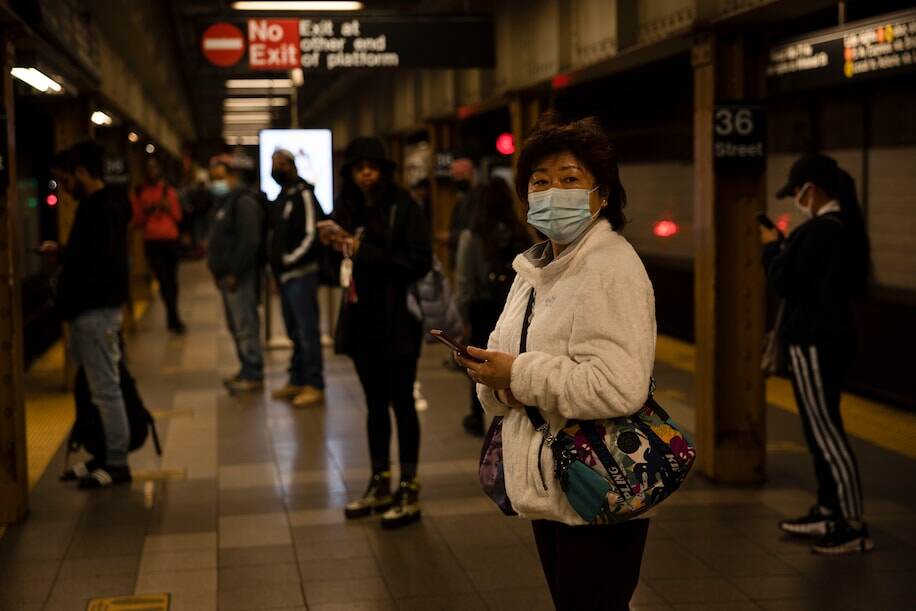 (Ed Ou for The Washington Post) | Tuesday's mass shooting on a Brooklyn subway train sparked fear among passengers of all walks of life who have long been connected by the storied transit system. On Wednesday, regular riders were back on board, but said it seemed quiet. Above, Mary Yu waits for a Manhattan-bound train in the Sunset Park station in Brooklyn. "It's stressful. It's so empty," she said.
Explore our photo essay of passengers the day after the violence, then check out the other best photos from this week. |





 Email
Email 



No comments:
Post a Comment