| The post-Roe landscape is confusing. State by state, the rules on where abortion is available and at what stage of a pregnancy are changing, sometimes by the day. "It's unprecedented for just overnight a right to be taken away — a long-standing right — and something that people have built their lives around," said Marya Torrez, senior policy director for the Planned Parenthood Federation of America. Here are two states that really underscore how chaotic things are — and how drastically elections this November could change abortion law in your state. 1. Michigan: The state technically has a law from the 1930s on the books outlawing abortion. Gov. Gretchen Whitmer (D) has asked the state Supreme Court to invalidate it. And she and the Democratic attorney general say they won't enforce it. Meaning, abortion is legal in Michigan — for now. Whitmer and other top Democrats in the state are up for reelection this November in this swing state. If they lose to Republicans, the state's Republican-dominated state legislature could make abortion illegal. "The only thing keeping Michigan a pro-choice state right now is the threat of my veto," Whitmer told The Washington Post. 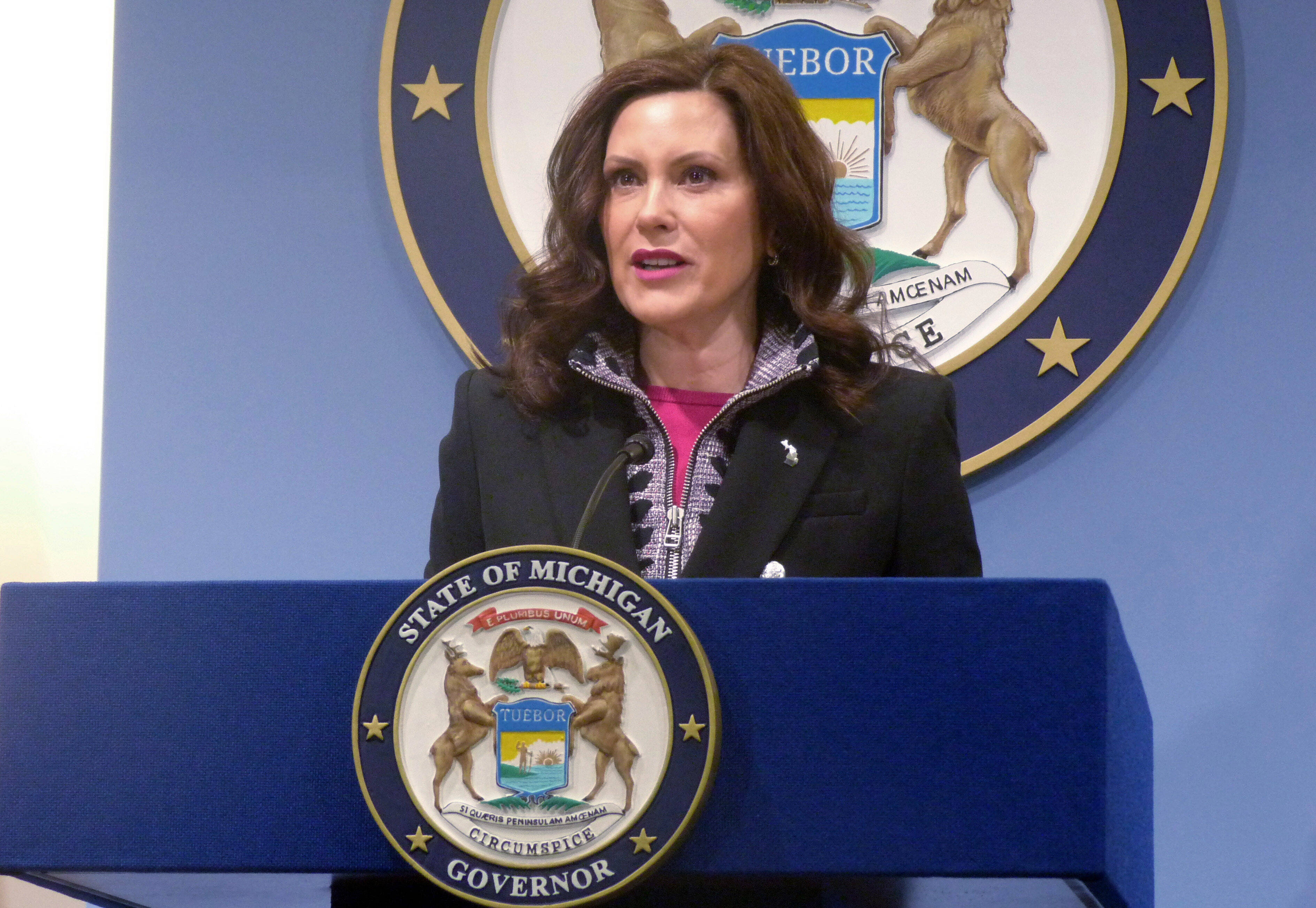 Michigan Gov. Gretchen Whitmer (D). (David Eggert/AP) | 2. Ohio: In 2019, Republicans there banned abortion once fetal cardiac activity can be detected, sometimes as early as six weeks. The current attorney general is a Republican, and he filed a motion with the courts to reinstate that law the day the Supreme Court announced its decision. But liberal groups are challenging it. And in Ohio's potentially competitive U.S. Senate race, Democrat Tim Ryan is using this to try to gain a leg up. "This is insanity. Ohio has traditionally been a centrist state," he said, The Post's Annie Linskey and Colby Itkowitz report. The next frontier of abortion battles Abortion pills: Medicated abortion — as opposed to a surgical procedure done at a clinic — is becoming more common. And after the Biden administration okayed obtaining these pills via telemedicine, mailed abortion pills were becoming more popular even before the fall of Roe. Some states are considering banning these pills outright, or penalizing providers who give abortions to those who come from a state where abortion is banned, raising prickly questions about interstate commerce and law enforcement, my colleagues report. The Biden administration has emphasized that the Food and Drug Administration has said the main pill used in a medicated abortion is safe and legal when prescribed by a doctor. But the Supreme Court could step in by limiting the federal government's ability to override these state bans, said Leah Litman, a law professor at the University of Michigan who supports abortion rights. 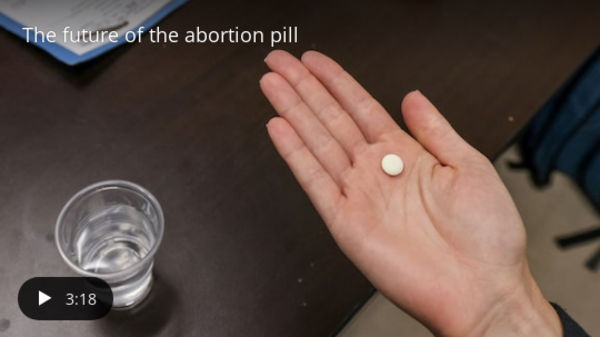 | | | Rape or incest exceptions: A number of red states aren't just banning abortion before most know they're pregnant. From Idaho to Texas to Oklahoma to Kentucky to Florida, they're moving to ban abortion in almost all instances, making no exceptions for rape or incest. These are some of the most extreme abortion laws put in place in about 70 years, said Elizabeth Nash, who follows state abortion policy for the Guttmacher Institute, an abortion research group that supports abortion rights. Birth control, fertility treatments, same-sex relationships and marriage: Justice Clarence Thomas wrote that the Supreme Court should reconsider a number of these other rights, while his conservative colleagues stressed that these issues aren't on the table. But there are no serious pushes in state legislatures to roll back any of these rights, and if there were, it could take years for court cases to reach the Supreme Court for an ultimate decision. How Americans feel about all this 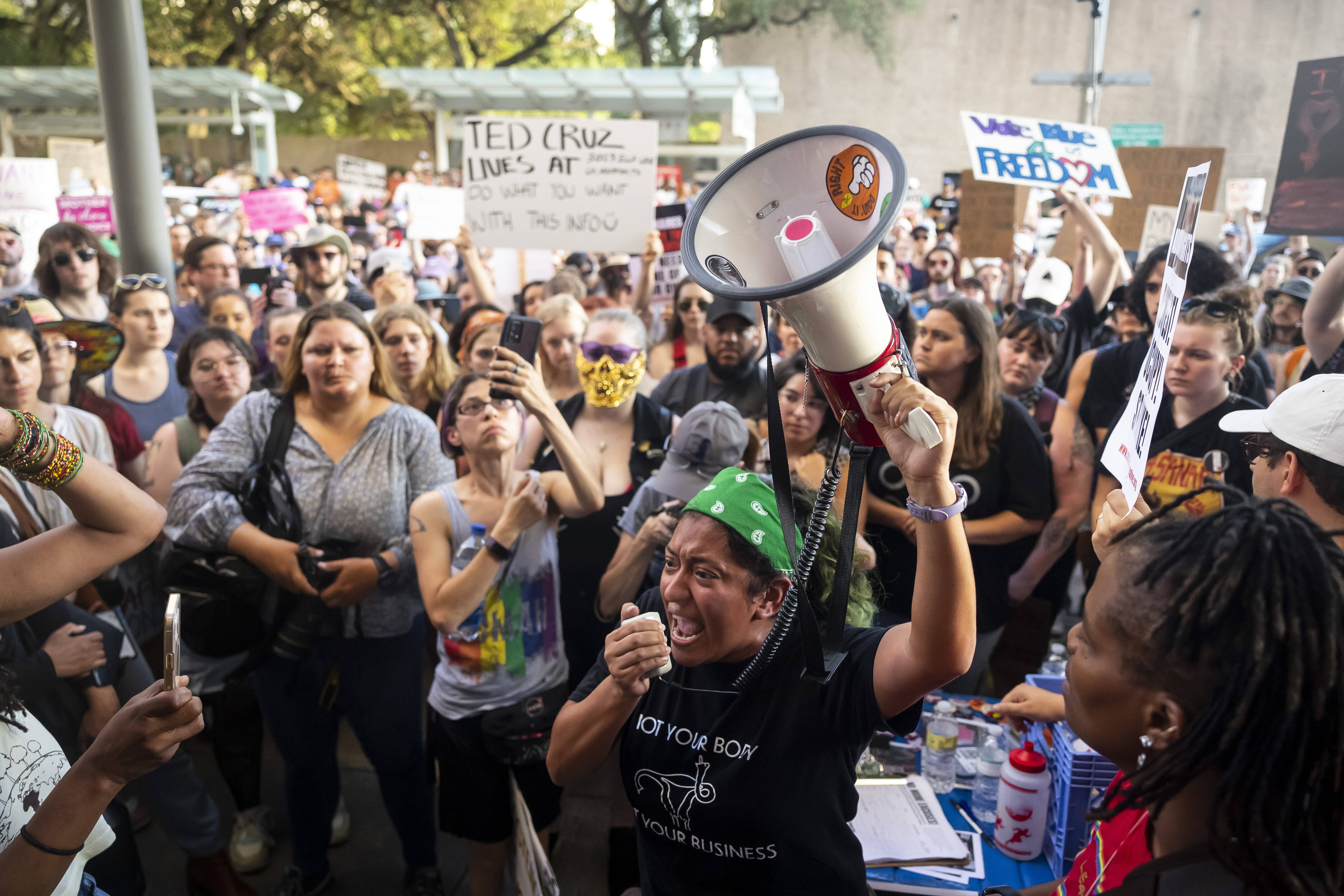 Abortion rights demonstrators in Houston on Friday. (Annie Mulligan for The Washington Post) | The end of the only federal abortion protection in America is unpopular. A majority of Americans oppose the Supreme Court's decision to overturn Roe v. Wade and think it was politically motivated, according to an NPR-"PBS NewsHour"-Marist poll taken right after the court announced its decisions. Americans oppose the decision 56 percent to 40 percent, the poll found. And about the same percentage said they thought the decision was mostly based on politics — i.e., conservative justices using this as a means to a long-sought conservative goal — as opposed to the law. But public opinion is sharply divided along party lines, with almost 9 in 10 Democrats opposing the decision and three-quarters of Republicans supporting it. | 



 Email
Email


No comments:
Post a Comment