| The revelations that former top White House aide Cassidy Hutchinson shared Tuesday about President Donald Trump throwing dishes and reportedly trying to physically wrestle his Secret Service driver are dramatic, even salacious. But why is everyone saying Tuesday's testimony was so damning for the former president? Let's break it down. Hutchinson painted a picture of a leader determined to seize power at all costs: Trump didn't care that his supporters had weapons; he riled them up and urged them to go to the Capitol anyway. And he even appeared to want to join them: he reportedly tried to wrestle the steering wheel and even grab his lead agent to go to the Capitol to join them in trying to stop the certification of his loss. That's all according to Hutchinson, who was testifying to Congress under oath about her behind-the-scenes moments with the president and his top aides. Trump issued blanket denials to all this. (She says the incident in Trump's vehicle was described to her by Tony Ornato, the deputy White House chief of staff for operations.) 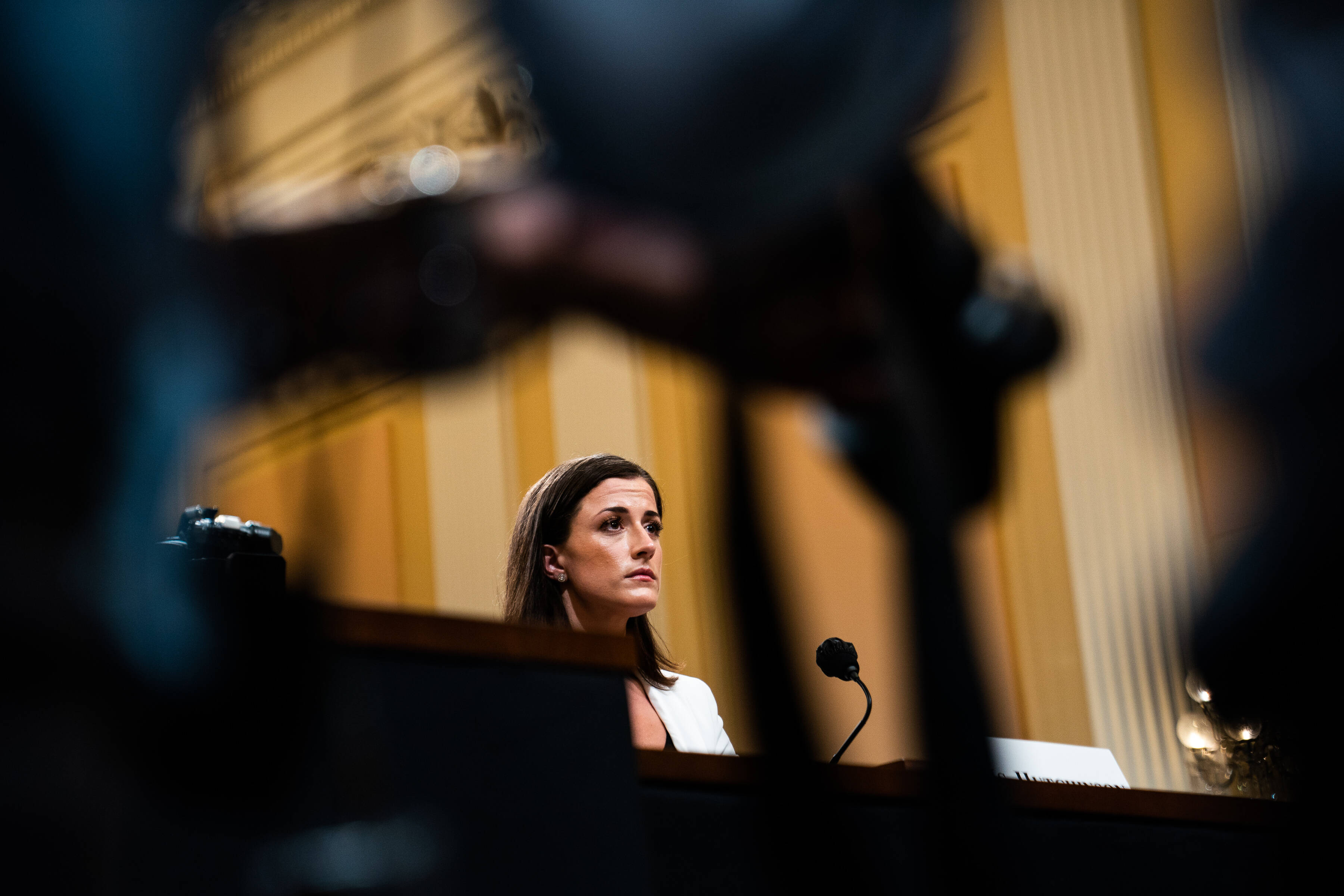 Cassidy Hutchinson, an aide to Trump White House chief of staff Mark Meadows, testifies Tuesday. (Demetrius Freeman/The Washington Post) | Hutchinson gave "an up-close look at a president and some around him who were attempting to subvert the outcome of the election and were prepared to allow a violent attack to take place to further that effort," The Post's senior political correspondent Dan Balz writes. Layer on top of all this evidence from the past five hearings that Trump tried to strong-arm state legislators and top Justice Department officials to work the levers of government to keep in power, and you have plenty of evidence that Trump attempted a months-long coup, which is exactly what the Jan. 6 committee is setting out to prove. Trump may be in legal jeopardy: Did Trump or his top aides work with militia groups to plan the attack? Did Trump intentionally try to stop an official proceeding of Congress? Did Trump engage in witness tampering to keep people from testifying to the committee? These are just some of the legal questions the committee's investigation has raised — and it will be up to the Justice Department to consider investigating them. Legal experts told The Post's Devlin Barrett that Hutchinson's testimony does make it more likely the Justice Department could target Trump, though they vary on what potential charges might be. 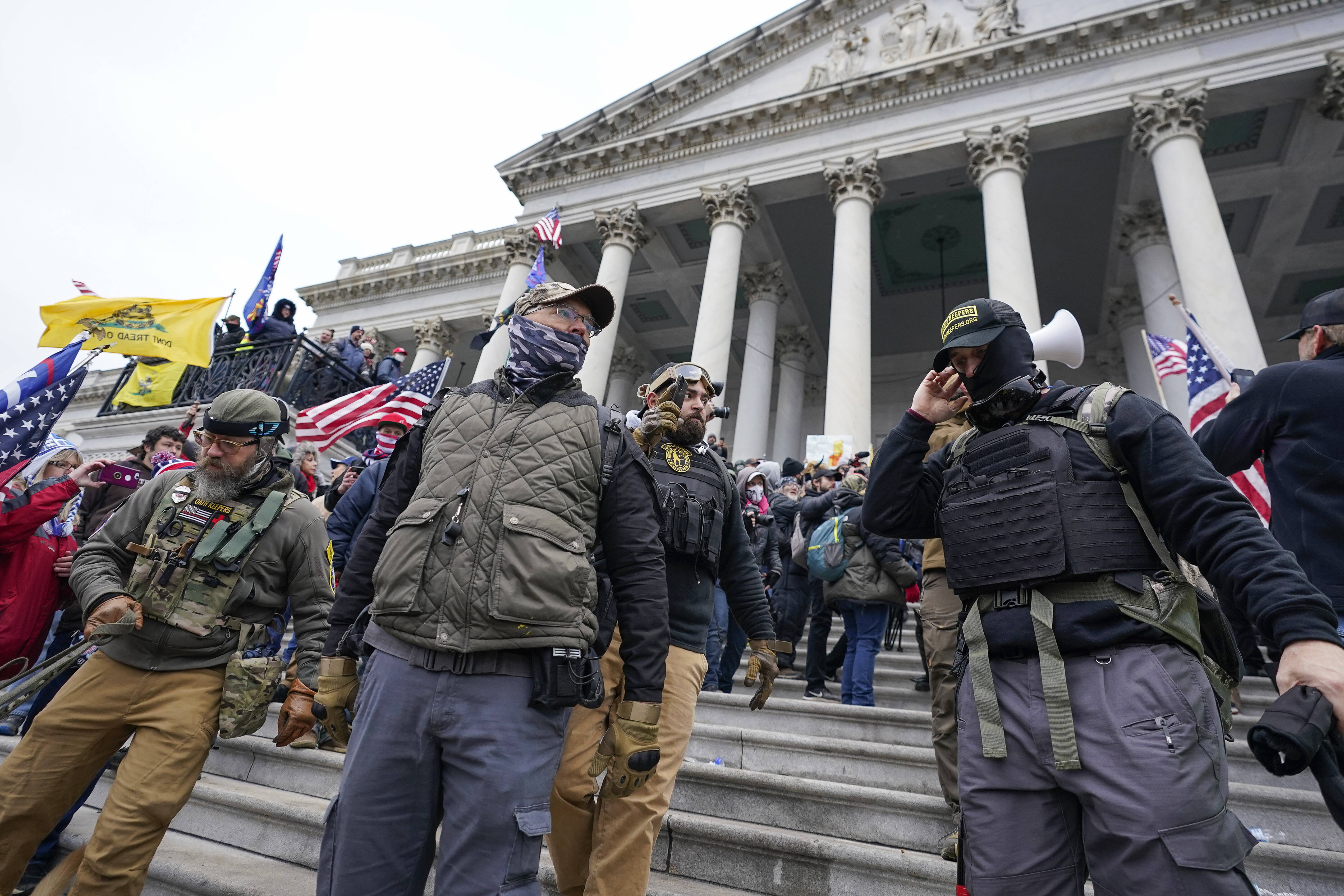 Members of the militia group Oath Keepers on Jan. 6, 2021. (AP Photo/Manuel Balce Ceneta) | All of this isn't great for a political comeback: That's obvious, but needs to be said. Can you impeach a Supreme Court justice? This is a common reader question after the Supreme Court overturned the Roe v. Wade decision that legalized abortion nationwide, a ruling out of step with the broader American public — and, some Democrats argue, in violation of what the justices said under oath in their confirmation hearings. The answer is: Sure, Supreme Court justices can be impeached. But it's historically rare to impeach a justice, and it wouldn't get that justice off the court. Impeaching a justice would require several steps that don't seem politically feasible right now: - Democrats finding the political will to hold an investigation in the House. In 2020, Democrats passed on a push to impeach Justice Brett M. Kavanaugh after the party was irate he made it on the court despite sexual misconduct allegations.
- Taking a vote in the House and getting almost all Democrats on board to impeach a justice
- Holding a trial in the Senate
- Finding 50 Democrats plus at least 16 Senate Republicans to convict the justice. Seven Republican senators voted to convict Trump after the Jan. 6 attack.
Can federal land be used for abortions? This is another hot conversation on the left right now, as abortion rights activists look for a way around the Supreme Court's ruling and subsequent red-state laws banning or closely restricting abortion. The legal consensus is that it's possible to set up an abortion clinic on a military base in Arkansas, but it would be very difficult and could put women or people who help them or the doctors at risk of going to jail. That's not a risk the federal government wants to take, according to legal experts I talked to. The main sticking point is that state law can apply in the absence of federal law — and there is no federal law protecting abortion. So a woman who travels to Arkansas to get an abortion could be prosecuted for it by the same federal government that set up the program. The Biden administration wouldn't do this, but the statute of limitations is five years, meaning if a Republican administration takes over in 2025, women could retroactively face punishment for getting an abortion. "You can't promise people that they aren't risking criminal liability," said Leah Litman, a law professor at the University of Michigan who supports abortion rights and is host of the Supreme Court podcast "Strict Scrutiny." Instead, the White House is focused on safeguarding a woman's right to travel from state to state — Mississippi to Michigan, for example — to get an abortion, and ensuring access to federal government-approved pills for medicated abortion that a doctor can prescribe by telemedicine. | 



 Email
Email


No comments:
Post a Comment