| Hello, good morning. It's almost time for fireworks. Send us your best spots to watch along with your most eye-popping tips to rachel.roubein@washpost.com. 🎆🎆 Today's edition: Antiabortion lawmakers are seeking to block patients from traveling across state lines. Democratic leaders have finalized a new drug pricing proposal with eyes on Sen. Joe Manchin (D-W.Va.). But first … Abortion providers are in 'crisis mode' |  Clinic escorts stand outside Jackson Women's Health Organization, which is the only abortion clinic in Mississippi. (Rogelio V. Solis/AP) | | | A North Dakota clinic is planning to move across state lines to Minnesota. In Illinois, a Planned Parenthood center is considering increasing its hours and staying open seven days a week. Calls to a key hotline for abortion referrals and financial assistance spiked 225 percent the day the Supreme Court overturned Roe v. Wade. Nearly 10 states have mostly banned abortion as of this morning, and many more Republican-led states are expected to follow suit in the coming days. The impact of upending nearly 50 years of legal precedent is reverberating through clinics across the country as they struggle to help women, some living hundreds of miles away, access the procedure. "We are just in crisis mode right now," said Michelle Brown, an OB/GYN who mainly practices in the Chicago area. Here's a snapshot of the impact of the Supreme Court's decision on providers: | - Clinics are planning to see more women seeking abortions later in pregnancy due to increased travel time and growing waitlists.
- Medical residency programs will likely need to adjust where their students receive on-the-job training.
- Health centers in blue states are grappling with how to manage a surge in volume of patients seeking abortions.
| | The vast majority of abortions occur in the first trimester, but some clinics are now hiring more staff who can perform the procedure later in pregnancy. | | Amy Hagstrom Miller, the head of Whole Woman's Health, said she's actively recruiting physicians who perform abortions beyond 14 weeks of pregnancy in her clinics situated in Minnesota, Virginia and Maryland. | - "We're planning for more patients to be further into the pregnancy because abortion bans delay people's ability to get abortions by design," Miller said in an interview two days before the Supreme Court overturned Roe.
| | But demand for such staff is consistently high — even before the Supreme Court's ruling, said Melissa Fowler, the chief program officer for the National Abortion Federation, an association of abortion providers. Meanwhile … the association is seeing a surge in calls from job seekers who say they're willing to travel or potentially relocate for a new position. For some, it's because they're expecting to lose their position now that Roe is overturned. For others, it's because they want to help out part time in clinics where more staff are needed. This comes as clinics in abortion-friendly states are scrambling to find ways to see more patients. | - "[It's] likely we will move to 10-hour days here shortly to be able to absorb more of those patients and keep that wait time to within a week," said Colleen McNicholas, chief medical officer of Planned Parenthood of the St. Louis Region and Southwest Missouri. "But I certainly envision … that we will need to move to 12-hour days and potentially even add Sunday."
| | Within hours of the Supreme Court's ruling, the Accreditation Council for Graduate Medical Education proposed revised requirements for OB/GYN programs. The measures — which are out for public comment until early August — are geared toward ensuring accredited programs continue to provide abortion education and training for their residents and fellows. (Residents who have moral or religious objections are allowed to opt out.) Among the proposed changes: | - In states where abortions are restricted, the program must ensure residents can get clinical experience with abortion in a state where the procedure isn't banned.
- If a resident isn't able to travel to another state, programs must provide various trainings, including simulations.
| | The view from the ground: "There already have been requests from other institutions, say in states that have trigger laws that are currently banned, on how to get their residents and their fellows to states that allow abortion for training," Brown said. "And it's a very big logistical nightmare to get that all set up." | | |  | Reproductive wars | | Antiabortion lawmakers want to block patients from crossing state lines |  Protests have erupted across the country following the Supreme Court overturning Roe v. Wade. (Jae C. Hong/AP) | | | Several antiabortion groups are working to draft model legislation for state lawmakers to stop women in states where abortion is banned from seeking the procedure elsewhere, The Post's Caroline Kitchener and Devlin Barrett report. The legislation being drafted by the Thomas More Society, a conservative legal organization, would allow private citizens to sue anyone who helps a resident of a state that has banned abortion from crossing state lines to terminate her pregnancy. | - The legal strategy borrows from a Texas abortion ban enacted last year, which empowers residents to enforce the law through civil litigation to evade legal challenges.
- Antiabortion lawmakers in Republican-led legislatures in states like Arkansas say they have already begun exploring ways to implement such restrictions and could propose legislation on the matter in special sessions planned for later this year.
| | Several Democrat-led states have passed legislation this year to counteract laws that try to restrict movement across state lines. The Justice Department has signaled its intention to fight against these kinds of laws in court. But like the Texas abortion ban, the proposal itself could have a chilling effect, where doctors in surrounding states stop performing abortions before courts weigh in out of worry they may face legal repercussions. | | |  | On the Hill | | Democrats forge ahead on drug pricing | 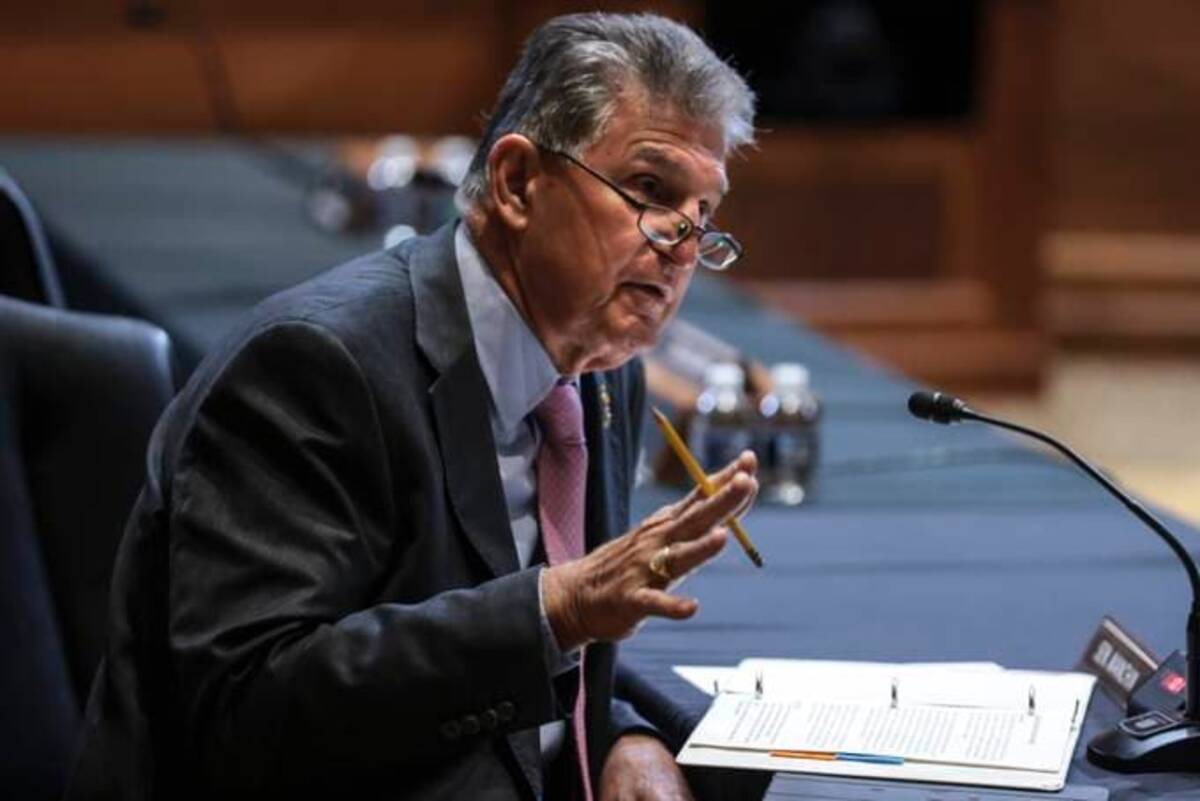 Democratic leaders are working to strike a deal with Sen. Joe Manchin (D-W.Va.) on an economic spending package to deliver on their campaign promises. (Oliver Contreras for The Washington Post) | | | Democratic leaders have finalized a revised proposal to lower prescription drug prices for seniors, part of a broader scramble to satisfy Sen. Joe Manchin (D-W.Va.) and resurrect a long-stalled economic package that they hope to advance as soon as this summer, The Post's Tony Romm reports. The development follows weeks of talks between Senate Majority Leader Chuck Schumer (D-N.Y.) and Manchin, a centrist holdout whose spending concerns scuttled Democrats' previous economic package, called the Build Back Better Act. The retooled prescription drug pricing proposal is largely similar to last year's bicameral compromise. Party leaders hope to include the drug pricing plan as part of a revived economic package that they would advance through the narrowly divided Senate through reconciliation. The retooled drug pricing proposal would: | - Allow the federal government to negotiate the price of select drugs on behalf of Medicare beneficiaries to lower health-care costs. Those talks would begin in 2023.
- Cap seniors' drug costs under Medicare at $2,000 each year, while penalizing companies that raise prescriptions faster than inflation.
- Close a loophole that would ensure the government still seeks to keep drug prices down even if party control in Washington changes, since Republicans have long opposed price negotiations.
| | Larry Levitt, Kaiser Family Foundation: |  | | | | First in The Health 202: Lawmakers push for better dental benefits under CMS | | More than 100 lawmakers are urging the Centers for Medicare and Medicaid Services to use its existing regulatory authority to expand Medicare coverage of medically necessary oral and dental treatment. Led by Reps. Lloyd Doggett (D-Tex.) and Nanette Barragán (D-Calif.), lawmakers contend that extending coverage to include medically necessary dental treatments would improve other health conditions and save Medicare money in the long run. Key context: The Social Security Act excludes routine dental services from Medicare coverage, but permits payment when the service is medically necessary. The letter comes as lawmakers seek alternative ways for Medicare enrollees to have dental coverage, since the policy has for months been left out of Democrats' economic package. | | |  | Coronavirus | | White House gears up for a fall vaccination campaign |  The newest iteration of coronavirus shots will be modified to better protect against the omicron variant circulating throughout the United States. (Robyn Beck/AFP/Getty Images) | | | The Biden administration will purchase 105 million doses of Pfizer-BioNTech's updated coronavirus vaccine in anticipation of a fall booster campaign, the Department of Health and Human Services announced yesterday. The $3.2 billion purchase includes both child and adult vaccines and would be delivered by early fall, pending a decision by the Food and Drug Administration to authorize new versions of the shots that are modified to better defend against the omicron variant. The administration has the option to purchase up to 300 million doses. A portion of the adult shots will come in single dose vials — a change states have been itching for. The announcement comes amid a months-long stalemate in Congress over future funding for the pandemic. The new Pfizer contract is being paid for using existing dollars reallocated from other covid-19 response initiatives. | | Dawn O'Connell, HHS assistant secretary for preparedness and response: | 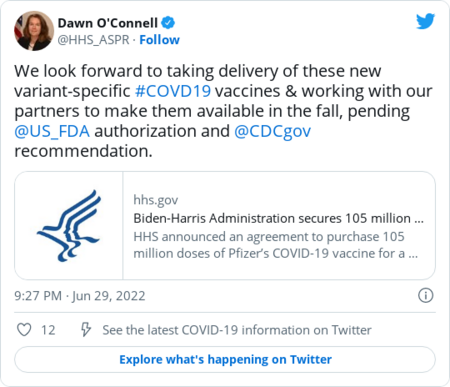 | | | | | |  | State scan | | Ohio abortion providers sue to challenge state ban |  The state's newly enacted ban would prohibit abortions after roughly six weeks of pregnancy. (Megan Jelinger/Reuters) | | | In Ohio: Abortion clinics are contesting the state's ban on the procedure after fetal cardiac activity has been detected, roughly around six weeks. The lawsuit argues that abortions are still protected under the Ohio Constitution, which has "broad protections for individual liberties" that protect residents' health-care choices. In Virginia: Gov. Glenn Youngkin (R) said he believes life begins at conception and vowed to sign "any bill … to protect life" that reaches his desk, our colleague Laura Vozzella reports. Moments after the court ruling, Youngkin said he would pursue a ban on the procedure after 15 weeks of pregnancy, with exceptions for rape, incest and to protect the patient's life, but added that he would settle for a 20-week cut-off to get a bill out of a divided Capitol. But yesterday, he said he would push for stricter limits if Republicans hold onto the state House and flip the Senate. | | The ACLU of Ohio: | 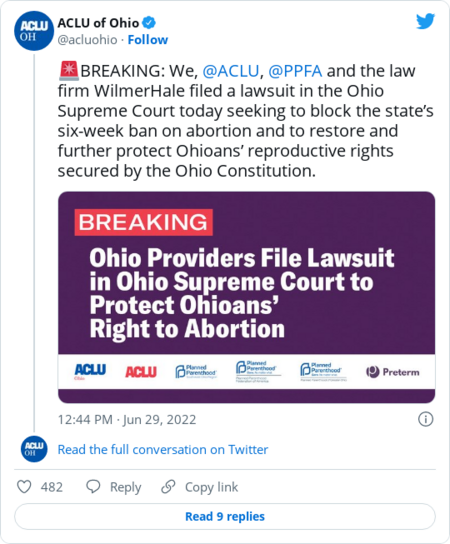 | | | | | |  | In other health news | | - On tap today: Justice Stephen G. Breyer will retire from the Supreme Court, clearing the way for Judge Ketanji Brown Jackson to be sworn in moments afterward. She will become the first Black woman to serve on the court, our colleagues John Wagner and Mariana Alfaro report.
- Anthony S. Fauci, 81, the chief medical adviser to President Biden, suffered a rebound of covid-19 symptoms after being treated with Pfizer's antiviral drug Paxlovid, according to Bloomberg News.
- The World Health Organization says "sustained transmission" of monkeypox worldwide could see the virus begin to move into high-risk groups, such as people who are pregnant or immunocompromised, or children, per Reuters reports.
| | |  | Health reads | | | |  | Sugar rush | | | Thanks for reading! See y'all tomorrow. | |


No comments:
Post a Comment