| Helloo good morning — yesterday was the first day of the best season (yep, I still love summer in the swamp). Today's edition: Top Democrats are holding meetings on Roe v. Wade as the Supreme Court decision looms. The Biden administration is plotting proposals to cut nicotine in cigarettes to minimally or nonaddictive levels. But first … | Congress is moving on insulin prices and mental health | 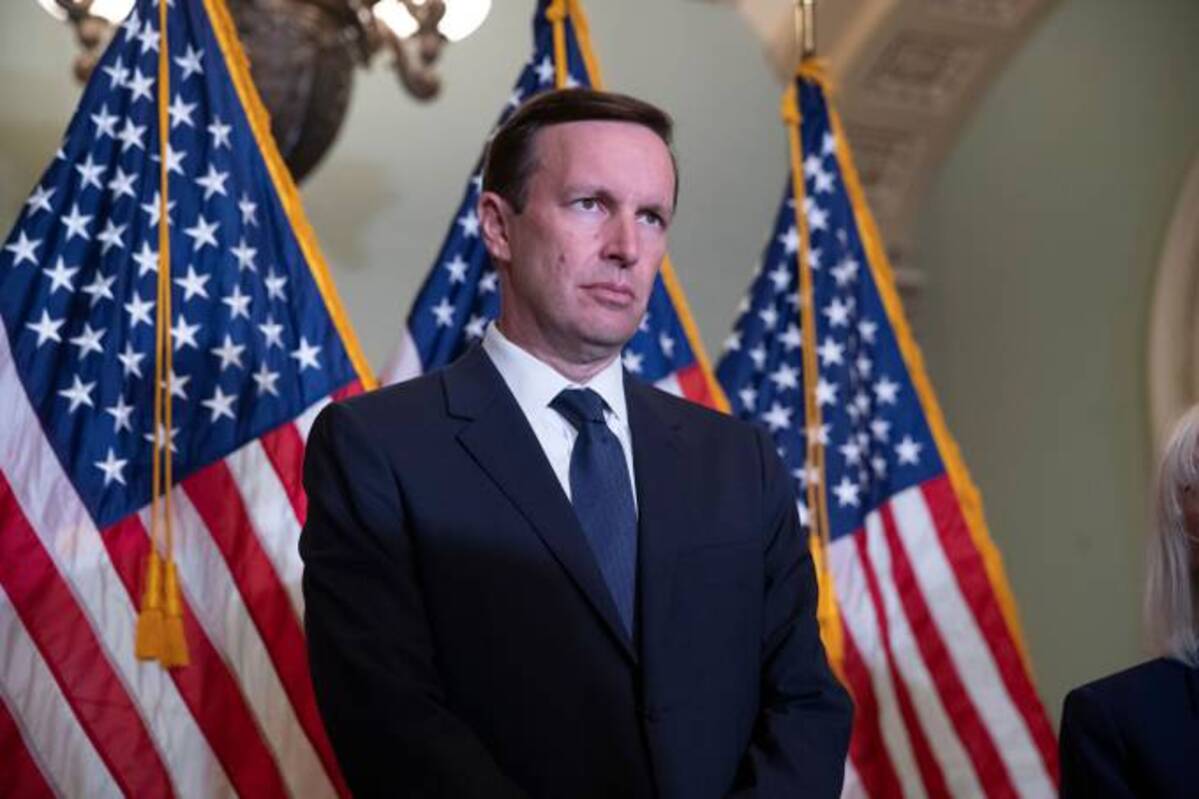 Sen. Chris Murphy (D-Conn.) was key to clinching a bipartisan compromise to advance modest gun restrictions and new mental health spending. (Michael Reynolds/EPA-EFE/Shutterstock) | | | The Senate is sprinting toward a two-week recess. And that means it's crunchtime for lawmakers to make headway on key priorities before leaving town at the end of the week. This morning, we're tracking two big developments: | - Key senators are planning to unveil a bipartisan bill aimed at curbing the sky-high prices of insulin after spending months forging a compromise.
- The Senate advanced a bill last night to toughen gun laws and provide billions for spending on mental health.
| | The legislation slated to be released today comes from Sens. Jeanne Shaheen (D-N.H.) and Susan Collins (R-Maine). It's aimed at targeting the price of the lifesaving medication, which Americans with Type 1 diabetes and some with Type 2 have struggled to pay for as costs for the medication have soared, Tony Romm and I report. Here's what the legislation does: | - Places a $35 monthly cap on the cost of insulin for patients with private insurance or enrolled in Medicare (though the uninsured wouldn't be afforded the same protections)
- Targets rebates that drug companies pay to insurers and middlemen that have been accused of driving up the costs of drugs at the point of sale
- Makes insulin more accessible by cracking down on prior authorization requirements that can force patients to jump through hurdles to get insurers to help pay for medications
| | Americans want Congress to crack down on the cost of insulin. But the legislation still faces daunting political odds amid the chamber's narrow margins and election-year tensions that make passing legislation of any kind a difficult proposition. In a joint statement, Shaheen and Collins called on Senate leadership to swiftly bring the legislation to the chamber's floor. Senate Majority Leader Chuck Schumer (D-N.Y.) previously pledged to do so months before the bill was finalized. But to pass, it'd likely need to win every Democratic vote, as well as get 10 GOP senators on board. And that may be a high hurdle, given how some Republicans have previously blasted the idea of a $35 cap as a price control. The issue of insulin legislation is also made ever more complicated by Democrats' quest to still try to pass some form of an economic package — which previously included the cap on the drug's cost. | Next up: The Senate's newly released gun deal | | The most significant gun restrictions in decades cleared a test vote in the Senate last night, putting the package on course to pass Congress this month. Key negotiators released the deal's legislative text yesterday. Less than two hours later, lawmakers voted 64 to 34 to advance the bill, our colleagues Mike DeBonis and Leigh Ann Caldwell report. The bipartisan compromise includes roughly $15 billion in new federal funding for mental health programs and school security upgrades. Here's a snapshot of the mental health components: | - Directs $150 million to support the implementation of a new three-digit number, 9-8-8, to reach the suicide prevention hotline
- Provides $500 million to increase the number of mental health service providers in certain schools
- Creates a nationwide expansion of a key way of funding community behavioral health clinics
- Appropriates $60 million over five years in mental health training for primary care clinicians treating children and youth
| | But is the legislation paid for? Yes, it is. And it's offset through what's essentially a health-related budget gimmick. Lawmakers are once again imposing another delay on the Trump-era ban on prescription drug rebates in Medicare that's never gone into effect. | | Yesterday's outcome was the result of intense negotiations after 19 children and two teachers were killed at an elementary school in Uvalde, Tex. Negotiators had to surmount major sticking points. Politico reported one of the hang-ups was over inserting language from the Hyde Amendment, the long-standing policy barring the use of federal funds to pay for abortion in most cases. The resolution: A congressional aide, speaking on the condition of anonymity to describe negotiations, said the health and education appropriations in the bill are subject to the conditions in the 2022 fiscal year funding bill. That means the Hyde Amendment applies. Such a measure is standard for how Congress handles supplemental bills, the aide said. | | More from Mike on the Senate timeline: | 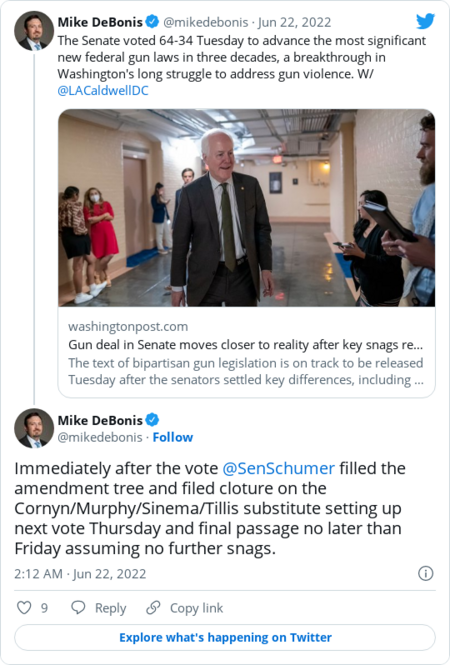 | | | | | Politico's Burgess Everett: | 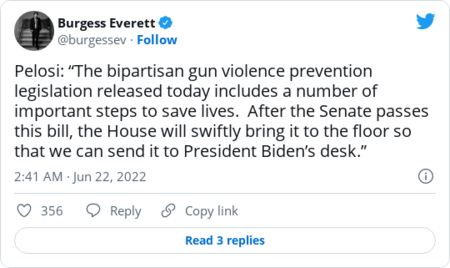 | | | | | |  | Reproductive wars | | On tap this week: Key meetings on abortion ahead of the Supreme Court's decision | 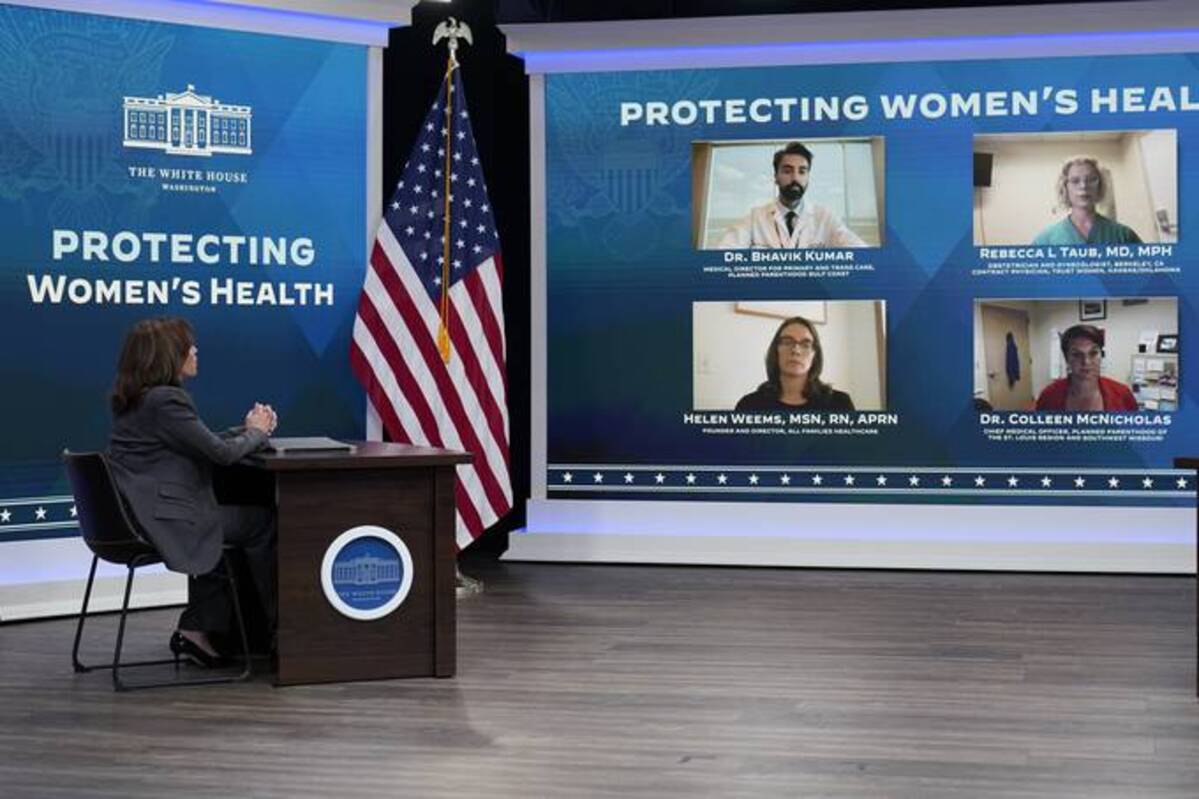 Today's coalition call will be the latest in a series of meetings Vice President Harris has had on protecting reproductive rights. (Susan Walsh/AP) | | | New: Vice President Harris will convene a coalition call with leaders across the country and senior Biden administration officials about protecting reproductive rights, a White House official confirmed to The Health 202. The meeting comes as the nation waits for the Supreme Court to issue a decision in a Mississippi abortion case that is expected to severely curtail a woman's right to an abortion. Since the leaked draft, Harris has held other abortion-related meetings with privacy law and technology experts, faith leaders and medical providers to discuss the impact that such a ruling would have on reproductive health care as the administration plots its response. On tap tomorrow: Senate Democrats plan to hold a special caucus meeting to discuss Roe v. Wade as the nation's highest court appears likely to soon strike down the decades-old abortion protections, according to multiple sources familiar with the matter who spoke on the condition of anonymity. | | Vice President Harris: | 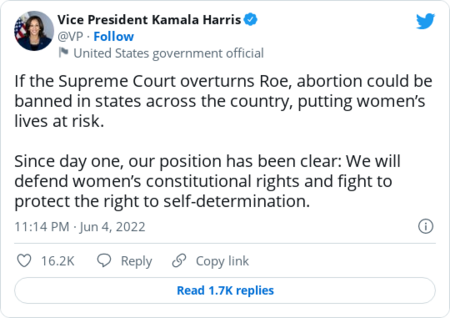 | | | | | |  | Agency alert | | The Biden administration is planning to cut nicotine in cigarettes |  If successful, the initiative could have a significant impact on smoking-related deaths and reduce the risk of young people becoming regular smokers. (Eric Vidal/Reuters) | | | The Biden administration is planning to develop a rule requiring tobacco companies to reduce nicotine levels in cigarettes sold in the United States to minimally or nonaddictive levels, The Post's Laurie McGinley reports. If successful, the policy would fit with some major goals of the White House: to reduce youth tobacco use and cut cancer deaths, which President Biden has pledged to reduce by 50 percent over 25 years. Next steps: The Food and Drug Administration intends to develop a proposed tobacco product standard by May 2023 "that would establish a maximum nicotine level" in cigarettes. After proposing a rule, the agency would then have to take time to sift through public comments before issuing a final regulation. | - But time is of the essence. Opposition could delay or derail the effort, especially if the regulation isn't completed before Biden leaves office, as a president elected in 2024 could tell the FDA to stop work on the unfinished rule, Laurie notes.
| | Robert M. Califf, FDA commissioner: | 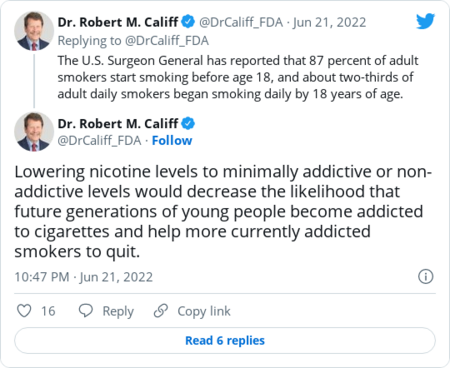 | | | | | |  | White House prescriptions | | Biden eyes Prabhakar to lead top science, technology office | 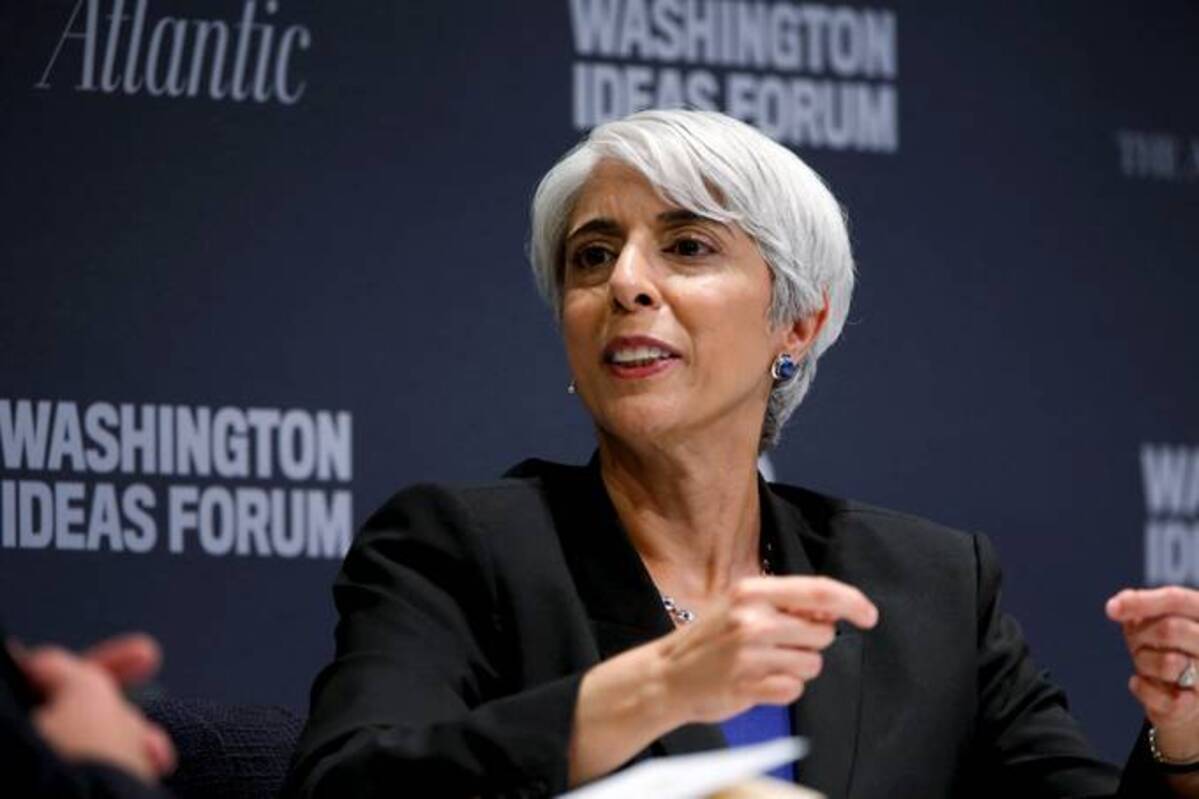 President Biden will nominate Arati Prabhakar to be the nation's new top science adviser. (Jonathan Ernst/Reuters) | | | Biden plans to nominate physicist Arati Prabhakar to lead the White House's Office of Science and Technology Policy. If confirmed by the Senate, Prabhakar would replace Biden's former permanent OSTP head, Eric Lander, who resigned from the post in February following an internal investigation that found credible evidence he'd bullied staff. Alondra Nelson has temporarily filled the vacancy ever since and Francis Collins has served as Biden's acting science adviser. | - Prabhakar's responsibilities would range from overseeing the reboot of the administration's cancer moonshot initiative to potentially the launch of Biden's new biomedical research agency.
| | The new Cabinet-level position wouldn't be Prabhakar's first time leading a federal entity. She formerly directed the Defense Advanced Research Projects Agency, a military entity that develops cutting-edge technologies, and was the first woman to lead the National Institute of Standards and Technology. | | Alondra Nelson, acting director of the Office of Science and Technology Policy: | 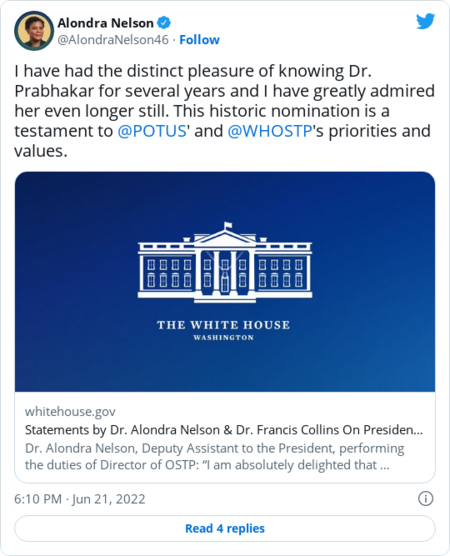 | | | | | |  | In the courts | | Supreme Court sides with insurer over dialysis coverage | | The Supreme Court ruled yesterday that an employer health plan didn't discriminate against workers with end-stage renal disease when it limited dialysis benefits for policyholders, Stat reports. The 7-to-2 ruling is significant because it potentially opens the door for other employers to make similar changes to their health coverage plans, a move that could steer workers with kidney failure to drop their private plans and jump onto Medicare. Key context: DaVita, a major dialysis company, sued Ohio's Marietta Memorial Hospital over its employee health-care plan, where all dialysis providers were out-of-network. The plan also advertises Medicare as an alternative for workers with a condition requiring the treatment. DaVita argued that the plan violated a federal statute that requires employers provide the same level of coverage for all patients, including those with end-stage renal disease. Marietta said its plan didn't discriminate against people with kidney failure because the "plan provides exactly the same benefit to every individual." And a majority of justices agreed with that reasoning, STAT's Bob Herman writes. Also on Tuesday, the Supreme Court declined to hear UnitedHealth Group Inc.'s challenge to a federal rule that allows the government to recoup billions of dollars in overpayments from insurers that participate in the Medicare Advantage program, Bloomberg News reports. | | David Gorski, oncologist and professor of surgery at Wayne State University School of Medicine: | 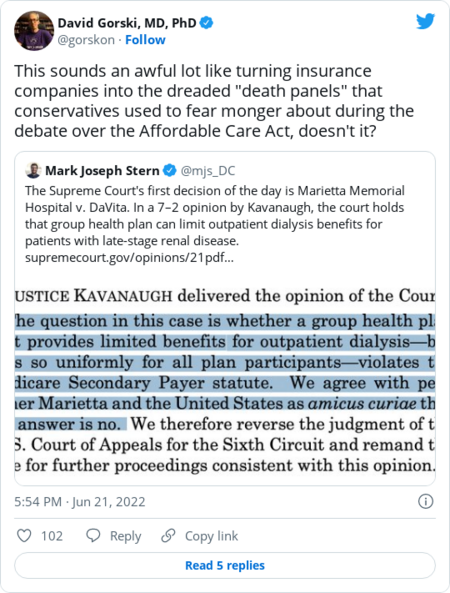 | | | | | |  | In other health news | | - In Texas: Rep. Henry Cuellar, the House's last antiabortion Democrat, narrowly clinched the party's nomination to represent the state's 28th Congressional District following a contentious reelection battle — and a recount — against progressive attorney Jessica Cisneros, our colleague Mariana Alfaro reports.
- In Louisiana: Gov. John Bel Edwards (D) signed into law yesterday a pair of bills that ban most abortions in the state, including via pills delivered in the mail and criminalize providers who perform the procedure, Axios reports.
- On the move: The nonprofit coalition Purchaser Business Group on Health has tapped Alan Gilbert as its new vice president of policy, a role in which he'll work with the country's largest employers to address long-standing obstacles to improve employee access to health care.
| | |  | Health reads | | | By Lenny Bernstein and Daniel Wu | The Washington Post ● Read more » | | | | | |  | Sugar rush | | | Thanks for reading! See y'all tomorrow. | |


No comments:
Post a Comment