The Verge - Creators |
- Now iFixit has genuine repair parts for Google Pixels, from the 2 to the 6 Pro
- Pro gaming tools are helping streamers get paid
- Snapchat adds paid subscription with more features for power users
- The game makers who found careers as asset store creators
- Pinterest has a new CEO, who has one job: to build the internet’s shopping mall
- Facebook and Instagram will remove posts offering abortion pills
- Podcasters are organizing to support abortion rights after Roe is overturned
- How Creators Get Paid Online
- Jeeyon Shim carved a new path in crowdfunding for her keepsake games
- Comradery is developing a cooperative way to get paid online
| Now iFixit has genuine repair parts for Google Pixels, from the 2 to the 6 Pro Posted: 29 Jun 2022 03:53 PM PDT  In April, Google announced plans to join the expanding list of tech companies that work with iFixit. The repair mavens distribute parts and tools for people interested in performing DIY electronics repairs, and starting today, iFixit's store offers genuine Google parts for a number of Pixel phones. You can order what you need to repair everything from the Pixel 2 to the latest Pixel 6 and Pixel 6 Pro, as well as the tools to install them and step-by-step guides to walk you through the process. (Aftermarket parts are also available if you're looking to fix an OG Pixel or Nexus device.)
/cdn.vox-cdn.com/uploads/chorus_asset/file/23661693/ifixit_pixel_repair_kits.jpg) Image: iFixit Image: iFixit Now, if you have a cracked screen or busted charging port, your choices aren't just finding a repair shop or tossing the device in the trash. iFixit has all kinds of repair kits, and while they get more expensive for newer devices — swapping out a Pixel 6 Pro screen for a genuine new one will cost $199.99 for the kit — they vary widely, mostly based on age. Cheaper parts for older devices should help keep those phones viable for as long as you're comfortable with the Android software update support they're receiving. iFixit's arrangements for parts and tools distribution already include companies like Microsoft, HTC, and even Valve's Steam Deck. There's also a partnership with Samsung in the works, and while we'll have to wait for more details there, it seems unlikely to require a 79-pound kit delivery. |
| Pro gaming tools are helping streamers get paid Posted: 29 Jun 2022 05:00 AM PDT  Software like Aim Lab and KovaaK's are key parts of the esports ecosystem A grid of blue, balloon-like blobs are pinned against a checkerboard shooting range. The goal, says Aim Lab, is to pop all of the targets as fast as you can with a pistol that's been tuned to the precise kinetic feedback of Riot's wildly popular shooter Valorant. Whenever you connect with a target, another one will materialize somewhere else on the grid, meaning that players will be graded on a variety of different vectors including speed, efficiency, and precision. All of the gruesome flourishes we've come to expect in a modern FPS — the sanguine blood splatters, the ragdoll corpses, the frilly reload animations — are missing. Aim Lab is about raw, fundamental precision; the basic task of clicking targets on the screen reduced to its bedrock. At the end of my first trial, I learned that my accuracy was hovering around a piddly, amateurish 50 percent. My most obvious weak spot? Apparently, I struggled landing shots to my right, and Aim Lab suggested clearing out any clutter on my desk that might be blocking my wrist. I moved some papers to the floor and booted up the module again, determined to get those numbers up. Aim Lab, which was released into Early Access in 2017 and is free to play on Steam, is one of the many platforms attempting to solve a problem that's vexed the video game community for generations. To excel at a shooter — particularly twitchy, tactical PC shooters like Counter-Strike and Valorant — you are expected to grind away in the matchmaking crucible, throwing up putrid KDAs, as you gradually grow more deft with your mouse. There is a lot of humiliation and disgrace baked into that process. But Aim Lab offers a kinder path toward Diamond-rank immortality. What if you could instead train in relative privacy and receive constructive feedback based on your own analytics? What if every one of your Rainbow Six Siege matches didn't end with an early, inglorious death, forcing you to wait five minutes for another bite at the apple? What if your bad performances weren't punctuated by a 12-year-old kid disparaging your personhood in the general chat? It's an enticing proposition. And that's what has made Aim Lab, and other aim-training services, one of the true commercial forces in professional gaming, plastered across esports jerseys and Twitch broadcasts. Earlier this year, Aim Lab brokered a sponsorship with Activision's Call of Duty League, joining it with previously established deals with Riot Games and Ubisoft for Valorant and Rainbow Six Siege, respectively. The company has partnered with a number of high-profile Twitch streamers, like LuluLuvely and Ethos, as well as promoting full-fledged esports teams that use the service. (ScreaM, a Valorant player for Team Liquid, has proudly showcased his Aim Lab routine on his YouTube channel — his click fidelity is simultaneously inspiring and terrifying.) Taken together, these sponsorships represent one of the core lines of demarcation that separates professional gaming and professional sports. It's hard to imagine ever matching Giannis Antetokounmpo's ability without freakishly long arms and a 40-inch vertical, and the NBA doesn't want you to believe otherwise. (In fact, one of the most famous Nike ads of all time is about how you won't be able to dunk after purchasing a pair of Jordans.) But to become as good as Ninja? That's in sight, so long as you have the right tools. Aim Lab has been downloaded 25 million times, according to the company. And all of those people are hoping to finally, definitively, get good. "Feedback that says, 'You're doing this right, you're doing this wrong, here's where there's opportunities to improve,' even without additional intervention, is something that people crave," says Wayne Mackey, CEO and founder of Statespace, maker of Aim Lab. "That's a key thing we're trying to solve. To have a thumbprint of your performance. Knowing where you're at, and where you're at relative to other people, is one of things you don't necessarily get from playing the game itself. In a game, all you really know is whether you hit someone or not." This is the premise that Aim Lab is built upon. For years, gaming superiority was an arcane art, known only within the limbic intuition of the top-level talent. But perhaps, with a fine brush, we can unlock what it takes to become a great player by scientifically drilling out the tics and bad habits we've accumulated in the same way a boxer might toil over their footwork. Mackey has a Ph.D. in neuroscience and he believes that first-person shooters — with their native pattern recognition and hand-eye coordination — are a rich text for anyone interested in the machinations of the human brain. Anyone who's sat down in front of an FPS can identify that sublime rebirth when our combat reflexes meld with our muscle memory, and aim-training software looks to unearth that latent sixth sense hidden inside all of us. But shooters come in all shapes and sizes, which means that these bootcamps are adaptable to whatever deficiencies that apply to your gaming diet. "In Apex Legends there's a longer time to kill, and that's when tracking skills come into play," says Garrett Krutilla, who designed KovaaK's, another popular aim trainer on the market. (Tracking, in this context, refers to a player's ability to keep their crosshairs on an enemy for an extended period of time.) "For games like Call of Duty and Counter-Strike, click-timing is much more important, because if you can shoot in just a split-second, the target dies." "A lot of pure Counter-Strike players come into an aim-trainer and do pretty well with the click-timing stuff, but then they'll play a tracking simulator and be like, 'Oh my god, I can't do this,'" adds Krutilla. "They still have good aim, but they can't track, because they haven't developed skills quite yet." Personally, my white whale is Valorant. I've always been jealous of those who've mastered the subtle art of the positional shooter — who can squeeze out headshots at the very moment a smidge of flesh protrudes out of a distant corridor. I did not enter Aim Lab and KovaaK's with the goal of reincarnating into an ace on the competitive ladder, but it would be nice to not suck. It's an anxiety that's becoming increasingly relevant as the video game industry tilts more towards a forever-online, multiplayer-heavy format. If I work hard enough, if I click on those balloons over and over again, maybe I won't be left behind as I get deeper into my 30s. It would likely take me months of discipline to confirm, without question, that the training has juiced my abilities. But after ramping up a few FPS sessions with a 30-minute dose of Aim Lab, I can conclude I don't feel quite as useless as I did before. For total laymen, I think the coaching will help you feel less overwhelmed in the heat of a firefight. I am a thematic gamer at heart; I play Battlefield in order to immerse myself in World War II, rather than to crunch numbers and analyze damage thresholds. But after popping enough of those balloons, eventually those rivals on the other side of the map lose some of their eminent menace. It's remarkable how quickly Aim Lab can make your wrist glide across your desk on pure instincts, without any interference from your pesky brain. The training reminds you that, at the end of the day, FPSes are all rooted in muscle memory. Enemy players are transformed into static moving targets — just another thing to click on — rendering the competition a math problem rather than a first-person shooter. It turns out that there's nothing to fear, so long as you feel prepared. "If you can build up your confidence in what you're doing, that will improve your skills and how much fun you're having," says Mackey. "And that's why we're training in the first place." Both Mackey and Krutilla struggled to sum up the average aim-training user. It's a loose confederation of those who genuinely aspire towards lofty professional heights — a Twitch star, a league contract — and those who simply want to punish their friends with greater dominance. What is clear is that both of these companies are injecting a healthy dose of capital into the ephemeral, and occasionally flagging, esports industry. We mentioned Aim Lab's sponsorships earlier, but KovaaK's also has a deal with a variety of streamers, as well as the Overwatch League's Houston Outlaws. They warm up in their nylon jerseys, popping those balloons, before laying waste to the field with a nuclear capacity that the average FPS addict can only dream of. "It's very authentic with us," says Krutilla. "We make sure the people we sponsor are using the software." Mackey goes a step further. To him, the aim-training business and the competitive gaming business are congenitally entwined, and every sponsorship deal he inks is helping seed a more prosperous future for esports. He has the money to spread around, so why not give it to the gamers themselves? "I can't imagine a better way to spend money that's earmarked for marketing. I can support the community and the streamers that everyone loves watching, or I can give money to Facebook. It's not even a question," he says. "We have a real rising tide mentality. Whatever is good for the community, in turn, will help us in some way. It moves everyone forward." I hope this attitude takes hold as the esports boom enters its uncertain adolescent years. Much has been made of the competitive gaming bubble — how a lot of the initial shriek of investment cash in the industry was misplaced, as publishers faced the music on some bad bets. (Does Halo really need to have a professional league?) But maybe esports always possessed the ability to buoy itself without relying on specious, running-in-the-red VC finance. Who needs patronage from Visa, Amazon, and Apple when there's a suite of companies built to serve the specific inclinations of the ascendent Twitch generation? Aim Lab and KovaaK's help gamers get better at first-person shooters, and both serve the community with natural fluency. As the bloat atrophies away, hopefully we'll be left with an esports field that no longer feels grossly unsustainable. It's high time to reorient this industry around those who want to be in this ecosystem for the long haul. In the meantime I'll be at the range, grinding my way towards Silver. Hey, you gotta start somewhere. |
| Snapchat adds paid subscription with more features for power users Posted: 29 Jun 2022 04:58 AM PDT  Starting this week, Snap will begin offering an optional subscription called Snapchat Plus that unlocks exclusive and early access features. Priced at $3.99 a month, the subscription is geared toward "the people who spend most of their time communicating with their closest friends on Snap," the company's SVP of Product, Jacob Andreou, tells The Verge. Dubbed Snapchat Plus, it's Snap's first real attempt at making money outside of advertising, though Andreou says there aren't expectations for Plus to become a "material new revenue source." At least initially, Snapchat Plus is mostly a cosmetic upgrade. The most notable features include the ability to change the style of the app's icon, see who rewatched a story, and pin one of your friends to the top of your chat history as a "BFF." (Yes, that last one gives me Myspace vibes, too.) Going forward, Andreou says that "single-playerish" features like the BFF pin will likely remain gated to Plus subscribers, while features that rely on interactions with others will eventually be released to the whole user base. By introducing a paid tier, it's natural to wonder if Snap plans to let people pay to turn off ads in the app. Andreou downplays the possibility, saying that "ads are going to be at the core of our business model for the long term." Even still, it's clear Snap sees an opportunity to diversify its revenue. Its hardware business hasn't and likely won't be meaningful for the foreseeable future, so subscriptions are an obvious area to explore. /cdn.vox-cdn.com/uploads/chorus_asset/file/23658414/Snapchat_Plus_screenshots.jpg) Snap Snap Snap isn't the only social app to introduce a paid tier recently: both Twitter and Telegram have rolled out their own subscriptions aimed at pro users, and Discord has made money for years through its optional Nitro subscription. During our chat, Andreou mentions informal conversations he has had with people who work at paid streaming services — many of which have added ad-supported tiers or are in the process of doing so. "Those tiers where they are monetizing less but are able to inject ads actually end up being by far their most lucrative and most beneficial tiers," he says. Andreou downplays the timing of the announcement, which comes just a month after Snap warned of slowing revenue growth. He says his team has been thinking about a paid offering since at least 2016, though I still detect a sense of urgency. The company called Snapchat Plus an "early" internal test after it was discovered in the app's code just two weeks ago. Now it's being released quickly in Snap's top markets: the United States, Canada, the United Kingdom, France, Germany, Australia, New Zealand, Saudi Arabia, and the United Arab Emirates. In my conversations with Snap employees over the years, I've consistently heard about the difficulty of trying to monetize the core chat part of the app without putting in ads. With Snap's stock price trading below its 2017 IPO price, there are more reasons than ever to figure that out now. So even though Plus isn't expected to meaningfully move the needle initially, I take it as a sign that Snap knows it needs to find more ways to make money and fast. |
| The game makers who found careers as asset store creators Posted: 29 Jun 2022 04:30 AM PDT  Once a means of supplementing an income, making assets and tools can now be a full-time gig When Jonathan van Immerzeel goes on vacation, he packs a decidedly unusual suitcase. In addition to sunblock, swimming shorts, and a passport, the intrepid creator takes a drone, green screen, and audio recording equipment. This is so that he can document every aspect of his surroundings, usually untouched wilderness, in as much high-fidelity detail as possible. He does so in the name of research, seeking inspiration for his next hit shader, essentially a program that renders graphics, which he then publishes on the Unity Asset Store. In fact, van Immerzeel, maker of "Stylized Grass Shader" and "Stylized Water 2," says that creating these tools for game development, understanding the minutiae of nature, and translating that into virtual form, has helped foster an appreciation for the actual great outdoors. "My eyes and ears have to be open to new information, paying attention to what many people would consider the weirdest things," van Immerzeel tells me over Zoom. "That's just part of the job." For the past five years, van Immerzeel has made a living creating tools for the Unity Asset Store, an online marketplace for users of the Unity game engine. It's jam-packed with thousands of virtual objects, some beautifully made, others less so, thrust together as if a high-end department store and thrift shop occupy the same beguiling online space. You'll find 2D and 3D models as well as tools, scripts, and shaders (what van Immerzeel makes) — essentially anything you can think of that brings a video game to life. If you've never checked out an asset store before, it's worth spending a few minutes perusing its virtual aisles. You might begin to imagine, for example, a group of Elden Ring-esque undead characters roaming an idyllic Japanese street. Before you realize, your dream video game will resemble a Frankensteinian monster of tropes — derivative, sure, but unique, charming even, in its own cobbled-together kind of way. /cdn.vox-cdn.com/uploads/chorus_asset/file/23600906/Screen2.jpg) Image: Denis Pahunov Image: Denis Pahunov Admittedly, few game makers create games entirely from the material hosted on Unity's asset store, lest they face the wrath of players labeling their work an "asset flip" (as was common a few years ago). Instead, such assets are used for a whole host of reasons: hobbyists mess about with them to learn the ropes of the engine; professionals use them for quick-fire prototyping (indie open world hit Sable began life as a premade hovercraft and sand dunes). Occasionally, these assets and tools form the polygonal bedrock of commercial titles (the primordial terrain of sci-fi gliding game Exo One was created using MapMagic 1). In the case of publicly available games, the makers of these tools are sometimes credited but often they're not. According to Denis Pahunov, maker of MapMagic 1, this isn't a problem. As far as he's concerned, "They already paid me so why should they then advertise the assets?" Pahunov and van Immerzeel both began their careers in the modding scene, for Morrowind and Unreal Tournament, respectively. While the games could scarcely be more different, Morrowind, an epic, fantasy RPG, and Unreal Tournament, a high-octane sci-fi FPS, modding allowed both creators to peer into the proverbial guts of these titles. Pahunov likens it to dismantling a toy to see what's inside, only to reassemble it with exacting precision. Van Immerzeel remembers opening Unreal as a 12-year-old and realizing that a skyline he'd been staring at for hours was simply a flat piece of geometry with a picture stuck on it (as opposed to a horizon filled with models of 3D buildings). It was a "lifting of the veil," says van Immerzeel, an "enlightening moment" that revealed the extent of the smoke and mirrors video games employ. There's something understatedly lovely about these formerly teenage tinkerers facilitating the next generation of game makers with a suite of digital tools that streamlines aspects of a notoriously complicated creative and technical process. Downloadable for just a few bucks, these plug-ins essentially let game makers buy solutions to complex problems so that they can focus their efforts on the bigger picture — say, for example, the game world itself. Between Pahunov's tools, which also include "Voxeland," and van Immerzeel's "Vegetation Spawner," gorgeous virtual landscapes (of the kind van Immerzeel enjoys on holiday) can be created at both a macro and micro level — miles of rolling hills filled with fluttering grass and trees. That said, making assets is still a business. For van Immerzeel, it began when he was let go from a warehouse job in the Netherlands while studying art and technology at the Saxion University of Applied Sciences. With a surplus of free time, van Immerzeel threw himself into making what would become "Stylized Water Shader." Upon completion, he posted it on the Unity subreddit, the post blew up, and, well, the rest is history. Since then, the creator has graduated, dabbled in freelance contract work, but finds himself drawn back to the Unity Asset Store — as well he should, judging by his revenue. In 2021, "Stylized Water 2" alone brought in a little over €33,000 (about $34,700 USD). Pahunov, meanwhile, turned his attention to the asset store full-time from 2017 to 2019, in between game dev jobs, bringing in over $5,000 per month at his peak. For others, like Noah Ratcliff, part of worker-owned game studio cooperative Aesthetician Labs, the Unity Asset Store offers, if not a deluge of dollars, then a reliable trickle. Ratcliff's tool, "Easy Feedback Form" (named with admirable straightforwardness), was developed as a personal project during college, but now supplements the income of the studio, raking in over $7,000 to date. For Ratcliff and their two friends, still early in their game development careers, this goes a long way to covering basic costs and the occasional short-term contractor. "Easy Feedback Form" even appeared in the credits of 2021's hit collectible card game Inscryption — a means for developer Daniel Mullins to fine-tune the tricksy, playfully meta title. As Ratcliff jokes, "We like to say that we're technically an award-winning asset now." But like so many forms of independent digital labor, from being a YouTuber or Twitch streamer to actually developing video games, making a living from these kinds of tools and assets can be hugely precarious. You're entering into a business arrangement not only with yourself, your potential customers, and the ebbs and flows of market demand, but with companies such as Unity to whom you're essentially dependent on. Their algorithms dictate what gets surfaced in search results for prospective buyers. /cdn.vox-cdn.com/uploads/chorus_asset/file/23600914/FarmField_SocialMediaImage.png) Image: Brandon Gillespie Image: Brandon Gillespie Just ask Brandon Gillespie, a 3D artist who has sunk days and weeks into planning and creating eye-popping assets such as "Peacekeeper Robot" and "Apocalypse Houses," only to sell one or two units. For comparison, "Farm Field," which came together in a number of hours, shifted over 200 units, while "Greeble City Kit" has sold over 650. These are by no means huge numbers. This unpredictability is a huge problem for Gillespie, who treats asset-making as a side hustle alongside his full-time job as a medical animator. That said, the "hit and miss situation" is one of the reasons why he hasn't published more. As with video games themselves, quality is by no means an assurance of success. There's one further factor to consider for would-be asset creators: the regularity with which Unity updates its engine. "Careful," warns van Immerzeel when I raise the subject. "There's a lot to be said about that." Maintaining assets so that they continue to function with each new version of Unity is a time-consuming business, particularly with a growing portfolio that likely contains asset packages with numerous models in them. When you consider that Unity may work differently on different hardware, well, the range of variables for a fix can quickly add up. "Sometimes things come up that you can't anticipate, like a weird shader glitch on PlayStation 5," says van Immerzeel. "You don't have the development hardware so you're just kind of hoping customers don't run out of patience while you try to fix it." Despite these issues, as well as contract work which has seen him work on a host of notable games, including Annapurna Interactive's Last Stop and super chill postal delivery game Lake, van Immerzeel thinks his future, at least for the time being, lies with the Unity Asset Store. He's able to follow his curiosity. Most of the time this results in profitable assets, but sometimes it doesn't. The way he sees it, if he wasn't doing this then he'd be working at a studio doing precisely the same thing, albeit without the same degree of autonomy. Pahunov, however, views the work a little more dogmatically. "I treat video games as art," he says. "I want to be a painter or sculptor, not a brushmaker. Even if the entire community uses my brush, it doesn't bring me closer to being an artist." For Pahunov, his tools have helped him achieve precisely this. He's now employed as an expert technical artist by Ubisoft RedLynx, encouraged by the studio's very own former creative director Antti Ilvessuo to apply. Ilvessuo was impressed by what he saw on the asset store. Van Immerzeel, meanwhile, has his entrepreneurial eyes set on the next innovation to his business: sound. The recording equipment he takes with him to far-flung corners of the planet is all part of the plan, a means of staying one step ahead in a highly competitive game. "Everyone offers environment packs but they're always missing the audio," he says. "It's such an essential part of games, and I think there's a market for it on the asset store." |
| Pinterest has a new CEO, who has one job: to build the internet’s shopping mall Posted: 28 Jun 2022 02:33 PM PDT 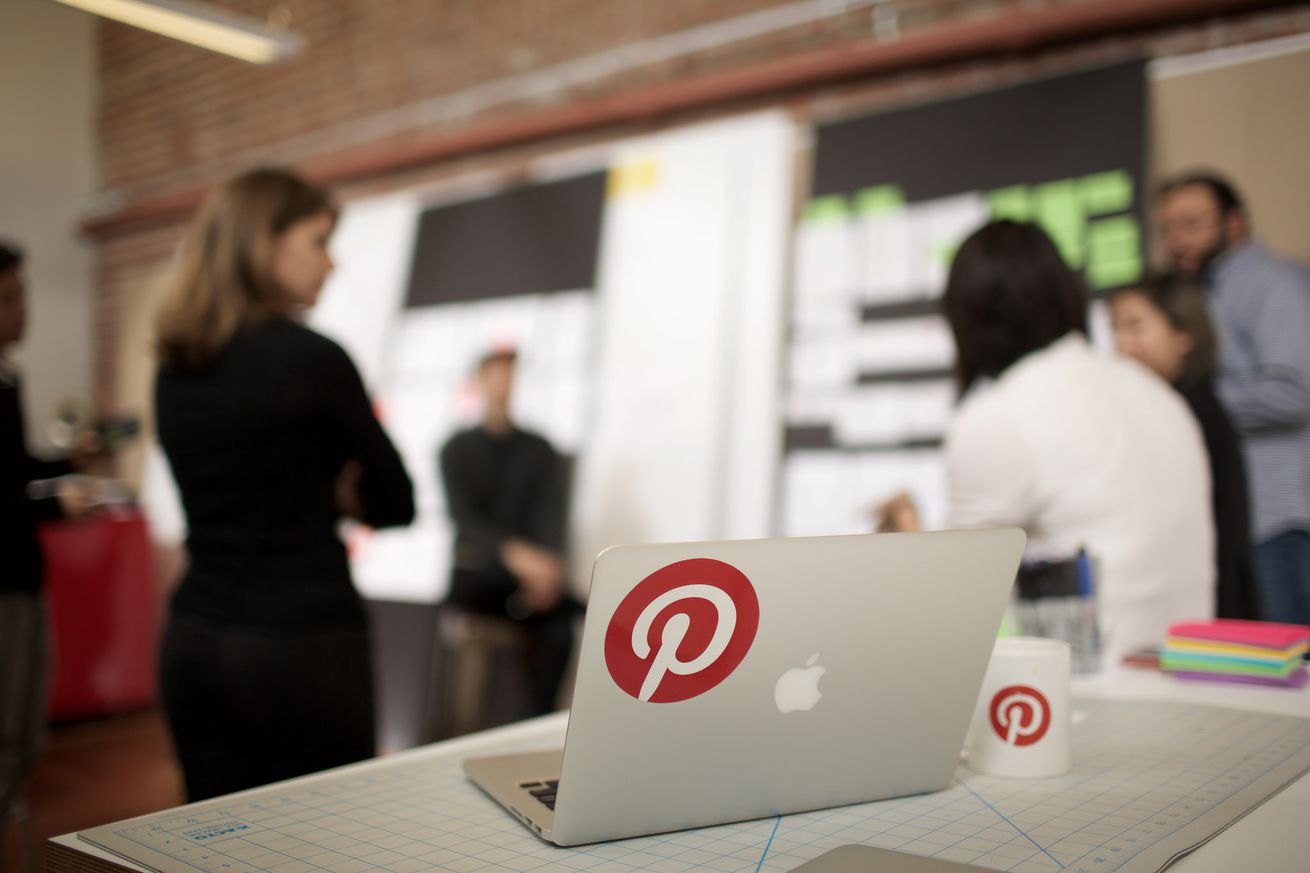 Ben Silbermann is stepping down as Pinterest's CEO, the company announced on Tuesday. He'll be replaced by Bill Ready, who has spent the last couple of years as head of Commerce, Payments & Next Billion Users at Google. Silbermann isn't leaving the company, though: he'll be Pinterest's executive chairman, following in the path of a number of tech CEOs who have recently gone from the daily trenches of running their company to a relatively more relaxed seat in the boardroom. "Bill's actually going to be a better CEO than I am for this next chapter," Silbermann told The Wall Street Journal as part of his announcement. There's only one way to read that: the time for the product dreamer founder is out. Pinterest's next job is to make money. A lot of money. Quickly. Pinterest has long seemed like a missed opportunity to investors. It's a platform with hundreds of millions of users that isn't growing that fast or making much money, even though most of those users spend their time searching for and pinning stuff they'd like to buy. Over the years, rather than compete with retailers and shopping platforms, it has become a hugely powerful discovery and curation engine for shoppers everywhere. There's an enticing — and likely massively profitable — future in which Pinterest acts as something like the internet's shopping mall: a single place for users to shop brands from around the web, facilitating purchases all over the place (and presumably taking a cut). But Pinterest was slow to embrace shopping and buying features, slow to embrace the creator economy, and generally slow to keep up with the future of commerce. Ready, on the other hand, has a long track record of being ahead of the game in e-commerce. He was a top executive at both Venmo and PayPal before going to Google in 2020 to run its various commerce projects. Google Shopping definitely hasn't taken over the world in the last two years, but Ready definitely had an impact: commerce became a core part of YouTube's future, Google revamped the way Shopping works, and the company reinvested in its payment systems like Wallet. And now, Ready seems to have big commerce plans for Pinterest. "In the next phase of our journey, we will help people engage more deeply with all the inspiring products and services they find on our platform so they can build their best lives," he wrote in a LinkedIn post announcing his move. "As someone who has spent most of my career in commerce and payments, it's so clear to me that Pinterest has the opportunity to build something unique—something special." Ready takes over the company at an interesting time, as the company has pushed hard to lead in creating a better kind of social network while also dealing with internal accusations about a problematic and discriminatory work culture. The rest of the internet is also catching up to Pinterest, as platforms like Snap and YouTube and even Twitter are embracing the shopping-ification of everything. Pinterest had an opportunity to be a major player in digital commerce and maybe still does. But the new CEO is going to have to move quickly. |
| Facebook and Instagram will remove posts offering abortion pills Posted: 28 Jun 2022 12:14 PM PDT  Facebook and Instagram are removing posts from users that offer help accessing abortion pills, saying they violate a policy around pharmaceuticals. Following the Supreme Court's overturning of Roe v. Wade on Friday, social media users have shared posts offering to mail abortion pills to people whose access to abortion has been stripped away or will be soon. But users are finding their offers quickly removed or restricted, as reported by Motherboard and the Associated Press. A test Facebook post by an AP reporter offering to mail abortion pills was removed within one minute. A test by a Verge reporter yielded similar results, with a post offering abortion pills being flagged within two minutes. The sale, gifting, and transfer of firearms and marijuana are also prohibited under the same section of Meta's restricted goods policy that bans pharmaceuticals. Yet test posts by the AP that offered to mail guns and weed were not removed; a similar test by The Verge offering to mail cannabis wasn't immediately removed by Facebook. In response to reporting, Meta spokesperson Andy Stone tweeted on Monday that "content that attempts to buy, sell, trade, gift, request or donate pharmaceuticals is not allowed." Stone says that posts containing information on the "affordability and accessibility of prescription medication" is allowed and that the company was correcting instances of "incorrect enforcement." Meta did not respond immediately to questions seeking clarification on how the policy is enforced and what might explain the discrepancies. In the days following the reversal of Roe, social media has become a key tool in spreading word of available abortion resources. But moderation decisions by social media companies have caused some major resource providers to lose access to their platforms right as the need has become especially acute. Abortion Finder, a site that allows patients to search for care providers, was briefly suspended from Instagram on Sunday, with Meta citing its restricted goods policy, according to NBC News. The account has since been restored. |
| Podcasters are organizing to support abortion rights after Roe is overturned Posted: 28 Jun 2022 09:00 AM PDT  I hope you all had a good weekend. I certainly wasn't huddled in a ball of anxiety about the very fabric of women's rights in the US being stripped away, no sir. On that note, there is a lot going on in the audio world in response to the Supreme Court overturning Roe v. Wade. Podcasters are organizing, Slate is doing a stunt campaign in areas where abortion is now restricted, and Howard Stern is running for president, maybe. But first, a very special Hot Pod announcement (elegant transition, right?) Hot Pod Summit goes Hollywood Big news: we're bringing Hot Pod Summit to Los Angeles. On November 3rd at KCRW, we'll have a day of conversations about how the podcasting industry is being shaped by West Coast tech giants and becoming increasingly entwined with legacy Hollywood institutions. The summit is being held in collaboration with work x work and On Air Fest LA, which runs from November 3rd to 5th, and is being co-presented by KCRW. I am excited to nerd out on audio, meet some of you guys IRL, and, dare I say, get a little tan? We'll keep you posted on the lineup and other details as they become available. Hope to see you there! Podcasters organize pre-roll campaign for abortion rights In the wake of the Supreme Court overturning Roe v. Wade, dozens of podcasters are banding together to record and place pre-roll messages advocating for abortion rights. Started by EarBuds Podcast Collective founder Arielle Nissenblatt, the campaign has managed to get some big shows on board, including My Favorite Murder and Getting Curious with Jonathan Van Ness. Nissenblatt collaborated with writers and producers to come up with different script templates to fit different hosts' needs (30-second vs. 60-second, US-based vs. international) and compiled links to abortion resources that podcasters could put in their show notes. The campaign also enlisted voice actor and podcaster Matt Cundill to record several different versions that shows can place if they do not want to record it themselves. When the decision was announced, "my first thought was, like, how will podcasters want to uniquely react to this?" Nissenblatt told Hot Pod. "They can offer resources, they can offer support, they can spread the message, and we can come at it from a unified place." So far, at least three dozen shows have participated in the campaign. Nissenblatt says that Karen Kilgariff and Georgia Hardstark from My Favorite Murder jumping on board did a lot to encourage other podcasters to do the same. Other big names that have expressed interest in joining include Alex Steed from You Are Good and Jamie Loftus and Caitlin Durante from The Bechdel Cast. Slate erects billboards promoting Slow Burn in states with trigger laws Slate is launching a provocative new campaign to promote its latest season of Slow Burn, which tells the story of Shirley Wheeler, the first woman convicted of manslaughter for getting an abortion. The outlet has placed billboards in states that now have some of the strictest abortion laws in the country urging passersby to "Defend Shirley Wheeler." /cdn.vox-cdn.com/uploads/chorus_asset/file/23656823/Screen_Shot_2022_06_28_at_10.59.49_AM.png) Provided by Slate Provided by Slate The campaign's URL, defendshirleywheeler.com, redirects to Slow Burn's show page. The billboards have been placed in Jackson, Mississippi; Oklahoma City, Oklahoma; Baton Rouge, Louisiana; Phoenix, Arizona; Boise, Idaho; Little Rock, Arkansas; and Daytona Beach, Florida, where Wheeler lived when she got her abortion. It's a smart (if dystopian!!) campaign that should grab attention in those areas, for better or worse. Howard Stern 4 Prez Because there hasn't been enough chaos in the past week, radio star Howard Stern has responded to the abortion ruling by saying he will really, actually probably run for president in 2024. "If I do run for president, and I'm not fucking around, I'm really thinking about it," he said on his SiriusXM show Monday, "as soon as I become president, you're gonna get five new Supreme Court justices that are going to overturn all this bullshit." Another pillar of the Stern platform: "one vote, one person, no more of this Electoral College, I'm getting rid of it." That would be nice, if legally impossible. If he did step into the fray, it wouldn't be Stern's first attempt at running for office. He ran for governor of New York in 1994 until he dropped out because he refused to disclose his personal finances. He may not have Mike Bloomberg money, but bringing in $85 million a year, Stern has plenty of cash to play with if he wanted to run (or at least do some kind of stunt campaign). Either way, President Biden is not likely to be pleased. SCOTUS won't rewrite defamation law (but they say a lot of things!!!) On Monday, the Supreme Court turned down a petition to hear a case in which an evangelical Christian ministry accused the Southern Poverty Law Center (SPLC) of falsely calling it an anti-LGBTQ hate group. If they had taken it up, writes my Verge colleague Adi Robertson, it would have opened the window for the court to make it easier for public figures to win libel cases against media outlets. By not taking up the case, SCOTUS is leaving the "actual malice" standard from the 1964 New York Times Co. v. Sullivan case in place, which found that public figures need to show that a false statement was made knowingly or with reckless disregard for its truth in order to prove defamation. Podcasters and publishers in the US are also covered by this protection. Justice Clarence Thomas, who doesn't have much regard for precedent, wrote a dissent saying that the "actual malice" standard should be revisited. "This case is one of many showing how [NYT v. Sullivan] and its progeny have allowed media organizations and interest groups 'to cast false aspersions on public figures with near impunity.'" In this particular instance, he seems to be the only person on the court of that opinion. But as Robertson notes, Justices Neil Gorsuch and Elena Kagan have taken issue with the "actual malice" standard in the past, so this may not be the last we hear on the libel issue. Pushkin Industries also goes Hollywood Malcolm Gladwell's audio company, Pushkin Industries, has cut a first-look deal with independent studio A24, Bloomberg reports. The deal will allow A24 to have the first crack at Pushkin's audio properties, which include hit podcast Revisionist History. The first project A24 will develop as part of the deal will be a documentary series based on Gladwell's most recent book, The Bomber Mafia. The deal will also pay for Pushkin to get a development executive. The company has hired Meghna Rao from Topic Studios to fill the role. The Black Effect Podcast Festival is coming to Brooklyn this summer iHeartMedia and Charlamagne Tha God will host the first Black Effect Podcast Festival this summer, featuring live tapings of some of the network's biggest shows, like The 85 South Show and All The Smoke. The festival will be held at The Brooklyn Mirage at Avant Gardner. The Black Effect Podcast Network is a collaboration between iHeart and its biggest star, The Breakfast Club co-host Charlamagne Tha God. "The Black Effect Podcast Network was created to amplify Black voices for new and established content creators and storytellers," he said in a statement. "I'm excited to celebrate the first-ever Black Effect Podcast Festival, where talented Black creators and aspiring podcasters will come together for a day to uplift and inspire one another." The festival will take place on August 28th, and tickets will go on sale on July 6th. That's all for today! I'll be out next Tuesday, thanks to Vox Media's extremely lit four-day July 4th weekend, so I'll be back in your inbox on July 12th. |
| Posted: 28 Jun 2022 07:07 AM PDT  The internet has made it easier than ever for artists to get their work in front of a large audience — the trick is making that a viable career. This collection of stories explores how creatives from various disciplines are utilizing platforms like Twitch, TikTok, Etsy, and others to turn their passions into something sustainable. That could mean resurrecting centuries-old blacksmithing techniques on YouTube or building a new kind of crowdfunding platform. Or it could involve becoming an expert at designing immersive Fortnite worlds. Whatever the project, these creatives are finding ways to get paid. |
| Jeeyon Shim carved a new path in crowdfunding for her keepsake games Posted: 28 Jun 2022 05:30 AM PDT  A more independent approach For Jeeyon Shim, making games wasn't a hobby, but a necessity. After she was laid off from her outdoor education job due to the pandemic, the self-taught designer started doing full-time game design in 2020. She quickly amassed a loyal following for her work in narrative-driven "keepsake" games, an experimental offshoot of role-playing games that involve deeply personal, player-created artifacts. In 2022, Shim is once again venturing into new territory. She decided to crowdfund her latest game, The Snow Queen, on a Squarespace website that she built herself — totally circumventing Kickstarter, which many see as the obvious choice for creative projects. The Snow Queen was fully funded in 90 minutes. It ended up raising over $30,000 (384 percent of its original $8,000 goal). "I wanted to see where I was with my own audience," she says. "How many people could I attract to a project on that project's merits, and on my merits?" "I started in this niche of game design as a direct part of my last job," Shim says of her previous career as a program designer / coordinator at a company that taught outdoor skills via live-action roleplay. During this time she also dabbled in games and established herself with small experimental projects. Shim's first crowdfund was for Wait For Me, a journaling game with designer Kevin Kulp. They initially asked for $500 — a rookie lowball that Shim says she'll never do again (Wait For Me ultimately received over $22,000). When Shim began a long-term collaborative partnership with artist / designer Shing Yin Khor, she knew she'd found her footing. Starting with Field Guide to Memory, the pair defined keepsake games as both a genre and a useful shorthand for their work. ("Shing and I aren't the first people to make this game form," she clarifies; they simply gave it a name.) Coining the term was, in the long run, a smart way to promote Shim's more experimental art, but it still means doing a little more work to reach newer, broader audiences. "I can't really lean on existing industry terms for the sake of copywriting or marketing," she explains. "And one of the things that I've learned about tabletop is that often those industry terms don't have consistent definitions." When it comes to getting an audience psyched about a new thing, Shim's background in working with children is a huge asset. "People say as kids get older, they can sit through more verbalization, and that's true, but no one really wants to," she laughs, pointing out that you still need an enthusiastic, warm approach with adults. "In some ways, crowdfunding and building crowdfunding is almost like facilitation or experience design… you have to define your terms as you go." /cdn.vox-cdn.com/uploads/chorus_asset/file/23600863/book_mockup_featuring_a_cup_of_coffee_m3813r_el2.png) Image: Jeeyon Shim Image: Jeeyon Shim With The Snow Queen, Shim stuck to a similar path of self-definition. She'd originally planned to use Kickstarter, but in December 2021, the crowdfunding giant announced that it would be adopting blockchain technology for much of its operations. Shim, who lives in the Bay Area, turned to her friends in tech to discuss her concerns about the environment and the prevalence of financial scams and fraud in Web3. She learned that the most eco-friendly forms of blockchain are still far more detrimental to the environment than existing infrastructure, and became concerned about security breaches that could affect herself and her backers. "Even if Kickstarter was saying… that you don't have to opt into the blockchain side of things, how do I know operationally how much of my business they are putting on the blockchain or not? I can basically only take them at their word," she says. So Shim turned to Squarespace, which she recommends for folks who are interested in an independent excavation into their audience. "It gives you every analytic you need, and you can basically plug and play," she says. "Kickstarter is becoming, if not a storefront, increasingly a platform where success is proportionately contingent on the audience that you've already established," she says. "An independent website made sense for this one project because it was an information-seeking project. I wanted to anchor my intuition and see how on track it was… and get a feel for what it would be to divest completely of a platform." An independent campaign page also gave her room to dive into her thought process. "On existing crowdfunding platform pages, it's hard to talk about that kind of thing at length, because those markets are really oversaturated, you want to be as brief in your copy as possible. On an independent page, you can do weird shit if you want to, and it's fine." Broadly speaking, what Shim is doing isn't new, but it's unusual in an age when "Kickstart" is a synonym for "crowdfund." Shim invokes the influence of comics legend and crowdfunding pioneer Spike Trotman, who runs Iron Circus Comics. "She did independent crowdfunding through web rings on people's blogs in the ancient dark age of the internet, before there was any kind of centralized social media platform at all," says Shim. "People would have pages on their Geocities or Angelfire blogs that were just links to other creators that they liked or things they liked." That evolved into curated RSS feeds and Google Reader, which could be used to create your own data infrastructure of artists and creators that you wanted to support. Today, Trotman has a successful publishing business and continues to make physical products that generate "long tail" income (Shim is particularly into the practical nature of Iron Circus' wire-coil-bound Poorcraft cookbook, which lays flat when you open it). Shim hopes to explore long tail income for herself with the same thoughtful approach to products. The Snow Queen, which was originally planned to coincide with Kickstarter's Zine Quest event, will have a zine that the player can draw on or cut out pages from. In the future, she's got her eye trained on non-games distribution chains, to have her books in comic stores and even art stores. Shim's faithful constants are her instincts, her hard-won audience, and her Patreon. The Patreon income covers rent, but she still has to manage significant healthcare costs, pet care, and living expenses. Despite The Snow Queen's success, she knows that right now she can't go completely independent with all her projects, including her next game, The Longest Rest. She's also got a whirlwind of ideas for the Snow Queen page, which she's converting back into a personal site. Eventually, she wants to integrate Twine-based games into the website or offer exclusives to her Patreon subscribers via Squarespace's private page feature. "Once I get the hang of it… I would like to start incorporating more interactive experiences like that into the crowdfunding itself… like you're playing a little bit of make-believe, as you decide to buy this thing or not," she says. "I just think that's fun. It has no business advantage whatsoever. It's just something I want to do." |
| Comradery is developing a cooperative way to get paid online Posted: 28 Jun 2022 05:00 AM PDT  It's easy to compare Comradery to Patreon. Both allow creators to collect money from subscribers, and both allow them to offer content, bonuses, and updates in return. But where Patreon is beholden to venture capital, Comradery is controlled democratically by the people who use it. "The one thing a venture capital tech company can never deliver is long-term stability," says Ty Underwood, a developer at Comradery. When funded by investors, platforms often squeeze creators by taking increased cuts. Patreon raised its fees in 2019. In April, Etsy creators went on strike after they announced that transaction fees would be rising. According to recent Bloomberg reporting, Twitch is looking to lower its revenue share with top creators from 70 percent to 50 percent. Even if they're hit hard by these changes, creators themselves often feel tied in, needing what the platform offers in order to make an income. Comradery wants to provide an alternative to that. The project began in 2019 and entered an alpha testing phase in August 2021. About 20 creators are currently participating and giving feedback as the platform moves towards beta release. "A lot of it is like building the plane as you're putting it into the air," says John Dorsey, a copywriter who has been working with the community as the project develops. Though Comradery had its core ideas in place before the alpha, Underwood and Dorsey say the feedback of its first participants has been invaluable. Members have suggested everything from outreach to communities who aren't as online to informal discussions before meetings to make people feel more comfortable. "I've started bringing very fun icebreaker questions like: 'Do you think a hot dog is a sandwich?'" says Dorsey. (Obviously, the answer is yes.) Another member, disability activist Robert Kingett, helped Underwood to ensure that the site was fully accessible for screen readers. "Often, when disabled people learn of a new platform, they are afraid that it will not be accessible to disabled users," he says. "This is because many developers believe inclusive design only benefits disabled users, and…falsely believe the effort to be costly or time-consuming." This was not his experience with Comradery. "They alleviated all of my doubts about accessibility and inclusive design," Kingett says. Even before he was onboarded as an official member, the team was willing to listen to his concerns and involve him in ongoing efforts to make the platform as accessible as possible. "In team meetings, I don't feel like just a consultant to bring in after the fact," he says. "I feel as if I'm driving the inclusive efforts of Comradery along with other disabled creators … It proves that if we all collectively work together, we'll build something better because it's designed for the user in mind rather than an investor." Kingett's feedback was compiled into a procedure that Underwood says can be used as a basis for future design. "That's totally transformative. I've never been able to be part of an organization where somebody's been able to make that happen before," Underwood says. Every new member is onboarded by two past ones, which the development team hopes to make people more comfortable sharing their opinions and participating in the cooperative. "If you've ever been part of a mutual aid or democratic organization, it's really hard to get people involved," says Underwood. "I think it's a kind of a good kind of optimism to say we would like every single person to contribute to a task." These tasks might range from being on the treasury committee to making a few edits on a piece of documentation. In a post on his own site, Kingett praised the process. So did another current member, Emerican Johnson, a member of the "anti-capitalist, anti-fascist, and anti-imperialist" creator cooperative Non-Compete. "It was nothing like the sterile, corporate experience of signing up for Patreon," he says. Other than the Comradery development team themselves, Non-Compete members are currently some of the highest-paid creators on the platform, making around $260 per month. (Luna Oi! also makes a similar amount on her own.) They also still use Patreon, which is something Comradery encourages. "Multiple streams of income, where [creators] don't just live or die by one source, has been a great way that people have been able to juggle the alpha," says Underwood. But for Johnson, the comparison is easy. "Patreon is a really terrible platform," he says. Though he's been using Patreon for years, he's seen few updates that improve the experience. He also dislikes Patreon's lack of support, particularly when compared with being able to directly influence Comradery's development. "[It's] the difference between being a member of a collective and being a customer. That's the difference between a capitalist relationship rooted in financial gain vs. a human relationship between equals." Eventually, Johnson wants to be able to drop Patreon entirely. "In my plugs on my videos now, I refer to Patreon as a 'dirty capitalist alternative to Comradery.' I don't want people to see Comradery as an alternative to Patreon. It's really the other way around. Patreon is a lesser, more malicious version of Comradery in my mind." Comradery is still working on a number of key features, from the creator dashboard to the charter. With the community they've currently built, they're also working on the interpersonal aspects, like producing moderation and conflict resolution guidelines. The process is gradual. "I think we kind of embrace the slowness in some ways," says Underwood. "It's about not stretching too thin." Dorsey offers the word "intentional," to capture the spirit. "We're going to do this one thing, we're going to do it really well, and we're going to build it out [so that] we can bring more people on over time," says Underwood. "I don't know how exciting that is, but I think that's the way to actually get it done." Johnson believes that Comradery will flourish — but not take over the payment industry. "Comradery will probably never get bigger than Patreon, and that's because Comradery has community standards and values," he says. Comradery themselves say they're not for everyone. One rule is: "No Bosses, No Cops." In other words, creators who employ people can't get involved unless they transition to their own cooperative model, and neither can law enforcement agencies. "That really means something to me," says Johnson. "That's one of the reasons I'm so comfortable cheerleading for Comradery. They aren't trying to maximize revenue, they're trying to build a community - a movement, really. That's what I'm excited to be a part of." |
| You are subscribed to email updates from The Verge - Creators. To stop receiving these emails, you may unsubscribe now. | Email delivery powered by Google |
| Google, 1600 Amphitheatre Parkway, Mountain View, CA 94043, United States | |


No comments:
Post a Comment