The Verge - Features |
- Chad Wolf, the illegal secretary
- How the TSA created two classes of travelers
- Unsettled: the Afghan refugee crisis collides with the American housing disaster
| Chad Wolf, the illegal secretary Posted: 29 Jun 2022 06:31 AM PDT 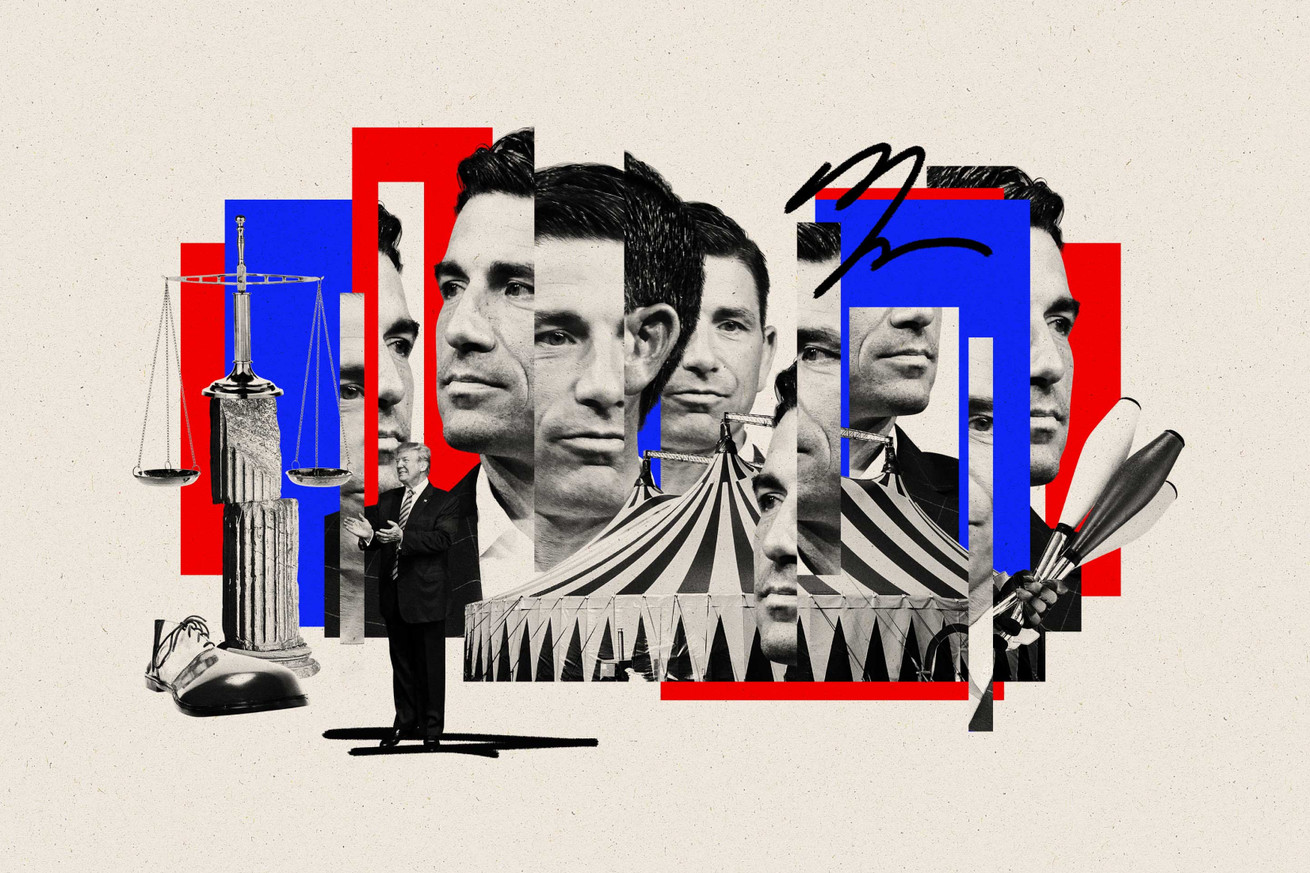 Kirstjen Nielsen's tenure as the head of the Department of Homeland Security was perhaps best known for the family separation policy at the border. The recordings of crying toddlers, the children wrapped in silver foil blankets, the detention conditions likened to "cages" — this was her legacy. Nielsen was reviled by almost everyone from the center and leftwards. Ironically, President Trump himself disliked her, in part for not being tough enough on immigration, and would eventually force her out. Nielsen would be the last legal secretary of homeland security in the Trump administration. What would follow would be a chaotic parade involving governance by tweet, a thicket of laws and regulations, incorrectly amended paperwork, and a strangely hilarious internal legal memo referencing a @DHSgov tweet as though it held some kind of binding authority. Seven months later, Nielsen's eventual successor, Chad Wolf, would take her place. It was under Wolf's direction that a motley crew of federal law enforcement — drawn from Border Patrol, ICE, the US Marshals, and Federal Protective Services — would occupy the city of Portland, Oregon, bathing its downtown district in a pea-souper of tear gas and snatching up its citizens for questioning in unmarked minivans. These brutal yet ineffective tactics were a response to the supposed "lawlessness" of the George Floyd protests in Portland. But Wolf's own lawless occupation of the secretary's seat would go largely unchecked. This is partly because Wolf was not the only one in this position. The tail end of the Trump presidency was riddled with acting officials who were no longer serving in a legal capacity. The laws that govern how these official positions get filled — such as the Vacancies Act — allow the executive branch a good deal of flexibility in appointing acting officials while the Senate confirmation process is pending. The Obama administration had, toward the end, seemingly given up on the Senate confirmation process, keeping a significant number of acting officials in key positions here and there. But the next administration went ahead and blew Obama's record out of the water and in ways that were in blatant contravention of the law. This was classic Trump: to do what Obama had been doing but a hundred times harder, without restraint or compunction. /cdn.vox-cdn.com/uploads/chorus_asset/file/23639840/VRG_Illo_5200_Homeland_Wolf_Spot_3.png) "My 'actings' are doing really great," President Trump said to reporters in January 2019. "It gives me more flexibility. Do you understand that? I like 'acting.' So we have a few that are acting. … If you look at my Cabinet, we have a fantastic Cabinet. Really good." As flexible as the Vacancies Act is, there are still limits. The executive branch has 210 days — a little under seven months — after a vacancy is created to put forth an appointee for Senate confirmation. By the end of the Trump administration, countless key appointments had run out the clock, with over a dozen government officials squatting illegally in their acting roles. Unlike the vast majority of these cases, the question of who was legally the secretary of homeland security was not governed by the Vacancies Act. The infamous 210-day limit that became so widely known during the second half of the Trump administration was not at play. (Although, if it had been, Chad Wolf — who took office 216 days after Nielsen vacated her position — would still have been an illegal acting secretary). On April 9th, 2019, Nielsen filed two fateful pieces of paperwork that would haunt the agency for the rest of Trump's term and beyond. The first was a boilerplate letter written by John Mitnick, the DHS general counsel, specifying that, "By approving the attached document, you will designate your desired order of succession for the Secretary of Homeland Security in accordance with your authority pursuant to Section 113(g)(2) of title 6, United States Code." (This, importantly, is the Homeland Security Act and not the Vacancies Act.) The second piece of paperwork was the "attached document," which amended the succession order so that Kevin McAleenan — a DHS official whose harsh approach to immigration had found favor in Trump's eyes — would succeed Nielsen, as was intended by the president. Unfortunately, Nielsen amended the wrong section of the succession order. There is no question of what Nielsen meant to do. The president, after all, had tweeted out that McAleenan would assume her role. "Please join me in welcoming Kevin as the Acting Secretary," she wrote in her farewell letter to the department. A tweet sent out by @DHSgov on April 10th showed two photos of Nielsen swearing in McAleenan. Yet from the start, McAleenan wasn't supposed to be the guy. Legally, it should have been Claire Grady, who had been serving as acting deputy secretary. On April 7th, the same day that both Trump and Nielsen tweeted that she was stepping down, The New York Times reported that Grady had told her colleagues she had "no intention of resigning to make way for Mr. McAleenan." Two days later, Grady resigned, and the path seemed clear for McAleenan's ascension. The irony here is that it would have probably been fine if Trump had used the Vacancies Act to tap McAleenan — at first, anyway. (By the time Chad Wolf took over from McAleenan on November 12th, 2019, the 210-day window had already elapsed.) But the DHS's own paperwork declared that the change was happening under the authority of the Homeland Security Act, and if it was happening under that law, one had to use a very specific succession order. /cdn.vox-cdn.com/uploads/chorus_asset/file/23639865/VRG_Illo_5200_Homeland_Wolf_Spot_2.png) Nielsen thought she had amended the succession order so McAleenan would replace her — but she had made the kind of error that haunts the dreams of anyone who's attempted to break their lease early or correctly bill their pet insurance. Instead of amending the section of the succession order that applied to cases of resignation, she amended the section that applied to her death or disability. In subsequent court decisions in Maryland, New York, California, and DC, various federal judges would conclude that McAleenan was never legally the acting secretary of homeland security. This did not seem to bother the White House very much. Trump was too busy tweeting about the illegals at the border to think about the illegals in his Cabinet. On November 8th, 2019, 212 days after he had taken office, McAleenan amended the succession order yet again to ensure that Chad Wolf — Trump's favored choice — would become acting secretary and then stepped down from office. This time, he amended the correct portion of the succession order. But the unfortunate part of being an illegal secretary of homeland security is that the things you do are not legal. Under both the original succession order and Kirstjen Nielsen's incorrectly amended succession order, Chad Wolf was not the next in line. He had been made acting head through the actions of an already illegal acting head; he was a doubly illegal acting secretary of homeland security. The Government Accountability Office called foul on the DHS succession in August 2020. In a reflection of the extraordinary chaos afoot, DHS responded to the government's own watchdog agency with an inexplicably combative letter calling the report's conclusions "baseless and baffling" and demanding that GAO "rescind its erroneous report immediately." The letter was signed by yet another Chad — Chad Mizelle — who was also one of Trump's actings, an official who was "performing the duties of the general counsel." (The general counsel who had assisted Nielsen with her resignation had since been fired by the White House, possibly because he had pushed back too many times on Trump's more legally dubious plans around immigration). The Mizelle letter included a picture of McAleenan and Nielsen, credited to the @DHSgov Twitter, as though it were proof that McAleenan had legally become the acting secretary, and ended with a strange ad hominem attack on a staffer that Mizelle claimed was the real author of the report, a junior attorney who "appears to have limited experience practicing law — having graduated from law school only three years ago." (At the time, Chad Mizelle was seven whole years out of law school). Shortly after the GAO report was released, Trump would officially nominate Wolf for the job. But the nomination itself couldn't fix the illegal succession — and in any case, the nomination never went through. For those on the outside looking in, Chad Wolf's tenure would mostly be remembered for the battle of Portland. Wolf also oversaw an increasingly hostile immigration policy. He suspended — or rather, attempted to suspend — the Deferred Action for Childhood Arrivals (DACA) program. He made sweeping changes to the asylum system that, among other things, would have disqualified many refugees fleeing domestic abuse or anti-LGBTQ persecution. "These regulations aimed to strip immigrants of basic rights to work authorization and due process," said Zachary Manfredi, an attorney with the Asylum Seeker Advocacy Project, who spearheaded litigation that tested the legality of Wolf's appointment in court. /cdn.vox-cdn.com/uploads/chorus_asset/file/23639890/VRG_Illo_5200_Homeland_Wolf_Spot_1.png) Undocumented and semi-documented immigrants — human beings who are declared "illegal" in the mainstream rhetoric of the Republican Party — face overwhelming odds. They are left to navigate an inscrutable legal and regulatory code in a language they may or may not have facility in, often with limited access to legal counsel. Their fates frequently rest on the paperwork they have or have not filed, the declarations they have or have not made. The moment they set foot on American soil, unseen timers begin a countdown. For them, their entire lives can hinge on being able to prove themselves to the great and towering machine of bureaucracy. Kirstjen Nielsen had all the help of the general counsel of the Department of Homeland Security, and she still filed her paperwork incorrectly. Years later, the Biden administration is paying for that mistake. Biden's DHS — now headed by a legal, Senate-confirmed secretary — has attempted to retroactively ratify Chad Wolf and Kevin McAleenan's administrative rulemakings; federal judges have refused to accept this maneuver. These policies originated illegally, and they remain illegal. Laws matter, and the process matters, especially when applied to an agency that inflicts a mercilessly exacting process on so many people. But these are, in the end, minor inconveniences. The court cases that have taken up the question of the legality of Wolf's and McAleenan's tenures have largely been administrative law cases brought by immigration rights groups seeking to block or overturn administrative rules on the basis that they were promulgated by an illegal secretary. These court victories matter to the immigrants who are affected by these rules, but they do not matter to Trump's illegal secretaries, who will likely not face any personal repercussions for their undocumented time in office. The actions Chad Wolf ordered in Portland in the summer of 2020 stemmed from Trump's own obsession with "lawlessness," and Wolf justified the DHS's brutality by citing damage to buildings on federal property and violence against law enforcement officers. On January 6th, 2021, a pro-Trump mob would storm federal property and attack federal law enforcement. The next day, Trump withdrew Chad Wolf's nomination for secretary of homeland security after Wolf urged him to condemn the violence at the Capitol. There had been a long and predictable lead-up to January 6th, which started with Trump's refusal to concede and his continuing assertion that the election had been stolen. After Christopher Krebs, the director of the Cybersecurity and Infrastructure Security Agency, openly stated that there were no security anomalies in the 2020 election, Trump fired him via tweet. This was maybe par for the course; Trump had spent the last four years purging various top officials at the Department of Homeland Security for being insufficiently hard-line. This is the third act, in which Chekhov's gun makes its inevitable appearance. Krebs was the director of an agency that Trump himself had created in 2018; he had served in that position from the beginning. He was also, according to the last legally amended DHS succession order, the real legal acting secretary of homeland security. |
| How the TSA created two classes of travelers Posted: 29 Jun 2022 06:31 AM PDT  I'm old enough to remember what it was like to fly before 9/11 — there were no TSA lines, there was no PreCheck, and there certainly wasn't any requirement to take off your shoes. In fact, there wasn't any TSA at all. But 9/11 radically changed the way we move through an airport. The formation of the new Department of Homeland Security and the new Transportation Security Administration led to much more rigorous and invasive security measures for travelers trying to catch their flight. This year is the 20th anniversary of the Department of Homeland Security and the TSA, and I think it's safe to say that nobody enjoys waiting in the airport security line. And in the post-9/11 world, things like PreCheck are the great innovation of the department. At least according to Dan McCoy, who is the TSA's chief innovation officer, who told me that PreCheck is "a hallmark government innovation program." But what do programs like PreCheck and the larger surveillance apparatus that theoretically keep us safe mean for the choices we make? What do we give up to get into the shorter security line, and how comfortable should we be about that? This week, The Verge launches "Homeland," our special series about the enormous influence of the Department of Homeland Security and how it has dramatically changed our country's relationship with technology, surveillance, and immigration. So we have a special episode of Decoder with Dan McCoy to see where the TSA fits into that picture. Okay. Dan McCoy, the chief innovation officer of the TSA. Here we go. This interview excerpt has been edited and condensed. You can find a full transcript further below. Nilay Patel: The founding of the TSA is connected to a very pivotal moment in my life. It was founded right after September 11th in 2001. I was in my second year of college. It was formally made part of the Department of Homeland Security when that agency was created in 2003. We are basically right at the 20-year mark of these agencies. It feels like a good time to step back and think about what it is they do, how they work, and where they can go. Let's just start with your role specifically, since I don't think most people know that TSA has a chief innovation officer. What is it that you do? Dan McCoy: So, what I do for innovation at TSA does perplex a lot of people. There are always these conceptions that I am very tech-focused and very experience-focused. A lot of government innovation groups have been really focused right now on emerging venture capital and emerging technology, and how to integrate them. I would best describe my role as chief facilitation officer for innovation. At that 20-year mark, how do you take a step back and ask, "Where do we want to purposefully innovate? How do we build the culture, the capacity, the manpower, and the assessment tools to actually let that innovation happen?" How is the TSA structured and how do you navigate that to facilitate innovation as you are describing? /cdn.vox-cdn.com/uploads/chorus_asset/file/23650153/Headshot_1x1_1.png) Transportation Security Administration Transportation Security Administration I don't know if this is a Reed Hastings line somewhere, that ideas are great, but until you move them through the process and they actually start to add value, they are just ideas. We have thousands of ideas across the TSA. What my team is doing now — and this is part of the innovation doctrine that we are rolling out — is building that pipeline of ideas and centrally locating it, so that we can identify what ideas are really going to be impactful and are getting underrepresented in the groups they are in. Why are they getting underrepresented? Is it the structure of the organization? Do we need to go drive training around design thinking, agile development, or lean model development into that specific area? We then let that natural diffusion of innovators, that 2% in that group, really take hold and say, "We are going to solve our own problems." I would say the only real innovation I have felt in the last 20 years of the TSA is PreCheck and Clear, and I'm signed up for both of them because I am a very impatient man who does not like to stand in line. Every time I go to the airport, I think, "I have allowed some amount of increased government surveillance of me because I am impatient." I am uncomfortable with that balance every time, but then I get through the thing faster and I'm like, "Well, it was worth it." That feels like the big innovation: that we have created two classes of travelers. One is okay with increased surveillance and the other is taking off their shoes. Is that something that we should innovate on? It feels like the ripest area at the customer experience that also keeps everybody safe. I am just so happy you were the first one to bring up PreCheck as an innovation, because this is something that there was a lot of conversation about when I came into TSA. "What are we doing around new technology? How are we adopting artificial intelligence and machine learning? What is our policy going forward on IoT [Internet of Things]?" It had me saying, "Can everybody take a step back and acknowledge that the biggest breakthrough innovation we have had since inception is TSA PreCheck?" It is a process innovation, it is a network innovation, and it is a partner innovation. It is not tech-focused in how it is delivered, but it adds a tremendous amount of value to the traveling public and to TSA operations. We have a whole other class going through the checkpoint that we have additional information around. I understand your point about giving up more information, and the unease around it. We have worked so closely with civil liberties groups through PreCheck in the data collection we are doing. As we are doing more around biometrics and mobile driver's licensing, that trust component is front and center in how we are rolling that out. That is second only to, "is it increasing security?" How do you make PreCheck biometric only, with fingerprints and facial matching? I think it is a little bit similar to Clear, as you mentioned a second ago. Now when Nilay walks up with even less patience, the facial match is done and he can go about his day. You are not divesting any form of identity going forward. Building around that is a real opportunity for us to innovate. I think the TSA PreCheck program is a hallmark government innovation program. How do you think about that balance? You only talked about it a little bit. If I step back — and I am old enough to remember what flying was like before September 11th — the goal was not tons of surveillance or identity verification. It was, "It would be cool if you didn't have knives and guns on the plane." How do you get back to that state? I look at the increased amount of surveillance as a net negative. I think it is fascinating that you are talking about it as a net positive, like, "We will do more surveillance and your life will be easier. We, the government, will be able to trust that you are a secure person because we know you have not bought a bunch of fertilizer in the last six months." What PreCheck is effectively doing is keeping tabs on you, so that when you get to the airport it knows your profile is safer than average. How do you get back to that place of, "What we are going to focus on is the scanners and the detection of what is in your bag. We do not have to surveil you, we just have to know that you in this moment do not pose a threat." This is definitely a hard one to answer from my part. From the innovation perspective, there is intelligence and analysis in the backend that is doing a lot of this work. We have partnerships with the FBI for those background investigations that you are talking about. If you ask an end user to design the best app, they want it to look slick and be frictionless as far as mobility and application development. That is only until you probe them with, "Well, do you want your data to be secure? Do you want to know that you are not being tracked?" I think that is what I equate the TSA process to. Most of my life, TSA has been the way that we go through the airport. We want to maintain that level of security that we know we need in our post-9/11 environment. What we want to do is make sure that we are building that level of clear trust with passengers, that this is the data we have and we are working off of. What I think most passengers want is less friction going through the process and the backend understanding that data is safe and secure. If I can drive a point to your question, I do not know if we are ever going to go back to only a goal-line defense of screening for threats. We have seen the benefits of a multi-layered approach, which is to disrupt, deter, and detect. "Detect" is our goal line; it is an interception in the end zone on something that could have gone awry. The "deter" is that we have new technology, we have new capabilities, and we have trained officers. You probably should not try anything in the aviation space. Then the "disrupt" is the whole national security ecosystem saying, "We should think about what attack vectors and what vulnerabilities may be targeted, because we want to disrupt those where they are." I hear that you want to deter things early, but the criticism of the TSA has always been, "Well, that is just a lot of security theater and you are just scaring the bad guys away with ineffective things." I just wonder, from your perspective as the innovation officer, do you ever think, "We can innovate on that and maybe get through the very difficult balance of privacy and security. Maybe we can find ideas from throughout the agency to make that equation better for people." I think it has become more intrusive over time. That's fair, and it is the public's take on the way we are working today. My hope is that we can take a different approach to what you have laid out. Can we shift the scales back one way or another? I am not the decision-maker closest to that problem to know. What we want to have happen is that someone in that area has the lens, that they are our innovator in that space, to go, "Maybe it is time to disrupt this a little bit, or at least shift the mission model a little bit. There has been some change that we have seen at another agency in the industry." FinTech is a really data-secure ecosystem where you give up a lot of data. If there is a change there, maybe it can apply to what we are doing. Our hope from the innovation team is that those people exist, are educated on what we want them to do, and are empowered to do it. We hope that those new approaches that are beneficial to the whole agency and traveling public will take place where they should, in that business unit. I know Clear has a database of faces; I don't love it, but again, I am impatient. At least they are a private company. If they do something wrong, people can sue them. It feels like there is that check where if Clear blows it, they can lose their contract and that is existential for them. TSA doesn't get to lose its contract. If you give the government the database of faces and they screw up, it feels like the remedies are less existential. We are doing it in a process right now. The first step in this direction is our one-to-one matching. You take your ID and insert it into the machine, and the face on this ID is Nilay. We match that Nilay has presented himself, so we are good here. That is our first level. Over time, we are moving to a one-to-end match, which today is in partnership with Customs and Border Patrol. They have a one-to-end system for reentry into the United States that they use that's in a pilot phase. This is why the innovation process is so important, to not only get the technology right, but to get that trust right. We are in a pilot that we are constantly gathering feedback from civil liberties groups. We are constantly getting feedback from industry standards mechanisms, like the International Standards Organization (ISO) and National Institution of Standards and Technology (NIST), where they are coming in and assessing the trustworthiness of this system. You are right, if there is a breach at Clear, they are going to lose customers and that is going to be existential. We don't necessarily have that, but what we do have is that those failures become incredibly public. We are aware of that. Dan McCoy is the chief innovation officer at the United States Transportation Security Administration, or TSA. Welcome to Decoder. Thank you for having me, Nilay. I am a listener, so this is exciting. The experience is way different than listening, so you are in for a ride. It's a great time to talk to you. The founding of the TSA is connected to a very pivotal moment in my life. It was founded right after September 11th in 2001. I was in my second year of college. It was formally made part of the Department of Homeland Security when that agency was created in 2003. We are basically right at the 20-year mark of these agencies, the DHS and the TSA. It feels like a good time to step back and think about what it is they do, how they work, and where they can go. Let's just start with your role specifically, since I don't think most people know that TSA has a chief innovation officer. What is it that you do? So, what I do for innovation at TSA does perplex a lot of people. There are always these conceptions that I am very tech-focused and very experience-focused. A lot of government innovation groups have been really focused right now on emerging venture capital and emerging technology, and how to integrate them. I would best describe my role as chief facilitation officer for innovation. At that 20-year mark, how do you take a step back and ask, "Where do we want to purposefully innovate? How do we build the culture, the capacity, the manpower, and the assessment tools to actually let that innovation happen?" That could either be at the local airport level or based out of headquarters where we are now, but my job isn't necessarily to run every innovation project at TSA. There are some that we will obviously do because it needs the protection, top cover, and resources of my office, but what we really want to do is start to educate and empower our workforce all the way down to the officer, our international staff, our cargo screeners, and more. We want to say, "Hey, if you guys have an innovation, see something that you want to fix, or you have a problem statement that is dropped on your lap, we want to give you the tools to fix it." A lot of these things have been challenges for years and now is the time to emerge and say, "What can creativity, design, and invention do to help solve that?" I always joke that Decoder is fundamentally a podcast about org charts. You are describing a problem that I think every large organization has. There are a lot of decision-makers, a lot of priorities, and a lot of ideas that can improve things at every layer of the company that get lost in inertia or bureaucracy. How does that play out for you? How is the TSA structured and how do you navigate that to facilitate innovation as you are describing? I don't know if this is a Reed Hastings line somewhere, that ideas are great, but until you move them through the process and they actually start to add value, they are just ideas. We have thousands of ideas across the TSA. It always surprises people that as a regulator-operator, we have the checkpoint which everybody is aware of and everybody interacts with, but our regulatory scope extends into multimodal pipeline security and different parts of the aviation sector. The ideas canvas a really large ecosystem of transportation security. What my team is doing now — and this is part of the innovation doctrine that we are rolling out — is building that pipeline of ideas and centrally locating it, so that we can identify what ideas are really going to be impactful and are getting underrepresented in the groups they are in. Why are they getting underrepresented? Is it the structure of the organization? Is it a really operational-focused org, that culturally does not like to take risks or do things outside the standard procedure? Is it that they just do not have the tools to necessarily do it at the local level? Do we need to go drive training around design thinking, agile development, or lean model development into that specific area? We then let that natural diffusion of innovators, that 2% in that group, really take hold and say, "We are going to solve our own problems." My role in that facilitation realm is to take the macro view of all of the challenges to innovate at TSA, and start to see where it is really getting bogged down so we can focus on removing those barriers. You are right, we have a lot of operational capacity and it generates a lot of ideas that we should be working to innovate around. You are using a lot of familiar language around agile development, faster processes, or turning ideas into products. What is your background? How did you become the chief innovation officer of the TSA? Prior to joining TSA, I was at a consulting firm where we were focusing on moving into new businesses and new markets with emerging technology. We said, "Government isn't necessarily doing the best job right now. There are these strong pockets to adopt new VC-backed technology and emerging tech, so how do we help facilitate that process as a consulting group? Is it through white-labeling a solution? Do we provide startups with the insight and cloud space to migrate to an environment that the government is willing to accept? How do we move startups into that space and help them get government clients?" That was really where I started to understand, "Oh, there is this emerging tech space that has so much applicability in government." What's shifted over the last 20, 30, 40 years is that as much buying power as the government has, there is emerging technology that does not necessarily look at us as their main client. Their 10-year roadmaps — their addressable market to keep them on the horizon for 10 years, to keep them relevant — do not include us. How do you now start pulling that technology in? That is where I started, but there are so many different concepts of what innovation looks like in government. There is just pure innovation management — ideas, tools, and education, and there are niche software factories, with idea platforms, crowdsourcing, ideation, and hackathons. For me, it was this idea of, "How do you bring that all together into one innovation portfolio? What agency really has the authorities in and of itself to go build that?" Luckily, the TSA is one of those agencies. We have a lot of autonomy given to our administrator to build things like that. It was an amazing opportunity to come in and say, "How do we build that really big innovation portfolio? How do we test what elements work better for us and which ones do not?" We have a pretty unique mission that we are going through and testing those different liabilities now. I have to ask the big Decoder question. How is the TSA structured? The main structure right now, I would say everybody interacts with the field. We have four large groups, two of which are generally support groups. There is operation support and enterprise support. If you think of it just by definition, the main focus of operation support is on the field, making sure that the checkpoints have all the new technology, intelligence, vetting services, things like that. Enterprise support focuses on IT and human capital all the way down the line. The mission focus — and where most people will likely interact with the TSA — is our security operations, which is in the field. That includes the folks that work in cargo screening and those who work multimodal. Any time you see a team's TSA badge at Metro stops or Amtrak, that is that group. Our second operational group are the federal air marshals, who came over following the cut to TSA. My team sits within our front office. The key learning point from the first pass of innovation at TSA — I have one predecessor — was that the group has to be as close as possible to the administrator. A lot of times what we are doing is disruptive. Even if you look at mission model innovation, which is akin to business model innovation, there is not always an appetite to push back against the standard procedure. It was pretty critical that we sit as close as we can to leadership for the projects for process development and new technology development, so that we have that background protection to get done what we need to get done. Which is an innovation in and of itself. It's end user value, but sometimes it's a little disruptive to the standard way that we do things. You talked a lot about how you facilitate things, how you make things go, and how you are building models for innovation. What kinds of decisions do you make and how do you make decisions? I know this is an old trope I hear people say on Decoder all the time, I try to make as few decisions as possible. Oh yeah, this is the "get out of jail free" card. It is. "I run the whole place, but I don't actually do anything." The team is the heart, it really is. It gets back to that idea of chief facilitation officer. The things that I decide on a daily basis are really working in concert with the rest of the TSA in my team. We kind of stole this idea from agile development. Specifically for the innovation team, they will come to me with blockers, and for intent. They might say, "Hey, we outlined this new thing that we want to get done. We have done customer discovery and we know it is going to add impact, but we are running into this barrier. Do you want to come in and try to remove it? Do you want us to work around it? Let's have a discussion around that." Not all of the decisions around innovation should be coming to me, which is good. There is an old Defense Innovation Board publication on what a chief innovation officer does. It hits on this notion that a chief innovation officer pulling in all innovation projects defeats the purpose. Having one choke point for innovation really defeats the purpose of why you would want innovation throughout an ecosystem and why you would want it throughout your organization. I try to limit the decisions I make. If it comes to me it's because we have hit a barrier, we have genuine enthusiasm around something, or it really does need some type of protection from my level. We might say, "Let's keep this on the tracks and make sure it happens," or we might make the decision to dial it back quickly when we need to. This is the third time you have used the word "protection." I think this is the first time anybody on Decoder has described their job as protection inside of an organization. What specifically do you mean by "protection?" There are the three types of innovation that we look at. There is continuous process innovation, which is how we make things move a little bit better along the standard path and our standard op model. There is business model — or in our situation, mission model — innovation, which is how we may deliver in different ways. Then there is disruptive innovation, those ideas that are either new trainings or new opportunities that are outside the standard scope of TSA. How do we make sure that those take root? I have probably sounded a little pejorative about it. What we are really here for is something like a design-thinking training, which is not necessarily within the standard operating scope of TSA but we have recognized the value of. How do you make sure such a program is resonating well with the workforce? How do you make sure that the outcomes of it still have the ability to grow, even when they go back to their home organization or move outside the innovation scope? How do you make sure that it takes root? That is really what I meant. It probably sounds a bit worse than it should, I apologize. It makes sense. I think the idea that someone close to the boss protects a project from being killed is pretty normal in most organizations. I would say the government — whether rightly or wrongly — is often perceived as having more inertia and more resistance to change. I would also connect that to the idea that it is hard to know if the government is doing a good job. The big tech companies are public — you can see how many iPhones Apple's sold, you can see what the stock price is doing. There are just all these public metrics of success or failure in a way the government cannot really provide. I think my key question here is how do you measure success at the TSA? How do I know it's working? I think every government group says that from an operational perspective, our failures are public and our successes are quiet. From the TSA perspective, as a whole, we ask if things are moving as they should. We break it down to our three main components: deter, detect, and disrupt. Are we doing that successfully? Are we disrupting attacks before they happen? Are we detecting anything at the checkpoint as our last line of defense? As those are moving along, I think that is the metric of success — at least for the public trust — that most resonates. We are catching firearms and potential explosives at the checkpoint. We do not want to get ahead of ourselves and sterilize the process for those KPIs and OKRs (key performance indicators and objective key results) we are trying to figure out right now for innovation and then have it end up as just, "Oh, you are going to do these five things." As we sat down to put together our innovation doctrine — which is a multifaceted, new communication method to the field — the big thing we wanted to put in there was that these are not hard and fast rules. This is not a prescriptive way to do innovation. It is guidance. It is the idea that if you do these things, it will start to happen organically. What we look at as the success of that pipeline is ideas to velocity and volume to velocity. How many good ideas are we curating and then moving into the next phase? How quickly are we moving those ideas through the pipeline? Some of those are ideas that we kill. We may say, "This doesn't have a fit in our enterprise. We don't think this will actually add value." We may think that it actually opens up a new security vulnerability. At the end of the day, we are still a security agency. It sometimes makes it hard to innovate in highly regulated spaces. We do have ideas that fall out of the pipeline, plainly because they open up some new risks that we were not anticipating. Our metric of success is how many of those ideas are getting life and getting oxygen and moving through this common process. We are not telling people exactly, "This is how thou shall innovate." We are saying that if you do these activities, you will naturally move into an innovation space. You mentioned the three pillars were, "deter, detect, and disrupt." Yes. That sounds pretty good. You deter the bad guys, you detect them, and if they try to do something bad, you disrupt them. Are those the key metrics? Do you measure how well that is going? Is there a dashboard that is like, "15 deterred, 20 detected, one disrupted?" It is a lot more micro than that. That is the macro view. This is where the divergence happens. Everybody listening should be really happy that there is still the operational side of the house that is doing the day to day, and then there is the innovation side. We do kind of share people, problem statements, and ideas back and forth, but that "deter, disrupt, detect" is really in the larger part of the TSA — our 60,000-person screening force — for those daily activities. I do not have a lot of insight into that. What we are doing is making sure that technology and processes are in place to allow people closest to the problem to innovate around and solve it. Then they naturally move it into transition where it does get refactored into the rest of the organization, which is again, mainly focused on those three elements. Let's talk about the actual experience of the TSA and how it might be innovated over time. This is going to be unfair, so I am just pre-apologizing for an unfairly reductive description of the airport. Oh no. I would say the only real innovation I have felt in the last 20 years of the TSA is PreCheck and Clear, and I'm signed up for both of them because I am a very impatient man who does not like to stand in line. Every time I go to the airport, I think, "I have allowed some amount of increased government surveillance of me because I am impatient." I am uncomfortable with that balance every time, but then I get through the thing faster and I'm like, "Well, it was worth it." That feels like the big innovation, that we have created two classes of travelers. One is okay with increased surveillance and the other is taking off their shoes. Is that something that we should innovate on? It feels like the ripest area at the customer experience that also keeps everybody safe. I am just so happy you were the first one to bring up PreCheck as an innovation, because this is something that there was a lot of conversation about when I came into TSA. "What are we doing around new technology? How are we adopting artificial intelligence and machine learning? What is our policy going forward on IoT?" It had me saying, "Can everybody take a step back and acknowledge that the biggest breakthrough innovation we have had since inception is TSA PreCheck?" It is a process innovation, it is a network innovation, and it is a partner innovation. It is not tech-focused in how it is delivered, but it adds a tremendous amount of value to the traveling public and to TSA operations. We have a whole other class going through the checkpoint that we have additional information around. I understand your point about giving up more information, and the unease around it. We have worked so closely with civil liberties groups through PreCheck in the data collection we are doing. As we are doing more around biometrics and mobile driver's licensing, that trust component is front and center in how we are rolling that out. That is second only to, "is it increasing security?" I always look at TSA PreCheck as an amazing opportunity to keep pushing innovation forward. What can you do in this space? Recently, a PreCheck lane has opened up in the Bahamas, which is another new innovation to move the boundaries of TSA out a little bit. Now we are doing our level of screening at another location, and we are allowing customers that option as they are leaving the Bahamas and repatriating back to the US. How do you make PreCheck biometric only, with fingerprints and facial matching? I think it is a little bit similar to Clear, as you mentioned a second ago. Now when Nilay walks up with even less patience, the facial match is done and he can go about his day. You are not divesting any form of identity going forward. Building around that is a real opportunity for us to innovate. I think the TSA PreCheck program is a hallmark government innovation program. How do you think about that balance? You only talked about it a little bit. If I step back — and I am old enough to remember what flying was like before September 11th — the goal was not tons of surveillance or identity verification. It was, "It would be cool if you didn't have knives and guns on the plane." How do you get back to that state? I look at the increased amount of surveillance as a net negative. I think it is fascinating that you are talking about it as a net positive, like, "We will do more surveillance and your life will be easier. We, the government, will be able to trust that you are a secure person because we know you have not bought a bunch of fertilizer in the last six months." What PreCheck is effectively doing is keeping tabs on you, so that when you get to the airport it knows your profile is safer than average. How do you get back to that place of, "What we are going to focus on is the scanners and the detection of what is in your bag. We do not have to surveil you, we just have to know that you in this moment do not pose a threat." This is definitely a hard one to answer from my part. From the innovation perspective, there is intelligence and analysis in the backend that is doing a lot of this work. We have partnerships with the FBI for those background investigations that you are talking about. If you ask an end user to design the best app, they want it to look slick and be frictionless as far as mobility and application development. That is only until you probe them with, "Well, do you want your data to be secure? Do you want to know that you are not being tracked?" I think that is what I equate the TSA process to. Most of my life, TSA has been the way that we go through the airport. We want to maintain that level of security that we know we need in our post-9/11 environment. What we want to do is make sure that we are building that level of clear trust with passengers, that this is the data we have and we are working off of. What I think most passengers want is less friction going through the process and the backend understanding that data is safe and secure. If I can drive a point to your question, I do not know if we are ever going to go back to only a goal-line defense of screening for threats. We have seen the benefits of a multi-layered approach, which is to disrupt, deter, and detect. "Detect" is our goal line; it is an interception in the end zone on something that could have gone awry. The "deter" is that we have new technology, we have new capabilities, and we have trained officers. You probably should not try anything in the aviation space. Then the "disrupt" is the whole national security ecosystem saying, "We should think about what attack vectors and what vulnerabilities may be targeted, because we want to disrupt those where they are." Innovation in those responses are one for one, in that the agility that we maintain is the only unwavering advantage we have going forward. We want to make sure that we are agile in developing new solutions and addressing new threats, that we are getting them out as fast as possible, so we can say security is growing in capability. Any time we see that this is a decision for somebody who is not Dan McCoy, chief innovation officer, we can peel back from some of those vetting services. I am sure that is always in discussion, but it is not something I'm really read into. It is not something I think a lot of people would even let me into the conversation for. The reason I ask you directly is because innovation is not broadly just about new technologies, though I certainly want to talk about that as well. It is not just about machine learning and facial recognition, but it is how we do things. I would put innovating the balance between civil liberties and security squarely in that, which is the age-old tension of government. How many misattributed quotes about civil liberties and security can we listen to in our lives? I hear that you want to deter things early, but the criticism of the TSA has always been, "Well, that is just a lot of security theater and you are just scaring the bad guys away with ineffective things." I just wonder, from your perspective as the innovation officer, do you ever think, "We can innovate on that and maybe get through the very difficult balance of privacy and security. Maybe we can find ideas from throughout the agency to make that equation better for people." I think it has become more intrusive over time. That's fair, and it is the public's take on the way we are working today. For what we have talked about, my role isn't necessarily injecting my presence into that space. How are we rebalancing this? I can't say I have been in a lot of the conversations around what the future of biometric looks like. What does the future of mobile look like? What are we doing with some of our background vetting systems as a party to those? My hope is that we can take a different approach to what you have laid out. Can we shift the scales back one way or another? I am not the decision-maker closest to that problem to know. What we want to have happen is that someone in that area has the lens, that they are our innovator in that space, to go, "Maybe it is time to disrupt this a little bit, or at least shift the mission model a little bit. There has been some change that we have seen at another agency in the industry." FinTech is a really data-secure ecosystem where you give up a lot of data. If there is a change there, maybe it can apply to what we are doing. Our hope from the innovation team is that those people exist, are educated on what we want them to do, and are empowered to do it. We hope that those new approaches that are beneficial to the whole agency and traveling public will take place where they should, in that business unit. Let's talk about some of the new technologies here, because I think that might be a more useful way to talk about this balance I have been poking at. You mentioned facial recognition and biometrics several times. The dream is that you show up at the airport, which is an evolving system that knows who you are, and you just go about your business and get on a plane. That would be one dream, but that seems to require a massive government database of faces. I don't know how you solve that problem. I know Clear has a database of faces; I don't love it, but again, I am impatient. At least they are a private company. If they do something wrong, people can sue them. It feels like there is that check where if Clear blows it, they can lose their contract and that is existential for them. TSA doesn't get to lose its contract. If you give the government the database of faces and they screw up, it feels like the remedies are less existential. How do you balance that as you think about, "We have to go out and find facial recognition vendors. We have to go build a system. This is the next generation of the TSA." We are doing it in a process right now. The first step in this direction is our one-to-one matching. You take your ID and insert it into the machine, and the face on this ID is Nilay. We match that Nilay has presented himself, so we are good here. That is our first level. Over time, we are moving to a one-to-end match, which today is in partnership with Customs and Border Patrol. They have a one-to-end system for reentry into the United States that they use that's in a pilot phase. This is why the innovation process is so important, to not only get the technology right, but to get that trust right. We are in a pilot that we are constantly gathering feedback from civil liberties groups. We are constantly getting feedback from industry standards mechanisms, like the International Standards Organization (ISO) and National Institution of Standards and Technology (NIST), where they are coming in and assessing the trustworthiness of this system. I have always said this of a lot of things in emerging tech. If it isn't trustworthy and you are going to lose participants because of that, then it isn't effective. We need to ask if facial recognition and AI is trustable, securable, and locked up for cyber vulnerabilities. If it isn't, then we are putting an ineffective system into the field. We would not do that when it comes to image scanning with CT, and we would not do that when it comes to on-person screening. Why do we think we would do it any differently with AIML or with facial recognition? If it does not hit that level of trust, that level of resiliency, then it is not effective and it doesn't get fielded. You are right, if there is a breach at Clear, they are going to lose customers and that is going to be existential. We don't necessarily have that, but what we do have is that those failures become incredibly public. We are aware of that. Again, we are making sure that this is getting piloted. We are gathering all the right information around it and we are working with groups dedicated to trust and resiliency. Until all of that lines up, if it is not effective, it doesn't get fielded. You mentioned earlier the concept of protection. You have this new pilot program that is going to do more biometrics. You know you have to trust it, but you need to protect any project or organization that gets it moving. At the same time, to make something like biometrics and facial recognition trusted, they need to be wildly transparent. There is already attention with groups like the ACLU, which is filing lawsuits about facial recognition records and how the systems work. You are never going to get started if you know the first thing that is going to happen is a lawsuit. You are never going to get all the way to the finish line, and be as transparent as you think you need to be to gain the trust, if releasing the documents results in bad faith attacks or something. For a government agency, that seems like a really difficult problem. How are you thinking about that? It is an incredibly hard challenge. Maintaining that trust and the operational effectiveness of the program with our passengers — mainly our constituents, the rest of the US citizens — is incredibly important, but moving to this space does increase the security outcome that we are looking for. The promise of TSA is that the security is better today than it was yesterday, either through lessons learned, new technology, or enhanced processes going into effect. It sits right on that edge where we know the security benefits of biometrics. From our intelligence groups, we know that moving into this space we yield some type of security benefit. Actually, can I just interrupt you? Can you give me the elevator pitch for the security benefits of biometrics? We are moving to a place with technology that matching a face by a machine versus a person is starting to be better. For recognizing counterfeit documents, we are moving into a place where machines are doing it better. The biometric component adds that extra level of security that you are binding it to that document. I understand the framework here, which is deter and detect. Why does that step confer additional security to me on the plane, that you know who everybody on the plane is? What that has to imply is you have also surveilled all those people and know who they are, as opposed to just making sure there are no dangerous materials on the plane. I'm not sure exactly how much of this I can get into. I am really bad at not knowing exactly what I can talk up to and then going past that line. It'll be fine. It's just you and me, man. It's only a few people that listen every week. That matching works a little bit better to make sure that the secure flight scan and who we are vetting against matches the person presenting themselves. Biometric is better at that than the traditional matching that we have today. It is really, for now, only a conversation around PreCheck or one-to-one match with the ID. I can get more of this from people way smarter on it. They send me out just smart enough to get myself into hot water, but hopefully enough to at least make it resonate with the public. It adds a security benefit to match the traveler to the vetting that we have done against them. I don't think this is controversial at all: If you are saying there is a security benefit to knowing who everybody on the plane is, then you have to know who they are. You can either say, "We have a block list or we have a no-fly list. We are going to make sure nobody on the no-fly list comes through." Or you can say, "On the margins, we have surveilled everybody enough that we know all these people are safe and we know who they are." So Nilay shows up at the airport, and we scan his face. We have some database of information about his behavior that says, "Even though he has a bag full of batteries, we are going to let him on this plane." I always have a bag full of batteries. That is what that necessarily implies. I don't think that is a controversial statement, that authenticating everyone's identity allows you to then make sure they are either not on the bad list, or that you understand that the risks are low. I would agree with that. If I missed that in your initial question, I apologize. Understanding who has made it to the sterile side is critically important for us. That now transitions to not just workers at the airport, but yes, folks on the flight. Understanding who has gone through and who is on the flight is a security requirement in the environment that we live in today. Then I guess my question is if you can add biometrics, how do you let me — somebody who is worried about it — know that data is private? As you add vendors and software and security, that is a pretty complicated stack of things. You are personally trying to drive innovation at all of the layers of that stack, so things are changing. We are adding more computers to something and computers are a little dicey. How do you build my trust in that entire complicated network of computers? We are adding computers to everything. I mean, what is a car today, but just a driving piece of chips? That is a Decoder greatest hit. I mean, cars are computers now, just on wheels. Technology is naturally matriculating into more of the checkpoint, as if it was not already there. That is good from the security standpoint. As for the trust element you are hitting on, I can say in our pilot programs that we are running that this is back to grassroots. This is communications with the public as they go through. There is always the opt-out version for biometrics, that is very clear. Our identity management team has worked with standards boards, they have worked with trust teams like the ACLU, to say there needs to be that opt-out strategy. That is well documented when you go to one of our pilot sites today. The other assurance is that we just need to verify who is making it to the other side of the sterile area. All of that information is gone the second you step away from the terminal. The picture of you that is captured on that device, we don't need to save it. We have what we need to get, which is that Nilay presented himself, it was him, he is on a plane later today, and we know he is on that plane because 72 hours ago, we knew that he was going to get on that flight. All we need to know is that you have now been granted access to the sterile side. What is next is that continued layered detection apparatus. While it is odd that he has this bag of batteries in his carry-on bag — most of us have moved to like a rat's nest of cords but he wants batteries — he can have them as long as they are not on the prohibited items list. Moving into either a walk-through metal detector or advanced imagery technology, does he have anything on his person? It's that layered approach. We need to know you have entered the other side and we have matched you to the person we expected to be showing up today. We do not need the facial recognition or the background. The algorithms will be worked out through commercial vendors who are doing a lot more in algorithm development and facial recognition. Not necessarily for some of the other components of TSA that are a little bit more owned and operated by us, but for the facial recognition part, all of that data is gone the second you step away from the terminal. It feels like once you add a step to the process, the step never goes away, even though you are adding more steps. I'll just ask directly. Let's say we assume there are facial recognition biometrics at every airport, can people stop taking their shoes off? Layered approach. You still need the shoes? I knew it was coming. This is actually where we are moving to and this is the promise of the innovation team, the promise of the technology working on. We have a pilot program today. We have had an amazing partnership with one of our national laboratories to start rolling out a shoe scanner. The convenience of PreCheck today is that you are giving up some of that information so that you can have these conveyances as you go through the checkpoint. We are moving to make enhancements to the standard checkpoint as well. Shoe scanner technology is very nearly on the horizon, pending year-over-year budget requirements from the Hill. That is something that I hope will be coming out probably within the next two to three years, at least in its pilot phase. We are moving away from AT, which is our current X-ray machinery, and moving into CT, which is computed tomography. That gives us a 3D rendering of the bag, and it gives us a lot more insight into what is in it. The core idea of moving to all of these technologies is that we want to provide a better environment for the officer to apply their main skillset, which is the security and assessment that we train them on. All this new technology will also mean that passengers will start to see some changes as they come through, as well. CT opens the door for fewer items on the prohibited items list. I don't know exactly what that is going to look like, that is a risk calculation that gets done by other parts of TSA. Moving in that direction, and in bringing in new and improved technology, we will start to have people potentially leaving their shoes on. Hopefully one day, water bottles come through with you, because we will have better technology to scan them. I think one thing everybody should remind themselves about TSA is that we do not do all of this because we really want to. These actions are based on historical threats and attacks that we have had. We are always looking to make changes to that, both for the officer benefit and the traveling public benefit. It does seem like there was one shoe guy and now we are all taking off our shoes. There have not been other shoe guys. It's hard to attribute. Everyone knows the shoes are going to come off, so maybe the shoe guys are deterred, but it seems like the one guy made everybody take off their shoes forever. Is there a calculation in your innovation framework that says, "We are spending too much time here. We can get the time back elsewhere and potentially be safer and more effective." There are changes that we look at, of, "Where is there a model shift?" I think this would be one of them. If we make a change in the way we conduct business, there will be a benefit. To your point about the shoe bomb, I can't say with positive or negative certainty or confirm any of this, but there was one public shoe guy. This is something I think Secretary Buttigieg said when he was on, that our successes are quiet. There was one public shoe guy, there is still the need for the shoe scan. Within the innovation process that we are looking at, what has been asked of me and our leadership and where I think it goes, is we want innovation at every level. There is business model innovation that should not be living with me, it should be living in the business. People at that checkpoint, people in that space, are always thinking about, "Should we be making a change here to increase security or passenger efficiency? Has some type of threat vector shifted, such that this is no longer such a requirement going forward? Can we make this change? Yes, no?" That is being discussed within the innovation doctrine framework, but it is not something I necessarily prescribe directly as a project that we get involved with. The challenging thing with all new technologies, especially ones that surveil people, is that you have no idea if they work equitably or fairly until you deploy them. Facial recognition is actually a great example. There are a lot of cases where we see facial recognition systems just have challenges with people of color. Yep. Seems to be down the line. Where are you balancing that out? Where are you saying, "In our pipeline, over the roadmaps we have, there has to be a checkpoint where we say we have enough data and we know this is fair." That is the pilot phase that I alluded to before. We have what the teams classified as the "triangle of trust" with mobile drivers' licenses (mDL) and biometrics going between all of the groups that are involved with it — the TSA, the issuing authority, and the relaying party. That is in the specifics, but it gets back to that core point where if it is struggling with people of color or different genders, then it is not effective. We do not want to ever field an ineffective solution that is not going to yield the value that we aspire for it to, or is actually going to degrade what we are doing today. With that knowledge going into it, if this does not work on a large portion of the population, then it is not actually going to be effective in the field. It is going to produce longer wait times and the queues will back up as the machine fails in front of us. We will then have people divert to the standard process, we will have slower throughput time within the checkpoint itself. There is a lot of attention paid to how effective this platform is at actually increasing passenger throughput and increasing match rates. That is really what we are looking at: Is this a mechanism not only to increase security, but is this also a mechanism to decrease queue wait times and increase passenger throughput? A lot of attention is paid to that by the identity management team that is rolling it out. I think they published an identity management roadmap where this is very clearly addressed. How do we make sure it works for everybody? At the end of the day, we still serve everybody. Again, this comes back to trust. Do you ever say, "In order to move faster, to get more new ideas off and running, to make things smoother, and to keep people safe, we should talk about that more?" My experience with TSA — and I think this is most people's experience with TSA — is that it's still fairly opaque. You still look at the one checkpoint. I will just tell you my personal experience. I fly with my wife and kid. She is a white lady, and I definitely get more random screens than she does. It's like a joke now with us. I do not know if the data is accurate. That is obviously an anecdote and I do have the bag full of batteries. I'm like, "I have a drone in my backpack. It feels like I'm going to get stopped." That is still the perception, that I have brown skin and tend to get stopped at the checkpoint more than my wife, who has white skin. How do you combat that as you roll out technologies that have these known problems in their deployment in the early stages? How do you combat the civil rights organizations in a more adversarial posture with you? I will hit on the latter point, but I do want to steer back to directly answer your question. I don't know if I would call it adversarial. They have a position and we want to be as close to that position as we can. It is a partnership. They understand our mission scope; they understand where we are headed and why the TSA was born. I don't like the idea of calling it adversarial, though it is a perception that I know people have. I view it much more as a partnership, where they are bringing the balanced perspective that we really do want to hear about these situations and about building trust. To your point around transparency, there are two main elements in the innovation doctrine we laid out, which is soon to be published across the ecosystem in the field. One is transparency. How are we making decisions around where we invest capital? How are we making decisions around what screening we do? How are we making decisions around our people movements and our staffing? All of that needs to be a little bit clearer in our decision framework, because it empowers more people in TSA and around TSA to also be transparent. This is the expectation; this is how we expect you to act and deliver. This is sometimes difficult, it is really familiar in industry and in tech, but failure has to be an option and available for us. "Move fast, break things" isn't exactly how we can operate, but we need growing room to pilot and say, "This did not work, and here is why. Let's pivot. This also did not work. Here's why. Let's pivot." In government, that is sometimes really hard. Your mission is aligned to Six Sigma, or your mission is aligned to zero negative outcomes, but that holds innovation back. We have to be able to cleanly run pilots and admit when something did not work. But all of our pilots need to be structured so that they are not driving such a negative impact that it damages the trust that we are trying to build, nor has a negative security outcome. It is nuanced, but how we run pilots is incredibly important within TSA. We need to be hitting that balancing act of effectually moving innovation forward, but allowing failure to happen in a safe, enclosed environment. I want to come back to the notion of the civil rights organizations as partners versus adversarial. I'm describing them as adversarial because I think that is the natural relationship that you want, the harsh external critic that is really focused on one narrow aspect of the balance. You are describing them as partners. Do they think they are your partners? I'm not going to move into that direction. I would hope that they would, but it is a fair question. My first thing I learned moving into TSA — though I had knowledge of it in the past — is how expansive this entire transportation system is. There are airport operators, civil rights groups, local law enforcement, tech vendors, the concessions groups within airports, multimodal. There are so many people involved that at times we do have to de-conflict something. It might be Pollyanna to think that everybody is a partner for us, because we all want to move in the right direction and we want it to be as effective, trustworthy, and secure as it can be. That is Dan's opinion, that everybody we work with is a positive partner as we try to innovate forward in this space. One of the big decisions that an agency decides the TSA can make is how to spend money, and in particular, what kinds of technologies you might spend money on. You said at the beginning, there are a lot of startups who might not know that you are a potential customer, but I'm looking at the numbers here. You mentioned the computed tomography scanners; that is a $781 million contract that got delivered to one company. Are you saying, "Okay, I am going to put out RFPs. Here is a capability we want. Someone will say yes and we will buy that one." Or as the innovation officer with your team, are you looking at the bleeding edge of tech and saying, "Actually, we might be a customer for you. We just don't know yet." Or is it both? How does that work? It is more the latter today, but it is both. The way that the government strategically does big acquisition purchases right now is years out from when we make that decision. This award has been the generation of 10 years of thinking, "Where is the technology going? How are we elevating the technology readiness level, the TRL? How is it getting done through R&D investment into the science? How is that being commercialized with other vendors?" My team is now starting to think through — again, we are relatively new in TSA — how we are approaching this. One thing we hear from startups and from venture capital is, "We would love to work with you. We think about your mission space and we understand your problem areas, but we don't know how to work with you." The traditional RFP process, as I outlined, can be years in the making and have these really high barriers of entry. The government has given us opportunities, and it has given us authorities to go test new technology and engage with the startup ecosystem. I had mentioned previously, the Defense Innovation Unit uses a process called OTA's, which is other transaction authority. It is a much more available pathway to bring in emerging technology, which is their key focus. How does that translate into TSA? Well, we have the same authority. What we need to do now is understand what companies we want to go after with our innovation pipeline. What are those emerging challenges that we want to use this method? If the message is in the medium, we want to go solve it in this manner. There are small business innovation research grants (SBIR) that DHS Science & Technology runs. The Air Force has been amazing at running those. If you look at everything they have done with advanced air mobility and counter-UAS [unmanned aircraft systems], all of that was really born from the process of SBIR. We want to co-opt that model for TSA, and really make TSA a place where people and emerging tech come in and say, "I understand your mission space. I saw your small business innovation grant. I understand it is a really nuanced, nascent area that you want us to work in. Let's do it. How can we help?" That is what we are building now through the doctrine. We are casting out that ecosystem and saying, "We are open for business. We want emerging tech to come in." It is far too often people in agencies and the government say, "Well, if these companies just knew how to work with us, they would be at our front door." We don't always make ourselves the easiest group to work with and that is another key role of a chief innovation officer. How do you make the agency as a whole easier to work with for emerging technology, for academia, and for venture-capital-backed startups? I talk to a lot of startup CEOs on the show. They are always failing and pivoting. It is just the story of any successful startup is a bunch of stumbles until you find a product-market fit. That doesn't feel like the kind of startups you want. You want people who have an actual product that works, I'm hoping. We haven't picked the seed-round, the series A, the IP component of this. There is a risk tolerance in government. I came from this space in a prior life, when we would present companies to government clients. I even do it myself now that I have transitioned. The first question somebody usually asks is, "Where else have you worked in government?" It de-risks the process of bringing them on board. There are companies that I think have never worked in TSA directly, but maybe are in the aviation space or the cyber space that we are trying to regulate. Maybe they're in an AIML space that we are looking to grow into, or at least understand the concepts. It will come down to where that pilot has them deployed. We might work with a startup technology in AI and data, where all we actually want them to do is help us better understand where we are treating data like exhausts, where we are capturing data, and how we can effectively use it. With those lessons learned, the longevity of a startup, we hope that we can keep them through that valley. We hope that we can provide funding to keep them alive and show their VCs that there is an addressable market here. We want to work with anybody who thinks that they have a solution to one of our problems. What we need to get a little bit better at on the innovation side is having that catalog, that early pipeline of challenges, curating them down, and then understanding where that ecosystem can help address some of them. You mentioned the computed tomography scanners might change the entire experience in two to three years. What is the tech on the bleeding edge you are looking at right now that might change the experience over a longer time horizon? This is the disruptive stuff that my group really is looking at. Everybody asks me, "When do I get Total Recall? When do I get the process of walking through the airport with scanning happening around me, but I don't break stride or slow down? I only get pulled aside if there is an issue." That is something that we are looking at as 5G now moves into 6G in IoT space. How can we work to have an array of sensors and sensor fusion that, over time, works either to replace or is integrated with our current technology? Computed tomography is really interesting, because it is an AI playground, in my opinion. We can have down to the voxel level artificial intelligence, looking at different items in a bag. It will be secure, it is masked, and it is not tied to any one person. It is an anonymous bag for the sake of this argument. You can have that level of detection, where AI is now doing the automatic threat recognition and you are no longer stressing an officer. You have enough background information to say, with a high level of fidelity, "We think we know what this is, and we think it is a problem. So grab that bag." That is going to have a tremendous impact on officers, how they spend their time, and security outcomes. The other big emergence that is in our line of sight right now — and this will not necessarily affect TSA's delivery of security, but we need to be prepared for it — is advanced air mobility, AAM. You are going to now have a whole new conveyance of travel and the promise of it is to decarbonize, which we are all pushing to do. The promise of it is connecting disparate areas faster and reducing congestion. That is a whole new mission model for us. We do not have a one-for-one on how we would deliver against that. Wait, I'm sorry. You're describing electric air taxis banging you between cities? Electric air taxis, advanced air mobility. That is moving interurbans. Miami is big on this, trying to understand how you can go from the airport or other parts. That is outside our current mission model. We have some overlap that we are looking at applying, but will we put checkpoints at these air taxi locations? Will we allow these air taxis to land directly on the secure side of TSA? We do not understand exactly what their business model is going to look like yet. I think they are still figuring that out as the technology grows, as they go through FAA certification. What we want to do from an innovation standpoint is be as agile as they are. We want to pivot alongside them so that we are never in hindrance to the market, but ready to help bring in the security and safety aspect when that is finally ready to go live. This is probably true of a lot of emerging technology, you always hear that it is sooner than you expect. With air taxis and electrification, we are hearing it sooner than we expect. We are trying to be as ready as possible for that to come alive. That is fascinating. I hope electric air taxis are sooner than we expect. I want to go back to, "We are going to fill the airports with 5G IoT sensors. It will be like Total Recall, where you walk through the wall and it is an X-ray of you and you can see everything." That is what everybody asks me for. I will just connect this to a question I ask on Decoder all the time. Everybody wants AR glasses. I will buy them in one second if they can tell me people's faces and names. To build that though, you need to build a worldwide facial recognition database. To do what you are saying, you need to turn the airport into a surveillance panopticon, where you are watching everybody at all times and you are looking into their bags at all times. That seems like a dystopian outcome, that you walk into the airport and dozens of cameras and computers are paying attention to you in a fairly intrusive way and cataloging your bag. I don't want to use the word cataloging, but I get the reference. It's assessing. It's funny, I brought it up and I almost now feel like I regret doing it. But everybody asks me when we jump on our design thinking cohorts, "When is it going to be Total Recall?" I applaud you, Nilay, for being the first person to go, "This is the dystopian view as compared to the frictionless view." It is just the technology we have today, moving it around. If it is not hitting the same level of security and it is making it so people don't want to use it, then we would never deploy it. It is something that we would pull back and say, "Whoa, this is creating a negative externality and an adverse reaction that we were not anticipating." The idea is people want to start going through the airport again with less friction. Obviously you are one of these people that is balancing the civil rights aspect and the privacy aspect of that, and those groups exist. What we really hear is that we want less friction, and that Total Recall anecdote is one way that we get there, but there would be layered protection on top of that. It is really out there in the future, and is still based on years of moving to that place with the idea that it is going to be trusted by the public. It is going to be just as secure, but it needs to be effective and trustworthy in general. Let's say you are an average citizen looking at the state of our government, which is all kinds of noise all the time, especially during an election year. You are listening to Decoder and it is the chief innovation officer of the TSA. How do you look into the future from that perspective and say, "Well, the two sides hate each other. All of this stuff might get thrown out the window every two years or every four years." How should people listening to this think about the timelines you are talking about and whether they can trust them? There are always parts of government timelines that revolve around who is taking control of the House or the White House. I will say from the TSA perspective and my experience in government, public servants deserve way more credit than they ever have received. I don't know when the narrative shifted, but at some point it feels like it did. There are people here that transition between administrations, that transition between different parties, that are dedicated and focused on driving improved security and innovation forward. I am not a political appointee in this role. I am here as a career official with the focus on improving not just the innovations at the checkpoint, but really driving forward that culture of reinvention. Maybe we can have something akin to the Netflix model of constant reinvention, open transparency, and open discussion at all levels of the workforce. We are all here. There are constant squabbles at every level of the government, but rest assured there are public servants working here doing amazing work. They are doing it quietly with no oomph or hype around it, but it truly is amazing every day to watch this leviathan move as swiftly as it does. That is what we did with the innovation doctrine, and I know DOT has done it with their innovation principles. First order was pointing out the fact that a lot of this is what we do today. We are just elevating and calling attention to the fact that we have people every day across government driving innovation forward. If anything, I hope this conversation is an ode to those government innovators, so they know they are appreciated. That's great. This is an amazing place to leave it. Dan, thank you so much for coming on Decoder. I really appreciate it. I appreciate it. Thanks, Nilay. |
| Unsettled: the Afghan refugee crisis collides with the American housing disaster Posted: 29 Jun 2022 06:30 AM PDT  The Abdils decided Afghanistan was no longer safe after their 14-year-old son, Abdul-Azim, was kidnapped on his way home from school. For years, the Taliban abducted children for ransom or used them as leverage in negotiating with the Afghan police. As much as it pained them to abandon their son, Fazela and Hakeem Abdil had other children — two teenage daughters — to think about. They were faced with a difficult choice: stay in an increasingly dangerous Afghanistan or leave their home forever. Up until then, things had been peaceful for the Abdils. "We had a well-arranged life. We had work, a house. Life was pretty comfortable," Hakeem says. But conditions in Kabul had grown worse when many assumed they'd get better. In February 2020, the Trump administration negotiated a deal with the Taliban, promising to withdraw all troops within 14 months so long as it abstained from attacking US soldiers. The violence did not end and, in fact, became more pronounced. So the Abdils made the painful decision to flee, knowing that they would be leaving Abdul-Azim behind. If the decision to leave is complicated, it is followed by the equally convoluted, bureaucratic process of emigrating. Hurriedly, the Abdils fled to Tajikistan where they awaited visas into Ukraine. Then they began a process to enter the US. After working alongside the Americans for nearly a decade in logistics and transport, Fazela qualified for a Special Immigrant Visa, or SIV, granting her and her family permanent safety in the States. The SIV can be read two ways: as a reward for aiding American forces or an acknowledgment that helping the US can put an Afghan's life in peril. That process left them in nearly two years of limbo. But, last December, the Abdils finally arrived in California. From the airport, they were transported to a mosque near Union City, where they slept on floor mats for one night, shielded by a single curtain. Without any money to spend on Ubers or bus passes, the family walked an hour and 40 minutes to a local nonprofit, the Afghan Coalition, to begin the process of resettlement. When I meet them, it is the first week of February 2022. The early afternoon sun is beginning to clear Northern California's winter haze as Hakeem Abdil carries a laundry basket full of cleaning supplies to the door of his family's first apartment in the United States. This arrival is long overdue, but the family has little time to ease into this new life. Shooing my hand away from the doorknob, the staunch middle-aged man welcomes me into their modest two-bedroom apartment in Fremont, just under an hour's drive northeast of Oakland. The kitchen is tiny; the living area is mostly empty save for a rug and a handful of bed pillows lined up against the wall for sitting. There's a laptop on the floor of the first bedroom. Beside it are English-language learning workbooks and a binder of resettlement paperwork. In the second room, there is one queen-size bed, the largest piece of furniture in the home and the only place for any of the four people living in the home to sleep. It's not extravagant, but after two years without a permanent home, it's a place of their own, at least for now. "We are happy here," Fazela says. She generously hands me a plate of mandarin oranges, and we sit on the living room floor as we talk. "Happy, but we would like to receive some support." The Abdils' fraught living situation might seem surprising when you consider that, even still, they are some of the luckiest recent Afghan refugees. They'd left before the US announced it would pull out, giving them a head start of nearly a year on the wave of new refugees, many on SIVs, that would attempt to resettle in California. But, if finding semipermanent housing was so difficult for the Abdils, what can even newer Afghan families expect to find when they land in the States? And can an already strained housing crisis absorb 100,000 new people? Hopefully, among those next to arrive in the US is Abdul-Azim. Just weeks after they left Afghanistan, the Abdils learned that their son had escaped Taliban captivity, ultimately making his way to Germany where he waits to join his family in California. When I ask about Abdul-Azim, Fazela leans forward, hiding her face, stifling tears between words. It's been two years since she has seen him. /cdn.vox-cdn.com/uploads/chorus_asset/file/23644118/mleshnov_220315_4969_0020.jpg) Photo by Marissa Leshnov for The Verge Photo by Marissa Leshnov for The Verge Last August, President Joe Biden confirmed that America would end its nearly 20-year involvement in Afghanistan by withdrawing its remaining military forces. But it wouldn't just be the military returning to America; around 100,000 Afghan refugees would be resettled in the US — allegiance to Americans rewarded with a new life in the States. Many Afghans would have trouble fleeing. As the Taliban encroached on Kabul, the fast-changing conditions on the ground made it difficult for Afghan allies, many of whom were admitted as humanitarian parolees. But if leaving was difficult, arriving would be as well. The largest Afghan population in the US exists in the Bay Area. The administration had promised refugees homes, and now, it attempted to place tens of thousands of families in densely populated areas that, for decades now, have been acutely afflicted by a lack of affordable housing. In order to accommodate the surge of refugees, the Biden administration rolled out a series of resettlement programs that would be coordinated by the Department of Homeland Security and its Operation Allies Welcome. It's a dizzying system: DHS handles the intake and initial processing of refugees, but a separate emergency program called the Afghanistan Placement Assistance Program, run by the State Department and in coordination with the Department of Health and Human Services, helps to provide cash and benefits assistance. For decades, nine resettlement agencies have been contracted by the State Department to help, and those agencies have hundreds of satellite and affiliate groups to help refugees on the ground. Additional benefits ranging from healthcare to employment services are run through the Department of Health and Human Services' Office of Refugee Resettlement (ORR). To complicate things further, benefits could vary depending on whether refugees were admitted to the US on SIVs or as humanitarian parolees. Though HHS's Office of Refugee Resettlement was created by the United States Refugee Act of 1980, many refugee benefits are spearheaded by the State Department's contracted nonprofits, like the International Rescue Committee (IRC) and Church World Service (CWS). If the process is mired in bureaucracy and confusing acronyms, at least the mission on the ground is clear. Where government contracted resettlement agencies stumble, volunteers often pick up the slack to ensure dignity and safety for the Afghan families arriving in the US. The sun is starting to set as I pull into the Zamzam Supermarket on a Friday evening in February. The market, which doubles as a restaurant, opened in Fremont, California, years after its owner, Gamal Siddiqi, immigrated to the US from Afghanistan. Madeena Siddiqui, a 30-year-old first-generation Afghan American, embraces me in a hug. "I'm so sorry," she says. "I'm not wearing much makeup today." Since September, Siddiqui has been working for the Afghan Coalition, a Fremont-based nonprofit that's filling in the gaps left open by the government and its contracted resettlement agencies. Over our dinner of kabob, dumplings, and Qabily, Siddiqui describes her role, likening it to holding a giant bowl above her head moving back and forth as she tries to catch the Afghan refugees the government can't sustain on its own. "I work 24 hours, seven days a week, even when I was sick," Siddiqui says, not out of self-pity but pride. "I'm constantly checking my emails, taking calls, looking for homes for people. I'm on top of it." On top of her volunteer work and full-time job, she came down with a bad case of COVID-19 in January. The illness sent her to the hospital and caused "an eruption of toxins" in her body, she says. When she gets stressed out, her face swells up. It was so bad that morning that she skipped her usual deep mauve lipstick and black eyeliner. Despite the sickness and long hours, Siddiqui has helped around 250 Afghan refugees find temporary housing and navigate the complicated resettlement system that exists in the US. In normal circumstances, resettlement organization employees tell me, agencies like the IRC would have two weeks to prepare for a refugee family to arrive in the country. They would find suitable housing, outfit it with culturally appropriate food and resources, and make preparations for the family to find jobs and receive the necessary documentation to work. But several resettlement agency employees across different organizations tell me the Afghan refugee crisis and the enormous influx of migrants has flipped the traditional system on its head, especially when it comes to housing. During the Trump administration, major reductions were made to the State Department's budget. For four years, these agency officials said they adjusted to the cuts that only allowed for around 15,000 refugees to enter the country annually by 2021. Following the rush to evacuate Kabul last August, that number grew exponentially. Resettlement agencies are not only scrambling to meet the demands of this torrent of clients due to a lack of staff and funding but also the hurried nature of the withdrawal, the ongoing housing crisis, and the pandemic. All of this made it virtually impossible for caseworkers to find housing for new Afghans. In January, I spoke with Jessica Reese, the vice president of institutional development at the Hebrew Immigrant Aid Society (HIAS), one of the nine contracted resettlement agencies. Reese says that housing is "the most complex need, the most urgent need" facing new Afghan immigrants. "There's a national housing crisis regardless of your nationality or status," says Reese. "We went from having quite a strong resettlement team to cobbling together private and public and individual foundation funding to survive." Without credit, jobs, or family in the area, many Afghans have been resorting to more temporary solutions, like hotels and Airbnbs all across the country. Last year, on August 24th, Airbnb co-founder and CEO Brian Chesky announced that his company would provide temporary housing to 20,000 Afghan refugees worldwide. In September, Chesky said the company would be extending its efforts to cover an additional 20,000 refugees for a combined total of 40,000 people. To reach this goal, Airbnb's nonprofit arm initially provided emergency funding and support to IRC, HIAS, and Church World Service. That system has since been expanded, giving other nonprofit groups not contracted with the State Department access to Airbnb's nonprofit funding and a special platform to book stays for refugees. Resettlement workers tell me that Airbnb has been the main tool to place Afghan refugees. "Airbnb has really become the primary mode of housing, at least temporarily, because of the housing crisis through[out] the United States and with the rapid pace in which families are arriving," Evangeline Long, national housing coordinator for Church World Service, tells me in January. It's difficult to nail down how long typical Airbnb stays are for refugees and their families. Some stay in a home for a weekend; others I met in February have been stuck in Airbnbs for weeks and months on end. (Mattie Zazueta, a spokesperson at Airbnb, told me the average stay for an Afghan refugee is 17 days.) Resettlement workers have said that the company has been incredibly flexible, allowing caseworkers to extend stays for refugees who still haven't been able to find a permanent home. But many Afghans have been forced to move from one Airbnb to another after their stays are up. Some leave early, citing discriminatory behavior from hosts. Siddiqui tells me that she's escalated at least two cases to Airbnb over the last few months, including one instance where a host allegedly complained about the food the family made in the home. Asked what happens to refugees once their Airbnb stays are over, Reese was unsure: "I can't say where they go right now," Reese says. "The Afghan crisis just throws everything, everything up in the air." In March, one IRC employee, who requested anonymity, said she was responsible for at least 50 different Afghan families at any given time. This meant welcoming new Afghans at the airport, finding them housing accommodations, and filtering any questions or requests they had to the proper people or government offices. /cdn.vox-cdn.com/uploads/chorus_asset/file/23389761/mleshnov_220315_4969_0008.jpg) Photo by Marissa Leshnov for The Verge Photo by Marissa Leshnov for The Verge The caseworker told me that a majority of the refugees she works with have grand visions of what their lives in America will be like. One client expected IRC to pay for an apartment for at least six months. Her main job, she told me, is to lower their expectations. "The government has been awful in all of these situations," the caseworker says. "I've never really seen it firsthand like this. Just the way that they have thrown this responsibility onto nonprofits and these counties and communities has been insane, just how they expected us and these refugees to adjust to these horrible conditions." The staffing issues have only gotten worse as they are expected to take on more and more cases. The IRC employee I spoke with was considering leaving the profession. "It's definitely made me rethink my life," they told me. "I've always wanted to work in humanitarian fields and just continue with this path. It's definitely made me acknowledge my privilege. I want to do everything I can to stay." Stanford T. Prescott, the acting senior communications officer for IRC, agreed that the housing crisis exacerbated the group's ability to provide help to Afghans. "The national housing shortage limits housing options for all Americans, including refugees, and typical housing vacancy rates are significantly lower than past years," he wrote in a statement provided to The Verge. "The housing crisis is already acute for Northern California residents, more pronounced than anywhere else in America, with a shortage of over a million rental homes for very low-income residents alone." The dramatic caseload has made it difficult for resettlement workers to stay on top of everything a client or family may need. When this happens, Siddiqui's phone floods with complaints from families iced out of more help. "How can you freeze your services when we are in a crisis right now?" she says. When these overwhelmed caseworkers can't answer the calls or emails of new Afghan immigrants, Siddiqui does. Over the last six months, she's booked dozens of Airbnbs, partnered with local food delivery and religious groups, and held the hands of dozens of Afghans as they build new lives in California, often while they wait to receive the money that comes from the government-aligned resettlement groups. "Once I get an email, once I get a call, I screen the families. I see how desperate they are," Siddiqui tells me. Then comes her triaging process. If a refugee family doesn't have anywhere to stay or is sleeping at a mosque, she attends to them first. "Like snapping a finger. I put everything on pause and take care of them first." As we finish our meal, Siddiqui pulls out her phone. It's been dinging nonstop with notifications from Afghan clients and friends who frequently call just to check in with her. After a while, she starts taking the calls with me there. Under the flickering lights of the market, we FaceTime one refugee after another. One man was a computer scientist in Kabul and recently found work as a security guard. He's stable but unsure of his future. "From the day I entered the United States, I've been taking a very strong dose of depression meds," he says. "That's the only thing that gives me relief for a temporary period of time. Like, nothing else can make me more happy than my medicine. That's it." It's the precarity of his situation — the job, housing, and food insecurity — that keeps him on edge. Like hundreds of other refugees, entering the US did not solve his problems. It created new ones. /cdn.vox-cdn.com/uploads/chorus_asset/file/23389786/mleshnov_220315_4969_0033.jpg) Photo by Marissa Leshnov for The Verge Photo by Marissa Leshnov for The Verge Outside of the Islamic Cultural Center in downtown Oakland last February, around a dozen volunteers dressed in bright orange safety vests buzz from crate to crate, picking fruit, milk, eggs, and other canned goods for the day's food deliveries. Salah Elbakri, executive director of the nonprofit Support Life Foundation, slaps the back of one volunteer, telling him he's welcome for the free "gym membership." There's a gravity to Elbakri's presence when he enters a space. Raising his hands above his head, he speaks quickly but urgently. He's an older, stockier man with graying hair, but he moves with a swiftness unmatched by the young 20-somethings packaging the day's goods, striding from one person to another, shaking hands and giving thanks to everyone who arrived to help. Over the last two years, Elbakri's organization has delivered food to families as part of its You Are Not Alone program, which seeks to fill the needs of people suffering financially from the pandemic. But, over the last six months, they have expanded to provide weekly food packages for Afghan refugees in the Bay Area by partnering with mosques and immigration groups. Every other week, registered refugee families receive four parcels, including meat, dry goods, dairy, and produce. Volunteers package it up, and others arrive later in the day to deliver the items to their destinations. Despite all of their work and an impressive Slack-based delivery assignment system (built in part by volunteer tech employees, Elbakri says), it's difficult to keep track of the refugees the organization serves. Afghan families might move from one hotel to another or one Airbnb to the next because most refugees still don't have a permanent place to live. Their migration process doesn't end when they enter the States. Once in California, it's the rising cost of housing that they try to outrun. Pointing at the building across the street from where we're standing, Elbakri says that a one-bedroom apartment there could cost upward of $2,800 a month. "I need to show you that this is the reality. I don't think anybody amongst them thinks that," Elbakri tells me of the refugee families he helps. "California is such an expensive place to live. I don't know what awaits them… The next step is homelessness, because I don't know when the government's subsidies will run out." After volunteers load up his truck, I join Elbakri on one of his delivery routes. While Support Life aids refugees, it also makes weekly deliveries to some of Oakland's desperate homeless encampments. The sites are "mostly immigrants," he tells me — first generation from South Asia or South America. He delivers water, soap, and food to dozens of unhoused people living in shacks along the road. "Looks like a war-torn country," Elbakri says, showing his staff several blocks' worth of plywood shelters over a Zoom call while we're in the truck. "Thank you, Ronald Reagan." Elbakri fears that this is the future Afghans will face if change doesn't come soon. I drive to the Muslim Community Center (MCC) in the East Bay to meet with Sister Aminah Abdullah. The MCC provides dozens of different services for Afghans — from rental assistance to food delivery. Abdullah walks me around the facility, packed with diapers, brand-name clothing, and bags on top of bags of food. The dispersal process is rock solid, and every volunteer whips around the building packaging donated items. There's enough food and furniture to supply dozens of immigrant families. But you can feel the exhaustion in the building. There aren't enough volunteers to solve every problem. That Tuesday afternoon in February, a handful of Abdullah's volunteers are making arrangements for new Afghans who lucked out and found permanent housing in the Bay Area. They're hauling everything one family needs into a designated spot in the hallway for delivery: mattresses, bed frames, sheets. "We've become a makeshift resettlement agency," Abdullah says. "We have immigration attorneys that we work with, and one of them was like, 'Do not give my number out. I'm working 20 hours a day with no sleep. I haven't seen my kids in weeks.' It's just madness." Before the pandemic, the MCC held Sunday school classes for children. Those classrooms have been completely refitted as free clothing bazaars and markets. There's one room with boxes of diapers stacked over 15 feet high. "It'll be like this for a long time," Abdullah says. "Families will get jobs and then something will happen, and they'll lose jobs and need more help. They'll have a baby and need more help. Or, God forbid, they'll get COVID and they'll need help. That's just our mission. Our mission here is to help people." /cdn.vox-cdn.com/uploads/chorus_asset/file/23389798/mleshnov_220315_4969_0046.jpg) Photo by Marissa Leshnov for The Verge Photo by Marissa Leshnov for The Verge As we talk, Abdullah's phone buzzes incessantly with calls and texts from clients. Once, we're interrupted by a man looking to donate money. A second time, two refugee men arrive to pick up a car the MCC secured for them so they can commute across the Bay for work. The biggest problem isn't the money. Every year during Ramadan, the Muslim community makes generous donations to the organization's Zakat fund. These charitable gifts allow the MCC to help pay rent for some refugees, at least for a few months. But they can't help refugees solve their biggest problems: building credit or cosigning a lease. "There's not a day [that] goes by that I'm here and a refugee family doesn't come in and say, 'Cosign for me.'" Abdullah says. Rental prices have skyrocketed over the last few decades and dramatically so over the last few years. It's not lost on the community that Silicon Valley companies, like Google, Facebook, and Airbnb are some of the main reasons why. "Google profits over $100 billion each quarter," Elbakri tells me as we drive through a homeless encampment in Alameda. "You don't think this whole crisis could be solved with $100 billion? You could solve most any crisis with $100 billion." While Silicon Valley giants and their rising profits make easy villains, housing has been an issue in California for decades, long before big tech completely took over the region's economy. In his 2020 book, Golden Gates: Fighting for Housing in America, Conor Dougherty argues that the lack of affordable housing is widening the country's economic divide, especially in population-dense cities. "As the middle class has hollowed, we've gotten this very unequal structure to cities, where you basically have people in service professions having to live next to really rich people, because they're effectively waiting on them. So it's hard to construct a housing market around everyone," he tells me. To Dougherty, the Bay Area would be one of the most difficult places in the world to find apartments or homes for refugees. "Over the past few years, the housing situation has gone from really bad to impossible," he tells me. /cdn.vox-cdn.com/uploads/chorus_asset/file/23389803/mleshnov_220316_4969_0051.jpg) Photo by Marissa Leshnov for The Verge Photo by Marissa Leshnov for The Verge The following Saturday, I join Elbakri once again on a different delivery route. We meet in Santa Clara, about an hour southeast of Oakland. He's loading up yet another truck, this time for dozens of Afghan refugees living in hotels in Turlock. Elbakri got a late start — volunteers who said they'd be there hadn't shown up. He's tired, but his voice is still lively as he greets those who do arrive, pumping them up as they start packing. The Turlock Comfort Inn and Suites is three stories tall, overlooking the Golden State Highway and miles of open land. Elbakri warns me of the "fiesta" that's about to take place. As we pull the truck into the parking lot, men, women, and young children file out of the hotel's side doors. I've already started piles of food for each family's hotel room: a package of pasta, some milk, some eggs, a chicken. But the children, many in their pajamas and one in bright pink Crocs, take over. Some are toddlers with sleep in their eyes and messy hair. Others are between 10 and 12, mostly boys, whose stoic expressions make them appear much older than they actually are. It's obvious they've done this all before. Playfully, the youngest kids waddle over with bags half their size, lining them all up in a row. After the 20 or so piles are stocked, two children roll out the hotel's luggage cart, stacking up deliveries to bring up to the third floor, where most refugee families are staying. A short drive away from the Comfort Inn, Elbakri takes me to the Turlock Inn, a motel stationed along a highway. Dr. Sohrab Hashemi, an oral surgeon from Kabul, lives there in a room with three other Afghan men. His certifications aren't accepted in the US, so Hashemi is studying to get back into dentistry in the States. Sitting in the truck, he shows me photos of his work on his phone: braces, extractions, dental surgeries. For now, he's volunteering, distributing COVID tests with a friend of Elbakri. At the Turlock Inn, Hashemi leads me through a handful of rooms. There are mattresses on the floor in rooms suited for two people at most. Dirty plates are scattered across dressers. There are no kitchens. The best cooking equipment they have are pressure cookers. A single free-standing oven is hooked up outdoors. Food spoils because the only options to store perishable items are the mini fridges or filling their room's bathtub with ice. Walking down the outdoor corridor of rooms, I spot an IRC business card on a windowsill. Hashemi encourages me to meet the family across the street; a father, a pregnant mother in her third trimester, and their seven kids. As we walk over, some of the children are playing in the gravel road, taking turns riding a rusty bicycle. After I knock on the door, the mother welcomes me in, wrapping a hijab around her hair. There are two beds; children's clothing is scattered across the floor with nowhere to store or hang it. A stuffed teddy bear wearing a Captain America costume is lying facedown in front of boxes of crackers. "The very day the Taliban took over Afghanistan, my husband was in a bad situation," the woman tells me through an interpreter. He helped people escape the country, guiding them through the Kabul airport. He worked with the American military, she says. "I told him that this was enough. Many Afghans are going to the US." She continues: "His death was written on his forehead. The Taliban was assassinating Afghan soldiers. They would pursue them and shoot them on their very heads." They left Kabul in the clothes they were wearing. As we talk, her husband, Ahmad Naeem, enters the room. Gathering one baby in his arms and adjusting her dress, he says that he walks his children an hour to school every day and an hour back. There's no public transportation. The family doesn't have a car. "I come back here, and I'm tired. But, in the future, if I'm going to find a job, what about my wife?" Naeem asks. "How does she take all the kids with her to school and come back? We would need so many strollers or for all of them to hold hands. This is a big problem." /cdn.vox-cdn.com/uploads/chorus_asset/file/23389800/mleshnov_220315_4969_0048.jpg) Photo by Marissa Leshnov for The Verge Photo by Marissa Leshnov for The Verge The Naeems have lived in this motel room for over two months since fleeing Kabul and spending a few months at a Texas military base. Just like the other Afghans I meet, they haven't been able to secure an apartment or home. They have no credit and no jobs. Until they can find someone to cosign a lease, they'll continue living at the Turlock Inn, living off of the generosity of other Muslims like Elbakri and his organization. "I thought our life would get better, that we'd find a house," the mother says. "I told IRC we needed a house. I told them that my kids are small. We need at least two rooms. One room is not enough." Before fleeing Kabul, the Naeems had a plan. Most importantly, they had hope. If they boarded their flight and arrived in America, their worries would be gone. But the US greeted them with open arms and hands that held broken promises. On our drive back to Oakland, Elbakri is exhausted. Normally a talkative, cheery man, he is silent as his GPS directs us northwest. He was out past midnight the night before organizing more deliveries, he tells me. He woke up around 5AM that morning to help load the 17,000 pounds of food his organization was scheduled to deliver out to Turlock and the surrounding areas. "You really have to constantly think about why I am doing this," he says. "I always tell my volunteers… 'There are days when things are not working out.' Like this morning. I didn't want to do this because I was so physically exhausted from last night. I needed at least two more hours of sleep." Over the last two decades, the US government spent approximately $145 billion to rebuild Afghanistan and to bolster its army and security forces. (A large sum, to be sure, but one dwarfed by the $837 billion spent solely on warfighting efforts.) Despite the billions of dollars spent to stabilize a nation the US had invaded, thousands of people died, including 2,443 American troops and more than 48,000 Afghan civilians, according to the Special Inspector General for Afghanistan Reconstruction. Toward the end of the US's withdrawal from Afghanistan, Kabul fell back into Taliban control. The war in Afghanistan ended just as it had been carried out for over 20 years: a lot of money was spent and very little was achieved. The same could be said about resettlement. As thousands of Afghans boarded flights to America last August, President Biden delivered a speech marking the end of the war. He promised to do right by interpreters, engineers, and other allies, welcoming them into the US with gratitude for their service to the American cause. In this, Biden was not without clear precedent — in 1975, Gerald Ford led similar efforts after the fall of Saigon, passing legislation that allowed 130,000 refugees from Vietnam, Laos, and Cambodia to resettle in the US. "The United States will be a leader in these efforts and will look to the international community and to our partners to do the same," Biden said during an August briefing. "The United States will do our part. And we are already working closely with refugee organizations to rebuild a system that was purposefully destroyed by my predecessor." When they first arrived, most Afghan refugees were processed at US military bases across the country. There, they found their first instance of temporary housing. But, despite being refitted with plastic curtains and makeshift beds, military bases were never meant to house refugees. Staying on the bases would not have been a solution. Sources detailed horrifying conditions on the bases, from reports of sexual assault to children playing in dirt. Bases in Virginia and Wisconsin reported measles outbreaks. "My first family, I took in two little girls for malnutrition. Two girls, they were not able to eat solid food. That's how, like, skeleton bones they became," Siddiqui tells me. "If they made the conditions at least somewhat livable, people would not leave this easily." Some refugees make the difficult decision to leave the bases before they're fully processed, according to an October Reuters report. As humanitarian parolees, these refugees can leave whenever they want. But, if they leave before they are processed, they forfeit many of the benefits they would otherwise receive. Once unprocessed refugees arrive at their destinations with their own means, they can ask for help from local resettlement agencies, but they are often put on a wait list, and many are unable to receive aid — left in limbo without financial assistance or permanent housing for weeks and sometimes months at a time. "One of the things our foundation's concerned with is, like, in three to four months' time, there's going to be a crisis of homelessness," says Joseph M. Azam, board chair at the Afghan-American Foundation and a member of Welcome.US, the government's national welcome council. His concerns echoed those expressed to me by Salah Elbakri when we passed by the encampment in Alameda. /cdn.vox-cdn.com/uploads/chorus_asset/file/23389787/mleshnov_220315_4969_0034.jpg) Photo by Marissa Leshnov for The Verge Photo by Marissa Leshnov for The Verge In similar counties like Santa Clara and Contra Costa, homelessness has risen anywhere from 3 to 35 percent since 2019, according to recent census data released in May. With an explosion of tent encampments, it has also become more visible. "This is a humanitarian crisis," Oakland Mayor Libby Schaaf said of the homelessness in her city. With the influx of refugees, two humanitarian crises are poised to collide. Last August, California Governor Gavin Newsom welcomed Afghans to California, declaring that it was "a state of refuge." Weeks later, Newsom's office reached out to Siddiqui. Newsom's office wanted to publicize her successful resettlement work in the East Bay. She declined the governor's offer. "His office reached out to me, and they wanted to do a kumbaya interview around the fireplace," Siddiqui says, listing off instances in which Afghan families were robbed of their welcome money in Sacramento, where the governor's mansion is located. "How are you telling me you want to run the success story when, in your own neighborhood in Sacramento, things like this are happening?" (Gavin Newsom's office did not reply to a request for comment.) Even the families who have fared relatively well within the system are ashamed of the conditions they have been relegated to living in. The Abdil family in Fremont, who at first agreed to have their portraits taken, backed out of using their real names and images. Fazela followed me out of their new apartment, requesting that we didn't post them online. She was partly worried that the government or the resettlement agencies might retaliate against the family for complaining. But she seemed most anxious about the embarrassing possibility that friends and family in Afghanistan would see their cramped apartment or read about their lack of job prospects. In Kabul, Hakeem Abdil worked in a family-owned pharmacy, a career he picked up from his father. But now, in America, they have nothing. /cdn.vox-cdn.com/uploads/chorus_asset/file/23389791/mleshnov_220315_4969_0038.jpg) Photo by Marissa Leshnov for The Verge Photo by Marissa Leshnov for The Verge After over a month at an Airbnb, applying to any apartment they could find, the Abdils were finally accepted by a retirement community in Fremont in January. Leasing an apartment is difficult for most people in the current market. It was even harder for the Abdils since no one in the family had a credit history — let alone a job. "I didn't have anyone that I could ask for money. I don't have anyone," Fazela says. "And then we found a friend who gave us money on loan. We borrowed the money. I don't know why the government didn't help us. They kept coming around for six months and assisted others with food and housing but didn't help us at all." With their Zakat money, the East Bay Muslim Community Center offered to help the Abdils pay their rent — at least for a few months. The Abdils turned the money down, telling me that there are other families far needier than they are right now. When we met in February, Fazela and Hakeem were consumed by the need to find jobs. Rent was coming due. Their 18-year-old daughter was too old for school but needed to speak better English before finding a job. The day before, Hakeem passed his learner's permit test. Once he gets his license, he plans to do delivery work, possibly for Amazon. Although he was educated as a pharmacist, he speaks little English. His long-term goal is to operate a taxi or an Uber, but he can't do gig work for the company until he's driven in the US for at least a year. A long road to stability still stretched out before them. Rent. Groceries. The loan for the deposit. They need a car, and once they have the car, they would need money for gas. Each new bill was a reminder of the beautiful house they had left behind in Kabul and the comfortable life they once led. But Kabul had long ceased to be an option. In America, at least, they would have a chance to watch their children grow up without the fear that their loved ones will suddenly disappear. So they forge on, dreaming of the day that Abdul-Azim, finally free of Taliban captivity, rejoins them. His twin sister began high school earlier this year, just weeks into the second semester. One day, Fazela hopes she will look out the window and see them both — their backpacks and textbooks in tow — two kids in America on their way back home. |
| You are subscribed to email updates from The Verge - Features. To stop receiving these emails, you may unsubscribe now. | Email delivery powered by Google |
| Google, 1600 Amphitheatre Parkway, Mountain View, CA 94043, United States | |


No comments:
Post a Comment