| Almost every interview started out the same way "I couldn't believe it." "I was devastated. I am devastated." "I thought there must have been some kind of mistake." In February, a former D.C. police officer was arrested in Florida. It wasn't just any police officer. It was Brett Parson, a lieutenant famous in the nation's capital and around the country for creating a unit that worked to build trust between the police and the LGBTQ community. 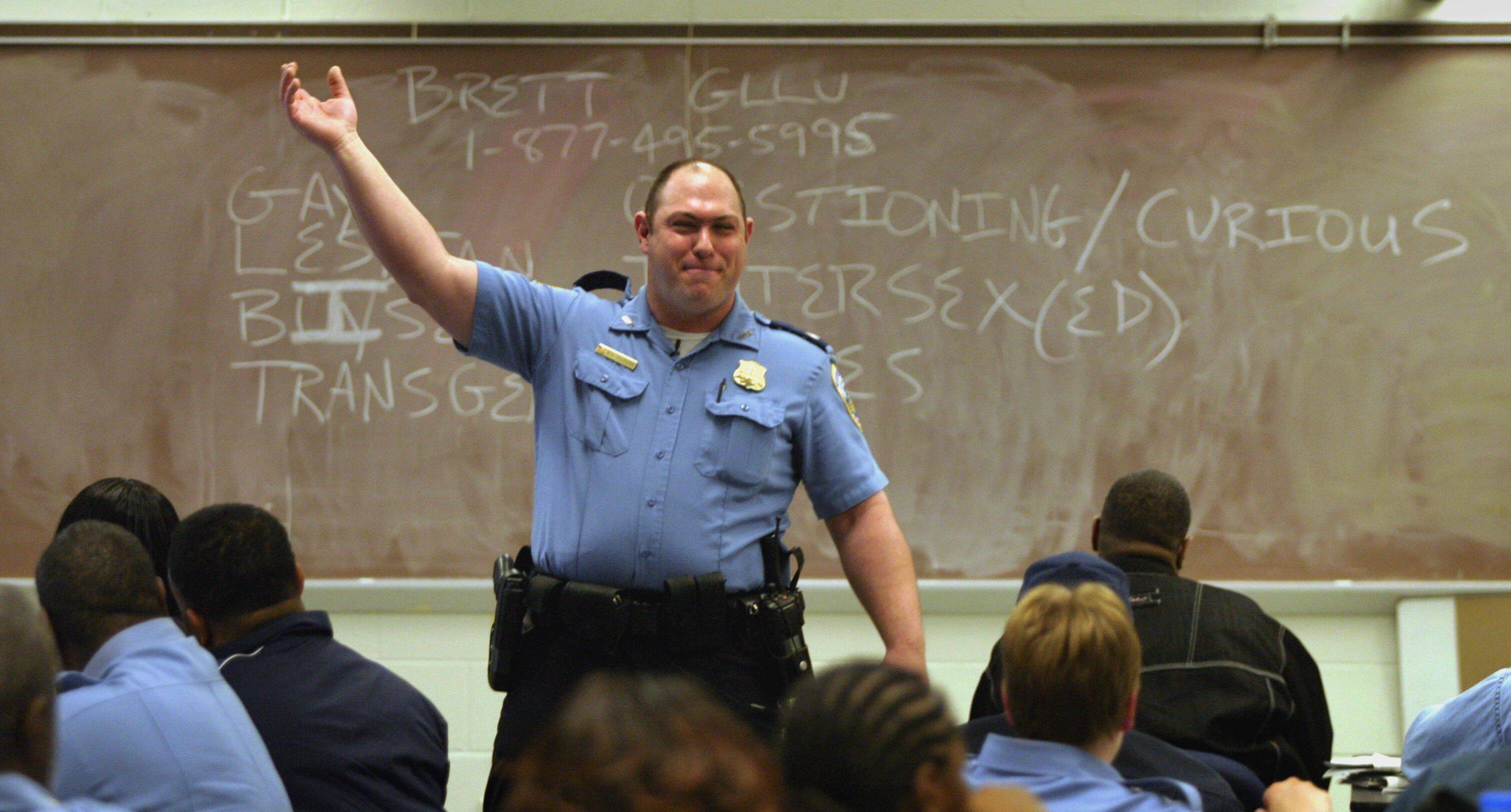 (Carol Guzy/The Washington Post) | Parson, an openly gay cop himself, was a fixture at Pride parades, community shelters and city nightclubs. He traveled the world teaching law enforcement agencies how to follow in his footsteps. So when his community learned he'd been arrested for unlawful sexual activity with a 16-year-old in Florida, his many admirers were shocked and confused. They wanted to understand the whole story. As a reporter who often writes about failures to protect vulnerable children, so did I. We knew from police records that Parson had used his status as a police officer to evade being questioned at the crime scene. That made my editor Lynda Robinson and I question what else he had done with the power he'd wielded for so long. We found that Parson's history was far more complex than it seemed on the surface. Now, the community that placed their trust in him is divided over whether what happened was a simple mistake or a serious betrayal.  (Carol Guzy/The Washington Post) People whose lives and work Brett Parson influenced during his 26-year career are grappling with the person they thought they knew — and the power he wielded for so long. By Jessica Contrera ● Read more » |    | | | Rising housing costs, combined with persistent inflation for basic necessities like gas and food, have left more Americans newly homeless and millions more fearing they'll soon lose their homes. By Abha Bhattarai and Rachel Siegel ● Read more » | | | | Amtrak has money to expand, but it doesn't own the railroad tracks. A stalled effort along the Gulf Coast is a test of its ability to grow. By Luz Lazo ● Read more » | | | | | "Interracial influencers" have amassed millions of followers on TikTok, winning over advertisers but also becoming targets of bigotry. By Sydney Trent ● Read more » | | | | A number of studies have shown that optimists enjoy higher levels of well-being, better sleep, lower stress and even better cardiovascular health and immune function. Perspective ● By Fuschia Sirois ● Read more » | | | | |  (Younes Mohammad for The Post) Thousands of people have finally returned from their ISIS detention camp to Iraq. But getting them home will be another story. By Louisa Loveluck and Mustafa Salim ● Read more » | | | | | | Much of the public discourse about post-abortion feelings tends to overlook a key point: "The reactions to abortion are as complex and as varied as women are," one expert said. By Allyson Chiu ● Read more » | | | | |  (Lara Antal for The Post) In live testimony, Cassidy Hutchinson used vivid detail to recount scenes involving President Donald Trump and some of his closest associates. Visual story ● By Washington Post Staff ● Read more » | | | | | | An adaptation from Scott Higham and Sari Horwitz's book, "American Cartel," reveals how lobbyists, lawmakers and K Street attorneys thwarted efforts to stop the deadly flow of pain pills. Book excerpt ● By Scott Higham and Sari Horwitz ● Read more » | | | | | | Gun purchases rose to record levels in 2020 and 2021, according to a Washington Post analysis. Gun deaths reached a 25-year peak in 2021. By Washington Post Staff ● Read more » | | | | | |
Photo of the week  (Kyodo/Reuters) | Former Japanese prime minister Shinzo Abe was assassinated on Friday as he stumped for a fellow politician at a campaign event in Nara, near Osaka. Police said the gunman, 41-year-old Tetsuya Yamagami, used a homemade firearm. Yamagami admitted to attempting murder, and said he wanted to attack Abe because he believed the former prime minister was connected to a group that he hated, police said. The shooting shocked Japan, a nation that has some of the world's strictest laws on gun ownership and where gun violence is rare. Last year, 10 shootings were reported not involving accidents or suicides, eight of which were linked to the yakuza, the Japanese criminal network. See the week's best photos here. |





 Email
Email



No comments:
Post a Comment