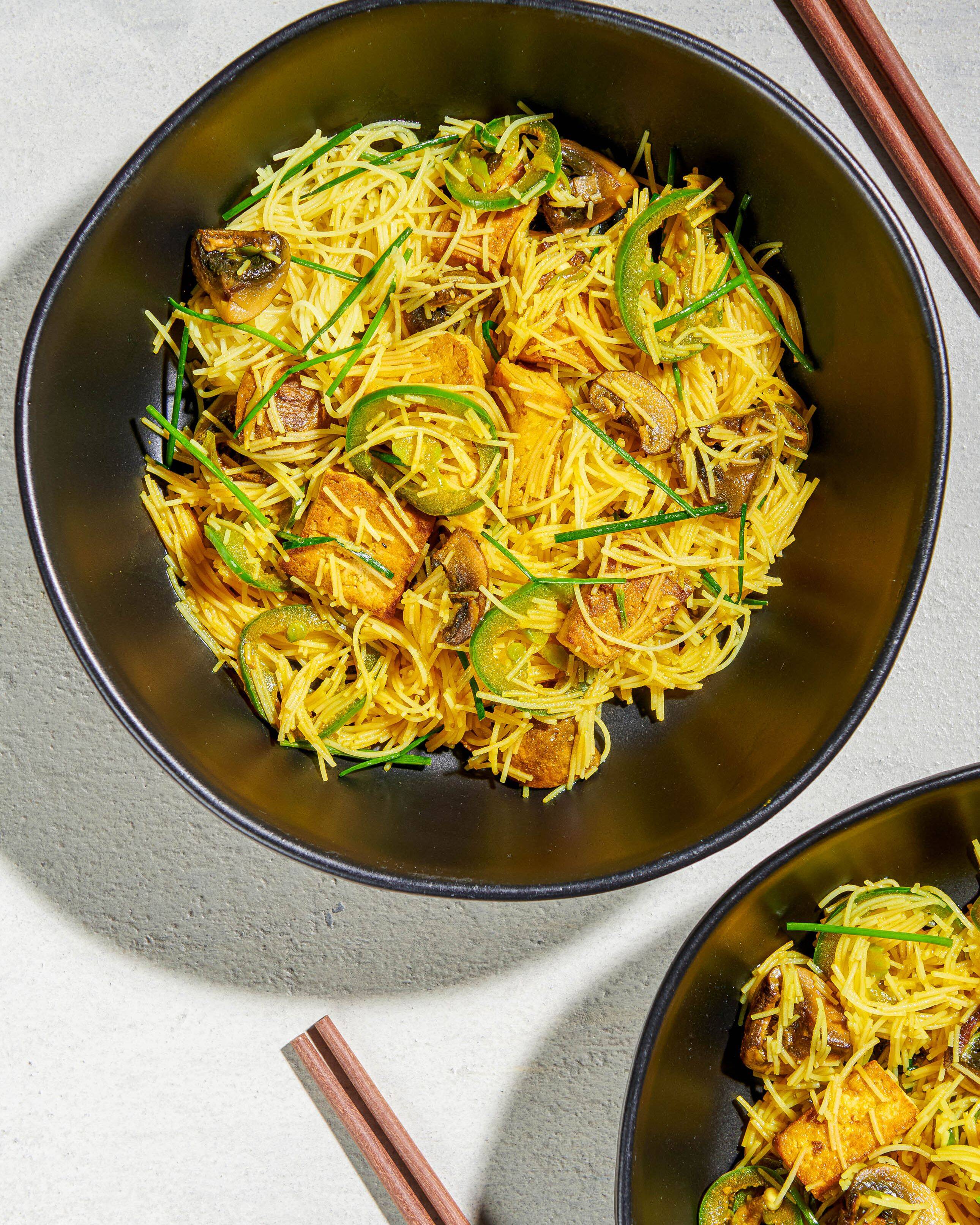
| Did a friend forward this to you? Sign up here. Goldfingers Fresh turmeric grows in the shape of hands with many long orange-gold fingers that burrow into the earth, tight and irregular, spreading and weaving and winding. It's part of the ginger family, according to "Nose Dive" by Harold McGee, along with galangal, and like its cousins, is originally from East Asia. Turmeric can be either white or yellow; the white variation is sometimes called zedoary. "Ginger and turmeric are among the earliest spices known to have been used in the prehistoric Indus River civilization," McGee writes, noting that they were important to the early spice trade. Though it's not as pungent as ginger or ginger's stronger sister, galangal, turmeric contains tumerones, a type of organic compound responsible for its slightly peppery bite.* It also contains eucalyptol, which is only present in turmeric's fresh form, giving it a warming, woody astringency. If you've never had fresh turmeric, seek it out. It's lovely in this rice noodle salad with tofu, which tastes like a bowl of sunshine. A little goes a long way, and it's usually sold by the pound and not too expensive. The flavor of ground turmeric pales in comparison to fresh — though its shelf-stability allows us to store it for years in the pantry as opposed to weeks in the fridge. Turmeric also contains some starch, according to "Season: Big Flavors, Beautiful Food" by Nik Sharma. Incorporated into a liquid or fat, whether you use fresh or ground turmeric, that starch helps thicken broths and sauces, as in this recipe, below. Turmeric Tip: Turmeric is known to stain dishes, cutting boards, counter tops, rags and clothing. If you use fresh turmeric, it's likely to stain your mortar and pestle. To get the golden hue out of dishes, laminate counters or cutting boards, use a combination of hot water and distilled white vinegar. To get turmeric stains out of clothing, squeeze fresh lemon juice over the stain, and then throw it in the wash. (via "Indian-ish: Recipes and Antics From a Modern American Family" by Priya Krishna with Ritu Krishna.) *Shout out to my brilliant chemist friend, Teri D., who knows more about this than I ever will!  | Today's recipe | 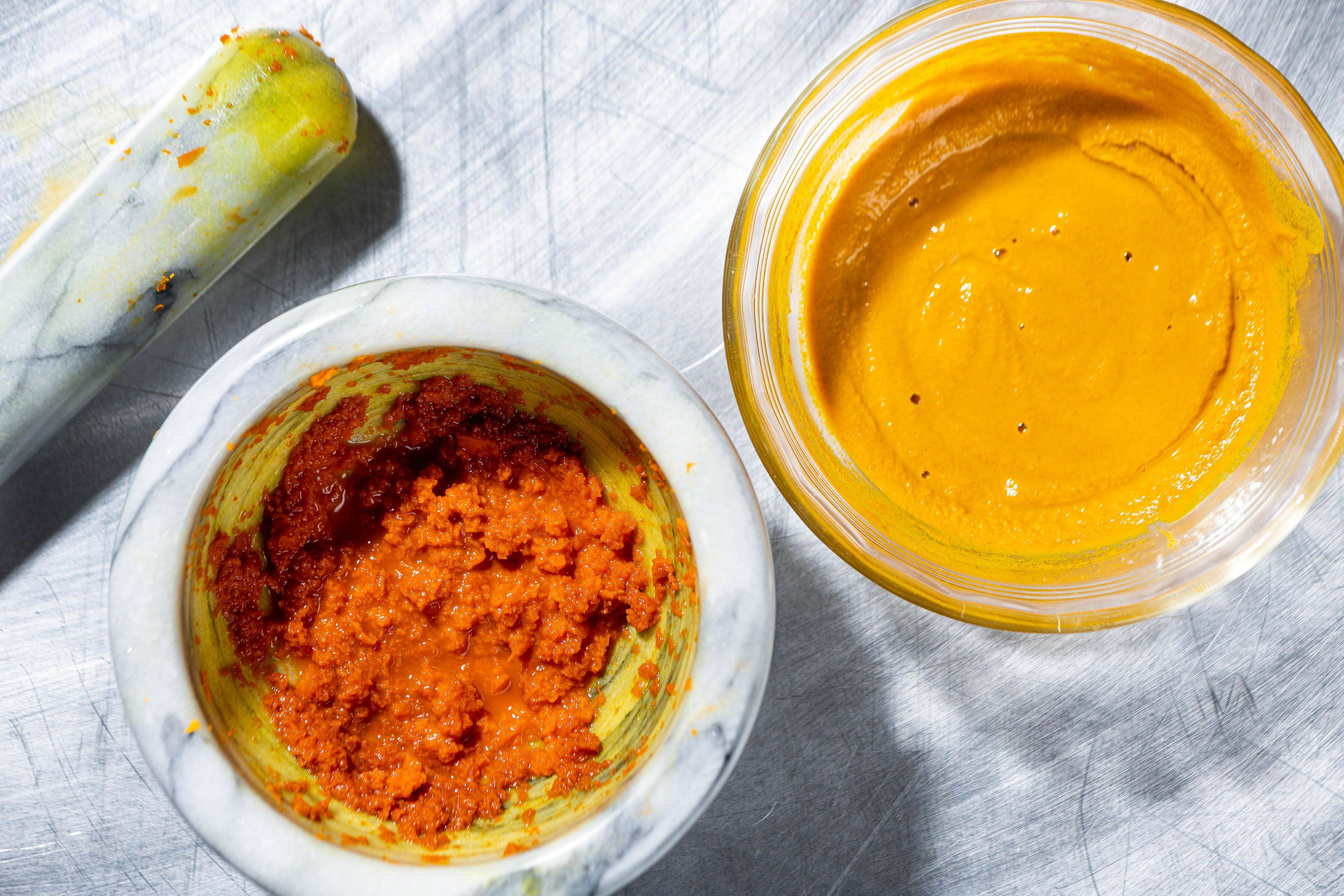 Left: Paste made from pounded fresh turmeric; Right: Paste made from ground turmeric. (Photos by Rey Lopez for The Washington Post; food styling by Lisa Cherkasky for The Washington Post) | Vermicelli Noodles With Turmeric and Tofu - If you can't have rice noodles >> try noodles made from another starch or legume. You could also make this with leftover rice.
- It's worth seeking out fresh turmeric at natural foods stores as its color and flavor is so much more vibrant. >> But if you can't find it, use dried. Also consider adding a touch of fresh ginger to brighten the flavor of the dried turmeric.
- Avoiding spice? >> Omit the chile.
For easy printing and scaling, view this recipe in our Recipe Finder. Servings: 4
Active time: 20 mins
Total time: 30 mins Ingredients - 8 ounces dried rice vermicelli noodles
- 4 ounces firm tofu, sliced
- 1 tablespoon plus 2 teaspoons low-sodium soy sauce or tamari
- 1/2 teaspoon plus a couple pinches granulated sugar
- 2 tablespoons peeled and coarsely chopped fresh turmeric (may substitute 2 teaspoons ground turmeric)
- 1/8 teaspoon fine salt, plus more as needed
- 1 tablespoon water, plus more as needed
- 2 tablespoons vegetable oil
- 4 ounces oyster or button mushrooms, cut into bite-size pieces (1 cup)
- 2 scallions, trimmed and thinly sliced on the diagonal
- 1/2 jalapeño chile pepper, thinly sliced (not seeded)
- 1/2 cup Chinese chives, cut into 1 1/2-inch pieces (may substitute the green parts of scallions plus 2 thinly sliced garlic cloves)
- 1/4 teaspoon freshly ground black pepper
Steps1. Place the noodles in a large bowl, cover with hot water and soak until soft and pliable, 15 to 20 minutes. Drain and set aside. 2. While the noodles soak, wrap the tofu in paper towels, set it on a plate and set another small plate on top. Add a can of tomatoes or another weight to the top plate and press the tofu sit for 20 minutes. Unwrap and discard the excess liquid. 3. In a medium bowl, whisk together 2 teaspoons of the soy sauce or tamari with a pinch of sugar. Add the pressed tofu and turn to coat evenly. 4. In a mortar and pestle, combine the fresh turmeric, 1/2 teaspoon of the sugar and 1/8 teaspoon of salt and process until the turmeric is finely ground. Then, add 1 tablespoon of water until it forms a paste, adding more water as needed. If using ground, in a small bowl, mix it with the sugar, salt and 2 tablespoons of water. 5. In a large skillet or wok over medium-high heat, heat the oil until shimmering. Add the tofu slices and stir-fry until they start to brown, about 1 minute. Add the mushrooms, scallions and jalapeño and stir-fry until the mushrooms soften, 45 seconds to 1 minute. 6. Stir in the turmeric paste and cook for 20 seconds, then toss in the chives (or the additional scallions and garlic) and stir-fry for another 20 to 30 seconds. 7. Stir in the drained noodles, the remaining 1 tablespoon of soy sauce or tamari, a pinch of sugar and the black pepper. Toss until the noodles are evenly coated, untangled and just heated through. (If any of the ingredients start to stick, add a little splash of hot water.) 8. Transfer to a platter or divide among dinner plates, and serve hot. Adapted from "Vegetarian Viet Nam," by Cameron Stauch (W.W. Norton, 2018). Tested by Joe Yonan. Nutrition information per serving: Calories: 320; Total Fat: 9 g; Saturated Fat: 2 g; Cholesterol: 0 mg; Sodium: 290 mg; Carbohydrates: 48 g; Dietary Fiber: 1 g; Sugar: 1 g; Protein: 9 g.  | Dessert | 🎧 "Bullwinkle, Pt. II" by the Centurians.
📰 Whoa, this lightning strike.
📺 The beekeeper making electronic music with bees.
📖 "One Summer: America, 1927" by Bill Bryson.
👀 Painting with thread.
🗣 If you liked this newsletter, please forward it to a friend! |



 Email
Email


No comments:
Post a Comment