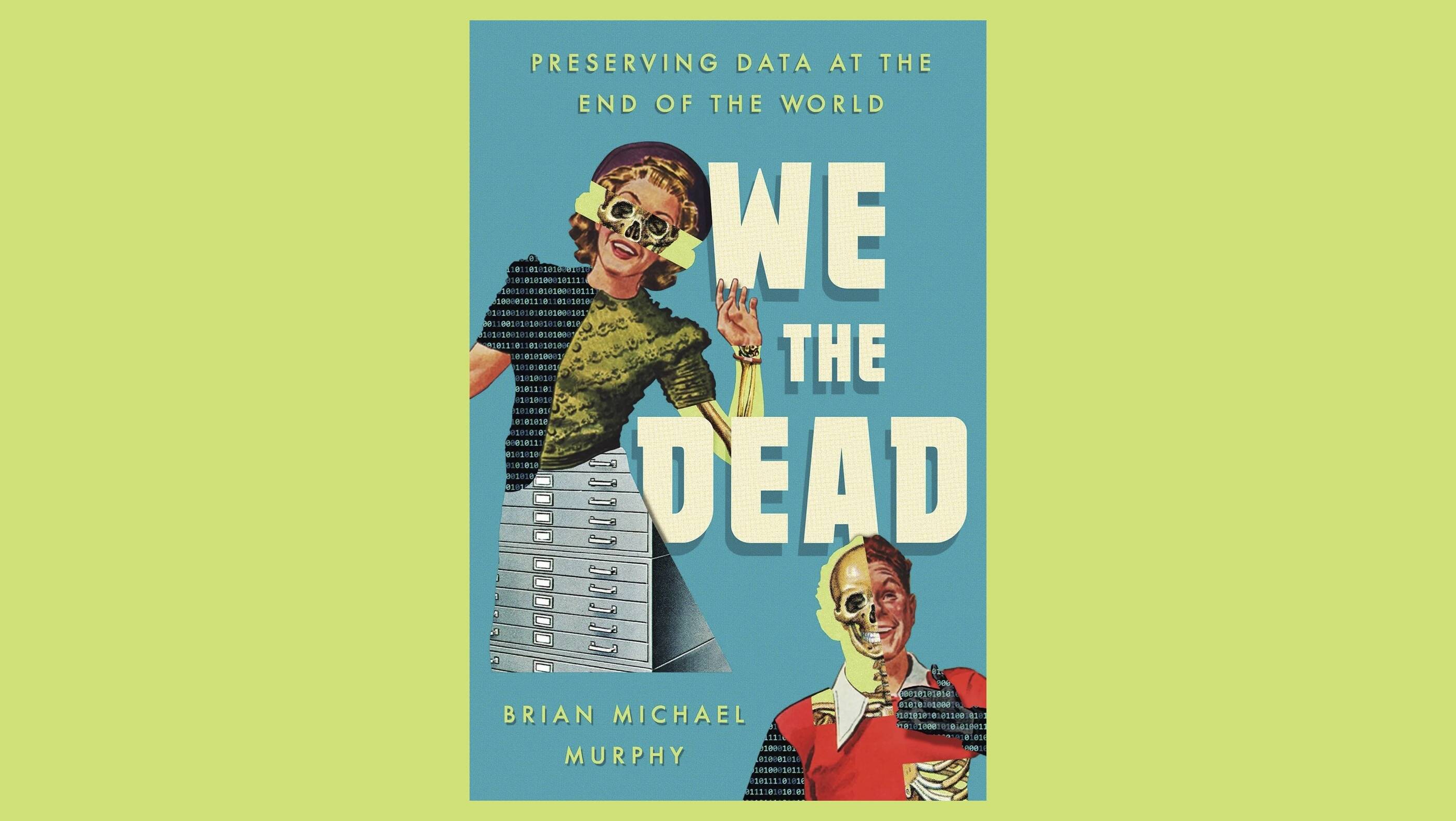
 (The University of North Carolina Press) | Donald Trump has been perfectly clear about the papers the FBI found at Mar-a-Lago: He declassified those documents before the FBI planted them in his house because they are his property, which he sent back to the National Archives in his desk. Easy-peasy. While struggling to follow this Byzantine story of political skullduggery, I've been reading a provocative new book called "We the Dead: Preserving Data at the End of the World." Author Brian Michael Murphy makes no mention of Trump and the Bigly Filing Fiasco, but his book explores our ever-expanding obsession with documenting, recording and saving information. I know that sounds as exciting as a Filofax, but Murphy is a witty writer – and a "media archaeologist"! – who travels deep underground to see for himself the weirdest and most fanatical efforts to preserve records. The book opens at Iron Mountain's National Data Center in Boyers, Penn., a doomsday bunker like the warehouse at the end of "Raiders of the Lost Ark." There, along with "every type of surviving media playback machine in the world," archivists race to preserve documents, photos, data, films, music: us. It's the ultimate example of "our mummy complex." "We tell ourselves that no matter what happens in this uncertain world, that no matter who is left alive when a war or economic meltdown or rash of terrorist attacks concludes, a trace of us will remain," Murphy writes. "This is the technological afterlife we seek, not unlike the Egyptians, who preserved the heart, liver, and lungs of the dead in earthen jars so that they could be used in the afterlife." But we've gone far beyond the Egyptians. Our current lives – every financial transaction, every social interaction, every legal and political proceeding – rely upon this exponentially inflating collection of data that must be constantly tended, defended and replicated on fading paper, brittle microfilm and failing hard drives. Murphy provides an engaging tour of the crises that propelled each new wave of preservation anxiety and the attendant technological advancements – from time capsules to wax cylinders to DNA-based memory chips. "The often unconscious aim of all this activity," he writes, "is to manufacture a collective technological fantasy of immortal life through which we can repress our awareness of our mortality, our fragility, our inevitable ending." I've never had such a clear, disturbing sense of the manic quality of our desperation to preserve every bit and byte of our existence. Nixon's tapes, Hillary's emails, Hunter's laptop, Trump's files – each of these political scandals is unique, but perhaps what supercharges them all is our zealous faith in the sanctity of data.  (RUDE/Illustration for The Washington Post) | The National Book Festival opens tomorrow morning. This is the first time the festival has been in person since 2019. Two intervening years in the covid wilderness have taught the Library of Congress how to make its literary extravaganza accessible to readers around the world. If you're in the D.C. area, the fun starts at the Washington Convention Center at 9 a.m. For those watching online, livestream programming begins at 9:30 a.m. ET. A number of local libraries, schools and organizations around the country will be hosting watch parties (full list). Highlights this year include appearances by Geraldine Brooks, Clint Smith, David Maraniss, Jesmyn Ward, Lev Grossman, Candice Millard and more than 100 other authors talking about fiction, history, politics, poetry, science and more. (Here's who to see.) I'm excited to hear Xochitl Gonzalez, author of the delightful debut novel "Olga Dies Dreaming" (review) and Lidia Yuknavitch, the author of "Thrust," which blew my mind (review). David Rubenstein, the Washington philanthropist who has supported the festival for years, will be on hand to talk about his upcoming book, "How to Invest: Masters on the Craft." So far as I can tell, it's an update on Steve Martin's classic advice about how to be a millionaire: "First, get a million dollars." There are many attractions for young people and children, too. They'll enjoy seeing Kwame Alexander, Marc Brown, Shawn Harris, Nic Stone, Jason Reynolds and other favorites. (Authors with tough but vulnerable characters.) Schedules will be distributed at the convention center, but the festival offers almost 12 hours of talks, interviews, panel discussions and storytelling, so a little planning beforehand will help. (Download and print out this schedule.) Most authors will be on hand to sign copies of their books, which you can buy at the Politics & Prose pop-up store in the convention center. (Many authors will sign old copies of their books, too.) Alas, masks are optional, which makes me pine for the glory days when the festival was held outside. (I'm still working through the 5 Stages of National Mall Withdrawal.) Please test yourself before arriving and do not attend if you're experiencing any symptoms of covid. Fortunately, the Covid-19 Community Level in D.C. is now rated "low." The Washington Post is a charter sponsor of the National Book Festival, and you'll see a few Post folks serving as moderators, including Alexandra Petri, Jonathan Capehart and yours truly. (See the poem near the end of this newsletter.) One more thing: Yesterday, a story in The Washington Post revealed that Ginni Thomas – wife of Supreme Court Justice Clarence Thomas – was even more determined to overturn the presidential election than we knew (story). Which makes me wonder again why this passionate enemy of democracy is still serving on the Trust Fund Board of the Library of Congress. (Trump nominated her for the honorary position in 2020.) As a committed purveyor of misinformation, Thomas has no legitimate role to play at the Library of Congress. President Biden should celebrate the National Book Festival by dismissing her. Books to the screen: - "The Lord of the Rings: The Rings of Power" debuts this week on Amazon. There probably isn't enough gold in all of Middle-earth to match what Amazon paid to adapt J.R.R. Tolkien's classic fantasy. The first season reportedly cost $465 million. (Amazon founder Jeff Bezos owns The Washington Post.) Alas, Post critic Inkoo Kang says it takes more than riches to make a show rich: "For audiences not already invested in the comings and goings of the pointy-eared folk, the series doesn't provide much reason to care" (ouch). As Bilbo Baggins always said, "It's a dangerous business, Frodo." (The new Lord of the Rings series, explained.)
- A TV movie version of "The Shell Collector," by best-selling romance novelist Nancy Naigle, debuted yesterday. This adaptation is the first original film from FOX Nation, which describes itself as a streaming service for the "most passionate and loyal fans" of FOX News. Yikes. . . . But maybe after 27 hours of listening to Trump sycophants rage about Democratic pedophile rings and the Globalists' climate change hoax, you'd need some downtime with pretty patriots finding love again on the beach (trailer).
 (Regnery Publishing, forthcoming Oct. 25, 2022.) | Books to the shredder: "2000 Mules," by election truther Dinesh D'Souza, had a terrible, horrible, no good, very bad pub day. The book, a companion to his debunked movie, claims that the "2020 presidential election was rife with fraud orchestrated by the Democratic Party." Supposedly, thousands of operatives – like drug mules – carried sacks of fake ballots to collection boxes around the country. "2000 Mules," which is published by the conservative imprint Regnery, was supposed to go on sale Tuesday. But at the last moment, Regnery issued a recall of all copies. And so, on his pub date, instead of releasing a book, D'Souza released a tweet. "There is an elaborate sausage-making process that goes into a book," he wrote. "Somehow a significant error got missed by the publisher." (That "somehow" just slays me.) D'Souza went on to say that the error has been corrected, but "2000 Mules" would have to be delayed until October. "The book is explosive," he added, "so I'm glad it's being done right. It will be worth the wait!" Errors in books aren't particularly rare, but recalling a print run is usually a last resort. This summer, for instance, Scholastic recalled a children's book titled "Shake Look Touch" because little pom poms attached to the pages could detach and pose a choking hazard. "2000 Mules," with little pom poms of its own, might need a similar warning. Thomas Spence, the president of Regnery, declined to provide any details about the error. But he said, "The error does not affect the argument of the book – namely, that there is compelling evidence of widespread ballot-harvesting in the 2020 election, ballot-harvesting that was at least suspect and perhaps illegal." This feels like recalling a book about alien abductions because one of the Martians' names is misspelled. 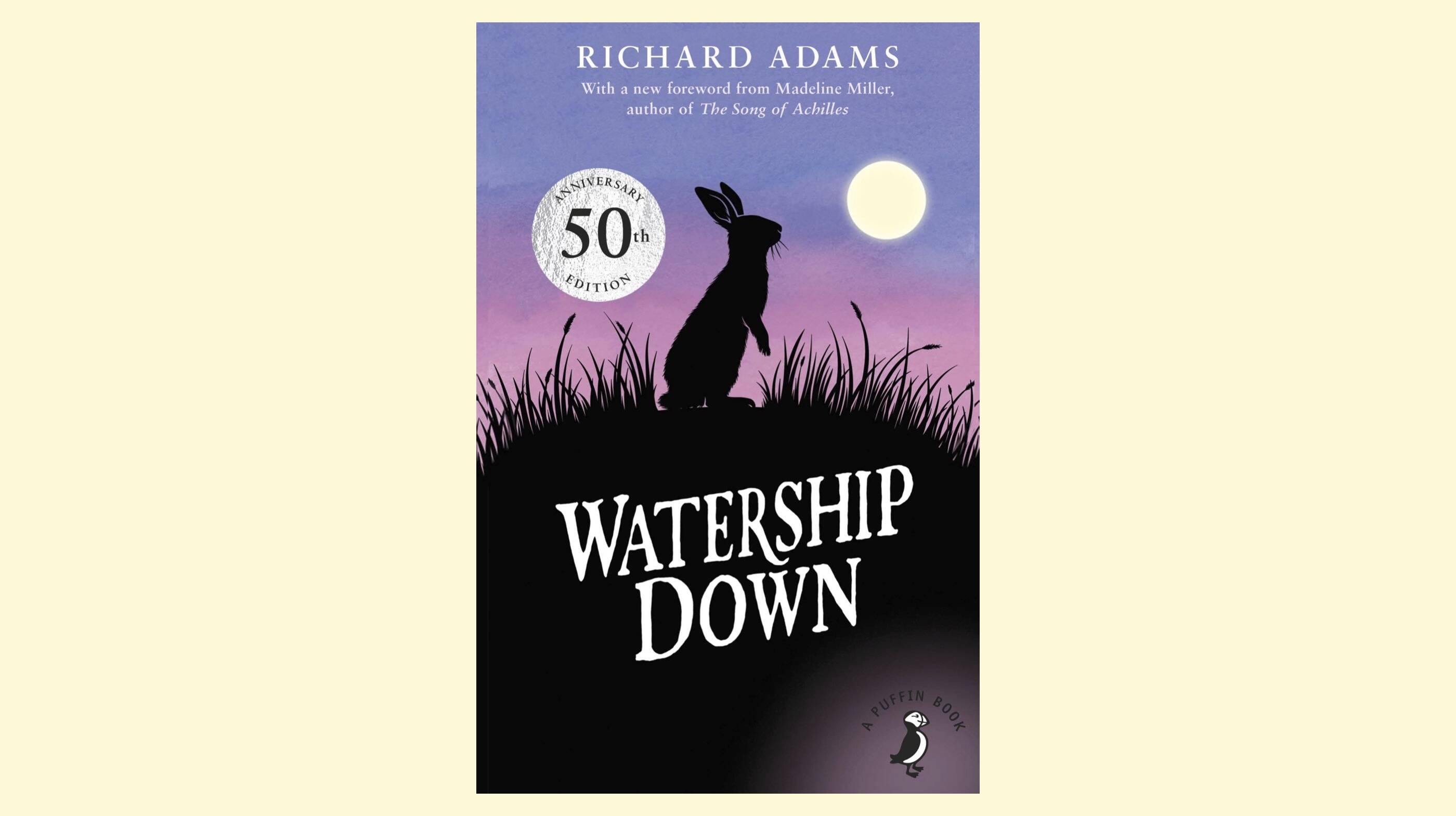 Puffin Classics (U.K. edition) | In the 1960s, during a long car ride to Stratford-upon-Avon to see Judi Dench in "Twelfth Night," an Englishman started telling his two little girls a story about rabbits. The world eventually came to know that story as "Watership Down." Jennifer Egan, Andrew Sean Greer and Michael Chabon have all cited Richard Adams's classic novel as an early influence on their lives. Junot Díaz remembers finishing "Watership Down" and "knowing with all the force of my young heart that my happiness would forever be caught up with reading." (The book that made me a reader). Madeline Miller, who wrote the introduction to the new 50th anniversary edition in the U.K., once told an interviewer, "It is a brilliant example of epic storytelling and has a dynamite, breathless ending. I keep my old copy, which is worn with reading, like some people keep childhood stuffed animals." Technically, the golden anniversary of "Watership Down" doesn't arrive till November, but today an academic conference on the beloved novel opens at the University of Glasgow. (The video introduction to the conference is everything you'd hope.) Adams's younger daughter, Rosamond Mahony, the director of Watership Down Enterprises, will be among the keynote speakers. In 2014, the BBC reported that "Watership Down" was Penguin Books's best-selling novel of all time. The novel's popularity was boosted by an animated film adaptation in 1978 featuring voices by John Hurt, Zero Mostel and a haunting song by Art Garfunkel. The Washington Post raved, "It'll renew your faith in cartoons" (review). The plot involves some harrowing conflicts. And so did the legal battle over "Watership Down." More than four decades after the movie came out, an English court ordered the producer to pay damages for copyright infringement, and the family estate won back all rights to the story. As Captain Holly observes, "We all have to meet our match some time or other." 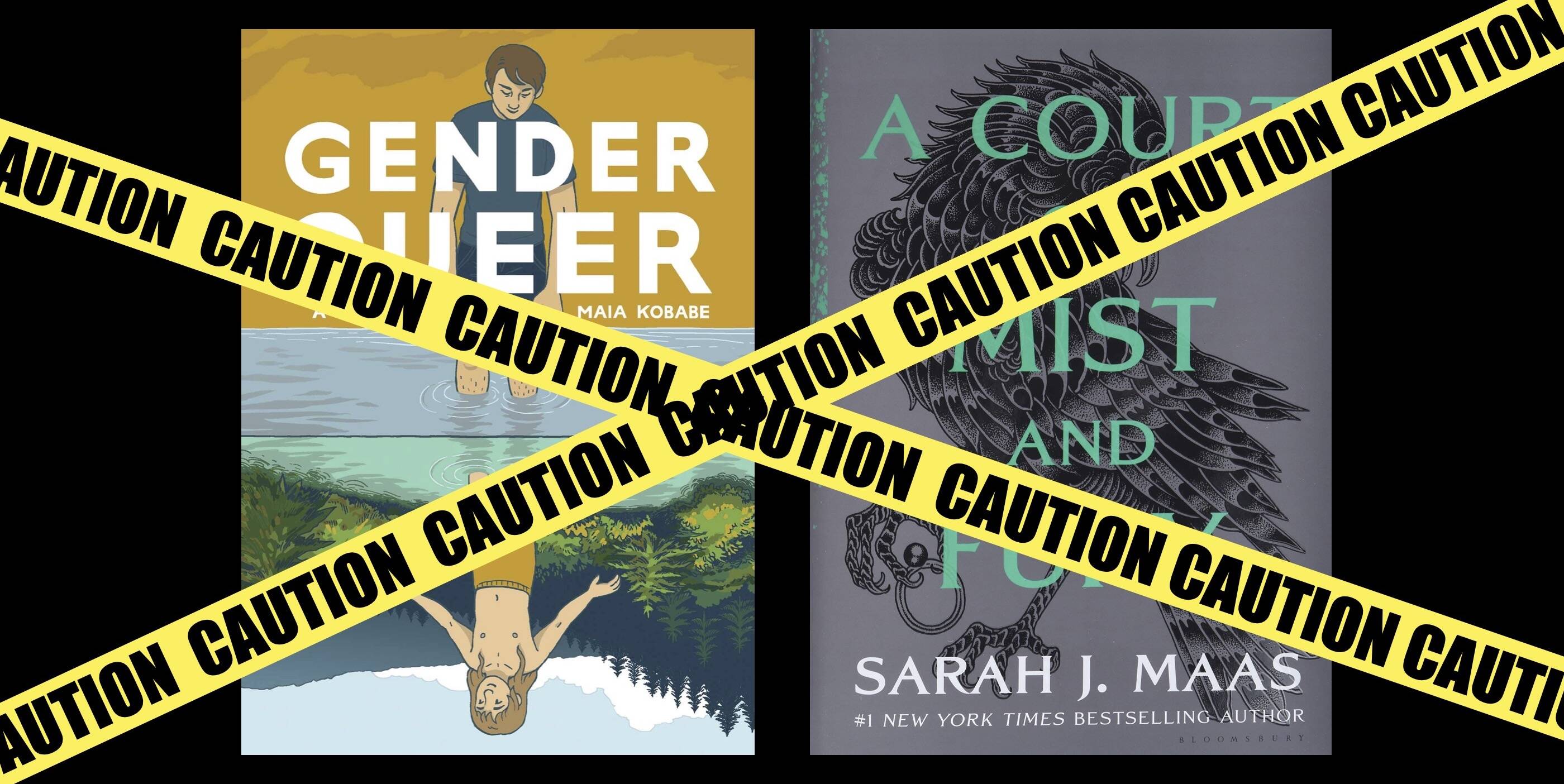 Oni Press; Bloomsbury (Photo illustration by Ron Charles/The Washington Post) | Freedom of expression triumphed in Virginia this week. Back in May, a pair of sanctimonious Republicans – congressional candidate Tommy Altman and his lawyer, Del. Tim Anderson (Virginia Beach) – filed a suit to keep Barnes & Noble from selling or even showing two titles to minors without parental consent. The books in question were "Gender Queer," an illustrated memoir by Maia Kobabe, and "A Court of Mist and Fury," a fantasy novel by Sarah J. Maas. The plaintiffs asked the court to declare both books obscene and, in effect, require bookstores to create a separate adults-only section. The case could have had significant impact on booksellers, libraries and schools. The case was a longshot, but the stakes were so high for literary freedom that people were worried. Fortunately, this week, Judge Pamela Baskervill ruled that neither book is obscene and that the pious old Virginia law cited to support this suit "is unconstitutional on its face" (full story). The Association of American Publishers issued a celebratory sigh of relief. Mary Rasenberger, CEO of the Authors Guild, said in a statement, "We knew that the First Amendment, as well as the obscenity laws, were on our side from the beginning, but too often politics and grandstanding seem to win out over legal arguments. We view this as a victory not just for writers Maia Kobabe and Sarah Maas but for all authors who face censorship." In response to the judge's decision, Tim Anderson wrote on Facebook: "Fundamentally, my client believes there should be a different standard of obscenity for children than currently exists for adults, but that will require review by higher courts to conclusively answer this question and possibly additions to the code by the General Assembly." Regardless of what these two publicity hounds decide, the fight for books will continue. More good news: On Aug. 2, a library in Jamestown, Mich., got defunded by local prigs after the librarian refused to remove a handful of LGBTQ books. Last week, The Washington Post published a story about the library's plight, and one of the people appalled by what she read in that story was romance novelist Nora Roberts. Quicker than you can say "happily ever after," Roberts donated $50,000 to the library's GoFundMe campaign. Along with contributions from more than 4,000 other supporters, the campaign has now exceeded its goal of $245,000. The library will try again to get a budget approved on Nov. 8. 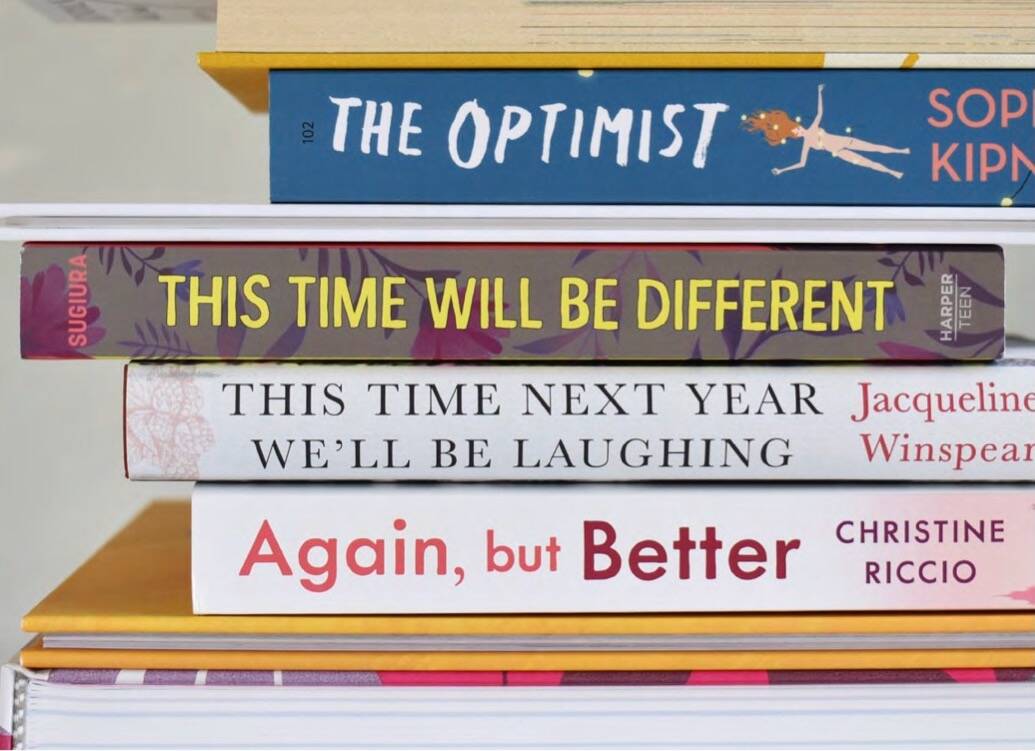 "The Optimist" with titles by Sophie Kipner, Misa Sugiura, Jacqueline Winspear and Christine Riccio. From "Spine Poems," by Annette Dauphin Simon. Copyright © 2022 by Annette Dauphin Simon. Reprinted courtesy of Harper Design, an imprint of HarperCollins Publishers. | Since you're reading this newsletter, you probably have piles of books around. About 10 years ago, when Annette Dauphin Simon was a bookseller in Neptune Beach, Fla., she began to realize those stacked titles were speaking to her in little poems, e.g. "The Splendid and the Vile" / "What's Not to Love" Next week, Simon will publish a photobook called "Spine Poems: An Eclectic Collection of Found Verse for Book Lovers." Each two-page spread features a cleverly ordered stack of titles and brief commentary. Midnight's Children
Forever Young
Vampires Never Get Old "Spine Poems" makes a fun gift for any book hoarder, and it'll surely inspire you to start mixing up your stacks. 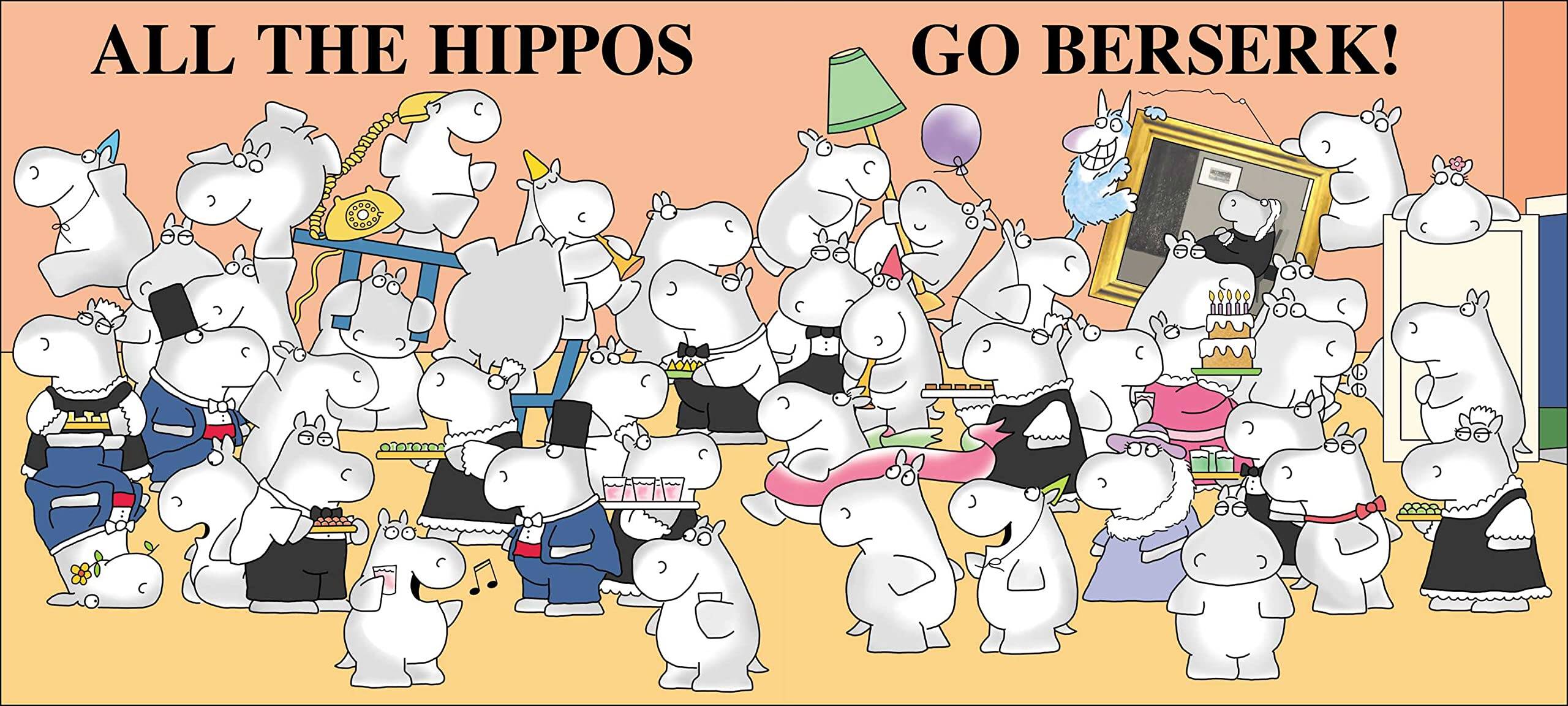 From "Hippos Go Berserk!: The 45th Anniversary Edition," by Sandra Boynton. (Copyright © 2022 by Sandra Boynton. Reprinted courtesy of Boynton Bookworks, an imprint of Simon & Schuster Children's Publishing.) | My grandmother spent most of her life running a school bookstore in St. Louis. Working there in the summers, I was charmed by a new line of greeting cards by Sandra Boynton. One way or another, I've been reading her ever since. This year marks the 45th anniversary of Boynton's first book, "Hippos Go Berserk!" She wrote that irrepressible children's book while she was a student at the Yale Drama School. After getting rejected by a bunch of publishers, she turned to the folks selling her greeting cards, Recycled Paper Products, and they decided to take a chance on it. But after a couple of years, the book had sold "only" 50,000 copies – a pittance compared to the cards – so Recycled Paper Products gave the rights back to her. Boynton has since sold more than 85 million copies of her books. And this year, she launched her own imprint at Simon & Schuster. "All of this sounds completely implausible and surreal," she tells me. "Publishing stories are bizarre. There are so many near misses and lucky cross-currents." (How Sandra Boynton built an empire.) To celebrate the 45th anniversary of her debut, Boynton has redrawn and redesigned "Hippos Go Berserk!" which this week is being reissued in a large, irresistible new edition. "It's familiar and spiffied up," she says. (Boynton's friend Ann Patchett asks, "Why mess with perfection?") Later this month, look for two new board books, "Pookie's Thanksgiving" and "Moo, Baa, Fa La La La La!" Boynton credits "fear of having to get a real job" for keeping her creative. "It's a great motivator," she says. "I'm lucky to have found what I love to do, and it doesn't diminish." Especially now that she has three young grandchildren to write for. When I mention how much I read her books to my daughters, she doesn't miss a beat: "Your daughters turned out incredibly well, and I'd really like to take a lot of credit for that, so you're welcome." 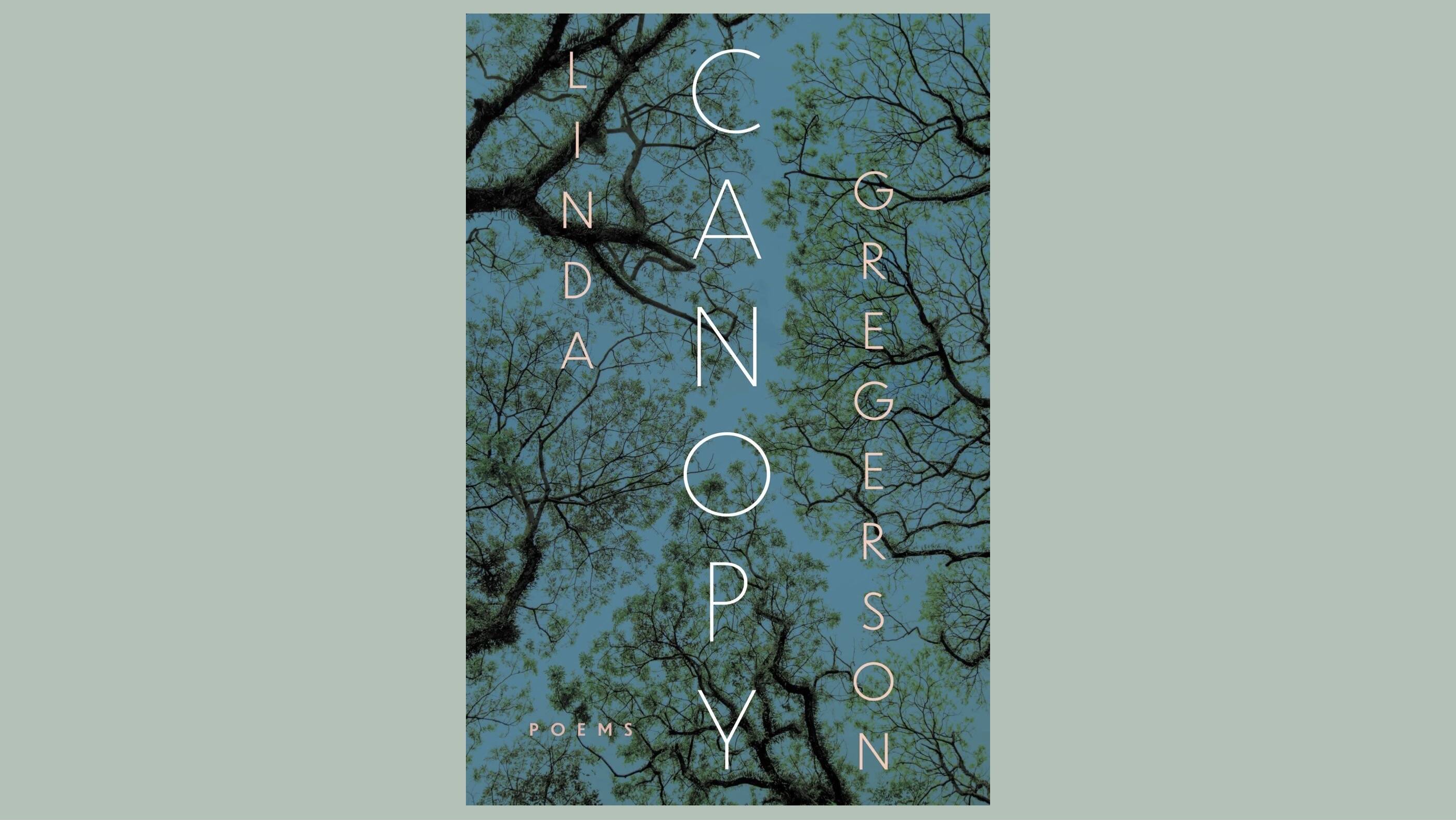 (Ecco) | Linda Gregerson, a former chancellor of the Academy of American Poets, is a Renaissance scholar fascinated by science. You can hear the breadth of her interests running throughout her brilliant new collection, "Canopy." Gregerson never goes where I expect; she constantly surprises and forces connections I wouldn't have thought possible. Every time I read "Canopy," I feel like I'm breaking through to another layer I'd missed before. This Saturday, I'll have the pleasure of interviewing Gregerson at the National Book Festival. A Knitted Femur First evidence
that one who ought to have died first,
of hunger,
of thirst, in the jaws of something hungrier,
lived long enough to heal.
Not pottery
not crafted tool but simply this far-from-simple
testament to taking care. The question
had been civilization:
early remains. Excavate the layered earth and lo, if you're
asking the question with an open mind:
a carbon-dated 15,000-
year-old sign. Which opens an obvious thought-stream when
a father-of-six or daughter-of-your-cousin
gets a job telling shoppers
to put on a mask. What's the starting salary for getting shot?
I've been reading about resilience and
how viruses
are good at this. Block them at one pass they'll adapt
and find a work-around. Kill the host
they'll find another.
Anger must be like that too. When I tried to sign up for the
listserv I was shuttled to another screen
and asked to "confirm
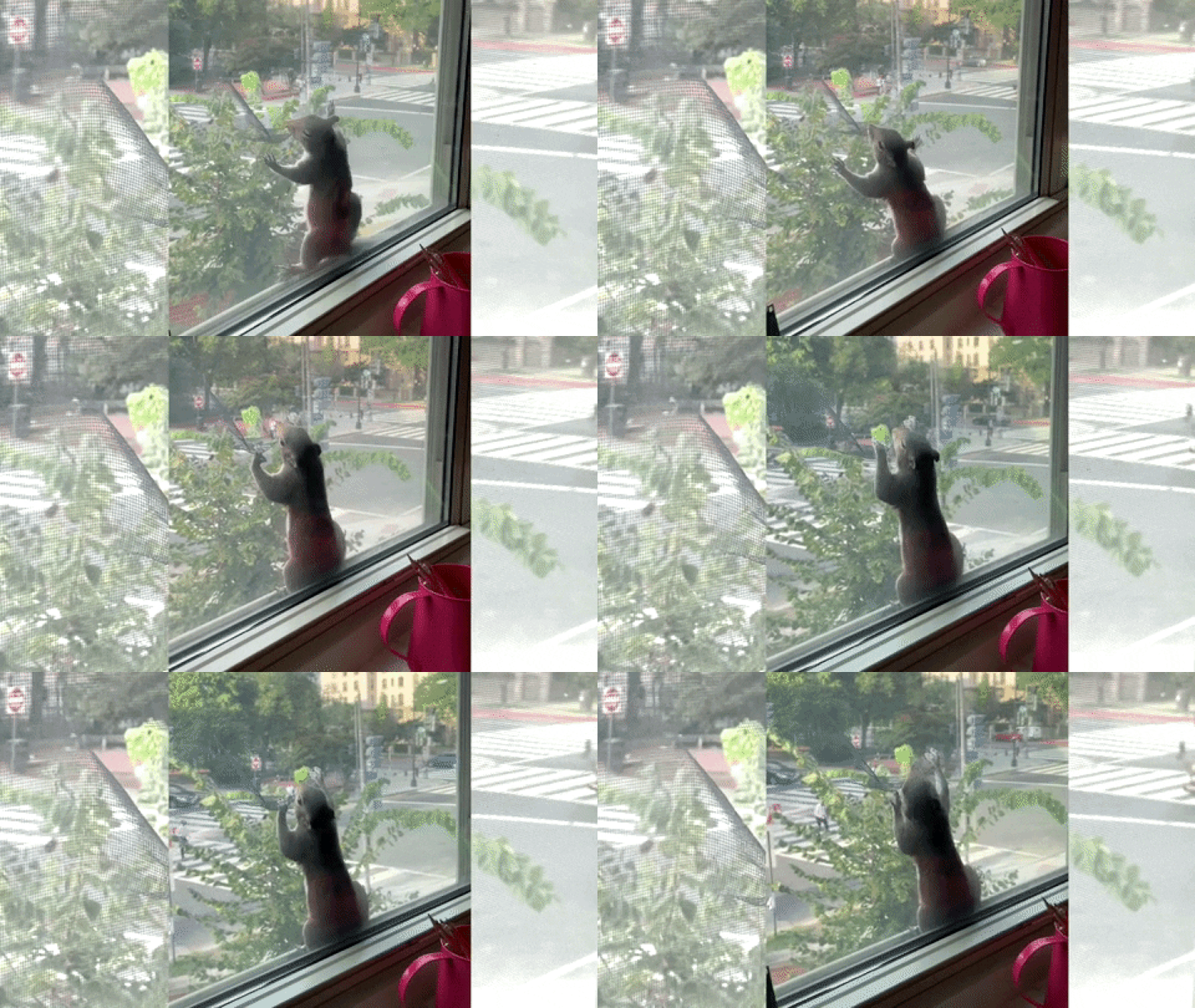
humanity." I checked the box. "A Knitted Femur" from "Canopy," by Linda Gregerson (Ecco). Copyright© 2022 by Linda Gregerson. Courtesy of HarperCollins Publishers. If you're a teacher, you know your most fearsome competitors. The first is snow. You could be unveiling the deepest secret of the universe, but if a flake of snow falls past the classroom window, your students will abandon you in a heartbeat. And don't even get me started on the distracting influence wielded by an intrepid bee. Pandemonium. This week, my younger daughter started teaching 7th grade English in Washington. It's way too hot for snow, and nary a bee showed up in her classroom. But she did have to contend with a curious squirrel, which got itself momentarily caught between the window and the screen. When you're a teacher – or a squirrel – every day is an adventure. Meanwhile, send any questions or comments about the Book Club to ron.charles@washpost.com. You can read last week's issue here. Please forward this email to friends who might enjoy this newsletter. They can start receiving it for free by clicking here. (Yes, it's really free.)
Interested in advertising in our bookish newsletter? Contact Michael King at michael.king@washpost.com. | 



 Email
Email


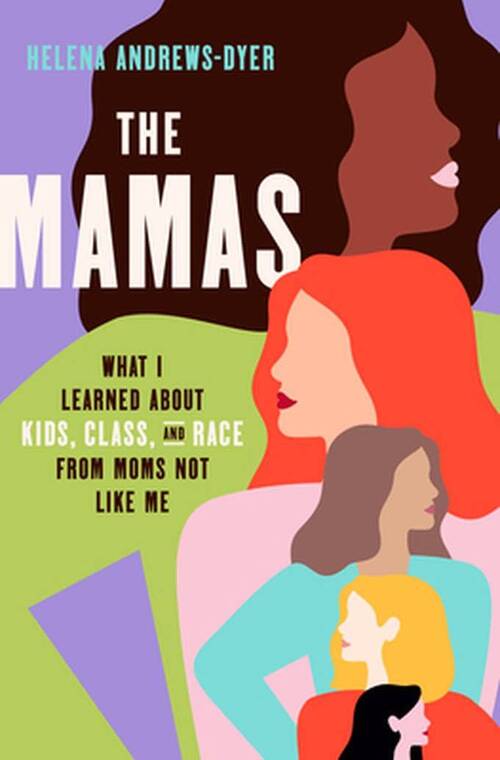


No comments:
Post a Comment