| Tonight, in a prime-time address from Philadelphia, President Biden is going to warn Americans that U.S. democracy is under threat. It's something he's been thinking about for a while, and the subject makes him very animated. "Where the hell are we?" he said earlier this week, an apparent reference to Sen. Lindsey Graham (R-S.C.) warning there will be riots in the streets if Donald Trump is charged with a crime. Biden, his aides told reporters, isn't trying to come across as partisan. But his speech inevitably will be received that way. Everything is partisan these days, plus it comes just two months before midterm elections that will be consequential for his party — and it's undeniable that Republican candidates are more willing to deny election results and flout democratic norms. To try to put what Biden will say in perspective, here's what democracy experts — nonpartisans, Democrats and Republicans — have told me over the past year about where we are. The fundamental principle of how a democracy works came under threat in 2020 in a way we've never seen in modern times. "If you use democracy as a shorthand for: 'We elect our leaders, and the person who gets the most votes wins,' what happened in 2020 and some of what is happening since threatened that principle," Trey Grayson, a Republican and former secretary of state of Kentucky, told me last year. His point was that politicians have raised questions about election results in the past — but not until 2020 did a sitting president actively try to overturn the results of an election. 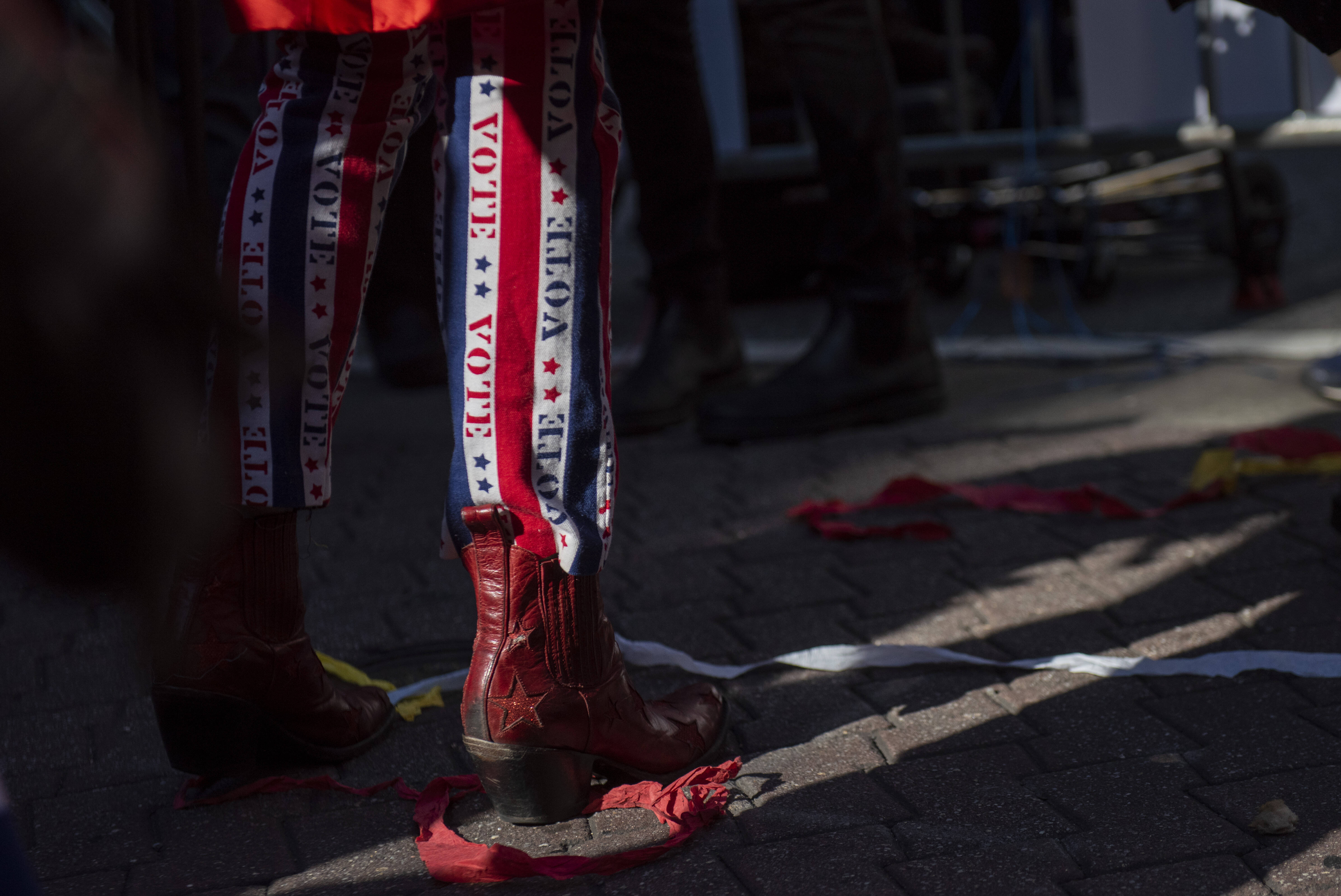 (Amanda Voisard for The Washington Post) | Conservatism is increasingly defined by denying election results: A Republican Arizona state senator told The Washington Post earlier this year that he isn't going to run for office again, because he's not willing to say the election was stolen. "If you ask any of my Democratic colleagues, they'll tell you how conservative I am," Paul Boyer said. "And the fact that on one issue I didn't agree with the party makes my belief on limited government, on school choice, on life, on public safety all out the window — it's like, no, I'm not a moderate." There's a concern in sections of the Republican Party that its leaders aren't speaking out enough publicly about election lies. House Minority Leader Kevin McCarthy (R-Calif.) has defended Trump after the Jan. 6 attack, and he could be the next speaker if Republicans take control of the House. "There will come a day when Donald Trump is gone," Rep. Liz Cheney (R-Wyo.) warned during the Jan. 6 hearings this summer, "but your dishonor will remain." She lost her job over that stance. 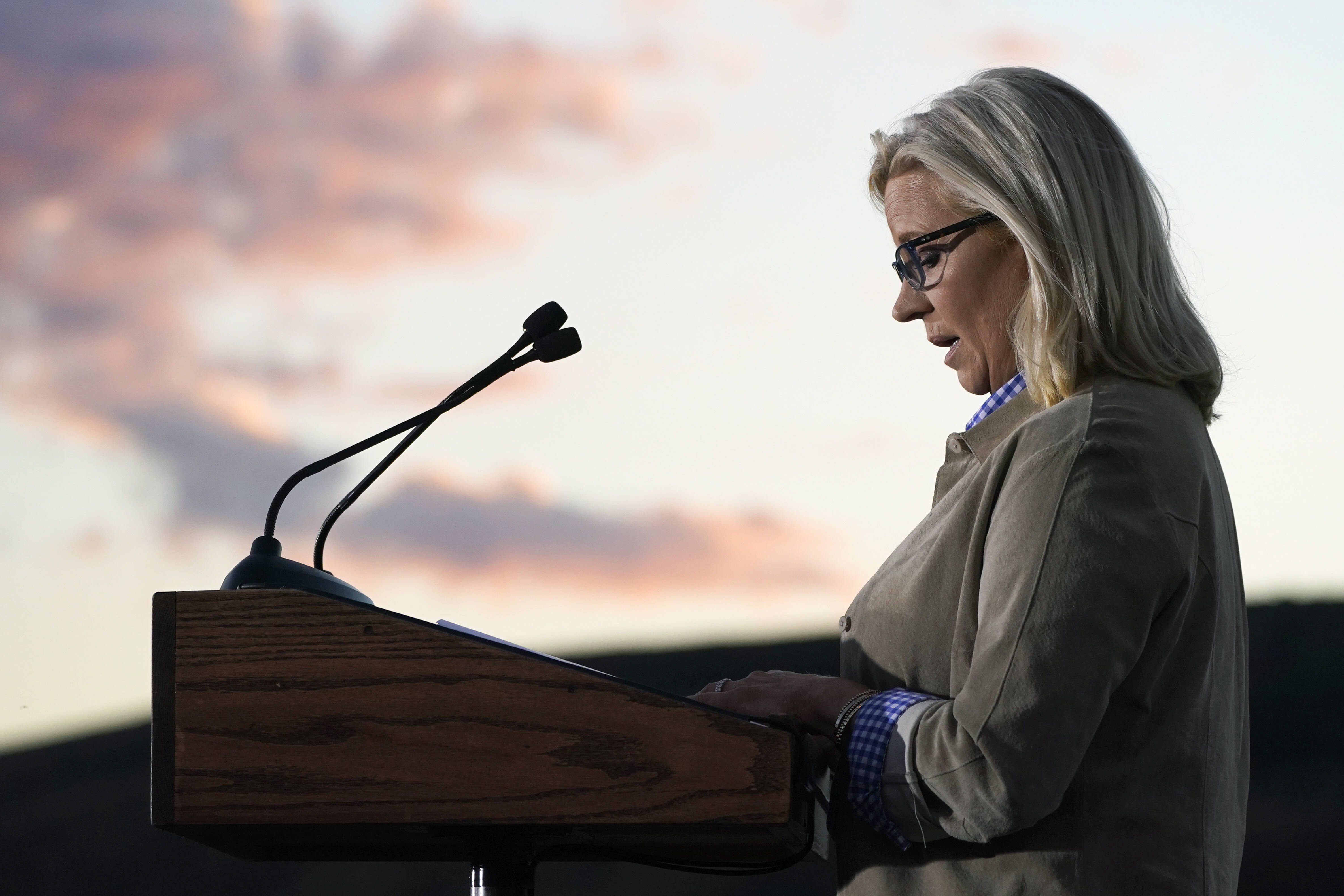 Cheney after losing her primary to an election denier. (Jae C. Hong/AP) | Democrats are motivated by protecting democracy: Michael Waldman, president of Brennan Center for Justice, said in a 2021 interview, "Now the 'big lie' has become a mobilizing and motivating issue on the right in the way it never was before, and for the first time, the push for stronger democracy protections have become a central motivating issue for progressives and Democrats." Democracy is based on shared norms: And those norms — from debating whether to get rid of the filibuster in the Senate, to what rules a president has to follow — are crumbling. That worries Meredith McGehee, the former head of the bipartisan good-governance group Issue One. "When you blow up norms, it's often chaos that ensues." It also worries Sean Morales-Doyle, head of the Brennan Center's voting rights program, that election denial is becoming a norm in America: "Every time someone spreads the lie that our elections were stolen, every time someone says that they would refuse to certify the outcome of an election, and then every time someone tries to do just that, it does damage to our democracy and it does harm to the public space in our elections." 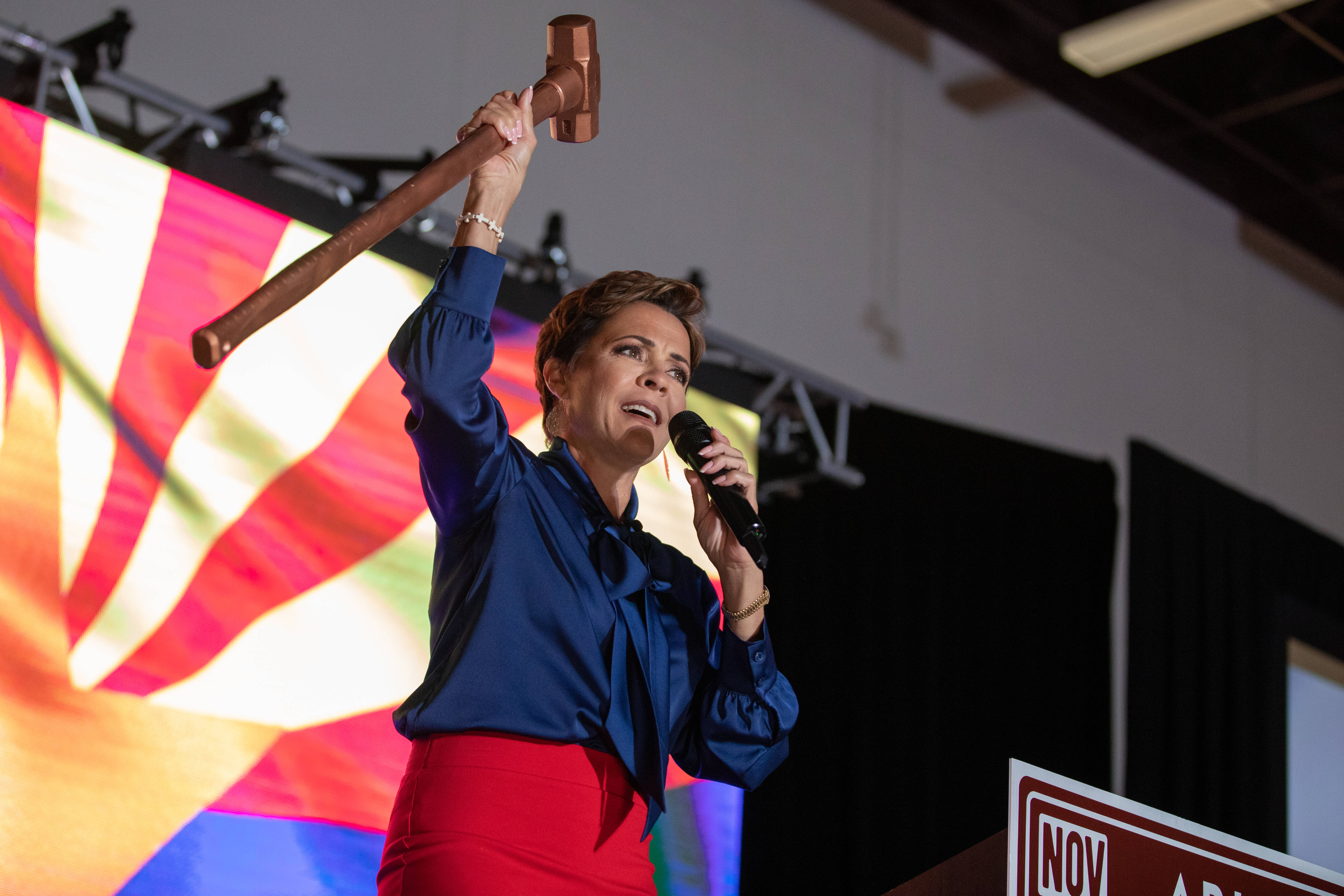 Kari Lake, the Republican gubernatorial nominee in Arizona, has said she would have refused to certify the 2020 election results. (Caitlin O'Hara/Bloomberg News) | It's probably going to take public pressure to stop election denial: "We need to have commitments from all candidates up and down the ballot that if you can't take losing, don't run for office," said Tammy Patrick, a former elections official in Arizona. America is losing good election officials: One of the gems of American democracy, our experts all said, is that local election officials from both major parties put on elections and tally ballots and report results. That can make it chaotic sometimes but also very hard to cheat on a wide scale. But after Trump waged war on his 2020 loss, these officials across the country no longer feel supported — or even safe — in doing their jobs. "Elections are underresourced, underfunded, underappreciated — and now they are under attack," Patrick told me. She said she talked to one Republican election official in a Trump county in Wisconsin who told her, "I used to be the pillar of my community, and now I'm being treated like the pariah." Biden's speech starts at 8 p.m. Eastern. Watch the speech and coverage of it starting at 7:30 p.m. at washingtonpost.com. | 



 Email
Email


No comments:
Post a Comment