| Good Monday morning and happy Halloween! Send your best pet costumes to mckenzie.beard@washpost.com. Today's edition: Newly drawn district lines are complicating a Republican's bid to hold onto a House seat in a Michigan swing district, and legal abortions have dropped by 6 percent in the two months since the fall of Roe v Wade. But first … | Three health-related ballot questions you might have missed |  A person smokes a Juul Labs Inc. e-cigarette in this arranged photograph taken in 2018. Gabby Jones/Bloomberg | | California's battle over flavored tobacco | | California voters will decide whether to uphold or block an existing state law that bans the sale of most flavored tobacco products to curb the youth vaping crisis. At issue is SB-793, which passed the state legislature with bipartisan support and was signed into law by Gov. Gavin Newsom (D) in 2020. After it was signed, opponents gathered enough signatures to put a referendum against the law on the ballot, which put enforcement on hold until voters could weigh in on the issue. Since then, tobacco giants Philip Morris USA and R.J. Reynolds, as well as other interest groups, have invested more than $22 million in support of a no vote on Proposition 31, per Ballotpedia. Proponents of the measure argue the new rules would prevent minors from getting addicted to nicotine, given evidence suggests young people gravitate toward e-cigarette devices that come in flavors like cotton candy, bubble gum or minty menthol. | | Opponents say the law is unnecessary because it's already illegal to sell tobacco products to people under the age of 21. They also point out that the measure could cut millions from the state's tobacco tax revenue and reduce funding for some public health and education programs. Former state senator Jerry Hill (D), author of the legislation, acknowledged the ban would reduce revenue from the sale of flavored tobacco products in the short term, but said cutting down the number of new smokers would save the state in the long run. "The trade-off is healthier, longer quality lives with a lot less health-care costs down the road," Hill told The Health 202. "The benefit and the cost savings that will come is extraordinary." | | Newsom with the YES on 31 campaign: | 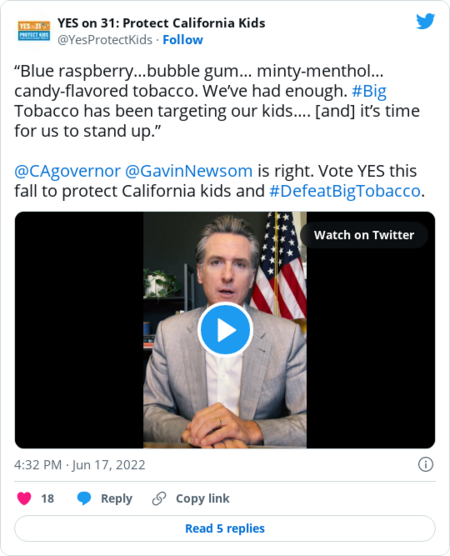 | | | | Oregonians consider a right to health care | | Voters next week will decide whether to add an amendment to the Oregon constitution establishing a right to "cost-effective, clinically appropriate and affordable health care" for every resident. If it passes, it would be the first of its kind in the nation. The ballot initiative, Measure 111, is being hailed by supporters, including Democratic lawmakers and the Oregon Nurses Association, as a way to force the state legislature to prioritize efforts to lower the cost of health-care coverage and drive down the uninsured rate. Yet the amendment doesn't include any specific policy recommendations or additional funding to make the constitutional right to care a reality. Critics argue it would establish a constitutional right without a strategy to fulfill the new obligation. Republican Oregon Senate Minority Leader Fred Girod was one such objector. "If Democrats are serious about giving Oregonians free health care, they should come up with an actual plan," he said last year after voting against the resolution, according to the Associated Press. | | Opponents are also concerned that the amendment could open the door for residents to sue the state if it fails to fill in the gaps of its roughly 6 percent uninsured rate, per the Kaiser Family Foundation. But the amendment contains a loophole that Lorey Freeman, chief deputy counsel at the Oregon Legislative Assembly, said could shield the state from future legal action. The key caveat: The state's obligation to provide health care must be "balanced against the public interest in funding public schools and other essential public services." Freeman said that the state courts would likely defer to the state legislature when it comes to determining how to fund universal health care for all Oregonians. "If the state enacted legislation that denied some sort of access to health care, then the constitutional amendment might come into play," she added. | | Health Care for All Oregon: | 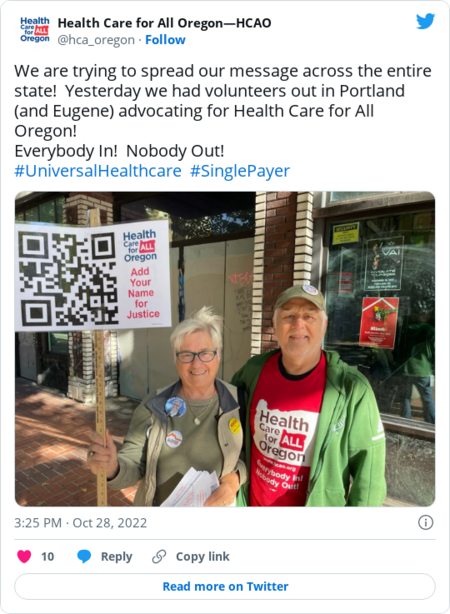 | | | | Dentists and insurers clash in Massachusetts | | When voters hit the ballot box next Tuesday, they'll be asked to decide whether dental insurers in the state should be required to spend more of patients' money on their care. The details: Unlike with medical insurance, there is currently no minimum threshold for dental care. Question 2 would require insurers to spend at least 83 percent of the premiums they collect on dental costs, not administrative expenses, taxes or profits, and refund excess dollars back to patients. If it passes, the referendum would make Massachusetts the only state in the nation to set a loss ratio for dental insurers. Dentists and health-care advocacy groups are rallying behind the initiative. They argue that the measure would ensure patients are getting a good value for their premiums and require more transparency from dental insurers. Dental insurance corporations say the legislation would hurt consumers by driving up the cost of insurance premiums and could lead to a loss of coverage in the state. However, proponents maintain that any price changes wouldn't be substantial, given the proposed law specifically bars increases above the consumer price index without state approval. | | Massachusetts state Sen. Eric Lesser (D): | 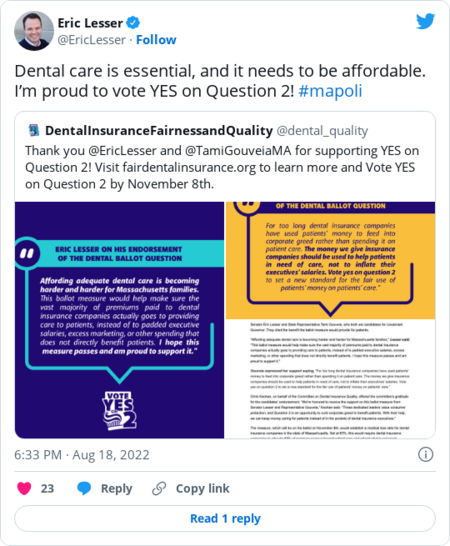 | | | | | Protect Access to Quality Dental Care, committee leading the opposition behind Question 2: | 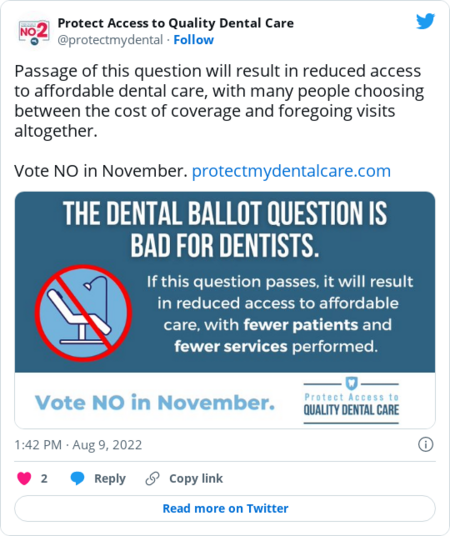 | | | | | |  | Daybook | | | President Biden will deliver remarks in Fort Lauderdale, Fla., tomorrow on protecting Medicare and Social Security, as well as lowering the cost of prescription drugs just a week ahead of the midterms. | | |  | On the Hill | | New dynamics give Democrats hope in Michigan swing district |  Republican candidate John Gibbs speaks to reporters in August. (Sarah Rice for The Washington Post) | | | Republicans are growing more confident about their ability to win back control of the House. But it's races such as Michigan's 3rd Congressional District that are complicating the party's goals, our colleague Marianna Sotomayor reports. In a dispatch from Grand Rapids, Mich., Marianna dives into the contest between Democrat Hillary Scholten and Republican John Gibbs — and how key issues, such as abortion, are playing out in the race. | - Gibbs, a Trump-endorsed candidate, beat Rep. Peter Meijer — a first-term congressman who voted to impeach Trump — in the district's primary election earlier this year.
- Meanwhile, newly drawn district lines have boosted Democrats' confidence that they can close the gap between Scholten's 2020 loss.
| | On abortion: Scholten has been seeking to highlight how her position differs from her opponent — a tactic Democrats up and down the ballot are using. A recent CNN poll showed 54 percent of the state's registered voters support an amendment on the state ballot this year that would enshrine abortion rights into the state's constitution. Gibbs has said he would support a federal 15-week limit on abortion, adding it is a "position based on common sense" because most European countries have more conservative laws limiting abortion. That's a more moderate position than he had in the primary, when he downplayed the need for exceptions, arguing that medicine had advanced to save the life of the mother, Marianna writes. | | |  | Reproductive wars | | Legal abortions dropped 6% in two months since fall of Roe |  Abortion rights advocates protest in Washington, D.C., in late June. (Photo by Katherine Frey/The Washington Post) | | | Legal abortions across the country have decreased by more than 10,000 — a decline of roughly 6 percent — in the two months since the Supreme Court overturned Roe v. Wade, the New York Times reports. The data is from a new group call WeCount, which is led by the Society of Family Planning, which supports abortion rights. Here's the detailed estimates from the consortium of abortion providers and academics: | - There were about 22,000 fewer abortions in July and August in states with bans and restrictions compared with April.
- The number of abortions rose by nearly 12,000 — or 11 percent — in states where abortion remained legal.
- Of note: The decrease in abortions is probably lower than the amount cited, since the data doesn't include abortions outside the regulated health system.
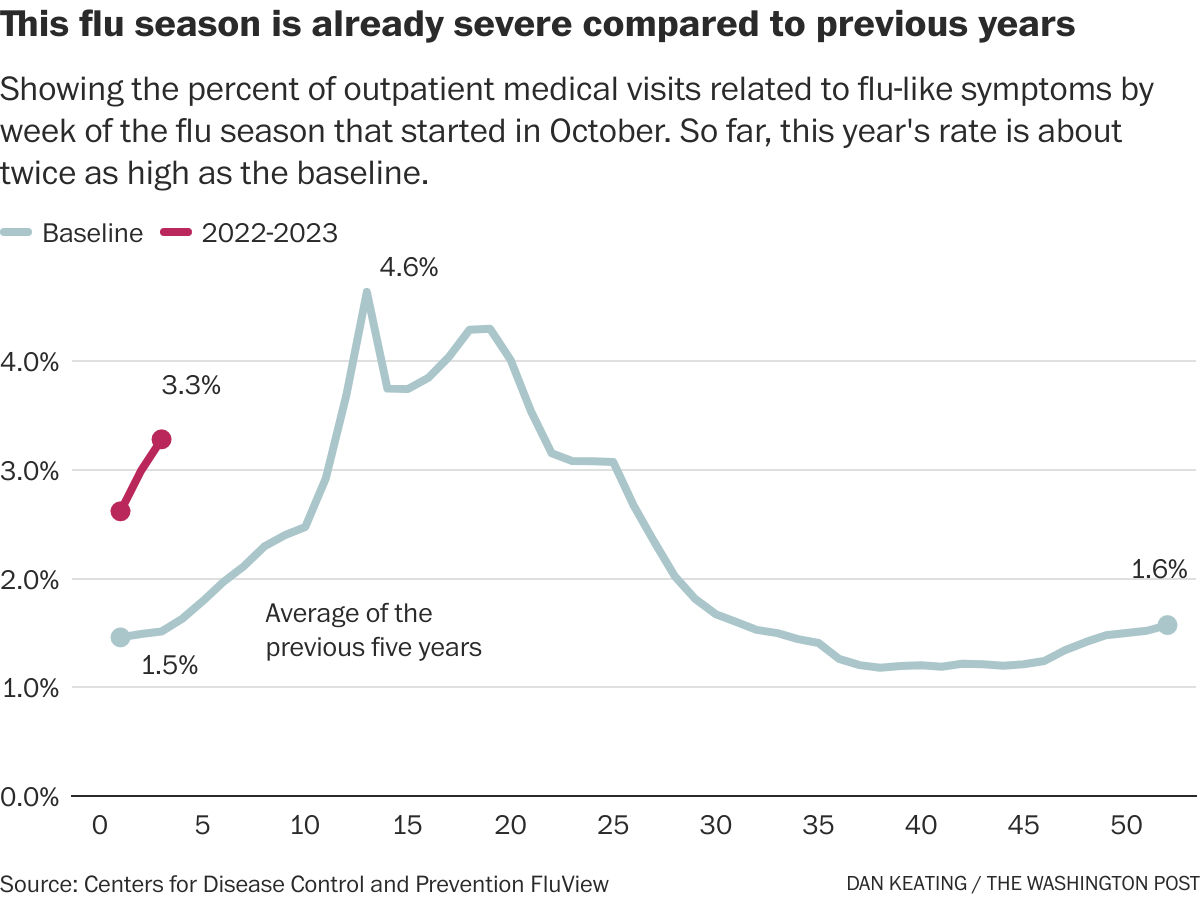
| | Republican Gov. Brian Kemp avoided pledging that he wouldn't sign future abortion restrictions in last night's gubernatorial debate with Stacey Abrams, a Democrat. Kemp said "it's not my desire to go move the needle any further," according to the Associated Press, though acknowledged a Republican legislature could pass further restrictions. "We'll look at those when the time comes," he said. He criticized Abrams as inconsistent on the limits on the procedure she would support. She contended her position has remained the same, and she'd support legal abortion until fetal viability, which is typically viewed as about 22 to 24 weeks. | | | | Flu season | | The flu has arrived early, and it's more severe than it's been in 13 years |  Experts are warning about lagging vaccination rates amid an early start to flu season. (Bloomberg News) | | | Influenza is hitting the United States unusually early and hard this year, resulting in the most hospitalizations at this point in the season in more than a decade, our colleague Lena H. Sun writes. The details: Flu season, which usually starts in October and peaks between December and January, arrived about six weeks early with uncharacteristically high illness. Until now, activity has been high in the U.S. south and southeast, but the flu is starting to pick up steam along the Atlantic coast. So far this season, there have been an estimated 880,000 illnesses, 6,900 hospitalizations and 360 flu-related deaths nationally, including one child, according to data the Centers for Disease Control and Prevention released Friday. For context, the burden of the flu hasn't been this high this early since the 2009 H1N1 swine flu pandemic. Experts are raising alarms about lagging flu vaccination rates. Just 128 million doses of flu vaccine have been distributed so far, compared with 139 million at this point last year and 154 million the year before, according to the CDC. | | |  | Chart check | | | |  | In other health news | | - Some researchers are attempting to find ways to blunt the coronavirus' slippery evolution. Their mission? Determine how to block the human proteins it uses against us, The Post's Mark Johnson reports this morning.
- Arizona's attorney general agreed not to enforce the state's near total abortion ban until at least next year, allowing providers to offer the procedure in the state.
- Psychiatrists are warning about the safety of online health start-ups that are prescribing ketamine to treat serious mental health conditions without medical supervision, even when it's at high doses that raise the risk of side effects, the Wall Street Journal reports.
| | |  | Health reads | | | |  | Sugar rush | | | Thanks for reading! See y'all tomorrow. | |






No comments:
Post a Comment