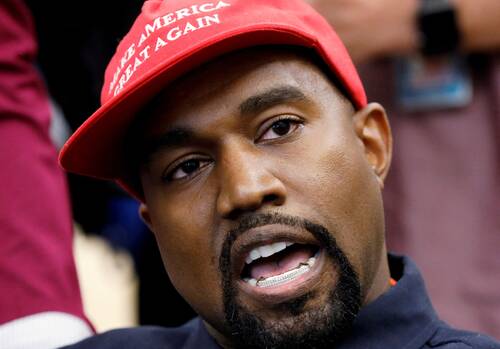
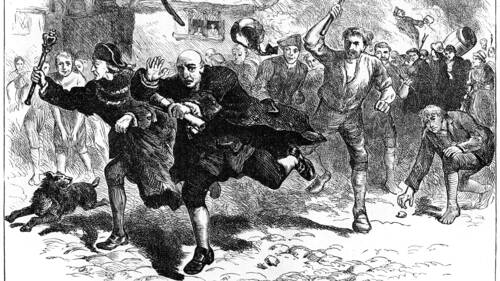
| "James Bennet was right," Erik Wemple wrote last week. Our media columnist was reassessing what he describes as "one of the most consequential journalism fights in decades": the 2020 firing of the New York Times's editorial page editor, who lost his job at the paper after publishing a now-infamous op-ed by Sen. Tom Cotton suggesting that the National Guard be called in to quash rioters during the George Floyd protests. It's an unexpected and eye-opening piece, a deep-dive into the internal workings of one media outlet's politics and personalities that explores how self-protective instincts and social media pile-ons can stifle discourse around controversial topics, and the ramifications for the field of journalism at large. Wemple does a great deal of digging into exactly what happened back in 2020, and admits that he himself got it wrong: "To date, the lesson from the set-to — that publishing a senator arguing that federal troops could be deployed against rioters is unacceptable — will forever circumscribe what issues opinion sections are allowed to address. It's also long past time to ask why more people who claim to uphold journalism and free expression — including, um, the Erik Wemple Blog — didn't speak out then in Bennet's defense." His conclusion? "It's because we were afraid to." Wemple reflects on his decision — wrong, he thinks in hindsight — not to object to Bennet's firing, and raises bigger questions about our current media environment. How do we decide what speech should be published in a national newspaper, and who should make the call? Are terms like "violence" and "danger" being overused to stifle important debate? And what happens when silencing happens from within? Let us know what you think. | The top opinion editor left the New York Times in June 2020 over a controversy that Publisher A.G. Sulzberger mishandled. By Erik Wemple ● Read more » |    | | | The Iranian journalist and activist, who spent much of her life being forced to contain her curls, explains how compulsory hijab laws hurt both women and men. By Alyssa Rosenberg and Masih Alinejad ● Read more » | | | | What they really crave is intimacy. By Christine Emba ● Read more » | | | | | Dropping Kanye West after his antisemitic remarks is a much more limited social-justice win than it appears. By Karen Attiah ● Read more » | | | The nation's allergy to aristocracy has been on display from the start, nowhere more vividly than in pre-Revolutionary Boston. By Stacy Schiff ● Read more » | | | If you are doing a parent-and-baby combo Halloween costume, think very, very carefully. By Alexandra Petri ● Read more » | | | | 




 Email
Email





No comments:
Post a Comment