Why we still haven't seen Trump's tax returns The 5-Minute Fix author Amber Phillips is on parental leave, and Washington Post reporter and editor Paige Winfield Cunningham is filling in. Send her a note any time on what you'd like to see in this newsletter. Remember Donald Trump's refusal to release his tax records during his first presidential run? Well, six years and two protracted legal battles later, the public still hasn't been able to view the records. Democrats on the House Ways and Means Committee came very close to obtaining them last week, but now the fight is dragging out a few more days — and could still result in a dead end. What happened: Today, Chief Justice John Roberts put a temporary hold on the Treasury Department's handover of Trump's tax returns to the House committee, giving the Supreme Court more time to review an emergency appeal from Trump to block it entirely. Why are Democrats in Congress still seeking the records? This fight has taken a back seat to the high-profile investigations of the Jan. 6 attack and Trump's level of responsibility for it. But House Democrats have said getting the records would help them write legislation to improve the way presidents are audited by the IRS. And many Trump critics are eager to see what the tax records might reveal amid investigations of his businesses. What is Trump's argument? That the committee is politically motivated in seeking his records and has no legitimate legal reason for obtaining them. What might the returns show? That Trump paid very little in federal taxes despite his vast wealth. In 2020, the New York Times reported that he paid no federal taxes in 10 out of 15 years and in 2016 and 2017 paid only $750 each year. What happens next? The Supreme Court is considering whether to intervene in the case. If it does, there may be no final decision until the start of the next Congress in January. And if Republicans take control of the House, they could end the records request, essentially granting Trump his wish to keep the tax returns under wraps. 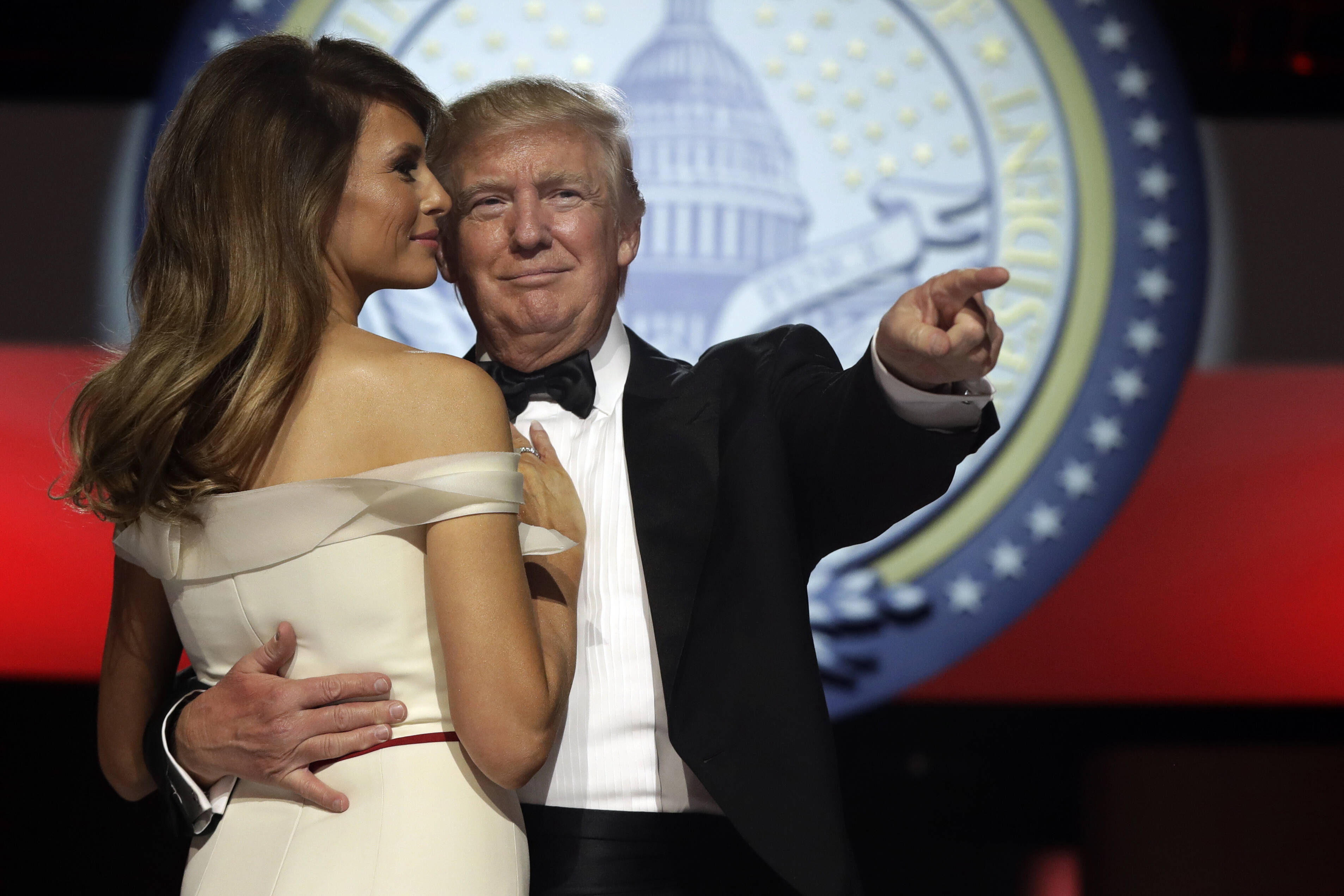 President Donald Trump and first lady Melania Trump at an inaugural ball in 2017. (Alex Brandon/AP) | Something to know about election fraud: It's rare Trump-supporting Republican voters now regularly air claims of election fraud to an extent that would have been unthinkable in past elections. Some GOP candidates have latched onto this narrative, popularized by Trump and his allies, and a dozen interviewed by The Post refused to say whether they will accept this year's election results. A Fox News poll from early October found that 55 percent of Americans are extremely or very concerned about election fraud — and that includes 75 percent of people who vote Republican. But the truth is that election fraud just isn't common. The Post's Glenn Kessler lays it out: - By every single metric, election fraud is rare in the United States.
- Almost no elections in the past 50 years have been flipped because of documented voter fraud, with occasional exceptions at the local level.
Let's walk through why: Elections are run by more than 8,000 local governments, and almost 90 percent of Americans vote on paper ballots. The system is just too decentralized for someone to steal the election through voter fraud. - This remained true for the 2020 presidential election. Even in states where the race was tight, disputed ballots made up a tiny percentage of Biden's victory margin. So even if every disputed vote was fraudulent (which was not the case) Biden still would have won.
But: That's not to say elections can't be manipulated by other means. Politicians can redraw districts to all but ensure one party will win, and Trump's allies tried to undermine the 2020 results by using illegitimate electors and trying to block Congress. Notably, none of these ploys involved ballot stuffing or other kinds of voter fraud that we hear about so much. The context: Trump didn't invent the idea that voter fraud can flip elections, though he did make such claims mainstream for Republicans. But decades before Trump (see the 1960 presidential race between Richard M. Nixon and John F. Kennedy), Republican officials made questionable claims about election fraud to cast doubt on election results and/or justify new rules that could restrict voter access. | 



 Email
Email


No comments:
Post a Comment