| Happy Friday! A quick programming note: The newsletter will be off on Monday but back Tuesday. Until then! Below: Some possible Kremlin-linked TikTok accounts aren't labeled, and the FTC declined a meeting with the head of Twitter. First: | Washington's TikTok tribes, explained | 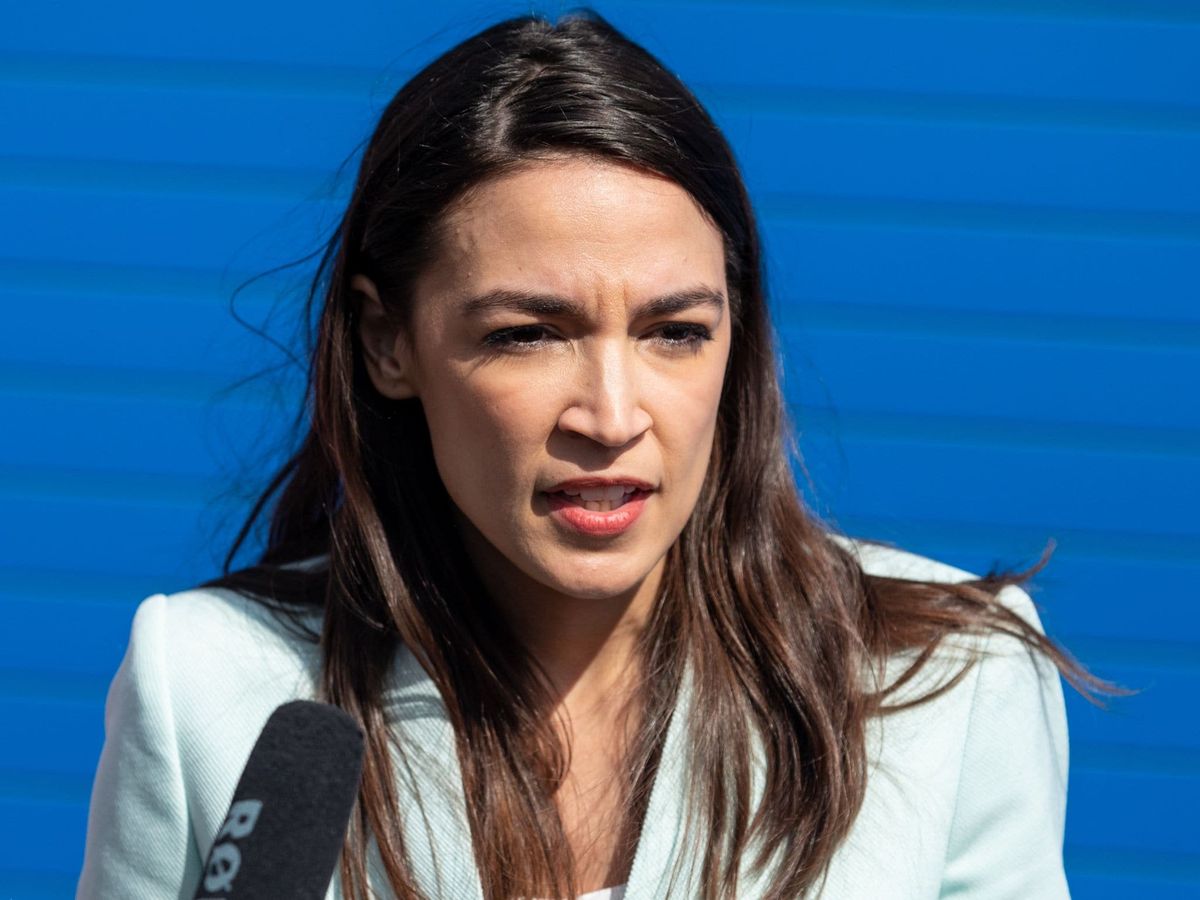 Rep. Alexandria Ocasio-Cortez (D-N.Y.) has come out against a TikTok ban. (Ilana Panich-Linsman for The Washington Post) | | | When TikTok CEO Shou Zi Chew testified to Congress last week, lawmakers told him the company had accomplished a rare feat: uniting officials on both sides of the aisle against the China-linked app. But in the days since the session, both parties have become increasingly fractured over what to do about TikTok — and particularly on the White House's role in any crackdown. Here's a look at the main political tents that have formed in the debate: | The progressive defenders | | A small but growing group of Democrats from the congressional Progressive Caucus have denounced calls for a ban, citing concerns that it would infringe on users' free expression rights and hurt creators and small businesses who rely on the platform to make a living. The members, including Reps. Jamaal Bowman (D-N.Y.) and Alexandria Ocasio-Cortez (D-N.Y.), have argued that instead of targeting TikTok, Congress should focus instead on setting up stricter rules for digital platforms throughout the tech sector, including around data privacy. | | Some of the members, such as Bowman, have gone on to argue that calls to ban TikTok are rooted in "racism" and "xenophobia" toward China, and could lead to another "Red Scare." | | A bipartisan coalition, led by Sens. Mark R. Warner (D-Va.) and John Thune (R-S.D.), is pushing for legislation to give the Commerce Department greater power to ban or restrict apps linked to countries deemed as foreign adversaries, such as China. The bill, if passed, would not guarantee a ban or a forced sale of TikTok, but it would give the federal government more legal standing to pursue either route. Unlike the other notable proposals, the RESTRICT Act does not explicitly target TikTok, and instead seeks to revamp how the government vets and responds to potential threats. While some within the group have not said whether they think the legislation should lead to a ban against TikTok, others have embraced those calls. | | A significant number of lawmakers have made it clear that the U.S. federal government needs to either ban TikTok or force its sale to a U.S. company — regardless of how this is accomplished. Some of those, such as Sens. Marco Rubio (R-Fla.) and Angus King (I-Maine), are proposing legislation that expressly targets TikTok and would effectively force a ban or sale. Others, including Rep. Cathy McMorris Rodgers (R-Wash.), have come out in favor of banning the app but have not directly addressed whether they think additional legislation is needed. | | Some from the pro-ban camp have come out against wider-reaching legislation to give the federal government more power to boot foreign apps, like the Warner-Thune bill. The group, which includes some House Republicans and notably a few prime-time Fox News personalities, argues the campaign would lead to massive federal overreach. "We should act decisively to ban TikTok directly. We shouldn't give new open-ended authority to federal bureaucrats," Sen. Josh Hawley (R-Mo.), who led an unsuccessful push to pass his own bill banning TikTok, said Wednesday. | The libertarian defenders | | Sen. Rand Paul (Ky.) broke new ground among Republicans this week by echoing the concerns recently voiced by liberal Democrats that a TikTok ban would violate the First Amendment. "I think we should beware of those who use fear to coax Americans to relinquish our liberties, to regulate and limit our First Amendment rights," Paul, who blocked Hawley's push, said Wednesday, adding that the United States should not try to "emulate Chinese speech bans." And like TikTok's Democratic defenders, Paul noted that "every accusation of data gathering that's been attributed to TikTok could also be attributed to domestic Big Tech companies." The main difference between the two camps is that Paul, a staunch proponent of limited government, did not issue calls for sweeping new restrictions to tackle the whole tech sector. | | While there's near-unanimity on Capitol Hill that there's reason for concern about TikTok's practices, many prominent lawmakers have not taken a stance on either the calls for a ban or the proposals aimed at better tackling perceived threats like the app. Rep. Frank Pallone Jr. (N.J.), the top Democrat on the House Energy and Commerce Committee, told Fox News a day before Chew testified before the panel that he was unsure about a ban but thinks "it's certainly something we have to consider." The session largely sidestepped questions about whether the federal government needs more power to target any alleged risks specific to TikTok, with lawmakers instead using the occasion to plug their ongoing efforts to pass federal privacy rules for the whole tech sector. | | |  | Our top tabs | | Possible Kremlin-linked media accounts not labeled on TikTok |  As of March 22, the accounts tied to Kremlin-funded outlets had over 14 million followers and had generated at least 319 million likes. (Yuri Kochetkov/EPA-EFE/Shutterstock) | | | A report released Thursday found that a group of media accounts on TikTok are likely linked to the Russian government but are not labeled as state-affiliated media on the platform. The analysis from the Alliance for Securing Democracy at the German Marshall Fund found 78 TikTok accounts that are likely affiliated with Kremlin-funded media outlets, though just 47 of those accounts are labeled as state media on the TikTok platform. "Not all the accounts labeled by TikTok or in our own data set are active, but it appears that each account could start posting again if they chose to do so," said Joseph Bodnar, the study's author. As of March 22, the accounts had over 14 million followers and had generated at least 319 million likes. "We label state-affiliated media so our community is clear if they are engaging with content that may be controlled or influenced by a government. This is an ongoing process and we'll continue to review new accounts and add labels as and when they join the platform," said TikTok spokesperson Ben Rathe, who added that TikTok has labeled over 120 accounts on its platform. | Kennedy, Lee introduce digital ad competition bill | 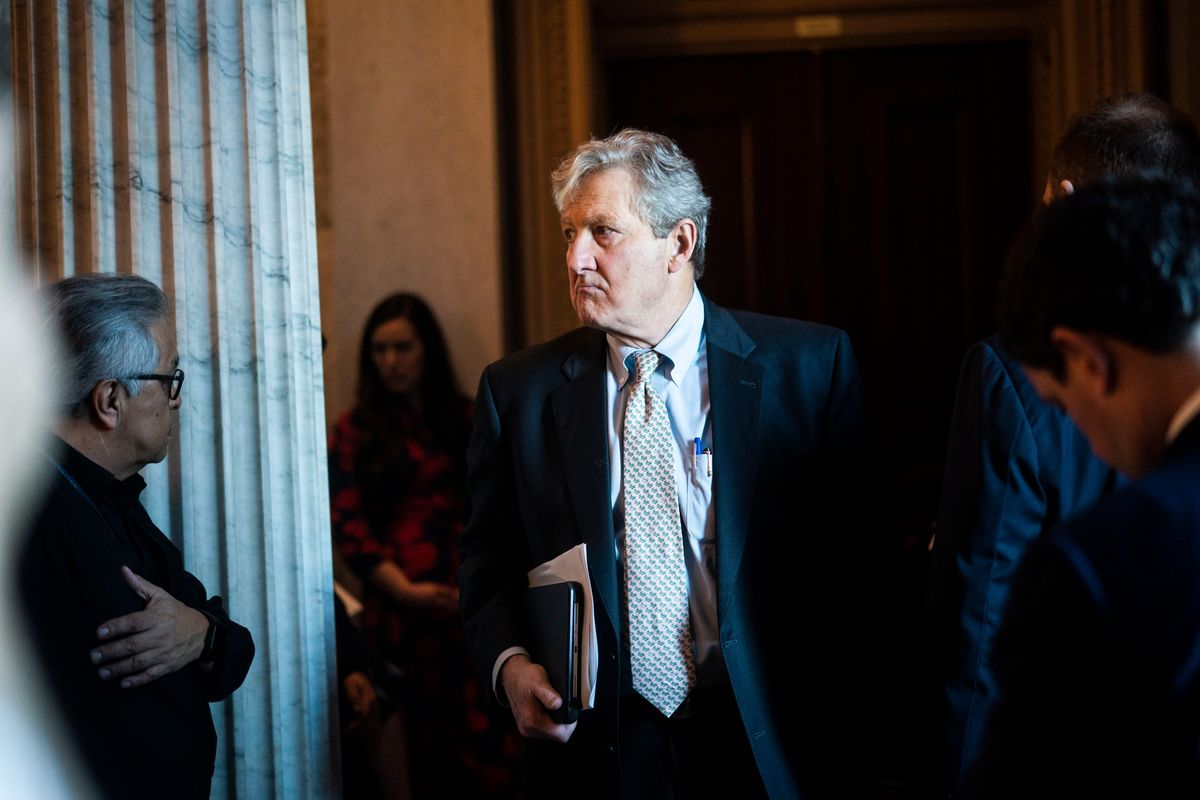 Sen. John Neely Kennedy (R-La.) departs following a weekly policy luncheon on Capitol Hill on March 7. (Jabin Botsford/The Washington Post) | | | Sens. John Neely Kennedy (R-La.) and Mike Lee (R-Utah) on Thursday introduced a bill to stop what they describe as a monopoly in the digital advertising space. The bill titled the Advertising Middlemen Endangering Rigorous internet Competition Accountability (AMERICA) Act is meant to spur competition in the digital ads industry by limiting large digital ad companies from controlling more than one area of the digital ad business if they process more than $20 billion in digital ad transactions. The bill would additionally "require medium-sized and larger digital advertising companies that process more than $5 billion in digital ad transactions to abide by several obligations to protect customers and competition." . The release specifically calls out Google and Facebook as companies that "dominate digital advertising." Facebook parent Meta declined to comment. Google did not respond to a request for comment. | Musk tried to meet FTC's Khan but was turned down | 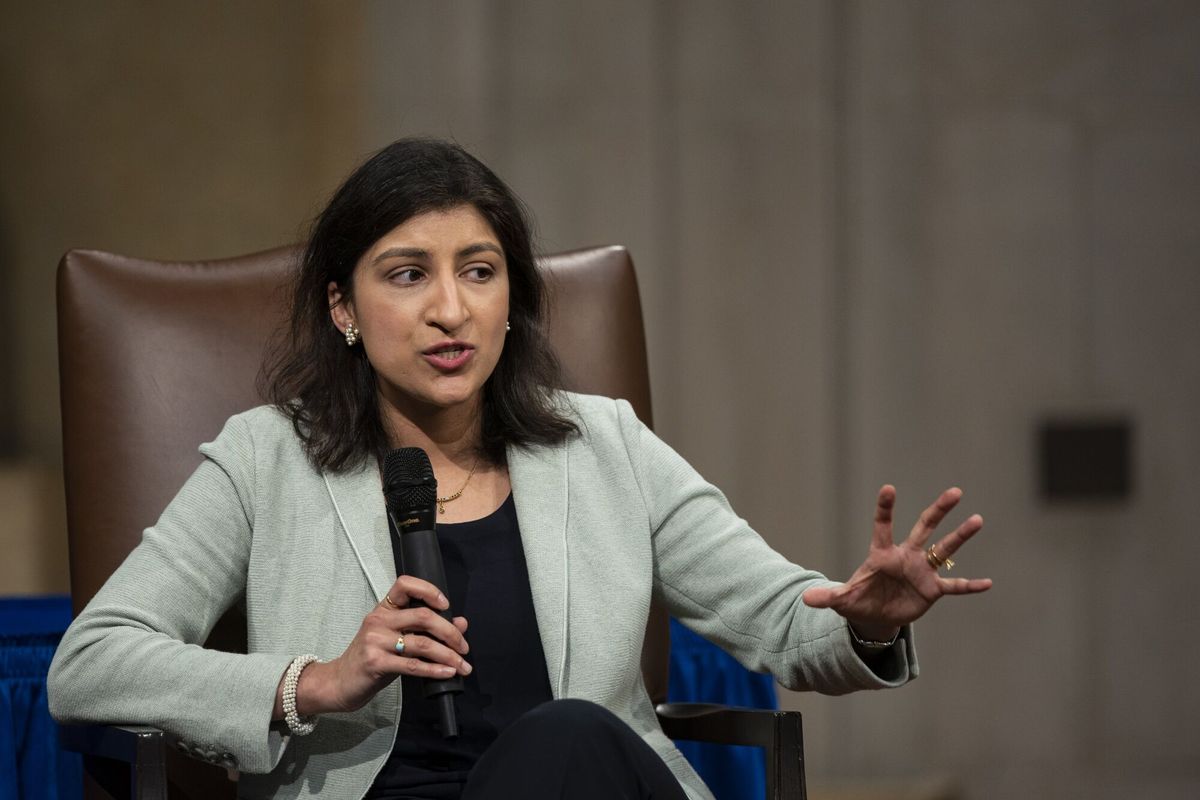 FTC Chair Lina Khan declined the meeting in a Jan. 27 letter, where she told a Twitter lawyer to focus on complying with current investigations. (Al Drago/Bloomberg News) | | | Twitter CEO and billionaire Elon Musk requested a meeting with Federal Trade Commission Chair Lina Khan, but the request was turned down, David McCabe and Kate Conger report for the New York Times, citing a review of documents. While Musk attempted to meet with Khan late last year, Khan declined the meeting in a Jan. 27 letter, where she told a Twitter lawyer to focus on complying with current investigations the consumer protection agency was conducting on the social media company. "Mr. Musk spoke last month with the F.T.C.'s lone Republican commissioner, Christine Wilson, according to an email between the agency's staff members and two people with knowledge of the matter," McCabe and Conger write. The FTC is investigating Twitter's privacy practices in connection with a broader 2011 settlement over how the company profited from ads using data that users did not consent to for collection. The FTC and Justice Department ordered Twitter to pay $150 million this past May for violating the 2011 order. | | |  | Agency scanner | | | |  | Hill happenings | | | |  | Inside the industry | | | |  | Competition watch | | | |  | Workforce report | | | By Julian Mark, Hamza Shaban, Aaron Gregg and Jacob Bogage ● Read more » | | | | | |  | Trending | | | |  | Daybook | | - Executive Vice President of the European Commission Margrethe Vestager speaks at an Atlantic Council event at 8:15 a.m.
| | |  | Before you log off | | | That's all for today — thank you so much for joining us! Make sure to tell others to subscribe to The Technology 202 here. Get in touch with tips, feedback or greetings on Twitter or email. | |




No comments:
Post a Comment