| Good morning and welcome to The Cybersecurity 202! Me again. I feel like the word "cybertroubles" describes a lot of we talk about every day. Was this forwarded to you? Sign up here. Below: A special counsel is reportedly looking into Trump's firing of Chris Krebs, and the debt ceiling proposal could rescind funds from CISA. | Diplomats stress cybersecurity for space | 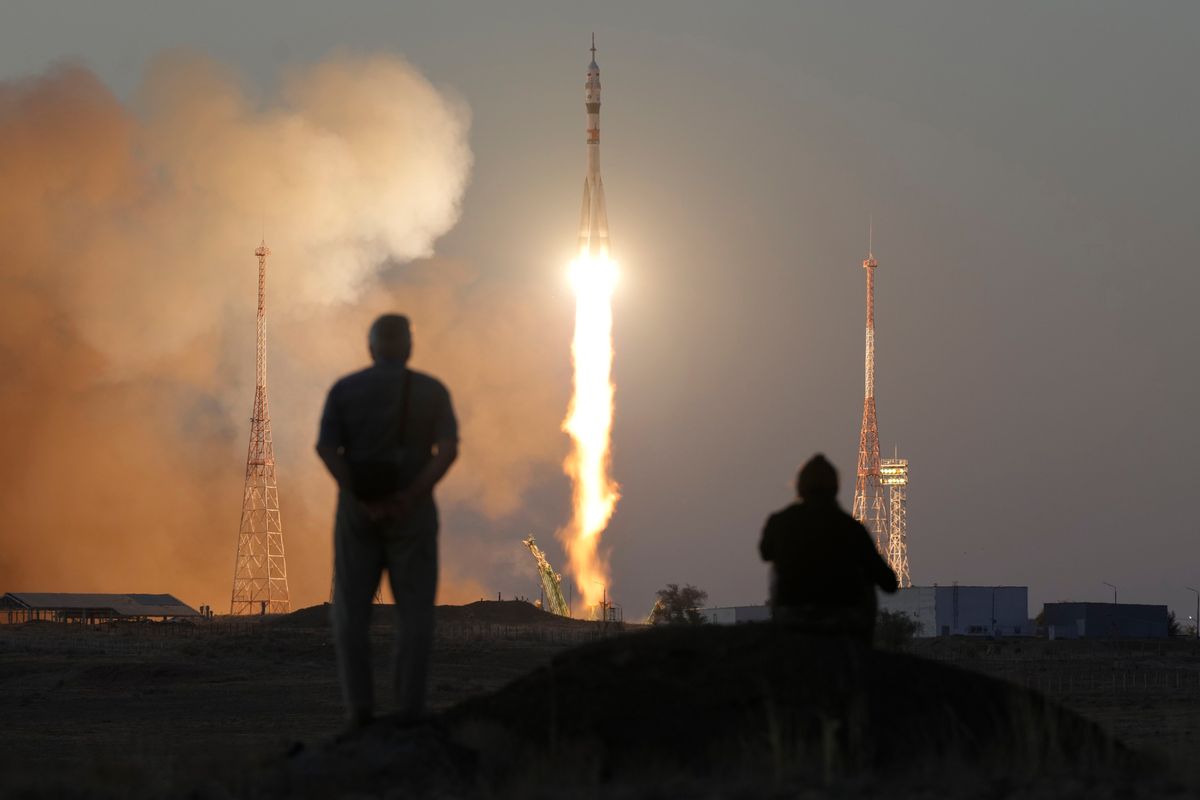 A State Department document warns that China and Russia are competing with the United States in space. (Dmitri Lovetsky/AP) | | | A new State Department strategy document stresses the role of cybersecurity in space diplomacy, a subject of burgeoning attention as the Biden administration seeks to shore up space equipment from cyberattacks. A handful of the goals laid out in the State Department's new Strategic Framework for Space Diplomacy touch on cybersecurity. They range from working with industry and partners on securing assets in space to working with "U.S. cybersecurity agencies and entities to promote a secure environment, with cybersecurity interoperability, to strengthen space asset resiliency against adversarial offensive operations." The framework, which was released Tuesday, comes just a month after acting national cyber director Kemba Walden said she would meet with firms in California to discuss gaps in protecting space from cyberattacks. | | Citing an annual threat assessment by the U.S. intelligence community, the State Department framework notes that China and Russia are key competitors with the United States in space. It also mentions a Russian cyberattack that targeted a satellite broadband service at the outset of Russia's invasion of Ukraine. That cyberattack has also been cited by policymakers as a concrete example of how cyberattacks can intersect with space. | | "We are all aware that the first 'shot' in the current Ukraine conflict was a cyberattack against a U.S. space company," Walden said last month. "So, there is strong agreement across public and private sectors that this is urgent and requires high-level attention. The White House is deeply committed to driving efforts to enhance space systems cybersecurity, recognizing that the incredibly complex and unique space ecosystem requires a very close public-private partnership, given the pace and scale of private-sector innovation." Documents leaked on Discord have also revealed more information about cyberthreats in space. For example, China is reportedly developing hacking tools to take over satellites amid wars, according to one of the documents. | | The State Department's strategic framework appears to be an attempt to center U.S. diplomats in the conversation about what should happen in space. "Traditionally, space relations have been the purview of NASA or the Pentagon, but the State Department document signals a larger involvement by the diplomatic corps," my colleague Christian Davenport wrote. "It is another sign of the growing importance of space in the American worldview that, in some ways, mirrors government activity at the dawn of the Space Age." But there have been calls for U.S. officials to do even more. For example, the successor of the congressionally created Cyberspace Solarium Commission recommended labeling space systems as critical infrastructure. That idea — which, if implemented, could give the sector even more attention — has "been floating around for a while," as my colleague Tim Starks wrote last month. For her part, Walden told reporters last month that the White House is rewriting a 2013 directive on critical infrastructure, though she couldn't say whether space would be included. "I don't know the answer because the sausage is still being made," she said at the time. "But what I will say is that designating something as critical infrastructure just is a way to frame how we do policy, and nothing more. It just brings a way of thinking, and nothing more." | | |  | The keys | | Special counsel looks into Trump's firing of Chris Krebs | 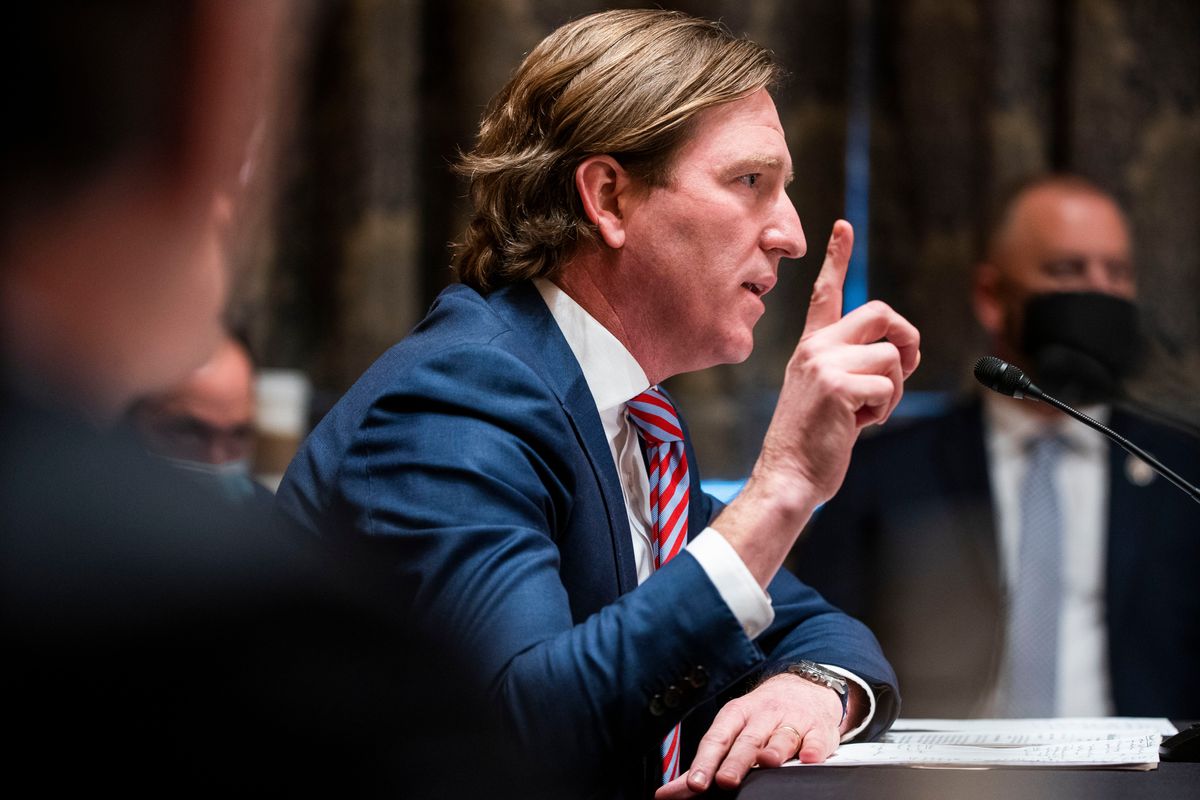 Krebs had pushed back on claims that the election had been stolen. (Jim Lo Scalzo/EPA-EFE) | | | Special counsel Jack Smith's team has subpoenaed aides who worked in the White House during the Trump administration and may have been involved in then-president Donald Trump's firing of Chris Krebs, who was director of the Cybersecurity and Infrastructure Security Agency, the New York Times's Maggie Haberman and Jonathan Swan report. Trump fired Krebs in November 2020 after he debunked Trump's claims that the 2020 election had been stolen. | | "The investigators appear focused on Mr. Trump's state of mind around the firing of Mr. Krebs, as well as on establishing a timeline of events leading up to the attack on the Capitol by a pro-Trump mob on Jan. 6, 2021," they write. "The latest subpoenas, issued roughly two weeks ago, went to officials in the personnel office, according to the two people familiar with the matter." Smith is investigating whether Trump or his aides conspired to obstruct the certification of the results or engaged in fraud to block the transfer of power between administrations, as my colleagues have reported. Smith's team has interviewed Krebs, the Times reports. Krebs declined to comment to the outlet. | Debt ceiling agreement includes measure to rescind CISA funding | 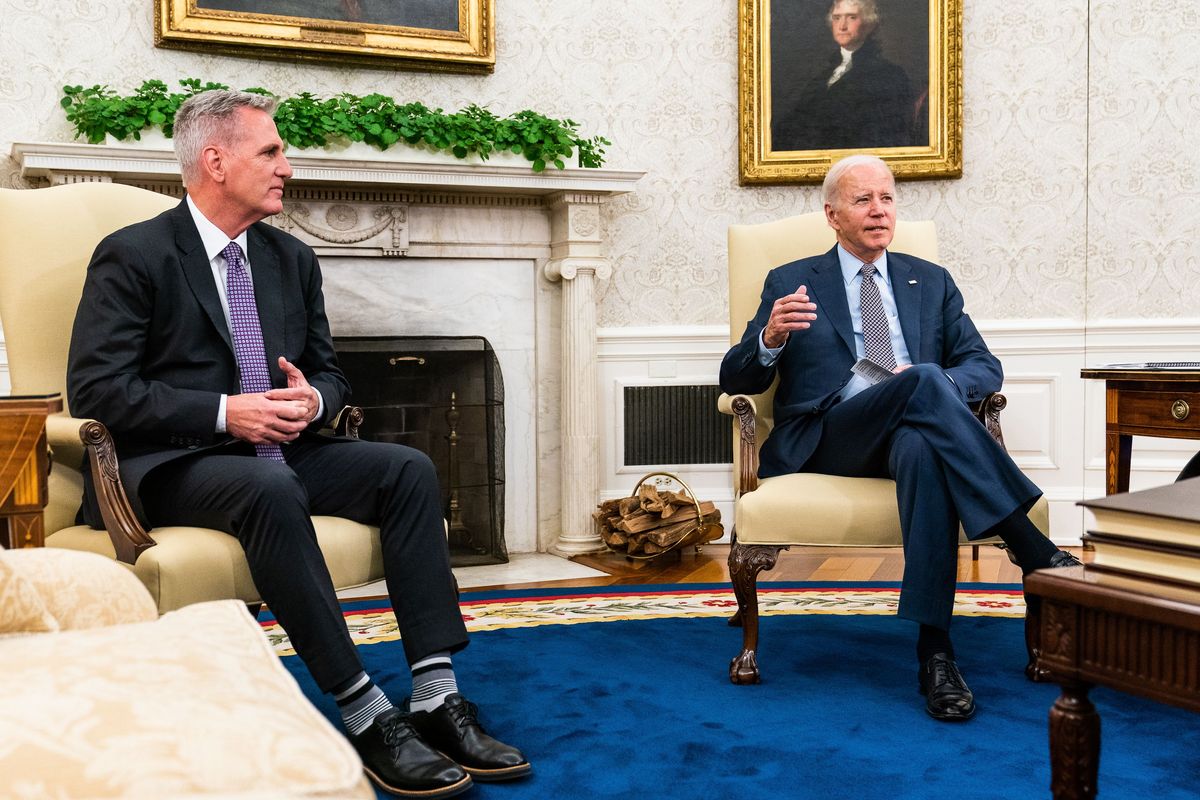 President Biden meets with House Speaker Kevin McCarthy (R-Calif.) in the Oval Office of the White House on Monday. (Demetrius Freeman/The Washington Post) | | - Unobligated funds are the funds given to an agency that are not spent or committed to by the end of a budget period. The ARP makes most of the emergency funds available to entities until summer of 2024.
- CISA through ARP "received $650 million to boost cybersecurity measures across the federal government, including through the use of intrusion detection systems such as its EINSTEIN continuous monitoring program," Jones writes
- It's not clear how much will be rescinded from CISA.
| | A separate fiscal year 2023 spending agreement allocated $2.9 billion to CISA. Even if all $650 million were to be rescinded, that would leave the agency with about $2.25 billion to work with. | State Department official reiterates that Section 702 is key for intelligence operations |  Section 702 allows the FBI and National Security Agency to gather electronic data without a traditional warrant based on probable cause. (J. Scott Applewhite/AP) | | | The State Department's top intelligence official, Brett Holmgren, on Tuesday stressed that controversial spying authorities have been vital to U.S. intelligence operations and that failure to renew the measure would be costly for American diplomacy. Holmgren, the assistant secretary of state for intelligence and research, said Congress should renew Section 702 of the Foreign Intelligence Surveillance Act (FISA) before it expires at the end of the year. He was speaking at an event hosted by the Center for Strategic and International Studies. | - Section 702 allows the FBI and National Security Agency to gather electronic data without a traditional warrant based on probable cause when the target is a foreigner overseas and it's for foreign intelligence purposes.
- Holmgren said the surveillance authority was vital for the agency "to learn about and warn international partners and U.S. businesses about North Korea's efforts to commit digital fraud to fund its nuclear program," CyberScoop's Tonya Riley reports.
- The intelligence community calls 702 a key national security tool, while privacy groups say it's a threat to constitutional rights. Many cybersecurity experts argue that it should be reauthorized with changes.
| | "Holmgren's remarks make him the latest in a veritable parade of Biden administration officials who have publicly called for the program's renewal, arguing it is essential to combating overseas hackers, spies and terrorists," Martin Matishak writes for the Record. White House officials in March warned Congress of 702's pending lapse. The FBI has previously released data indicating its staff have complied more with communication interception rules outlined in FISA, but GOP concerns over politicization of FBI investigations has put 702's renewal authority in doubt for Republican lawmakers. And revelations about misuse could also make it harder for government officials to get support from Congress to swiftly reauthorize 702. | | |  | Government scan | | | |  | Industry report | | | By Aaron Gregg, Cristiano Lima and Gerrit De Vynck ● Read more » | | | | | |  | National security watch | | | |  | Global cyberspace | | | |  | Cyber insecurity | | | |  | Daybook | | - The Senate Banking Committee holds a hearing on countering China at 10 a.m.
- The Senate Homeland Security Committee holds a hearing to discuss modernizing DHS mission-critical legacy IT systems at 10:15 a.m.
- The Senate Judiciary Committee will consider amendments to bills aimed at preventing drug trafficking on social media platforms and preventing online child exploitation tomorrow at 10 a.m.
- Anne Neuberger and other cybersecurity officials speak at the Center for Strategic and International Studies about cyberthreats to critical infrastructure tomorrow at 2 p.m.
| | |  | Secure log off | | | Thanks for reading. See you tomorrow. | | |





No comments:
Post a Comment