 | | By Dan Diamond with research by McKenzie Beard and Rachel Roubein | | | Happy Tuesday! Your guest author is learning to juggle pushing strollers with chasing scoops. Not a subscriber? Sign-up here. Today's edition: The Biden administration is ending its coronavirus vaccine mandates first deployed in 2021. The federal health department says two hospitals that denied an emergency abortion broke the law. But first … | Bernie Sanders threatens to block Biden health appointees who are too soft on drug industry | 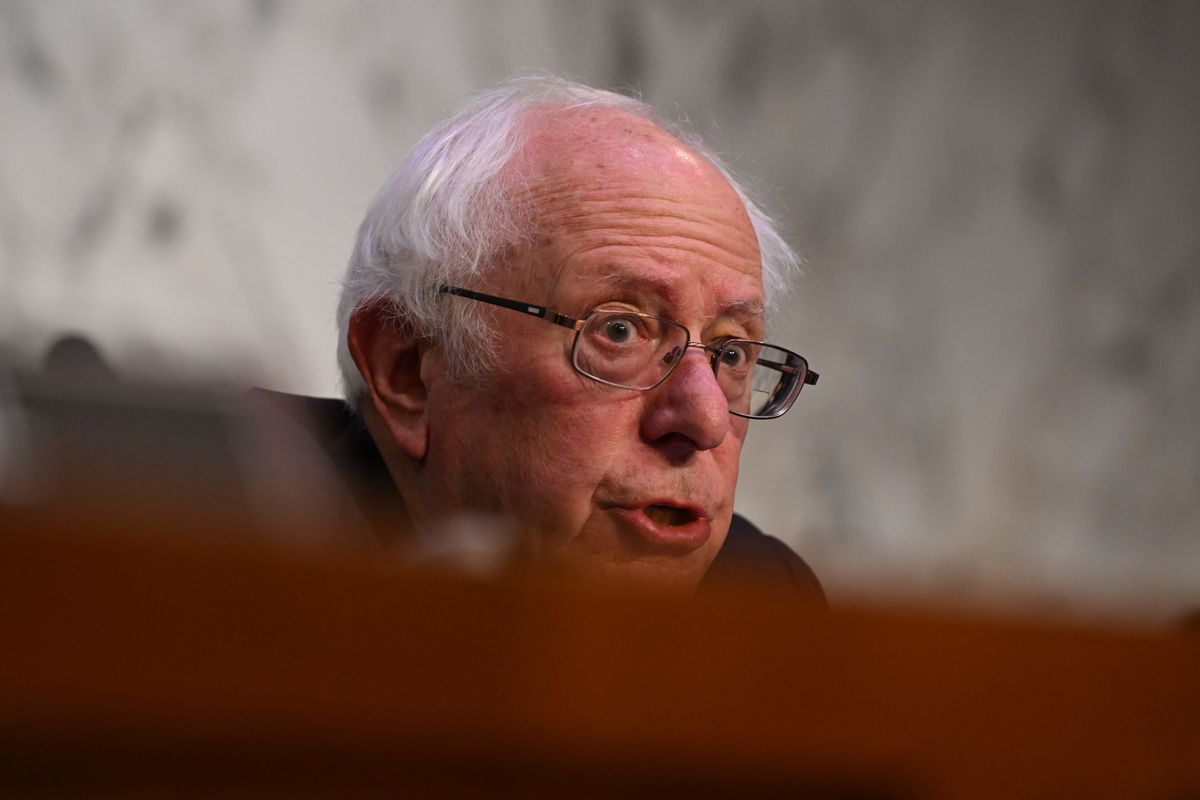 Sen. Bernie Sanders (I-Vt.) in a Senate Health, Education, Labor, and Pensions hearing. (Photo by Ricky Carioti/The Washington Post) | | | Sen. Bernie Sanders (I-Vt.) is warning the White House: Health and Human Services nominees who aren't prepared to "stand up and fight" the drug industry will likely lose his vote. "I will strongly oppose any future nominee to a major federal health agency who is not prepared to significantly lower the price of prescription drugs in this country," the Senate health panel chair wrote to President Biden last week, in a letter shared with The Post. Sanders said his new rules apply to any upcoming health nominee — whether an agency director or assistant secretary — he stressed in an interview with The Health 202. And as head of the Health, Education, Labor and Pensions Committee, Sanders has the power to slow-walk nominees, assuming he schedules their confirmation hearings at all. "I want action here. I want this administration and its nominees and its appointments to start addressing the prices of the high costs of prescription drugs," he said. | | It's not an empty threat. Sanders has opposed Biden's nominees before — a point he underscored in his letter to the president. | | | | | | | | CRC screening methods can be difficult to access, leading to low screening rates among underserved populations. Shield offers a more patient-friendly option to increase screening rates nationally. | | | | | | | | "As you know I voted against the confirmation of Dr. Robert Califf, the head of the FDA, because of his unwillingness to stand up to the greed of the pharmaceutical industry," Sanders wrote. (Califf, a cardiologist who worked at Verily and spent years working with drug companies on clinical trials, was confirmed in a narrow 50-46 vote last year; allies defended Califf's work with the drug industry and said his perspective would be useful to the Food and Drug Administration.) Sanders's threat has also grown sharper given the narrow margins in the Senate. With Sen. Dianne Feinstein (D-Calif.) recuperating from an illness in California — effectively leaving Democrats with a 50-49 majority — Sanders could block a Biden health nominee if he joined with Republicans in a party-line vote. | | What does this mean for Biden's likely nominee to lead the National Institutes of Health? The Post and others have reported that Monica Bertagnolli, a cancer surgeon who leads the National Cancer Institute, is set to be nominated as NIH director. Bertagnolli has prior work with biotech companies; a list of her disclosures is at the bottom of this 2019 blog post as president of the American Society of Clinical Oncology. Sanders sidestepped questions on Bertagnolli's candidacy, and it's not yet clear if he would support her. A source familiar with the situation said that Sanders in March proposed three potential NIH directors to the White House: Aaron Kesselheim of Harvard Medical School, Vincent Rajkumar of Mayo Clinic, and Sarah Szanton, dean of the Johns Hopkins School of Nursing. Sanders also personally discussed their candidacy with White House Chief of Staff Jeff Zients, the source said. Beyond NIH, it's not clear when the next major health agency opening will be. While HHS Secretary Xavier Becerra and CDC Director Rochelle Walensky have faced internal frustrations, both have survived past the midterms, often a time when the White House makes personnel changes. | | Sanders's rationale: "Fundamental changes" in HHS policies are "long overdue." The senator said that he has long-standing concerns that health leaders aren't using all of the tools at their disposal, citing decisions at the Centers for Medicare and Medicaid Services, FDA and NIH. "No drug therapy, no matter how effective and life-saving it might be, is worth anything to the person who can't afford it. Further, the high cost of prescription drugs has resulted in tens of billions of unnecessary costs to Medicare, Medicaid and other federal programs," Sanders wrote to Biden. For instance, he pointed to NIH's rejection of a petition by prostate cancer patients to allow the government to step in and license patent rights to another manufacturer for pricey cancer drug Xtandi as an example of a policy that he wants the agency to reverse. | | Sanders also said that the agency needs to take a harder line with the private sector, citing how NIH supported Moderna's research and development of its mRNA vaccine but has struggled to influence the company's subsequent financial practices, even as its founders became billionaires. NIH should tell industry partners, "We are prepared to help you develop prescription drugs, on dementia, on Alzheimer's, on cancer, whatever it may be, we're prepared to put money into it," Sanders said. "But on the other hand … you're not going to be able to charge any price you want." What's next: Expect Sanders to underline his stance at today's Senate HELP markup of drug-price legislation that he's steering with Sen. Bill Cassidy (La.), the panel's ranking Republican. "What I will say [Tuesday] at the markup is this is a good start. It is a modest start. We are going to go a lot, lot further," Sanders said, touting next week's hearing on insulin prices as another opportunity to push the industry. | | |  | Daybook | | | Remember when? It's been exactly a year since Politico broke the news that the Supreme Court was poised to overturn Roe v. Wade. The news outlet was right, and the June ruling was the most consequential moment for abortion in decades, leading to a seismic shift in where in the country (and when in pregnancy) women can obtain an abortion. | | |  | Coronavirus | | Most federal coronavirus vaccine mandates to end next week | 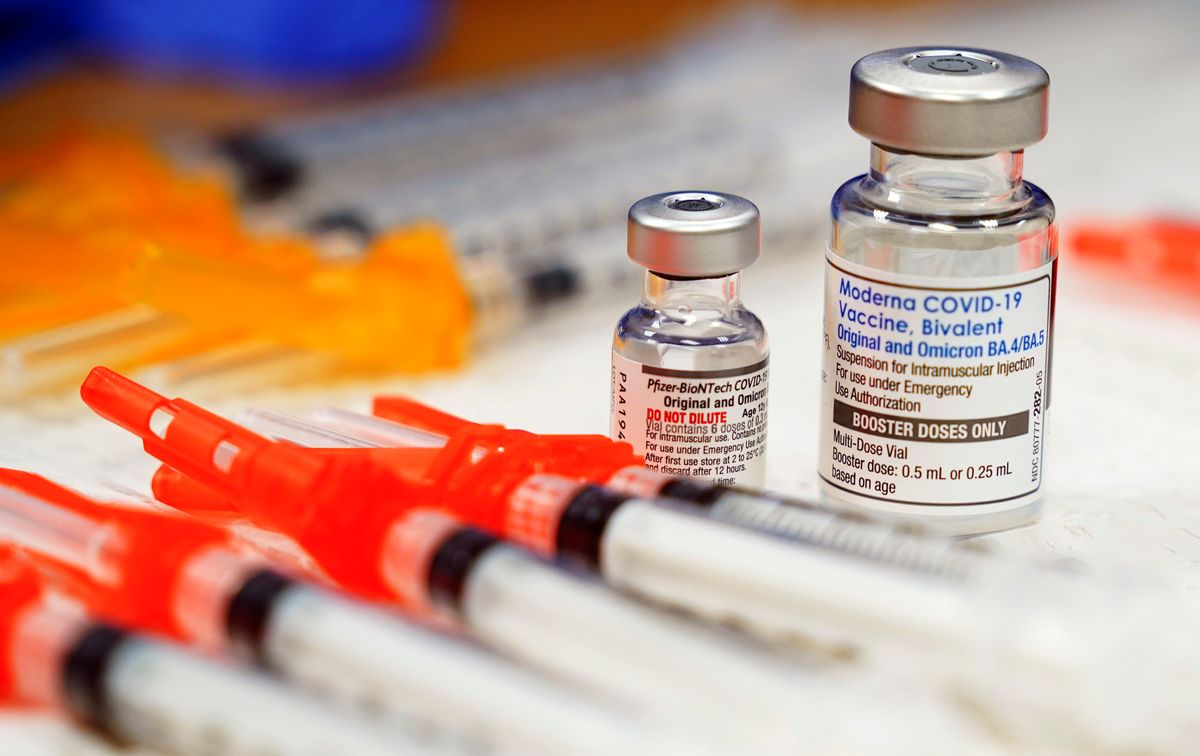 Pfizer, left, and Moderna bivalent coronavirus vaccines. (Steve Helber/AP) | | | The Biden administration is ending its requirements that most international travelers, federal workers and contractors, health-care workers and Head Start educators be vaccinated against the coronavirus, Dan scooped yesterday. | | Biden first ordered the vaccine requirements in 2021 — which led to lengthy legal and political battles. The requirement for federal workers had been blocked by the courts since January 2022, though the Supreme Court last year allowed a mandate to go into effect for most health-care workers at facilities that receive Medicaid and Medicare funding. The timeline: The administration will end the coronavirus vaccine requirements for federal employees, federal contractors and international air travelers at the end of the day on May 11, which is when the public health emergency for the coronavirus will terminate. The Department of Health and Human Services and the Department of Homeland Secretary will start the process to unwind mandates for Head Start educators; Medicare and Medicaid-certified facilities, which includes nursing homes and hospitals; and certain noncitizens at the border. | | |  | Agency alert | | HHS says two hospitals that denied an emergency abortion broke the law |  HHS Secretary Xavier Becerra said federal law requires doctors to treat patients in emergency situations. (Ben Margot/AP) | | | Two hospitals put a pregnant woman's life in danger and violated federal law when the facilities refused to provide an emergency abortion when the Missouri woman was experiencing premature labor, the Associated Press's Amanda Seitz reports, citing a first-of-its-kind federal investigation. The nation's top health official said federal law requires doctors to treat patients in emergency situations — and that trumps state law. The details: The federal government's probe centered on Freeman Health System in Joplin, Mo., and University of Kansas Health System in Kansas City, Kan. In August, the facilities reportedly declined to provide an abortion to Mylissa Farmer when her water broke early at 17 weeks. | - Abortions are largely banned in Missouri, but there are exceptions for medical emergencies. The hospital didn't respond to AP's request for comment.
- Abortions are legal up to 22 weeks in Kansas; it's unclear why the health system refused to provide one. A spokesperson said the woman's care followed "the standard of care based upon the facts known at the time, and complied with all applicable law."
| | |  | Reproductive wars | | AAPLOG invites ACOG to a debate | | A group of gynecologists who oppose abortion is trying to organize a public debate with the head of the American College of Obstetricians and Gynecologists (ACOG). The group, called the American Association of Pro-Life OB/GYNs, said it has invited ACOG CEO Maureen Phipps to debate its own CEO, Christina Francis, over "whether induced abortion is consistent with good medicine." The Civil Discourse Project of the Kenan Institute for Ethics at Duke University confirmed it has agreed to host a potential debate this fall. The invitation comes after AAPLOG, which is one of the plaintiffs suing to get FDA approval of abortion pill mifepristone rescinded, was banned from hosting an exhibitor's booth at a major ACOG meeting in February. | | The group tweeted this at the time: | 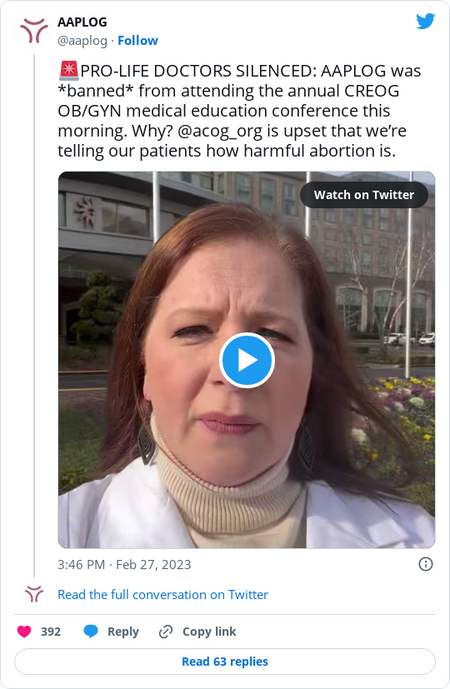 | | | | | In a letter sent Monday to Phipps, AAPLOG's board wrote: "Scientific progress and advancement depend on the free exchange of ideas; debate only benefits the wider medical community. Having this debate at a university setting will also aid attending medical students and residents, as they deserve to be given all available information with the freedom to personally discern their approach." ACOG confirmed that it banned AAPLOG from exhibiting at the conference, saying in a statement to The Health 202 that "ACOG welcomes exhibitors that align with our shared commitment to the advancement of evidence-based, scientific information." The group didn't respond to a question about whether it would accept the debate invitation. | | |  | Data point | | | For the first time, Medicare Advantage plans cover more eligible beneficiaries than traditional Medicare. In January, over 30 million of the nearly 60 million people with both Medicare Part A and Part B were enrolled in a private plan, according to a new analysis by KFF based on data from the Centers for Medicare and Medicaid Services. | | Jeannie Fuglesten Biniek, a health economist for KFF: | 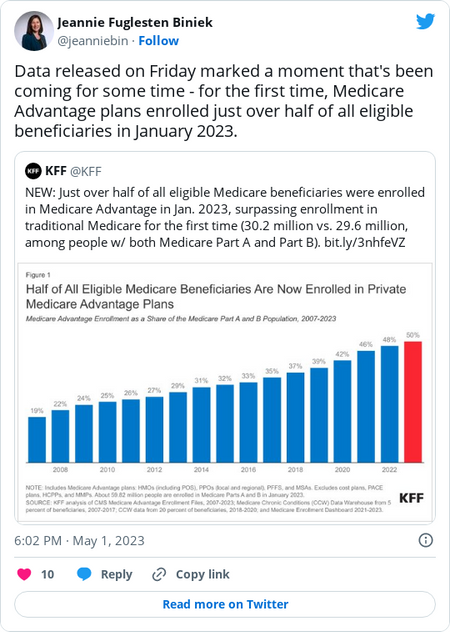 | | | | | |  | In other health news | | - New this a.m.: Loneliness presents a profound public health threat akin to smoking and obesity, Surgeon General Vivek Murthy warned in an advisory out this morning meant to rally Americans to spend more time with each other in an increasingly divided and digital society, our colleague Fenit Nirappil writes.
- In Missouri: A judge in St. Louis County granted a temporary restraining order preventing the state from enforcing its new emergency rules imposing new restrictions on gender transition for residents of all ages until at least May 15, our colleague Casey Parks reports.
- Republicans on the House Energy and Commerce Committee are expanding the scope of their inquiry into NIH's oversight of research that could pose biosafety or biosecurity risks. The lawmakers are asking the agency for additional information about the studies it oversees as well as its process for ensuring they are conducted safely, according to a letter sent yesterday.
| | |  | Health reads | | | By Melanie Evans | The Wall Street Journal ● Read more » | | | | | By Peter Loftus and Joseph Walker l The Wall Street Journal ● Read more » | | | | | |  | Sugar rush | | | Thanks for reading! See y'all tomorrow. | |




No comments:
Post a Comment