_tstmp_1685533184-500-500.png) | | By Dan Diamond with research by McKenzie Beard and Rachel Roubein | | | Welcome to Wednesday, where your guest author is in search of a TV show to replace "Succession" as his weekly escape. Send viewing suggestions and other tips to dan.diamond@washpost.com. Not a subscriber? Sign up here. Today's edition: The debt ceiling bill goes before the full House today, and congressional scorekeepers estimate it'd claw back over $27 billion in unspent covid relief dollars. A federal appeals court cleared the way for Purdue Pharma to settle thousands of lawsuits over the opioid epidemic, but shields the family members who own the company from future claims. But first … | A group of experts says it's time to revamp the nation's medical research agency | 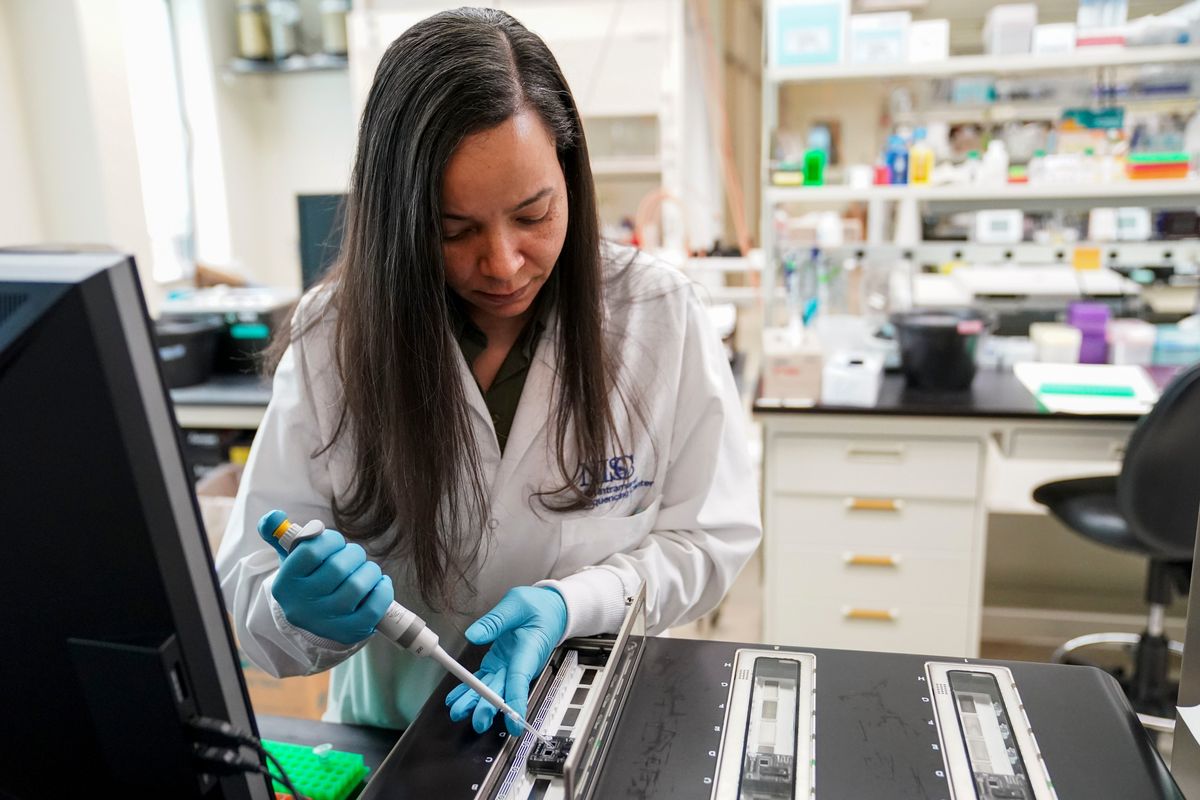 Shelise Brooks demonstrates pipetting viscous genomic DNA at the NIH Intramural Sequencing Center in Rockville, Md., in April. (Carolyn Van Houten/The Washington Post) | | | Critics are circling the National Institutes of Health: America's premier scientific agency is facing probes on Capitol Hill and questions about its roughly $50 billion in annual funding, even from avowed supporters. "I'm a big fan of the NIH … but I will say, I'm concerned by the pace of scientific research that we're seeing," Rep. Josh Harder (D-Calif.) said at a budget hearing last month. GOP critiques, driven by frustration over the agency's covid response, have been far harsher. Florida Gov. Ron DeSantis (R), who declared last week that he's running for president, reportedly called for NIH to be burned "to the ground." For a coalition of experts, including officials at the Brookings Institution, it's a perfect moment to try to build NIH back up. In a series of papers posted online and presented in a Capitol Hill briefing this month, experts laid out their ideas to revamp the agency. MIT professor Pierre Azoulay made the case for how NIH could overhaul its peer-review process to encourage scientists to pursue more ambitious projects. Robert Cook-Deegan of Arizona State University called for the agency to diversify from its biomedical focus and invest more in social sciences and health services research. "The causes of ill health are more than just biology," Cook-Deegan wrote. | | The "Building a Better NIH" project was first conceived a year ago, after longtime NIH director Francis Collins retired and President Biden pushed for the creation of the Advanced Research Projects Agency for Health, a new agency inside NIH. Organizers including Richard Frank, a former senior HHS official who now leads the USC-Brookings Schaeffer Initiative for Health Policy, and leaders at the Institute for Progress and the Good Science Project worried about what they saw as a fundamental slowdown in NIH's work. And their findings were published the day after Biden nominated cancer surgeon Monica Bertagnolli, who leads one of NIH's institutes, to take over the sprawling agency that touches nearly every corner of America's scientific establishment. (She'll face a barrage of questions from senators skeptical of the agency during her confirmation process.) "We're trying to be constructive here," said David Wessel, who leads Brookings' Hutchins Center on Fiscal and Monetary Policy and was a co-organizer of the project. "The question is, is [NIH] living up to its potential?" The answer is no, at least according to the project's organizers. "The average age of investigators is going way up. The number of breakthrough papers is falling, the number of papers per grant is falling, the amount of administrative time that has to go toward running a grant has gone way up," Frank said, adding a warning about the next generation of scientists. "The pipeline of young trainees and postdoc investigators is not as rich as it used to be." Project participants tackled an array of NIH-related challenges, ranging from the agency's role in patenting scientific research to how it could better diversify the participants in clinical trials. For instance: Former congressman Rush Holt (D-N.J.) — a scientist before entering politics — examined public distrust of biomedical breakthroughs. He concluded that NIH needs to do more to engage the public in its research and better communicate its findings. "The research has been just jaw-dropping, breathtaking. But we're clearly not getting what we need," Holt said in an interview, citing the mRNA vaccines developed with NIH support — and rebuffed by many Americans earlier in the pandemic. "If NIH isn't going to see how their research ends up in society … who will?" | | The Building a Better NIH initiative also explored broader, almost existential questions. One example: Should the agency fund people or projects? | | NIH has long relied on Research Project Grants, or R01 grants, where the agency awards up to five years of funding for researchers to focus on a specific project. It's "a very static way of thinking about allocating research dollars," said Heidi Williams, a Stanford University economist who helped organize the Building a Better NIH initiative. "What if we just funded people that we think have good instincts for choosing projects, and we gave them unrestricted funding so that in real time … [they] have the flexibility to switch into something else that they think is going to be higher social impact." She cited a newer NIH grant, known as the Maximizing Investigators' Research Award, as a "fantastic example" of this alternate approach. | | NIH officials said they were aware of the project and receptive to suggestions; some of its leaders participated in a Building a Better NIH workshop last year. The agency also pointed to its own reviews of its funding models and the development of new programs to encourage ambitious research. Still, the organizers of Building a Better NIH said they hoped their work would catalyze "continual improvement" at the agency, and they urged NIH's leaders to take more risks. "They have the potential — because it's such a big place — to do experiments," such as trying new approaches for funding young investigators, Frank said. Such changes "don't take new authorities. The leadership could just do those things." | | |  | On the Hill | | | 👀 The CBO score of the debt ceiling deal is out. One of the main things we've been asking over the last few days is exactly how much money in unspent covid-19 relief funds would the legislation claw back. Congressional scorekeepers estimated the bill would permanently rescind $27.1 billion in funding. | | Meanwhile, here's one interesting note on work requirements in the food stamp program, per Politico's Adam Cancryn: | 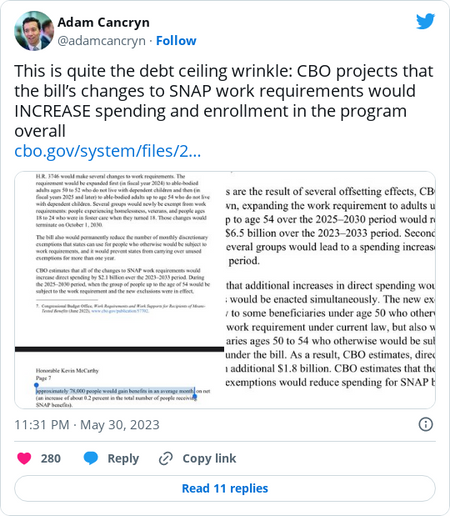 | | | | | On tap tonight: The House is slated to vote on the bill to suspend the debt ceiling as lawmakers rush to avert a default before June 5, The Post's Rachel Siegel and Marianna Sotomayor report this morning. The deal — brokered over the weekend by President Biden and House Speaker Kevin McCarthy (R-Calif.) — has received criticism from both far-right Republicans and some progressive members of Congress. On the right, members of the House Freedom Caucus are upset at McCarthy for compromising with Biden and not getting a deal with steeper spending cuts. And on the left, more progressive members are frustrated that the deal imposes new work requirements for certain federal programs (although not for Medicaid). | | Rochelle Walensky, director of the Centers for Disease Control and Prevention, has agreed to testify before the House select subcommittee on the coronavirus pandemic on June 13, just weeks before she will step down as head of the agency, the panel announced yesterday. The CDC did not immediately respond to a request for comment. | | |  | In the courts | | Appeals court paves way for Purdue Pharma opioid settlement | 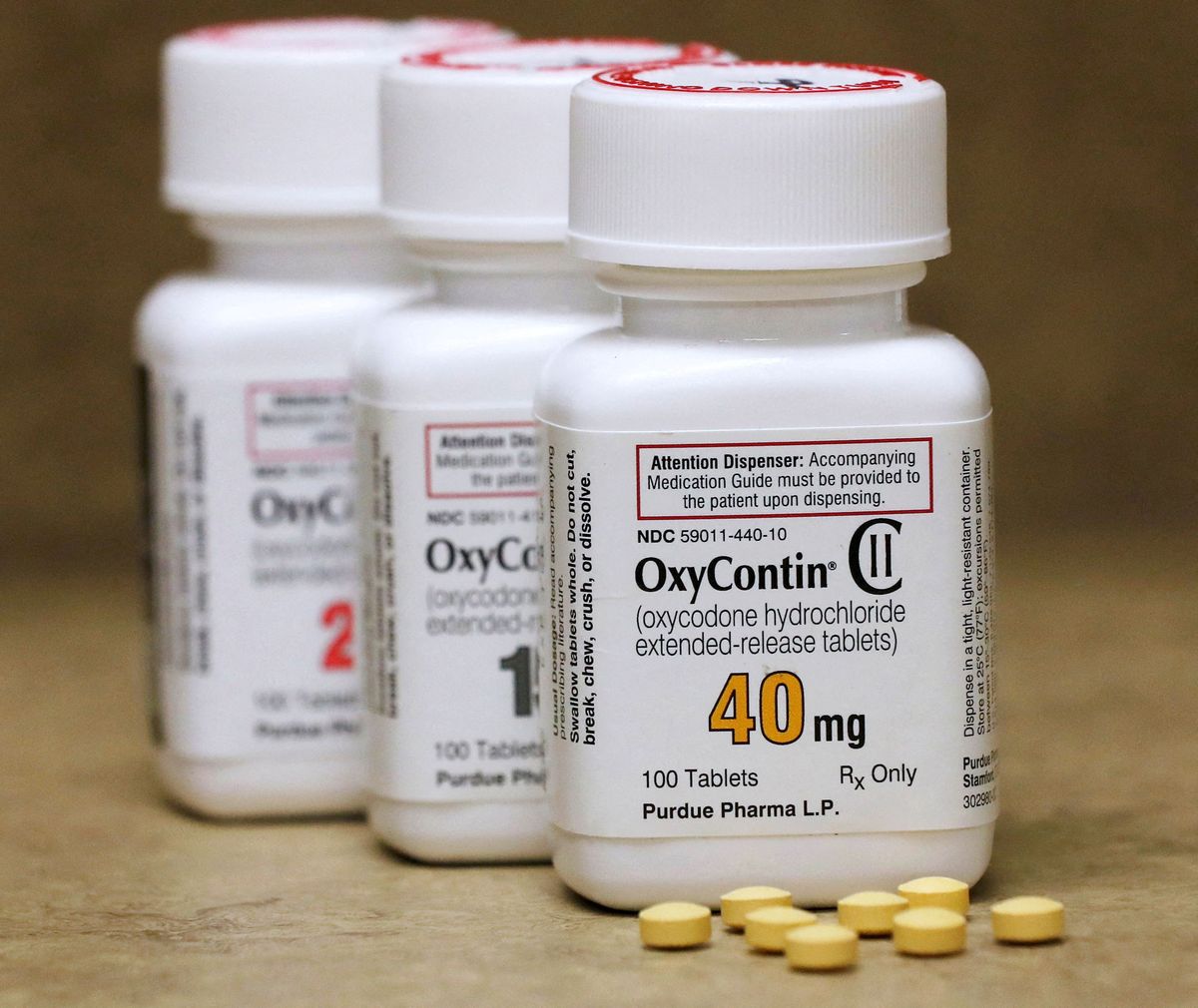 The settlement funds will go toward addiction abatement and prevention, as well as compensating victims and their families. (George Frey/Reuters) | | | A federal appeals court cleared the way for drugmaker Purdue Pharma to settle thousands of opioid lawsuits yesterday, reinstating a controversial bankruptcy settlement that shields the family members who own the company from future liability, our colleague David Ovalle reports. The details: Under the plan greenlit by the U.S. Court of Appeals for the 2nd Circuit, members of the Sackler family will give up control of the company and pay up to $6 billion in settlement funds. That money will be used to address the opioid crisis that Purdue Pharma has been accused of helping to spark by aggressively marketing its signature painkiller, OxyContin, in the mid-1990s and early 2000s. The basis of the appeal centered around whether the Sacklers could receive immunity from future opioid lawsuits as part of the drugmaker's broader bankruptcy settlement, despite not having filed bankruptcy themselves. The appeals court ruled the Sacklers needed to be shielded from future lawsuits to "ensure the fair distribution" of the settlement money, David notes. The case could still be appealed to the Supreme Court. The view from Purdue Pharma: In a statement yesterday, the company said its mission now is to "deliver billions of dollars of value for victim compensation, opioid crisis abatement, and overdose rescue medicines." | | Connecticut Attorney General William Tong (D): |  | | | | | |  | Data point | | WHO: Health-care attacks in Ukraine top 1,000 |  A heavily damaged hospital room after being struck by a Russian rocket in Vilnyansk, Ukraine. (Heidi Levine/The Washington Post). | | | The World Health Organization has verified 1,004 attacks on health care in Ukraine since Russia invaded the country in February last year, the highest number recorded by the international agency in any humanitarian emergency. The WHO has reported 896 attacks on health facilities, 273 of which impacted medical supplies and 121 disturbed transport. There have been 101 deaths, including among health-care workers and patients, and 139 injuries. The impact of the attacks over the last 15 months have reverberated across Ukraine's health-care system. According to the WHO, significant challenges in providing services like chemotherapy or mammography have been reported due to staffing and medical equipment shortages. Some regions are also facing difficulties delivering high-skilled childbirth services, the organization said. | | The WHO Regional Office for Europe: | 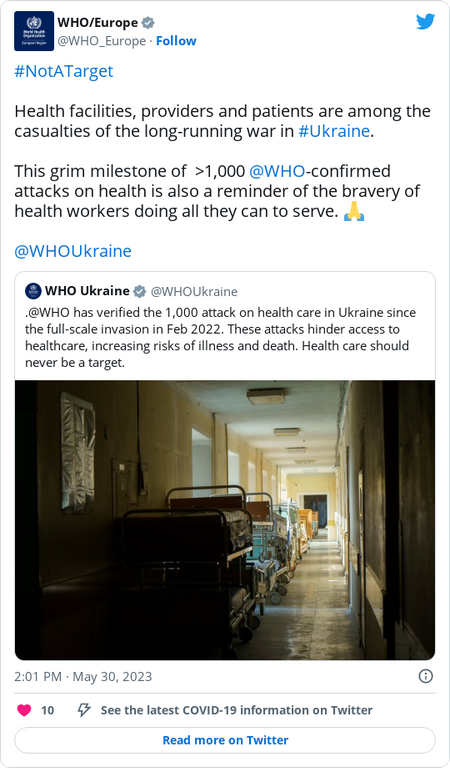 | | | | | |  | In other health news | | - Former first lady Rosalynn Carter has been diagnosed with dementia, the Carter Center announced yesterday. The news about the 95-year-old comes more than three months after her husband, former president Jimmy Carter, entered hospice care, our colleague Timothy Bella reports.
- The Pharmaceutical Care Management Association launched a seven-figure advertising campaign yesterday accusing pharmaceutical companies of driving up the cost of prescription drugs as it seeks to dispel rising scrutiny around the role of pharmacy benefit managers.
- Minnesota Gov. Tim Walz (D) signed a bill yesterday legalizing recreational marijuana for people 21 and older, making it the 23rd state in the nation to allow adult-use cannabis, Ryan Faircloth reports for the Star Tribune.
| | |  | Health reads | | | |  | Sugar rush | | | Thanks for reading! See y'all tomorrow. | |





No comments:
Post a Comment