| Happy Wednesday! This is David, your Technology 202 researcher, trading places with Cristiano today. I don't know anything about basketball, but I know a little bit about fencing. Send news tips and dueling advice to david.dimolfetta@washpost.com.
Below: The Supreme Court rejects a social media appeal, and Microsoft accuses the U.K.'s competition regulator of acting as a global "outlier." First: | How the FCC may be forced to grapple with AI, too |  FCC Chair Jessica Rosenworcel said the agency is "doing some work behind the scenes" on AI. (Demetrius Freeman/The Washington Post) | | | The Federal Communications Commission (FCC) — which has jurisdiction over radio, television, cable and satellites — isn't best known for grappling with cutting-edge technology. But amid the rise of generative AI tools like ChatGPT and Midjourney, the telecommunications regulator may be forced to tackle artificial intelligence, an area that's beginning to intersect with communications infrastructure and airwaves. A pressing concern is the skyrocketing rates of robocalls, leading to several FCC actions as the agency seeks to cut down scams against consumers. AI can make robocall operations much cheaper because the technology can automate dialing, talking and responding, according to former Democratic FCC chair Tom Wheeler. Nicol Turner Lee, a senior fellow at the Brookings Institution focusing on equitable broadband access, said robocalls could open a Pandora's box of possibilities for consumer deception, especially for elderly Americans. Wheeler added voter manipulation as a related area of concern, where an AI-cloned voice could direct an individual on an Election Day to an incorrect location to cast their vote. A former FCC senior official, who spoke on the condition of anonymity to speak candidly, said there are a number of related concerns triggered by AI in areas with FCC jurisdiction. | | One is political campaigns, where voice-cloning technologies and deepfakes could deceive voters listening to or viewing advertisements that contain candidate endorsements. Internet service providers (ISPs) could also use AI and machine-learning tools to analyze customer data and offer more tailored broadband prices to deceptively overcharge customers, the former official said. "The FCC is actively studying the potential impacts of AI, in particular the opportunities for advanced communications networks like spectrum sharing and wireline network management, as well as its potential as a tool and a challenge for consumers," FCC spokesperson Will Wiquist told The Technology 202, adding that the agency is "watching closely" ongoing work from the AI and machine-learning working group in its Technological Advisory Council. The agency for several years has considered ways to use AI for achieving its own goals, like managing spectrum frequencies to prevent signal interference between devices. In 2021, the tech advisory council released a document that detailed various ways the agency could leverage AI and recommended creating a dedicated task force. The council reiterated the recommendation in December, saying it was needed "to address how the FCC can best incorporate AI-based methods and techniques as part of its operations." The FCC under Republican Chair Ajit Pai also convened a 2018 forum on AI and machine learning to discuss how they could impact the communications sector in the future. The agency is still in the "first inning" for AI regulations and there isn't yet a burning issue it needs to address, Pai, who served as chairman of the FCC from 2017 to 2021, told The Technology 202. But if the agency decides to move on regulating AI, it would likely begin with a preliminary "notice of inquiry" that asks the public to provide feedback and concerns they have about the technology, he said. Turner Lee said the commission could proceed with issuing an inquiry to update its current robocall rules to include AI-generated voices. A task force could also help "investigate what the FCC has power over," she said. The FCC was notably not present when a group of federal agencies gathered last month to signal a "whole of government approach" to regulate AI out of concern that the technology could help exacerbate long-held biases in American society. The Equal Employment Opportunity Commission and other watchdogs at the meeting warned about the risk of "digital redlining," an area where the FCC has taken significant action for broadband access. The FCC's omission could be a sign that, even at the White House level, there are still discussions to be had about what agencies have regulatory authority over AI, Turner Lee said. | | Inside the FCC, AI regulation discussions appear to be in early stages. FCC Chair Jessica Rosenworcel in a May 18 news conference said the agency is "doing some work behind the scenes" looking at AI in the context of robocalls and spectrum self-healing, which resolves network outages without human intervention. Republican Commissioner Brendan Carr said Congress is the appropriate place where AI discussions should occur right now, adding that he is open to using the technology to aid the commission's goals. The deliberations speak to a broader challenge of running an oversight agency created for a sector that has evolved rapidly since its establishment in 1934, Wheeler said. "We've seen how difficult it's been thus far in the digital age to deal with issues like privacy and competition … with the existing tools," he said. "We need a new toolbox, but that toolbox has to be structured differently and be built around digital era concepts rather than industrial era concepts." | | |  | Our top tabs | | Supreme Court rejects appeal in social media sex trafficking case | 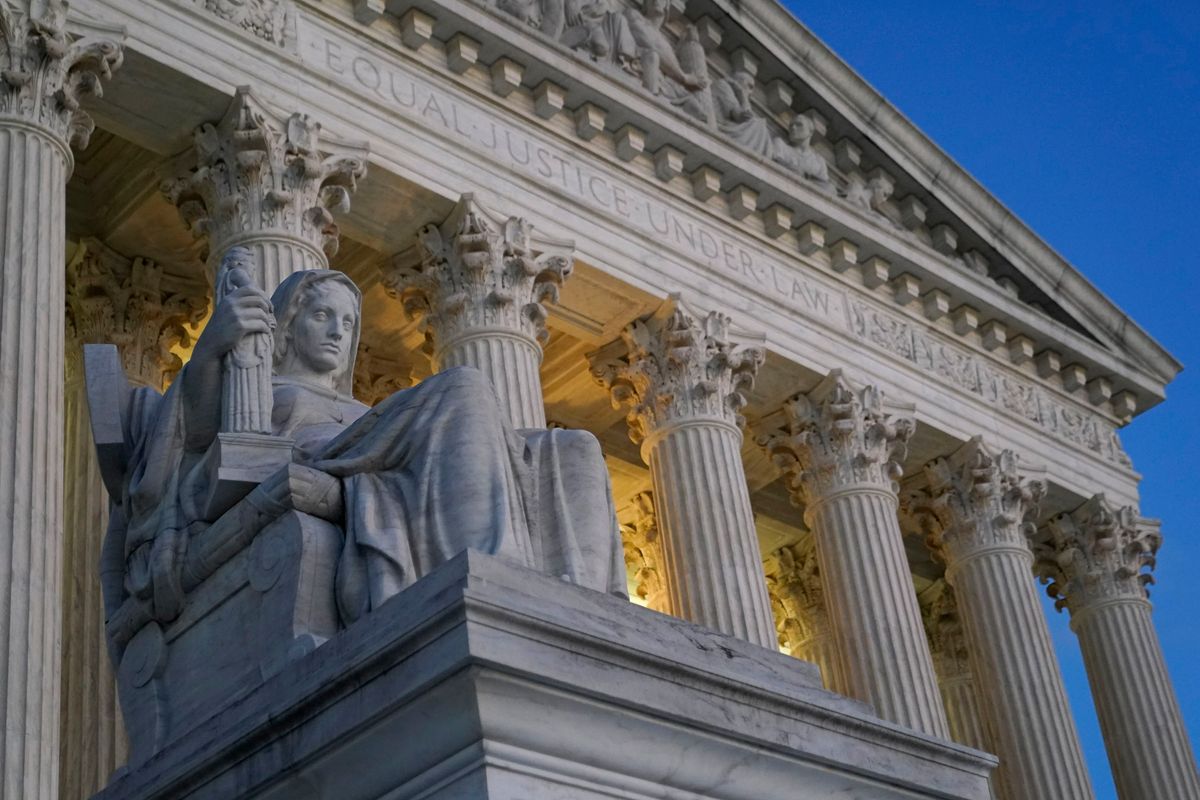 The Supreme Court turned away an appeal by victims in a social media sex trafficking case. (Patrick Semansky/AP) | | | The Supreme Court on Tuesday declined to hear an appeal from child abuse victims who claimed Reddit knowingly facilitated sex trafficking by hosting images of child sexual exploitation, Bloomberg News's Emily Birnbaum reports. "The 9th US Circuit Court of Appeals decision in Reddit's favor marked the first time a federal appellate court weighed in on a 2018 amendment to Section 230, which was written to allow lawsuits against social media platforms over sex trafficking claims," Birnbaum writes. The decision marked another major legal victory for Silicon Valley companies that are shielded from lawsuits over content they host under Section 230. The Supreme Court earlier this month turned down a chance to narrow those protections in two blockbuster cases, Gonzalez v. Google and Twitter v. Taamneh, which tackled whether social media platforms can be held responsible for recommending or failing to curb terrorist content. | New FCC maps show 8.3 million U.S. homes, businesses lack high-speed internet | 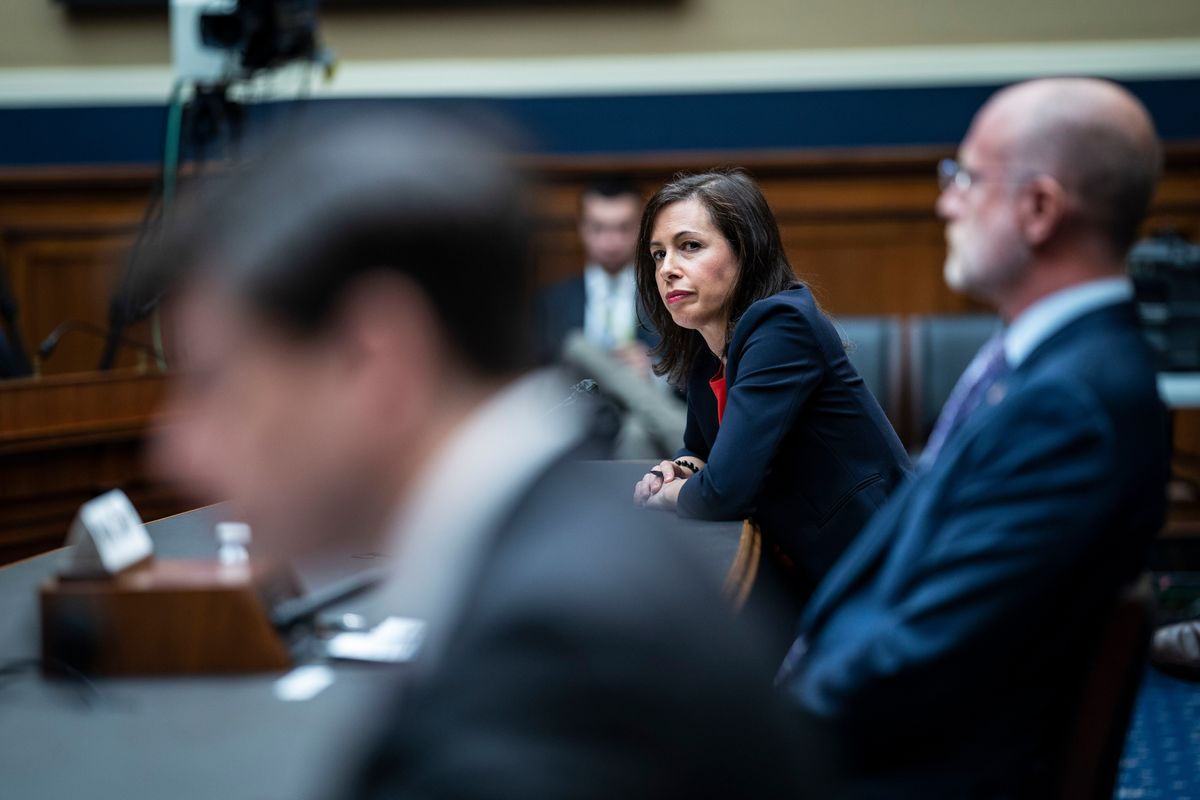 Federal Communications Commission Chairwoman Jessica Rosenworcel listens during a House hearing in March 2022. (Jabin Botsford/The Washington Post) | | | The FCC released an updated version of its national broadband maps on Tuesday, showing that more than 8.3 million U.S. homes and businesses lack access to high-speed internet, Reuters's David Shepardson reports. "The FCC said it has increased its estimates of homes and businesses without access by nearly 330,000 locations," Shepardson writes. The mapping data is set to play a major role as the Biden administration roles out billions in federal grants to boost internet access nationwide. Congress in 2021 approved $42.45 billion in grants for states and territories to expand broadband infrastructure to areas without access. "The Commerce Department's National Telecommunications and Information Administration (NTIA) reiterated Tuesday it plans to announce by June 30 how it intends to allocate broadband infrastructure grants to states and territories," Shepardson writes. | Microsoft: U.K. an 'outlier' in challenging Activision Blizzard deal |  Microsoft agreed to buy "Call of Duty" video game maker Activision Blizzard for $69 billion. (Dado Ruvic/Illustration/Reuters) | | | Microsoft accused the United Kingdom's competition regulator on Tuesday of acting as a global "outlier" by blocking its $69 billion acquisition of gaming giant Activision Blizzard, Reuters's Sam Tobin and Paul Sandle report. "It is only here that we have this uncertainty in terms of there being a decision which we say is fundamentally wrong and purports to stop this merger worldwide in relation to a tiny part of the gaming industry," Microsoft lawyer Daniel Beard told a judge handling the case on Tuesday. "The company's appeal against the decision is likely to be heard in late July, a judge at the Competition Appeal Tribunal (CAT) indicated on Tuesday," Reuters reports. While authorities in Britain and the United States' Federal Trade Commission are seeking to block the deal, the European Union recently greenlit the acquisition in a victory for the tech giant. | | |  | Agency scanner | | | |  | Inside the industry | | | |  | Trending | | | Analysis ● By Hamza Shaban, Faiz Siddiqui, Alexis Arnold and Joe Fox ● Read more » | | | | | |  | Daybook | | - The Senate Banking Committee holds a hearing titled "Countering China: Advancing U.S. National Security, Economic Security, and Foreign Policy" at 10 a.m.
- The Atlantic Council holds an equitable AI workshop at 10 a.m.
- The Center for Strategic and International Studies holds a discussion titled "Korea and U.S.-China Competition" tomorrow at 9:30 a.m.
- The Senate Judiciary Committee will consider amendments to bills aimed at preventing drug trafficking on social media platforms and preventing online child exploitation tomorrow at 10 a.m.
- The Hudson Institute holds an event on China and U.S. national security tomorrow at 2 p.m.
| | |  | Before you log off | | | That's all for today — thank you so much for joining us! Make sure to tell others to subscribe to The Technology 202 here. Get in touch with tips, feedback or greetings on Twitter or email. | |





No comments:
Post a Comment