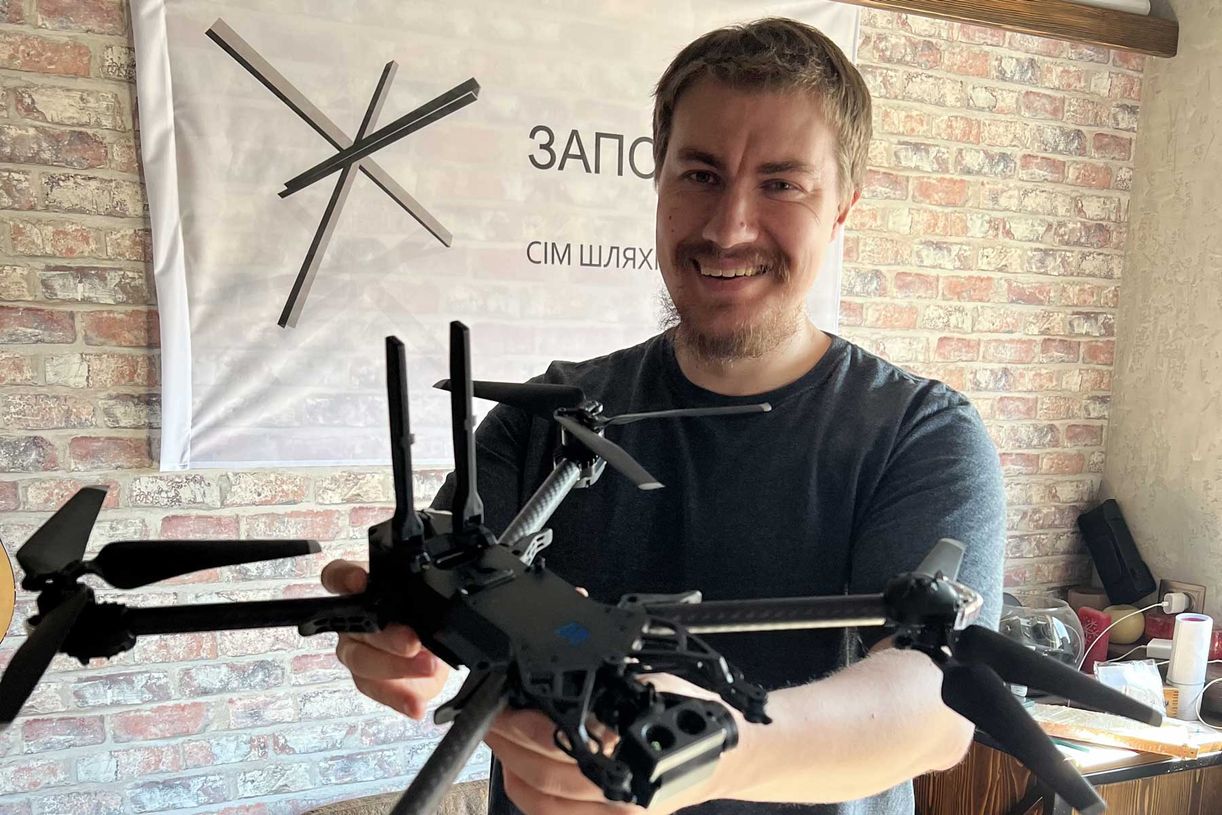
| Really, how different are Bay-area creative directors looking for a cheap ride to dinner and Ukrainian troops manning the front lines? In the thinking of Silicon Valley, they're both "end users." Columnist Max Boot recently sat down with a start-up-minded Ukrainian (and former entrepreneur) who has applied that framework to the war in his country to great effect. "Much of the media focus in the past year has been on Ukraine's need for weapons and ammunition," Max writes, but Andrey Liscovich identified the nonlethal equipment that forces needed and began a nongovernmental organization to source it. Already, he has supplied drones, satellite imagery, batteries and radio sensors. Just as in Silicon Valley, he told Max, "You don't ask them what the solution should be; you offer them a solution and ask their reaction." That's how Liscovich found himself on his current mission: figuring out how to ship U.S. school buses refitted as mobile command (and shower!) facilities. It's not just Ukraine that would benefit from lots of creative thinking. War, generally, could use a little more of the Silicon sensibility. Bina Venkataraman's latest column focuses on the applications of AI and other advanced technologies in war. She surveys Ukraine (and beyond) and sees land mines still killing brutally and indiscriminately. Isn't that a sign we should be asking more of our technology? "Before betting on specific tools," she writes, "… political and military leaders, technologists and the rest of us should ask what is needed to reduce the humanitarian costs of war, and the suffering in its aftermath." Chaser: Three Ukraine experts break down where things stand — in terms of aid, territory, budget, refugee displacement, international rhetoric — in your all-you-need-to-know war dashboard. | 





No comments:
Post a Comment