| | | | | | 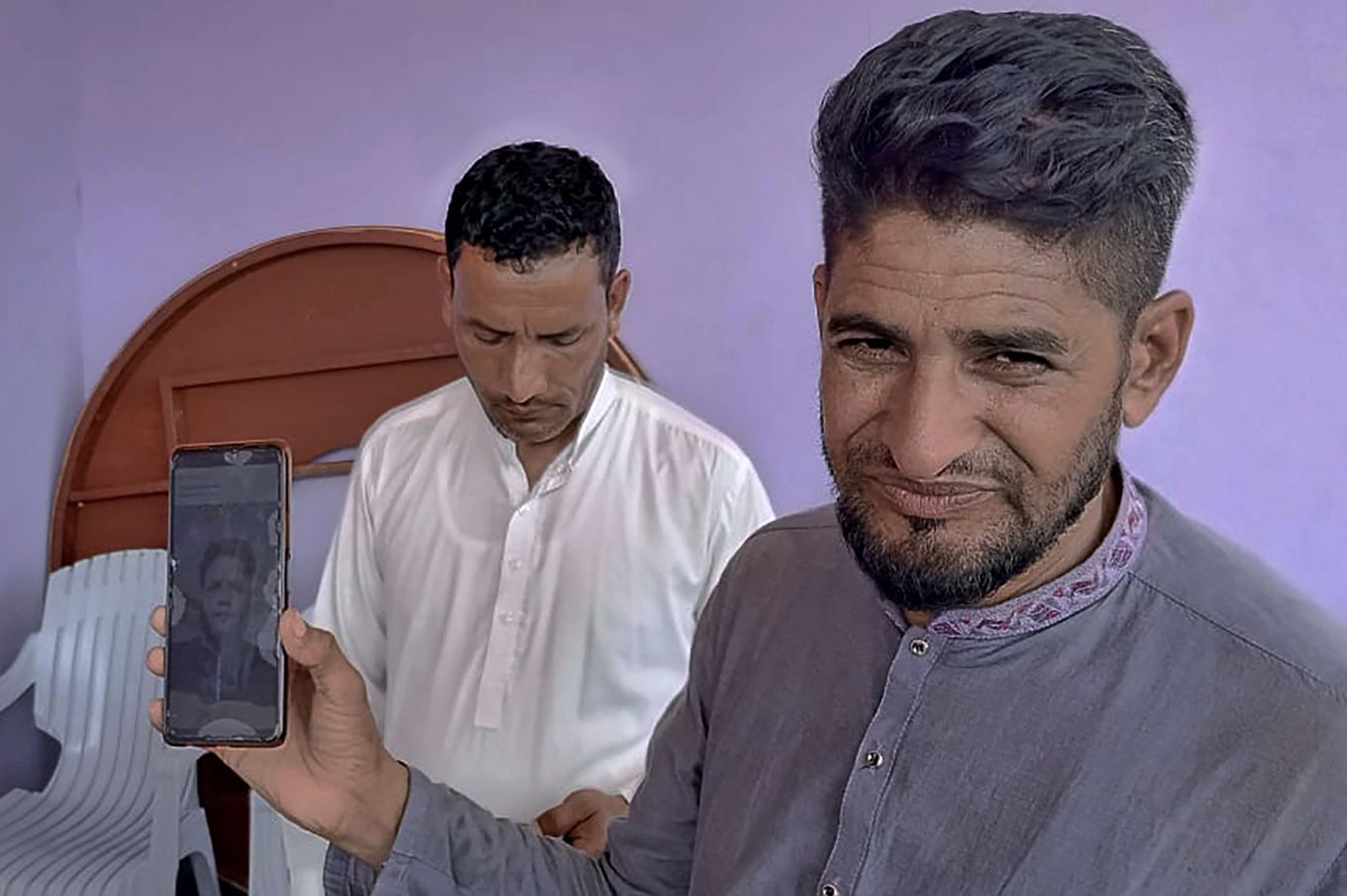 Raja Sakundar displays a picture of his nephew, who was missing after a boat sunk off the coast of Greece. (Nasir Mehmood/AP) | The two maritime tragedies that gripped attention in recent days could barely be more different. Last Wednesday, a fishing trawler carrying more than 700 migrants primarily from Egypt, Syria and Pakistan went down off the coast of Greece, in one of the worst such disasters in more than a decade. Though the death toll is officially at 81, Greek authorities have only counted 104 survivors. Their testimony suggests all the women and children aboard perished. By some estimates, more than 300 Pakistani nationals on the boat died, with one account alleging many were forced to stay below deck in the hold as the ship capsized and sank. Shocking as it is, this disaster in the Mediterranean is all too familiar to a global public largely numb to the plight of those making the perilous crossing. The migrants fell victim to a familiar chain of misfortunes: They were exploited by people-smuggling networks that stretched from their countries of origin to the coast of Libya. With the threat of violence, they were forced onto an overcrowded, unseaworthy, ill-equipped boat. The ship that took them to their deaths was stranded for days on its intended journey to Italy without help, despite apparent distress calls made by the migrants. And they endured this all in a desperate attempt to find asylum on a continent whose governments have failed to come up with a collective plan on migration and where many locals would rather push them back into the sea. Far away in the North Atlantic, a cinematic ordeal is playing out that has news media and the global public riveted. Somewhere near the famous wreck of the Titanic, a deep-sea submersible is missing. At the time of writing, the search for the 21-foot craft, known as the Titan, was entering its fourth day after it lost contact with Canadian research vessel Polar Prince on Sunday morning. The U.S. Coast Guard and Royal Canadian Air Force had scrambled to locate the submersible over a vast 10,000-square mile search zone in the ocean, which reaches 13,000 feet deep in some areas. U.S. officials feared that the five passengers aboard, if still alive, had not much more than a day of oxygen left. The Titan was carrying out a dive organized by OceanGate Expeditions, a private research and tourism company that has conducted trips to the Titanic wreck site. Its passengers reportedly pay $250,000 a head to go on the journey. Though the names of those on board had not been released by authorities, reporting confirmed that British businessman and explorer Hamish Harding, French diver Paul-Henri Nargeolet and OceanGate CEO Stockton Rush were inside the Titan. So too were Shahzada Dawood, heir to one of Pakistan's biggest private fortunes, and his teenage son Suleman. "[They] had embarked on a journey to visit the remnants of the Titanic in the Atlantic Ocean," the Dawood family said in a statement. "As of now, contact has been lost with their submersible craft and there is limited information available." On social media, some Pakistanis pointed to the grim spectacle of compatriots from opposite ends of a great socioeconomic divide disappearing in the watery depths at the same time. Pakistan is in the middle of a devastating economic crisis, with the rate of inflation at a 50-year high, food shortages, energy blackouts and mounting unemployment. The conditions have compelled numerous people, especially among the poor, to seek a better life abroad. "The desperate situation has led to the mushrooming growth of people smugglers in Pakistan," wrote Zahid Shahab Ahmed, a senior research fellow at the Alfred Deakin Institute for Citizenship and Globalization in Australia. "In exchange for large sums of money, they offer people transportation, fake documentation and other resources for a swift departure from the country." "It is bad enough that the spectacular failure of the government to fulfill its part of the social contract by providing economic security to its citizens drives desperate individuals — even the educated ones — to leave the country," noted a Monday editorial in Dawn, a Pakistani daily, further lamenting that "an inept, uncaring government has made little effort to crack down on a vast network of human smugglers who fleece desperate individuals and put them on a path strewn with hazards." Pakistani Prime Minister Shehbaz Sharif declared Monday a national day of mourning, while authorities in various parts of the country arrested people suspected of links to human-trafficking networks. "Our thoughts and prayers are with you, and we pray that the departed souls find eternal peace," the chairman of Pakistan's Senate, Muhammad Sadiq Sanjrani, said, vowing to take on the people smugglers. That may be cold comfort to many Pakistanis, who live in what by some measures is South Asia's most unequal society, one long dominated by influential, quasi-feudal potentates. Sharif himself is a scion of a political dynasty that also has huge business interests.  A sign showing the inauguration plate of a bridge partly funded by Pakistan's Engro Corp., in front of the Dawood Hercules building in Karachi. (Rehan Khan/EPA-EFE/Shutterstock) | The Dawoods belong to the same world. Shahzada Dawood is vice chairman of Engro Corp., a major conglomerate that is a subsidiary of family-owned Dawood Hercules, fronted by his father, Hussain Dawood. It's a multibillion-dollar operation that sprawls over various sectors of Pakistan's economy, including textiles, fertilizers, foods and energy. As a result, Engro has been the beneficiary of hefty government subsidies. Both Dawood and Sharif were identified in the 2016 Panama Papers leak as one of the dozens of Pakistani tycoons and politicos to possess secret offshore bank accounts. Dawood frequented the World Economic Forum, touted his vision for a "sustainable future" and business models that help uplift "low-income communities." The Dawoods are also engaged in philanthropic work in Pakistan, the United Arab Emirates and Britain, where Shahzada Dawood and his immediate family are based as dual British-Pakistani citizens. The hundreds of Pakistanis lost in the Mediterranean were chasing just a glimmer of that life. Speaking to the Associated Press, Zohaib Shamraiz, a Pakistani man living in Barcelona, described his last conversation with his uncle, Nadeem Muhamm, who was still missing. Shamraiz's uncle had left behind three young children in Pakistan to make a better life for his impoverished family. "I spoke to him five minutes before he got on the boat," Shamraiz told the AP. "I told him not to go. I was afraid. He said he had no choice." | | | 1,000 Words  (Rafael Vilela for The Washington Post) | Rio de Janeiro Bureau Chief Terrence McCoy took a reporting trip to the giant Outback Steakhouse in São Paulo to understand why this American restaurant serving inauthentic Australian barbecue came to dominate the country with perhaps the world's finest churrasco: "Named the world's largest Outback in 2018 — and the world's most lucrative before that — its dimensions and legend since then have only grown. But even then, it's not big enough. Not for Brazil, and not on a recent Monday. Hostess Kalany Nunes, 19, surveys the line for lunch, several dozens deep. "This is Outback," she explains. "It's very chic." As a son of the suburbs of heartland America, I'm no stranger to the shopping mall culinary circuit. Red Lobster, Olive Garden, TGI Fridays, Chili's — I know and celebrate them all. But nothing prepared me for the throng of people excitedly awaiting their chic experience at Outback Steakhouse. And in a country where I never would have expected it. Few things evoke Brazil more than beef. Meat is sizzling everywhere, all the time. Despite that culture, Brazil's love affair with the American chain is only deepening. For five years running, the chain has been voted Rio de Janeiro's most popular restaurant. The frenzy has even sparked a knockoff restaurant: Outbêco, or "Outbêco Strokehouse," several outposts call themselves. Some days, it felt as if I was one of the last people here who wasn't eating at Outback. In my four years as Rio bureau chief for The Washington Post, I'd opted mostly for traditional Brazilian churrasco, which routinely delivered some of the best cuts of meat I've had. On this Monday afternoon, I decided to find out for myself. I drove to the São Paulo shopping mall and got in the Outback line." | | | Talking Points • The Biden administration is conducting indirect bilateral talks with Iran that it hopes, at a minimum, will curtail Tehran's nuclear program short of weapons development, end its proxy attacks on U.S. forces in Syria and bring home three longtime American prisoners in exchange for limited access to some of Iran's billions of dollars frozen overseas. • When Secretary of State Antony Blinken arrived in Beijing, people in China were skeptical. The secretary's last name when pronounced in Mandarin sounds similar to the pain killer ibuprofen. People joked on Weibo that his visit would cause headaches rather than relieve them. Instead, it appears that Blinken's visit has acted as a remedy, at least in the short term, alleviating some of the tensions in the bilateral relationship, reports China correspondent Meaghan Tobin. • As Indian Prime Minister Narendra Modi visits the White House this week, India's reliance on Russian arms constrains it from lining up with the West in confronting Moscow over its war, reports Karishma Mehrotra. The BrahMos missile, one of India's most highly regarded weapons, illustrates this relationship. Its name is a portmanteau of the Brahmaputra River in India and the Moskva River in Russia, which began jointly developing the missile after the fall of the Soviet Union. • Romanian prosecutors announced that internet personality and self-described misogynist Andrew Tate and his brother have been indicted on charges of human trafficking, rape and forming an organized crime group. The prosecutors' statement said the injured parties were "sexually exploited by group members" and forced to produce online pornography through acts of "violence and mental coercion." • Families across western Uganda held funerals for dozens of students among the 42 people killed in an apparent attack by militants on the Lhubiriha Secondary School late Friday. Uganda's government said that the attack was carried out by five members of the Allied Democratic Forces, a militia based in Congo, with links to the Islamic State. | | | Top of The Post | By Sarah Kaplan, Simon Ducroquet, Bonnie Jo Mount, Frank Hulley-Jones and Emily Wright ● Read more » | | | | | | Viewpoints | | | Tit-for-tat attacks 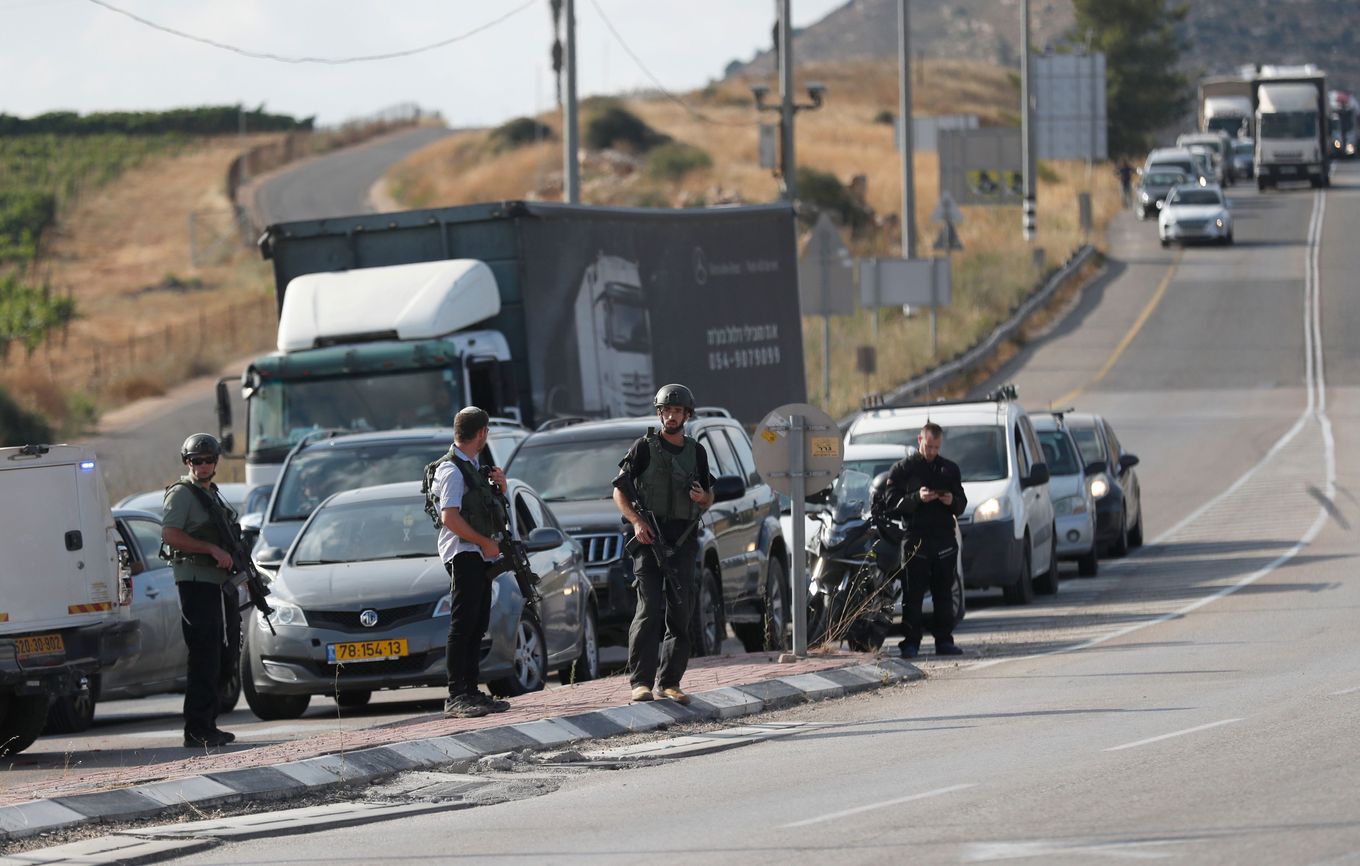 Israel Defense Forces officers stand guard on a road leading to the Israeli settlement of Eli in the West Bank, after four people were killed at a gas station Tuesday. (Atef Safadi/EPA-EFE/Shutterstock) | JERUSALEM — Four Israelis were killed by Palestinian militants in the central West Bank on Tuesday, the latest in a series of tit-for-tat attacks that threaten to tip the region into a new, deadlier period of violence. At least two gunmen opened fire at a hummus restaurant in a gas station outside of Eli, an Israeli settlement in the West Bank. One gunman was killed by an Israeli civilian at the scene, and a second was later shot dead by Israeli forces, according to the military; the army said it was conducting a manhunt for additional suspects and had closed parts of Route 60, the main highway running through the occupied West Bank. The two gunmen were identified by Hamas, the militant group that rules the Gaza Strip, as 26-year-old Mohannad Shehada and 24-year-old Khaled Sabah. Hamas praised the attack, saying it was a response to an Israeli military raid in the West Bank city of Jenin on Monday, which left six Palestinians dead. Militants used explosives to damage armored vehicles during the hours-long raid, and Israel deployed Apache combat helicopters to extricate troops under fire — an extremely rare move that analysts warned could spark further escalation after a year of grinding violence. Tuesday's mass shooting was "just the beginning of a series of acts of resistance that will disturb [Israel's] fragile state and turn the night of their soldiers and settlers into a nightmare," Hamas said in a statement. Israel is struggling to contain a new generation of Palestinian militants, many of them based in Jenin, who are using homemade weapons, including low-tech bombs and rockets, to confront Israeli soldiers as they carry out near-daily raids across the West Bank. "It's time for a military operation in Judea and Samaria, and to take down buildings from the air," Israel's far-right national security minister, Itamar Ben Gvir, said Tuesday at the scene of the gas station attack, using the biblical term for the West Bank. The Israeli raid Monday was aimed at arresting two suspected militants, including the son of an imprisoned senior Hamas official from the West Bank and a member of Palestinian Islamic Jihad, but the operation quickly spiraled into a prolonged firefight. Palestinian militant groups, including the Jenin Brigade and Islamic Jihad, claimed several of the dead, but the fatalities also included a 15-year-old boy, according to the Palestinian Health Ministry. At least 91 other Palestinians were injured, including a Palestinian photojournalist clearly displaying his press credentials, the ministry said. Eight Israeli soldiers and border police officers were injured when they came under fire as they tried to leave the city; at least one roadside bomb hit an Israeli armored vehicle. For more than eight hours, Israeli soldiers were pinned down as they awaited extraction. In a move not seen since the days of the second intifada in the early 2000s, Israel dispatched combat helicopters to rescue the injured soldiers. The helicopters fired at Palestinian combatants on the ground to clear the area, the army said. The battle, which began around 7 a.m. Monday and ended late in the afternoon, was the latest in a series of intensifying clashes that have accompanied Israeli military incursions, which have become longer and more deadly this year — at least 114 Palestinians had been killed by Israeli forces in the West Bank as of June 12, including militants and civilians, according to the United Nations. At least 19 Israelis were killed by Palestinians over the same period, the U.N. said. The 15-year-old boy in Jenin, Ahmad Yousef Ahmad Saqer, was standing with a group of young Palestinians when Israeli forces opened fire with live ammunition, hitting him in the abdomen, according to Defense for Children International, a Palestinian advocacy group. Monday's events were seen by some analysts as an Israeli military failure, evoking memories of bloody West Bank battles during the second Palestinian uprising, as well as Israel's involvement in Lebanon's civil war. "Yesterday's operation in Jenin will come to be regarded as a milestone for the IDF not only because of the amount of time it took to get out of the ensnarement (the longest offensive operation undertaken since the second intifada), but also for the reason that caused that: The introduction of powerful IEDs that turn the area into one that resembles 1990s-era south Lebanon, even if these devices are less powerful than the ones we saw back then," wrote Yossi Yehoshua, a military correspondent for the Israeli newspaper Yediot Ahronot. – Shira Rubin and Sufian Taha Read more: 4 Israelis killed by Palestinian gunmen as violence surges in West Bank | | | Afterword  hungry birds | | | | |


 Email
Email







No comments:
Post a Comment