Species Spotlight: Mink 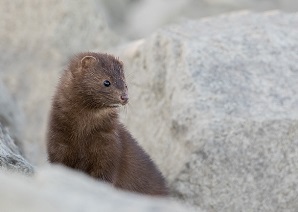
Mink (Mustela vison), perhaps one of wetland's cutest furbearers, are primarily nocturnal carnivores that feel just at home on land as they do in water. Both their dense underfur, which is protected by oily guard hairs that make their coat waterproof, and a diet heavy in fish during winter explain why they spend time in the water. Mink occupy a wide variety of wetland habitats including streams, rivers, lakes, freshwater and saltwater marshes, and coastlines. They can be found throughout New York State, most of the United States, and Canada. Their fur is dark brown blending into a slightly lighter shade on their underside. A small white patch of fur on the chin makes it easy to identify them. Males are usually larger than females and may exceed two feet in length with a bushy tail that's 6-8 inches long. Mink fur is shiny and soft which is why the interest remains high in trapping mink. DEC annually conducts a statewide survey of trappers to monitor furbearer populations and harvest. Mink are fierce predators. They can take prey that are twice their size! Muskrats, rabbits, and small rodents are common foods. Waterfowl, small marsh-nesting birds, and crayfish also are important summer foods. Mink are generally not preyed upon by larger predators like many small animals are. Occasionally they fall victim to a red or grey fox, bobcat, or great horned owl, but not without a good fight. Minks, like other members of the Mustelidae family, such as weasels, have a pair of anal scent glands. The liquid in these glands has a strong smell and is probably used for communication or defense purposes—another reason minks aren't preyed upon too often. Photo of mink by John Mack.
Home Sweet Home: A Place for Birds and People 
All along the Atlantic coast, people love going to the beach. The sun, the surf, and the memories we create with our friends and families make the beach a special place. We fish, play, fly kites, walk our dogs, and relax while some of our most imperiled wildlife attempt to feed, rest, and raise their young nearby. For shorebirds like Piping Plover and Red Knot, and seabirds like the Roseate Tern, the beach is 'home sweet home.' Every year, as we flock to our favorite beach destination for sun and fun, shorebirds and seabirds return from their wintering areas in the Caribbean and South America to eat, rest, mate, and raise their young on the beach. These birds face many threats during migration, including loss of habitat, hunting, predation, climate change, and human disturbance that keeps them from the food they need to survive. Learn how you can share the shore and help these beach birds survive or check out this short video about sharing the beach. Photo and story courtesy of Atlantic Flyway Shorebird Initiative.
Karner Blue Butterfly Seasonal Update 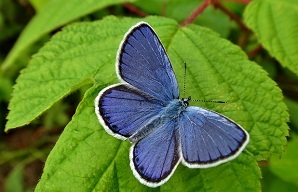
Karner blue butterflies (Lycaeides melissa samuelis) are nearing the end of their spring brood. In some places across New York state, this year's unpredictable weather has affected their food plant, wild blue lupine. Frost and late snow damaged flowers in some areas which affected available nectar and will affect seed production. We should be seeing the last of the first brood wind down soon and the second brood emerges as soon as the end of June or the first week of July. Karner blue facts: - Karner blues have two broods (generations) per season or even three in optimal habitat.
- Caterpillars will only feed on lupine plants, while the adult butterflies will eat the nectar from a variety of flowering plants.
Places to Go: You can see these endangered butterflies at the Albany Pine Bush Preserve. Please be careful and stay on official trails when walking through Karner blue habitat to avoid crushing the lupine and caterpillars. Photo of male Karner blue butterfly by Lisa Pipino.
Outdoor 3D Archery & Wilderness Skills Day 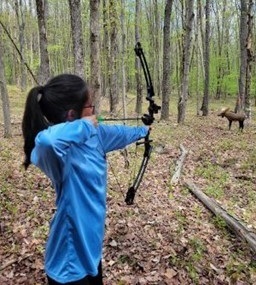
Join NY Hunters of Color, The Nature Conservancy, and New York BHA for a 3D Archery Shoot and Outdoor Skills training day! When: Sunday, June 25 from 11 a.m. to 4 p.m. Where: Eugene and Agnes Meyer Nature Preserve (The Nature Conservancy) – Parking is available Transportation Provided – NYC Bus pick-up and drop-off at the McCaffrey Playground W 43rd St., New York, NY 10036 - Pick-up at 11 a.m.
- Drop-off at 5 p.m.
All are welcome! Register to attend. Check out the 3D Archery Day flyer (PDF) for more details. Interested in more events like this? Sign up for the "Becoming an Outdoors Woman" newsletter. | 


No comments:
Post a Comment