| | | | | | | | | | 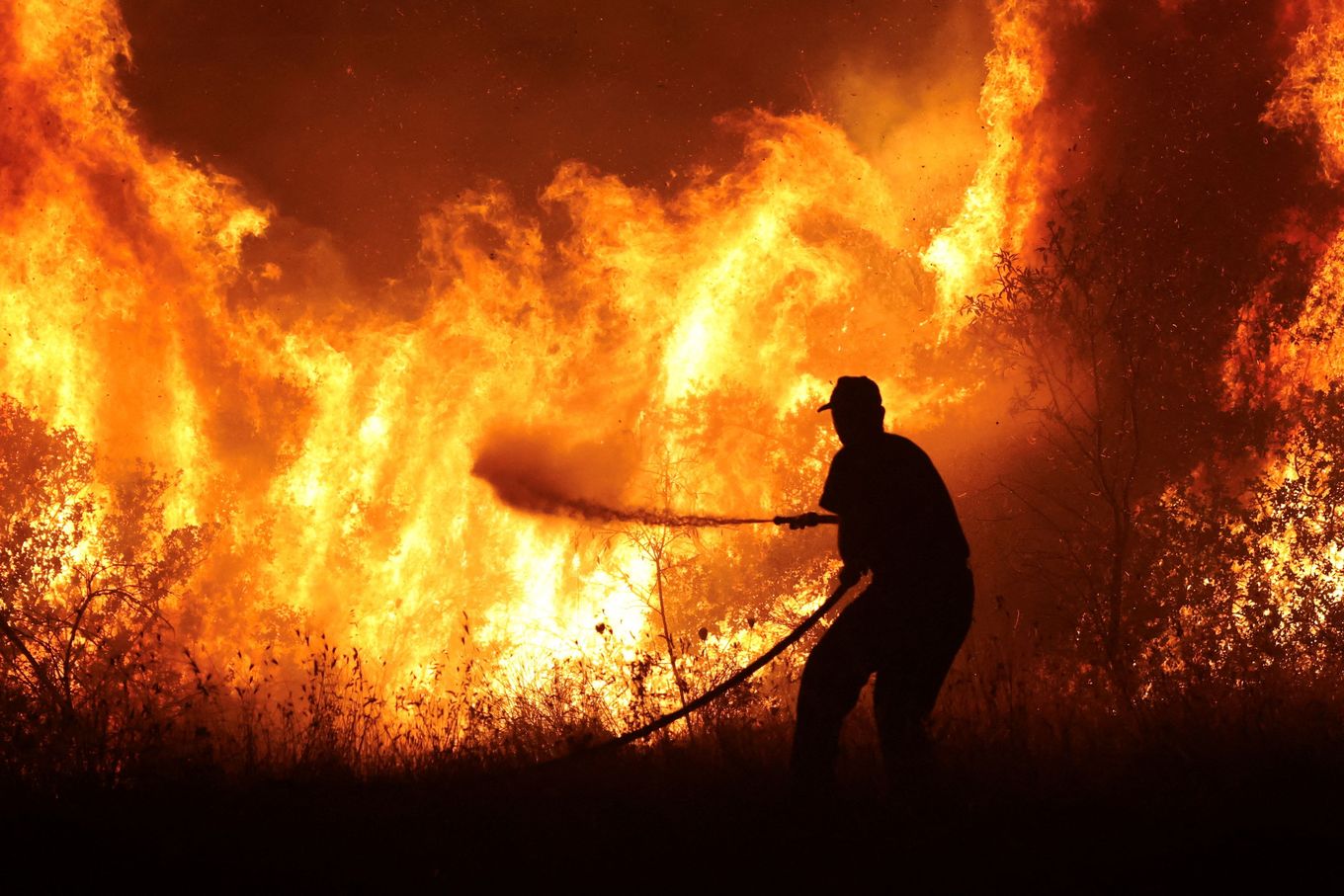 A firefighter tries to extinguish a wildfire burning at the industrial zone of the city of Volos, Greece, on Wednesday. (Alexandros Avramidis/Reuters) | U.N. Secretary General António Guterres has a habit of making apocalyptic pronouncements about climate change. But his latest warning, as scientists confirmed that July was set to become the Earth's hottest month on record, is impossible to ignore. "The era of global warming has ended," Guterres declared in a news briefing at the United Nations' headquarters in New York on Thursday. "The era of global boiling has arrived." Across the world, we've seen the stark effects of what amounts to an ongoing planetary emergency. Recent heat waves scorched through North America, Europe, North Africa and the Middle East. They triggered wildfires on both sides of the Mediterranean, and blazes that incinerated millions of hectares of land in Canada. A record monsoon flooded parts of north India. A spike in ocean temperatures baffled and alarmed scientists, while one recent study suggested that global warming was bringing a major circulation system in the Atlantic Ocean to collapse. Meanwhile, in the southern hemispheric winter, fewer stretches of the Antarctic sea are freezing over. "Climate change is here. It is terrifying. And it is just the beginning," Guterres said at the briefing, where he described "children swept away by monsoon rains, families running from the flames [and] workers collapsing in scorching heat." A study published last week by a coalition of scientists found that the extreme heat waves of recent months would be "virtually impossible" without the effects of man-made climate change. Friederike Otto, co-leader of the group of researchers and a climate scientist at Imperial College London, told my colleagues that their findings should come as no surprise, and that we won't know what the "new normal" of life in the era of climate change will look like until the world actually stops burning fossil fuels. "This could be even a cold year in the summers to come. This is not what we need to get used to," Otto said. "We need to get used to this, and worse." Despite the visceral evidence of a changing planet, and all the entreaties of U.N. officials and climate scientists, there's little political unanimity on what must come next. Governments across the world have put forward plans and commitments to drastically slash emissions and decarbonize their economies. But the measures needed to stave off planetary warming beyond a threshold considered by scientific consensus to be catastrophic for the planet are still proving to be a tough sell. Right-wing parties across the West are exploiting public disquiet over green policies. Last week, as wildfires blazed through the Italian island of Sicily, Prime Minister Giorgia Meloni described the conditions provoked by extreme weather as "a test" of her nation's capacity and resilience. But not long before, Meloni had beamed into an election rally in Spain for the far-right Vox party, a like-minded ally, where she called on the continent's "patriots" to resist the "climate change fanaticism" of their leftist and liberal opponents. Vox's leadership is known for their climate science denialism and they fared disappointingly in elections this month. But the party has previously capitalized in local polls on farmer discontent over water conservation policies and branded the country's 2021 Climate Change law as "the law for the return to caves and poverty." In Italy, where Meloni's faction holds sway in a right-wing coalition, similar noises are common. Guido Crosetto, the country's defense minister, complained in a recent interview that Europe's climate-focused policymakers were creating a security risk for the continent. "Once we have destroyed a quarter of European industry to give it to China, how do you think people will react?" Crosetto asked. "As a reaction, everyone will hate any good environmental intention, associating the battles on the climate with the deadweight loss of jobs." The European Union has arguably done more than any other polity to shift its societies toward renewable energy. But the transition has surfaced many thorny political debates. Governments in countries such as Poland and Hungary bristle over E.U. strictures on the usage of coal. The anger of Dutch farmers over new mandates for nitrogen emissions may shape the upcoming election campaign in the Netherlands. In Germany, the continent's leading automakers have launched an insurrection against the E.U. plan to phase out sale of all fossil-fuel-powered vehicles by the middle of the next decade, while the country's ruling coalition avoided implosion in June after it watered down legislation on heating homes. The country's far-right Alternative for Germany party, which is in the climate skeptic camp, happens to be surging in the polls. Unlike in the United States, where much of the Republican base still seems to reject the basic facts surrounding climate change, Europe's far-right parties are positioning themselves as pragmatic realists. "While no longer openly climate crisis deniers, they denounce the inequalities and the harm caused to industry they say are exacerbated by climate policies," wrote Nathalie Tocci, a former E.U. foreign policy adviser. This "greenlash," she explained, is having tangible effects and may slow down the continent's decarbonization efforts. Sensing the adverse political currents, technocratic centrist leaders like French President Emmanuel Macron and Belgian Prime Minister Alexander de Croo called in May for a pause to the implementation of the E.U.'s environmental standards. Henry Olsen, a right-leaning columnist at The Washington Post, argued that a more "sensible" policy would focus on technological innovation and offsetting the costs of the energy transition, as opposed to rapid decarbonization. "This inevitably means talking about climate change more as a problem to be managed than as a crisis that requires a total restructuring of the economy," he wrote last week. But it's hard to ignore the gravity of the moment. "We are at war, we will rebuild what we lost, we will compensate those who were hurt," Greek Prime Minister Kyriakos Mitsotakis told reporters last week, as fires scorched through his country's tourist-clogged islands. "The climate crisis is already here, it will manifest itself everywhere in the Mediterranean with greater disasters." In remarks at the U.N. climate summit in Egypt last year, the center-right Greek premier said it was possible to push a climate agenda that both reckoned with what's happening to the planet, while also not exacting a great toll on the public. "Personally I see no tension between safeguarding the present and investing in the future," he said. "Our people will not support us otherwise." | | | 1,000 Words 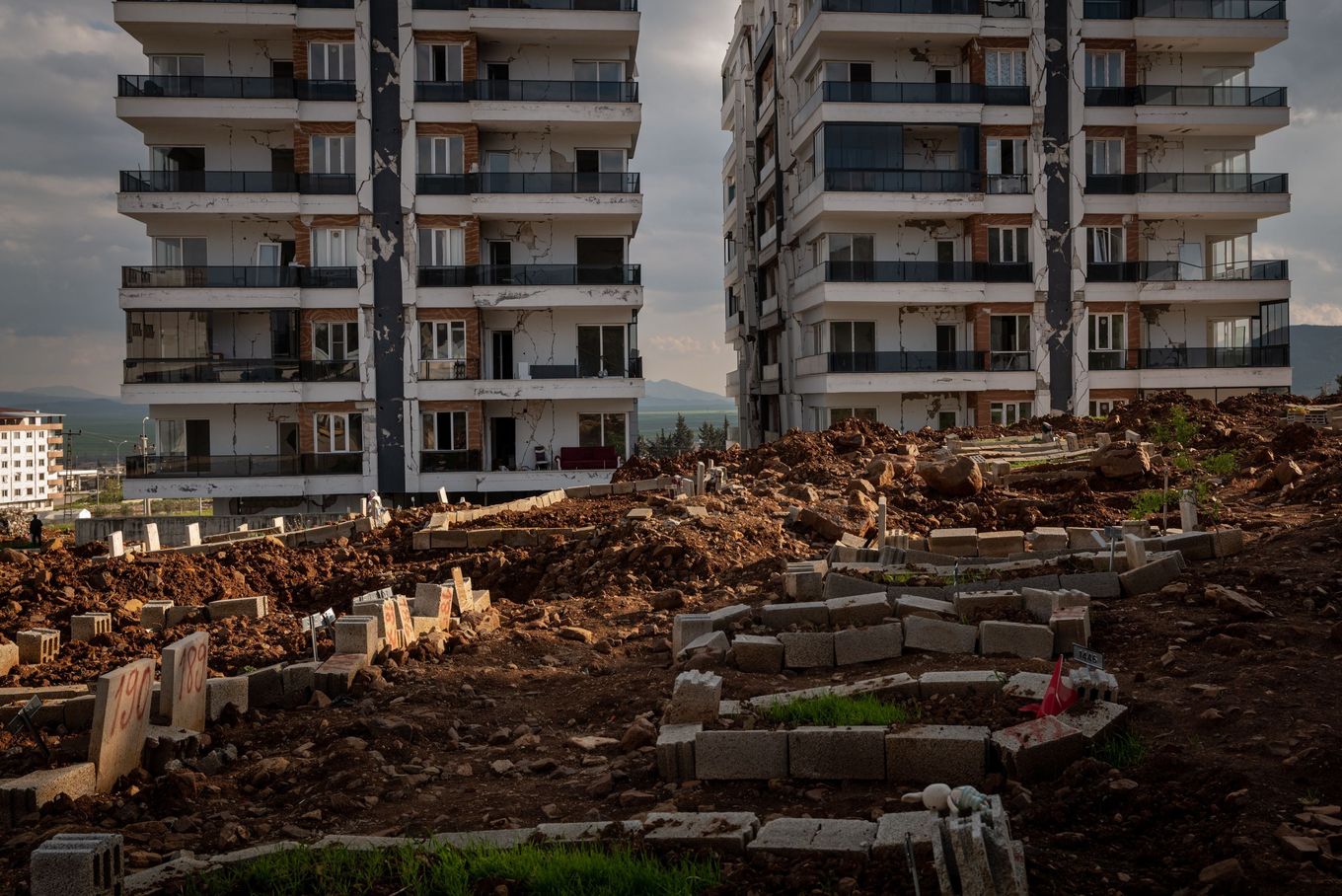 An extended area of cemetery near damaged buildings in Nurdagi, Turkey. Spray-painted numbers mark the graves of those killed in the Feb. 6 earthquakes. (Nicole Tung for The Washington Post) | 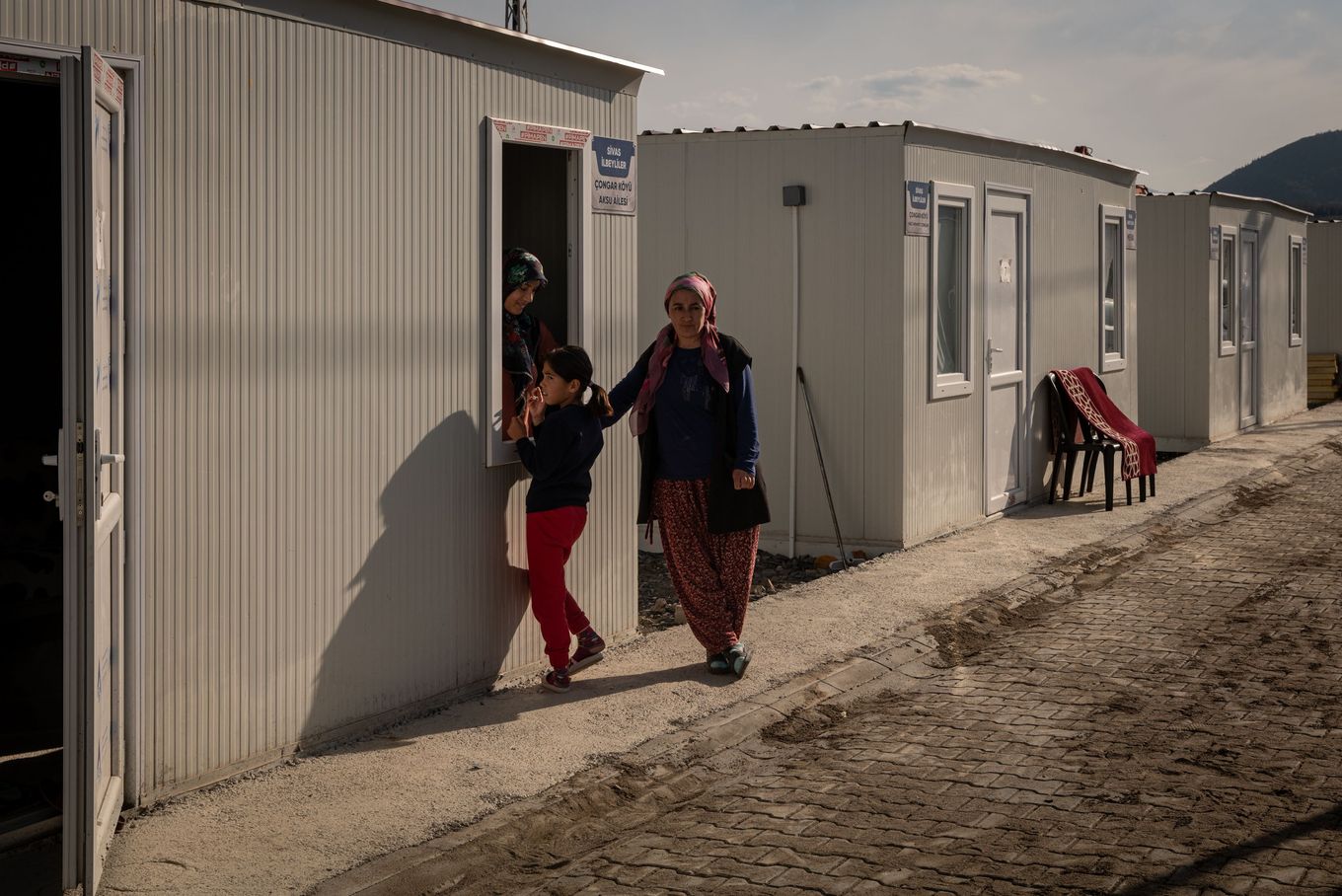 Displaced residents are seen in a container camp housing thousands of people in Nurdagi. (Nicole Tung for The Washington Post) | From Nurdagi, Turkey, reporters Kareem Fahim, Beril Eski and Gamze Yilmazel report on how one town is coping and rebuilding months after the devastating twin earthquakes that killed more than 50,000 in February: Hasan Kilic still visits what remains of the building where he lost nearly everyone — his wife, his parents, a brother and two of his three sons. His gaze was hollow as he reflected on all that he and this town had suffered. In what seemed to him like an instant, "Nurdagi was turned into nothing," Kilic said. Nearly six months later, what remains of the town is vanishing. Residents have been exiled to shipping-container communities on the town's outskirts or to faraway cities. Crippled apartment blocks are being bulldozed and carted off. But on a windswept hill above the city, new apartment blocks are rising at an astonishing pace. The surrounding area is becoming a showcase for a plan to build hundreds of thousands of homes across the earthquake zone within a year — a promise made by President Recep Tayyip Erdogan that tamped down public anger at the government's sluggish earthquake response and earned Erdogan votes in Turkey's recent presidential election. | | | Talking Points • The head of Niger's presidential guard declared himself the leader of the West African nation on Friday, two days after soldiers detained the democratically elected president, Mohamed Bazoum. Gen. Abdourahmane Tchiani said the "harsh reality of insecurity in Niger" had led the soldiers to overthrow the president. Tchiani criticized the government for not cooperating with neighboring Mali and Burkina Faso in tackling the Islamist insurgency roiling the Sahel region of Africa, and he vowed to work with both nations, which are also led by military juntas. • The United States is poised to cut off assistance to Niger if its democratically elected leader is not restored to office, Secretary of State Antony Blinken said this weekend, warning that the military ouster of Bazoum could have painful ramifications for Nigerien citizens. • At least 40 people were killed in a suspected suicide bomb blast targeting a political convention in northwest Pakistan on Sunday, raising new concerns over the mounting scale of attacks as the country prepares for a general election later this year. • Zelensky's office confirmed that Saudi Arabia is preparing to host peace talks on behalf of Ukraine. U.S. national security adviser Jake Sullivan is expected to attend the talks, according to a person familiar with the matter. The summit, which Russia is not attending, is reportedly intended to give Ukraine's backers a chance to align positions on how to end the war. | | | Top of The Post | | | Viewpoints | | | Fordlândia 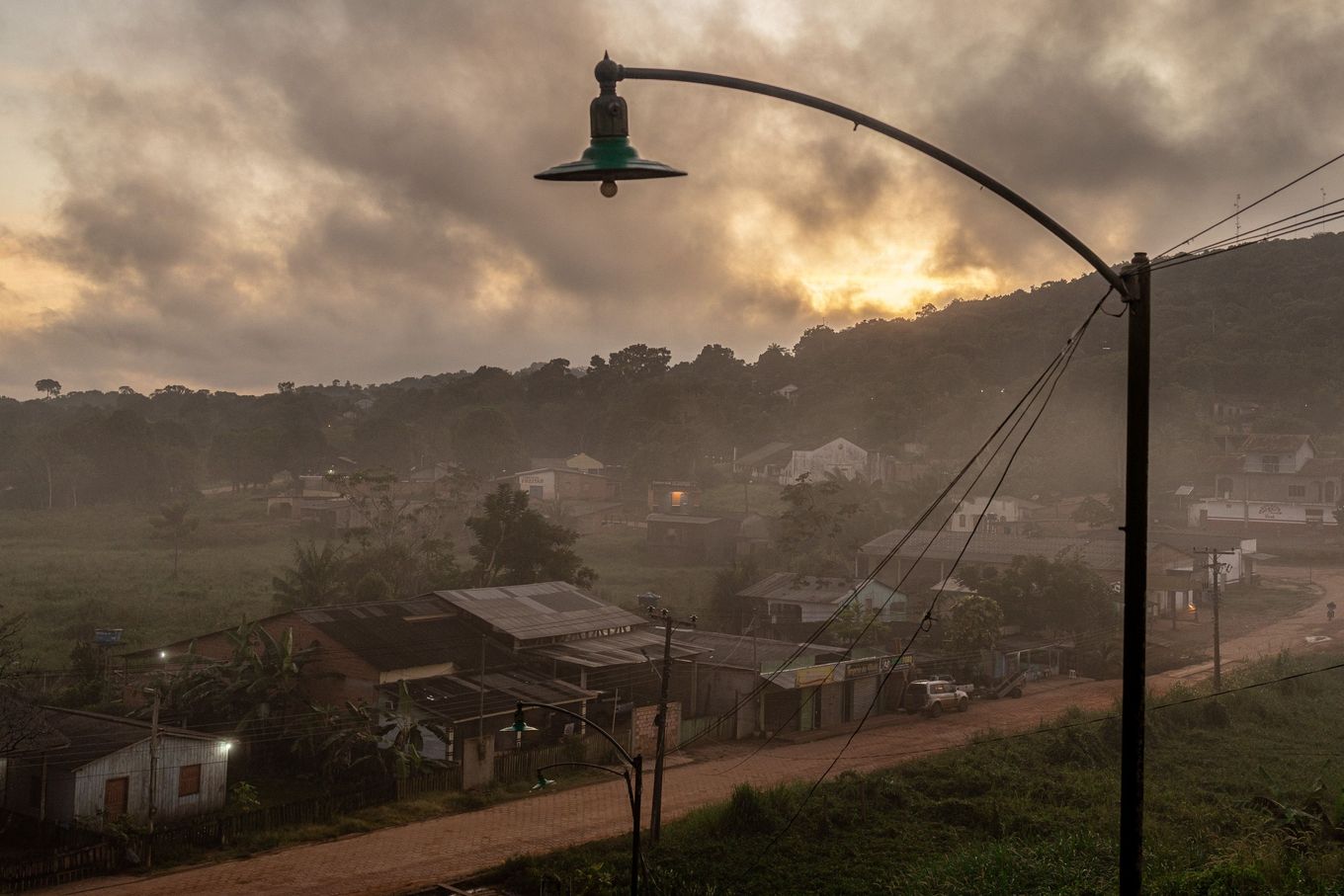 Sunrise on a street in the tiny Fordlandia village. (Rafael Vilela for The Washington Post) | FORDLÂNDIA, Brazil — When he was a young man, Luiz Magno Ribeiro felt nothing but pride in his city. It was, he believed, the most miraculous town in Brazil, a place of many firsts. The first settlement deep in the Amazon rainforest to have running water and electricity. The first to treat patients in a modern hospital. The first to build a swimming pool, a cinema, street lamps — an oasis of civilization in a remote jungle: Fordlândia. Where Henry Ford tried to defeat the Amazon and was instead defeated. But one recent morning, as he set out to inspect the community, it wasn't awe that the 49-year-old felt. It was frustration and grievance. Despite all of Magno's efforts, despite the community's backing, despite the help of federal attorneys and a recent order by a judge, the remarkable history of Ford's conquest to harvest Amazon rubber was being lost, historic building by historic building. And the roughly 2,000 people still here, many of them impoverished descendants of Ford workers, were being forgotten — again. Now came another sign of neglect. As Magno, the town historian, walked through the neighborhood where Ford's executives once enjoyed the comforts of a Midwest suburb — wide-screened balconies, concrete sidewalks, porcelain bathtubs — he smelled something acrid. There, inside one of the stately houses, he saw it: bat guano. Mounds of it. The elegant home had been taken over by a squatter — and a colony of bats. "He didn't even clean it up," said Magno, furious at the squatter. "There must be 20 pounds of guano here. And no one does a thing. I've never seen this city in worse condition." 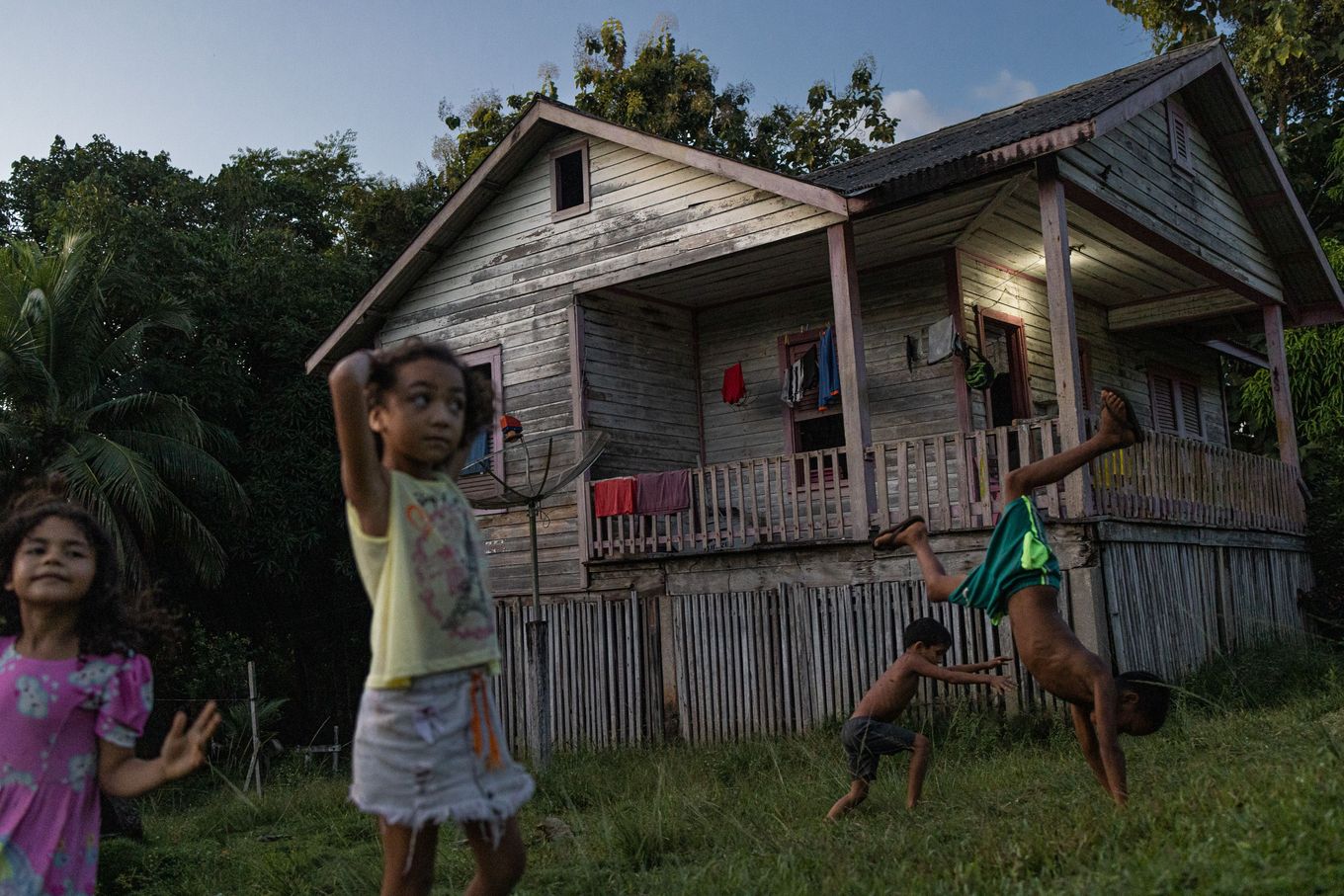 Children play in the Prainha neighborhood. Humble workers' dwellings built as part of the Fordlândia project remain standing. (Rafael Vilela for The Washington Post) | 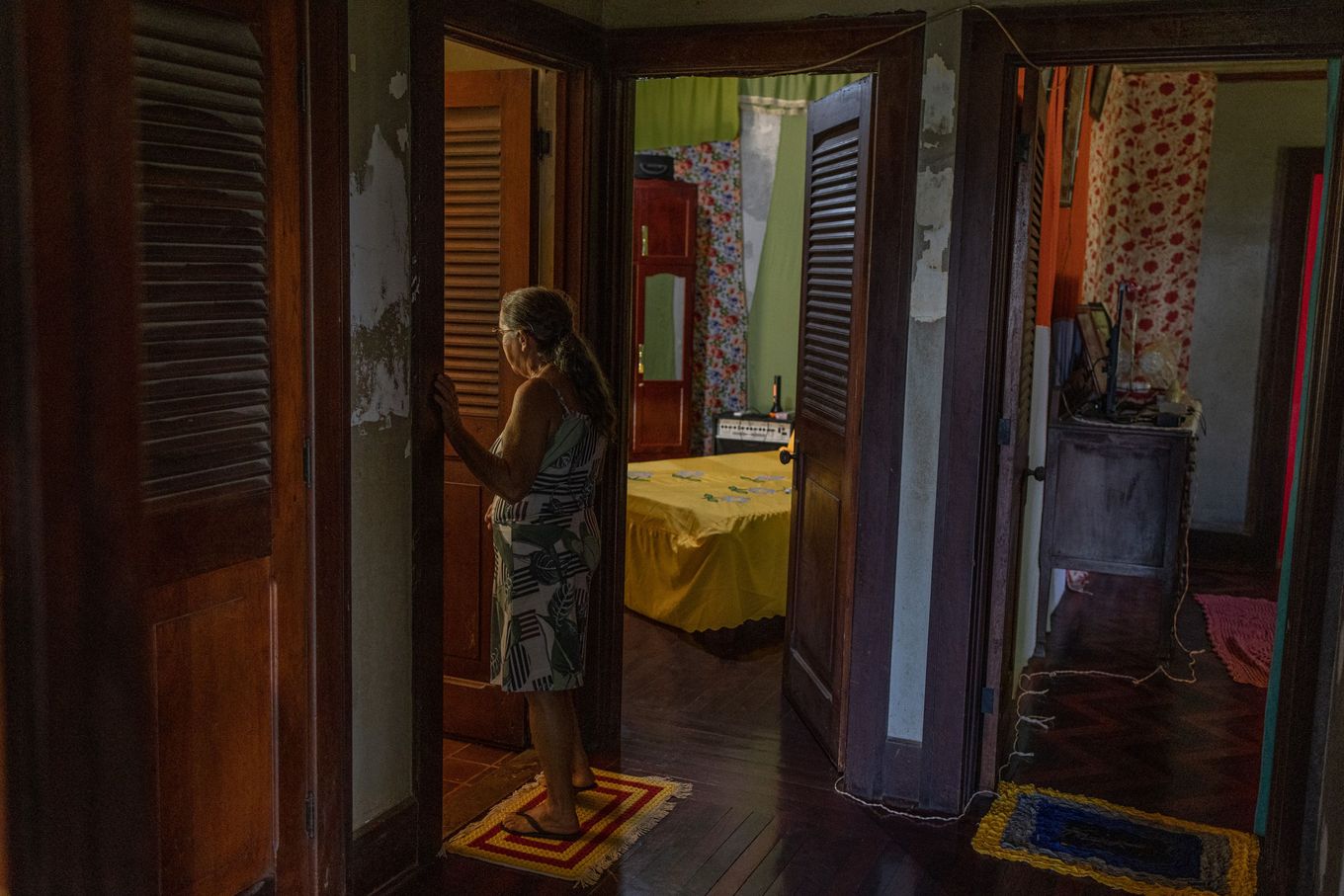 Altina da Costa Castro, 63 and her granddaughter Kaila Vitória, 9, lives in an abandoned house in Vila Americana, a luxury condominium created for Ford Motors executives to live in from 1928 in "Fordlandia." (Rafael Vilela for The Washington Post) | Nearly a century ago, the Ford Motor Co. spent heavily in blood and coin to construct what became, practically overnight, one of the Amazon's largest cities. Thousands of acres of forest were razed. Millions of dollars were spent. Hundreds of workers died. But neither Ford nor the Brazilian government, which assumed control of the property when the company departed in 1945, has done much of anything to preserve this historic town whose brief heyday came at so high a cost. William Clay Ford Jr., Henry's great-grandson and now the company's executive chairman, reportedly supported in 1997 the opening of a rubber museum here, but nothing came of it. Meanwhile, the Brazilian government, according to federal attorneys, has for more than 30 years ignored pleas to endow the town with historical protections. Ford didn't respond to requests for comment. Neither did Brazil's National Historical and Artistic Heritage Institute, which is charged with safeguarding the country's historic sites. In recent years, Fordlândia's collapse has only accelerated. The hospital, designed by Ford architect Albert Kahn and the first to perform complicated surgeries deep in the Amazon, was ransacked a decade ago and stripped of its roofing and walls. Down came a historic home where Ford executives had lived. The cinema, where American poetry was read in Portuguese, was condemned as a safety hazard in 2020 and knocked down. And this year, the last resident who had worked for Ford died, at 102. "There won't be a Fordlândia in 30 more years," Magno lamented. "It will all be lost." He has come to think of it as two towns. There's the Fordlândia that's been portrayed in the media: a ghost town whose story ended when Ford left. Then there's the reality: Fordlândia never suffered an exodus. If it's not quite thriving, it remains a community with schools, shops and churches. What connects the two Fordlândias is failure. First, the failure to conquer the jungle. And now, the failure to preserve. – Terrence McCoy Read more: Surviving in Henry Ford's lost jungle town | | | Afterword  peace prize barbie | | | | | |


 Email
Email


No comments:
Post a Comment