| | | | Don't knock-knock it till you've tried it | | | (Demetrius Freeman/The Washington Post) | | All the right wants is to be funny. Conservatives are "starting to get better at comedy and it's making lefties nervous," reads an iconic, often mocked 2018 tweet from one pundit. But workshop digs at the president, then land on what you just know will be a devastating zinger and — whoops — you've handed him a gold mine of a brand. "Bidenomics" was a joke at President Biden's expense when it began, but, as Gene Robinson writes, "if recent economic trends continue, he might well have the last laugh." Inflation has gone down, and unemployment has stayed down. The once-derided Bidenomics, it turns out, is working. It's all good news — except to Republicans, who are struggling to turn the economy into an albatross for the president. It would probably help if they had some sort of alternative message. But, Jen Rubin argues, Republicans just "feed their special-interest donors, perpetuate crony capitalism and grow the debt." A humming economy and inflation at 3 percent have left the GOP at sixes and sevens. The hope Republicans are holding on to is that voters won't link the economy's gains with Biden's handling of it. As Jen writes, "Biden's economic results have far outstripped the media's portrayal of the economy and the public's perception of it." But the clock is not on the right's side, and the president has a whole year to connect the dots. That's plenty of time, especially if he follows Gene's proposals for how to break through to America. | | Chaser: Former Indiana governor and university president Mitch Daniels writes that young employees aren't prepared for any sort of economy, what with the work ethic colleges are instilling. | |  | | The Cairo Zoological Gardens in the 1930s. (Library of Congress) | | In the 19th century, the khedive of Egypt, looking at the leafy avenues of Europe, set out to greenify Cairo. The resulting public gardens, Egyptian writer Yasmine El Rashidi recalls, were oases in the city's "parched expanse." Today's Cairenes might think them more mirage than oasis. The gardens have all but disappeared, paved over for more American-style eateries, more gas stations, more "money, money, money," in the words of President Abdel Fatah El-Sisi. | | | The Great Pyramid of Khufu, right, and the pyramid of Khafre behind buildings on the outskirts of Cairo on March 2. (Khaled Desouki/AFP/Getty Images) | | Rashidi's essay charts the gardens' demise. She writes that along the street where she grew up, "a 1-kilometer stretch of verdant Nile bank with 100-year-old trees has been razed to make way for a strip mall." The accompanying photos of the de-beautification sting. | | | Partially cut-off trees in Heliopolis in January 2020. (Mohamed El-Shahed/AFP/Getty Images) | | And it's not just parks. Rashidi writes that historic neighborhoods and heritage buildings have been overrun, as well. Even the 1,400-year-old cemetery known as the City of the Dead is being razed. Perhaps now its moniker belongs to all Cairo. | | 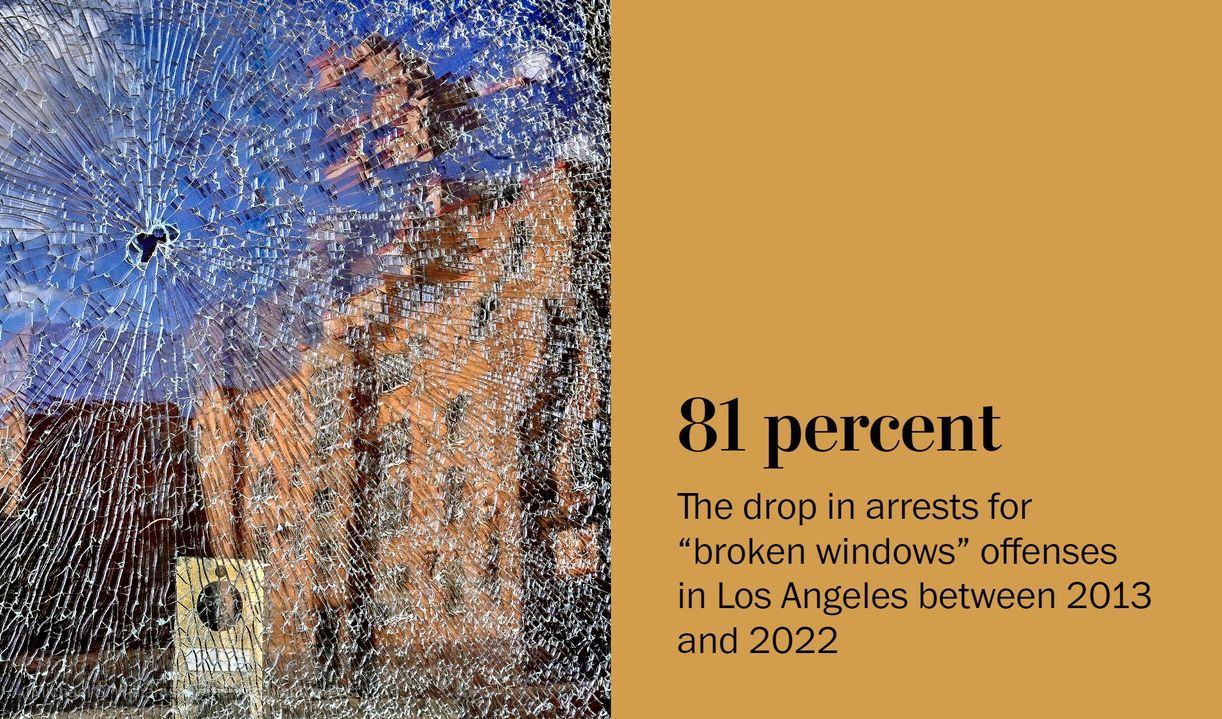 | | From conservative think-tanker Charles Murray's analysis of rising urban crime in the United States. He's careful not to ascribe causation, but he just can't help but notice that the decrease in minor-offense policing coincides pretty well with the overall increase in crime. Murray looked also at New York and Washington and saw similar patterns. The cause for the shift in policing in each of the three cities is complex, but "the effects are not complicated or subtle," he writes. "The daily quality of life … has suffered" — especially for the people of color and low-income families in the urban centers most affected. "If improving their lives is the goal," he writes, "then restoring broken-windows policing should be part of the solution." Chasers: Another threat to downtowns comes from the work-from-home era. Post readers wrote in with 15 ideas to help revitalize them. Meanwhile, Mike Bloomberg writes in an op-ed that it's simply time for everyone to get back to the office. | | I am visiting a friend at her home in Maine, where the recycling situation looks like this. I have not seen the sun for approaching 72 hours because every waking moment is devoted to figuring out where the pint container that once held blueberries is supposed to go. | | 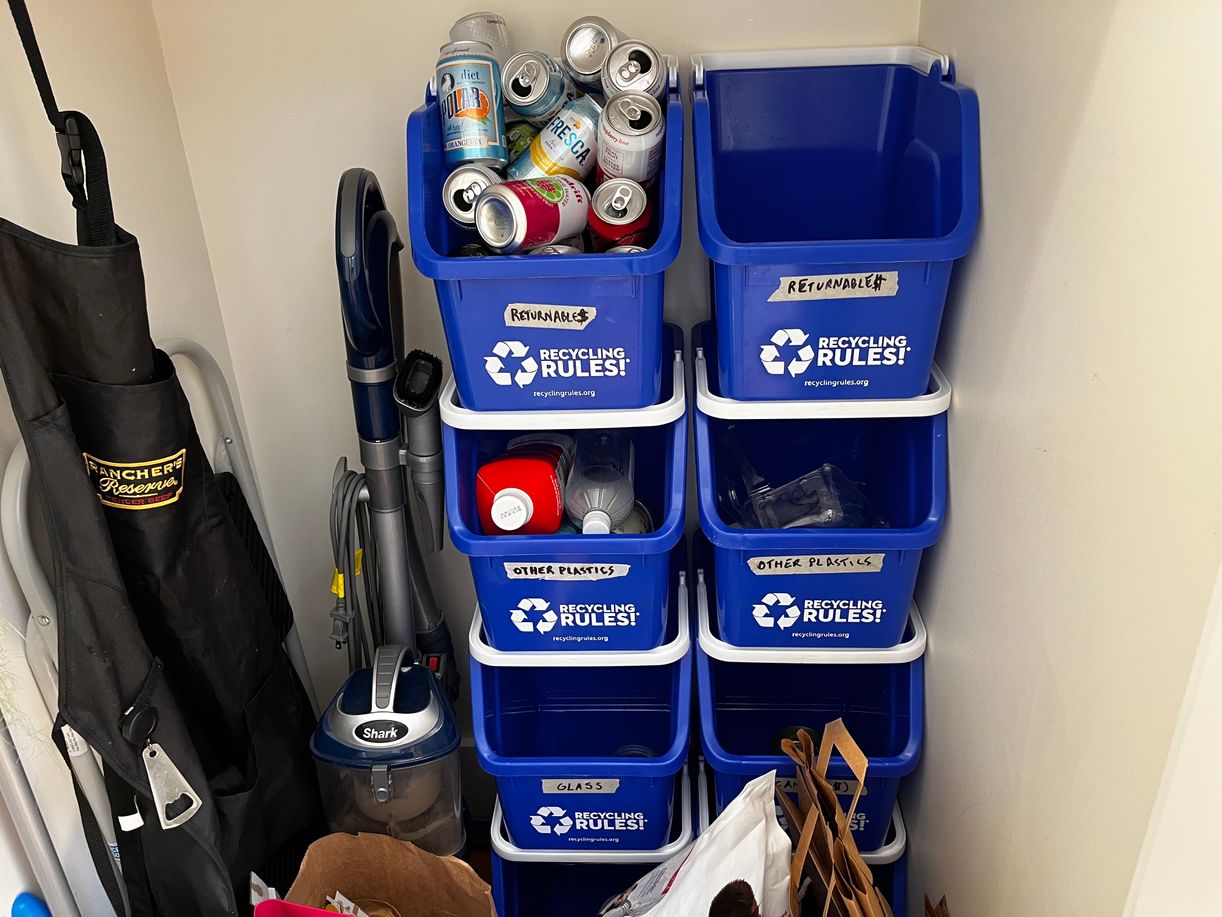 | | Help! (Drew Goins/The Washington Post) | | Recycling is confusing, writes Rob Gebelhoff, a Post Opinions editor — but it doesn't have to be as byzantine as it is. Plastics in particular are a mess, and across the 20,000 recycling systems in the United States, standards, uh, vary. Rob's modest solution is for the government to standardize labeling so consumers know which plastics can actually recycle, and how. Even if that means a big reduction in what is ostensibly recyclable, Rob explains, it will be better for the Earth in the long run. | | It's a goodbye. It's a haiku. It's … The Bye-Ku. Reduce your effort Reuse what they took from you Recycler's revenge *** Have your own newsy haiku? Email it to me, along with any questions/comments/ambiguities. See you tomorrow! | | | | | | | | | |






No comments:
Post a Comment