Reducing Conflicts with Black Bears 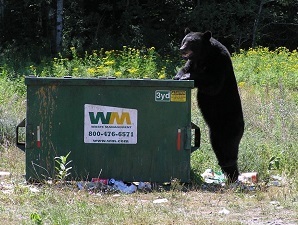 With the arrival of spring, black bears begin to emerge from their dens. DEC has already received a few reports of bear sightings across the state. Human-related food sources such as bird feeders, pet food, and garbage can attract bears and lead to potential conflict. Feeding bears either intentionally, which is illegal, or unintentionally through careless property management, has consequences for entire communities as well as the bears themselves. With the arrival of spring, black bears begin to emerge from their dens. DEC has already received a few reports of bear sightings across the state. Human-related food sources such as bird feeders, pet food, and garbage can attract bears and lead to potential conflict. Feeding bears either intentionally, which is illegal, or unintentionally through careless property management, has consequences for entire communities as well as the bears themselves.
To reduce the potential for human-bear conflicts, DEC advises everyone residing in or visiting bear country (much of upstate New York) to be "BearWise" and remove any attractants. People should take down bird feeders and clean up any remaining birdseed as soon as possible, store garbage inside secure buildings, and feed pets indoors. By taking these simple steps, New Yorkers ensure that bears will find food naturally, which in turn protects people, property, and bears.
For more information, please visit DEC's webpage on reducing human-bear conflicts.
DEC to Resume In-Person Hunter Education Courses  DEC will resume offering in-person, instructor-led Hunter Education Program (HEP) courses beginning April 1, 2021. COVID-19 safety protocols will be followed in every in-person course, including health screening upon arrival, mandatory mask-wearing, social distancing, smaller class size limits, and sanitizing hands and equipment. DEC will resume offering in-person, instructor-led Hunter Education Program (HEP) courses beginning April 1, 2021. COVID-19 safety protocols will be followed in every in-person course, including health screening upon arrival, mandatory mask-wearing, social distancing, smaller class size limits, and sanitizing hands and equipment.
In-person courses are free and are taught by volunteer HEP instructors. Courses are offered in hunter education, bowhunter education, trapper education, and waterfowl hunter education. Registration is required and all in-person courses require mandatory homework that must be completed prior to participating in the in-person course. For more information, or to register for a HEP course, visit DEC's website. Due to COVID-19, the number of courses offered may be limited this spring. Check back often as new courses may be added weekly.
2020 Bear Harvest Totals 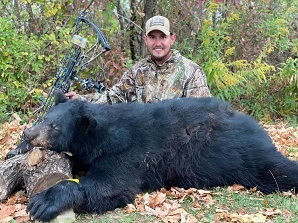 New York State bear hunters took 1,723 black bears during the 2020 hunting seasons. Black bears continue to prosper in New York's excellent bear habitat. Bear hunting seasons allow DEC wildlife managers to collect valuable information that our scientists use to help maintain healthy bear populations. And successful bear hunters help maintain populations at sustainable levels and are rewarded with outstanding food for their families and friends. New York State bear hunters took 1,723 black bears during the 2020 hunting seasons. Black bears continue to prosper in New York's excellent bear habitat. Bear hunting seasons allow DEC wildlife managers to collect valuable information that our scientists use to help maintain healthy bear populations. And successful bear hunters help maintain populations at sustainable levels and are rewarded with outstanding food for their families and friends.
Hunters took an estimated 1,152 bears in the Southern Zone, comparable to the record set in 2019, and 11 percent greater than the recent five-year average. While take in the regular season was lower than last year, hunters had record success during the early and bow seasons. In the Northern Zone, hunters harvested an estimated 571 bears—the highest number since 2015. A productive early season in the Northern Zone is generally followed by a relatively low regular season harvest, with the reverse anticipated in the year to come. The 2020 bear harvest followed this pattern, with an early-season harvest that increased four-fold from 2019, and a regular-season harvest that dropped approximately 25 percent from 2019 numbers.
Notable Numbers
- 3: the number of bears harvested per 10 square miles in Wildlife Management Unit (WMU) 3K, which includes southern Sullivan County and a portion of Orange County. WMU 3K had the greatest bear harvest density of any unit, but the town of Monroe in Orange County yielded 4.5 bears for every 10 square miles.
- 116: the greatest number of bears reported taken on any one day was recorded on September 12, the opening day of the early bear season in the Southern Zone.
- 550 pounds: the heaviest dressed weight bear reported to DEC in 2020, taken in the town of Greenville, Orange County. Scaled weights of dressed bears were submitted for 26 percent of bears taken in 2020.
- 13: the number of tagged bears reported in the 2020 harvest. These 13 bears included two bears originally tagged in Pennsylvania and one from New Jersey. The remainder were originally tagged in New York for a variety of reasons, including research, nuisance response, relocated urban bears, or released rehabilitated bears.
- 911: the number of hunter-killed bears from which DEC collected teeth for age analysis in 2020.
A complete summary of the 2020 bear harvest with results and maps by county, town, and WMU is available on DEC's website.
DEC Proposes Updates to Wildlife Management Area Regulations DEC is proposing amendments to the regulations governing Wildlife Management Areas (WMAs) in order to protect natural resources, promote public safety, and help ensure the multiple uses of New York's WMAs remain compatible as public demand for outdoor recreation increases. Proposed changes would update and clarify existing regulations—defining the allowable activities and uses of WMAs. Some changes would help bring consistency with existing rules for state forests, campgrounds, and other DEC lands, while others continue the prioritization of hunting, fishing, trapping, and wildlife viewing opportunities on WMAs. New York State has more than 120 WMAs containing nearly 250,000 acres, including 124,000 acres of forests and grasslands and 53,000 acres of wetlands. DEC's Bureau of Wildlife manages an additional 38,000 acres of land, including Unique Areas and Multiple Use Areas, for a total of approximately 150 areas for New Yorkers to visit and enjoy. The public is invited to comment on the proposed amendments. For more information, visit DEC's proposed fish and wildlife regulations webpage. Comments will be accepted through May 24, 2021. Photo credit of harvested bear: Eli McCaig with a female bear he took in Steuben County. |


No comments:
Post a Comment