Mises Wire |
- The Ethics of Public Spending
- Libertarianism: A Fifty-Year Personal Retrospective
- Stealing from Thieves
- It Belongs to Me! A Libertarian Analysis of Property Rights in Nigeria
- How Governments Killed the Gold Standard
- Spencer and Hayek’s Liberal Evolutionism, and Why It Should Omit the Nation-State
- Rothbard's The Ethics of Liberty with Stephan Kinsella
- The Populist Case for the Gold Standard
- Subjectivism Exposed the Limits of Political Will. Statists Hated It.
- Inflation Is Great If You're Already Rich
- A Defense Against Attacks on Negative Liberty
- Decentralization: Why the EU May Be Better Than the US
| Posted: 28 May 2021 03:15 PM PDT ABSTRACT: This article wrestles with the issue of when is it justified to accept money from government. The case is made that it is indeed almost always justified to do so. But not for everyone. Keywords: libertarianism, ethics, theft, taxation Jonathan Gress (jonathan.gress@lpmaryland.org) is an independent scholar. Walter Block (wblock@loyno.edu) is the Harold E. Wirth Eminent Scholar Endowed Chair in Economics at Loyola University and senior fellow at the Mises Institute. The authors are grateful to a referee of this journal whose comments on an earlier draft of this paper enabled them to greatly improve it. The usual caveats of course always apply. THE ETHICS OF TAKING GOVERNMENT MONEYIt has been argued by libertarians, who else, that it is ethical for libertarians to accept government money,1 on the ground that it is better for libertarians to have the money than the state.2 Libertarians are likely to use the money specifically to undermine state power, such as by donating to libertarian organizations. Even if libertarians do not use the money specifically to attack the state, spending on personal consumption is presumably a better use of the funds than whatever crimes the government was in the process of committing with them. Can we extend this approach to the question of nonlibertarians using government money? After all, if it is better for libertarians to spend stolen wealth on themselves than for the state to keep that wealth for other purposes, it is better for anyone to spend that wealth on themselves than for the state to keep it. On grounds like these, one can even argue against immigration control; for instance, even if public property belongs to the taxpayers, it is better if immigrants come in and take it than if the government is allowed to keep control of it.3 Of course, this approach has its limits. Benefiting from stolen wealth is legitimate for the victims of the criminal state (the taxpayers), and it may also be legitimate for nonmembers of the state who are not themselves victims (e.g., immigrants who are not taxpayers), but it surely cannot be legitimate for the criminals themselves. It is not permissible for top members of the government to spend stolen wealth on personal consumption, as they are part of the criminal apparatus itself and such spending itself constitutes a crime. But can we be certain of this assertion? Would it be a crime if Bill Clinton spent his pension on a yacht? Or is it simply that he owes restitution as a key member of the criminal enterprise, with his spending choices being relatively immaterial to the case against him? We answer as follows. Surely, there is nothing improper about yachts, per se. To the degree that he earned the money to pay for this good properly, there can be no objection. However, to the extent that the wealth emanates from improper sources, it would not matter one whit on what he spent it; he should be compelled to at least return the stolen money to its proper owners. To resolve such issues, we rely on ruling class analysis to distinguish the criminals from the noncriminals. In the view of Rothbard (2004): All States are governed by a ruling class that is a minority of the population, and which subsists as a parasitic and exploitative burden upon the rest of society. Since its rule is exploitative and parasitic, the State must purchase the alliance of a group of "Court Intellectuals," whose task is to bamboozle the public into accepting and celebrating the rule of its particular State. The Court Intellectuals have their work cut out for them. In exchange for their continuing work of apologetics and bamboozlement, the Court Intellectuals win their place as junior partners in the power, prestige, and loot extracted by the State apparatus from the deluded public. The noble task of Revisionism is to de-bamboozle: to penetrate the fog of lies and deception of the State and its Court Intellectuals, and to present to the public the true history of the motivation, the nature, and the consequences of State activity. By working past the fog of State deception to penetrate to the truth, to the reality behind the false appearances, the Revisionist works to delegitimize, to de-sanctify, the State in the eyes of the previously deceived public.4 For example, a janitor cleaning the bathroom in Congress is taking government money in wages and is even performing a service for the government, but it would be a stretch to consider him part of the ruling class. His power over the criminal organization that is the state is almost nonexistent, so his responsibility for their crimes is likewise almost nonexistent. The Congressmen passing the oppressive taxes and laws who use the bathroom, on the other hand, are clearly very much part of the ruling class. The janitor is justified in taking his salary but not the Congressmen in taking theirs, unless they are libertarian heroes like Ron Paul who used their office to speak out against the evils of government and vote against every unconstitutional law or spending proposal.5 As the Ron Paul exception shows, our ruling class analysis treats every individual differently and evaluates their membership in the ruling class based on the work they do for or against the government and its crimes. THE ETHICS OF SPENDING GOVERNMENT MONEYIf it is a virtue to take government money, as we maintain, it seems to follow that it is ethical for the government to spend money, and if it is more virtuous to take more government money rather than less, it seems to follow that it is more virtuous for the government to increase government spending than to decrease it. Of course, this conclusion seems rather paradoxical for a libertarian; libertarians normally support only decreases in public spending. We acknowledge that our call for taking government money as a virtue sounds counterintuitive to the libertarian ear.6 This, of course, is distinct from merely being just or permissible. It is permissible for Jones to take the best available course of action while it is not necessarily a virtue to do so. But we stand by this claim. Given that government is evil,7 the less money it has, the better. Well, ceteris paribus, the more money people take from the state, the less it will have. Doing so, then, is not merely a good course of action to take, but over the call of duty; to wit: a virtue. QED. However, if we return to our original argument, we see that the benefit of spending government money does not lie in the spending itself but rather in the fact that statist funds are thereby diverted from even worse uses. That is, we want to put the stolen funds to the best possible use, given their dire circumstances. So while the best use of all for government funds is to return them forthwith to the taxpayers (along with appropriate compensation for the crime of theft), if this isn't possible, it is still better8 for the government to spend its money on libertarians than on nonlibertarians, or on nonlibertarian, non–ruling class members than on ruling class members. When it comes to evaluating government spending policies, then, we do not necessarily reject or endorse the spending plans out of hand, but instead consider the alternatives. Does the spending increase necessitate a rise in taxing or borrowing? If it does, we must reject it, regardless of how noble the cause. Thus, if the government suddenly decided to spend a million dollars a year on the Mises Institute, but would have to fund this subsidy out of a new bond issue, no libertarian in good conscience could support this. On the other hand, if this subsidy were to come out of the existing budget and necessitate a spending decrease in some other area that causes more economic harm, like corn subsidies, we would favor it as the best use of the stolen funds, given the alternatives. Extending this analysis, we oppose an increase in corn subsidies if, say, it came out of the public budget for the Libertarian Party's election campaign, but we would support it if it reduced the budget for the DEA, whose job almost entirely consists of physically assaulting and threatening people for nonviolent drug "crimes." If the increased subsidies had to be funded by a tax hike, on the other hand, this would clearly be incompatible with libertarian theory.9 The proviso that spending increases in certain areas be compensated by decreases in other areas is highly important. In practice, it means that libertarians must oppose most10 boosts in government expenditures, simply for the reason that they do not come with any guarantee that no new taxes will be imposed, or new borrowing carried out, to pay for them. Without such an assurance, libertarians are ill advised to endorse any spending increase, even on an ostensibly praiseworthy cause like a Rothbardian economics professorship at a public university. However, once the professorship is granted, a Rothbardian economist would not be doing anything wrong by taking the position and using it to teach sound libertarian ethics and economics, simply because the likely alternative is that the government would abolish the position and use the same funds to more nefarious ends (such as a chair in Keynesian or Marxist economics). One of the three main heroes in Rand (1957) was Ragnar Danneskjold. This character was a "pirate" (scare quotes around this word since piracy typically applies to criminals who prey on innocent ship owners). Ragnar was entirely different. He, instead, stole, or, rather, liberated money and other possessions from government ships. True, he did so in order to return funds to Hank Reardon, perhaps the fourth most important character in this magnificent novel. This brings us to a new point. Suppose Danneskjold had not used the proceeds of his "piracy" to benefit victims of government as he did. Nor, we presume, that any of these monies had been forcibly taken from him or his parents. Would his actions have then been unjust? We claim not. Nor would any other bilked taxpayer have the right to demand from him part of these funds. His reply to them would be simple: Go and liberate your own money from the state apparatus. Why should I do that for you? There are no positive rights, such as your right to take money of which I justifiably deprived the government.11 So far we have discussed the ethics of public spending as it relates to spending increases; now we must apply ourselves to decreases. We have previously seen that a libertarian can support a rise in public expenditure on some items provided that it comes out of the existing budget (i.e., does not necessitate upsurges in taxes, borrowing, or inflation) and provided that the boost serves to divert state funds from other areas that are more harmful. Thus, it is better for the government to spend on libertarians than on nonlibertarians, and on ordinary people than on members of the ruling class; it is also more libertarian for the government to direct its resources on providing goods and services that do not of themselves violate the nonaggression principle rather than on violations of that principle (welfare is better than warfare). What, now, of proposed decreases in public spending? The same principles apply, but in reverse. Thus, libertarians welcome any proposed decrease in public spending if we know it will also lead to a decrease in taxes or borrowing. If we have no reason to think that taxation will be affected, however, we might want to consider what will be done with the money. If the state is proposing to end public funding of Libertarian political campaigns in order to shore up their budget for the statist indoctrination program known as public schools, we would have good reason to balk at this and to push for keeping the current budgetary allocation. Or if they are intending to ax food stamp benefits merely in order to expand their nuclear arsenal, we would also be wary. Just as we have a built-in bias against any proposed increased in public spending, though, on the grounds that the state rarely keeps a promise to avoid jacking up taxes or borrowing more private money, libertarians likewise incline in the direction of any reduction in public spending. The less the government spends, the more public pressure it may feel to follow this by lowering taxes. Reduced outlays on benefits and welfare have an additional benefit of making the public less dependent on the state and more likely to support further decreases in its power. In order to oppose the cut, we would have to be reasonably sure that it would have no effect on the total budget and would only lead to spending increases in more harmful areas. CONCLUSIONThe standard libertarian opposition to public spending can be reconciled with the position that taking government money is not itself a crime.12 As with everything else in human action, we are faced with a choice and must decide on the better course of action given the set of options. Taking government money is not a crime in the libertarian philosophy, because it does not violate the nonaggression principle. From a utilitarian point of view, this act will do more harm to the state than not doing so. Ditto, paradoxically, for the nonlibertarian welfare queens, but not for members of the ruling class who are most likely to directly benefit the state. For a ruling class member such as George W. Bush, it would probably have been better if he had not accepted his government salary; his ability to wage war and other evil deeds would have been reduced to the extent that he would not have been able to support himself during his presidency. What about the fact that many academics vote for the government to spend money and occupy college or university positions in which they receive some of that money? Is this justified in our view? Of course not. Such scholars are in effect part of the state apparatus, or at least in league with it. Ditto for leftish movie stars who brag about donating money to the government over and above what they owe in the form of taxation. Likewise, the choice to spend government money may or may not be a crime, depending on whether it leads to more theft from taxpayers or rather to less funds available for other, worse projects.
 |
| Libertarianism: A Fifty-Year Personal Retrospective Posted: 28 May 2021 03:00 PM PDT ABSTRACT: This retrospective, covering half a century, is a personal history of modern libertarianism. It provides some historical perspective on the growth of libertarianism and its impact on society, especially for those who were born into an existing libertarian movement, including political and academic paths. As outsiders, Austrians and libertarians can expect more than their share of difficult times and roadblocks, although that situation has improved over time. It also shows the limitations of the political path to liberty and the importance of the Austrian view that society changes via emphasis on sound economic science, its practicality, and its subsequent impact on ideology. Finally, it conveys the importance of solving practical problems and puzzles via the thin, radical version of libertarianism. Keywords: libertarianism, libertarian party, mises institute, lew rockwell, murray rothbard, austrian economics, auburn university Mark Thornton (mthornton@mises.org) is Senior Fellow at the Mises Institute. The author would like to thank I. Harry David, Robert B. Ekelund, Jr., and Joseph T. Salerno for helpful commentary. This article is dedicated to Llewellyn H. Rockwell, Jr. This paper was first published in Studia Humana, vol. 9, no. 2 (2020), pp. 100–109. Reprinted with no changes as permitted under the original CC: BY-NC-ND license. 1. INTRODUCTIONThis personal retrospective, covering half a century, is an extremely thin slice of the history of modern libertarianism. Its purpose is to provide some historical perspective on the growth of libertarianism and its impact on society, especially for those who were born into an existing libertarian movement. As outsiders, Austrians and libertarians can expect more than their share of difficult times and roadblocks, although that situation has improved over time. If you attempt to make a career in these academic areas, you should view it more as a vocation than as a profession (Salerno 2019). It also shows the limitations of the political path to liberty and the importance of the Austrian view that society changes via emphasis on sound economic science, its practicality, and its subsequent impact on ideology. Finally, I hope it conveys the importance of solving practical problems and puzzles via the thin, radical version of libertarianism, rather than the thick and compromised versions.1 2. IN THE BEGINNINGIn 1970 libertarianism did not exist as a coherent term meaning opposition to government coercion. Murray Rothbard (1926–95) would often lament that many of the good terms, such as liberalism and capitalism, had been hijacked by the bad guys. However, it turns out that the term libertarian is one of the few stolen by the good guys from the bad guys.2 At this time there was no significant libertarian social movement or political party to represent libertarianism. Although I was moving toward this political view by the age of eight, I would not hear the word for more than another decade. The only institutional forms of libertarianism were the Foundation for Economic Education, which was founded in 1946 by Leonard Read, Robert LeFevre's Freedom School, which began in 1956, and the Institute for Humane Studies, founded by F. A. Harper in 1961. The National Libertarian Party in the United States began in 1972, and the Center for Libertarian Studies was founded by Burt Blumert and Murray Rothbard in 1976. However, I never heard of any of these organizations until the early 1980s. I began listening to an alternative-rock AM radio station at age thirteen. You could only get its signal at night. The program that I listened to was sponsored by the John Birch Society. Its advertisements were long, thoughtful commentaries on events of the day. I rarely disagreed with its views, but I think it avoided airing its most controversial viewpoints. I guess I was a thirteen-year-old Bircher. 3. THE WORD LIBERTARIANEven though my political views were libertarian by the time I was eighteen years old (Thornton 2002), the encounter between me (on the one hand) and the concept and term of libertarianism (on the other) was still a couple of years away. During my sophomore year at St. Bonaventure University, I declared my major to be economics, acquainted myself with the writings of Milton Friedman, and saw the television advertisement for the Libertarian Party's presidential candidate, Ed Clark. I was really excited about having a term for my political views and knowing that others out there that held similar views. Some people took a dimmer view of my new political home base. Only a couple of my professors were market oriented, and apparently only one, Scott Sumner, had ever heard of the Austrian school of economics. Even though the Austrian school was minuscule then, I knew that it had been very important in the past and I suspected it still had a lot to offer. Unfortunately, my history-of-economic-thought professor assigned Joseph Schumpeter's Ten Great Economists: From Marx to Keynes, and the only chapter that we did not cover was the one on Carl Menger, the founder of the Austrian school. We did cover the chapter on Joseph Schumpeter's professor Eugen von Böhm-Bawerk, but my professor did not discuss the connection to the Austrian school. The topic I was most interested in was the Austrian business cycle theory, and I was very excited when a special course on business cycles was added in my junior year. The elderly professor who taught the course told us that he was retiring and they needed to put him in some classes, so they resurrected this course from the old curriculum. On day one he told us that Keynesian economics had cured the business cycle, so the course was no longer needed. How he could say such a thing given that the economy was in the worst shape since the Great Depression was beyond my comprehension. Maybe that was why he was being retired. The class and the textbook covered nine business cycle theories, and the Austrian theory was never mentioned—not even in the index! I decided that I would be a guerrilla student activist. My main outlet was to discuss libertarian ideas and government failure with my friends and my professors in my economics, history, philosophy, and political science classes. I also pinned libertarian pamphlets around campus on billboards. One day, I found a note attached to my dorm-room door asking for a meeting. It was from the dorm monitor, a position I did not even know existed. It turns out the monitor was the most feared man on campus. He was a former US Marines officer turned Franciscan friar—that is, a monk. He taught calculus and went to class in only his brown robe and leather sandals even if there was two feet of snow on the ground. I was frightened to death, and my roommates and friends would howl in laughter about my predicament. It turns out that he had discovered my guerrilla activism. He recommended that I stop it because I might be considered either insane or a criminal. It was such a relief! The confusion over the meaning of libertarianism at this time was rampant—anything from communism, to libertinism, to the John Birch Society belief system was suspected—and I eventually developed a good, disarming explanation of what the term really meant. I mention all this to note, importantly, that these were very dark early days for liberty and libertarianism. The United States had been taken off the gold standard; had experienced Watergate, the Vietnam War, gas lines, and the Great Stagflation (1971–82); and was currently mired in an economic depression. So, however despondent one might become about the libertarian moment now, remember that much progress has been made and that a massive amount of knowledge about libertarianism and the Austrian school is readily available to fuel future progress, thanks largely to Lew Rockwell and the donors to the Mises Institute. As Murray Rothbard would remind me several times, he was always a pessimist in the short run but an optimist in the long run. Remember, we measure libertarian progress in terms of ideology, not votes, and there is no question that ideological progress of significant proportions has occurred. Most Austrian economists support the idea that ideological change is what causes social change (Stringham and Hummel 2010). The next semester, improvements started to take place. I took a course on international economics from a new professor, Scott Sumner, an ABD from the University of Chicago. He was a free market economist, and his course could have been renamed Why Arguments for Protectionism Are Stupid. One day before an exam, I went to his office hours to ask a technical question. After we were done with my question, I noticed he had a copy of Human Action on his bookshelf.3 I asked him about it, and he said his grandfather had given it to him and it was not part of the University of Chicago curriculum. I later asked him if he would do a directed-readings class for me on Mises's book The Theory of Money and Credit, and he agreed. I think I had bought the book on sale from Laissez Faire Books or Liberty Fund. My performance in trying to understand Mises was less than optimal, but Scott knew Mises's work on business cycles and that kept me on track. I really did not think much about Scott again until 2012, some thirty years later, when I learned that he was ranked fifteenth on Foreign Policy's influential list of the top hundred global thinkers. Sumner was tied with Federal Reserve chair Ben Bernanke! I was astonished, but with a little research I confirmed it was the same Scott Sumner. His ideas were circulated through his blog, Money Illusion. Apparently, academia was losing its stranglehold on the flow of ideas. Scott's ideas were related to nominal-GDP targeting where the central bank uses monetary policy to achieve an annual increase in nominal GDP, of say for example 5 percent. Bolstered by the historic performance of Ed Clark's presidential campaign in 1980, I decided to join the political fight, which seemed at the time the most direct path to liberty. I also wanted to learn more about Austrian economics. I joined the Libertarian Party and started doing volunteer work, such as getting signatures that would permit Libertarian Party candidates to get on the ballot. I eventually realized that the combination of ignorance and politics would make the political route to freedom a difficult one. In terms of ignorance, the vast majority of people had never heard of the Libertarian Party, and of those who had heard of it, most did not know what it really meant. In terms of politics, the one thing that Democrats and Republican could almost completely agree on was keeping third parties off the ballot by making the number of signatures prohibitively high for small nonprofit organizations—that is, third parties. The combination of these two factors would be toxic to the party's success and growth. 4. GRADUATE SCHOOLNote that libertarianism at this time was 99 percent based on the idea of limited government, where government would consist of police, courts, and national defense and maybe some local government activities. The idea was to borrow some ideas of the Founding Fathers to assuage people's fears of society breaking down into chaos. The vast majority of libertarians were minarchists and constitutionalists who supported the ideal of the night-watchman state, an idea popularized by philosopher Robert Nozick in his 1974 book Anarchy, State, and Utopia. This was the idea that government should be viewed as a necessary evil. For the minority, the anarcho-capitalists, it was merely a tactic—a way to make political progress. I include myself in the latter group. I also started applying to graduate schools, I think eleven in all, including New York University's and George Mason University's PhD programs in economics and Auburn University's master's program in economics. The rest were MBA programs. I was accepted to all these programs, but I chose Auburn because of its low cost and because I had already met Auburn University economist Roger Garrison at an Institute for Humane Studies summer conference in Kentucky. I had also researched the Auburn faculty's publications, and the faculty all seemed to be writing interesting and practical academic papers, even some on Austrian economics. I was told it was in the top-three master's-only programs in the country. Things were looking up when I was granted funding as well. Things did not go well upon arriving at Auburn University. During my first week, one of the professors, upon learning of my interest in Austrian economics, said that Austrian economics is a historical fact but dead as a school of economic thought. He said that there were virtually no Austrian economists working at doctorate-granting universities and even if there was one and you wrote an Austrian dissertation, you would never find a decent job. However, the next term the esteemed Leland B. Yeager joined the faculty at Auburn University from the University of Virginia. Yeager was a macroeconomist but was also noteworthy in international economics and economic philosophy. Garrison taught first graduate macroeconomics course, and Yeager was scheduled to teach the second and third macro courses. I was told he was a fellow traveler of the Austrian school and that he was translating one of Ludwig von Mises's books. At the time, I was reading Murray N. Rothbard's America's Great Depression, a book that had a profound effect on me and my understanding of Austrian business cycle theory as well as the Great Depression in the United States. I was very excited I could possibly write my master's thesis on the Great Stagflation of the 1970s using Rothbard's book as a template under the supervision of Garrison and Yeager. I knew Garrison liked the Austrian business cycle theory, but when I broached the topic with Yeager, he responded that the theory was a "grizzly embarrassment." I was distraught and without a thesis subject heading into the third term. You write your thesis in the fourth term. I thought of dropping out of the graduate program and made the decision to do so, only to quickly reverse that decision. I got past my first year of graduate school.4 I think it was shortly thereafter that Roger Garrison called me into his office and sat me down. He told me that that Lew Rockwell was moving the Ludwig von Mises Institute to Auburn University and would be bringing Austrians from around the world to give seminars, publishing books and newsletters, and supporting the economics department's new doctoral program. Rockwell would be giving me a full scholarship for my next year in graduate school. This all sounded too good to be true. I had never heard of Rockwell or the Mises Institute and not a word about a new doctoral program. I was naturally very skeptical, as Garrison was a well-known prankster and provocateur. He must have seen the disbelief in my eyes because he pointed to a large box to my right and behind my chair. He said that Rockwell had sent it and that I should take a book from it. I reached in and pulled out a copy of Rothbard's Man, Economy, and State, one of the largest economics books I had ever seen. The only Rothbard book I had was Power and Market, and when Garrison said it was originally supposed to be part of Man, Economy, and State, I had no idea what to think. I left Garrison's office stunned with disbelief (Salerno 2002). The Mises Institute showed up in the summer of 1983. It consisted of Lew and Mardi Rockwell, some boxes of pamphlets, and its technology: an electric typewriter. They moved into a tiny office in Thach Hall on Auburn University's campus. It was attached to a small conference room and actually in a very prominent location in the College of Business. Pat Barnett soon joined them, and Lew got to work, with Murray Rothbard running the academic affairs from afar. They were attempting to bring the world true economics and true libertarianism. What the Rockwell, Rothbard, Burt Blumert, and Ron Paul foursome have done is build an enormous worldwide libertarian movement. It all is now centered at the Mises Institute (Rockwell 2018). As the luckiest person in the world, I have had the privilege of seeing Lew and his colleagues build the Mises Institute into a worldwide powerhouse in the realm of ideas. He built the institutional framework, including Mises.org, that has helped support thousands of teachers and maybe millions of students. There are too many details of this tremendous success story to provide in this essay, but it is critical to highlight here that Lew provided the structural home for true economics and true libertarian political theory. 5. MY POLITICAL CAREERShortly after I arrived in Auburn, I saw the Libertarian Party candidate for governor of Alabama being interviewed on a local TV station. I had never seen a Libertarian politician on television in my hometown of Geneva, New York, so I was pleasantly surprised. However, I was also overwhelmed by moving to a new city and state and the tougher workload of graduate school. Fortunately, the citizens, students, and professors were all friendly to me. Walking down sidewalks on campus and even around town, total strangers would say hey as an informal greeting. Graduate work was nothing like college. You had to do the readings, you had to do the assignments, and of course you had to come to class under all circumstances. Exams were competitive and often graded on a curve, and a final grade of C was considered failing. There was simply no time for politics until the end of the spring term. Sometime after my exams were over, I contacted the party's national office and it put me in contact with state headquarters. When I contacted one of the top officers of the state party, he invited me to the next executive-committee meeting in Birmingham—about a two-hour drive—the following Sunday. I asked myself: an executive-committee meeting on a Sunday at someone's house? The meeting found me sitting on the floor listening to people talking about bylaws and Robert's Rules, but there was no political action until late in the meeting, when several votes were taken about officers and candidates for political office. I thought I was going to be there all night, but fortunately every vote had no candidate or a single candidate, so things went quickly. Leaving the meeting on time to return to Auburn before dark, I found myself elected as state representative for District 3 (thirteen counties and 750,000 citizens in east-central Alabama). More puzzling, I was elected to be the party's candidate for the district's Alabama House of Representatives seat. As a six-foot, four-inch Yankee, I stuck out like a sore thumb, plus on election day I would only be twenty-four and therefore ineligible for the job. I would soon learn who my opponent was. Alabama was a solid Democratic state, and the Republican Party was not running a candidate (things have obviously changed). The Democratic candidate was Bill Nichols, who had been in Congress for twenty-two years, was a football hero at Auburn University, was a vice president of the most important textile factory in the district (an industry that has now abandoned the district), and was crippled on D-Day on the beaches of Normandy and therefore a war hero. Fortunately, I could turn to Lew Rockwell, who had some political experience, as an unofficial advisor. He said that given that the probability of winning was zero and given the demands of graduate school, I should run an educational campaign or nothing at all. I decided to give the educational campaign a try. On Sunday afternoons I would write fundraising letters once a month and letters to the editors of the state's newspapers each week. It would be about six hours before everything was enveloped and stamped. The campaign distributed pens, t-shirts, and posters, mostly to Auburn students. I feel like I was successful in getting a very large number of people to learn what libertarianism was, and I got 4 percent of the votes. I also met Jimmy Wales, the founder of Wikipedia, who helped out with the campaign. This campaign was also successful in getting David Bergman, the 1984 Libertarian Party candidate for president to visit Auburn University and give a speech to students and faculty. That was followed by Ron Paul in 1988, Andre Marrou in 1992, and Harry Browne in 1996 and 2000. These events were well attended by students and often generated interviews in the student newspaper. I was also the faculty advisor to the Auburn University Libertarian Club for many years. My mother died unexpectedly in 1987, and given that I was editor of the Austrian Economics Newsletter, I decided to buckle down and finish my dissertation. No more politics. Then one day, the state-party chairman paid me a surprise visit and begged me to run for Congress. I told him under no circumstance would I do it and gave my reasons. He then suggested I be a line holder and run for constable, which had no duties. I agreed just to get him out of my office. I did not think I thought about the campaign until months later, when I was rudely awakened early on a Sunday morning. It was the politics editor of the local paper. "Is this Mark Thornton, Libertarian candidate for constable in Lee County?" My response was yes. "Did you know that you are running unopposed and that you will be the first Libertarian Party candidate ever elected in Alabama?" I lied and said, "Yes, of course." His next question was "What is your campaign platform?" I responded that I would abolish the office. That brief interview was apparently enough for his article, which was picked up by the Associated Press and newspapers across the state. I did interviews with all the major newspapers in the state and several smaller ones. My little ten-to fifteen-minute phone calls took no money and little effort, but generated more publicity than any campaign in the state party's history. The fact that I had lied made me realize I was becoming a politician. I knew that I never actually had the power to dissolve the office. Then 1995 rolled around, and my effort to stay out of politics took a big blow. My libertarian friend on the Birmingham city council called me and told me he was running for US Senate as a Republican and that he wanted me to run for vice chairman of the Alabama Libertarian Party to prevent it from running a candidate for Senate. He said it would be a one-day effort, the position carried no active duties, and I could step down later. I agreed. The convention was a real ruckus. I was elected vice chairman as planned. However, the elected chair did not want to waste the ballot access the party had earned, so he forced through a candidate for US Senate; mission not accomplished. Worse yet, just as I arrived home, the telephone rang. It was the chairman, who stated that he and the candidate for US Senate had resigned. At that point he informed me that my only duty was activated. I would take over as chairman, and, with no volunteers coming forward, I would also have to take over as the candidate for US Senate as my friend did not get the Republican nomination. I designed the campaign to be hard-hitting and educational. I never once said that any government function was necessary. I knew more people by now, in and out of libertarian circles. I restricted my campaign time to weekends, Wednesday afternoons, and scheduled interviews and events. I built what I think was one of the first campaign websites and designed and purchased t-shirts and large road signs. I even produced thirty- and sixty-second radio ads, which I peddled to small rural stations, hoping to get requests for interviews. It worked. I would often be on the air longer than the ad time I purchased! I got the endorsement of the Reform Party, Gun Owners of America, and some local groups, and I almost got the Constitution Party's endorsement until the chairman, Howard Phillips, violated a core belief of his party in order to deny me the endorsement. I came in third place with over 4 percent of the vote. Then one day not long after the election, the sitting governor of Alabama, Fob James, came to Auburn University, his alma mater, where he had studied engineering and had been a star football player. He was going to give a speech at the brown-bag seminar that I had been running for several years. In his speech he strongly supported the gold standard. After his speech was over, he said: "Now where is that libertarian fellow who ran for Senate?" Sitting next to him, I raised my hand and said: "Governor, welcome to my seminar." The place roared with laughter. Then the governor said that he and his wife had seen me on TV and that he liked what I said and how I said it. A few day later I was offered the position of assistant superintendent of banking and was told that I would actually be working for the governor's office and investigating all aspects of state government. After leaving this office, I worked briefly for the Alabama attorney general Bill Pryor. Describing those experiences would unnecessarily lengthen this essay, and I am working on a book on that subject that will explain it in detail. 6. DISSERTATIONMy best professor, Robert B. Ekelund Jr., posed a titillating question in class one day. What does prohibition do to the quality of alcohol? I raised my hand and said it would decrease it, and my fellow graduate students agreed. He said no, it would increase it. We were told it was a question on the preliminary exams of the economics department at the University of Chicago. He explained that smugglers would buy expensive whiskey and cross the Detroit River into the United States. Given the high risk, it paid better to make the attempt with high-quality whiskeys and scotches, which commanded a much better price. I knew there was something wrong with the answer and felt like if I could solve it, I might have a dissertation topic. Eventually I found data that tracked the potency of cannabis—that is, marijuana—and showed that it had increased in line with the money spent on the War on Drugs. Now all I would need was a theory. I remembered an argument in University Economics, the famous textbook by Armen Alchian and William Allen, called "shipping the good apples out." The argument is that the fixed cost of shipping lowers the relative price of higher-quality apples to distant consumers and leads to an outflow of high-quality apples. I reasoned that the risk of smuggling illegal drugs into the United States increased the total cost of transportation and risk by a tremendous amount and that this reduced the relative price of higher-potency cannabis versus lower-potency cannabis. In layman's terms, you get more bang for the buck. This changed the incentive of smugglers to smuggle higher-potency cannabis, and that in turn altered the incentives of growers to grow higher-potency cannabis in terms of the active ingredient, THC. The smuggled product would be stripped of all of its non-essential attributes and pressed into bricks for shipment. No stems, no seeds, just the medicinal part that has an intoxicating effect, and also no pleasantries like the rolled paper cigarettes with filters like we find in the legal tobacco market. Growers would eventually be able to genetically engineer cannabis to increase THC levels at the expense of CBD. This would change the cultural question "Do you want to get high?" to "Do you want to get stoned?" I wrote my first paper on the subject, "The Potency of Illegal Drugs," in the mid-1980s and shared it with several friends and colleagues. In 1986 Richard Cowan dubbed my results "the iron law of prohibition." I outlined my dissertation on 3′′ x 5′′ cards but could not start my dissertation until after passing all my classes and all my preliminary examinations. Still, I remained excited at the prospect of a dissertation that was a simple application of basic economic theory, that would be tested not with econometrics, because of a lack of data, but rather by looking back at the history of alcohol prohibition (1920–33) and at other illegal drugs. Plus, it seemed that the main logical argument was that the more you tried to prohibit drugs, the worse the results would be. No need for a cost-benefit analysis because there were no benefits, just costs. There was no trade-off. There was no need for value judgment. Thus I would be staying within the confines of Austrian economics and I would be striking a direct hit for libertarian political economy, against the dreaded War on Drugs. Eventually, I took my outline for a traditional-format economics dissertation to Professor John Jackson, a man who seemed to know everything. He also seemed to work well with the entire faculty and was very well respected by everyone. He asked who I wanted as readers on my committee. I responded that I wanted Richard Ault and Leland Yeager. Richard Ault was the best microeconomist on a faculty of mostly good microeconomists. Leland Yeager was known more as a macroeconomist, but he actually knew everything, including libertarian political theory. These two men were libertarian from a practical or utilitarian perspective. These three professors were known for being helpful with students, and they deserve a great deal of credit for the success of my dissertation. In the early stages of the dissertation, I was called in and asked to drop the subject and format of my dissertation. Instead of a dissertation on the economics of prohibition written in the traditional book format, it would instead be on the economics of the 1920s and written in the new three-essay format. It would consist of an essay on the tax cuts of the 1920s that I already had written, an essay on income distribution in the 1920s that I had already done a good deal of work on, and an essay on alcohol prohibition in the 1920s that I had started working on as a chapter of my original dissertation. The committee justified the change by noting correctly that I could finish it quicker and get three papers submitted to academic journals, and it would be better for my job-market prospects once I finished. I saw the merits of their arguments and complied, but I was crushed that what I thought was a second great dissertation idea was being discarded. I only realized many years later that that dissertation would have been a dangerous one during the pinnacle of Reagan and Bush's War on Drugs. It would have been dangerous for me and my job prospects—and, in terms of things like budgets and grants, the department, the college, and the university. I assembled an abstract and the work I had completed on the three essays of my proposed dissertation, submitted the result to my committee, and scheduled a time to present my proposal. The presentation took about fifteen minutes and was pretty straightforward. I was excused from the room and asked to sit outside the seminar room so that the committee could discuss the proposal. This discussion seemed to take forever, but the committee finally emerged about forty minutes later. They had rejected my proposal, and they said that I was to proceed on my original proposal on the economics of prohibition! Many months later, after about six iterations of all of the chapters, an outside reader was appointed and a final oral exam was scheduled. The outside reader had many excellent questions and suggestions, including the suggestion that the entire dissertation should be edited again before being submitted for publication by an academic publisher. I had never thought about doing that, but about eighteen months later it was published by the University of Utah Press and would become one of their best-sellers. I went on to write many articles on this subject, both academic and popular. 7. ACADEMIC CAREERAll this time I was the editor or coeditor of the Austrian Economics Newsletter under the stewardship of Murray Rothbard. He emphasized to me that the publication should emphasize things that were controversial within Austrian ranks and not Austrian economics compromised by mainstream economics and that the publication was rapidly losing its comparative advantage in the presentation of news about Austrian economics. He also prodded me to write on the economics of antebellum slavery after I took the Austrian stance in an impromptu debate with Robert Higgs at a Mises University conference in which Higgs took the Fogel and Engerman view that capitalism kept slavery profitable, during a question-and-answer session. This resulted in me supervising a master's thesis and dissertation and publishing several academic journal articles in which my coauthors and I showed that it was government intervention that kept slavery economically viable, not capitalism per se. Reading books about the Civil War had been a hobby of mine, and I included a footnote in my dissertation that the Union blockade was like the War on Drugs in that it radically changed the type of goods that were smuggled. That suggestion would ultimately lead to several academic articles and a book published with Robert B. Ekelund Jr. We showed that the intervention in the economy by the Confederate government was the reason they lost the war. In the interest of time and space, I will just mention that I have been writing about Richard Cantillon, the first economic theorist and a proto-Austrian (Deist 2019), for over twenty years, including doing a modern retranslation of his Essay with Chantel Saucier. I have also written many articles on how Austrian economists have done much better than mainstream economics at predicting economic crises and articles on the skyscraper curse, which culminated in the publication of a book in 2018 that predicted an economic crisis in 2020. 8. CONCLUSIONWhen you see the lowly beginnings of libertarianism in America, with the Austrian school of economics on the brink of extinction, it is hard to believe how much progress has been made. The progress has occurred around the globe. I had never heard the word libertarian until I was an adult, and my discovery of the word led me to discover the Austrian school, which was otherwise not in my college curriculum. Having the good fortune to graduate from college during the depression of 1982, I moved to Auburn, Alabama, which, in addition to the scholars already mentioned, led me to scholars such as Randy Beard, Don Bellante, Mark Jackson, Bob Hébert, Randy Holcombe, Dave Laband, Dave Kaserman, John Sophocleus, Bob Tollison, and many more. Then, with the arrival of the Mises Institute, I was exposed to several Nobel Prize winners and most of the prominent people in the Austrian school, including especially my colleague Joe Salerno—not to mention all the great students I have had the pleasure of mentoring. These people have taught me the value of practical solutions to social problems and the importance of solving social puzzles. These solutions not only help people, they demonstrate the power of good economics and the free market. Based on my experience in political campaigns, which are seemingly the most direct path to liberty, I think most of them are of limited value, with the important exception of dealing directly with the general public and engaging in the battle of ideas, especially Ron Paul's campaigns. At some point in the future, possibly the near future, such engagements will bear fruit.
 |
| Posted: 28 May 2021 02:15 PM PDT ABSTRACT: The libertarian nonaggression principle (NAP) enjoins us from messing with other people or their property. This means that theft (removing owned items from the control of their proper owners) is not acceptable. Major libertarian writers (Murray Rothbard, Walter Block) have however opined that if an item is currently held by someone other than the proper owner, then it is permissible to grab the item (i.e. stealing from a thief). This paper argues against this position. Keywords: nonaggression principle, theft, murray rothbard, walter block, libertarianism Sven N. Thommesen (thommsn@auburn.edu) taught economics and finance at Auburn University from 1999 to 2018. THE QUESTIONThe libertarian nonaggression principle (NAP) forbids aggression against other persons or their property, which means theft is not allowed. That is, appropriating property from its rightful owner is frowned upon. But what if the property you are appropriating is not in the hands of the rightful owner because the current possessor has himself stolen it from the rightful owner? What then? Is it morally acceptable to steal from a thief? (We are asking here about the appropriateness of re-stealing previously stolen property—not about stealing other property properly belonging to the thief.) WALTER BLOCK'S ANSWERIn recent blog entries Walter Block has posted a couple of exchanges that he has had with students regarding the moral status of appropriating items from individuals who have already stolen those same items from their rightful owners (See Block 2018a and 2018b). The discussions veer into more complex issues, such as what to do if the original thief is the government, and how to bring the stolen items back to their rightful owners when much time (possibly generations) has passed since the original theft, but they also touch on simple cases of individuals stealing from each other. One correspondent formulates his understanding of libertarian theory as, "[O]nce the original theft happens, you're not really committing violations of the NAP by 'stealing' from the thief." (Block 2018b) Another quotes Block as saying that "stealing from a thief is good since it's not his legitimate property," and Block does not correct him. Instead he says that the case of "liberating" a confiscated truck from a government impound lot would not be theft, since "you can only steal from the rightful owner" (Block 2018a). This second correspondent demurs, however: "I believe you CAN steal from a thief. Just because the thief stole from an innocent person does not give me, an unaffected third party, a right to steal from the thief, since he didn't take anything that was rightly mine" (Block 2018a). Block's response was surprising.1 My intuition is to hold with the latter sentiment! (And, on a matter of terminology, if it is morally right to appropriate stolen items from a thief, this secondary action should probably be referred to by a different word than "stealing.") MURRAY ROTHBARD'S ANSWERAs it turns out, Block is not the only libertarian to take the position that it is morally acceptable (and hence not a violation of the NAP) to steal from a thief. Here is what Rothbard (1969) wrote: Suppose, for example, that A steals B's horse. Then C comes along and takes the horse from A. Can C be called a thief? Certainly not, for we cannot call a man a criminal for stealing goods from a thief. [Any goods, or just previously stolen goods?] On the contrary, C is performing a virtuous act of confiscation, for he is depriving thief A of the fruits of his crime of aggression, and he is at least returning the horse to the innocent "private" sector and out of the "criminal" sector. C has done a noble act and should be applauded. Of course, it would be still better if he returned the horse to B, the original victim. But even if he does not, the horse is far more justly in C's hands than it is in the hands of A, the thief and criminal. Rothbard really doubles down on the you-can't-steal-from-a-thief position, calling subsequent thefts "virtuous." Now, when Rothbard refers to the "private sector" and the "criminal sector," it can be surmised that he really has in mind a discussion of what to do with government-held property. But his chosen example is focused on individuals stealing from other individuals, and in this case it is difficult to agree with his position. I am at a loss to understand Rothbard's notion that there are degrees of "justly holding" property that is not in fact in the hands of the rightful owner! THE NAP AND PROPERTYIn order to sort out what the NAP might have to say about variations on the notion of theft, a basic theory of property is needed. An attempt will be made to provide various categories of property, in order to help clarify our applications of NAP. Step 1. All existing entities in the universe can be sorted into two broad categories: 1. (Potential) property owners 2. (Potential) property In the first category, we put human beings. That may be a fairly "speciesist" thing to do and, in galactic terms, possibly imperialistic. But, for now, as a first cut, the category of potential property owners includes only living earthly entities that are sapient, sentient, and lacking in instincts for how to survive in the wild.2 Should it be discovered that other earthly species fit this description, rights might have to be extended to them.3 And, of course, if aliens in spaceships were to drop in for tea one day, they would presumably also belong to this category. But for now, human beings it is. That leaves everything else in the category of potential property. Note that in this categorization, potential property owners are not also included in the category of potential property, thus ruling out chattel slavery by definitional fiat! I also note that this way of dividing all existents on Earth into two categories accords well with the Christian view that God gave over the rest of Creation for Man to manage. Step 2. All the items in the potential property category can be further subdivided in accordance with how they are owned (seen from each potential property owner's subjective point of view): 1. Property owned by me 2. Property owned by others a. Property owned by individuals b. Property owned by groups or organizations 3. Potential property owned by nobody So, what does the NAP say that an individual is entitled to do with items from those three categories? Regarding property that is unowned, all is clear: it can be used in whatever manner an individual wishes, as long as nobody complains or disputes his use. Or an individual can put down stakes and "mix his labor with the land" to make it his in an act of Lockean homesteading. As an example, if the woods near my house are unowned, I can take Sunday walks there along with others without necessarily wanting to fence off part of the forest for myself. Regarding property owned by me, all is also clear: an individual can do whatever he wishes with stuff that he owns. That includes using it, giving it away, bartering it or selling it, renting it out, trashing it, or leaving it fallow and unused. Anything at all, as long as the individual does not violate the rights of others in the process. It should be noted that in libertarian theory an individual is the rightful owner of property if he has homesteaded previously unowned property, if he has created the property himself out of resources he owned, or if he received the property from a previous rightful owner as a gift, a bequest, or through a sale or act of barter. Now, getting to the stealing-from-thieves question, what can a person legitimately do with property that is owned by someone else? Here the NAP is clear: he cannot legitimately do ANYTHING with such property. The basic rule is: do not mess with other people's stuff! So, in Rothbard's example, the fact that the horse now being ridden by A actually belongs to B is of no consequence: since the horse is not mine, I have no legitimate claim to it. For me to appropriate the horse from A is no more or less defensible than if I had stolen it directly from B. Let us not forget that a major point of having a rule such as the NAP is to reduce interpersonal conflict as much as possible.4 To say that the minute a piece of property is no longer in the hands of its rightful owner it is legally and morally up for grabs is to invite a melee of thieves stealing from each other! Not exactly a peaceful solution. RESTORING STOLEN PROPERTYUnder a libertarian theory of justice, following an act of theft the justice system has two key tasks: to restore the stolen property to its rightful owner and to punish the perpetrator. The only person who has a right to "steal from the thief" is the rightful owner, who is entitled to recover his stolen property. This he can do himself, or the government (in a Randian world) or his designated agents (in a Rothbardian world) can do it for him. In Rothbard's horse thief example, an unrelated third party who knows who owns the horse, and realizes that the current rider must have stolen it, could (acting on his own) decide to "liberate" the stolen horse from the thief with the intention of returning it to its rightful owner. But if on the way that person encounters the police or a defense agency while riding the stolen horse, he is likely to become their prime suspect, and he would have to talk fast indeed to get out of the jam he has put himself in! What happens to the third party in such a case is one of the many questions which the NAP does not directly address, and which therefore would be handled differently in different societies or jurisdictions. The third party's knowledge (did he know the horse was stolen, and if so, from whom?) and intentions (did he plan to return the horse to its owner, or was he going to sell it) will play a role. It follows, then, that contra Rothbard, it is neither acceptable nor virtuous to "steal from the thief." If someone recognizes that an item must be stolen, and he knows the rightful owner, the neighborly thing for him to do is call the owner, his agent, or the police and let them know what he has observed. (Though the NAP itself, being concerned solely with negative rights, does not require him to do so.) If a stolen item is found in the possession of the original thief, providing justice is straightforward: the stolen item is returned to its proper owner, and the thief is made to pay compensation to the owner for violating his ownership rights and for any direct expenses incurred by him as a consequence of the stolen item being unavailable for his use. However, if the stolen item is now in the possession of a person other than the original thief, things become more complicated. The stolen item needs to be returned to the owner, of course, to the detriment of the current possessor. But the defense agency or police then need to unravel the chain of custody of the stolen item, from the current possessor back to the original thief, in order to determine who needs to be punished and/or made to pay restitution. The knowledge and intentions of each party will be important. GROUP OWNERSHIPIn the division of owned things above, a distinction was made between things owned by individuals and things owned by organizations or groups. This was done only because some people may wish to dispute whether groups (your chess club, your personally held firm, a corporation) can own property at all, and if so whether the rules for such group-owned property differ from the rules for property held by individuals. At a minimum, groups that own property need to have their own internal rules for who among their members or employees are entitled to use the property and in what manner; also, the group needs to make clear which individuals are to be held responsible (i.e., legally liable) if such property is used in a manner that causes harm to others. As for myself, the previously stated rule applies: if a piece of property is not mine, I should leave it alone. This applies to property owned by groups of which I am not a member as well. GOVERNMENT OWNERSHIPThere is one type of organization which has a special status in libertarian theory, namely governments. These claim all manner of authority vis–à–vis their citizens, and they own property (according to their own laws of property). In a Rothbardian world, of course, governments would not exist, and in a Randian world they would be limited to their "proper" functions only (defense of individual rights). But this leads to the need to add an additional category of ownership in the list above: Step 3. Further potential property 2c. Property owned by a government Now, Rothbardians would have it that (in the current state of affairs) a government is simply not a legitimate owner of any property since all their funds are stolen funds to begin with. Some might quibble with this: the claim is not necessarily completely true, since a Randian government that supports itself entirely by voluntary means (contributions, lotteries, etc.) would in fact be operating with non-stolen funds! The fact that this government may illegitimately (from a Rothbardian point of view) claim a monopoly on the use of force in some circumstances does not mean that voluntarily donated funds are tainted. But, as many have pointed out, the likelihood that a "proper" Randian limited government will ever be observed in the wild is vanishingly small. Instead, what does exist are governments that steal people's stuff via civil forfeiture, condemnation proceedings, eminent domain, and innumerable taxes and fees. Voluntary contributions to contemporary governments are small enough to be irrelevant for purposes of this discussion. RECOVERING PROPERTY TODAYThen the question, as raised by both Rothbard and Block, becomes: If property currently held by entities calling themselves "government" is not to be considered theirs because it is stolen (or was purchased with stolen funds), is it acceptable for random citizens to "liberate" such government property for their own use? Block and Rothbard both answer this question in the affirmative, putting the government in the role of the original horse thief. Stealing from the government becomes a virtuous act in this view. In the alternative view put forth above, the answer would have to be no. Stealing from a thief is not acceptable under the NAP, and it certainly is not virtuous. Under a reasonable interpretation of the NAP, the only acceptable actions would be for original owners to recover stolen property directly from the thief, either by themselves or via designated agents. So, no, random citizens cannot enter city hall and appropriate for themselves whatever office supplies they might find there. Let us not forget that the point of the NAP is to limit conflict—and such action on the part of random citizens would certainly cause conflict! (Uniformed men with guns would appear in short order….) The same reasoning applies to taxes in general, in that the funds all go into a big pot and the individual taxpayer cannot disentangle his money from other people's money (since money is fungible). On the other hand, if someone's car has been seized under "civil forfeiture" in a roadside stop, he would be justified under the NAP in recovering his vehicle from the police impound lot. Whether attempting to do so at present would be a wise move is another question! (And, contra Block, I maintain that if I were to "liberate" your stolen vehicle from the impound lot, I would be morally obligated to give it back to you as the rightful owner.) RECOVERING PROPERTY ON LIQUIDATION OR DEFAULTA special case arises if a government entity is going out of business (being liquidated). In such a case, the governing principle would be to return all stolen property to its original rightful owners. For specific items (such as cars in the police impound lot) or pieces of real estate held for failure to pay property taxes, this should be straightforward. But what of bank accounts holding general tax receipts, or real estate and other assets purchased with tax funds? It is not clear that the NAP alone gives us the answer. I would say, liquidate the organization the way you would any other defunct firm: sell off all general assets, pay off all debts (though some libertarians would say to repudiate all debt), and then distribute any remaining funds among the taxpayer-citizens according to some reasonable, acceptable scheme. FACTS AND BELIEFSThere is sometimes a difference between what a person believes to be true, and what is actually the case. Nobody is omniscient! But everyone has to act, and so each person acts on what he believes to be true, which opens the possibility that someone may end up violating the rights of others without intending to. As Walter Block points out, mens rea matters. What is important in this discussion of crime is not just what is actually true, but also what the suspected criminal thought he was doing. So, to the above "metaphysical" categories of ownership, at least two "epistemological" categories need to be added: Step 4. Potential property 4. Property whose status is unknown in that I do not know whether it is owned or unowned 5. Property whose status is uncertain in that I do not know if the person currently using or possessing the item is its rightful owner In the first case, a person might tentatively act on the assumption that the property is unowned and proceed to use it or even to homestead it. But, if the actual owner shows up, the current user must be ready to vacate the premises immediately. And he may possibly need to pay restitution for his uninvited use, if the owner should wish to press charges. To what extent the nonowner's belief, or lack of knowledge, regarding the ownership status of the property is taken into account at a trial is one of those factors that will be specific to the local justice system. To me, the safest rule would seem to be to leave alone any property that I do not know for certain is currently unowned. The second case bears on the horse thief situation. Does Rothbard's evaluation of the virtuousness of C's actions change depending on what C thought he was doing? On the one hand, if C knows for a fact that the horse belongs to B and that A must have stolen it, that is one thing—he may be justified in grabbing the horse from A in order to give it back to B. But what if he does not know this, and is only stealing the horse from what he believes to be the legitimate owner? In the latter case, is he still virtuous? Even from a Rothbardian point of view, it could only be so if we take a God's-eye view of things (As in, "C is doing a good thing, even though he did not know it and in fact had no intention of doing so."). The situation (second case) also leaves open the possibility that C has simply misunderstood the situation: perhaps A is riding the horse with B's permission, so that no theft has occurred. In this case, C's theft of the horse from A cannot be counted as virtuous, no matter what he believed. As the rightful owner, B would surely have a case against C. As a final comment on Rothbard's position, I would claim that the stolen horse is not brought back into the "innocent private sector" when re-stolen by C. That only happens when the horse is restored to its proper owner, B. Until then, the horse is in the "criminal sector," whether currently in the possession of A or C, and regardless of any misunderstandings or misidentifications by either. In conclusion, the conflict-reducing and justice-preserving solution in accordance with the NAP would be for everyone to follow the rule that one leaves alone any property that one does not own oneself, no matter what one may believe about who actually owns it. Stealing can never be virtuous. APPENDIXHere is a summary of the categories of property used in this paper: All existing entities in the universe can be sorted into two broad categories: 1. (Potential) property owners 2. (Potential) property All the items in the potential property category can be further subdivided in accordance with how they are owned (as seen from each agent's subjective point of view): 1. Property owned by me 2. Property owned by others a. Property owned by individuals b. Property owned by (private) groups or organizations c. Property owned by a government 3. Potential property owned by nobody Property with uncertain status: 4. Property whose status is unknown in that I do not know whether it is owned or unowned 5. Property whose status is uncertain in that I do not know if the person currently using or possessing the item is its rightful owner
 |
| It Belongs to Me! A Libertarian Analysis of Property Rights in Nigeria Posted: 28 May 2021 01:45 PM PDT ABSTRACT: In this article the nature of private property rights in Nigeria is analyzed and a case is made for basing property rights in natural rights libertarian political philosophy. The issues of land and natural resource ownership and control in Nigeria are analyzed from a Rothbardian point of view. A Rothbardian framework of property ownership options is proposed and used. It is shown that neglect in the protection of property and the frequent abuse of property rights by the Nigerian government is the major reason for poverty in the country. Hence, using examples, a case is made for the reduction and possible elimination of government intervention in the ownership and control of land and natural resources within the Nigerian polity. Keywords: nigeria, property rights, natural rights, political philosophy, murray rothbard, natural resources Tam Alex (talex@africanliberty.org) is a senior fellow at African Liberty and the cofounder of the Nigerian Libertarian Project (NLP). He also publishes Nigeopolis, an online magazine dedicated to advocating for the absolute right of Nigerians to life, liberty, and property. INTRODUCTIONIn Nigeria, the presence of government intervention and regulation is an everyday fact of life. Although there is a general belief that it is the government's responsibility to provide food, water, shelter, education, and many other things, it provides none of those things in the quantity or quality demanded (Olayiwola, Adeleye, and Ogunshakin 2005; Bello-Schunemann and Porter 2017; and Ukanwah 2018). Public schools are decrepit, roads are in bad condition and in many parts of the country are nonexistent, government hospitals and clinics are littered with the macabre, and city waste systems are cesspools of diseases waiting to inflict the next epidemic on the people (Efe 2013). In short, the Nigerian government provides hardly anything of value to increase the standard of living of its people. Not only does the government not provide public services to the people, but it also heavily regulates and restricts the market economy. Whenever people try to provide these basic services themselves, heavy licensing fees, high taxes, and embargoes are placed on them. To even use a car radio, in some states, one needs a radio permit.1 Price controls of commodities such as electricity and petroleum products are common. This leads to shortages in those products for the people (Ogunleye 2017; Petroleum Act 1969, 2004). Although estimates show that the demand for electricity in the country is over 290,000 megawatts, installed capacity is about twelve thousand megawatts and less than 50 percent of this capacity has ever been available (Sambo 2008; Power Africa 2018). Government oil refineries are not operational, hence Nigeria, though one of the world's largest producers of oil, is still very dependent on the importation of refined petroleum products. Even with all this, Nigerians are resilient and have taken their destinies into their own hands by providing many of these goods and services for themselves. They generally do this by staying away from the heavily regulated and unfair formal economy. In some cases, at the risk of their lives and freedom, they participate in dangerous black markets, just to improve their standard of living. Today Nigerians provide themselves with septic tanks, for disposal of human waste; water boreholes, for their running water needs, and power generators, to provide the electricity needed for comfort and economic activities. Where feasible, especially within their local communities, Nigerians have even built their own roads and gutters. In this article, property rights in Nigeria are analyzed in the natural rights libertarian tradition as propounded by economist and libertarian political philosopher Murray Rothbard ([1973] 2006). It is shown that the reason why Nigeria has been called the poverty capital of the world is the government's lack of protection of Nigerians' private property. If the Nigerian government respected the rights of its citizens to the material resources they have "mixed" their labor with and their right to transfer their property titles by exchange to whomever they wish, the Nigerian people would not be in poverty. Hence, it is argued that people's right to property should be recognized and immune from government depredation. POVERTY AND THE NIGERIAN ECONOMYIn 2014 Nigeria became the largest economy in Africa after the Nigerian National Bureau of Statistics (NBS) announced that it had, through a process called "rebasing," changed how it calculated the country's gross domestic product (GDP). This process of rebasing led to an 89 percent increase in the country's GDP (Awojobi, Ayakpat, and Adisa 2014). Overnight, Nigeria became the twenty-first largest economy in the world but nothing fundamentally changed about the economic situation in the country. One journalist called it "a miracle borne of statistics" (U. Friedman 2014). A former US ambassador to Nigeria called it a "a matter of politics and not economics" (Campbell 2014). A 2018 World Poverty Clock report showed that Nigeria had the most people in extreme poverty (World Data Lab 2019). With almost 90 million people in poverty, in 2018 Nigeria was also called the poverty capital of the world (Kazeem 2018). A Poverty Work Program report by the World Bank (2016) on Nigeria stated, "Although it is one of the most rapidly growing economies in the Sub-Saharan African region, Nigeria is struggling to translate the growth into quick poverty reduction." The report gave three causes for this unresponsiveness: it blamed the rise in population, the unresponsiveness of employment to growth, and widening inequality. This article argues that the rise of poverty in Nigeria, even with an average economic growth rate of 6.8 percent over the last decade (Ajakaiye et al. 2016), is due to a weak adherence to private property rights. In Nigeria, the government forcibly displaces entire communities in land-grab exercises, blatantly disregarding the property rights of its citizens and leaving thousands of people homeless in some cases. Hence, the reasons given by the World Bank (2016) study do not get to the heart of the problem and do not really help anyone understand the reasons behind the failure of so-called economic growth in Nigeria to relieve its poverty. NATURAL RIGHTS LIBERTARIANISMEconomist and political philosopher Murray Rothbard stipulates that the libertarian creed rests on the "nonaggression axiom." Aggression he defined as "the initiation of the use or threat of physical violence against the person or property of anyone else." Hence, it is synonymous to invasion. Rothbard showed that for people to engage and realize their full potential they need to be able to lead a life free from aggression. That is, they must be able to use their lives and property however they see fit (Rothbard [1973] 2006). This axiom is arrived at through the theory of natural law, on which libertarianism rests. Natural law theory rests on the insight that we live in a world of more than one—in fact, a vast number—of entities, and that each entity has distinct and specific properties, a distinct "nature," which can be investigated by man's reason, by his sense perception and mental faculties. Copper has a distinct nature and behaves in a certain way, and so do iron, salt, etc. The species man, therefore, has a specifiable nature, as does the world around him and the ways of interaction between them. To put it with undue brevity, the activity of each inorganic and organic entity is determined by its own nature and by the nature of the other entities with which it comes in contact. Specifically, while the behavior of plants and at least the lower animals is determined by their biological nature or perhaps by their "instincts," the nature of man is such that each individual person must, in order to act, choose his own ends and employ his own means in order to attain them. Possessing no automatic instincts, each man must learn about himself and the world, use his mind to select values, learn about cause and effect, and act purposively to maintain himself and advance his life. Since men can think, feel, evaluate, and act only as individuals, it becomes vitally necessary for each man's survival and prosperity that he be free to learn, choose, develop his faculties, and act upon his knowledge and values. This is the necessary path of human nature; to interfere with and cripple this process by using violence goes profoundly against what is necessary by man's nature for his life and prosperity. Violent interference with a man's learning and choices is therefore profoundly "antihuman"; it violates the natural law of man's needs. (Rothbard [1973] 2006, 32–33) Rothbard summarizes the natural rights foundation of the libertarian creed as follows: (1) the absolute right of every man to the ownership of his own body [i.e., self-ownership]; (2) the equally absolute right to own and therefore to control the material resources he has found and transformed; and (3) therefore, the absolute right to exchange or give away the ownership to such titles to whoever is willing to exchange or receive them. (Rothbard [1973] 2006, 85) For the right to self-ownership, there is, in general, little contention on who should own a person's self—that person.2 However, serious contention arises over control and ownership of the resources found in nature. Human beings are born into their environment and they must use the means (land, labor, and capital) which they find in their environment to attain their ends (Rothbard [1962, 1970] 2009). These "means" must be owned and controlled by some person or some entity. Rothbard ([1973] 2006) presents three possible scenarios for the right to self-ownership and the right to own the land and resources found in it: 1. The original transformer of the resource or land from the original state it was left in by nature or God, or the person who brought it into production by mixing his labor with the land should own and control it. 2. Another person or group of persons should own and control the land or resource that has already been transformed or brought into production by the original transformer. 3. Everyone in the world has a quota or equal share in the land or resources—this is the communal solution. In this article, these scenarios will be referred to as Rothbard's options for ownership of property and the terms option one, option two, and option three will be used to refer to Rothbard's options. As Rothbard shows, option three is impossible in practice. Take the example of Nigeria's oil reserves. Can any one of Nigeria's 200 million citizens take their share of their country's natural gas resources and sell it at will? No. Therefore option three becomes option two. A small handful of people will own and control the land and resources in the country. Where is the justice in this? What gives them the right to take ownership and control the fruit of someone else's labor, if indeed they did not bring the resources or land into production? In fact, option two is what the members of the Nigerian government have implemented. And this is one of the main problems preventing economic development in Nigeria. The only just alternative to the current system is option one. PROPERTY RIGHTS IN NIGERIAProperty is the lifeblood of a society. And private property is the only known way to ensure the successful allocation of resources within an economy, or otherwise stated, to ensure that everyone gets what they demand in quantity and quality with little or no shortages or wastage. Nigeria's 1978 Land Use Act grants ownership of all land "comprised in the territory of each State in the Federation" to the government. The urban areas are to be under the control and management of the state governors—except those vested in the federal government or its agencies—and non-urban areas are to be managed by the local governments. All land is to be held in "trust and administered for the use and common benefit of all Nigerians." Ordinary Nigerians can only gain access to the land through a certificate of occupancy (C of O), given by the governor. The governors of the states have the power to give land to whomever they see fit and can decide what a specific plot land should be used for. Although, in general, Nigerians own their persons, as slavery is a crime under the 1999 Constitution of the Federal Republic of Nigeria, they cannot claim unequivocal ownership over the land they live on, which they may have gotten through purchase, homesteading, or as a gift. Based on the libertarian theory of property, the Nigerian government is not respecting Nigerians' fundamental right to their property by stipulating that it owns and controls all Nigerian land. They violate property rights further by stating that Nigerians can only use the land by acquiring a "statutory right of occupancy" as granted by a state governor or local government chairpersons for a tenure of ninety-nine years.3 Hence, Nigerians are not truly free, since they cannot fully own or transfer the fruits of their labor in land. If anyone homesteads unused land in Nigeria, they must register that land with the necessary authorities. However, in many cases, a piece of unused land may not yet be designated for use, which is the government's prerogative. Hence, if someone goes to an unused piece of land, clears the bush, builds a fence, and erects buildings, in essence homesteads this piece of land, the government can take that land away sometime in the future if that area has been designated for something else, such as a business district. Such a person would be evicted without compensation (Agboola and Jinadu 1997). This has happened so many times. The government has destroyed the wealth accumulated by many Nigerans who invested their labor in the land and resources they found, creating value for themselves in the process (Agboola and Jinadu 1997). People only have the power to create and protect wealth when they have inviolable rights to property, which as we shall see, is an extension of their persons. Rothbard describes it this way: A man … can acquire "wealth"—a stock of useful capital or consumer goods—either by "producing" it himself, or by selling to its producer some other product in exchange. The exchange process reduces logically back to original production. Such production is a process by which a man "mixes his labor with the soil"—finding and transforming land resources or, in such cases as a teacher or writer, by producing and selling one's own labor services directly. Put another way: since all production of capital goods reduces ultimately back to the original factors of land and labor, all production reduces back either to labor services or to finding new and virgin land and putting it into production by means of labor energy. A man may also obtain wealth voluntarily in another way: through gifts. (Rothbard 1998, 37) Without private property, especially in the means of production—like land—it is difficult to efficiently allocate scarce resources. Without it, no exchange can happen, and without exchange, people cannot place a value on the property to be exchanged, hence monetary prices on property cannot be established; and without a price system, effective allocation of scarce resources is impossible. Without the allocation of scarce resources to the parts of the economy that need them the most, waste and shortages arise, plunging people into untold suffering (Mises [1920] 1990). By severely limiting rights to property ownership, the Nigerian government robs its people of the opportunity to build and access an efficient system of resource allocation. HOW NIGERIANS THRIVE DESPITE GOVERNMENT DEPREDATIONSNigerians have altogether disregarded the government and have decided, as they rightly should, to take their destiny into their own hands by providing for themselves the goods and services they need to raise their standards of living. The government, in some cases, has made it illegal for Nigerians to engage in certain activities, such as owning and mining natural resources, without a permit or license. People are not able to own the natural resources discovered on their lands or the lands their ancestors have lived on for many generations. And when the people decide to engage in mining and processing natural resources on the land that is rightfully theirs according to the natural rights theory of property, the government kills, maims, or imprisons them. In this section the status of private property rights in two key inputs of Nigeria's economy—land and natural resources—is examined, and specifically the extent to which Nigerians have thrived despite government depredations. In some cases, they have been successful; in others they have not. I present this in a "problem" and "solution" format. Land Rights, Ownership, and the Illegal Transfer of Wealth Problem Land ownership has been hotly contested in Nigeria since the nation's conception, especially in its urban areas (Okafor and Nwike 2016). Every act, policy, or law governing the ownership and control of land in Nigeria refers to unused land—that is, land still in the way nature left it—as the property of everyone. However, it is mandated to be administered (i.e., controlled) by government officials. For this reason, Nigeria's system of land ownership more accurately reflects Rothbard's second option to ownership of property than it does the third, as is commonly argued. In urban areas the eviction of indigenous communities and slum dwellers has become commonplace (Agboola and Jinadu 1997). State and federal governments kick these people off the land they mixed their labor with. The reasons given for evicting these people and demolishing their homes largely cite concerns over unsafe and unsanitary conditions due to the overcrowding characteristic of these settlements. But in the rare case that the government relocates the displaced people, they are put in locations worse than the ones from which they were removed. Their evacuated lands are then used to develop multimillion-dollar residential and commercial properties. This was the case with the Maroko settlement eviction of July 1990, which left over three hundred thousand people displaced from their homes (Agboola and Jinadu 1997). Table 1 shows some examples of displacements of people by Nigerian governments. Table 1: Evictions of citizens by Nigerian governments4
Source: Data from Agboola and Jinadu (1997, 274).The case of the people of Otodo Gbame, a fishing community in Lagos State, provides another example of the Nigerian government's abuse of property rights. Located on the edge of the lagoon on the Lekki Axis, this land contained homes, boats, and other community structures. These people set up communities along the coast of Lagos. By all indications, these people met the land in its natural state, and through the mixing of their labor with it, assumed ownership of the land; that is, it became their property. In 2016, the governor of Lagos State announced plans to demolish waterfront communities within the state. This led a nonprofit to help the community members get a court injunction against the demolition of their community. The Lagos State government blatantly disobeyed the injunction and went on with the decimation of the community. The powerful, wealthy, and politically connected laid claim to the land. Hence, the people had to be evicted (Adegbeye 2017). The question is, what gives the wealthy, politically connected family the right to the land they had never brought into use? Nothing but aggression, personified in the state government. Aggression is the antithesis of the libertarian principle. Here we see that when the state claims to make ownership in land equal to everyone, they end up either taking control of it themselves or giving such control to their cronies. Solution Part of the solutions to poverty in developing countries is private ownership of property. Development economist P.T. Bauer, referring to developing countries, stated that "[e]mergence from poverty requires effort, firmly established private property rights, and productive investment" (Bauer 2000). When people come into ownership of land through the fruits of their labor, they can exchange it with other parties for whatever commodity they choose and be better off. In Nigeria's rural communities, the 1978 Land Use Act is completely ignored. In these remote areas, where property values are low, individuals commonly purchase and sell land and conduct commerce using land with little or no disturbance from the government. As Okafor and Nwike (2016, 14) point out, "the land use Act provides that 'all lands in rural areas, be under the control and management of the Local Government, within the area of jurisdiction of which the land [is] situated,' which implies that there will be no more open market transaction, yet this is still in practice in the area." But in urban communities, where the value of land is at a premium due to the concentration of population and economic activities, property rights to land are less secure. In rural areas, Nigerians enjoy a system of de facto private property ownership, because the government does not interfere with lands of lesser value. Had the Otodo Gbame community enjoyed the same absence of government interference, they could have completely changed their economic prospects by selling their land at market value to the current developers of Periwinkle Estate, the multimillion project that was built on their land. According to a report from Amnesty International, "A plot of land in the Periwinkle estate sells for between NGN45 million and NGN200 million (US$124,710–US$554,269)" (Amnesty International 2017). Natural Resource Ownership and the Illegal Transfer of Wealth The Nigerian physical geography is endowed with natural resources (Adeoye 2016). But why has this not turned into prosperity for the average Nigerian? Some cite the "resource curse," (Auty 1993). Some studies have even attempted to show a relationship between a natural abundance in resources and low economic growth (Sachs and Warner 1995). One thing that the literature on the resource curse fails to point out is that in countries where private property in natural resources exists, and the rights in these resources are clear and secure, economic development has been possible and the resource curse has never been an issue. Problem Nigeria is a major producer of oil. Revenues from oil, mostly through joint ventures with international oil companies (IOCs) and a few local oil companies (LOCs), are a major part of the government's revenue—41.7 percent in 2018 (BudgIT 2018). According to section 44(3) of the 1999 constitution, all natural resources within the Nigerian geographic domain are owned by the federal government: [T]he entire property in and control of all minerals, mineral oils and natural gas in[,] under or upon any land in Nigeria or in, under or upon the territorial waters and the Exclusive Economic Zone of Nigeria shall vest in the Government of the Federation and shall be managed in such manner as may be prescribed by the National Assembly. The government gives licenses to the IOCs and LOCs to explore and exploit petroleum resources. There are two major problems here. First, these resources are found in communities that have been homesteaded by the people. Hence, the government, according to the libertarian theory of property, has no right to give away these people's property. But it does, and, yet again, we see a system thought to fit Rothbard's third option devolving into his second option. Second, since the natural resources remains government owned, IOCs and LOCs have no incentive to consider the long-term capital value of the assets in their resource management schemes. Instead, they place heavier emphasis on short-term profits from exploiting the asset (Rothbard 2006). Also, since the land and natural resources are controlled by government officials who do not "own" the resources, it is not in their economic interest to protect the capital value of the resources either. Thus, natural gas, which is a by-product of oil production, is allowed to be flared off and wasted, polluting the air rather than being exploited as a resource (Udok and Akpan 2017). The oil companies exploit these resources with reckless abandon, leaving environmental destruction in their wake. Meanwhile, the people, deprived of their rights to exploit or benefit from the resources found on their land, are left in environments made unlivable by oil spillage and the deposition of other petroleum waste products. Over 2 million barrels of oil were spilled between 1976 and 1996 (Ajide and Isaac 2013). And the flaring of gas in the Niger Delta, where most of the petroleum in Nigeria is exploited, has led to increased incidence of respiratory diseases like asthma and bronchitis among nearby populations (ERA and FOE 2009). In addition to environmental degradation and disease, government misappropriation of so-called communal lands has resulted in political unrest and violent encounters between the oil companies and members of the communities affected by their activities. Militant groups within the communities have destroyed drilling and exploration assets. In fact, some especially frustrated community members have gone so far as to risk their own lives to reclaim the resources drawn from their lands. Oil poachers hack at pipelines to harvest crude oil, which they refine in makeshift refineries and then sell in domestic and in some cases foreign markets. This is extremely dangerous work. Not only must such people evade government security agents, but they must be cautious lest the waste product—gas—ignite, engulfing them all in an inferno (W. Ross 2012). In response, the Nigerian government has carried out brutal military crackdowns to suppress these uprisings. With all these dangers, the benefit of these activities still outweighs the cost, as the Niger Delta, though the country's fountain of wealth, is one of the country's poorest and least developed regions (Ukaga, Ukiwo, and Ibaba 2012). Successive Nigerian governments, basing the ownership of petroleum on Rothbard's option 3 and attempting to utilize the revenue from it to increase the standard of living for all Nigerians, have failed to reduce poverty and instead have enriched themselves and their supporters. Nigerian historian Max Siollun illustrates this trend, describing the Nigerian oil boom, which resulted from the Arab embargo in the 1970s: The influx of petrodollars into government coffers also amplified both the Nigerian government and people's developmental ambition…. The FMG [federal military government] proved ineffective at managing the wealth, and was unable to use it to significantly increase Nigerians' living standards. Although the oil boom created a tiny coterie of powerful economic oligarchs and [a] patronage system amongst senior military officers, their families and their civilian associates, living conditions for the rest of the population either remained stagnant or deteriorated. This created the paradox of a rich country with poor people. Gowon [the head of state] described the problem as "want in the midst of plenty" and observed that Nigeria's problem was not lack of money, but how to effectively spend its sudden new found wealth. Civil perceptions that Nigeria was "rich" also made the population impatient for the oil boom wealth to trickle down to the society at large. In an attempt to distribute federal wealth to workers, the FMG in January 1975 decided to award public sector employees massive pay rises exceeding 100%…. The increased spending power of public sector workers led traders to increase their prices, fueling inflation and wiping out the economic benefits the pay rises were intended to create. Private sector workers then went on strike to demand pay rises for themselves. (Siollun 2009) This situation has remained fundamentally unchanged. Only a handful of Nigerians, usually those with cozy relations with the government officials who control these resources, have benefited from the nation's oil wealth. For example, between 1970 and 1999 the Nigerian government generated about $231 billion from oil, or $1,900 for every man, woman and child in that same period (M. L. Ross 2003). But according to the World Bank, most of Nigeria's oil wealth is siphoned off by 1 percent of the population (Junger 2007). This is either done through blatant criminal activity in the form of missing oil tankers, falsified bills of ladings (B/L), and bogus contracts between international oil companies and government officials (Katsouris and Sayne 2013). A 2016 Oxfam briefing paper stated that "[c]onditions written into the contracts of international oil companies requiring them to partner with local companies have been exploited by corrupt political elites who have created shell companies to capture a slice of the rewards" (Hardoon, Ayele, and Fuentes-Nieva 2016). Here, again, Rothbard's second option is at play. Solution Many environmental advocates have said that the government needs to hold the oil companies accountable for the environmental degradation they cause, as oil spillage has destroyed local fishing and farming communities (Lugard 2016). They try to separate property, human, and environmental rights. But this misses the point. Not only are environmental and human rights property rights, but when anything of value is owned by everybody, it is owned in reality by no one and will come under the control of a handful of people who are able to use the threat or force of violence to cement their control, which eventually leads to the misuse and abuse of that thing of value. Those who eventually get to control these things of value that are supposed to belong to everyone are usually those in government and those in their patronage networks. The injustices of Nigeria's petroleum industry reveal the inherent enmeshment of human rights, property rights, and environmental rights. While government ownership of valuable oil sources has led to poverty, waste, pollution, and disease, the application of private property to Nigeria's petroleum industry would bring an end to these issues. The reason why there is pollution in the air, waters, and land is that there is little private ownership of those resources (D. Friedman 1973). There is extensive pollution of the lands in oil-producing communities in the Niger Delta, because there is little private ownership of those lands. Discussing this issue more generally, economist David Friedman puts it this way: If the pollution were done to something that belonged to someone, the owner would permit it only if the polluter were willing to pay him more than the damage done. If the polluters themselves owned the property they were polluting, it would pay them to stop if the damage they did were greater than the cost of avoiding it; few of us want to dump our garbage on our own front lawns. (D. Friedman 1973) A good example would be the case of the Audubon Society, a private nature conservancy that purchases and manages ecologically important wildlife and wilderness preserves, such as the Paul J. Rainey Wildlife Sanctuary. The Rainey Wildlife Sanctuary is a 26,800-acre marshland which is "home for deer, armadillo, muskrat, otter, mink and more than 50,000 snow geese … also is the site of a number of oil and gas wells, and provides grazing land for private cattle herds" (Baden 1986). Why would an organization like the Audubon allow oil and gas wells on their lands? Are they not worried about environmental pollution caused by the oil and gas exploration and exploitation? Because the land is privately owned, the owners benefit from the natural resources found on and in the land through royalty checks—over $25 million—from the oil companies that exploit the petroleum resources on the land. The oil companies have an incentive to take the utmost precaution when exploiting the resources; they have an incentive not to destroy the land, because they want to be allowed access to the oil and gas that they intend to sell. They know that if they polluted the land the Audubon would not only expel them from their property but could also sue them for damages. This is a win-win situation. Audubon and the oil companies both benefit from this relationship. The Audubon, the owners of the land, have an incentive to protect the environmental integrity of the land but also an opportunity to benefit from the economic value of the natural resources on it, and they are in full control of their property. Hence, there is no environmental pollution and there is an economic benefit for the owners of the land. All this is possible because the Rainey Wildlife Sanctuary is privately owned and the Audubon's property rights to the Wildlife Sanctuary are secure (Baetjer 2017). The simple solution to poverty and environmental pollution in the Niger Delta, and all other places in Nigeria where other natural resources can be found, is the establishment and protection of private property in the lands and what nature has left in, on, or above them. If this occurred, IOCs and LOCs would be able to cut deals with the oil-producing local communities in the Niger Delta with little to no interference from the government. These communities would benefit directly from the billions of dollars in oil revenue, and poverty for them would be a thing of the past. For example, the IOCs and LOCs could lease the land directly from the communities and agree to pay royalties at an agreed amount. The structure of these contracts would be left to the communities and the companies. As shown above, many of these communities have traditional structures for land use and tenure that they could extend to the IOCs and LOCs during exploration rights negotiations. The IOCs and LOCs would also have an incentive to be careful as they exploit the oil resources, because they would understand that if they do not, they could be kicked off the land. These companies currently enjoy protection from the government irrespective of the damage they do to the land. They would also be incentivized to employ locals, first for unskilled and semiskilled labor and eventually, after the necessary training and education, in skilled positions. Hiring locals does not just cost less than hiring expatriates but locals also understand cultural nuances that may be difficult for expatriates to grasp. This is Rothbard option 1 in the ownership of land. A WAY FORWARDFor the Rothbardian libertarian, calling for the abolishment of the Nigerian government would not be out of bounds. And it should not be. The Nigerian government is the entity that acquires its revenue through physical coercion through taxation or through the misappropriation of revenue from the exploitation of natural resources. It has the compulsory monopoly of force and is the ultimate decision-maker within the territorial area called Nigeria. The goal should be to create a Nigerian society in which there is no apparatus of coercion that preys on the lives and property of Nigerians. We now know where we are and where we need to be, hence we what we need is a plan to transition from having an all-encompassing Leviathan government to having little to no government, or a government, as Henry L. Mencken put it, "which barely escapes being no government at all." This makes the development of a strategic framework important. Rothbard (1977) thought deeply about the importance of being strategic in bringing about libertarian change, asking, "[N]ow that we know the nature of our social goal, how in the world do we get there?" He went on to quote a 1976 unpublished white paper on the Massachusetts libertarian movement to buttress his point about the importance of strategy in bringing about our goal: [A] strategic framework may be viewed as performing a function similar to the function of the price mechanism within the economic system: the allocation of scarce resources among competing goals. In other words, strategy enables a political movement to undertake a systematic and explicit ordering of priorities which in turn enables the movement to allocate its scarce human and financial resources in the most efficient manner possible. (qtd. in Rothbard 1977, 1) We have looked at how the Nigerian government, as a result of suppressing private property, especially for land and natural resources, has caused avoidable suffering for its citizens. To ensure the prosperity, peace, and economic development of Nigerians, a strategy is needed that involves Nigerians considering what the role of government, if it any, should be. Building a Libertarian Movement There is an important need to build a movement to bring about libertarian social change in Nigeria, where the tenets of liberty and private property are the order of the day. The movement would spread libertarian ideas into mainstream political discourse in Nigeria. According to Rothbard, "ideas do not spread and advance by themselves, in a social vacuum; they must be adopted and spread by people, people who must be convinced of and committed to the progress of liberty… this means that liberty can only advance by means of developing a libertarian movement" (Rothbard 1977, 2). Once a full movement has taken root the need for a political party would potentially become inevitable. Political parties in Nigeria are fronts for acquiring power and are ideologically decrepit. Though Nigeria has a multiparty system, only two political parties dominate Nigerian politics. Thus far, the other parties have not been able to put forth a formidable third-party candidate (Kazeem 2019). Nigerians are looking for an alternative, and only a party with a consistent ideology can provide that. It is time for a libertarian party of Nigeria. Libertarianism Is Nigerian The Nigerian political elite could lay spurious accusations of "Western imperialism" at the feet the movement. These accusations usually claim that African, and more specifically Nigerian, cultures are collective in nature and that private property in land and natural resources is un-African, therefore un-Nigerian. This is false. Ghanaian economist George Ayittey showed that factors of production could be privately owned in many indigenous African societies and communities (Ayittey 2006). Ayittey stated: In indigenous Africa, all the factors of production were owned by the natives or extended families, not by their rulers, the chiefs, or by tribal governments. Feudalism was not commonplace in Africa, except in Abyssinia (Ethiopia). That means, in popular language, that the means of production were privately owned. The hunting spears, fishing nets, cattle, pots, huts, farm produce, fish, textile looms, gold jewelry shops, and various tools and products were all privately owned. (Ayittey 2006, 322) Specifically, of land and natural resources Ayittey writes: Land was widely and erroneously regarded by the experts as "communally owned." This confusion arose … from … improper interpretation. Whereas the American could say, "This land belongs to me"—the individual being the basic social and economic unit—the African would say, "This land belongs to us"—the "us" connoting the extended family. Unfortunately, early Europeans in Africa misinterpreted the "us" to mean the entire village or tribe…. A river "belonged to all," but a dam across the river was private property. Once someone applied his labor to something, it became a personal property. The same attitude was extended to land. Once a family settled on an unoccupied piece of land and farmed it, it became theirs. (Ayittey 2006, 322–23) As can be seen, once someone "mixed his labor" with the land or natural resources and transformed it from the state nature left it in, it became private property. This is in harmony with Rothbardian libertarian tradition. An old proverb of the Yoruba people of Nigeria goes thus, "Teni n Teni, takisa n taa tan," which could be loosely translated as, "Whatever is yours is yours; regardless, you shouldn't despise your brother because he is at the bottom of the barrel." Hence, while private property was important mutual aid and voluntary charity were also important. Stakeholders of the movement must consistently drive home the idea that the tenets of libertarianism are Nigerian. Consensual Government Finally, part of the strategic framework should involve informing the Nigerian people that without their consent the government cannot oppress them. The nineteenth-century French economist Frédéric Bastiat stated: It is not because men have made laws, that personality, liberty, and property exist. On the contrary, it is because personality, liberty, and property exist beforehand, that men make laws. What, then, is law? As I have said elsewhere, it is the collective organization of the individual right to lawful defense. Nature, or rather God, has bestowed upon every one of us the right to defend his person, his liberty, and his property, since these are the three constituent or preserving elements of life; elements, each of which is rendered complete by the others, and that cannot be understood without them. For what are our faculties, but the extension of our personality? And what is property, but an extension of our faculties? If every man has the right of defending, even by force, his person, his liberty, and his property, a number of men have the right to combine together to extend, to organize a common force to provide regularly for this defense. (Bastiat [1850] 2007) Hence, the protection of life, liberty, and property should be the bare minimum that Nigerians should accept from their government. Not one that preys on those who gave it the right to exist. This also is consistent with the writings of John Locke: To understand political power right, and derive it from its original, we must consider, what state all men are naturally in, and that is, a state of perfect freedom to order their actions, and dispose of their possessions and persons, as they think fit, within the bounds of the law of nature, without asking leave, or depending upon the will of any other man. (Locke [1690] 1980) Therefore, if ever the government did more than the bare minimum of protecting the life, liberty, and property of its people or became destructive to those who instituted it, it would become incumbent on the people to abolish or disregard it altogether. CONCLUSIONNigerians are already disregarding the government in many ways. They enter the market to provide security and judicial services for themselves. They pay private security guards to protect their homes and property. They buy and sell important, but heavily regulated, commodities like petroleum products and electricity on the black market, at the risk of their lives. They avoid the overly regulated formal economy to do business. Soon the costs of doing business in black and informal markets will outweigh its benefits due to its inefficiencies in the allocation of resources. When this occurs, Nigerians will decide that enough is enough and demand admittance to the formal economy with the condition of limited government interference in it, by any means necessary. The period of militancy in the Niger Delta and the recent clamor for the secession of the southeastern part of the country are just symptoms (Akpan, Nwokah, and Andem 2018). It would be wise for the government and its officials to relent before it gets to that point.
 |
| How Governments Killed the Gold Standard Posted: 28 May 2021 12:00 PM PDT The historical embodiment of monetary freedom is the gold standard. The era of its greatest flourishing was not coincidentally the 19th century, the century in which classical liberal ideology reigned, a century of unprecedented material progress and peaceful relations between nations. Unfortunately, the monetary freedom represented by the gold standard, along with many other freedoms of the classical liberal era, was brought to a calamitous end by World War I. Also, and not so coincidentally, this was the "War to Make the World Safe for Mass Democracy," a political system which we have all learned by now is the great enemy of freedom in all its social and economic manifestations. Now, it is true that the gold standard did not disappear overnight, but limped along in weakened form into the early 1930s. But this was not the pre-1914 classical gold standard, in which the actions of private citizens operating on free markets ultimately controlled the supply and value of money and governments had very little influence. Under this monetary system, if people in one nation demanded more money to carry out more transactions or because they were more uncertain of the future, they would export more goods and financial assets to the rest of the world, while importing less. As a result, additional gold would flow in through a surplus in the balance of payments increasing the nation's money supply. Sometimes, private banks tried to inflate the money supply by issuing additional bank notes and deposits, called "fiduciary media," promising to pay gold but unbacked by gold reserves. They lent these notes and deposits to either businesses or the government. However, as soon as the borrowers spent these additional fractional-reserve notes and deposits, domestic incomes and prices would begin to rise. As a result, foreigners would reduce their purchases of the nation's exports, and domestic residents would increase their spending on the relatively cheap foreign imports. Gold would flow out of the coffers of the nation's banks to finance the resulting trade deficit, as the excess paper notes and checks were returned to their issuers for redemption in gold. To check this outflow of gold reserves, which made their depositors very nervous, the banks would contract the supply of fiduciary media bringing about a monetary deflation and an ensuing depression. Temporarily chastened by the experience, banks would refrain from again expanding credit for a while. If the Treasury tried to issue convertible notes only partially backed by gold, as it occasionally did, it too would face these consequences and be forced to restrain its note issue within narrow bounds. Thus, governments and commercial banks under the gold standard did not have much influence over the money supply in the long run. The only sizable inflations that occurred during the 19th century did so during wartime when almost all belligerent nations would "go off the gold standard." They did so in order to conceal the staggering costs of war from their citizens by printing money rather than raising taxes to pay for it. For example, Great Britain experienced a substantial inflation at the beginning of the 19th century during the period of the Napoleonic Wars, when it had suspended the convertibility of the British pound into gold. Likewise, the United States and the Confederate States of America both suffered a devastating hyperinflation during the War for Southern Independence, because both sides issued inconvertible Treasury notes to finance budget deficits. It is because politicians and their privileged banks were unable to tamper with and inflate a gold money that prices in the United States and in Great Britain at the close of the 19th century were roughly the same as they were at the beginning of the century. Within weeks of the outbreak of World War I, all belligerent nations departed from the gold standard. Needless to say by the war's end the paper fiat currencies of all these nations were in the throes of inflations of varying degrees of severity, with the German hyperinflation that culminated in 1923 being the worst. To put their currencies back in order and to restore the public's confidence in them, one country after another reinstituted the gold standard during the 1920s. Unfortunately, the new gold standard of the 1920s was fundamentally different from the classical gold standard. For one thing, under this latter version, gold coin was not used in daily transactions. In Great Britain, for example, the Bank of England would only redeem pounds in large and expensive bars of gold bullion. But gold bullion was mainly useful for financing international trade transactions. Other countries such as Germany and the smaller countries of Central and Eastern Europe used gold-convertible foreign currencies such as the US dollar or the pound sterling as reserves for their own domestic currencies. This was called the gold-exchange standard. While the US dollar was technically redeemable in honest-to-goodness gold coin, banks no longer held reserves in gold coin but in Federal Reserve notes. All gold reserves were centralized, by law, in the hands of the Fed and banks were encouraged to use Fed notes to cash checks and pay for checking and savings deposit withdrawals. This meant that very little gold coin circulated among the public in the 1920s, and residents of all nations came increasingly to view the paper IOUs of their central banks as the ultimate embodiment of the dollar, franc, pound, etc. This state of affairs gave governments and their central banks much greater leeway for manipulating their national money supplies. The Bank of England, for example, could expand the amount of paper claims to gold pounds through the banking system without fearing a run on its gold reserves for two reasons. Foreign countries on the gold exchange standard would be willing to pile up the paper pounds that flowed out of Great Britain through its balance of payments deficit and not demand immediate conversion into gold. In fact by issuing their own currency to tourists and exporters in exchange for the increasing quantities of inflated paper pounds, foreign central banks were in effect inflating their own money supplies in lock-step with the Bank of England. This drove up prices in their own countries to the inflated level attained by British prices and put an end to the British deficits. In effect, this system enabled countries such as Great Britain and the United States to export monetary inflation abroad and to run "a deficit without tears" — that is, a balance-of-payments deficit that does not involve a loss of gold. But even if gold reserves were to drain out of the vaults of the Bank of England or the Fed to foreign nations, British and US citizens would be disinclined, either by law or by custom, to put further pressure on their respective central banks to stop inflating by threatening bank runs to rid themselves of their depreciating notes and retrieve their rightful property left with the banks for safekeeping. Unfortunately, contemporary economists and economic historians do not grasp the fundamental difference between the hard-money classical gold standard of the 19th century and the inflationary phony gold standard of the 1920s. Thus, many admit, if somewhat grudgingly, that the gold standard worked exceedingly well in the 19th century. However, at the same time, they maintain that the gold standard suddenly broke down in the 1920s and 1930s and that this breakdown triggered the Great Depression. Monetary freedom in their minds is forever discredited by the tragic events of the 1930s. The gold standard, whatever its merits in an earlier era, is seen by them as a quaint and outmoded monetary system that has proved it cannot survive the rigors and stresses of a modern economy. Those who implicate the gold standard as the main culprit in precipitating the events of the 1930s generally fall into one of two groups. One group argues that it was an inherent flaw in the gold standard itself that led to a collapse of the financial system, which in turn dragged the real economy down into depression. Writers in the second group maintain that governments, for social and political reasons, stopped adhering to the so-called rules of the gold standard, and that this initiated the downward spiral into the abyss of the Great Depression. From either perspective, however, it is clear that the gold standard can never again be trusted to serve as the basis of the world's monetary system. On the one hand, if it is true that the gold standard is fundamentally flawed, that in itself is a crushing practical argument against the principle of monetary freedom. On the other hand, if the gold standard is in fact a creature of rules contrived by governments, and it is politically impossible for them to follow those rules, then monetary freedom is simply irrelevant from the outset. The first argument is the Keynesian argument and the second the monetarist argument against the gold standard. Two recent books have elaborated these arguments against the gold standard. The economic historian Barry Eichengreen published a book in 1992 entitled Golden Fetters: The Gold Standard and the Great Depression. Eichengreen summarized the argument of this book in the following words:
According to Eichengreen, then, not only was the gold standard responsible for initiating and internationally propagating the Great Depression, it was also the primary reason why the recovery was delayed for so long. It was only after governments one after another in the 1930s severed the link between their national currencies and gold that their national economies finally began to recover. This was because, unbound by the rules of the gold standard, governments were now able to bail out their banking systems and run budget deficits financed by bank credit inflation without the constraining fear of losing their gold reserves. Thus, the phrase "golden fetters" in the title of Eichengreen's book is a reference to Keynes's statement in 1931, "There are few Englishman who do not rejoice at the breaking of our gold fetters." Of course, what Keynes and Eichengreen fail to understand is that the end of the classical liberal era in 1914 caused the removal from government central banks of the "golden handcuffs" of the genuine gold standard. Were these "golden handcuffs" still in place in the 1920s, central banks would have been rigidly constrained from inflating their money supplies in the first place and the business cycle that culminated in the Great Depression would not have taken place. A second book that inculpates the gold standard as a leading cause of the Great Depression was published in 1998 and is entitled The Great Depression: An International Disaster of Perverse Economic Policies. According to the authors, Thomas E. Hall and J. David Ferguson, one of the most perverse and destabilizing economic policies of the 1920s involved the Fed violating the rules of the gold standard by allegedly "sterilizing" the inflow of gold from Great Britain. This means that the Fed refused to pyramid inflated paper dollars on top of these newly acquired gold reserves in quantities sufficient to drive US prices up to the inflated level of British prices. This policy would have made US products more expensive relative to British products on world markets and would have helped mitigate Great Britain's ongoing loss of gold reserves through its balance-of-payments deficits. These deficits were the result of the fact that Great Britain had returned to the gold standard after its wartime inflation at the prewar gold parity, which, given the inflated level of domestic prices, significantly overvalued the British pound in terms of the dollar. These deficits could have been avoided if the British government had either deflated its price level sufficiently or chosen to return to gold at a devalued exchange rate reflecting the true extent of its previous inflation. Hall and Ferguson, however, ignore these considerations, arguing that when the United States sterilizes gold,
Thus, in Hall and Ferguson's view, the rules of the gold standard dictate that when one central bank irresponsibly engages in monetary inflation and subsequently attempts to maintain an overvalued exchange rate, less inflationary central banks must rush to its aid and expand their own nations' money supplies in order to prevent it from losing its gold reserves. But if a nation losing gold due to inept or irresponsible monetary policy can always count on those gaining gold to share "the brunt of the adjustment" by expanding their own money supplies, this is surely a recipe for worldwide inflation. Now, this line of argument indicates that Hall and Ferguson completely misunderstand the true purpose and function of the gold standard. To begin with, a gold standard functions much better without a central bank, because these institutions, as creatures of politics, are inherently inflationary and tend to promote rather than restrain the inflationary propensities of the fractional-reserve commercial banks. But, second, under a genuine gold coin standard, the choices of private households and firms effectively control the money supply. As I explained above, if the residents of one nation demand to hold more money for whatever reason, they can obtain the precise quantity of gold coin they require through the balance of payments by temporarily selling more exports and buying fewer imports. This implies that, if a central bank does exist and it wishes to act in accordance with a genuine gold standard, it should always "sterilize" gold inflows by issuing additional notes and deposits only on the basis of 100 percent gold reserves and insisting that the commercial banks do the same. It should not permit these gold reserves to be used as the basis of a multiple credit expansion by the banking system. In this way, a nation's money supply would be completely subject to market forces. By the way, this is precisely how the distribution of the supply of dollars between the different states of the United States is determined today. There is no government agency charged with monitoring and controlling New Jersey's or Alabama's money supply. Hall and Ferguson reveal their uneasiness with and lack of insight into the operation of the money supply process under a genuine gold standard with the following example:
While it is true that the commercial demand for gold does play a role in determining the supply and value of money under a gold standard, it is hardly cause for alarm. Rather, it highlights the important fact that the gold standard evolved on the market from a useful commodity with a preexisting supply and demand and was not the product of a set of arbitrary rules promulgated by governments. Now, Hall and Ferguson conclude that by breaking the rules of the game and persisting in sterilizing the gold inflows from 1929 to 1933, the Fed caused a monetary deflation in Great Britain and throughout Europe. The nations losing gold were forced to contract their money supplies and this contributed to a financial collapse and a precipitous decline in real economic activity that marked the onset of the Great Depression. Thus while the authors blame the initiation of the Great Depression on Fed sterilization policies, they attribute its length and severity to the gold standard. According to the authors, as long as European countries remained on the gold standard and US sterilization continued, there could be no end of the Depression in sight. The US gold stock would become a huge pile of sterilized and useless gold. Starting with the British in 1931, our trading partners began to recognize this fact, and one by one they left the gold standard. The Germans and ironically the United States were among the last to leave gold and so were hurt the worst, experiencing the longest and deepest forms of the Depression. So although Eichengreen emphasizes the gold standard as a restraint on government monetary policy and Hall and Ferguson the failure of governments to play by its rules, in effect, they reach the same conclusion: the gold standard, and with it monetary freedom, stands indicted as a primary cause of the greatest economic catastrophe in history. In the face of the historical evidence they adduce, can any defense be mounted in favor of the gold standard? The answer is a resounding "yes," and the defense is as simple as it is impregnable. As I have tried to indicate above, the case against the gold standard is from beginning to end a case of mistaken identity. The genuine gold standard did not fail in the 1920s, because it had already been destroyed by government policies after 1914. The monetary system that sowed the seeds of the Great Depression in the 1920s was a central-bank-manipulated and inflationary pseudogold standard. It was central banking that failed in the 1920s and stands discredited to this day as the cause of the Great Depression. A detailed case in support of this view can be found in the works of Murray N. Rothbard, particularly in his book America's Great Depression and in A History of Money and Banking in the United States: The Colonial Era to World War II. In these works you will read that the US money supply, properly defined, increased from 1921 to 1928 at the annual rate of 7 percent per year, a rate of monetary inflation that was unseen under the classical gold standard. You will also learn that during the 1920s the Fed, far from operating as the deflationary force on the money supply portrayed by some monetarists, increased the categories of bank reserves within its control at the annual rate of 18 percent per year. Finally you will read that from 1929 to 1932, the Fed continued to exercise a highly inflationary impact on the money supply, as it feverishly pumped new reserves into the banking system in a vain attempt to ward off the cyclical downturn entailed by its own earlier inflation of the money supply. The Fed was defeated in this endeavor to pump up the money supply and "reflate" prices in the early 1930s by domestic and foreign depositors who reclaimed their rightful property from an inherently bankrupt US banking system. They had suddenly lost confidence in the Fed-controlled monetary system masquerading as a gold standard, when they perceived at last the dwindling prospect of ever redeeming the rapidly expanding mountain of inflated paper claims for their gold dollars.  |
| Spencer and Hayek’s Liberal Evolutionism, and Why It Should Omit the Nation-State Posted: 28 May 2021 12:00 PM PDT ABSTRACT: Herbert Spencer and F.A. Hayek developed bodies of liberal political thought that stress the importance of evolutionary social adaptation as a type of spontaneous order. An evolutionary social theory, properly understood, can form part of a liberal theory of politics. Improperly understood, it has been employed to form defenses of the modern nation-state, and nation-states are not products of spontaneous social evolution but rather are destructive of it. Hayek and Spencer both regard social evolution as a process that is progressive in nature, producing large, complex industrial societies. Their emphasis on the importance of our lack of knowledge needed to design social norms and of the destructive nature of efforts to do so generally supports the classical liberal values of limited government and personal freedom for which they argued. On the other hand, their evolutionary arguments to explain the emergence and persistence of freedom and limited government in mass societies are deficient, because the evolutionary arguments on which they rely depend upon social rules being established and sustained in smaller societies than the mass societies they imagine as the end of social evolution. A consistent liberal evolutionist, therefore, would not also defend the nation-state. Keywords: evolution, spontaneous order, herbert spencer, friedrich hayek, classical liberalism Dr. Boykin is Associate Professor of Political Science, Georgia Gwinnett College (sboykin@ggc.edu). The author thanks his colleagues Dr. Laura Bourland, Dr. Dovilė Budrytė, and Dr. Laura Young for comments on an early draft of the article. F. A. Hayek once described himself as a "ghost from the nineteenth century" (Hayek 1982, 287). He does in fact form a bridge in the tradition of classical liberal thought between the nineteenth and twentieth centuries; in particular, his use of evolutionary theory to support political and economic liberalism revives a number of Herbert Spencer's core ideas. This article compares the main views of Hayek and Herbert Spencer and argues that their evolutionary analyses should not include the nation-state. Considering Spencer and Hayek together is significant for two reasons. First, as a matter of intellectual history, the likeness of Hayek's and Spencer's central ideas is remarkable. Hayek seldom refers to Spencer, and he never acknowledges any acquaintance with Spencer's antirationalist social theory or psychology, both of which argue along lines quite similar to his own. Hayek's contribution to political theory lies in his effort to build a system of liberal thought on the ideas of spontaneous order and social evolution, and his writings have played an important role in recent developments in classical liberal thought. Like Hayek, Spencer mounted a systematic defense of classical liberalism on the same fundamental ideas and was an intellectual leader among the liberals of his day. Given the critical notice devoted to Hayek over the last two decades, it is unfortunate that interest in Spencer's work faded so quickly after his death in 1904. Second, the measure of agreement between Hayek and Spencer represents the attributes of a distinctive political argument. Spencer's and Hayek's defense of classical liberalism rests ultimately on their claim that once evolution gives rise to liberal societies, it becomes irrational to turn back. This is so, they argue, because our inevitable lack of knowledge of complex social phenomena in developed societies and our reliance on tacit or inarticulate knowledge makes market intervention and social planning, which they interpret as a return to the institutions of preliberal societies, impracticable and destructive. This line of thought became more pronounced in Hayek's later work, but much the same type of argument was clearly spelled out in Spencer's writings of the nineteenth century. The side-by-side comparison of Hayek and Spencer offered here brings the key elements of this defense of classical liberalism into sharp focus and provides a perspective from which the theoretical possibilities and implications of this type of liberal thought can be fleshed out. Finally, this article builds to an analytical point of current interest: a coherent liberal evolutionism should not include the nation-state. In broad outline, Spencer's and Hayek's contrast of societies established and maintained by consciously designed order and those that emerged through an evolved order of norms has much to offer libertarian political theory. On the other hand, their evolutionary arguments to explain the emergence and persistence of freedom and limited government in mass societies are deficient, because the evolutionary arguments on which they rely depend upon social rules being established and sustained in societies smaller than the mass societies they imagine as the end of social evolution. In fact, we should expect evolved social rules to decay and disappear in mass societies, creating a vacuum that leads to the growing political power that Spencer and Hayek warn against. A consistent liberal evolutionist would not defend the nation-state. A coherent liberal evolutionism does not regard social and cultural development as having a historical direction such as greater group size, and it is the state, not evolution, that establishes the ever-larger societies that Spencer and Hayek envision through force, not voluntary cooperation. A well-developed and properly circumscribed theory of social evolution can help illuminate the emergence of institutions that form the framework of a free society, including private property, markets, and such intermediate social structures as the nuclear family. An evolutionary social theory, properly understood, can form part of a libertarian political theory. It should not be employed to form defenses of the modern nation-states, which are not products of spontaneous social evolution but rather are destructive of it because they create societies too large for evolved cultural rules to persist. The first two sections discuss and compare Spencer's and Hayek's theories of social evolution. The final section shows why the evolutionary processes they describe do not operate successfully in mass societies and thus that a liberal evolutionism should not include the nation-state. I. SPENCER ON SOCIAL EVOLUTIONSpencer is popularly misconceived as a crude "social Darwinist" who regarded social evolution as a brutal contest among individuals (see, e.g., Hoftstadter 1955, 41–46). His views were not that simple. He argued that social evolution tends toward the development of larger, more complex societies that produce greater freedom and want satisfaction for their members. For Spencer, social evolution produces moral sentiments that support principled behavior based on ideas of just conduct and altruism. Social evolution proceeds in part by means of group competition and in part by means of individual competition. Group selection involves, in the most visible way, armed conflict among societies in which some displace or subsume others. More generally, social or "superorganic" evolution proceeds by group selection as the cultural institutions and practices of a group that serve group survival functions tend to persist and enable that group's practices and institutions to displace those which are less effective at promoting group survival in other groups. This is a key locus of social evolution, and it is an aspect of Spencer's thought that is similar to Hayek's. Social evolution for Spencer also involves competition among individuals, though his view of individual competition places greater emphasis on individual adaptation than the "social Darwinism" with which he is popularly associated (Taylor 2007, 52–56; Carneiro and Perrin 2002, 233).1 This last dimension of social evolution occurs within a much broader process of social change operating at the level of social groups. A key feature of Spencer's thought that is of particular importance for the argument in part III below is that he views social evolution as including violent conquest to establish states and as progressive in producing larger societies. He regards regressive change to "militancy" and socialism as a product of bad policy rather than as a by-product of mass societies. Social Evolution Spencer's theory of social evolution is grounded initially in his psychology, which sought to harmonize empiricism and a subjectivism derivative of Kant's epistemology via evolutionary theory. The human mind develops through experience of the world, but our experience is a translation of the environment through our nervous systems, which we have inherited and which develop over our lifetimes in response to our interaction with our environment. We learn through trial and error in our experiences, and learning modifies the connections in the nervous system that classify the phenomena we encounter (Spencer 1896, 1:330–75, 468–96). Individuals' minds grow more complex through learning and adaptation, and many of the connections of the nervous system are passed on to subsequent generations by means of Lamarckian transmission of acquired characteristics (1:439–67). As a result, the minds of human beings have become more complex over the course of generations. Spencer describes social evolution in terms of variation and natural selection among both individuals and groups. Human action is goal directed, and "adjusted actions are preceded by unadjusted ones" (Spencer [1897] 1982, 1:50). Behavior patterns that bring a greater degree of goal fulfillment are naturally selected over those that are less efficient. Through a testing process of trial and error, both in the individual and the group, we move to "adjusted actions" from "unadjusted ones." The "evolution of conduct" involves competition among individuals: "[A] successful adjustment by one creature involves an unsuccessful adjustment by another creature, either of the same kind or of a different kind" (1:51–52). Spencer refers to this, however, as "imperfectly evolved conduct"; he argues that the emergence of moral constraints on individual competition increases the likelihood that more individuals in a group will realize their goals (1:59–79). Group survival also supports the emergence of altruistic behavior (1:234–38). The emergence and development of moral sentiments tempers individual competition and promotes group survival: [C]onduct restrained within the required limits, calling out no antagonistic passions, favors harmonious cooperation, profits the group, and, by implication, profits the average of its individuals. Consequently, there results, other things equal, a tendency for groups formed of members having this adaptation of nature, to survive and spread. (2:43) Social evolution, which involves both individual competition and group selection, tends toward the development of moral sentiments and social institutions and practices that promote optimal well-being and make "the totality of life greater" (2:52–53). Spencer thus argues that social evolution has efficiency properties that tend to increase the quantity of want satisfaction in a society. He draws his conclusions from the emergence of animal behavior that has the results he describes, an argument to be found in the work of contemporary biologists analyzing the emergence of cooperative and altruistic behavior among animals (Smith 1978, 1982; Smith and Price 1973, 15–18; Dawkins 1989, 166–88). He uses this argument to explain the emergence of morality among human beings, equating "highly evolved conduct" with "what is called good conduct" among human beings (Spencer [1879] 1982, 1:78–79). The morality and culture of societies evolve as "changing systems of ethics, proper to changing ratios between warlike activities and peaceful activities" under changing circumstances (Spencer [1897] 1982, 1:170; Spencer 1901, 1:442). Morals and culture evolve through an unplanned evolutionary process as groups whose practices support larger populations and produce greater want satisfaction for their members emerge and spread. As this process cannot be planned, it is a species of spontaneous social order. Evolution and Spontaneous Social Order Societies are analogous to individual organisms in that "both consist of mutually dependent parts. In both cases, the assumption of unlike activities by the component members is possible only on the condition that they severally benefit in due degrees by one another's activities" (Spencer [1897] 1982, 1:175–76). Although some authors have argued that he held an organic view of societies (Offer 2010, 196–222; Paul 1988, 269–70; Paul 1983, 621), Spencer states that his reason for analogizing organisms and societies is to facilitate the depiction of evolved social order, and by no means to argue that the two types of order are the same.2 Taylor (1992, 132) suggests that Spencer's comparison of society and organism is intended to engender "the view that society was not an object of conscious human design" and that this limits the ability of government to rationally direct social processes (see also Gray 1985, 246–53; Simon 1960, 294–99; Elwick 2003, 35–72). For Spencer, social evolution is the emergence and development of spontaneous social order, and the ability to control spontaneous social processes in a beneficial manner is highly limited. The complexity of societies greatly limits the ability to intervene rationally on behalf of some particular goal, because the unintended consequences of such intervention may be destructive: "[T]his spontaneously-formed social organization is so bound together that you cannot act on one part without acting more or less on all parts" (Spencer [1884] 1982, 392). Spencer argues that evolving social orders tend to grow larger, and that as they grow larger, they also grow more complex. A social order grows more complex, because as it grows larger there emerges a "progressive differentiation of structures" which "is accompanied by progressive differentiation of functions" (Spencer [1897] 1901, 1:450). As a society grows more complex, it also grows more abstract. This occurs as individuals come to rely more and more on the emerging complex relations of the social order; it is those relations which become the more permanent elements of the order, as the individuals who compose it change over time (Spencer [1897] 1901, 1:452–60; Spencer [1884] 1982, 392). Spencer identifies two ways in which a society may become larger and more complex: either a discrete social group may proliferate, or different groups may be joined together. Spencer refers to the latter as a "compound" group. A larger social order clearly requires a greater productive capacity to support it. This is made possible by structural and functional differentiation. As a society grows larger, its productive and political order becomes more complex, both in terms of structure and function (Spencer [1897] 1901, 1:463–89; Spencer [1857] 1971). It is this greater complexity that permits the support of a larger population: "But along with advance of organization, every part, more limited in its office, performs its office better; the means of exchanging benefits becomes greater; each aids all, and all aid each with increasing efficiency; and the total activity we call life, individual or national, augments" (Spencer [1897] 1901, 1:489). Social evolution thus tends toward a larger and more complex social order. Spencer classifies societies into "militant" and "industrial" types. One way that groups grow is through conquest of one group by another or through the formation of military alliances for common defense or imperialism (Spencer [1897] 1901, 1:519–22). In such a society, military preparedness is likely to be one of the group's main purposes. Spencer argues that if the group's main purpose is military readiness, that purpose entails the concentration of power, which extends over the society's productive activities as well as its relations with other groups (1:523–47). Spencer describes the "militant" society as one in which "compulsory co-operation" (coercion as opposed to voluntary cooperation) predominates (1:564) (emphasis in original). Industrial societies evolve from militant societies, because the origin of large societies is initially in conquest or defense-oriented military alliances (Spencer [1897] 1901, 1:565). Industrial society, as a sociological type, is a construct rather than an empirically observable social order, because real societies only approximate it in some respects. In the industrial society, production is carried on by exchange rather than by government direction, and individuals in it have rights to property. Disagreements are resolved by bargaining or impartial adjudication rather than by arbitrary decisions of the state. Persons in such a society view their actions toward others as being constrained by rules and view their government as being limited in its authority over them ( 1:564–69). "Voluntary co-operation" predominates in an industrial society (1:569, emphasis in original). An industrial society may revert to the militant form through foreign threat or imperialism, and Spencer saw this as happening in the Europe of his time (Spencer [1897] 1901, 1:579–86). Spencer also saw the emergence of socialism as another means by which this transformation might occur. Socialism requires massive intervention and direction by the state in a society's economic life, which requires the concentration of power (Spencer [1884] 1982, 498–518). Evolution and Ethics For Spencer, the good associated with social evolution does not rest upon the fallacious notion that whatever evolves is good in a moral sense simply because it has evolved. G. E. Moore famously attributed the naturalistic fallacy to evolutionary ethics, but he observed correctly that "[t]he view, which, as I have said, seems to be Mr. Spencer's main view, may also be held without fallacy. It may be held that the more evolved, though not itself the better, is a criterion, because a concomitant, of the better" (Moore 1903, 54). In Spencer's theory, social evolution inclines toward greater degrees of complexity and, in consequence, greater productivity. In industrial society, cooperative rather than coerced interaction is possible. Cooperation requires that individuals keep agreements. If they do this, they will be better off, both individually and collectively, because voluntary social relations permit the greater complexity of social relations which makes a society more productive. Voluntary social relations are also nonviolent, so that no one is actively harmed by the actions of others (Spencer [1897] 1982, 1:170–78). Nonviolent, cooperative social relations are good, because they make those who live in such an environment better off. For beyond so behaving that each achieves his ends without preventing others from achieving their ends, the members of a society may give mutual help in the achievement of ends. And if, either indirectly by industrial cooperation, or directly by volunteered aid, fellow citizens can make easier for one another the adjustment of acts to ends, then their conduct assumes a still higher phase of evolution; since whatever facilitates the making of adjustments by each, increases the totality of the adjustments made, and serves to render the lives of all more complete ( 1:53–54). Spencer's argument for the good of social evolution is utilitarian. Social evolution inclines toward a larger, more complex social order that generates greater amounts of want satisfaction due to the greater productivity of the society. Also, more people may experience life itself, since the evolving social order grows larger. Life is good, Spencer argues, because life makes pleasure possible, and "the good is universally the pleasurable" (1:66). Although Spencer's ethics are utilitarian, and he argues that acts are good if they generate utility, he is critical of the "empirical" utilitarianism that advocates choosing particular acts or rules based upon their expected social utility. Spencer argues that interpersonal comparisons of utility are too likely to be wrong to be useful, and that Making general happiness the immediate object of pursuit, implies numerous and complicated instrumentalities officered by thousands of unseen and unlike persons, and working upon millions of other persons unseen and unlike. Even the few factors in this immense aggregate of appliances which are known, are very imperfectly known; and the great mass of them are unknown. (Spencer [1897] 1982, 1:187) He argues that individual rights are the means to generate the greatest amount of utility in a social environment about which we have limited knowledge. The reason individuals should be treated as bearers of rights is that these rights establish an industrial society, which can support a greater number of persons enjoying higher levels of well-being (1:236–38). As products of social evolution, Spencerian moral rights arise in particular societies as customary or conventional rules, even though Spencer, when engaging in moral philosophy, defends them as consistent with his law of equal freedom and on utilitarian grounds (Spencer [1884] 1982, 141–58; Weinstein 1998, 72–74, 156–62). Rights are "conditions to the achievement of happiness," and "our rational course is to bring existing intelligence to bear on these products of past intelligence, with the expectation that it will verify the substance of them while possibly correcting the form" (Spencer [1897] 1982, 1:199). Spencer understood rights to liberty and the protection of private property as means to social cooperation and adaptation, "[s]o that utility, not as empirically estimated but as rationally determined, enjoins this maintenance of individual rights; and, by implication, negatives any course which traverses them" (Spencer [1884] 1982, 163–64).3 Spencer, then, may be interpreted as an indirect utilitarian in that his utilitarianism relies, not on calculations of the utility of particular rules or acts, but instead on the efficiency of spontaneous ordering processes, including social evolution (Gray 1986, 107).4 He calls his indirect utilitarianism "rational utilitarianism," meaning by the qualifier "rational" that it takes account of the constraints on our knowledge of individual actions and preferences (Spencer [1897] 1982, 2:260). Spencer contends that social evolution tends toward an ideal society that he calls the "social state." The most general rules of the social state, he says, can be rationally discovered and used to evaluate real societies (Spencer [1897] 1982, 1:303–05). The "social state" combines maximum individual freedom with maximum utility for each member of the society (Spencer, [1850] 1970, 62). The "social state" is based solely on voluntary agreement and is a stateless society. The stateless society in which maximum freedom is combined with maximum well-being is for Spencer the end toward which social evolution is oriented. Spencer's treatment of the "social state" changed over time. In his first book, Social Statics, Spencer argues that "government is essentially immoral" (Spencer, [1850] 1970, 186) because its coercive basis is so at odds with the voluntary nature of the "social state." In the 1877 second preface to Social Statics, Spencer presents the disclaimer that in writing the book he had not sufficiently recognized "the transitional nature of all political institutions, and the consequent relative goodness of some arrangements which have no claims to absolute goodness" (Spencer, [1850] 1970, xi). He goes on to attribute his newfound relativism to the anthropological information he acquired in preparing The Principles of Sociology. In his last major work, The Principles of Ethics, Spencer places a good deal of weight on his distinction between "absolute and relative ethics." The "adaptation of humanity to the social state" (Spencer [1897] 1982, 1:303) has not yet been completed, so humanity is not ready for its great freedom. In the meantime people will have to submit to the state and its commands because they are still not good enough to be free (Spencer [1897] 1982, 1:287–308). Spencer's acceptance of "relative ethics," of things as they are, follows from his claim that social evolution is moving in the direction of the "social state." For Spencer our destiny is perfect liberty, but we must be willing to wait for some unspecified period of time to claim that liberty. His view leads to a conservative quietism that has been noted by others (Taylor 1992, 167–75; Burrow 1966, 184–87). II. HAYEK ON SOCIAL EVOLUTION AND ETHICSHayek's theory of social evolution is similar in several ways to Spencer's. Like Spencer, he relies on an evolutionary psychology and a theory of group selection and individual feedback to explain social evolution. Further, he distinguishes taxis, or societies in which planned order predominates, from cosmos, or societies in which unplanned or spontaneous order predominates. Like Spencer, he regards the growth of government in the advanced industrial states as a threat to spontaneous order and to personal freedom, and to social evolution as a type of spontaneous order. Key features of his thought that are shared with Spencer (discussed in part III below) are his view that social evolution is progressive in generating larger and growing societies and that socialism, as the transformation of cosmos into taxis, is a result of bad ideas and policies rather than the mass societies that he sees as the products of social evolution. Social Evolution Hayek's psychology is important to understanding his social theory, which places great emphasis on the limited powers of human reason. In a manner surprisingly similar to Spencer's, Hayek's psychology is a kind of Kantian subjectivism with an evolutionary twist. Mental phenomena are "representations of the external environment" (Hayek 1952, 121). Mental experiences are distinguished and related to one another by the classification of stimuli through connections between neurons, and mental experiences derive their attributes from the "following" through which they travel in the nervous system (Hayek 1952, 61–64). Objective differences in the physical world are translated into subjective differences through the physiological following established by classification (Hayek 1952, 119). The classificatory structure evolves as the "system of connexions is acquired in the course of the development of the species and the individual by a kind of 'experience' or 'learning'" (Hayek 1952, 53). The system contains perceptual and behavioral patterns that are tested through action, and the results "select and confirm those which are useful as adaptations to typical characteristics of its environment" (Hayek 1979, 42). It is probably impossible to determine how much of this system is inherited, and how much is the product of individual experience (Hayek 1952, 102). The structure becomes more complex through experience as new classes form and new relations among classes are established. The emerging complexity adds to the cognitive "map" that enables the individual to interact successfully with the environment (Hayek 1952, 109–12). Hayek maintains that the mind's mechanism for adaptive learning places insuperable limitations on the human capacity for knowledge. The central nervous system is a hierarchical structure in which the formation of new connections on lower levels is governed by those already present on higher ones, so the system of classification must contain "a part of our knowledge which, although it is the result of experience, cannot be controlled by experience" (Hayek 1952, 169). These include "supra-conscious" connections that guide all mental activity and of which the individual is never aware (Hayek 1967, 61; 1979, 45). Thought operates through connections that are beyond awareness and cannot be altered because they are the basis of the classificatory scheme that makes thought possible; evolutionary psychology thus reveals "the limited powers of our reason" (Hayek 1973, 33). It is because of our lack of knowledge, Hayek argues, that we rely upon rules. For Hayek, all human action is "rule-guided." We need not "know" a rule, in the sense that we are able to explain it, but we may nevertheless "know" the rule in the sense that we can follow it. We can be said to know a rule, furthermore, in that we can recognize whether the conduct of others conforms to the rule (Hayek 1967, 43–45; 1960, 22–25). We can therefore learn to obey such rules without having them explained to us because we can learn them by imitating the conduct of those around us (Hayek 1973, 17–18; 1988, 21–23). Knowledge of rules of conduct can contain tacit elements, so it is clear why Hayek maintains that such knowledge is acquired by imitation rather than explicit instruction by another: knowledge that is not articulate cannot be imparted through explicit instruction. Our ability to use tacit knowledge enables us to use more total knowledge, since more information may be embodied in that tacit knowledge than in what we can know explicitly. Rules of conduct serve to adjust our behavior to an environment about which we have imperfect knowledge. Some rules will be better attuned to the environment than others, and the less adapted ones are displaced through a process of natural selection: [I]n social evolution, the decisive factor is not the selection of the physical or inheritable properties of the individuals but the selection by imitation of successful institutions and habits. Though this operates also through the success of individuals and groups, what emerges is not an inheritable attribute of individuals, but ideas and skills—in short, the whole cultural inheritance which is passed on by learning and imitation. (Hayek 1960, 59) Hayek's conception of social evolution thus incorporates the transmission of acquired characteristics—here through imitation—and the Darwinian theory of natural selection (Hayek 1979, 155–58; 1988, 23–28). The process operates as groups following different rules pursue their ends, testing their rules against the environment. Those rules that are better adapted to prevailing conditions will make those who act according to them more productive than those who follow less adapted rules. The rules followed by the more productive group will become the ones most widely followed, as the more productive group will grow larger due to its productivity, and as others seek to emulate the success they observe in them (Hayek 1979, 80; 1988, 70, 122–27). Even after certain rules emerge and become dominant in an area, those who follow them need not understand the process through which they developed: "The group may have persisted only because its members have developed and transmitted ways of doing things which made the group as a whole more effective than others; but the reason why certain things are done in certain ways no member of the group needs to know" (Hayek 1973, 80). Thus "[c]ulture is neither natural nor artificial, neither genetically transmitted nor rationally designed" (Hayek 1979, 155). This is a clear difference with Spencer, for whom cultural adaptations were genetically transmitted. Hayek maintains that we should "view morals, not as innate instincts but as learnt traditions" (1988, 155), and that "[w]hat has made men good is neither nature nor reason but tradition" (1979, 160). He nonetheless recognizes, like Spencer, that organized violence may play a role in group selection because "the displacement of one group by another, and one set of practices by another, has often been bloody" (Hayek 1988, 121). Spontaneous Order Hayek distinguishes orders that are intentionally created, such as organizations, from orders that are emergent or evolved, which are instances of "spontaneous order" (Hayek 1973, 36–38). An intentionally created order must be structured in such a way that its creator or creators can be aware of the activities of all its parts, but a spontaneous order, not the product of intentional design, can be so complex that no one is aware of the activities of all its parts or even of all the rules that guide those activities (Hayek 1967, 66–72). A spontaneous order may also be "abstract." In a spontaneous market order, for example, the individuals involved may not know most of the relationships that exist among them (Hayek 1973, 38). Spontaneous orders are "purpose independent." Only orders that have been intentionally created can be said to have a purpose. So far as the spontaneous order is concerned, the aims of its components are irrelevant. The components' "rule-guided" activity sustains the order, but the order itself is a by-product of the pursuit of the aims of the individuals within it (Hayek 1976, 1–6; 1988, 75–83). Although spontaneous order is useful because it allows for order beyond the capabilities of design, people have less control over it than over intentionally created orders such as organizations. They cannot deliberately determine what will happen to particular components of a spontaneous order without tampering with and disrupting the order (Hayek 1967, 23–24; 1973, 41–42). Social evolution, as a type of spontaneous order, permits a society to use information efficiently in the emergence of the social rules (Hayek 1960, 56–67). Hayek regards social evolution as being itself a spontaneous process, referring to "our traditional, spontaneously evolved morals" (Hayek 1988, 134). Spontaneous order, as in the market, efficiently transmits information about the present and expected future, while social evolution transmits information about what rules have been tried and naturally selected over others in the past. Hayek contrasts spontaneous order with planned order, and he uses the terms cosmos and taxis to refer to each, respectively. A planned order, or taxis, is governed by rules that are consciously designed to serve a specific purpose, and as a result there are limits on the kinds of things it can do. A designed order can achieve only a limited level of complexity, because the activities of each individual in the organization must be known to and regulated by some other individual. Consequently, a made order can make use of only a limited amount of information in coordinating the activities of its members. Since it is designed for some specific purpose, the number of ends that can be pursued by it are limited, and the goals of each member of the order are subordinate to the overall goals of the organization (Hayek 1952, 141–52; 1978, 77–106; 1988, 75–88). Cosmos, or spontaneous order, on the other hand, is abstract, complex, and purpose independent. The emergence and reproduction of an order of social norms makes it possible for individuals to pursue ends that they have chosen, because the order is produced and preserved by behavior which everyone can to some extent predict. Everyone can plan for themselves based on their justified expectations about the behavior of others. Expectations about others' conduct can be justified insofar as a society is governed by an effective order of social norms, one function of which is to lend stability and predictability to society, which enables individuals to make plans based in part on what they know about others around them. The purpose-independent nature of a spontaneous order means that it can become complex in that it can include an unlimited number of individual ends and plans that can be based on an unlimited amount of information. As far as a society's general social order is concerned, cosmos is superior to taxis because of the amount of information that can be utilized in it. The greater the amount of usable information in a society, the greater the amount of want satisfaction can be generated by that society (Hayek 1960, 22–27; 1976, 107–32). The state has a limited role in spontaneous social order. Its function is to "provide an effective external framework within which self-generating orders can form" (Hayek 1979, 140). Hayek's criteria for the rule of law, that laws be general, abstract rules that are equally applied (Hayek 1960, 149–54), is intended to limit government's ability to interfere with spontaneous social processes. Hayek has been interpreted as holding a Burkean conception of government as being itself the result of a kind of spontaneous evolution (Buchanan 1975, 183n13; Brennan and Buchanan 1985, 9–10). The limited basis for such a view is found in Hayek's support for the common law, through which he seeks to show how the body of a society's law may be viewed as being, in part, a product of evolution. In fact, however, Hayek's own work on constitutional design, which includes an "ideal constitution," makes clear that he views theory as helpful to understanding how consciously-designed governmental structures may facilitate the emergence of spontaneous order and cultural evolution (Hayek 1979). Hayek's theory of cultural evolution might be described in part as the transformation of taxis into cosmos. Hayek notes that primitive groups resemble taxis in that the rules of such societies are oriented toward the achievement of a particular goal and might strictly regiment the members: "In its primitive form the little band did indeed possess what is still attractive to so many people: a unitary purpose, or a common hierarchy of ends, and a deliberate sharing of means according to a common view of individual merits" (Hayek 1978, 59). The emergence of private property and market exchange in some groups made these groups more productive, and these groups superseded those following older rules. As institutions supporting commerce grew, taxis was displaced by cosmos (Hayek 1988, 29–47). The driving force behind evolution in Hayek's account is rules that conduce to the production of wealth, and, in turn, the size of the population that the group can sustain. For Hayek, socialism is the epitome of taxis, in which the state is responsible for planning production and distribution. It is not only central planning but calls for "distributive justice" that pose a grave threat to spontaneous order and individual freedom. If government is to achieve a pattern of distribution, it must intervene in persons' plans and lives to obtain the desired result. Government direction of the economic life of societies is destructive of personal freedom and spontaneous social order (Hayek 1976, 80–84). Further, the redistribution of wealth to promote material equality runs counter to the individual feedback requirements of social evolution, since the natural selection of practices presupposes differential success, so "the imposition of egalitarianism must stop further evolution" (Hayek 1979, 172). As Spencer saw in socialism the reemergence of the imposed order characteristic of militant societies in late nineteenth-century Europe, so also Hayek saw the threatened destruction of spontaneous social order and its replacement by the planned order of taxis as the end result of government growth throughout the twentieth century. Social Evolution and Ethics Hayek is an indirect utilitarian (Gray 1986, 59–60; Hardin 1988, 14, 78), as was Spencer. He argues that utilitarianism that calls for the deliberate choice of actions or rules on the basis of their purported utility-generating properties is a form of "constructivism" and has the same problem as others, namely that it requires knowledge which cannot be collected by anyone (Hayek 1976, 115–18). His argument is directed against "rule" and "act" versions of utilitarianism. Rules operate as part of a system of rules, and therefore generate utility only as parts of a system of rules. For that reason it is a mistake to evaluate a discrete rule on the basis of its utilitarian qualities (Hayek 1976, 18–20). In a large and complex society it is not practically possible to acquire the information needed to assess the outcomes resulting from the use of a specific rule: "Each person has his own peculiar order for ranking the ends that he pursues. These individual rankings can be known to few, if any, others, and are hardly known fully even by the person himself" (Hayek 1988, 95). Hayek's critique of utilitarianism may be summarized as follows: "The trouble with the whole utilitarian approach is that, as a theory professing to account for a phenomenon which consists of a body of rules, it completely eliminates the factor which makes rules necessary, namely our ignorance" (Hayek 1976, 20). Hayek nonetheless defends social evolution on utilitarian grounds. Social evolution, according to Hayek, is a process through which the rules of a society adapt to accommodate increasing population size and complexity of social relationships. Changes in rules that expand the scope of the division of labor and market exchange bring about a more efficient use of information concerning the employment of productive resources. As a result of increased productivity, the society produces a greater amount of wealth. As a greater amount of wealth is produced, the society is able to maintain a larger population. The larger population means more complexity and the further development of the division of labor, market exchange, productivity, and wealth (Hayek 1988, 126–34). Thus, for Hayek, social evolution generates increasing size and complexity in a society. He is not concerned solely with population size, as Gray (1986, 141) believes. Hayek contends that the increasingly efficient use of information brought about by social evolution ensures that: the material equivalent of any given individual share will be as large as it can possibly be made. In other words, while the share of each … will be determined partly by skill and partly by chance, the content of the share which is allocated to him by that mixed game of chance and skill will be a true maximum. (Hayek 1976, 119) In Hayek's account of social evolution, then, societies advance in terms of population size, and the average level of want satisfaction will be as great as can be at a given moment. For Hayek, social evolution generates institutions that lead to increasing aggregate utility in a society, with the average level as high as it can be at a given time. III. THE NATION-STATE AND SOCIAL EVOLUTIONSpencer and Hayek conceive of social evolution as a progressive process that produces larger societies. There are good reasons to disagree with them. Evolution is a type of explanation that simply refers to the unplanned emergence of order suited to its environment and has no inherent direction (Mises [1957] 1985, 367–70). While some of its nineteenth-century adherents, such as Spencer, Benjamin Kidd (1906), and Walter Bagehot (1906), regarded social evolution as progressive, albeit in very different ways,5 Darwin ([1871] 2013) himself and other theorists such as William Graham Sumner ([ca. 1900–06] 1992) and T. H. Huxley ([1894] 1997) absolutely denied that there was any association between evolution and progress. Spencer and Hayek are wrong to identify social evolution as progressive, and they are wrong to include the nation-state in their understanding of social evolution. In this section, I show why social norms that promote voluntary cooperation are likely to break down in the mass societies created by states, resulting in the very government growth Spencer and Hayek warned against. Evolution Is Adaptation, Not "Progress" A "liberal" evolutionism is a theory of the emergence of voluntary cooperation but has no internal criterion of "progress." Darwin's ([1859] 1968, 115) theory of biological natural selection is elegant: where there is scarcity, there is a "struggle for existence." Organisms that produce the largest number of offspring that reach adulthood and reproduce carry those traits that enable them to survive in their environment. Those that fail to reproduce occasion the gradual disappearance of their unique traits. The traits represented in the larger number become the dominant traits. Darwin ([1871] 2013, 56) argues that among social animals, which include human beings, there is a "moral sense" that is oriented toward group survival. In animals other than human beings, it is instinctive. In human beings, that moral sense involves restraints on our conduct toward others that tend toward group survival, even if it is not thought of that way. Darwin argues that as human societies grow larger (beyond the small group), humans extend these moral sentiments to a larger sphere of persons. His thinking here is definitely influenced by the Scottish Enlightenment theorists, such as David Hume and Adam Smith, who maintained that this moral sense gives rise to conventions that promote cooperation among people.6 These nevertheless remain distinct. That is, biological evolution, where it does not involve social behavior, is indeed based upon the "struggle for existence." Social evolution, on the other hand, tends to reduce that struggle within the group. Thus, as "Darwin's Bulldog" T. H. Huxley maintained, social evolution works against the "struggle for existence" ([1894] 1997, 299–300). What can be distilled from theorists of social evolution such as Darwin, Spencer, Hayek, and others, is that social evolution has the following characteristics. First, conventions emerge through individual adaptation and spread through a group through learning and imitation. This does not entail material benefits for each individual following a social rule. In some instances this will clearly be the case, though in some types of learned behavior, such as altruistic behavior and adherence to nonrational rules of conduct that involve a sense of rightness and self-restraint, there is no discernable material payoff to the individual following the rule. Second, rules that have spread through a group persist because they enhance the survival chances of the group following them and thus continue to carry the social rule forward. This kind of logic offers a functional account of the persistence of social rules among groups but does not explain their emergence in the first place. Where individual conduct is selected because it enhances individual welfare, individual learning and imitation are straightforward: people follow a practice because it is rational to do so to attain their goals. This selection does not require that the behavior enhance group survival chances or increase the attainment of ends by the group as a whole, nor does it imply that the behavior will do these things. If, for example, conditions make dishonesty, theft, promise breaking, and the like rational in terms of individual welfare, those behaviors can be expected to become dominant among the group, because they have a better payoff for the individual than do behaviors that enhance group welfare. Consequently, the real problem is to explain the emergence of behaviors that enhance group welfare or, barring that, the conditions under which such rules are more likely to emerge. We can easily imagine conditions that are inimical to the establishment and persistence of rules that tend to promote group welfare. The familiar prisoner's dilemma game (see, e.g., McCarty and Meirowitz, 2007, 87–88) offers a useful illustration. Let Row and Column be individuals with ordinal preference rankings A > B > C > D. Each has choices available to follow a rule of cooperative self-restraint (cooperate) or one of advantage taking (defect), with payoffs as follows:
There is a unique Nash equilibrium where both players defect because neither player can improve his payoff by changing strategy when the other player defects. If the players are rational, they reach this suboptimal outcome (C, C), but both would be better off, realizing the optimal outcome (B, B), if they chose to cooperate. The theory of social evolution predicts that rules facilitating cooperation that emerge among a group will persist because they enhance group welfare. Thus, social evolution hypothesizes that a rule of cooperation will persist if it emerges among the players. We do not know why such a rule would emerge. Perhaps they have adopted a philosophical or religious conviction that it is right to cooperate when others are willing to do so. What matters for the theory of social evolution is that if they adopt such a rule, the rule will persist among them where they interact with each other because it enhances group welfare. Key to this result, though, is that the individuals are able to identify one another as persons who follow the beneficial practice. Otherwise, they should expect other rational persons they encounter to defect and do likewise themselves, leading to the predicted and suboptimal equilibrium outcome. Where the group is small enough that the individuals composing it interact repeatedly and can identify cooperators, a rule of cooperation may persist. James Buchanan (1978) and Robert Axelrod (1984) argue precisely this. Axelrod showed in computer simulations of the iterated prisoner's dilemma game that a mixed strategy of "tit for tat," which is to cooperate on the first interaction with other players and thereafter follow the other player's choice on the last interaction, emerged as an "evolutionary stable strategy" in competition with strategies of always cooperating or always defecting. Buchanan, Axelrod, and others demonstrate that when group size exceeds that which enables individuals to identify fellow cooperators, a pure strategy of defection becomes dominant. Cultural Evolution and Group Size Spencer and Hayek rely upon group selection with individual feedback mechanisms to explain social evolution. But as shown in the preceding section, the emergence and stability of the kinds of cooperative practices (i.e., cultural or moral rules) that Spencer and Hayek have in mind require that individuals interact repeatedly with either the same individuals or others who share adherence to the same cultural or moral rules. This, in turn, requires that groups be relatively small in size (and, as discussed below, be partially isolated from each other in territory). Viktor Vanberg (2014, 42–46) offers a useful distinction between "conditioned" and "unconditioned" spontaneous order. "Conditioned" spontaneous order emerges in the context of a framework of rules that imposes some constraints on individual choice and conduct, such as the market. "Unconditioned" spontaneous order emerges in the absence of such constraints through a "blind" process of variation and selection; biological and cultural evolution serve as examples.7 Since the market requires known conditions to flourish as a spontaneous order, Vanberg rightly asks about cultural evolution whether "'suitable' framing conditions are required for its 'beneficial' operation" (Vanberg 2014, 48). While it is not my task here to fully specify the conditions for social evolution that would have the efficiency properties that Spencer and Hayek have in mind, theoretical work to identify such conditions is needed to determine whether the "evolutionary" liberalism they championed is a viable enterprise. Indeed, it is a common criticism of Hayek that he fails to specify such conditions (See, e.g., Witt 1994, 178–89). I argue in the following that one such condition—group size—has important implications for institutional design if cultural evolution is to generate the socially useful results that Spencer and Hayek believe it does. Rule following that promotes cooperation demands self-restrained behavior toward others. If such self-restrained behavior is to persist, individuals must be able to avoid being taken advantage of by uncooperative individuals. Cooperative individuals can avoid being taken advantage of if they know who is unlikely to cooperate, and they are more likely to be able to make accurate predictions about others' behavior in a smaller group than a larger one (Taylor 1987; Axelrod 1984). When the group is too large for individuals to be confident in their expectations of spontaneous cooperation from others, coercion becomes necessary to ensure rule following (Olson, 1971, 45; Hardin 1982, 185–200; Ullman-Margalit 1977, 22–47). A significant implication of this analysis is that "the spontaneous order which we call society," as Hayek puts it, will not spontaneously "form" beyond the size that permits individuals to know what to expect from each other. In other words, a society that is a spontaneous order will be a relatively small one. Much research on cultural evolution has focused on the emergence of altruistic behavior, which presents the question of how individuals who practice altruism avoid being exploited by others who do not. Spencer himself analyzed the emergence of altruism in evolutionary terms (Spencer [1897] 1982, 1:271–85). Altruism is useful for analytic purposes, because it involves a self-restraint that characterizes adherence to moral rules that regulate our interaction with others by imposing constraints on our alternative courses of action toward them. For this reason, analysis of how altruism may emerge and remain stable helps explain how social rules of the kind Hayek and Spencer have in mind could emerge and persist. Group size and partial isolation by territory are key variables in the emergence of altruism by group selection, because individuals must interact predominantly with others who share the same behavior in order for altruism to become stable (Smith 1964, 1145–47). More recent research reaffirms that small group size and isolation are key conditions in the evolution of altruistic behavior (Cooper and Wallace 2004, 316). Research employing individual selection in the form of behavior responding to collective action problems likewise concludes that group size is a key factor in the emergence and persistence of cooperative behavior. In a large group in which individuals do not know the strategies employed by others (cooperation or egoism), egoism will emerge as the dominant strategy and drive out cooperation (Ostrom 2000, 145). Hayek and Spencer contend that social evolution is a process of increasing group size and complexity to sustain a larger population and a higher standard of living. Rules of conduct are adaptations that facilitate the increase in population and complexity of relations within a group. Clearly, if group selection requires a small group size to enable members to avoid the problem of free ridership that exploits constrained choice or altruistic behavior, group selection cannot explain the emergence of new practices that benefit the group as it grows to an unlimited size. In a group that is large enough, new rules will cease to emerge, and traditional rules will decay and disappear. The technological and economic advance affected by social modernization in mass societies leads to the gradual disappearance of easily identifiable social subgroups (Almond and Powell 1966, 24–25; Huntington 1968, 30–35). Further, the emergence of mass societies produced "the anonymous individual—less powerfully socialized for moral response, and inhabiting new social contexts in which the old moral and personal prescriptions failed to apply, and liberated in considerable measure from self-control of the old kind" (Wilson 1985, 324). These phenomena make the theory of rule selection by group less plausible as our shared expectations about others' conduct diminish and as partially isolated groups following different rules disappear. As a group becomes larger and more complex, the evolutionary process that Spencer and Hayek envision should begin to lose the efficiency properties that they attribute to it. Thus, while Spencer and Hayek argue that social evolution tends toward the development of larger, more complex societies, it appears instead that social evolution with the efficiency properties they predict will work among smaller groups rather than increasingly large societies. The Extended Order of the Market Is Not a Group When Spencer and Hayek discuss the increasing size and complexity of social order generated by social evolution, they naturally have in mind the modernization that emerged in Europe over centuries and took off rapidly with the Industrial Revolution. As this process unfolded, productive capacity and population grew. Population pressure required that there be more trade beyond the boundaries of small communities, and the emergence of larger urban centers supported the development of manufacturing and finance. Population pressure spurred on innovative production techniques, making possible the support of larger populations at a higher standard of living than ever before in human history. When Spencer and Hayek wrote of the development of modern market societies, they clearly visualized the historical process as it unfolded in the nation-states that were present in Europe from the seventeenth century on, and the benefits they saw in this process involve the increasing standard of living and political liberalization that have characterized that period. Since what Hayek calls the "extended order" (1988, 6) of market cooperation grew up in the environment of nation-states, it is unsurprising that observers would regard the larger populations that the emergence of modern economies supported as groups which are specifically the populations of nation-states. David Rose (2011) views the cultural and moral background of market economies as a means by which free ridership on the trustworthiness of others in the large group context is overcome. This cultural and moral background, he argues, enables large groups with greater productive capacity than smaller groups to sustain institutions that support private property and markets. Rose is right about the necessity for a cultural and moral background of keeping agreements, trustworthiness, and the like as essential to the preservation of market economies. But the extended order of market cooperation is not a group. In fact, it is the willingness of persons to engage in economic transactions with people who are not members of their own communities that gives rise to the extended order and makes it possible. The increasing population supported by market relations of increasing complexity is not a group, but many groups, and it is also not a state. We should not conceive of the extended order of market cooperation as in any sense coterminous with the territorial jurisdiction of states. When Hayek and Spencer refer to the increasing size and complexity of society as a concomitant of social evolution, they do in fact seem to be thinking in terms of modern states. Insofar as they are thinking of modern states, one reason they are wrong is that they refer to the extension of the market order, which does not necessarily involve recognizable social groups. Persons who engage in trade with one another do not, by virtue of that fact alone, form a group. A social group will include economic interaction, but it includes much more besides. The predominant theories through which sociologists understand the concept of a "group" are social identity theory and self-categorization theory, both of which maintain that a group of people is an aggregation who think of themselves as a group or are characterized by others as a group (Turner 1999). Market relations do not generally involve groups in this sense. If I am a vendor of flooring material, for example, I do not think of myself and my wholesalers, distributors, and customers as a "group," because while there is a functional linkage that connects me with the others, we never form anything like a group. I might think of a trade association to which I and other vendors of flooring material belong as a group, but that is not a group engaged in market activity in any ordinary sense. In fact, a trade association is more likely to be engaged in political actions than in economic transactions as its principal activity. It is in part because of the impersonal nature of market transactions that they are able to assume the level of complexity and abstractness that Hayek and Spencer correctly attribute to them. Identity and other commonalities in groups do not preclude the increasing size and complexity of the extended order of cooperation. People who have nothing else in common with one another can engage in cooperation on a limited scope for the sake of mutual benefit such as voluntary exchange. Thus, for example, a business engages in importing goods from another country for resale, and they purchase goods from trading partners with whom they have no other social relationship than that specific, narrow relationship of exchange. If either of them decides that they do not trust the other as a trading partner, they can quit doing business with them and they can turn to someone else. In this way, the discipline of the market can operate in the extended order among people who do not share values with each other beyond rational self-interest. This extended order is different than a group, because these persons do not do anything other than engage in limited, narrow types of voluntary exchange for their own mutual benefit. They are not (or need not be) neighbors, do not engage in more intimate forms of social relations beyond trade, and do not engage in collective action with one another. If they have any of the foregoing in common it may be entirely accidental, and mutual benefit rather than group identity or self-categorization is the basis of the market relationship. The market order offers the advantages that it does precisely because the emergence of its spontaneous order of trade relations is not dependent on the existence of a group, and that is why it can grow increasingly large and complex, as Hayek and Spencer observe. The extended order of cooperation can be facilitated by small groups with a culture that promotes cooperation within the group and which incidentally gives rise to the kinds of moral values that make persons trustworthy in market transactions with people outside their communities (Rose 2011 refers to these values). Such communities are, or can be, the building blocks of the extended order of cooperation. Large empires are not only unnecessary, but, as I argue in the following sections, they undermine the moral culture that can facilitate the extended order of market cooperation. Social practices that support trade among persons who have little in common with one another culturally emerge to support mutually beneficial exchange relationships. Peter Leeson (2014) notes that the familiar example of the Law Merchant facilitated international trade beginning in the Middle Ages and enabled persons who differed culturally and in other ways to engage in trade without government regulation. Leeson also describes interesting and often colorful examples of how persons with facially antagonistic interests, such as herders and reivers along the Anglo-Scottish border from the late Middle Ages through the early modern period, who developed a system of customary law to resolve disputes.8 This shows how a regime of evolved rules that perform a narrow and specific kind of social function can emerge without governmental involvement, and it also shows that social norms can emerge and persist among networks that do not constitute geographically defined societies. He also describes how European traders in nineteenth-century Africa were able to develop conventions that facilitated mutually beneficial exchange such as, for example, the emergence of credit transactions to make trade more profitable than banditry for indigenous peoples. Mutually beneficial trade does not require the existence of a group with a common culture. Trade relations are of a narrow and specific type. They do not include something like self-governance among a community for an indefinite period of time. Communities do that, but the extended order of market cooperation does not require much depth of social relations, which is what makes the extended order possible. It is the great achievement of markets that they extend across groups and do not require a large group in the sociological sense to operate. The extended order of market cooperation is not a group, so it would be a mistake to conflate the development of the extended order of the market with the growth in size of states. States seek to preserve themselves by increasing their assets of power, which they can do by a variety of means, some of which involve increasing their territory to obtain control of human and material resources (Morgenthau 1985, 122–40). A principal factor in the increasing size of states historically has been advances in military technology; whether the increasing growth of states contributes to economic development depends upon factors other than sheer size, such as how the state protects property rights or seeks to redistribute wealth (North 1981, 64, 96–97, 143–57). States increase their size by different means and for different reasons than the expansion of the spontaneous emergence of cooperation among people for purposes such as trade that extends across different groups. Influencing trade or controlling trade routes have often been means by which states seek to increase national power, including by controlling territory through imperialism, but this kind of state action is the antithesis of spontaneous market order. The State and Cultural Disintegration The optimism about progress in the nineteenth century was replaced by a sociological pessimism in the twentieth, and I tie this narrative together with the string of evolutionary theory, which hypothesizes that voluntary cooperation will diminish among groups that are too large for evolved rules that support such cooperation to persist. Into this vacuum steps the coercive power of the state, and there is a general tendency for that power to grow and become more centralized. There is a direct line from Oppenheimer (1922) to Nisbet ([1953] 2010) showing how the modern state causes intermediate social structures to deteriorate. Oppenheimer (1922, v) is clear that the state, which exists to expropriate and control wealth, deliberately seeks to dominate such structures in a manner that will weaken them. Nisbet emphasizes how the state supplants intermediate social structures, such as the family and religious bodies, in providing for order through centralized coercion rather than decentralized socialization. The aristocratic warrior class that created the nation-state through war and conquest (Oppenheimer 1922) established the large territories that were a fertile ground for the emergence of large industrial concerns in the first century of the Industrial Revolution. It is not principally the extension of the division of labor and development of the money economy, which Weber ([1905] 2002; [1915] 1947) and Simmel ([1907] 1990), for example, argued were responsible for the emergence of larger industries and growing territories, but the state in the first instance that preceded these large production units and territories. The advent of these large enterprises with bureaucratized, routinized innovation and production undermined the social esteem of entrepreneurship and the value of freedom of contract and private property (Schumpeter [1942] 2008). Schumpeter argued that capitalism undermines its own foundations in favor of socialism as it had previously undermined those of feudalism.9 But capitalism does not do this alone. The large nation-state created by the precapitalist aristocracy set the stage for the social and economic conditions that favor the emergence of socialism.10 The state changes the environment in which people live, and people adapt to that environment in a way that erodes traditional, evolved constraints on behavior. It establishes a territory determined by political power rather than by voluntary cooperation. While formal analysis of social evolution demonstrates that voluntary cooperation emerges only where groups are small enough that individuals can identify those who will cooperate (and those who will not) and refuse to cooperate with those who will not cooperate with them, the scope of the territory the state creates is as large as the state can hold. Where this territory is larger than the scope that voluntary cooperation can support, voluntary cooperation becomes less viable as a self-perpetuating means by which individuals can survive and achieve their goals and by which societies can sustain themselves. Norms of conduct once enforced by communities through noncooperation with those who do not observe evolved norms weaken and disappear, and these are replaced by coercive rules enforced by the state. Where voluntary cooperation diminishes, political power and coercion become more necessary to provide order in society. The state, initially established as an instrument of domination and exploitation, makes itself "necessary" to ensure order. Thus modernity is the experience of diminishing shared norms and increasing state power. The state, established everywhere to dominate and exploit persons, thus makes itself necessary to the perpetuation of a society it has created by means of power. Intermediate social structures such as family, religious bodies, civic groups, fraternal organizations, and less formal social groups play an important role in preserving and transmitting values and social norms, and such structures are in themselves important sources of social order. Tocqueville recognized in American society of the early nineteenth century how civic associations accomplished all manner of collective purposes without governmental involvement: "Everywhere that, at the head of a new undertaking, you see the government in France and a great lord in England, count on it that you will perceive an association in the United States." (Tocqueville [1835] 1951, 2:106). But as societies grow larger and more complex, the capacity of voluntary association diminishes and the state progressively replaces voluntary association with political power: It is easy to foresee that the time is approaching when a man by himself alone will be less and less in a state to produce the things that are the most common and the most necessary to his life. The task of the social power will therefore constantly increase, and its very efforts will make it vaster each day. The more it puts itself in place of associations, the more particular persons, losing the idea of associating with each other, will need it to come to their aid: these are causes and effects that generate each other without rest. (Tocqueville [1835] 1951, 2:108) Voluntary associations weaken and decay with the rise of mass societies created by nation-states. As these social structures deteriorate, the function they perform ceases to operate as before. This means that they cannot reliably perform their former role as preservers and transmitters of values, and the anonymity of mass society becomes more and more the predominant mode of life, particularly in urban areas. As voluntarily association weakens, the state steps in, as Tocqueville, Oppenheimer, Nisbet, and others have expected, and seizes control of functions once performed by smaller groups. These intermediate social structures represent and constitute "social capital" in that they are repositories of values and evolved social rules (Putnam 2000, 19–26). As social capital diminishes, behaviors such as altruism and attitudes such as trust diminish as well. Shared values can mediate and prevent social conflict, but the disappearing social capital of mass society means that one should expect more conflict among individuals and groups competing for political and other advantages over each other. Altruism that promotes cooperation diminishes, and trust that inhibits conflict diminishes, and the result is more conflict and less cooperation. These are called "intermediate" social structures, because they create a buffer between the individual and the state (Nisbet 1986, 21–22). As these weaken and disappear, with the resulting increase in social conflict and diminishing voluntary cooperation, the state exerts more power directly over individuals to produce the order lacking from evolved and natural structures. The state, by creating an environment in which intermediate social structures decay, makes itself more "necessary" in that the state must impose order where the emerged order supported by intermediate social structures deteriorates along with those structures. The specific functions performed by intermediate social structures are to transmit social rules and to establish networks among individuals in which relationships involving reciprocity and trust can emerge and persist. It is in such networks that social rules are enforced through cooperation and noncooperation. Traditional rules that facilitate cooperation are not, as Hayek recognized, followed because individuals realize that they conduce to greater aggregate productivity and wealth. People follow such rules because they have been taught them by example and through training by the intermediate social groups in which they grow up and reach maturity. Families, religious bodies, and formal and informal social groups are the schools of morality in which traditional rules are transmitted through generations, and the enforcement of traditional rules through cooperation and noncooperation is a part of their transmission and persistence. States create nationalism. They do this in part by reducing or eliminating the social functions performed by smaller, more local groups and communities. A national identity based largely on myth and abstract symbols replaces more concrete identities and attachments to intermediate social structures that individuals knew and interacted with. The extension of the territory of the effective social unit beyond that in which people can know those they interact with is a reason this happens. Nisbet ([1953] 2010) argued that nationalism is what emerged as a substitute for the identity, attachments, and social functions performed by local communities, families, and churches before the advent and rapid growth of the nation-state. Nations are constructs. They are constructs because they are (poor) substitutes for the foregoing. Nation-states have supplanted the economic and security functions performed by those social structures without performing the essential social functions of transmitting values and providing identity, roles, and meaning to the lives of persons. The result is the mass society that Durkheim ([1897] 1951) analyzed, in which anomic individuals are connected to nothing and lack a rational basis for conforming to social rules. This means that the state makes itself more "necessary" to provide the order that the civil society that it has destroyed once provided. The evolutionary social theories of Hayek and Spencer are accounts of large-scale social change. Each is principally concerned with types of societies and is intent on showing why market-oriented societies displace alternative modes of social organization due to their capacity to promote economic development and sustain larger populations with better standards of living. Each is also really a sketch of how social evolution works, because both fail to devote attention to how social norms preserve and replicate themselves within societies. Hayek (1989, 136–37) mentions religion as a factor but does not regard religious institutions as important in social evolution. He does discuss how the nuclear family is important regarding the accumulation of property (1989, 137) but does not discuss its place in transmitting values. He recognizes that the growth of the "extended order" brings on the disappearance of traditional social groups, and he wants government to occupy much of the social space left by this disappearance. He says, for example, that social welfare programs are necessary because: "as a result of the dissolution of the ties of the local community, and of the development of a highly mobile open society, an increasing number of people are no longer closely associated with particular groups whose help and support they can count upon in the case of misfortune (1979, 54). Spencer, very much the nineteenth-century utilitarian, places no emphasis on religion or family, nor does he view intermediate social structures of any kind as important in preserving or transmitting values and norms to future generations. Both have seen the forest but missed the trees. Neither theorist has a theory of social evolution that explains how social norms are preserved and transmitted over time. Because of this, their theories of social evolution are incomplete. A theory of social evolution that explains how the free societies they have in mind will replicate the norms that make them possible must explain how these norms preserve and replicate themselves among people. This Spencer and Hayek fail to do. CONCLUSIONThere are striking similarities between Spencer's and Hayek's theories of social evolution. Comparing their work side by side, we can see the outlines of a type of defense of classical liberalism that incorporates social evolution. There is a significant flaw in Spencer and Hayek's view that social evolution produces ever-larger societies, because the evolutionary process they describe is not likely to function in the large, mass societies which they envision as its product. In fact, that process is likely to break down, precipitating the growth of government that further erodes and destroys evolved norms and social institutions. A "conditioned" evolution consistent with thought will not include the nation-state. Left open here is the question of whether a libertarian society that will persist must be stateless or whether small states on the model of classical liberals from Montesquieu to the Antifederalists could remain free societies in the modern world, because that requires addressing additional ethical and political issues beyond the scope of this paper. One thing is clear, though: a libertarian society that remains free in the modern world will be a small society.
 |
| Rothbard's The Ethics of Liberty with Stephan Kinsella Posted: 28 May 2021 11:30 AM PDT Lawyer and legal theorist Stephan Kinsella joins the show as we dive into Part II of Rothbard's The Ethics of Liberty, grappling with the foundational issues of crime, proportionality, and contract. When is property justly held? When may injuries to a person or property be addressed with force, and how much force? How do we deal with one another contractually, in terms of promises and expectation? How do we resolve disputes privately? Rothbard presents a remarkable exposition of a theory of liberty, a normative justification for laissez-faire which was sorely lacking. Kinsella does a remarkable job of explaining Rothbard's concepts with force and clarity, so you won't want to miss this episode! Mentioned in the Episode and Other Links of Interest:
 |
| The Populist Case for the Gold Standard Posted: 28 May 2021 11:00 AM PDT ABSTRACT: There have been many calls for reforming the gold standard since the end of the classical gold standard and especially since the end of Bretton Woods. While these calls have somewhat abated in recent years, this article will attempt to show that the gold standard is still a superior monetary system, and that the reform of the monetary system is still a desirable policy. Key Words: gold standard, monetary policy, austrian economics, populism Kristoffer Mousten Hansen (kristoffi@gmail.com) is a research assistant at the Institute for Economic Policy at Leipzig University and a PhD candidate at the University of Angers. He is also a Mises Institute research fellow. The author thanks Dr. Joseph Salerno for comments as well as an anonymous referee. We will proceed by first analyzing the shortcomings of the present fiat-money order, indicating how it distorts the market and society through inflation, redistribution, by artificially increasing the importance of financial markets, and by hampering US industrial production in international trade. Then we will show that these problems would cease to exist under the gold standard, and we will indicate a possible reform for returning to gold in the US. Finally, we will argue that such a reform in order to be successful must become a popular crusade—i.e., it must become a populist issue. INTRODUCTIONPolitics have become increasingly populist throughout the Western world since the Great Recession. Both left-wing and right-wing parties thunder against political and other elites, suggesting that their specific programs and ideologies will put an end to what they see as unfair exploitation of the people by an unaccountable and increasingly out-of-touch elite. In the United States recent populist movements are the Tea Party movement and Occupy Wall Street, and both Donald Trump and Bernie Sanders used populist rhetoric in their presidential campaigns. The rise of populism is, in hindsight, perfectly understandable. The war in Iraq would be a "cakewalk"; "if you like your health insurance, you can keep it"; my opponent's voters are a "basket of deplorables"—mainstream politicians have again and again shown themselves to be out of touch with reality and increasingly, it seems, also with more and more of their voters. Most important for our purposes, the Federal Reserve, charged with managing the money supply and securing low inflation and low unemployment, was oblivious to all dangers on the eve of the Great Recession, and seemed to do what it could to help big banks and investors weather the storm, no matter what the price would be for the rest of the country. Indeed, the Federal Reserve has proven unable to achieve the goals set for it since its establishment and especially since the final end of the gold standard and the introduction of the fiat dollar in 1971, when its control over the money supply was vastly expanded. The Fed did manage to break the inflationary expectations that had led to double-digit inflation in the 1970s, but this slight improvement has not canceled out the many evil effects of fiat money. The harmonious development of society and the economy depends on sound money, which is itself a spontaneous social institution (Mises 1981, 421), while monetary policy leads to accumulating economic distortions. These distortions favor political and financial elites (Sennholz 1985, 1979): they have greatly expanded the scope of the financial sector and its importance to the economy, and politicians now have greatly increased resources at their disposal to pursue their dreams of remaking society. With our present fiat money system it is much easier for politicians to engage in deficit spending, as this spending artificially enlarges the market for government bonds as well as other financial titles. The public at large, on the other hand, is more and more dependent on financial markets if not outright on the state, while political elites are less beholden to the taxpayers for the resources they need. More than any other institution, it is our contention that the Federal Reserve has caused economic distortions and increased popular resentment toward elites in general. This is why the gold standard should be the eminently populist cause: against unaccountable elites and for the general welfare of the public at large. Not only that, it is only by making the gold standard a populist crusade that there is any hope of restoring gold to its monetary role (Mises 1981; Sennholz 1985; Paul 1985). Fiat money has greatly distorted the economy and harmed the common man, and returning to the gold standard would resolve these distortions. This does not mean that the restoration of the gold standard would mean the fulfillment of every policy currently advocated by populists, nor that the advocates of gold should stoop to demagogy. The case for gold must be presented honestly. All we mean by making the gold standard a populist cause is to make the appeal directly to the public at large, and especially to that part of the public who are the most victimized by the present system, and who have the most to gain by returning to sound money. The gold standard cannot be just an academic exercise: we must show how a return to gold would improve the economic situation and prospects of the common man. We will proceed as follows: first, we will present some of the main problems of fiat money. In particular, we will focus on how these problems affect the broad classes of producers in the private sector. Then, we will show how these problems would disappear, or at least be more manageable, under a gold standard. We then sketch how the gold standard would look in the present day and how we could move from fiat dollars to gold and, eventually, to complete monetary freedom. Finally, we will briefly discuss the ways monetary reform might become a populist movement. We do not pretend to any great originality with this proposal, rather it should be seen as an updated and slightly modified version of Mises's proposed reform from the 1950s. THE CASE AGAINST FIAT MONEYWhat follows is a brief survey of the main problems of fiat money. They are all variations of the effects that additions to the money supply have as new money enter and spread through the economy, the Cantillon effects (named after the Irish economist Richard Cantillon, who first analyzed them in 1755. Cantillon 2010), and are as such all connected. They can be broadly categorized as inflation, redistribution, financialization, and deindustrialization. Inflation Price inflation is a constant presence in the age of fiat money. It is true that the high inflation of the 1970s gave way to more moderate inflation in the following decades, but the purchasing power of the dollar has continued to fall steadily (see figures 1 and 2). This moderation might partly have been due to greater restraint on behalf of the Federal Reserve, but it should be pointed out that the money supply continued to grow throughout the period. A more likely explanation is that the advent of moderate price inflation was due to exogenous factors beyond the control of US monetary authorities. The last forty years or so of globalization have seen the integration of first the East Asian tiger economies, then the formerly Communist countries, and especially China, into the world economy, massively increasing global production and trade. Former Fed chairman Alan Greenspan frankly admitted that the period of low inflation was not due to activist central bank policy (Greenspan 2007, 12–15; cf. Stockman 2013, 63–64); indeed, more recently he admitted in an interview with the Gold Investor that during his tenure as chair of the Federal Reserve "US monetary policy tried to follow signals that a gold standard would have created. That is, sound monetary policy even with a fiat currency" (Greenspan 2017, 14). We may question just how effective merely playing at the gold standard is compared to the real deal,1 but this policy may have led monetary authorities along a less inflationary path for a time. Figure 1: Purchasing Power of the US Dollar, 1960–2019.
Figure 2: Purchasing Power of the US Dollar, 1960–2019, YOY Change.
Nevertheless, the effect of these positive developments across the globe would, in the absence of government manipulation of the money supply, have been a steep fall in the prices of consumer goods. The 1990s and the first decade of the 2000s should have been marked by deflation, as the amount of goods offered to consumers increased while the supply of money remained steady. This would have spread the benefits of globalization and increased production to all holders of US dollars. But the Fed's inflationary policy neutralized this beneficial effect, as it pumped more money into the economy in pursuit of its goal of low but stable price inflation. The hollowing out of the purchasing power of the dollar therefore continued at a time when we should have expected a general appreciation in the value of money. The inflation engineered by the Fed did not cause uniform price increases across the board. The effects of additions to the money supply depend on where the new money enters the economy and how it spreads through the economy. So some consumer goods did fall in price—e.g., consumer electronics—while others rose drastically, such as housing. Figure 3 shows this clearly by comparing changes in the Case-Shiller housing index to the general Consumer Price Index. Housing became drastically more expensive relative to other consumer goods over the last thirty years. Figure 3: Case-Shiller Housing Index Compared to CPI (1987 = 100).
Figure 4: United States Trade Balance, 1992–November 2018.
Inflation and the erosion of purchasing power do not affect only the consumers; they are also important factors for producers. In an inflationary environment, the entrepreneur cannot simply allow for yearly depreciation based on the purchase price of his assets. He has to also estimate how monetary factors will distort future prices in order to calculate his replacement costs and make adequate allowance for depreciation. At the very least, this increases the costs of doing business, as more time and resources must be spent on accounting; more seriously, it can lead to capital consumption and reduced productivity, as the entrepreneur fails to foresee replacement costs adequately (Rothbard 2009, 993–94; Baxter 1955; cf. Reisman 2002). Monetary inflation, furthermore, is not simply a hydraulic process, with prices being raised gradually as new money percolates through the economy. Rather, inflation may also affect the quality of products offered for sale by entrepreneurs (Sieroń 2017). Increases in the money supply often affect the prices of producer goods before those of consumer goods, especially when the new money enters the economy in the form of credit expansion. It is not possible to simply pass on the higher costs to the consumers if the demand for goods is elastic, as higher prices would then simply mean lower total revenues. Rather, the entrepreneur must somehow reduce his costs in order to stay profitable, which usually means substituting lower-quality for higher-quality inputs (ibid., 153, 155). This process of product degradation also takes place over the long term: given that the broad mass of consumers will only receive increased monetary incomes late in the Cantillon process, the entrepreneurs will have to cut costs long before they can raise prices for consumers in order to stay in business. As inflationary credit expansions are perennially reoccurring, entrepreneurs will have to shift their innovative activities toward cost-cutting technologies and finding ever-cheaper substitutes for inputs, at the expense of research into higher-quality products. In the long run, we should therefore expect the inflationary environment of the fiat dollar system to yield progressively worse consumer products over time compared to what would have been produced under a sounder monetary regime. While it is difficult to isolate this effect in the real world of complex phenomena, there are some clear indications that such product degradation has in fact been taking place. When we look at the consumption of foodstuffs in the United States during the twentieth century, there are some clear trends of changing consumption patterns that follow very closely the change to inflationary fiat money. This is not to say that every change in the diet for the worse is caused by monetary phenomena. For instance, the fall in butter consumption (figure 6) occurred mainly before the end of Bretton Woods and was probably due to the crusade of Dr. Ansel Keys against it (Teicholz 2014), but other changes have a clearer connection to the increasingly inflationary monetary systems of the postwar period and especially after 1971. The changing trends in the consumption of meats have a clear connection with monetary phenomena. We will make two assumptions for the purposes of our presentation: that people, at least in Europe and America, eat more meat the more prosperous they are and that most people in the western world consider beef a higher-quality meat than pork or chicken. There was a rising trend in per capita consumption of the main kinds of meat—beef, pork, and chicken—until 1971. After this date, however, overall consumption of meat virtually stagnated: it only returned to the 1971 level for an extended period in the 2000s and was in 2017 only 3.5 percent above the 1971 level. What is more, the kinds of meats consumed have changed dramatically: pork consumption has declined and beef consumption has collapsed by more than 30 percent, while the amount of chicken consumed per capita has more than doubled since 1971, and has increased sixfold since 1909 (see figure 5). While changing consumer tastes may account for part of this change, it is hard not to suspect that most people can simply no longer afford the same amount and quality of tasty beef that they could in the 1960s and 1970s.2 There are, at the very least, some interesting indications here of the way that fiat money has led to the production and consumption of lower-quality products. Figure 5: Per Capita Availability of Leading Meats, Indexed 1971 = 100.
Figure 6: Proportion of Per Capita Availability of Fats.
Redistribution It is a fact of nature that economic resources are distributed unevenly. Even if everybody had the same resources initially, different choices would quickly lead to differences in wealth and income. In a market economy, such differences are due to differences in productivity and in entrepreneurial skill. Workers will tend to be paid according to the value of their contribution to production; savers will earn a return on their investment based on the social rate of time preference; successful entrepreneurs will earn higher profits than unsuccessful entrepreneurs; all will earn an income and accumulate wealth based on their contribution to satisfying consumer demand. This inequality is not wrong or evil, but simply a fact of life that results from the free actions of economic agents. Inflationary monetary policy distorts this picture of market-determined natural inequalities, as Cantillon effects redistribute income and wealth to the early receivers of new money and away from those who receive the new money last or who are on fixed incomes. This process was restricted under the gold standard, since gold cannot be created at will and gold mining does not lead to Cantillon effects, as we shall see below. Increases in the issue of fiduciary media did mean some redistribution, but these increases were severely limited by the danger of an outflow of gold. Since the final destruction of the gold standard in 1971, however, this is no longer an issue: the monetary authorities can keep inflating the money supply and banks can continue to create fiduciary media to the benefit of some at the expense of others. The result has been stagnating incomes for workers and for the middle class generally, while the politically well connected and the financial operatives who are closest to the source of new money benefit. Recent studies (Bachman 2017; Brill et al. 2017; Bivens et al. 2014) suggest that for the median US worker, earnings (in real terms) have not only been stagnant, but have fallen slightly since 1973. This is not due to falling productivity: rather, the growth in productivity has far outstripped growth in compensation to workers since 1970 (Brill et al. 2017, 8). Up to that point, increasing productivity was reflected in higher wages, as we should expect according to economic theory. While the economy has continued to become more productive, then, the average worker sees less and less of this increased productivity. Who are the beneficiaries of this hidden redistribution? The main clients of the central bank: the government and the commercial banks (Hülsmann 2013). These have generally been the first to receive the new money, as the banks have been able to expand their issue of fiduciary media and the government has always had a ready market for new debt issues. Since the 1970s, finance has become an increasingly important part of the economy, and even in nonfinancial firms, financial income constitutes an increasing proportion of total revenue (Lin and Tomaskovic-Devey 2013). The reason for this should be clear: as money is pumped into the economy through financial markets, firms that position themselves to take advantage of monetary infusions and easy financial conditions will win out over their less savvy competitors (although this is an advantage that depends on the conditions of easy money and credit expansion). The company officers guiding this process and the workers skilled in financial dealings will naturally earn higher compensations than their colleagues engaged in more mundane activities.3 This does not invalidate the conclusion of economic reasoning that wages are set in accordance with the discounted marginal revenue product (DMRP) of the worker (Rothbard 2009, chap. 7). However, this is the long-run tendency of the market and will only ever be reached in final equilibrium. In the meantime, inflation, especially in the form of credit expansion, temporarily increases the revenue to be gained from financial transactions and makes indebtedness more attractive. It is therefore clear that so long as the inflation lasts, financial incomes will be higher than they otherwise would be. In our inflationary environment, the DMRP of financial wizardry is simply higher than it would otherwise be, and that of workers correspondingly lower. While real wealth has increased as a result of globalization and increased productivity, the distribution of wealth and incomes has been increasingly skewed since 1970 due to continuous inflation. Private sector workers see their wages stagnate while government employees, government contractors, and the financial sector benefit.4 Financialization Fiat money, as we have seen, tends to lose its purchasing power over time. This means that plain saving—hoarding of money and accumulation of durable goods—and direct investment of accumulated funds in capital goods are discouraged. Instead, both the supply and the demand for financial assets increase as savers look for some way to protect their accumulated wealth (Hülsmann 2013, 6). The quality of fiat money is such that it is not a good store of wealth, since price inflation and a falling purchasing power are inherent to fiat money (cf. Bagus 2015b on the importance of the quality of money). Furthermore, as a consequence of central bank policy, the prices of financial assets tend to increase relative to those of nonfinancial assets (Žukauskas and Hülsmann 2019), so saving in forms other than financial titles is discouraged. In order to protect themselves from the wealth-destroying effects of inflation, savers have to engage in financial speculation: they take on debt to invest in financial assets, just to stay ahead of inflation and the redistributive effects of central bank policy. This all leads to increased dependence on the financial sector, not only for consumers who want to acquire durable consumer goods such as houses and cars, but also for savers who want to accumulate wealth for later consumption and for businesses that want to expand operations (Hülsmann 2008b, 180–85). There is nothing wrong with financial institutions or financial markets in themselves. They provide a valuable service for the individual saver or borrower, and they provide a valuable service for society as a whole by helping to allocate funds to the most valued uses. The problem is that the destruction of sound money has led to a situation where everybody has to make use of financial services simply to preserve their wealth, while the financial markets increasingly depend on central bank interventions, not on the objective facts concerning the real assets underlying the various financial claims (Hülsmann 2014, 11–12). A paper issued by the Bank of England (Bush, Farrant, and Wright 2011) makes a similar point: severe imbalances have been allowed to build up in the international monetary and financial system, and capital movements do not seem be guided by considerations of productivity. There is also evidence that overreliance on financial markets has had spillover effects on the real economy, as it has distorted the process of valuation and calculation guiding economic action (Ehret 2014). This leads us to the next problem generated by fiat money and privileged financial markets: the perennially reoccurring business cycle. It should come as no surprise that banks and other financial institutions' knowledge that they can depend on the central bank to bail them out leads to moral hazard. They can now engage in risky speculation in the hope of huge profits, and when the financial system periodically experiences a crisis or collapse, the taxpayers and hapless depositors are left with the bill. This speculation generally takes the form of increased lending to businesses in the form of fiduciary media, that is, uncovered money substitutes. As this increase in lending is not matched by an increase in saving, the result is that the market rate of interest is driven below its natural level and the business cycle is set in motion (Mises 1981, 357–64). Austrian economists have thoroughly explained the business cycle resulting from credit expansion (e.g., Hayek 1935; Mises 1998, 535–83; Rothbard 2009, 989–1041; Skousen 1990; Hülsmann 2002; Huerta de Soto 2009; Salerno 2012). Cheap credit initially fuels a boom, as entrepreneurs invest in a longer structure of production. But the real savings needed to complete all investment projects are not available, and this becomes apparent when the infusion of cheap credit has passed through the system and the interest rate again rises to a level determined by the time preference of the economic agents. The boom inevitably turns to bust as nonviable investments are liquidated, workers laid off, and inconvertible capital goods in unprofitable production processes abandoned. As part of the adjustment process during the bust, there is often so-called secondary or credit deflation (Rothbard 1963, 14–19; Salerno 2012, 37–41). Faced with bankruptcies and financial difficulties among borrowers, banks contract credit, or refuse to roll over short-term loans. At the same time, there is often an increased demand for money, as, faced with greater uncertainty, entrepreneurs and consumer hold off on spending until they are more sure of the economic environment. However, monetary authorities often intervene to prevent this deflation. To do this, they recapitalize overextended banks with new money, and the financial system that initiated the business cycle is largely saved from the ensuing recession. At the same time, workers and entrepreneurs have to scramble to reconstitute the structure of production along sustainable lines, while living through periods of unemployment and reduced incomes. Deindustrialization It is difficult to know how much of the decline in manufacturing and deindustrialization in the United States we can ascribe to the natural development of the economic system. The integration of vast areas of the globe into the world economy over the last several decades means that some industries are simply no longer competitive in the United States. Workers and investment will have to shift to other employment where the US still has a comparative advantage. There is no way around this adjustment, but there is some reason to believe that industry in the United States has been disadvantaged by the monetary policy of the Federal Reserve. The first indication that something is amiss is the permanent deficit in the US balance of payments. Except for periods of recession, the deficit in the trade balance has only grown since the early 1990s (see figure 4). This would not normally be a problem, since the trade deficit would be offset by investments in the US economy. Increasingly, however, the trade deficit is paid for by a continuous outflow of newly created fiat dollars. Under the gold standard, this would be impossible (cf. below), and in this world of fluctuating fiat currencies, inflation should have led to a depreciation of the dollar in terms of foreign currencies, as its supply increased and its purchasing power fell. Yet this has manifestly not happened; the dollar's exchange rate is by and large stable. The reason for this is that the fiat dollar deliberately continues to be overvalued against foreign currency. David Stockman (2013) has repeatedly spoken of the "China price," the downward pressure on prices caused by the flow of goods from China. Yet it is not just increased productivity and market integration that cause this. Lewis Lehrman (2013, 191–95) has argued that China is in effect a financial colony of the United States: by pegging the yuan to the dollar at an undervalued rate, Chinese exports to the US are boosted, and the People's Bank of China can then inflate its own currency against its artificially overvalued dollar holdings. Indeed, the current international monetary system is best seen as a continuation of the gold-exchange standard introduced in 1922 and reintroduced at Bretton Woods, where the dollar became the world's reserve currency and the only link to gold. This allowed the US to build up a balance of payments deficit, especially from the late 1950s on. Instead of an outflow of gold from Fort Knox, dollar balances simply accumulated abroad, especially in Western Europe, stoking inflation there, and in effect meant (and means) that the citizens of any country with a positive balance of payments vis-à-vis the United States were financing Americans' acquisition of tangible assets in their own countries as well as the foreign spending of the US government. Jacques Rueff called this "an unprecedented system of spoliation" (Rueff 1972, 191) and it has continued since the end of Bretton Woods in 1971.5 The best description of this system is as a policy of American financial imperialism in which the Chinese government and other creditor nations are the junior partners.6 Not only are the incomes of Chinese workers artificially diluted, but the permanent overvaluation of the dollar has made it impossible for American industries to compete with those of other nations, and the result has been widespread deindustrialization in America (ibid., 195). It has been persuasively argued that increased trade contributed significantly to the collapse of manufacturing employment in the 2000s (Houseman 2018), which would corroborate the theory advanced here: monetary policy distorted the benefits from globalization and hobbled American industry. Had the dollar been allowed to depreciate as a consequence of inflationary Fed policy, it is plausible that the dislocations from the emergence of the Chinese economy and its integration into the world economy would not have been as severe. In that scenario Chinese and American industry would both have adapted and evolved according to the law of comparative advantage, to the benefit of both countries. Instead, American workers have had to suffer far more than necessary from the inevitable dislocations of globalization, while the benefits of globalization have been redirected to the people in control of the fiat dollar system: politicians, career bureaucrats, and crony capitalists well connected to the Fed's money-creating operations. The fiat dollar, then, has bred serious ills for American economy and society. Yet can the reintroduction of the gold standard—or, rather, the introduction of a pure gold standard—overcome these problems? And how can we go about reestablishing gold as money? We turn now to these questions. THE SOLUTION: RETURN TO GOLDThe goal of this section is to establish that a return to the gold standard would overcome the severe problems that the fiat dollar has caused and that such a return is not only desirable but also eminently feasible. We will also briefly explain why the gold standard is preferable to some other commodity standard, such as a silver standard or a bitcoin standard. Previous Reform Proposals There have been very many proposals for a return to or a reform of the gold standard ever since the gradual deformation of the classical gold standard began. The following is not a complete list of these proposed reforms. We are only interested in recent reforms along the lines of a "true" or "pure" gold standard, where gold truly is money and money is seen as a market institution (Salerno 2010a). Money originated in the market as the outcome of the free actions of human beings (Menger 2007, 257–85; 2009), and the ultimate goal of any reform should be to reestablish money as a market institution and banish all government interventions from the monetary sphere. In a way, returning to the gold standard is just a means to this end—once the reform is accomplished, it is up to the actors in the market to either validate the experience of millennia by freely using gold as money or to discard the gold standard in exchange for their preferred medium of exchange. The "gold standard" of such reforms is Mises's from 1953 (Mises 1981, 413–57), and this is the one we will use as a blueprint for our own proposal. Rothbard wrote several works calling for a return to gold at a legal par that would lead to 100 percent reserves, and while we agree with his views on fractional reserve banking, we do not agree with this proposed method of achieving 100 percent reserves (Rothbard 2005, 1985; more on this below). Jesús Huerta de Soto has also proposed a reform of money and banking along Rothbardian lines (Huerta de Soto 2009, 715–812). Hayek in his writings on monetary reform in the 1970s does not endorse a gold standard, but his call for full freedom in monetary matters is definitely consonant with the gold standard as envisioned by its champions (Hayek 1976, 1990, 2008). Hans Sennholz (1969, 1979, 1985) and Ron Paul (Paul 1985; Paul and Lehrman 1982) both emphasize the need for complete freedom in monetary matters as part of their reform proposals. The Misesian reform we will outline below is superior to both the Rothbardian approach and a reform that calls for full freedom in monetary affairs but stops short of abolishing the paper dollar. The way of returning to gold that Rothbard proposes is that the definition of the dollar be changed so that the total stock of gold becomes 100 percent equal to the supply of dollars in circulation (Rothbard 2005, 181–83; Huerta de Soto 2009, 800). When Rothbard wrote this in 1962, it would have required a ten- or twenty-fold rise in the price of gold , and it would require an even greater increase today, but this would simply be the equivalent of a massive inflation and would itself cause grave dislocations. It would also amount to a massive intervention in the monetary sphere, which is not the best strategy when the goal of the reform is the elimination of all such interventions. Rothbard sees a massive deflation of the dollar supply as the only alternative, but if this is so, that is probably the better alternative. In the end, Mises's plan is preferable, as it depends on the free action of men in the marketplace, not government fiat, to set the new legal par between dollars and gold. If the goal is monetary freedom, then the price of gold should be set by free markets, not by politicians (cf. Salsman 1995, 120). Once the market has established the price, paper money is to be made freely convertible into gold and vice versa. This plan is not a guarantee against a deflationary destruction of fiduciary media, but is the reform least likely to entail such radical economic dislocation. And should such a deflation happen anyway, it will be due to the choices of freely acting men, not a government policy. The problem with reforms along the lines suggested by Sennholz and Hayek that look only to freedom in establishing a new monetary system is that they overlook the great advantage fiat dollars have in competition with alternative potential moneys. Since it is already established as money, the fiat dollar will generally be preferred to other media of exchange, as it simply fulfills the primary purpose of money better than the alternatives (White 2002, 2004). Since prices are expressed in dollars, it is much easier to continue to use the incumbent money rather than speculate on some other commodity that might in time become widely used as a medium of exchange. This advantage of incumbency could be countered if the issuer of the fiat money, addicted to highly inflationary policies, in the end completely destroyed the monetary system. If we rely only on freedom, only on economic actions and not on political reforms in the establishment of sound money, all we can do is to wait for and even cheer on the complete destruction of the monetary system, while we stock up on the commodities that we think will emerge as media of exchange after the economic apocalypse. This is, however, an immoral and destructive course of action (Hülsmann 2008b, 241), as it amounts to resignation and surrender in the face of a great evil. There is, furthermore, no reason to think that the advocates of sound money will be in a position to prevent the perversion of the monetary regime that would emerge after the end of the fiat dollar. The goal of all these reforms and of the reform we will present below is not simply anchoring the dollar to gold; rather, the goal is to completely replace fiat money with commodity money. Only in this way can the evils of fiat money be permanently banished. How the Gold Standard Would Solve the Problems of Fiat Money Inflation Unlike with fiat money, there are definite limits to the possible increases in the supply of gold. Gold is an economic good and its production is subject to the same economic laws as all other goods (Hülsmann 2003, 39). In particular, the production of gold is limited by the law of costs (Sennholz 1975, 47–48): over time, the costs of production will tend to equal the selling price, as entrepreneurs bid up the prices of factors of production until the return to capital (the interest rate) is the same in all industries. Should a producer of gold go beyond this limit, he will lose money, just as would be the case in the production of other goods: he would spend more on inputs and wages than he would receive in revenue, so attempts to become rich simply by producing money would be self-defeating. Furthermore, gold is indestructible; virtually the whole stock ever mined is still in existence, so current annual production is just a fraction of the total aboveground stock, usually 1–2 percent (Skousen 1996, 83–85). The possibilities for monetary inflation, then, are clearly limited under a gold standard. This does not mean that the supply of gold is completely fixed; the production of gold will respond to an increase in the demand for money. As the demand for money increases, the purchasing power of money increases, meaning that it is now relatively more profitable to produce money. Gold miners will therefore expand their operations and less gold will be used for industrial purposes, as the gold is more highly valued in monetary uses, and manufacturers will search for substitutes to replace the more costly gold. Current production of gold and supply for monetary uses will also respond to a decrease in the demand for money: if the demand for gold for monetary purposes falls, its price will fall and gold miners will curtail their activities, reducing the additions to the present stock of gold. It may also prove possible to use more gold for industrial purposes or for consumer goods at the lower price, and more gold will therefore be switched to these uses, away from the monetary use (Salerno 2010b, 345; White 1999, 31–39). It is theoretically possible for there to be short-term, localized inflation in gold-producing countries during a gold rush (Skousen 1996, 88), but these are unlikely now that the whole earth has been explored. Should they happen, however, they will only be temporary: the new gold will spread across the globe in such a way that its purchasing power will tend toward equality throughout the world (Mises 1981, 170–78), as it indeed did during the period of the classical gold standard (McCloskey and Zecher 1985). Speculation will speed up this process, further limiting the local inflationary effects of sudden increases in gold production. Deflation of the money supply will be very limited, since gold is indestructible. Two kinds of changes on the demand side may cause the money supply to fall: a fall in the demand for money will lead to a lower purchasing power of money and higher prices, which would mean a relative increase in the profitability of gold for industrial purposes, leading to increased industrial demand. Similarly, an increase in industrial demand for gold will lower the supply of money, causing a general fall in prices and an increase in the purchasing power of money. In both cases, gold does not disappear completely: it will still be a potential part of the money supply, ready to reenter people's cash balances should their demand for money increase or the possibility for profitable industrial uses disappear. There will very probably be price deflation during periods of economic growth, but this is on the whole beneficial (cf. Saul 1969; Bordo, Landon-Lane, and Redish 2010), as it just means that the value of everybody's money holdings will increase slightly, which will not hamper economic growth (Selgin 1997; Thornton 2003; Hülsmann 2008a; Bagus 2015a). A falling price level will tend to stimulate gold production, and increased gold production will then tend to stabilize the price level. This is indeed what happened historically: in the period of 1890–1910, for instance, there was a tremendous economic expansion, but the overall level of prices was much the same in 1910 as it had been in 1890. The reason was that falling prices had stimulated gold production to such an extent that the monetary gold stock increased threefold (Rueff 1972, 45). The problem of inflation leading to lower-quality products will also disappear under the gold standard. Recall that the substitution of lower-quality for higher-quality inputs was a response to the cost squeeze experienced by entrepreneurs as a result of fiat money inflation affecting input prices before affecting the prices of the final products. These problems will disappear on the gold standard, as money will be produced by entrepreneurs in response to consumer demand, not created arbitrarily. Redistribution Unlike the production of fiat money, money production on the free market does not imply redistribution away from producers. Just as in other industries, the incomes to gold miners are due to their productive efforts and entrepreneurial foresight, to how well they satisfy consumer demand. It might be argued that gold, after all, is money, and that Cantillon effects mean that the production of gold leads to redistribution. But the similarity between the two cases is only on the surface. The "redistribution" to the entrepreneurs operating gold mines is no different from the "redistribution" to entrepreneurs engaged in producing consumer goods and capital goods. The new money produced will be paid out to the entrepreneurs, capitalists, and workers engaged in gold mining, and should increased demand for money or reduced costs increase the profitability of mining, more workers and capitalists will be attracted to the business. Conversely, should the profitability of gold mining decrease for some reason, workers will be laid off and have their wages reduced, capitalists will shift their investments from gold mining to more profitable areas, and entrepreneurs will suffer losses until all the adjustments have been made. All these changes are no different from what happens in other industries, and they do not lead to the kind of redistribution described by the Cantillon effect. It is true that during a gold rush the workers and capitalists will be able to enjoy their increased incomes before the price effects of the increased money supply have taken effect, but a comparison to the production of a nonmonetary commodity will show that this is no different from increased profits in other sectors. Let us imagine that there is a sudden increase in demand for steel. Steel mills will make larger profits, as their selling prices increase before their buying prices, and these profits will be distributed among the entrepreneurs and workers and capitalists engaged in steel production. Entrepreneurs will bid up factor prices for their inputs in order to expand their production to satisfy the increased demand until production has been expanded and the profits have been distributed to workers and factor owners. The permanent effect of the change in demand has been increased incomes to all the workers and factor owners engaged in steel production, and they can enjoy these incomes before the prices of consumer goods have adjusted fully to the change in consumer demand brought about by the change in income distribution. When we have commodity money, then, a boom in the production of money does not have effects, when it comes to the distribution of incomes, that are different from those of a boom in any other industry. It will lead to a rise in money incomes, but everybody is free to try their luck in the gold mines, and so the increased monetary incomes here will quickly bid up money wages in other industries. The distribution of incomes will change accordingly as productivity and consumer demand change. Financialization Financial markets offer an important service to the economy—what we may call the financial division of labor7—as they transfer savings to where they are most valued. Savers benefit, as they gain a return on their savings and borrowers benefit, as they can now raise the funds they need for their planned investments instead of having to fund them out of their own savings. Financial intermediaries simply facilitate the process of investment by searching out and evaluating possible investment opportunities, pooling savings, and organizing markets (cf., e.g., Mishkin and Eakins 2016 for more on the true benefits of financial institutions). However, as detailed above, the role of financial markets has been much exaggerated under the rule of fiat money, as virtually all saving has had to be in the form of financial assets to guard against inflation and as the costs of borrowing have been artificially lowered. Under a gold standard, we can expect money with a stable, probably even increasing, purchasing power. The artificially elevated demand for financial assets will therefore disappear, as it will no longer be necessary to guard against the erosion of one's savings by investing in financial markets as fast as possible. We can imagine that people would instead accumulate funds and make long-term investments—perhaps in bonds, perhaps in various market funds, and probably to a larger extent in non-financial assets. There will still be an important role for financial markets, and it might even be, as Salerno (2010a, 364–65) speculates, that some financial assets (specifically, money market mutual funds) will supplement gold in its monetary role. But the artificial impetus forcing every small-time saver into the financial market and inducing everybody to take on debt will be gone, as it will no longer be necessary for everybody to dabble in financial markets to protect their savings. The business cycles and periodic financial collapses will also disappear with the return of the gold standard. There will still be entrepreneurial errors and bad business decisions, and these may lead to the collapse and bankruptcy of companies from time to time. But we will not see the systematic boom of the economy as a whole followed by crisis and recession as the bad investments are liquidated. This phenomenon is dependent on infusions of money into the credit market that drive down the market rate of interest from its natural level—and this simply will not be possible under the pure gold standard. All lending will have to be backed by savings; there will be no fiduciary media. Credit will only be what Machlup (1940, 224n; cf. Mises 1981, 265) called transfer credit and Mises called commodity credit, that is, credit provided out of real savings, not simply granted ex nihilo by banks. Even the case of a gold-induced business cycle that Mises (1998, 571) thought at least theoretically possible—increases in the supply of commodity money that reach the credit markets first—will not, in our opinion, trigger the business cycle, for what has happened here is not an artificial lowering of the rate of interest; rather, some entrepreneurs with a lower time preference have increased their incomes by better satisfying consumer demand. They have chosen, at the market rate of interest, to increase their investments relative to consumption. There is no difference between this scenario and the case where an entrepreneur in some other sector is successful, amasses a fortune, and invests most of it rather than consuming it. In Machlup's terms, it is still an (perhaps temporary) increase in transfer credit, not created credit, and such fluctuations are simply part of the dynamic market process (Rothbard 1963, 34–36). Deindustrialization We live in a changing world and industries that were once competitive may suddenly find that new competitors in the global economy are undercutting them. This is simply part of reality, and to the extent that worldwide economic integration has made manufacturing in the United States noncompetitive, being on the gold standard would not have changed this. Some short-term pain for some producers is inevitable when the whole world economy has to adjust to the integration of large nations like China into the international division of labor. The problem of the permanent balance-of-payments deficit and the artificially overvalued dollar would, however, be solved by returning to gold. Increased imports would mean an outflow of gold, and this would lead to a higher purchasing power for gold in the country. Foreigners taking advantage of this would increase their purchases of goods from the United States and the outflow of gold would be reversed to an inflow as speculators exploited the profit opportunity created (Salsman 1995, 34). Gold would tend to be distributed in such a way that its purchasing power is the same in all countries (Mises 1981, 170–72, 178). There are very definite limits to the supply of commodity money and a balance-of-payments deficit could not go on for long. Eventually, it would be reversed and money would start pouring back into the country (Heilperin 1939, 145, 152–53). These adjustments would happen automatically—that is, without the need for intervention by the monetary authorities—and would result in imports, in the long run, being paid for with exports or with foreign investments. Only the gold-producing countries would have a sustained outflow of money. How would the gold standard affect trade between industrializing nations and the United States and would it limit the tendency for manufacturing to decline in the US? To the extent that imports into the US have been artificially stimulated and production in the United States has been disadvantaged by the fiat dollar system, to that extent the gold standard would restore competitiveness to industry in the United States. This does not mean that the gold standard would hamper international trade; quite to the contrary, it would promote sustainable trade and integration between all trade partners. We can imagine that under the gold standard, the United States would specialize in producing and exporting higher order goods such as specialized machinery, advanced electronics and the like to China, while China exported lower order goods and consumer goods to the United States. Yet all this is speculation; all we can say with any degree of certainty is that the balance of payments would tend to balance in the long term, and that capital flows would finance expansion of production in the most profitable locations and not simply support government and private consumption in the United States.8 The Outline of a Gold Standard for the Twenty-First Century The gold standard would be a vast improvement over fiat money, as it would solve most of the problems identified above. Furthermore, it is clear that it is the broad strata of the public who would gain from the reform, while only the narrow elites controlling the production of fiat dollars would lose out. The goal of our reform should not, however, be to simply return to the gold standard as it existed before 1933 or 1914, as this system still left the government and the central bank with some influence over monetary policy. Rather, we should aim at complete monetary freedom, at getting the government completely out of the business of producing and managing money. Mises's reform plan is, as indicated above, the main inspiration for the present proposal. His reform consists of two simple steps: 1) cease all inflationary activity; this also means 100 percent reserves for all future bank deposits; and 2) once the market price of gold stabilizes, this market price of gold is decreed the new legal parity for the dollar and the dollar is to be convertible unconditionally at this parity (Mises 1981, 448–49). A conversion agency independent of the Federal Reserve should be set up to accomplish this. The goal of this reform is not simply to stabilize the value of the dollar, but to make sure gold coins again circulate as money, that gold is again in everybody's cash holdings, in order that the common man understands the importance of commodity money and is alerted in time should inflationary schemes be tried (ibid., 450–52). It is therefore important that all five-, ten-, and twenty-dollar bills are withdrawn against new gold coins within a year of the reform. The first step in any reform, then, must be to stop inflating the money supply. The market can only be expected to find the correct price if disturbing factors are eliminated and the goal of reform is openly announced. It is therefore also necessary that all legal tender laws and all laws and taxes discriminating against the use of gold for monetary purposes be repealed (Paul and Lehrman 1982, 179–81). Naturally, all measures prohibiting or limiting private coinage of gold and silver coins must also be repealed. This will greatly facilitate the production and spread of such coins and prepare the way for the complete privatization of the monetary system. Once these measures have been implemented and the commitment to restore the gold standard been openly and forcefully communicated, markets will in a short time establish a new dollar-gold ratio that will then be elevated to the new legal parity. It is impossible to say beforehand what this new price will be. Mises thought that the price of gold would settle around $36–$38, but this is obviously nowhere near the present-day market price. The legal price of $42.22 per troy ounce that the Treasury still insists on using in its accounts is equally outdated (Bureau of the Fiscal Service 2019). We can imagine that the imminent reintroduction of gold for monetary uses will create additional demand for gold, although it must be realized that a lot of the present demand for gold is for monetary and investment purposes: out of a total production of 4,490 tons in 2018, 1,810.6 tons were bought by investors and central banks (World Gold Council 2019).9 Most likely, a great proportion of the 2,200 tons used for jewelry was also really investment demand, but how much we can only speculate. For present purposes, imagine that the announcement of the reform and the initial actions suggested above lead the gold price to settle around $1,500—a slight increase from its present level.10 This price is then decreed the new legal parity—that is, the dollar is now defined as 1/1,500 troy ounce of fine gold. The conversion agency envisioned by Mises then proceeds to exchange all paper dollars presented to it at the legal parity into newly minted gold coins. Several problems immediately present themselves when we contemplate this plan. For one thing, what kind of dollars, that is, what range of money substitutes should be accepted for redemption? Whether we choose M1 or M2, or just the currency component of M1, it is clear that the Treasury does not have enough gold to fully redeem all fiat dollars now in existence. At our suggested price of $1,500, the gold reserves of about 8,140 metric tons would be valued at about 400 billion dollars (precision is not important for our purposes here). This would be enough to redeem about one-quarter of the currency component of M1, or one-tenth of M1 or one-thirty-sixth of M2 (see figure 7). Figure 7: US Money Stock, 2019.
Clearly, despite the large gold reserves, immediate redemption of every dollar in existence is not possible at gold prices below $15,000 at a minimum. However, there is no reason to think that the whole dollar stock will be presented for redemption at once. The dollar will, after all, improve considerably in quality once all inflation stops and redemption in gold is resumed. Hopefully, this means that an orderly withdrawal of paper money and its substitution with gold will be possible, and the Treasury will be able to gradually buy up gold in the market as necessary to redeem all dollars with gold as they are presented to the conversion agency. How the Treasury is to find the resources to buy gold as needed is a different question: it might fund the purchases out of tax receipts, which would mean an increase in taxation or a reduction in government expenditures and would therefore be unpopular, as well as keeping paper dollars in circulation, or it might fund its gold purchases by selling off government assets. The government held assets worth $3.48 trillion at the end of fiscal year 2017, to which should be added stewardship land not on the books (Department of the Treasury 2018, 55, 155). Selling off these assets to fund the necessary gold purchases would have the double benefit of not burdening the taxpayer and liberating substantial resources for use by the private sector, increasing real wealth and the production of desirable goods and services. This is clearly preferable to diverting taxes to gold purchases, since taxation not only is unpopular, but it is also destructive of real wealth. Another serious problem is how to most easily get rid of the paper money in daily use. The use of cash is still widespread, and especially so for small purchases (Kumar, Maktabi, and O'Brien 2018). We agree wholly with Mises that it is desirable to replace banknotes with hard currency, but that is more easily said than done. The smallest gold coin produced by the US Mint is the one-tenth- ounce gold eagle, which at the suggested price of $1,500 per ounce would have a purchasing power equal to $150. Even were it technically possible to produce a one-twentieth-ounce coin, this too would be unusable for smaller purchases. Clearly, some other solution is necessary. One possibility would be to allow for the existence of the old Federal Reserve notes, which could then assume the function of a token money for small purchases (Paul 1985, 137). This, however, leaves open the possibility of government interference in monetary matters, as only a legal monopoly on the issue of such notes can ensure their monetary character, and the point of the reform is precisely to finally achieve the complete separation of money and the state. Another possibility is to let banks take care of the problem by issuing money certificates and token coinage in small denominations. We can easily imagine that banks and other intermediaries will already be helping the citizens redeem their dollars for gold, so it is not too farfetched to think that the process will to a large degree consist in the transfer of gold bullion from the government to banks rather than of coins to citizens. This will save the cost of coinage for the government and economize on the costs of redemption for the citizens, and the citizens, if they so chose, could then continue to keep their gold in the bank and use money certificates. There is a risk that the old paper currency will continue in use, simply because its value will be stabilized by the reform. As already said, this is undesirable, as it leaves the government a role in monetary affairs—and thus leaves the door open for the government to start meddling again. The solution to this problem is simple: allow the market to set a premium for gold above paper. Only at the conversion agency should the legal parity be enforced (Paul 1985, 135–36; Sennholz 1985, 82), market actors should be free to prefer gold in exchange and even to refuse to accept paper dollars. It is natural that sound money and trusted money certificates should be preferred to and command a slight premium over paper, since it is a more honest and secure form of money. By allowing this premium to emerge on the market – i.e., by abstaining from government intervention in the market process—while still enforcing the legal parity at the conversion agency, we should see a steady stream of gold out of the US Treasury and into private holdings. The premium may not amount to more than 1 percent, and will perhaps even be less, but that should be enough. This trend can be strengthened by forcing the US government as a whole, not just the conversion agency, to accept paper dollars in payment of fines and taxes at the legal parity. Since paper currency is also not very durable, we should expect it to disappear relatively quickly as old notes are turned in before they disintegrate. Returning to the gold standard would usher in an era of increased productivity and prosperity for all. This has been the historical experience: the monetary reform in Germany in 1948, for instance, did not lead to a crisis, but rather straight out of a depression (Rueff 1964, 103–21; Lutz 1949) and was an important cause of the German Economic Miracle.11 It is true that returning to the gold standard would mean that the government would have to balance it budget in short order, and this may evidently be problematic for companies whose main business is in government contracts of various kinds, but these difficulties would be minor compared to the great prosperity unleashed in the rest of the economy. The financial system too should be able to adapt to sound money quickly, as most banks have ample reserves compared to their demand deposits (see figure 8). These reserves will be a more than adequate cushion for any short-term turbulence in financial markets that might result, especially since the quality of the banks' reserves will improve as they are gradually swapped for gold through the process of redemption. Figure 8: Total Reserves and Total Checkable Deposits, 2009–19.
Mises suggested that a monetary reform should be accompanied by the elimination of further issues of fiduciary media (Mises 1981, 438). His idea was to institute a 100 percent reserve requirement on new issues of money substitutes, whether in the form of demand deposits or banknotes.12 There is a lively debate over the issues of banking and money among supporters of the gold standard, but here we will limit ourselves to suggesting a reform targeting base money, or money in the narrower sense. A banking reform liberalizing financial institutions and removing undue protections and privileges would be of great benefit in itself and has previously been suggested as an integral part of monetary reform by, for instance, Judy Shelton (1994, 305–6), but we will not here enter into a discussion of the problems or benefits of fractional reserve banking and fiduciary media.13 Once the reform has been accomplished and all fiat dollars have been exchanged for gold, it will be a small matter to move on to complete monetary freedom. No special privileges should be afforded the use of gold for monetary purposes. Merchants, banks, and other financial institutions are free to favor one medium of exchange over another, should they so desire, but the same freedom of choice cannot be allowed to the government. While it may continue to keep its accounts in terms of the defunct dollar or in terms of gold, it should be forced to accept any commodity in current use as money in payment of taxes and other dues. This will ensure that, going forward, the market will be free to confirm gold as money, or to replace it with its preferred commodity. Why Not Silver or Cryptocurrencies? We have throughout emphasized that the goal of the reform is not simply the gold standard, but full monetary freedom. So why not choose another commodity, such as silver, or something more modern such as bitcoin? It is entirely possible that the market may, in time, come to prefer these media of exchange to gold. We have proposed a gold standard that would put the minimum of artificial obstacles in the way of such a substitution. Yet there are still good reasons to think that gold is the better choice for a commodity money. There is, first of all, a long tradition across the globe of gold as a medium of exchange and store of value. This means that there is widespread ownership of gold throughout society and that it would not take much mental effort for the citizenry at large to again come to think of money as gold and gold as money. This is probably as true of silver as it is of gold. Bitcoin, on the other hand, is a recent invention (cf. Barta and Murphy 2017; Ammous 2018 for an introduction to bitcoin). While it could theoretically serve as money, it is not used or owned widely in society yet. Unlike gold and silver, bitcoin requires at least some familiarity with modern digital technologies. This will, in our view, slow down its widespread adoption for some time, even if it should prove to be a higher-quality medium of exchange than gold. The payment of transaction fees is also inherent in the use of bitcoin, while it is free to use gold and silver, although banks might very well charge a fee for the use of their services and credit card companies already charge such fees. Our preference for gold over silver is purely pragmatic: both metals could conceivably perform the functions of money equally well and have done so historically. However, the US government is in a better position to replace the paper dollar with gold than with silver. The Treasury possesses 8,140 metric tons of gold, or about 261 million troy ounces—enough to redeem a sizable portion of the outstanding paper dollars, as outlined above. Its stock of silver is slight by comparison: only 498 metric tons, or about 16 million troy ounces (US Geological Survey 2018). The conversion agency is bound to buy more gold than the US government already possesses anyway, but the US government is in a much better position to return to gold than to institute a silver standard. Nevertheless, should the public prefer silver to gold, we can conceive of the conversion agency supplying silver currency as well, although this can only be done if the government buys up large quantities of silver. Having silver circulate as money as well as gold might be one way to solve the problem of small change outlined above, but it should be made clear that a fixed exchange between the two metals is not what we advocate. That would run into the problems described by Gresham's law, and would at best result in silver becoming a rather expensive token coinage. Instead, it might simply be possible for the citizens to buy silver coins from the conversion agency instead of redeeming their dollars for gold. But this would be a purchase transaction, not an act of redemption, and silver would continue to fluctuate in value in terms of gold. Expanding the possibilities for purchasing silver coins even before the reform is completed would also be in keeping with the ultimate goal of monetary freedom.14 WHY THE CASE FOR MONETARY REFORM MUST BE POPULIST"[We] must show how the money system impoverishes most people and benefits politicians, government officials, and entitlement cronies." - Hans Sennholz (1985, 78) Such a reform as we have presented above is ambitious, and it might well be asked how it can be a popular cause. However, any social institution depends on popular support for its continued existence, and this is true also of money. In order to promote sound money, the public at large must be convinced of the justice and utility of that reform (Mises 1981, 456). The reason for making the cause of the gold standard a populist cause is not simply that all branches of government have proved impotent or unwilling to defend sound money (Mises 1981, 452); unfortunately, there does not seem to be any clear political gain to be made from championing sound money, while there is a clear financial and bureaucratic interest in maintaining the status quo. There also seems to be very little understanding of the importance of the gold standard, which to this day is still too often confused with the gold-exchange standard in official circles and academia and therefore dismissed as a barbarous relic. It is, however, clearly in the interest of the public at large to see a return to sound money, and it is especially in the interest of that portion of the public employed in the private sector or who live off their own funds. We tried to outline in the last two sections how such people are hurt by the fiat dollar and how a return to gold might benefit them especially. Only by making such appeals to the tangible benefit that the public can expect from sound money can we expect them to join a movement for gold (Paul 1985, 131), and only if we can make the cause of the gold standard a popular movement on a par with the free trade movement of the nineteenth century (Hayek 1990, 133) can unwilling politicians and bureaucrats be forced to accept it. It is, in other words, necessary to make sound money a popular crusade in order for a return to the gold standard to become at all possible. Making the cause for the gold standard a populist one does not mean that just any argument in its favor can be used. The arguments used must always be true and in accord with reality. A popular movement for sound money and gold should not create unrealistic expectations in the public; the gold standard can solve some problems but it is not an economic panacea. The agitation for the gold standard should never go beyond what can reasonably be expected, but we should not be afraid to show the relevance of sound money to whatever question holds the public's attention at the moment. Some arguments are clearly not compatible with the gold standard: the gold standard imposes golden shackles on the state, and it would be dishonest to pretend otherwise, nor can or should it be hidden that advocacy for sound money was and is intimately connected with the main goals of classical liberalism and libertarianism: laissez-faire, personal freedom, and peace. This does not mean that the public has to be converted to the whole liberal/libertarian program, but it does mean that it would be dishonest and counterproductive to hide the fact that sound money would mean severe limits to the possibilities for expanding state power. The case for gold probably cannot sustain continued support on its own. A sound money movement would want to ally with other popular movements to advance its cause (Sennholz 1985, 79). Sennholz suggested the tax revolt movement in the 1980s, but there is no reason to be picky. Gun owners, advocates of First Amendment rights, of privacy rights, of religious freedom—wherever there is a movement whose objectives are consonant with the objectives of the sound money movement, there the possibilities for cooperation should be explored. Some causes, no matter how popular, cannot be allies of a movement for restoring the gold standard. Specifically, any movement that seeks to expand the scope of government significantly in pursuit of its goals cannot be an ally of a movement for sound money, as the objectives of such a movement are incompatible with the institution of sound money. How can the populist appeal, then, be made? This, as already indicated, depends on the specific circumstances of time and place and the problems exercising the public. In general, in the American context, appeals might be made to the injustice of Roosevelt's confiscation of gold in 1933 and how it would be just to restore the gold to the current owners of dollars; the long tradition of adherence to gold and sound money might also be invoked, from the Jeffersonians and Jacksonians to the late nineteenth century. Fundamentally, any policy rests on the popular acceptance of the doctrines on which it is grounded, which is why any long-term reform must be based on popular support for true principles: The first condition of any real monetary reform is still to rout completely all populist doctrines advocating Chartalism,15 the creation of money, the dethronement of gold and free money. Any imperfection and lack of clarity here is prejudicial. Inflationists of every variety must be completely demolished. We should not be satisfied to settle for compromises with them. The slogan, "Down with gold," must be ousted. The solution rests on substituting in its place: "No governmental interference with the value of the monetary unit!" (Mises 2011, 21) CONCLUSIONThe gold standard, and sound money generally, is still the only solution to the problems generated by fiat money. We have argued in this paper that the economy and society of the United States is still plagued by the evils of fiat money, even though the high inflation of the 1970s gave way to the "Great Moderation". We have also tried to show how returning to gold would solve the specific problems caused by fiat money, and how a feasible reform returning the dollar to gold would look now, after close to 50 years of fiat money. The crucial point is that any restoration of the gold standard must originate as a popular movement, and the advocates of the gold standard must therefore make their appeal to the public, not to politicians and central bankers. The benefits of sound money are very real, and so are the abuses of fiat money. There is therefore no reason that sound money cannot become a popular idea at the center of a political program as it once was (Mises 1981, 414).
 |
| Subjectivism Exposed the Limits of Political Will. Statists Hated It. Posted: 28 May 2021 09:00 AM PDT In Human Action, Mises suggests that opposition to economic theory intensified as the theory developed. When the subjectivist school showed that economics isn't limited to a separate sphere, but rather that all human action can be studied scientifically, the opposition went so far as to challenge reason itself. Before economic theory got started, philosophers studied political and economic affairs from a normative standpoint. They tried to say how society should be organized, in the same way that they devised accounts of how human beings ought to act.
What does Mises mean? Suppose that you think, as many do, that employers should pay their workers a "living wage," enabling them to support a family on one income. If the employers do not do so, they are denounced as greedy. The presupposition here is that whether to offer a wage of this kind is entirely up to the employers. In what sense might it not be? Surely, an employer is free to make an offer, and the employee to accept or reject it. But according to economic theory, workers earn the discounted marginal value product of their labor. In brief, workers earn what their labor contributes to the value of what they make. If a firm pays a "living wage" above this, it will lose money and will tend to be supplanted by other firms. If a law requires that firms pay a living wage, the economy will be disrupted. There are, then, regularities that limit what political action can achieve. If political actors disregard these laws, they will be unable to get what they want. The statists could not answer the arguments of the economists but instead challenged their motives. This challenge took two forms. First, it was claimed that the economists were not impartial scholars but were in the pay of the capitalists, who want to pay workers as little as they can get away with. (Such accusations are far from ended: the accusation is a principal theme of Nancy MacLane's Democracy in Chains [2017].) Second, detractors of economics maintained that there is no such thing as objective reason. All human reasoning is biased, with class and race most often declared to be the source of this bias.
Mises is careful to avoid a counterattack. If he is trying to discredit the opponents of economics by calling attention to their motives, i.e., their wish to promote statist panaceas, can't he also be accused of doing the same thing as the statists? They said that the economists are biased; he says the critics are biased. What is the difference? He answers that he is not claiming to refute the opponents of economics by calling attention to their bias. Their arguments need to be answered on their own terms. But this does not preclude inquiry into the motives of those who advance these arguments.
Before the rise of the subjectivist school in the 1870s, opponents of economics could say that even if there are binding laws of economics, these apply only to one part of human behavior, the pursuit of material wealth. The laws of economics, according to this position, do not apply to nonmaterial goals, and this offers ample scope for state action. After the 1870s, this response collapsed. There is a general science that establishes truth about all human actions. This more sweeping claim has elicited more strident attacks on economics.
Mises says that the
 |
| Inflation Is Great If You're Already Rich Posted: 28 May 2021 07:00 AM PDT We've seen pictures of empty shelves in Venezuela. Meantime, the one-year return on the Caracas stock exchange is 1,804.92 percent. If you're already rich in assets, inflation is a big nothing burger. But it's a problem if you're poor. Original Article: "Inflation Is Great If You're Already Rich" This Audio Mises Wire is generously sponsored by Christopher Condon. Narrated by Michael Stack.
 |
| A Defense Against Attacks on Negative Liberty Posted: 28 May 2021 06:15 AM PDT ABSTRACT: Isaiah Berlin made the distinction between negative liberty and positive liberty. Since then, prominent contemporary philosophers including Charles Taylor and Martha Nussbaum have declared negative liberty insufficient or incoherent. This is a critique of those declarations, which have been unduly accepted to a large extent. The critique primarily focuses on Taylor, who made the most direct and complete argument against negative liberty. His argument is shown to be ineffective. And further, his conception of positive liberty is shown to be incoherent. Keywords: negative liberty, positive liberty, isaiah berlin, martha nussbaum, charles taylor Stuart Doyle (stuartdoyle1@gmail.com) is in the US Marine Corps and holds a M.S. degree in criminology from the University of Pennsylvania. Many conceptions of freedom have been formulated over the centuries. As Isaiah Berlin (1969, 4) pointed out, there are two basic contrasting categories into which most of these conceptions may be seen to fit: theories of negative liberty and theories of positive liberty. Negative theories define freedom exclusively in terms of the independence of the individual from interference by others. Lockean theories are prominent examples. In contrast, the positive theories contend that freedom resides at least in part in collective control over common life toward some positive goal. Theories descending from Rousseau exemplify this category. In the decades since negative and positive liberty were clearly delineated, the most lauded contemporary philosophers, such as Charles Taylor and Martha Nussbaum, have categorically denounced all concepts of negative liberty. In an essay titled, "What's Wrong with Negative Liberty," Taylor argues that a negative definition of freedom cannot be adequate and that we should understand freedom as a positive ability to fulfil our purposes. Nussbaum has not dedicated an entire writing to the topic per se, but in her book Creating Capabilities she declares the idea of negative liberty to be "incoherent" (Nussbaum 2011, 65). Though she does not form an argument in support of this claim, I bring it up only to emphasize a blind spot needing attention. Denouncing negative liberty seems to have become so fashionable that when it is done in a work of philosophy apparently no substantiating argument is needed. This is a strange state of affairs considering that the best arguments which have been made against negative liberty are severely defective. I see Taylor's essay as the most prominent example. So, my goal here is to show that Taylor's conception of freedom is incoherent. After we briefly observe the conspicuous absence of Nussbaum's argument, I will address Taylor's argument, which seems to have made philosophers comfortable in dismissing negative liberty out of hand. Nussbaum writes: Fundamental rights are only words unless and until they are made real by government action. The very idea of "negative liberty," often heard in this connection, is an incoherent idea: all liberties are positive, meaning liberties to do or to be something; and all require the inhibition of interference by others. This is a point that must be emphasized particularly in the United States, where people sometimes imagine that government does its job best when it is inactive. (Nussbaum 2011, 65) After this claim about negative liberty being incoherent, the passage reads with the cadence of justification, as if the next clause gave reason to believe the claim, but it does not. It merely endorses the antithesis: positive liberty. We are supposed to just see the incoherence of negative liberty once it has been gestured at. But counterexamples come too easily for that. From the Bill of Rights: "The right of the people to be secure in their persons, houses, papers, and effects, against unreasonable searches and seizures, shall not be violated… Excessive bail shall not be required, nor excessive fines imposed, nor cruel and unusual punishments inflicted" (U.S. Const., amend. IV and VIII). It would take significant rhetorical writhing to rephrase these as positive freedoms. Rather than freedom from search and seizure, would it be freedom to privacy? How does one "do" privacy except by simply not being searched? Maybe one could construct a satisfactory positive reformulation of these freedoms, but it would certainly be ugly and inelegant compared to the easy coherence of the negative formulations. So a quick bit of examination shows that on a topic of monumental importance, Nussbaum has made a strong assertion, which is not self-evident and is not justified by any subsequent reasoning. But, to my knowledge, this has been widely accepted as exemplary work in philosophy. Maybe certain arguments against negative liberty have silently become consensus, so that we can all now just assume that negative liberty is wrong. But such a consensus would be premature. The arguments against negative liberty have not been so effective. I will now show that the vanguard essay attacking negative liberty, Taylor's "What's Wrong with Negative Liberty," fails completely. Taylor's argument is as follows. We care more about some freedoms than we do about other freedoms. For example, we care about freedom of religion more than we care about the freedom we lose at a traffic light. And there must be some reason that different freedoms have different importance. According to Taylor, freedoms get their differing importance from the differing importance of the purposes they serve (Taylor 1979, 217). Thus purpose is said to be inexorably tied to freedom. And purposes are positive things, which we can fail to fulfill, even if the government does not set up any obstacles that would hold us back from their fulfillment. Taylor writes of how internal obstacles such as our own baser desires or fears can prevent us from fulfilling our important purposes (ibid., 215). Since those purposes are supposedly necessarily tied to freedom itself, our own baser desires and fears make us unfree when they foil the fulfilment of our important purposes. And so, by Taylor's reckoning, freedom necessarily entails positively overcoming our own baser desires and fears and fulfilling our important positive purposes. Like Nussbaum's assertion, Taylor's claim is not merely that some positive liberties should exist, but that no negative liberty can ever coherently exist. Taylor opens the possibility that a government which is supposed to guarantee freedom may be required to structure society in a certain way that would enable us to positively fulfill our purposes. But he leaves this application an open question. Taylor's argument goes wrong in its crude taxonomy of freedoms. He contrasts the nature of the freedom we lose at traffic lights to the nature of freedom of religion (Taylor 1979, 218). He means to show that the two kinds of freedom differ in quality, nor merely in quantity. He needs to establish the notion that there are differing inherent levels of importance in freedoms in order to establish the notion that freedoms vary in qualitative kind, which he needs in order to argue that the different freedoms serve different positive purposes. Some freedoms do seem more important than others. But in order to establish difference in quality, Taylor must rule out difference in quantity as the relevant variable. To do this, he compares crude counts of freedom. He says that many people only practice their religion once per week, while many people lose freedom at red lights multiple times per day. Thus by Taylor's count, traffic lights are a quantitatively greater loss of freedom than the loss of religious freedom. But since our care is greater for loss of religious freedom, the difference must be qualitative, not quantitative, by Taylor's reasoning. This crude accounting fails to notice that freedom of religion is a collection of many freedoms. Religion can be totalizing. Imagine a country which required us all to be Amish. This would entail loss of freedom of transportation, communication, hairstyle, clothing style, profession, education, and artistic expression, to name a few. All of these freedoms would be lost at all hours of every day. Most religions even require that certain types of thought be practiced or avoided at all times. Likewise, a mirrored loss of many freedoms is suffered by those who very much wish to be Amish where it is prohibited. By looking just a little more closely at the rough bucket of classification called "religion," Taylor's analysis starts to crumble; loss of religious freedom entails a much greater sheer quantity of lost freedom than does the imposition of multiple daily stoplights. Even the agnostic or the casual practitioner who attends worship once per week or less fears the loss of religious freedom because of the potential for totalization. Freedom of religion has at times been thought not so important; communist revolutions sometimes preceded with a popular lack of concern for freedom of religion. From the later stages of such cases, many of us have gained an appreciation of the potential for totalization when freedom of religion is lost. These days, many of our judgments are affected by fears of potential totalization, as they should be. Freedom of religion always includes a huge quantity of freedoms for some people, and its loss always includes the potential loss of a huge quantity of freedoms for everyone. So, to make a more valid comparison between freedom of religion and traffic light freedom we should imagine a quantitatively totalizing traffic light. Suppose you had to wait for a red light to change before you took each step, or before you moved any part of your body in any direction at all. And suppose that rather than thirty seconds, the light could remain red for an hour, or a day. It is easy to imagine a red light that would make Taylor beg to give up his freedom of religion if he could just be free of waiting at the red light. Simple quantity changes everything. If red lights were a category that we knew to have realistic potential for quantitative totalization, we could easily care more about freedom from red lights than we care about freedom of religion. This means that Taylor has not ruled out quantity as the important variable in his example as he needed to. He has not given us any reason to believe that different freedoms get their legitimacy from different purposes, and so he has not made an effective argument for positive purposes being intrinsic to freedom. Not only does Taylor's argument fail, but the positive freedom which he goes on to describe is incoherent. I mentioned that Taylor focuses on how our freedom could supposedly be foiled by our own baser desires and fears. His conception of positive freedom describes the times when we overcome those undesirable desires: we have more important and less important desires. For Taylor, to be free means that we must act in accordance with our more important desires. He says that "we can speak of freedom or its absence without strain" in this sense (Taylor 1979, 221). But normally acting in accordance with one's more important desires is called discipline or will power. And when labeled as such, it seems normal to say that freedom means being free to exercise discipline or not. We can certainly "speak of freedom or its absence without strain" in this sense too. But Taylor's view of freedom necessarily entails not being free to exercise or not exercise discipline. There seems to be a contradiction, but it gets worse. Taylor's positive freedom demands that we always act righteously. He at first seems to allow leeway by individualizing our important purposes and desires; each person's self-actualization may be different. But Taylor needs to show that some of our desires are more significant than others. And once he has elevated our significant desires to the status of "import-attributing" (Taylor 1979, 226), he cannot allow the individual to be trusted with deciding which of his desires are important, for he could easily get it wrong. As an example of getting it wrong, Taylor offers the case of Charles Manson, who had long-term desires and purposes which imparted a sensation of importance. He had a sense of fundamental purpose (Taylor 1979, 227). Clearly, Taylor and I agree that Manson's sense of purpose was wrong. But for Taylor this implies that Manson was not free, because he could not act in accordance with his true significant purpose. And Taylor's point here is that, for all we know, any one of us could be like Manson: incorrect about our true significant purposes. So none of us are to be the arbiter of our own right purpose. The standard of rightness must necessarily be external to the individual if Taylor's point is to mean anything at all. So, in order to be free at any moment, we must act righteously, as determined by some externally imposed standard. This turns freedom into its opposite; freedom cannot mean strict compulsion to act in a prescribed way. We can easily say that Charles Manson was wrong in his desires and perceived purpose. And we can agree that each of us has certain purposes we should try to fulfil. But these evaluations are just not part of freedom. I have not ruled out that a government could be right in instituting some kind of promotion of righteous virtue, which would promote the fulfilment of good purposes. But this would likely be a tradeoff with a loss of freedom. Desirable values can conflict in such tradeoffs. When conflicting values such as freedom and righteousness are mashed together into a single concept, the conflict becomes a self-conflicting incoherence, like Taylor's positive freedom. Being free includes being free to act in a less than perfectly righteous, honorable, or self-actualizing way. Otherwise, freedom entails a single, extrinsically prescribed course of action, which is a nonsensical idea of freedom. Taylor's conception of positive freedom contradicts itself, and his argument against negative freedom fails. If this is the kind of position on offer from the critics of negative liberty, then assertions such as Nussbaum's are wildly unfounded. This is a simple critique, without any full theory offered as an alternative, but it is an absolutely necessary step toward identifying or constructing a better theory of freedom.  |
| Decentralization: Why the EU May Be Better Than the US Posted: 28 May 2021 04:00 AM PDT Over the years, I've been pretty hard on the European Union. Both as an editor and a writer, I've published articles criticizing its central bank and its unelected, bureaucratic central government. Especially objectionable is the EU ruling class's propensity for cynical politics built around threatening and intimidating voters and national governments who don't conform to Brussels's wishes. Recall, for example, how the EU threatened the United Kingdom with retaliatory tariffs and legal action to dissuade the British from voting to pull the UK out of the EU. Many within the EU continue to push petty anti-British policies to this day. Moreover, the Brussels government has taken steps to force into line various EU member states that don't conform to EU edicts on immigration or internal politics. For example, over the past year, Brussels has launched legal proceedings against Poland because of steps taken by Poland's elected government to reform the regime's judicial system. The EU has also taken legal action against Poland, Hungary, and the Czech Republic over immigration policy. Even worse, many within the bloc continue to push for a so-called United States of Europe, which will presumably drive the bloc toward far more political unity and control by the Brussels regime. Simply put, the EU is a force for political centralization which threatens to further abolish what remains of more localized autonomy in Europe. The United States Is Even WorseYet, for all of the EU's insistence on moving in the wrong direction—that is, the direction of political centralization—the EU remains remarkably decentralized by American standards. Indeed, when it comes to its degree of centralization, and the degree to which the central bureaucracy exercises control over member states, the EU is far superior to the United States. This is evident in several ways. When it comes to border control, welfare programs, and control over each member state's political institutions, the EU is clearly far more decentralized than the United States. Best of all, it is still possible for EU member states to actually leave the union, as demonstrated by Brexit. Indeed, for those of us who favor greater political decentralization in the United States, a step toward the EU's current situation would be a move in the right direction for the US—at least in terms of its political structure—even if the EU itself is presently trending in the wrong direction. The European Welfare State Is More DecentralizedOne key area in which Europe is more decentralized than the US is its welfare state. European member states are fortunate in that their welfare programs remain decentralized, and that the bloc does not have any social benefits program comparable to the US's Social Security program. This isn't to say the EU doesn't have any social-spending programs administered in Brussels. The EU bureaucracy takes in tax revenues from member states and then redistributes those funds around the bloc. In practice, this means wealthier EU members are net payers while poorer EU members are net receivers. Funds largely go toward "economic development" projects and agriculture. Although transfer payments are a reality in the EU, the EU has nothing like the US's system of a single nationwide program that directly taxes individuals and then pays that money back out directly to individuals. For example, with Social Security and Medicare, individual workers in the US are directly taxed by the central government and then those funds are transferred by the central government from wage earners to retirees. Other similar programs include food stamps and Medicaid. This means millions upon millions of Americans look directly to the federal government for a "check in the mail." Although all US states have their own welfare programs of various sorts, these tend to be very small compared to the federal welfare apparatus. Naturally, this tends to give the federal government far more control over the lives and personal budgets of Americans than if the welfare system were funded and administered at the state or municipal level. In Europe, by contrast, the welfare state is administered and funded overwhelmingly at the level of the member country. Britain's National Health Service—even when the UK was part of the EU—has always been a British program. The same is true of the UK's pension programs. Other member states function in a similar fashion. France, for example, has an immense welfare state, but those who receive transfer payments through the French system do not ultimately depend on the Brussels government for these payments. The political implications of this are immense. The national nature of the American welfare state acts as an enormous impediment to any effort of an American state to break away from the union. Any American state that seeks to leave the US would, for instance, likely face opposition from voters who fear the loss of benefits—especially Social Security—doled out by the central government. Indeed, were the European welfare state unified to the degree that it is in the United States, it is extremely unlikely that Brexit would have ever happened. British pensioners and recipients of "EU welfare" payments would have been too fearful of losing their benefits—just as many opponents of Scotland's independent referendum feared the loss of transfer payments from London. It's not a coincidence that elderly residents of Scotland (and "out-of-work benefits claimants") lopsidedly voted against Scottish independence. The Member States' Legislatures Still Dominate Lawmaking in the BlocGovernment regulation in Europe is increasingly a matter for politicians in Brussels. Yet, for the most part, the administration of government continues to be dominated by the governments of the member states. Although the tug-of-war between Brussels and the national legislatures continues, the fact is member states generally retain unilateral control over national budgets, law-and-order issues, and over social policies like abortion. There is no European equivalent of the FBI, for instance. Moreover, as conflicts within the bloc between east and west over migrants continues, we see that member states are both more willing and more capable of pushing back against edicts from the central government than is the case with American states. Member states even have unilateral control over their own national borders. While most members of the EU are subject, de jure, to the Schengen Agreement and its successor agreements, member states still maintain the de facto unilateral control. This was on clear display during the early months of the covid-19 panic, when numerous member states within the EU closed down much of the travel across their borders. Exit Is Still PossibleNothing better illustrates the EU's greater level of decentralization than the fact that member states can still peacefully and legally leave the bloc. This was demonstrated when the United Kingdom finally left the EU after several years of negotiations following the national referendum on Brexit in 2016. Although the Brussels government sought to make it as difficult as possible for the UK to withdraw, it was nonetheless impossible to deny that the UK could legally do so. Moreover, in the practical sense, there was ultimately nothing the EU could do to prevent the UK from leaving, largely because the other EU members were not willing to support military action to force the UK to continue within the bloc. We could of course contrast this with the United States. In the case of the US, anytime Americans hint at the possibility of secession, opponents of secession chortle that "the secession question was solved by the US Civil War!" Those who invoke this phrase, of course, are signaling that they believe any attempt at secession justifies military invasion and occupation. Fortunately for the Europeans, the EU has yet to progress to the point where it can take military action against its own people with impunity. In America, on the other hand, any overture toward asserting independence from Washington brings veiled or not-so-veiled threats of violence. What Brussels Bureaucrats Really WantNone of this is to say that the bureaucrats who run the EU in Brussels wouldn't love to have all of the powers the US government currently enjoys. For years, the EU has been moving toward expanding its military capabilities, while calling for greater fiscal controls to expand the European Central Bank's monetary policy. Some now call for using the covid-19 crisis as a justification for creating a "stronger EU." But, however strong Europhiles' calls are for political unity, old habits die hard. Many Europeans still aren't willing to turn their national legislatures into mere adjuncts of a central government that will rule from Brussels. Americans, on the other hand, have historically had no such qualms about empowering a central state to a level that would delight any Europhile bureaucrat. It's too late for American member states to assert independence from the central government without facing an avalanche of legal, political, and even military opposition. Europeans would be wise to not put themselves in a similar position.  This posting includes an audio/video/photo media file: Download Now |


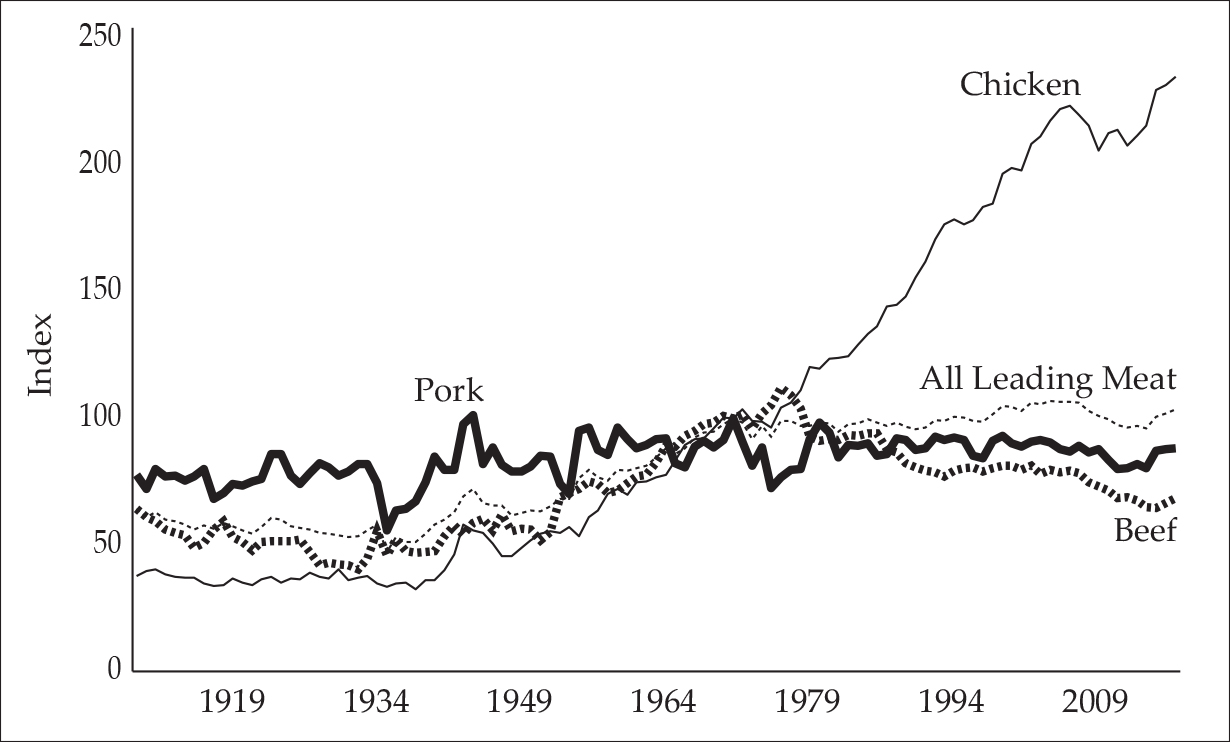


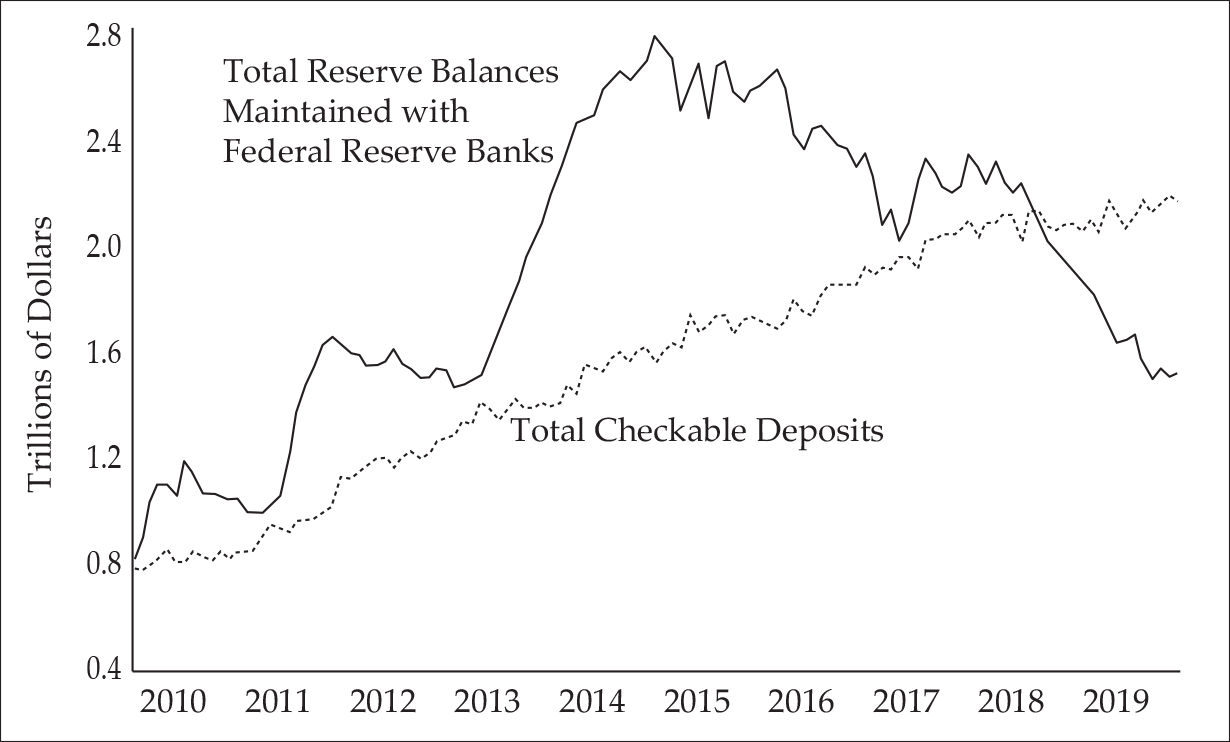
| You are subscribed to email updates from Mises Wire. To stop receiving these emails, you may unsubscribe now. | Email delivery powered by Google |
| Google, 1600 Amphitheatre Parkway, Mountain View, CA 94043, United States | |



No comments:
Post a Comment