DEC Releases Final Deer Management Plan 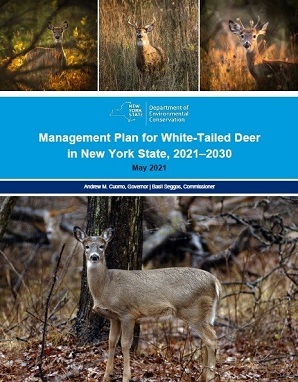 The "Management Plan for White-tailed Deer in New York State, 2021-2030" is the product of public input, expert review, and sound science that will improve the management of white-tailed deer across New York State. This second-edition deer plan, available on DEC's website, outlines strategies to manage deer populations across a range of abundance levels and diverse deer-related impacts in rural, urban, and suburban areas. The plan enhances DEC programs that provide relief to landowners and the public experiencing deer damage and conflicts, seeks to protect New York's deer from the devastating potential of Chronic Wasting Disease (CWD) particularly - in light of the recent announcement about a confirmed detection in bordering Warren County, Pennsylvania - and enhances the state's deer hunting traditions. In addition, the plan provides information about how DEC determines population objectives, sets harvest quotas, calculates annual deer harvest, and describes the effectiveness of various management strategies for reducing impacts from overabundant deer. The "Management Plan for White-tailed Deer in New York State, 2021-2030" is the product of public input, expert review, and sound science that will improve the management of white-tailed deer across New York State. This second-edition deer plan, available on DEC's website, outlines strategies to manage deer populations across a range of abundance levels and diverse deer-related impacts in rural, urban, and suburban areas. The plan enhances DEC programs that provide relief to landowners and the public experiencing deer damage and conflicts, seeks to protect New York's deer from the devastating potential of Chronic Wasting Disease (CWD) particularly - in light of the recent announcement about a confirmed detection in bordering Warren County, Pennsylvania - and enhances the state's deer hunting traditions. In addition, the plan provides information about how DEC determines population objectives, sets harvest quotas, calculates annual deer harvest, and describes the effectiveness of various management strategies for reducing impacts from overabundant deer.
Draft Regulations Proposed to Implement Key Plan Provisions  To begin the implementation of portions of the management plan, DEC proposed rule changes that will improve deer management, simplify big game hunting, expand hunting opportunity, and increase hunter safety. To view the proposed regulations and provide comment, visit the Fish and Wildlife Proposed Regulations webpage. DEC will accept written public comments through August 8, 2021. To begin the implementation of portions of the management plan, DEC proposed rule changes that will improve deer management, simplify big game hunting, expand hunting opportunity, and increase hunter safety. To view the proposed regulations and provide comment, visit the Fish and Wildlife Proposed Regulations webpage. DEC will accept written public comments through August 8, 2021.
Knocking on Our Door: CWD Detected in Captive Deer Facility in Pennsylvania 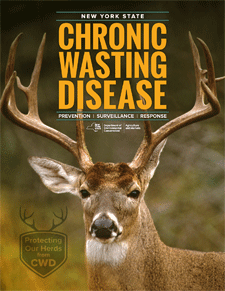 Chronic Wasting Disease (CWD) is a real threat to New York's wild deer and moose populations, and the latest detection in Pennsylvania brings the disease to our border. A deer taken on a Warren County, PA captive-shooting facility in mid-December 2020 was recently confirmed positive for CWD. Because of the proximity of this facility to New York, DEC and the New York State Department of Agriculture and Markets (DAM) are communicating with wildlife and agriculture officials in Pennsylvania implementing control measures, including establishing a new Disease Management Area, which extends to the New York border. There is currently no evidence that CWD is present in wild deer in the area. Chronic Wasting Disease (CWD) is a real threat to New York's wild deer and moose populations, and the latest detection in Pennsylvania brings the disease to our border. A deer taken on a Warren County, PA captive-shooting facility in mid-December 2020 was recently confirmed positive for CWD. Because of the proximity of this facility to New York, DEC and the New York State Department of Agriculture and Markets (DAM) are communicating with wildlife and agriculture officials in Pennsylvania implementing control measures, including establishing a new Disease Management Area, which extends to the New York border. There is currently no evidence that CWD is present in wild deer in the area.
To protect New York's deer herd from CWD, DEC and DAM will follow strategies outlined in the Interagency CWD Response Plan. In addition, DEC will begin an enhanced effort to test deer in the area through opportunistic collection of vehicle-killed deer or deer taken on damage permits. Future actions will depend on results of this immediate sampling and information obtained from Pennsylvania. CWD is a highly contagious disease that affects deer, elk, moose, and caribou. CWD poses a significant threat to New York's wild white-tailed deer herd. It is always fatal and there are no vaccines or treatments available. For wildlife diseases like CWD, prevention is the most effective management policy, and hunters are important partners in disease prevention. DEC tested 2,720 harvested deer across the state last hunting season and found no evidence of CWD in the herd. DEC partners with cooperating meat processors and taxidermists to obtain samples for testing each year. There are no documented cases of CWD infecting humans, but DEC urges caution when handling or processing CWD-susceptible animals. For more on what DEC is doing and what you can do to protect New York's deer from CWD, visit DEC's website.
Lead and Non-lead Hunting Ammunition: Interagency Working Group Convenes to Address a Complex Problem In New York, as in many other states, there has been a growing awareness and understanding of the potential negative impacts of lead hunting ammunition. Lead fragments left behind after a big game animal is harvested can remain in the meat, carcass, and within the gut pile exposing scavenging wildlife and people to lead via consumption. 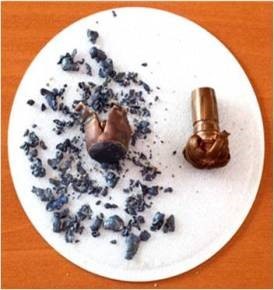 DEC has been encouraging deer hunters to try non-lead ammunition for several years, but as most hunters know, ammunition of any kind is hard to come by right now. While the current ammunition shortage won't last forever, it does illustrate the complexity of this issue and the challenge we face in trying to minimize the risks to wildlife and people from lead bullet fragments. Wildlife and human health risks, cost, availability and demand for non-lead alternatives, and the needs, interests, and concerns of hunters, conservationists, and people who eat game all need to be taken into consideration. DEC has been encouraging deer hunters to try non-lead ammunition for several years, but as most hunters know, ammunition of any kind is hard to come by right now. While the current ammunition shortage won't last forever, it does illustrate the complexity of this issue and the challenge we face in trying to minimize the risks to wildlife and people from lead bullet fragments. Wildlife and human health risks, cost, availability and demand for non-lead alternatives, and the needs, interests, and concerns of hunters, conservationists, and people who eat game all need to be taken into consideration.
This issue has been gaining a lot of attention nationally and internationally, with some jurisdictions restricting use of lead ammunition for big game and others setting up educational campaigns or incentive programs to increase understanding of the issue and promote a transition from lead to non-lead ammunition. To tackle this issue, DEC recently initiated a working group that brings together a variety of interest groups to conduct a comprehensive examination of the risks posed by lead hunting ammunition to wildlife and people in New York. The working group includes representatives from DEC, the New York State Department of Health, Cornell University's Wildlife Health Program, and organized hunting and conservation groups. The group seeks first to thoroughly understand the issue and identify and engage key interest groups to understand their concerns. Then, after the comprehensive review and by December 31, 2021, DEC and the working group will develop recommendations to minimize the risks posed by lead in the environment from hunting ammunition and communicate this information to key interest groups and the public. |


No comments:
Post a Comment