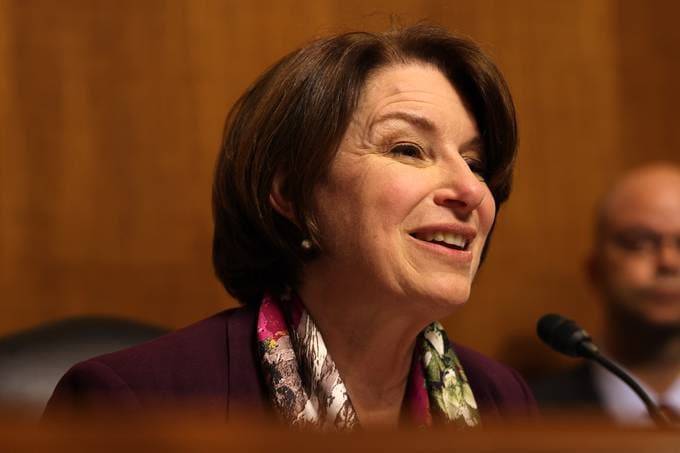
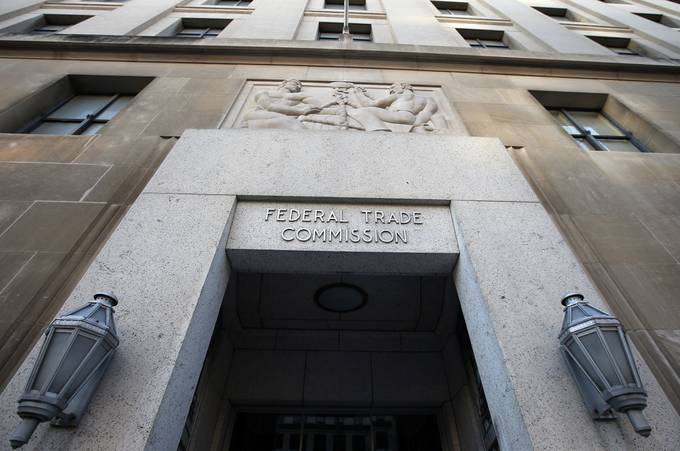
 Sen. Amy Klobuchar (D-Minn.) (Photo by Anna Moneymaker/Getty Images) | Sen. Amy Klobuchar (D-Minn) is worried about her smart speaker — and yours. I'm Geoffrey Fowler, The Washington Post's tech columnist in San Francisco. As a consumer advocate who reviews — and has covered his house with — lots of connected gadgets, I was intrigued to see the topic on the agenda in Congress on Tuesday. Klobuchar, who chairs the Senate Judiciary antitrust panel, hosted a hearing on the privacy and competition issues in the smart-home market. Across a number of high-stakes tech policy topics, the smart home is where these issues become personal for consumers. During the hearing, executives from Amazon, Google and speaker maker Sonos got pressed on specifics of how their products do — and often don't — work together, boxing out competition and limiting consumer choice. Sen. Josh Hawley (R-Mo.) sharply criticized Amazon Vice President Ryan McCrate for how his company last week launched its controversial Sidewalk network on Echo smart speakers as an opt-out, rather than an opt-in. You can read my instructions on how — and why — to turn it off here. (Amazon CEO Jeff Bezos owns The Washington Post.) After the hearing, I spoke with Klobuchar about why she wanted to turn a spotlight on the smart home. She told me the issue is personal for her, too. During the hearing, she joked about using her smart vacuum cleaner to remotely surprise her daughter. Klobuchar said she owns a smart speaker — she declined to name the brand — that she uses to check on the weather in Minnesota and listen to music. But she doesn't totally trust it: "I unplug mine whenever I'm on the phone with a senator," she said. I can't say I blame her. So what can Congress do to keep the smart home safe for consumers while also fostering new ideas and products? The following interview has been edited for length and clarity. Fowler: Why focus attention on the smart home? Klobuchar: Look at the numbers — 94 million people in the U.S. — having at least one connected speaker. And you just know this market is going to grow and grow. Everyone knows about the privacy concerns. It's also about looking at it from antitrust — looking at it from the fact that you've got a 53 percent market share with Amazon and 31 percent share for Google. The major takeaway for me was the companies really did not make any commitments to interoperability. I mean, talking about working groups does not a commitment make. Today Google and Amazon said they support the idea of voice assistants working across different devices, yet we're still not able to, say, use Google Assistant and Alexa at the same time on a Google or Amazon smart speaker. That just calls out for legislative action. Fowler: What rules do we need? Klobuchar: We've got our broad bill that would really help with all of this, with setting rules on exclusionary conduct. That would be a general term that could apply to pharma, to home tech, to app stores, you name it. There are a lot of different ways we can go at this, including the most direct right now with enforcement through the Federal Trade Commission. And that means getting the resources — I just passed that bill with Sen. Chuck Grassley (R-Iowa), which would greatly enhance their budget. Fowler: Privacy was a big topic during the hearing. Do you worry about your smart speaker? Klobuchar: I think everyone worries about it, but especially in a job like mine. We just can't allow the novelty of new technologies and innovation to blind us to the problems and the challenges that they present. It doesn't mean we hate them. We may even like them. It means we just know that we have to respond to them and in ways that will keep consumers safe. Fowler: What privacy rules do we need? Klobuchar: Just general privacy laws to protect data and also how companies monetize data, which is an issue we talked a lot about. There should be privacy provisions for this new economy we're in. I have favored data taxes and the like, if they're going to use our data. Fowler: Is the privacy solution to say there are certain things companies can't do with our data? Or is the solution to make laws that say they just can't collect certain kinds of data? Klobuchar: You want people to have a choice about having their data collected. And right now, we all know that's not easy. You get these things pop up on your screen. I have this feeling all the time: I can't get to what I want to without answering the question, and then you have to look for the little box in the corner with the X to make it go away. It's ridiculous. Fowler: Let's talk about some news of the day: What does it mean to have Lina Kahn named as chair of the Federal Trade Commission? Klobuchar: I think she is an out-of-the box thinker, someone who will look at these things in the forward-looking way we need to look at tech today. Fowler: Are you aligned with her views on antitrust? Klobuchar: I'm not going to say I support everything she's ever said in her life, but … I'm generally supportive of being aggressive when it comes to tech. These cases are against the biggest companies the world has ever known. They are complicated legal matters. Her background as a law professor, I think, will be very helpful because these are cases like the world has never seen. | 



 Email
Email 






No comments:
Post a Comment