| The European Union is going after Google — again.
European regulators have fined Google nearly $10 billion over the past decade for various infractions of the E.U.'s competition laws. But they're not done yet. On Tuesday, the European Commission, led by antitrust crusader Margrethe Vestager, said it was launching a new investigation of Google, and this one focuses on the company's most important business: advertising. More than 90 percent of the $182 billion Google made in 2020 came from ads. The company's bread and butter is search ads, and YouTube ads are a fast-growing part of the business, too. But what's less known is Google also sells the infrastructure that helps ads show up on much of the rest of the Internet, too — whether it's a banner ad on your local news site or a pop-up in a gaming app on your phone. 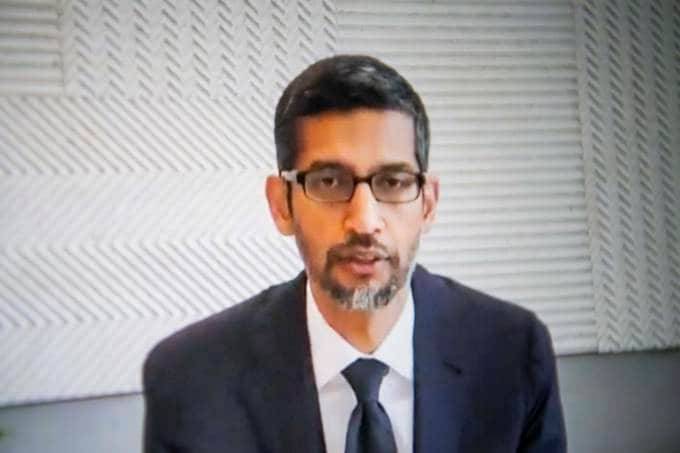 Sundar Pichai of Google testifies before the House Judiciary Committee on July 29, 2020. (Carolyn Van Houten/The Washington Post) | This byzantine world of advertising tech — which facilitates the tracking, data collection, and bidding processes that decide which ads crop up in the milliseconds it takes to load a regular webpage — features hundreds of companies vying to make money. But none are as big as Google. The tech giant sells tools for nearly every rung of the advertising ladder between the consumer who sees the ad and the agency that created it.
For years, Google's advertising tech competitors and news publishers that rely on Web-based advertising have accused Google of unfairly using its dominance in the space to push people toward its own products and shut out competitors. They point to practices such as Google requiring anyone who wants to buy YouTube ad space to go through its own ad-buying tool, arguing that is anti-competitive and ultimately bad for consumers. The European Commission specifically called out that example as something it will be looking into.
The investigation has similar themes to the antitrust lawsuit launched by the Texas attorney general's office in December, which accuses Google of using its dominance in advertising tech to steer advertisers toward its own products and away from those of its competitors. But the European investigation will look at something Texas and other American jurisdictions haven't yet: changes Google is making to online advertising that might actually be good for privacy. The company is experimenting with ways to facilitate targeted advertising but block tracking cookies — the little bits of code that follow people around the Internet and let almost anyone amass data on website visitors. The issue gets to the heart of a major question facing tech companies and societies as a whole — is more privacy still good if it cements the dominance of a handful of corporate giants?
Apple is taking this route, too, cutting down on the ability of app developers to collect data on their users if they're on iPhones. Mozilla, whose Firefox browser is still used by millions of people, has also cut down on tracking cookies. But smaller companies that rely on ads say this path will lead to Big Tech knowing more about its users, while freezing out all possible future competitors from accessing the data that fuels the Internet economy.
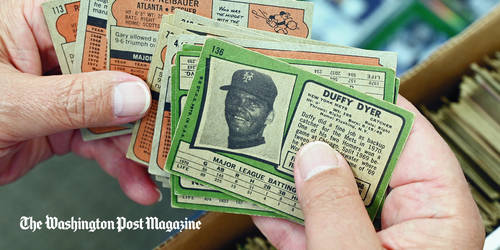
Privacy advocates say this is a false choice. The European Commission agrees, saying that "competition law and data protection laws must work hand in hand to ensure that display advertising markets operate on a level playing field in which all market participants protect user privacy in the same manner." It's just not clear yet how exactly that would work. | | | Our top tabs The FTC will be the U.S. regulator to look at Amazon's planned purchase of MGM.  Lina Khan, a critic of Amazon and its past acquisitions, is leading the FTC. (Chris Delmas/AFP/Getty Images) | The regulator will take up the acquisition with Amazon critic Lina Khan at its helm, the Wall Street Journal's Brent Kendall reports. In negotiations with the Justice Department, the FTC pushed to oversee the deal because it is already investigating the e-commerce giant's business practices, people familiar with the matter said. An Amazon spokeswoman and FTC spokeswoman declined to comment. (Amazon CEO Jeff Bezos owns The Washington Post.) A major U.S. labor union plans to prioritize unionizing Amazon. 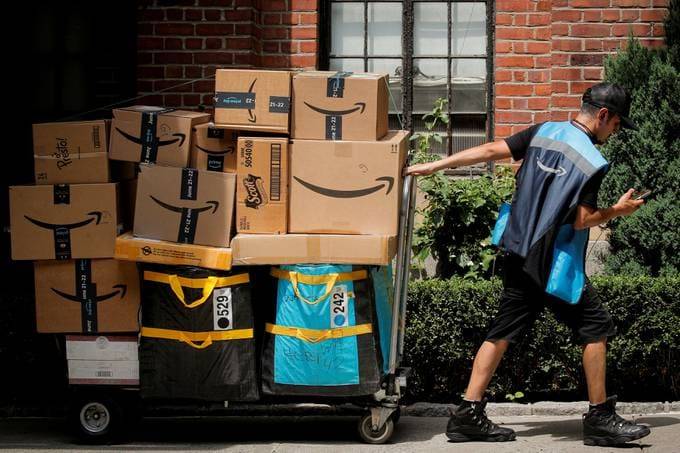 The move came as Amazon promotes its annual Prime Day. (Brendan McDermid/Reuters) | The International Brotherhood of Teamsters is expected to pass a resolution on Thursday to create and fund an Amazon division, Motherboard's Lauren Kaori Gurley reports. The labor union plans to focus its efforts on a pressure campaign to force Amazon to bargain and recognize a union, rather than holding votes to unionize through the National Labor Relations Board. The company began working on the initiative "well before" an Alabama unionization drive that Amazon decisively defeated this year, said Randy Korgan, the union's national director for Amazon. Amazon did not respond to a request for comment. It was a bad day for investors in bitcoin.  The cryptocurrency dropped nearly 10 percent. (Edgar Su/Reuters) | Prices for the most popular cryptocurrency dropped as much as 9 percent on Tuesday, dipping below $30,000 for the first time since January, Hamza Shaban reports. The slump came amid reports that China is clamping down on bitcoin miners, the companies that field warehouses of computer servers to run the complex calculations that the cryptocurrency needs to record transactions and create new bitcoin. The slump could be particularly bad for investors who bought bitcoin and other coins this year when the digital currency rose as high as $64,000. | | | Rant and rave Twitter announced that applications are open to host paid gatherings and subscriptions on the service. Google News Lab's Ashley Alese Edwards: The Courier Journal's Olivia Krauth: Brad Sams, the executive editor of BWW Media Group: | | | Hill happenings | | | Inside the industry Tech killed trading cards. Now, it's bringing them back. 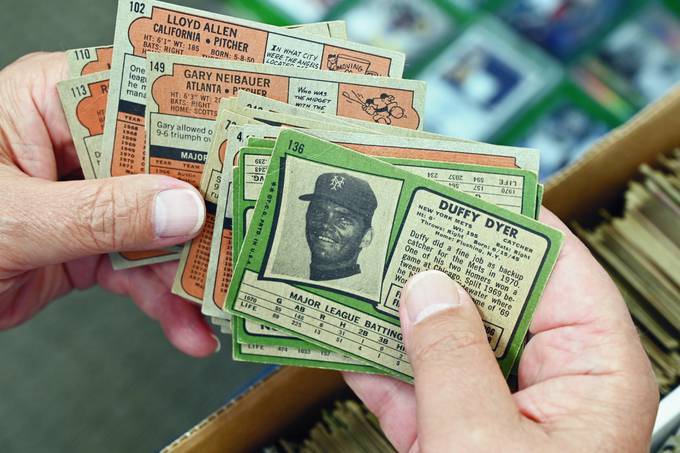 Trading cards are having a comeback. (Marvin Joseph/The Washington Post) | The rise of e-commerce has made buying and selling sports trading cards popular again, and the interest of people sitting at home during the pandemic has pushed the market to new heights, Mark Selig reports. It's part of a broader trend of people putting their money into new asset classes, and it has fueled the rise in prices for things as diverse as cryptocurrencies and classic cars. | | | Trending | | | Daybook - Oliver Dowden, the United Kingdom's Secretary of State for Digital, Culture, Media and Sport, discusses global competition over technology at a Brookings Institution event today at 9 a.m.
- The House Judiciary Committee marks up antitrust legislation today at 10 a.m.
- Google CFO Ruth Porat, former TaskRabbit CEO Stacy Brown-Philpot and former IBM CEO Ginni Rometty speak at a Washington Post Live event today at 11:30 a.m.
- Rep. Ken Buck (R-Colo.), the top Republican on the House Judiciary antitrust subcommittee, discusses antitrust legislation at a Washington Post Live event on Friday at 11 a.m.
- Acting Federal Communications Commission chairwoman Jessica Rosenworcel discusses the Emergency Broadband Benefit program at a New America event on June 29 at noon.
| | | Before you log off | | | |


 Email
Email 




No comments:
Post a Comment