Mises Wire |
- Lithuania's Crackdown on the Unvaccinated
- Happy Hour May Be Getting a Little Happier
- Review: Trust in a Polarized Age
- An End to the Bizarre CDC Rent Moratorium
- How to Use Democracy To Deny Human Rights
- Some Conservatives Still Pine for the Good Ol' Days of Cannabis Prohibition
| Lithuania's Crackdown on the Unvaccinated Posted: 30 Aug 2021 01:00 PM PDT Many Lithuanian politicians are embracing outright segregation of unvaccinated Lithuanians. Fortunately, many Lithuanians are resisting. This fight is not about opposing vaccines, but about protecting basic freedom of choice. Original Article: "Lithuania's Crackdown on the Unvaccinated" This Audio Mises Wire is generously sponsored by Christopher Condon. Narrated by Michael Stack.  |
| Happy Hour May Be Getting a Little Happier Posted: 30 Aug 2021 12:15 PM PDT Eleven states ban happy hour. These laws restrict the sale of alcohol at discounted prices during specially designated times. Unfortunately, many citizens regard these backdoor price controls as perfectly legit. Original Article: "Happy Hour May Be Getting a Little Happier" This Audio Mises Wire is generously sponsored by Christopher Condon. Narrated by Michael Stack.  |
| Review: Trust in a Polarized Age Posted: 30 Aug 2021 12:00 PM PDT
Trust in a Polarized Age David Gordon (dgordon@mises.com) is a Senior Fellow at the Mises Institute. Kevin Vallier, who teaches philosophy at Bowling Green State University, is a leading advocate of "public reason liberalism," and his latest book is a distinguished contribution to that school of thought. He has in his past work been substantially more favorable to the free market than most of his fellow public reason liberals, and that tendency continues in the book we have before us to examine. In what follows, I shall proceed in a somewhat unusual way, and Professor Vallier has good cause to complain against me, if so minded, for doing so. I shall first briefly explain his main project, which I have to say I do not accept; but after that, I shall concentrate on some points in the book of great merit, regardless of what one thinks of his variant of public reason. Our author begins from a fact difficult to dispute. People in the United States do not trust their government, and partly in consequence do not trust one another, so much as they did in times long past. Vallier deplores this and aims in in his proposals to remedy this situation, though he acknowledges that he cannot guarantee that what he suggests will accomplish this. He sets forward his main objective in this way: Social trust for the right reasons: a society enjoys social trust for the right reasons when its social trust is grounded in adequate evidence available to every member that others are socially trustworthy because each is normally prepared to comply with moral rules from her own intelligible reasons. This is the central normative notion in the book. I want to establish that liberal rights help to generate trust for the right reasons. (p. 50, emphasis in original) To establish this, Vallier makes empirical claims about what promotes trust, and normative claims about what should elicit trust; and in his arguments for his claims, he displays mastery of the specialized literature of philosophy and empirical political science. His path to his goal is intricate and involves many twists and turns, but these I shall leave to the reader, for one principal reason. Following Rothbard, and his predecessors Oppenheimer and Nock, I believe that the state is a predatory body that we ought not to trust, but rather to view with the severest suspicion. Vallier is well aware of this objection, and he proposes to mollify those of us who hold it by allowing us to "opt out" of state-provided services, in ways similar to accommodation offered the Amish and other religious groups. Enough of my beliefs; let us now proceed to a few of the many excellent points to be found in the book. Vallier handles in exemplary fashion an objection to viewing property rights as constraints on the state. The objection is that "private property rights have a strong conventional component; they are necessarily the creation of political institutions. Consequently, property rights cannot provide a prepolitical restraint on the state, since they are not prepolitical." (p. 113) Vallier answers with a devastating question: "how can we have a right to free speech against the government if the government (as the objection implies) is required to define and protect that right? Or how can we have a right to bodily protection if the government is required to define and protect that right?" (p. 114, emphasis in original) Not content with one decisive objection, Vallier strikes another fatal blow: The second problem with the conventionalist challenge is that it depends on ignoring the critical distinctions between moral rules, legal rules, and constitutional rules. It is certainly true that we can only keep property rights in existence by means of socially constructed rules. But taxpayer-funded, legislative rules are not required—property rules are often stable moral and legal rules that are in equilibrium due to factors other than the actions of nation-states. (p. 115, emphasis in original) Some conventionalists shift the argument to history: even if some property rights now exist independently of legislative rules, didn't the state have first to create markets? Vallier's answer departs from the sober seriousness characteristic of the book and is not without a tinge of sarcasm: "the historical claim is, as far as I can tell, false. And so it cannot play a central role in determining the scope of property rights." (p. 128) Thomas Piketty has argued, with spurious statistics, that capitalism tends inevitably to inequality, and his many blunders have been ably exposed by George Reisman, Phil Magness, Robert Murphy, and others. Not to be outdone, Vallier raises an objection to Piketty of his own: One of the controversies raised by Thomas Piketty's well-known work on income inequality is that much of the inequality he documents can be explained by the differing values of the real estate held by the very rich and that owned by everyone else. If so, then reforming zoning laws to prevent them from creating artificial shortages of real estate should be an excellent way to reduce inequalities of wealth. Limiting zoning laws can also boost economic growth: a recent study finds that in 220 metro areas, zoning constraints on land use "lowered aggregate US growth by more than 50 percent from 1964 to 2009." That's staggering. (p. 176) Growth is for Vallier a key concept, and for him it severely limits permissible restrictions on property rights. He writes, Few today would dispute that a competitive marketplace, where firms are free to experiment with new methods of production that are then subjected to the withering scrutiny of millions of consumers, is a kind of golden goose. And it is a golden goose we can kill; command economies nearly killed it. When we back off pure capitalism, then, we must be mindful not to strangle the productive process. Even small costs to the growth rate have dramatic effects over time because of compounding growth rates. Without growth, we will lose enormous social goods not merely for the rich but also for the middle classes and the least advantaged. (p. 131) Vallier draws the consequences of this vital point for restrictions on property rights. The desirability of growth will not only strengthen the public justification of private property rights, it provides sufficient reason to reject restrictions on property rights. If property rights restrictions hurt economic growth that is broad-based—growth that benefits everyone—then many members of the public will have sufficient reason to reject these restrictions.... Even Marx acknowledged that capitalism is a fantastically productive economic system, despite the injustice and misery it can cause. So even socialists should recognize that capitalism has enormous productive potential." (p. 132) Our author introduces a vital concept that sharply limits the coercive regulations of the free market that he in theory allows. This is what he calls "policy epistemology": because of the presumption in favor of the market, proposals for regulation must pass a high bar before they can even be considered. If experts disagree about the wisdom of a proposed regulation, we lack the required basis to upset market arrangements. And one eminent expert very strongly disagreed. The Nobel laureate Ronald Coase believes that some regulations might be beneficial, but in his attempt to summarize decades of research, he cannot recall a single instance where a regulation passed even the simplest cost-benefit test. Perhaps Coase is biased, but it would take a remarkable level of bias to lead him to claim falsely that he cannot recall single case of a regulation passing such tests." (p.159, emphasis in original) Vallier adds another point. "And remember the importance of securing economic growth. If some regulatory and public-goods programs undermine economic growth, that can serve as a defeater for those programs." (p.162) Kevin Vallier has written a book fully worthy of his eminent mentor Gerald Gaus, and readers willing to persist through this demanding book will learn a great deal. If I continue to prefer Rothbard to "public reason," I trust that my old student will not hold this against me.  |
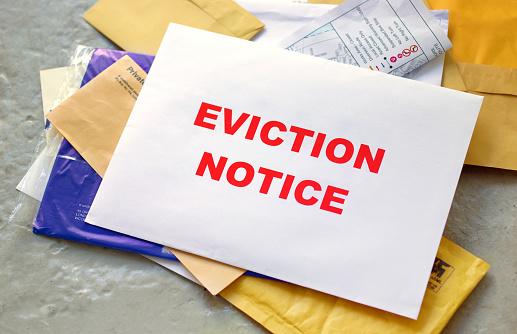
| An End to the Bizarre CDC Rent Moratorium Posted: 30 Aug 2021 10:45 AM PDT The "transitory" inflation swamping the country has stubbornly persisted into July. Producer prices posted a second straight 1 percent month-over-month increase, which brought the full-year number to a record 7.8 percent. Twelve-month US export prices rose 17.2 percent, and nearly 22 percent if the rate of the first seven months of 2021 were annualized. (I find it telling that those prices—which are subject to no after-the-fact data collection adjustments—are rising at a rate that is nearly triple the Consumer Price Index [CPI]). But there is one major cost center of American lives—rental housing—where the government claims Americans are getting a break. Not because the supply and demand dynamics are not pushing rents up with the same virulence that we now see in food and energy, but because the government relies on very dubious data collection and has thoroughly disrupted the normal functioning of the marketplace. For the vast majority of families, housing costs constitute the single largest portion of their living expenses, and in fact, represent more than a third of the Consumer Price Index. For more than a third of US households, housing costs boil down to rent. But the government has a very hard time incorporating housing cost data into the overall inflation statistics. The inputs they actually use could not be more irrelevant and misleading. For people looking to buy homes, the 22 percent increase in house prices thus far this year may be making it more difficult to afford what they want. But the government does not consider home prices when calculating housing costs. Similarly, by most metrics home rental costs are up about 9 percent this year, slightly outstripping the overall costs of living. But the government does not consider those numbers either. Instead, they rely exclusively on "owner's equivalent rent," a phantom statistic that nobody uses, and which can't be objectively determined. Owner's equivalent rent is derived by asking homeowners how much they would pay to rent a home that would replicate, in terms of size, location, quality and amenities, the homes they already own. Huh? Most homeowners do not have their fingers on the pulse of the rental market, particularly for homes that look just like theirs. Typically homes available for purchase and those available to let are taken from different pools of housing stock. If asked to come up with such a hypothetical, most homeowners would likely just guess. Would it surprise you then to know that the owner's equivalent rent statistics have been far, far lower than either home prices or actual rents? In the latest CPI report, the Bureau of Labor Statistics estimates year-over-year increases in owner's equivalent rent was just 2.3 percent. How convenient. So as far as the government is concerned, housing costs aren't really going up that fast as most people think! Can you imagine how high the current CPI would be if the government used real data rather than a convenient fiction? But the distortions of owner's equivalent rent may be nothing compared to those being made by the government's policy of eviction bans, which many in government certainly hope will become a permanent feature in the housing market. (Representative Ilhan Omar has introduced such legislation in the US Congress). In one of its most revealing, cynical, and representative actions, last week the Biden administration decided to extend the so-called eviction ban that was decreed by the Centers for Disease Control (CDC) back at the beginning of the covid outbreak in April of 2020. By declaring that homelessness would constitute a threat to national health during a pandemic, the CDC edict banned landlords from evicting tenants for failure to pay rent, at least during the duration of the crisis. (Of course, the agency failed to define any objective criteria as to when the crisis would be considered over.) Contrary to the beliefs of Democrats, people don't pay rent because "it's the right thing to do," they pay because they don't want to be kicked out of their homes. If that risk is removed, a great many renters will simply stop paying. But despite the nonpayment landlords are not relieved of their obligations to provide building services, effect repairs, and to pay their mortgages and property taxes. So in effect, the inability of landlords to evict a tenant for nonpayment effectively deprives the landlord of earning a return on their property. When landlord associations challenged the ban as a "forced taking without compensation," the Supreme Court agreed that the CDC had overstepped its authority. In its 5-to-4 decision to quash the ban, Justice Brett Kavanaugh joined the other four conservative justices in saying it was unconstitutional. But he let the ban stand temporarily as long as it was not extended past July 31. Perhaps recognizing the policy faced economic, as well as legal, challenges, the Biden administration seemed to recognize reality. On many occasions over June and July administration spokespeople said that the administration had no legal pathway to sustain the policy past July 31. Those niceties did not satisfy the powerful progressive wing of the Democratic Party. Congressional "Squad" members Ayanna Pressley of Massachusetts and Cori Bush of Missouri pressed Biden to extend the ban despite the court's opinion or to even pack the court with more progressive judges if needed. Based on that pressure, it did not take much for Biden to flip-flop and extend the ban. To save face the Biden team supposedly replaced the old "broader" moratorium, with a more "focused" plan (that only affected 90 percent of the country). This allowed the administration to claim it was not ignoring the court's order, but offering a new plan that satisfies their concerns. That was a stretch, even by Washington's standards. But it's obvious that Biden knows he is peddling fiction, and that the court will knock down the new plan just as it knocked down the old one. But the president just doesn't care. Responding to a reporter's question on the subject, he essentially acknowledged that the new plan would be ruled unconstitutional but if it offered relief to tenants in the time it would take to work through the courts, then the move was the right thing to do. When Trump tried such imperial maneuvers he was branded a tyrant. When Biden does it, he's a hero. But apart from the legal and political issues, the policy itself is bound to be seriously detrimental to the interests of low-income renters. We must recall that the eviction ban does not absolve renters from their obligations. It simply bans landlords from eviction during the pandemic crisis. Eventually, landlords (hopefully) will regain the legal leverage they need to enforce payment. When they do, tenants will be liable to not only pay current rent, but the back rent they did not pay during the eviction ban. I don't know that much about human nature, but I would suspect that many low-income renters who did not pay rent during the eviction ban did not put those funds aside so that they could pay the balance when the time came. More likely, the majority of those funds have been spent (In fact, so many Americans not making rent or student loan payments is one of the many reasons consumer spending, retail sales, GDP and trades deficits have been so high.) That means they will be unable to settle up when their landlords ultimately come knocking. This may give a great many landlords the leverage to evict marginal tenants for nonpayment, a development that may not have occurred under normal conditions. Some landlords may simply look to exact revenge on tenants who could have paid but chose not to. In any event, many of these tenants may find themselves kicked out. At that point landlords may be able to rent those units at rates that are more reflective of current market conditions, adding to the inflationary pressure. It will also put a chill on a great many landlords who have just received a crash course of just how irrelevant their property rights are in Washington. Since there are many more voters who pay rent than receive rent, the interests of landlords will always be politically subordinate, particularly among Democrats, no matter how many campaign contributions are made by the National Association of Realtors. Given that, I would imagine some landlords will reconsider their business plans and convert their units to condominiums, list them for short-term rentals only, retain them for personal use, or focus their efforts on higher-end rental properties where the likelihood of nonpayment is lower. It will also discourage developers from building more rental properties. Given how easily the economics of these ventures could be eviscerated by capricious executive orders, who could blame them? All of this will add up to fewer rental units available. The contracted supply, and the cost of added political risk, will lead to much higher rents for those units left on the market. The pain will be particularly felt at the bottom end of the market, where renters will have an even harder time finding decent housing. Inevitably the government will step in to build more public housing, thereby doubling down on the low-income housing project failures of the past. The poor will be shunted to ghettos where their prospects will be even more dismal. But that's Washington. This article originally appeared at SchiffGold under the title "Biden's Rent Gambit."  This posting includes an audio/video/photo media file: Download Now |
| How to Use Democracy To Deny Human Rights Posted: 30 Aug 2021 09:00 AM PDT "You gather the idea that Mauritius was made first, and then heaven; and that heaven was copied after Mauritius." Since its rebirth as an independent state in 1968, this paradisaic island has been touted as a paragon of democratic political institutions promoting rapid economic growth and motivating its citizens to overcome divisions of religion, language, ethnicity, and region of origin. It is looked up to as an example of thriving democracy and constitutionalism in the aftermath, most recently, of Dutch, French, and British colonization. One benefits greatly from venturing beyond a cursory look at this small island republic's admirable history and digging into the respect for institutions borrowed from its Western overseers. In doing so, it becomes painfully transparent that proselytizing about the virtuous and egalitarian character of a representative democracy has been little more than another shrewd but effective tactic of the state to maintain its essentially illiberal nature with the end goal of enthralling the ancestors of present-day Mauritians and ensuring that their descendants are born under its yoke. The Lack of Preexisting Cultural and Societal InstitutionsUnlike a select few of its fellow African entities, such as Botswana or Madagascar, Mauritius has not had the advantage of precolonial institutions or cultural frameworks to promote resistance against the state's encroachment on property rights or to provide guidance for development following the departure of the colonizers. With regard to Madagascar, several Malagasy tribes, specifically the Merina, had such institutions. This society, descended from Southeast Asian settlers, adhered to a legal code instituted by its Hindu aristocracy, which l'Estrac describes in Mauritians: Children of a Thousand Races, his 2004 work, as outlining a basic social order, the organization of justice, the status of the family, property rights, moral values, and territory. However, this lack of precolonial institutions or frameworks did not prevent the spark for an anarchic society from coming forth. Beginning in the late seventeenth century, the incumbent Dutch colonial administrators witnessed not only the ruthlessness and violence they could inspire in rebels and runaway slaves, but also how this diverse group, comprising Malagasy and Indian slaves, could achieve peaceful coexistence. Taking refuge in the uncharted Mauritian wilderness upon their escape, this seemingly disparate group of former slaves, miles away from their respective motherlands, established a society in which each individual's land was demarcated and neighbors' property and individual rights, as well as their freedom to practice whichever faith they belonged to, were respected. The commonalities that transcended their differences were their love of freedom and willingness to take any measures necessary to defend their liberty. No measure was so drastic or immortalized as their arsonist massacres of the Dutch establishment in 1677 and their escape to Bourbon Island (present-day Réunion). Thus, if we are to lament the loss of a truly voluntarist spirit among the island's modern-day citizens, as well as its diaspora, we can pinpoint the departure of its anarchic ancestors, in the pursuit of their own freedom, as the downward turning point in the fight against the state. The fight for freedom by any means necessary did not end here; uprisings and revolts became increasingly frequent over the following years, manifested by Malagasy and Indian slaves who saw slow, excruciating deaths as free men and women as preferable to lifetimes spent chained and shackled. The State Wises UpUnder no colonial administration were the state's attempts to keep disenfranchised groups pitted against one another more beautifully executed than under the French (1715–1810). The legal codes and governmental practices that their bureaucracy left behind were fundamental to keeping the freedoms and aspirations of the island's inhabitants in check. However, to understand how these manifestations of statism in their colonial incarnations function, it is crucial to gain an accurate picture of who stood where in the social hierarchy of the day. At the dawn of French rule, the elite consisted of French-born inhabitants who had arrived in service to the East India Company. Whites born on the island were directly beneath them. Then the Creoles, foreigners (Englishmen and Dutchmen), and, finally, the slaves, the latter of which were separately categorized as black, Indian, or Malagasy. At the turn of the century, this hierarchy had remained more or less unchanged, perhaps with greater diversity in the middle class (the "people of color"), which at this point consisted of free Indians and Creoles. With specific regard to the Indians, a singularly ingenious strategy by the French colonial government to gain better control over them was the creation of the "chief of the Malabars" (chefs de Malabars) office1 in 1784. The position was created in response to frequent intracommunal feuds. The position was filled by Denis Pitchen, a wealthy Tamilian Catholic born to free Indian parents. At a superficial level, Pitchen's elevation to a position of authority as a nonwhite resident would be lauded as a milestone for the representation of nonwhites, particularly by apologists of colonialism or advocates of reform through bureaucratic channels. However, l'Estrac provides us with two wrinkles that undermine this milestone's glorious sheen:
Pitchen's performative elevation was a crippling blow to the self-determination of the inhabitants. This tactic was a common one for rulers: elect an elite or a committee of them from the disenfranchised classes and grant them a few privileges to convince them of the benefits of retaining the present system of governance. The efficacy of this strategy is evident in the resignation of the future generations to the legislative and executive tools of the French and, later, the British as the best pathways to improve their condition and environment. In their 2015 article in the journal International Labor and Working-Class, Yoshina Hurgobin and Subho Basu not only confirm the predicament of indentured laborers, as previously mentioned, but also reveal the despicable bastardization and repression under oligarchies and all forms of big-government camps throughout history (a feat that Murray N. Rothbard defines as the theft of capitalism from laissez-faire liberals by right-wing traditionalists). Knowing that an open and free labor market would allow laborers to pursue better-paying jobs or positions in which they could diversify their skills, the plantocracy saw to it that the state's anticapitalistic and illiberal character trumped any entrepreneurial spirit that was slowly brewing within Mauritian society. The state's decisive blow to freedom and liberty came in 1886, when the revered reformist Sir William Newton began the electoral tradition of the Council of Government. Newton was very careful to restrict the franchise to those who met the criteria of earning a certain income and owning a certain amount of wealth in the form of assets or land. Despite this discriminatory restriction of the franchise, the masses' adoration of democracy would soon grow into a general culture of leaving the responsibility of governance in the hands of "elected" officials. This contract, however, is merely symbolic, as their own constitution only recognizes three groups (Hindus, Muslims, and Chinese), with the remaining communities being lumped together under "general population." ConclusionAs the politicians and lawmakers of the Mauritian political structure have become more diverse (only with regard to ethnicity and religion, as opposed to diversity of thought and philosophy), the Mauritian population has convinced themselves that their fight for liberty and self-respect as a nation is behind them, remaining ignorant of the pyrrhic nature of their "victory." In the end, the fact that the notion of a people not needing a government to have their freedom of religion and speech seems absurd represents the devastating extent to which the statist mentality has been cemented in the minds of the men, women, and children of this country.
 This posting includes an audio/video/photo media file: Download Now |
| Some Conservatives Still Pine for the Good Ol' Days of Cannabis Prohibition Posted: 30 Aug 2021 04:00 AM PDT Aron Ravin, a self-described "nudnik," who writes for National Review thinks so and I suspect others do as well. This thinking, however, is that of an ever-shrinking minority and it is hard to imagine the pro-legalization trend being reversed. Nevertheless, let's look at the arguments and why he claims libertarians are so wrong on this issue. Before we press on, it is important to remember that cannabis legalization is basically citizens of individual states standing up to federal authority and flipping it the bird. Ravin claims, "I do not, and do not plan to, partake in the devil's lettuce." Well, libertarians have never suggested, apart from medical reasons, that people consume cannabis any more than they suggest people consume alcohol, potatoes, pornography or Nike products. Libertarians, above all others, support the right to consume—and not to consume—so that is not a real issue. The first issue Ravin raises is the increasing consumption of cannabis over the last twenty years, the period when cannabis has become increasingly legal and accepted. For any number of reasons, everyone should have expected this: more legalization, less punishment, lower prices, greater availability, new uses, new forms, substitution for other legal and illegal drugs, means more consumption. So, I'm not sure what Beltway libertarians he hangs out with, but they fail the basic-common-sense test. But does this increased consumption lead to greater health concerns? Ravin thinks consumers should be concerned with lung cancer and disease, but of course that is related to smoking, which presumably everyone knows about and cannabis smokers typically consume tiny amounts compared to cigarette smokers. While the science is limited, "Smoking cannabis has not been proved to be a risk factor in the development of lung cancer." Ravin also notes the correlation between cannabis and psychosis, but does cannabis cause psychosis or does psychosis lead to cannabis consumption? With respect to this first general concern, nobody thinks this is a national emergency requiring people to be put in jail, or even that sin taxes or fines would be appropriate. Ravin points to the broken promises of legalization. It did not wipe out the black market like the repeal of alcohol prohibition (i.e., the Twenty-First Amendment), it did not prevent children's access, it did not decrease consumption, and it even did not prevent cannabis growers in California from stealing water. No surprises here. The most important consideration is that our cannabis legalization has been a step-by-step, many-decades-long process, not an overnight success, like Repeal. High taxes and regulations have kept the black market in business, as expected. Nothing prevents children's access to anything, but consumption among twelve- to seventeen-year-olds is down, not up, running counter to the general trend of increased consumption. As mentioned above, consumption in general was always expected to increase, not decrease. In addition to the straightforward economic reasons for this, there has also been a substitution away from pain medications and other pharmaceuticals toward cannabis. Some of that has occurred under medical supervision, but mostly it is just people realizing that drugs like OxyContin, heroin, various psychoactive drug, and other drugs can harm or kill you while cannabis poses fewer such risks. The last argument he presented is key to the whole war on drugs debate. Ravin notes that cannabis potency, i.e., the percentage of THC (tetrahydrocannabinol), the active psychoactive ingredient, has risen dramatically. Cannabis is widely available, and cheap. He thinks the legal product is both cheaper and more expensive because of taxes and regulations.
The argument is that cannabis is now too potent to be legal. However, high drug potency is actually the number one scientific reason against the war on drugs, not a vault of legalization. First, cannabis potency has been rising for a long time, at least since President Nixon declared his "war on drugs" in 1972. By the time citizens stated declaring cannabis legal in their own states, cannabis had already increased in potency some twenty times since Nixon's declaration. Most importantly, it was the war he started that caused higher potency. This is based on the simple economic concept that if you add a fixed cost, such as transport cost, to two grades of a product, the higher-quality or higher-priced grade will more likely be exported and the lower grades will stay at home or be processed into different products. Top grade Idaho russet potatoes tend to get exported and the lower grades stay closer to home and get turned into instant mashed potatoes. The same is true with drug potency. Growers and smugglers would rather deal with a product of higher potency, given similar local prices, because it means more "doses" can be more easily transported and concealed without detection by law enforcement. My "discovery" was dubbed the iron law of prohibition by Richard Cowen, then President of NORML, the National Organization for the Reform of Marijuana Laws, published in none other than National Review! However, I've been told that the trend toward higher-potency cannabis continues inside the legal dispensaries. Has the law been violated? Not really. Cannabis consumers have grown up in a black market where the litmus test has been potency, especially if one brand costs the same as another. In addition to this factor, here are a few things to keep in mind:
Even if all of this were taken into account, it would still ignore the legalization of hemp and CBD products, which contain at most only trace amounts of THC. If the market for such products were roughly equal to the legal market for cannabis, it would mean that consumers as a group have effectively cut the potency of their products in half. The arguments presented by Ravin seem to have some surface legitimacy, but they are based on distortions, untruths, or the illogical pronouncements of Beltway libertarians. Most importantly, the federal government, along with pharmaceutical, alcohol, and tobacco companies have spent money politically trying to put the legalization genie back in the prohibition bottle, so any argument or propaganda will suit their purposes.  This posting includes an audio/video/photo media file: Download Now |
| You are subscribed to email updates from Mises Wire. To stop receiving these emails, you may unsubscribe now. | Email delivery powered by Google |
| Google, 1600 Amphitheatre Parkway, Mountain View, CA 94043, United States | |




No comments:
Post a Comment