| Welcome to The Technology 202! My cat-loving household was frightened to learn we may be unwitting purr-veyors of misinformation. (They're so cat-astrophically cute though.) Below: The latest on Google's fired AI star and children's privacy groups launch a new campaign. First up: | Lawmakers spar over Biden's FCC pick and Section 230 in latest tech hearings | 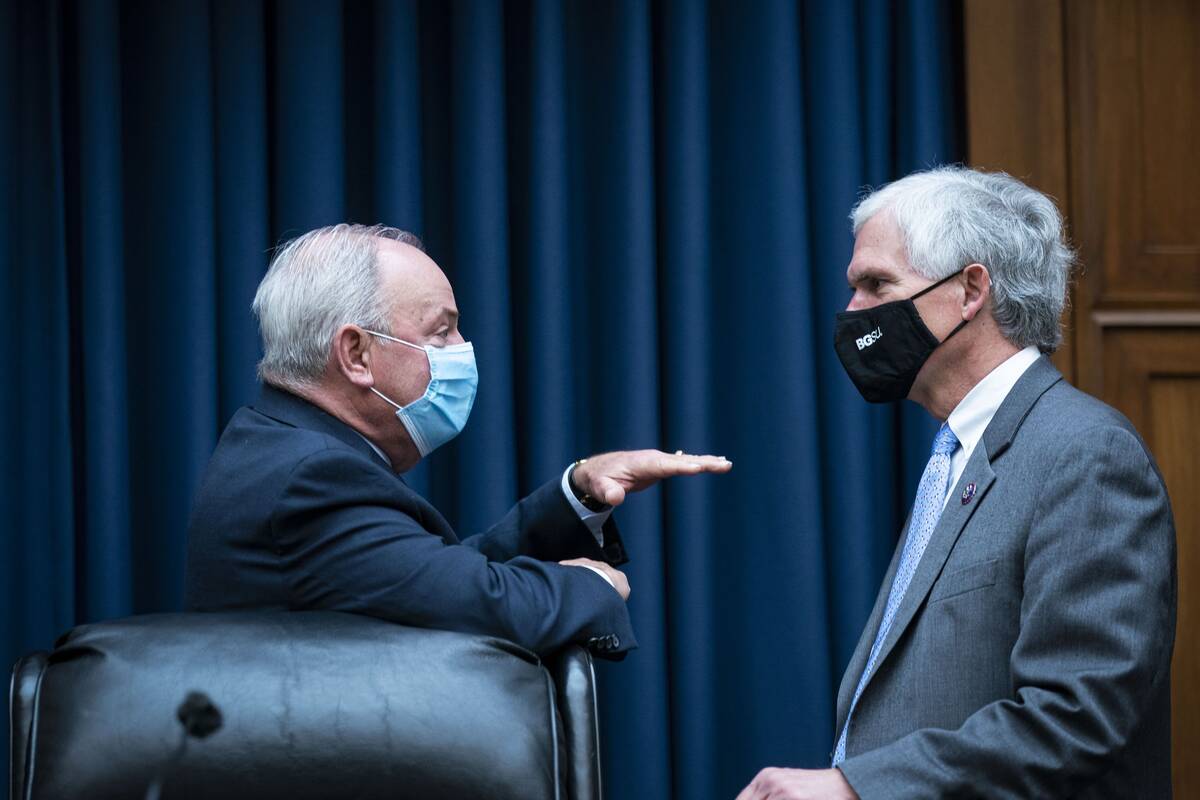 Reps. Michael Doyle (D-Pa.) and Bob Latta (R-Ohio) speak during a hearing on Section 230 on Wednesday. (Al Drago/Bloomberg) | | | At a pair of congressional hearings Wednesday, lawmakers flashed signs of bipartisan support for some of President Biden's telecom nominees, but they showcased deep partisan divisions over other picks and efforts to revamp the tech industry's liability protections. The sessions, a Senate confirmation hearing and a House legislative hearing on the legal shield known as Section 230, headlined a busy day for tech policy on Capitol Hill. At the former, senators advanced in a bipartisan vote the renomination of Federal Communications Commission Chair Jessica Rosenworcel, split along party lines the nomination of Alvaro Bedoya to the Federal Trade Commission and argued over a contentious pick. At the latter, lawmakers shared opposing views on how much agreement exists on Section 230. Your current host and former host, Cat Zakrzewski, teamed up to bring you other key moments: | | | | ADVERTISEMENT | | Content from Comcast | | Advancing Digital Equity to Build a Future of Unlimited Possibilities |  | | Comcast's Internet Essentials has connected 10 million people from low-income families to high-speed Internet for less than $10/month. But Americans need laptops, tablets and digital skills too. That's why, through Project UP, we're investing $1 billion over the next 10 years to connect people to the Internet, advance economic mobility, and open doors for the next generation of innovators, entrepreneurs, storytellers and creators. | | | | | | | Republicans gave FCC nominee's old tweets the poster board treatment | | Multiple Republican senators raised concerns about whether FCC nominee Gigi Sohn could be an unbiased commissioner, citing her old tweets about Fox News. Sen. Ted Cruz (R-Tex.) at one point displayed a poster board with screenshots of tweets, where she criticized the network for spreading misinformation. Sohn said her tweets came in the context of a broader debate about misinformation, as she sought to draw attention to the entire media ecosystem amid scrutiny of misinformation on tech platforms. The exchange highlighted the lack of support for Sohn among Republicans, with Sen. Roger Wicker (R-Miss.) opening the hearing saying he was concerned about Sohn's record of "hyperpartisan views" on matters that may come before the hearing. Cruz and other Republicans repeatedly sought to position her as a partisan who would lead to greater online censorship. Sohn said her record tells the opposite story. "I have long worked with organizations and companies with whom I vigorously disagree with on their point of view," she said. Sohn has received support from some conservative media outlets, including Newsmax. | Sohn said it would take at least a year for the FCC to restore net neutrality rules | | Both of Biden's FCC nominees are net neutrality supporters, and if confirmed by the Senate, they are widely expected to restore the Obama-era rules that prevent Internet providers from blocking or slowing down websites to prioritize their content. But Sohn said that any move to bring back those rules would "take quite a bit of time to begin with," including starting a new proceeding, a comment period and months of meetings. Sohn's timeline came in response to Sen. Kyrsten Sinema (D-Ariz.), who said she believed Congress should pass a bipartisan bill addressing net neutrality, rather than the FCC taking action that could be reversed in the future. Sohn said she agreed with Sinema that Congress should act in this area. "I would much prefer if Congress settle the matter," she said. "I've been an advocate for net neutrality for 20 years, and I'm as tired of the ping-pong game as anybody." The exchange highlighted how Sohn received a handful of tough questions from members of her own party, significant in a 50-50 Senate where she will need broad support from Democrats to clinch the nomination. | Haugen cautions Congress: Act swiftly, but tread lightly | | Appearing at her second congressional hearing since revealing herself as a Facebook whistleblower, Frances Haugen offered House lawmakers two notes of caution about regulating the social media giant. In her prepared written statement, Haugen warned members of the House Energy and Commerce Committee not to get so bogged down in deliberations to the point of inaction. "Facebook wants you to get caught up in a long, drawn out debate over the minutiae of different legislative approaches," she wrote. "Please don't fall into that trap. Time is of the essence." In her remarks at the hearing, she also urged lawmakers to consider the implications of Congress' last major carve out to Section 230, the 2018 sex-trafficking law known as FOSTA-SESTA, when weighing more changes to the digital liability shield. In particular, she said, Congress should heed human rights advocates' warnings about FOSTA-SESTA rarely being used for its intended purpose and harming vulnerable communities. | House Republicans rebuff Democrats' bill targeting algorithmic amplification | | While Democratic lawmakers were quick to highlight similarities between their bills to revamp Section 230 and Republicans' proposals, GOP leaders struck a far more critical tone. In his opening remarks, Rep. Frank Pallone Jr. (D-N.J.) noted that proposals from both Democratic committee leaders and Republican leaders sought to open platforms up to liability for algorithmically amplifying content, though in different ways. "While the proposals aren't identical, this is a place for us to start what I hope can be bipartisan work," said Pallone, chair of the House Energy and Commerce Committee. The remarks echoed comments made ahead of the hearing by Rep. Mike Doyle (D-Pa.). But ranking member Rep. Cathy McMorris Rodgers (R-Wash.), Pallone's counterpart, attacked the Democratic bill as a "thinly veiled attempt to pressure companies to censor more speech." | | "While there's agreement on the need to hold Big Tech accountable with the Section 230 reforms, it's clear that there are drastically different approaches and solutions," she said. The disconnect deals a major blow to the prospects of agreement on the panel. | | |  | Our top tabs | | Facebook shifts policy, allows its users to praise Kyle Rittenhouse | 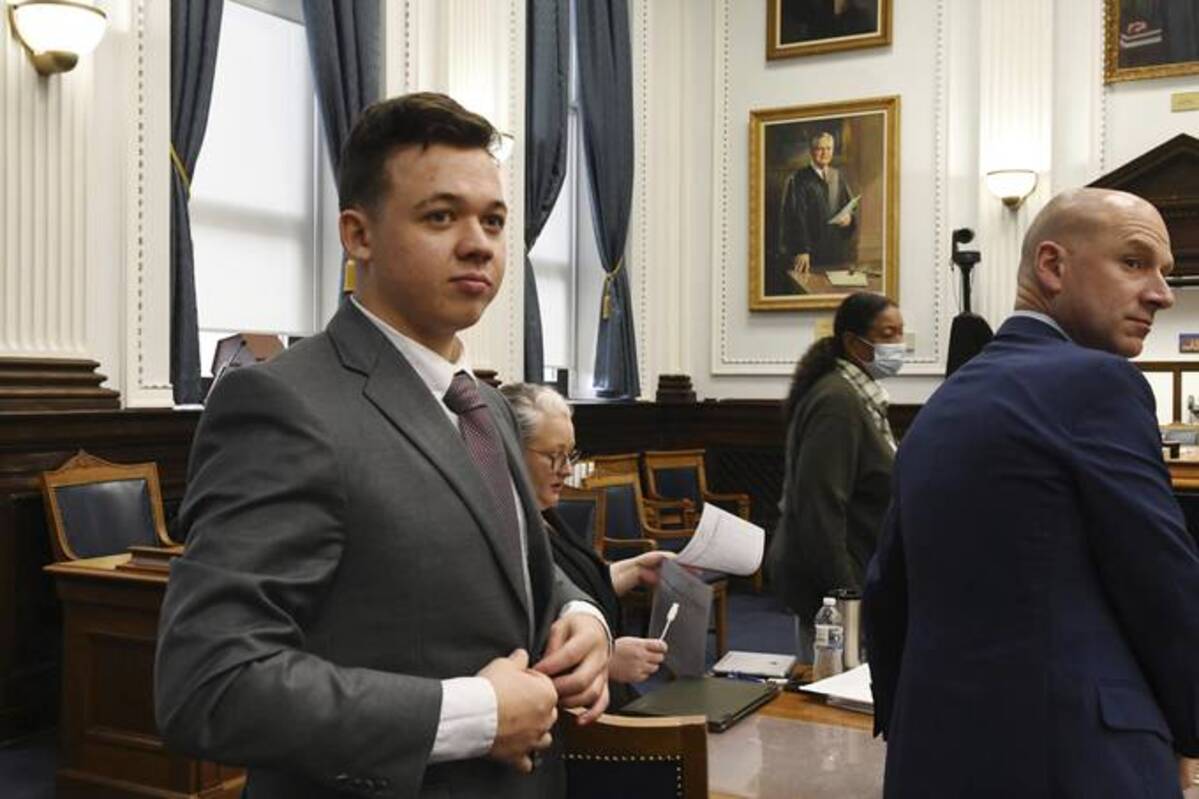 A jury acquitted Kyle Rittenhouse last month. (Mark Hertzberg/Pool/AP) | | | The company lifted restrictions on praise for Kyle Rittenhouse after he was acquitted of all charges for fatally shooting two people and injuring another in Kenosha, Wis., last year during a wave of protests against police violence, I report. Rittenhouse will also be allowed to join the platform, and Facebook is removing restrictions on searching for his name. "After the verdict in Kenosha, we rolled back the restrictions we had in place that limited search results from returning content related to key terms including Kyle Rittenhouse," said Andy Stone, a spokesman for Facebook parent Meta. "While we will still remove content that celebrates the death of the individuals killed in Kenosha, we will no longer remove content containing praise or support of Rittenhouse." | A star AI researcher who was fired from Google is launching a new research organization | 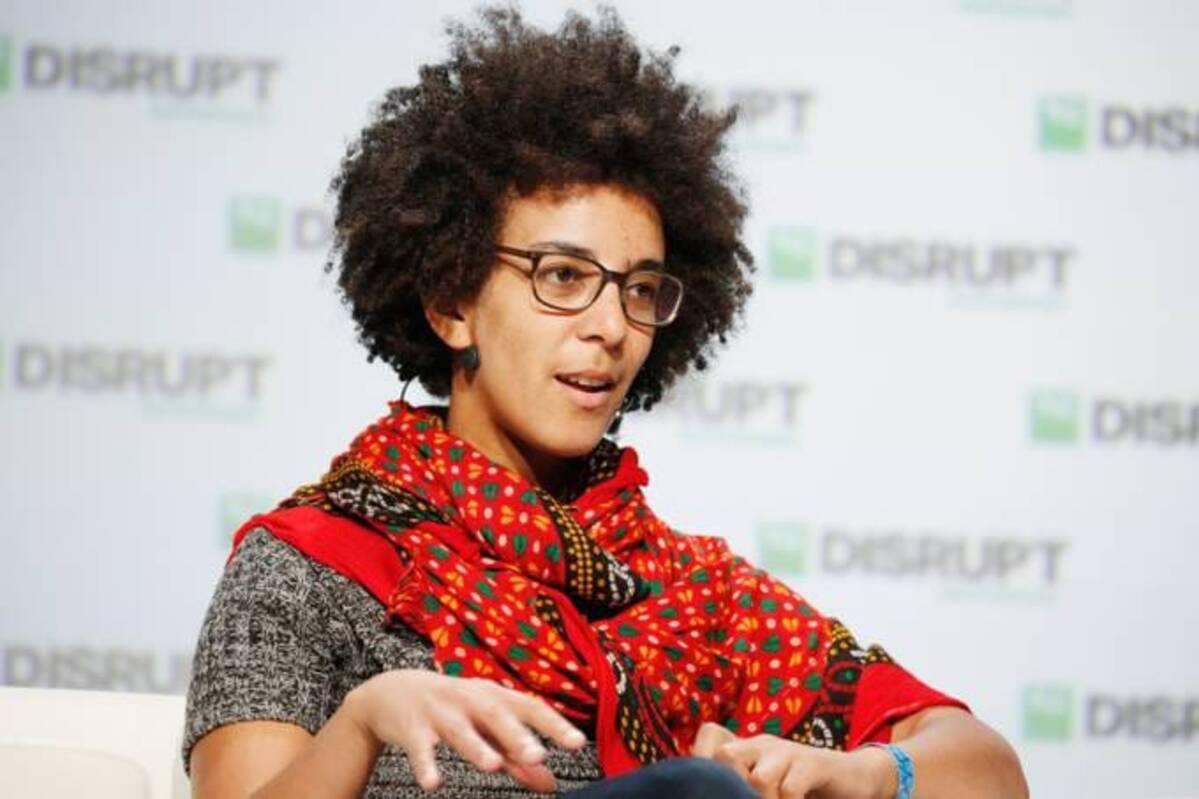 Google fired Timnit Gebru, a high-profile AI researcher, after she wrote a paper critiquing the company's work on artificial intelligence. (Kimberly White/TechCrunch/Getty Images) | | | Timnit Gebru's Distributed Artificial Intelligence Research Institute (DAIR) is backed by $3.7 million in funding and will focus on AI's harms to marginalized groups, Nitasha Tiku reports. The institute will seek to build a more positive model for what AI can accomplish. Google fired Gebru last year after she wrote a research paper that critiqued the tech giant's AI work. DAIR has received funding from the MacArthur Foundation, Ford Foundation, Kapor Center, Open Society Foundation and Rockefeller Foundation. "Gebru hopes to use the funding to break free of the broken incentives of Big Tech, where outspoken researchers can be sidelined, potential harms are evaluated only after an AI system is in use, and profitable AI projects — such as large language models, the subject of Gebru's contested paper — are treated as inevitable," Nitasha writes. | Children's advocacy groups want the U.S. to follow U.K. teen privacy rules |  The coalition will advocate for legislation and FTC rules to protect children and teens. (iStock) | | | The "Designed With Kids in Mind" coalition is advocating for a U.S. "design code" to protect teens. The coalition will also "advocate for legislation and new Federal Trade Commission rules that protect children and teens from a business model that puts young people at risk by prioritizing data collection and engagement," it said. The groups that have signed on include Fairplay, Common Sense, ParentsTogether and the Rape, Abuse & Incest National Network (RAINN). The coalition is promoting three bills that it says will give teens key privacy protections and add "incorporate key elements" of the U.K. Age Appropriate Design Code. Under those rules, which went into effect in the U.K. in September, apps and online services that are "likely to be accessed by children" have to follow 15 standards aimed at boosting children's safety and privacy, including adding strict privacy settings and turning off geolocation by default. | | |  | Rant and rave | | | Payment processing company Square has changed its name to … Block. We couldn't resist: | | Business Insider's Rosalie Chan: | | Bloomberg's Lorcan Roche Kelly imagined a seemingly inevitable conversation: | | |  | Mentions | | - Former CIA director and secretary of defense Leon Panetta is joining the Center for Tech Diplomacy at Purdue's global advisory board.
| | |  | Inside the industry | | | |  | Trending | | | |  | Daybook | | - The House Science Committee holds a hearing on microelectronics today at 10 a.m.
- The American Enterprise Institute hosts an event on the role of economic analysis in antitrust on Friday at 10 a.m.
- FTC Chair Lina Khan, Department of Justice assistant attorney general for antitrust Jonathan Kanter and Tim Wu, a special assistant to President Biden, speak at a two-day FTC and Justice Department workshop that begins Dec. 6.
- Danish Tech Ambassador Anne Marie Engtoft Larsen and U.K. Technology Envoy to the U.S. Joe White speak at an Atlantic Council event on technology diplomacy on Dec. 6 at 11 a.m.
- Washington D.C. Attorney General Karl A. Racine (D) testifies at a Senate Finance subcommittee hearing on technology competition, growth and privacy on Dec. 7 at 9:30 a.m.
- NATO Assistant Secretary General for Emerging Security Challenges David van Weel discusses artificial intelligence cooperation at an American Enterprise Institute event on Dec. 7 at 9:30 a.m.
- Heather Boushey, a member of the White House's Council of Economic Advisers, participates in a Brookings Institution event on technology and inequality on Dec. 8 at 11 a.m.
- Instagram head Adam Mosseri testifies before the Senate Commerce Committee's consumer protection subcommittee on Dec. 8 at 2:30 p.m.
| | |  | Before you log off | | | That's all for today — thank you so much for joining us! Make sure to tell others to subscribe to The Technology 202 here. Get in touch with tips, feedback or greetings on Twitter or email. | |


No comments:
Post a Comment