| Happy Friday folks! Below: How neo-Nazis are using Twitter's new privacy rules, and what the Biden administration's next moves are on foreign surveillance. First up: | Push to crack down on tech giants faces tough voting math in Congress | 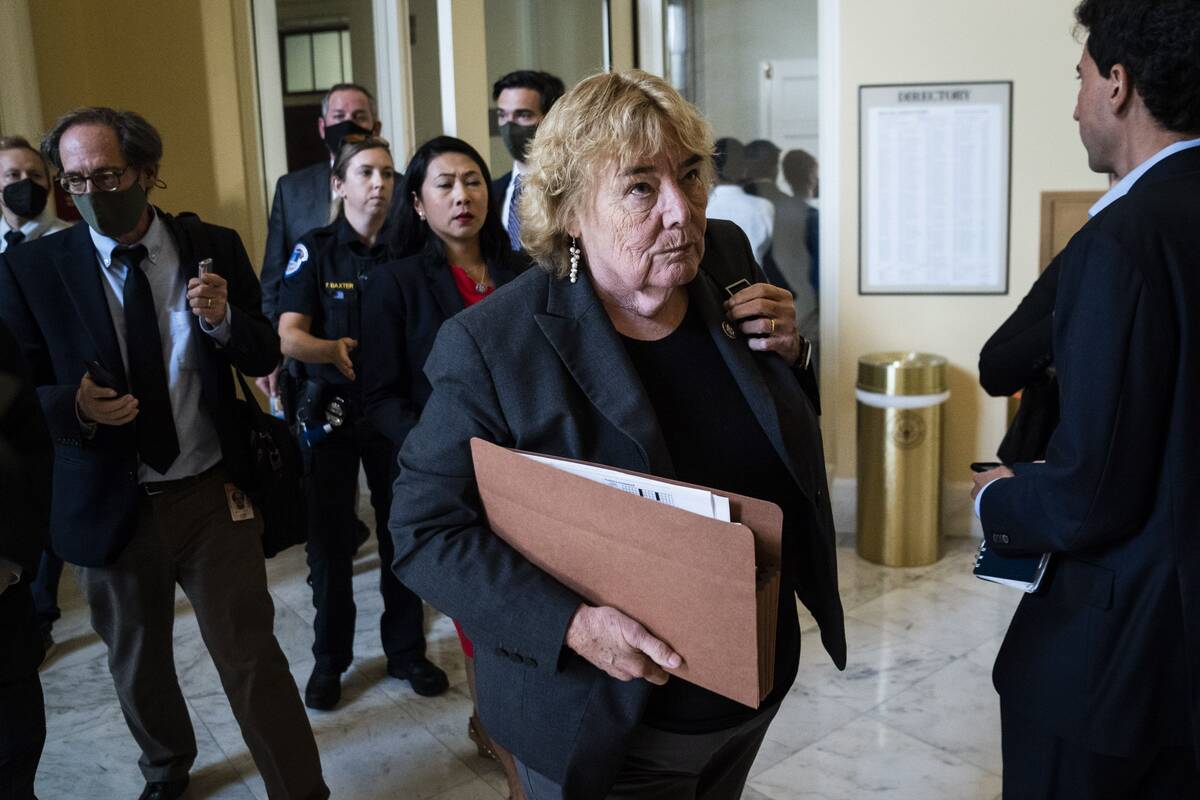 Rep. Zoe Lofgren (D-Calif.) remains opposed to key pieces of lawmakers' antitrust efforts. (Jabin Botsford/The Washington Post) | | | A bipartisan group of House lawmakers in June narrowly advanced a sweeping package of bills aimed at stopping Silicon Valley's most powerful companies from squelching competition. Since then, Sen. Amy Klobuchar (D-Minn.) has led an effort in the Senate that has produced several bipartisan companion bills, a sign of growing momentum for the crackdown. But a group of holdouts threatens not only the most aggressive reforms, but also more modest bills seen as bellwethers for lawmakers' broader antitrust efforts. That includes a pair of proposals: The American Innovation and Choice Online Act, which would prevent major tech platforms from giving their own products a boost over competitors' goods, and the Platform Competition and Opportunity Act, which would make it easier for regulators to block large tech companies from scooping up rivals. Both bills advanced with bipartisan support out of the House Judiciary Committee in June, despite facing opposition from most of the panel's Republicans and some California Democrats. Over the past several months, amended versions of the proposals have been introduced in the Senate and drawn broad support. Sen. Chuck Grassley (R-Iowa), the top Republican on the powerful Senate Judiciary Committee, notably backed the bill targeting what's known as "self-preferencing" by tech platforms of their own goods. But some of the legislation's most vocal skeptics, including California Democrats like Rep. Zoe Lofgren who represent Silicon Valley, remain unmoved by the proposals in the Senate. "There were some modest adjustments made in the Senate bill, but I still think they miss the mark," she said of the self-preferencing bill in an interview. | | | | ADVERTISEMENT | | Content from Comcast | | A network with one simple purpose – to keep customers connected |  | | We've created a network with one simple purpose: to keep customers connected. In the last 10 years, Comcast has invested $30 Billion – and $15 billion since 2017 alone – to keep America's largest gig-speed broadband network fast, secure, and safe. Because more Americans rely on Comcast to stay connected, we work around the clock to build a better network every single day.
Learn how the network keeps you connected. | | | | | | | | And she said she is also concerned about the Senate bill to limit tech companies' acquisitions. Both bills, she argued, are too narrowly focused on the conduct of a small group of companies. A slew of Republicans and some other California Democrats, including Reps. Eric Swalwell and Lou Correa, voiced similar concerns during the marathon House markup session in June. Leaders of the centrist New Democrat Coalition, one of the largest caucuses in the party, have also voiced concerns about the bills. Rep. Suzan DelBene (D-Wash.), who leads the group, said in a statement to The Technology 202: "I share the same fundamental concern with the Senate proposal as I did with the House legislation, that these bills are missing the mark on what is needed to protect Americans in the digital space." If more Democrats like Lofgren and DelBene remain opposed to the Senate proposals, it means backers will need to drum up more Republican support to get enough votes to pass. And to do so, they'll have to overcome opposition from House Republican leadership. That tough math leaves a narrow margin of victory for the bills' proponents, who have yet to introduce some of the House package's most aggressive proposals in the Senate. A House leadership aide, who spoke anonymously to discuss private negotiations, said they "expect the committees of jurisdiction to continue to work with members and stakeholders on the way forward on protecting consumers and competition." Proponents of the antitrust push remain confident their proposals will clear the finish line. "I have no doubt we will have the votes and they'll come to the floor and they'll pass out of the House," said Rep. David Cicilline (D-R.I.), who has led the antitrust efforts in the House. Cicilline said they have "worked very closely with the White House in developing this legislation" and maintained regular contact with Klobuchar and her staff, and that he expects no "daylight" between the House and Senate when the bills finally move. And he said they've had "very productive conversations with a number of other California members." | | "Obviously anyone who's interested in making recommendations that will improve the legislation in the House and Senate, we welcome that … but it has to be people who are serious about actually wanting to improve them … not prevent reforms from happening," he said. "This bill is modest, it's narrowly targeted toward a real problem, and we're confident it will pass with bipartisan support," said Caroline Tabler, a spokeswoman for Sen. Tom Cotton (R-Ark.), who is co-sponsoring with Klobuchar the bill to limit tech companies' mergers. Some lawmakers who criticized the House measures could still be persuadable. Rep. Ro Khanna (D-Calif.), who earlier called those measures "poorly drafted," said he had not yet reviewed Klobuchar's proposals "in detail" but said her approach to tech and antitrust is "pretty nuanced." Lofgren isn't sold on the legislation's path to becoming law just yet, though. Asked whether she's discussed the bills with House leaders including Speaker Nancy Pelosi, a fellow California Democrat, Lofgren replied: "I do know that the policy of the Speaker is not to take bills to the floor that can't pass, that don't have the votes. … I'll just leave it at that." | | |  | Our top tabs | | Neo-Nazis and the far right are using Twitter's new rule against anti-extremism researchers |  An anti-fascist researcher's Twitter account was suspended after someone reported a photo involving the Proud Boys, a far-right group with a history of violence. Twitter said the move was a mistake. (Reuters/Emily Elconin) | | | Far-right activists are coaching their followers on how to use Twitter's new ban on sharing people's private information against the extremism researchers and journalists who work to uncover their identities, Drew Harwell reports. Advocates argue that the policy change will be a gift to members of extremist groups who don't want their identities to be widely publicized. "It's going to be emboldening to the fascists," said anti-fascist researcher and organizer Gwen Snyder. Snyder's account was suspended Thursday after someone reported a photo she had posted showing a local mayoral candidate at a public rally alongside the Proud Boys, a far-right group with a history of violence. Twitter spokesman Trenton Kennedy said the tweet wasn't a violation of Twitter's policy and "our teams took enforcement action in error" after The Washington Post asked about the suspension. | | Snyder "said she believed her reported tweet did not break the rules but deleted it anyway, worried that any appeal she filed would take too long or ultimately fail," Drew writes. Critics have raised questions about Twitter's carve-out for newsworthy posts, arguing that it's not clear how Twitter will make those determinations with a limited staff. | The FTC sued to block Nvidia's $40 billion chip acquisition of Arm |  Nvidia argues that the deal would promote competition. (David Paul Morris/Bloomberg) | | | The Federal Trade Commission is arguing that the massive deal would stifle semiconductor competition, Cat Zakrzewski and Jeanne Whalen report. It comes after intense scrutiny of the acquisition in the United Kingdom, where Arm is based, and the European Union. "The FTC argued that the acquisition would give the California-based Nvidia too much control over the technology and designs that its competitors use to develop their own rival products, as well as access to sensitive data about some of its key rivals," Cat and Jeanne write. "The agency argues that Nvidia could use that power to undermine rivals, which would ultimately lead to reduced quality and higher prices for American consumers." Robert Sherbin, a spokesman for California-based Nvidia, said the deal would "benefit the industry and promote competition." Arm, which is owned by Japan's Softbank Group, declined to comment. | The Biden administration plans to work with allies to restrict export of surveillance tech to authoritarian governments | 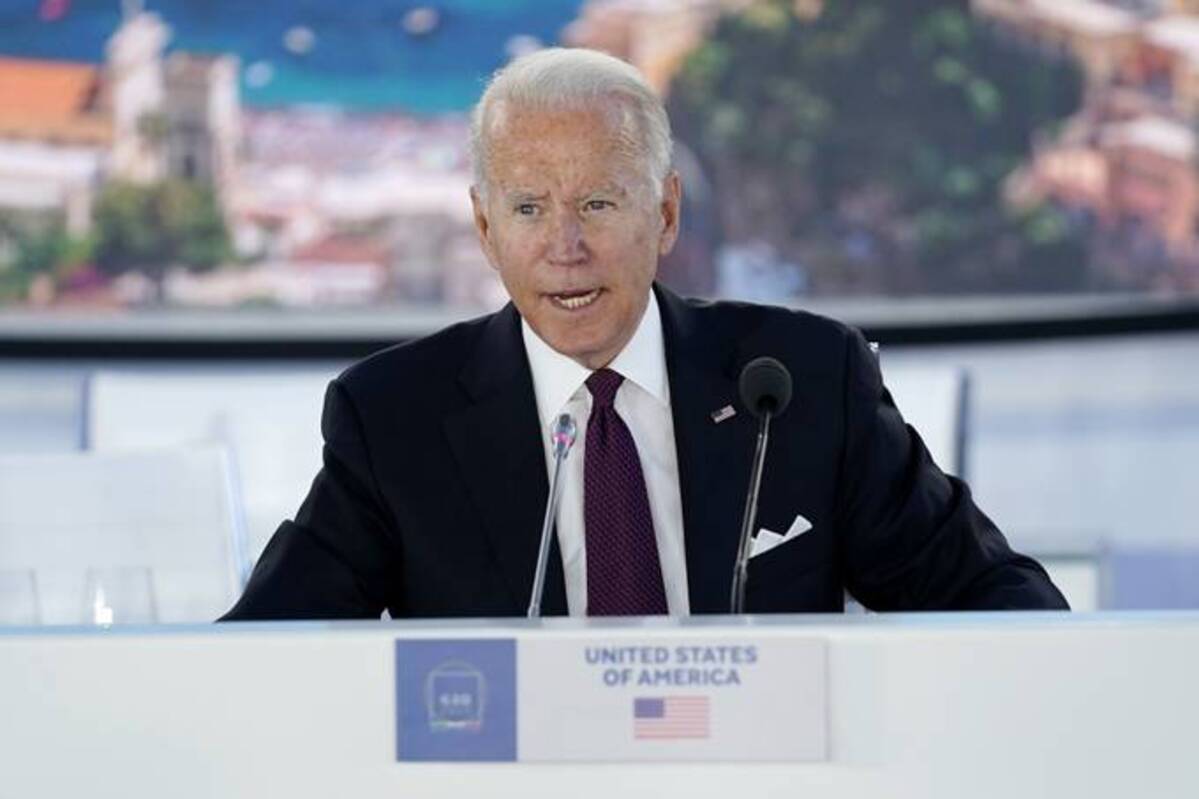 The Biden administration plans to roll out the initiative next week. (Evan Vucci/AP) | | | The countries will work together to "establish a code of conduct for coordinating export-licensing policies," the Wall Street Journal's Yuka Hayashi and Alex Leary write. The countries will also share information on technologies used to target journalists, dissidents and activists. "The technologies to be covered by the new initiative will be similar to those already targeted by domestic U.S. policies linked to sensitive technologies that are used for legitimate law-enforcement and intelligence operations but are also increasingly deployed by nondemocratic actors," Hayashi and Leary write. The Biden administration will formally announce the initiative at a virtual Summit for Democracy that it's hosting next week. China and Russia aren't invited. | | |  | Rant and rave | | | Tesla announced a $1,900 electric ATV aimed at children. Writer Andrew Paul: | | |  | Agency scanner | | | |  | Inside the industry | | | |  | Privacy monitor | | | |  | Workforce report | | | |  | Trending | | | |  | Daybook | | - The American Enterprise Institute hosts an event on the role of economic analysis in antitrust on Friday at 10 a.m.
- FTC Chair Lina Khan, Department of Justice assistant attorney general for antitrust Jonathan Kanter and Tim Wu, a special assistant to President Biden, speak at a two-day FTC and Justice Department workshop that begins Dec. 6.
- Danish Tech Ambassador Anne Marie Engtoft Larsen and U.K. Technology Envoy to the U.S. Joe White speak at an Atlantic Council event on technology diplomacy on Dec. 6 at 11 a.m.
- Washington D.C. Attorney General Karl A. Racine (D) testifies at a Senate Finance subcommittee hearing on technology competition, growth and privacy on Dec. 7 at 9:30 a.m.
- NATO Assistant Secretary General for Emerging Security Challenges David van Weel discusses artificial intelligence cooperation at an American Enterprise Institute event on Dec. 7 at 9:30 a.m.
- Heather Boushey, a member of the White House's Council of Economic Advisers, participates in a Brookings Institution event on technology and inequality on Dec. 8 at 11 a.m.
- Instagram head Adam Mosseri testifies before the Senate Commerce Committee's consumer protection subcommittee on Dec. 8 at 2:30 p.m.
- The Senate Commerce Committee's communications, media and broadband subcommittee holds a hearing on algorithmic harms on Dec. 9 at 10 a.m.
| | |  | Before you log off | | | That's all for today — thank you so much for joining us! Make sure to tell others to subscribe to The Technology 202 here. Get in touch with tips, feedback or greetings on Twitter or email. | |


No comments:
Post a Comment